Showing posts with label Andy Craig. Show all posts

Friday, 20 September 2013

Golden Demon '88: The Photographs of Andy Craig

I have been lucky enough to have recieved a batch of photographs in the possession of Andy Craig, ex-'Eavy Metal painter from the Golden Age of Games Workshop. These were taken during his trip to the Golden Demon awards in 1988. It must be strange for him to look back on these now, as less than a year later he was working at GW and presiding over the next Games Day as an actual painter.

The photographs are old, in some places out of focus and have suffered through scanning and transfer through the internet, but they present a rare collection of images from a more simple time. When painters were painters and gamers were gamers. These are raw images. They were never taken to be published let alone be let loose across the world some 25 years later, so be kind to them. 

How else should we start but with an out of focus mug shot of Andy? Was it a deliberate early form of the now ubiquitous 'selfie' or an accidental 'wot's wrong wiv dis?' misfire? 
Rolls and rows of painted models! Now taht is what the Golden Demon should be about. What we have here is a selection of models from the, then, Studio collection. Despite the blurry nature of the photograph you can spot loads of classic minis here. The 2nd Edition Bloodbowl teams, Chaos Dwarfs, Chaos Thugs and Sorcerers not to mention the super rare Dwarf Wizard from the Combat Cards! What else can you spot?
A big table! We have seen this one before from Guy Carpenter's photographs but this one lacks Pete Taylor. Stacks of models here and its rather difficult to tell what's what, but I am sure I can spot some of the Naismith(?) giants near the centre of the board. I am pretty sure that is Jervis Johnson sitting on the rear table organising Bloodbowl games with a couple of identifiable folks. The guy in grey might be Alan Merret?
Loads of dragons await the judges attention. Stacks of boxes lay littered across the back of the room, presumably used to house the entries, with a gusto that would enrage modern health and safety executives. 
If memory serves these must be the Mythlore LARPers. Remember them? Not sure if the chap of the left is indeed a chap or a chappette I am afraid!
This one is quite blurry but you can make out quite a few entries that did not make it into the Fantasy Miniatures book.
Dioramas wait to be judged. Hours or work went into these and there are few visual records around for us to study. At least we have shots like this however.
Its hard to tell at this angle, but that Rhino may well be Guy Carpenter's model! I am not sure. Punters were certainly allowed near the models - no glass cabinets then!
Stacks of stuff. I love the table tennis model on the left! This just goes to show how many entries did not make it into the book.
Beautiful dragons... Once the pinnacle of miniature painting and the love of all fantasy types. No longer. Though I think this is due to a lack of good modern dragons to inspire painters.
Ivan Bartleet receives his Slayer Sword.
I am still saddened that freehand banners went out of fashion. Look at all of these! All lovingly crafted by everyday gamers and all so different to each other. 
Ivan's Overall Winner model, the war elephant, stands alongside that skull model diorama. See, skulls were popular even then!
Love this photograph. The Golden Demon entries stand proudly alongside a used tissue, a packet of crisps and a wayward microphone stand while domineering fire hydrants look on disapprovingly! Classic! 
Dave Andrews? Standing guard over some early Rogue Trader models, including first edition Land Raiders.
Another Master Painter? These T-Shirts were awarded to the regional winners if I remember correctly. 
Here's Tim Pollard in his.
And Andy Craig in his!
I have included a link to the original Fantasy Wargames book here. Its really great fun to flick through this and attempt to identify different models in the photographs. It also gives a far better idea to the modern reader how varied and imaginative the models entered in 1988 were. 


Do you have any old school photographs of past Games Days, Golden Demons or GW stores in general from the 1980s and early 90s that you would like to share? We really would like to see them as even the most mundane of shots is likely to be of great interest to our community. If you own such pictures, please email me at realmofchaos80s@yahoo.co.uk. 

A huge thank you to Andy for scanning and posting these images to me. And thanks to Tim Pollard for his great picture too!

Orlygg

Sunday, 11 August 2013

'Eavy Metal: Paul Benson, Mike Beard and Pete Taylor special


Between issues 107 and 111 of White Dwarf, 'Eavy Metal grew up. It lost its 'make it up as you go along' attitude and eclectic contributors (Blanche, Priestley, Sean Masterson etc) and settled down into something we would recognise today. The 'Eavy Metal team were far more visual in the magazine, and it would not be long until their painters would start semi-regular demonstrations in GW stores.

The range of miniatures on show also improves. As does the quality of painting itself, largely due to the arrival of Mike McVey and the employment of various Golden Daemon winners. The quality of writing was also good, with John Blanche and Phil Lewis explaining the artistic approach behind many of the miniatures show cased. Occasionally, guest painters had their work presented, and the extracts that follow contain work from Mick Beard, Pete Taylor and Paul Benson. Oh, and look out for the first appearance of friend to Realm of Chaos 80s, Andy Craig too!

Some inspiring Realm of Chaos miniatures and conversions here, including the famous snake tailed Slaaneshi champion and the unreleased plaguebearer the Steve Casey found in Bryan Ansell's collection.
Work here from a number of 'Eavy Metal artists including some conversions by Blanche. Note the painted version of the unreleased Beast of Nurgle. The converted  minis with the horror arms is one of my favourite models from this period.
Pete Taylor was a Warhammer Third Edtion hero and his Chaos army was legendary. Here we have a wealth of his converted models with distinctive faces.
This page shows how the miniatures reflected the range of games available at the time, with models from Rogue Trader, Blood Bowl and fantasy all gracing the same page. Note a painted example of the Dwarf Firethrower discussed last post.
Citadel's new plastic horses were also showcased with a brief guide to painting them here.
Andy's now famous Eldar models and a range of squats.
A discussion about how to get the best from your horses and, oh look, a young Andy Craig at work in the studio!
Mick's and Paul's work is discussed and the new plastic horses recieve some fantasy riders.
Paul had a beautiful style. Very individualistic indeed. This page represents some of his best work that was ever published.
Beautiful dioramas from Mick. Though I have wondered for years why the bear rider's back is still white.

Saturday, 23 February 2013

Realm of Chaos Black: Painting Tips and Techniques with Andy Craig

Welcome to the first in a series of 'Eavy Metal style articles by miniature painter extraordinaire Andy Craig. Those of you who frequent the Facebook Oldhammer Community may well have already had the opportunity to pick Andy's brains over different aspects of miniature painting. Many of the paints discussed here are available from arts suppliers, such as The Range or Hobbycraft, though we do refer to quite a few old school Citadel Colours, so you may wish to refresh your memory with this article first.

A few posts back I talked about my view of miniature painting and how 'technique can never be a replacement for soul'. As many of you have said, it seems that the 'winning is everything' ethos that prevails among many players of GW games has seeped into the painting scene too. Whatever happened to the sense of adventure and fun that existed during the early years of the Golden Demon competition, eh? Have a look here, here and here if you are unsure what I mean by this.

The theme for this edition of Realm of Chaos Black (get it?) is the colour recipe. Now I am a simplistic out of the pot man, largely because I have never really felt confident enough to go crazy and start mixing up colours, largely due to the fact that my usual result is a rather muddy finish. Well Andy has been really helpful in offering quite a bit of advice in this regard that should interest those of you who wish to improve your painting. So I'll hand over to him...

Enjoy!

Orlygg.

Red for the Red God!
In my early career, reds were a very difficult colour to get right and I'd avoid using it like the plague. Upon arrival at the 'Eavy Metal studio, I soon found out from the other figure painters that I wasn't alone.
We'll start with the red on the cape in the image below.


First of all make sure your using a good red, e.g. a red that has a very Matt finish - 'cheaper' brands are better for this. I use Anita's acrylic which can be bought in most hobby stores/art suppliers. It really is wonderful stuff, I've used it for years.
For a velvety cloth look, as in the image below, mix red, dark brown and black. Half the amount of black to the red and brown. Thiswill provide you with the base colour. Then start to apply red mixed with small amounts of the base until you are using only red for the first stage of highlights. The red should be pretty prominent by now, so begin to add small amounts of orange to the stand alone red, keep the highlights small to retain the red as larger highlights will just bleach the red. Add a bit of white to the orange and red for the finishing highlights but don't go anywhere near white! I'd say half a tone higher as by this stage the highlights should be very small. 

I hope that this makes sense and you can get good results from the mix.


Bright red.
To achieve a brighter red, I mix any base red with Dealer Rowney 'FW' series acrylic ink, expensive stuff but my God guys this stuff rocks! The reason I add ink to the red is the richness it creates and this technique works the same for any other corresponding colour. So, base colour applied(may take two or three coats to get a flat, even base) just add yellow to the base mix again keeping the highlights small (really important) until you are using yellow, no white.
Weathered red.
Mix red, purple and half the amount of black. The purple will give the red depth. start highlights by adding red to this base mix until you are using using red alone. Highlight using red and orange unitl half the tone of the red, then apply a thin ink wash of dark brown (raw umber is a good choice) red and again half the amount of black just to tone things down.
Blood red. 
This is really simple. Just use black, red and dark blue for your base colour, then half the amount of red to black and blue. Add red to base mix until you using just red to highlight. Once this is dry, use a brighter (not a mix) stock red like if you were using a crimson red to mix the base colour.

Chaos Warrior Bloodbowl Style! Painted by Andy and part of Bryan Ansell's collection.
Yellows and pinks.
Okay, I've lost count of the times that I've been asked 'how do you get such bright yellows and pinks'. It seemed to be a trademark as to how people back in the '80s recognised my work, so here goes....
Yellow
Use a mid tone yellow, such as the old Sunburst Yellow, and there are a couple of ways you could apply this to your model. 
1, mix yellow paint and orange ink, one quarter ink to paint, apply as your base, then add yellow to this for highlights until you're using only yellow. Add white to yellow again keeping highlights small, (as long as you can see at least three tones...your doing good) until you are using an almost white. 
2. Base coat using just the yellow on its own, again mix yellow and orange ink as before, then apply it as a wash, go for the consistency of milk for your colour wash, you should need only one wash for this. The start your highlights using yellow alone, then add white as desired.
Off yellow.
For a more realistic looking yellow I use Windsor & Newton 'Nut brown', any tone of yellow works for this. apply the same way as above 1 or 2. good idea to experiment with this using different shades of brown, also really good for painting Gold rather than using gold, seen so many painters using this (not my theory, but from what I,ve seen, the same type of thing) to paint gold and it looks awesome. also works well for that battle worn yellow look, just add more brown ink or give a light (watered down) brown wash.
Pink.
Its been years since I've painted anything pink and the only way I achieved this was using Citadel Titillating Pink. Base coat your model with this pink, then mix the pink and half the amount of a bright red ink. Then mix this down to an ink form before washing over the pink. Highlight with Titillating Pink, then pink and white.
One of the greatest colours (along with Bilious Green) to be found in the original Citadel Paint Sets. Now very hard to get of as the Coat d'Arms version, called Shocking Pink, is a different colour.
Here's an example of Titillating Pink in action. A two-tone Tzeentch horror by Andy. Now in the collection of Bryan Ansell. 
Flesh tones.
One thing I've loved doing above all others, is experimenting with colours, and none is more relevant than different skin tone effects. I've been using this recipe for flesh for most of my career, so I hope it is of some use to you guys.
With so many paint manufacturers out there selling their 5 or 6 step flesh tones, save yourselves some money guys and just buy the darkest tone.....and add white to it..
If you want to create your own, use this as your base colour. Mix red, yellow, white, brown (burnt umber) and Windsor & Newton 'Burnt Sienna' (must be w&n Burnt Sienna for this to work). Mix brown, white in the same amounts, then add red and yellow at half the amount, then Burnt Sienna ink as same amount as yellow and red. experiment with this to obtain different skin tones, add more red for a more tanned look or yellow for a more bronzed look. For me, its been a great foundation skin tone, if I feel the base mix is to dark for a particular figure I just add white. 

It would be great hear how you get along with this.

Another two tone horror, again part of Bryan's collection and painted by Andy.
Greens.
I loved painting orks when I was working in the studio, so to start I'll explain the green I used for greenskins.
Any mid earth tone green (such as the old Woodland Green) will do as a base. Use sunburst yellow, white and Windsor & Newton 'apple green' ink, mix the green with half amounts of white and yellow, though you may want to add less white if you like the darker tones. Add a quarter of ink to this then use as base coat. Add white and yellow to base colour for highlights, then give a thin wash of apple green ink once highlights are completed.
Weathered greens
These work well for clothing and look great light or dark. Mix dark brown (raw umber) Woodland Green and black. Use the same amounts of brown and green and a quarter black, then use as base coat. Add Woodland Green to the base mix for highlights then add yellow to woodland green for your final highlighting but stop just as you see the yellow starting to show. Make a thin wash from the base mix then apply as a finishing touch.
Bloodbowl Star Player. Painted by Andy. Owned by Bryan. Photographed by Steve Casey !
Blue.
System 3 Process Cyan by Rowney is the only blue I've used for years and you can achieve some incredible shades just by adding to it. If you want a deep rich shade add a dark purple ink, which seems to work better than just adding paint. Windsor & Newton Ultramarine ink works really well with this blue and gives an incredible mid tone.
Metal
I've seen some amazing metal effects on armour over the years, but let's face it, metallic pigment has never really been that good, which is why you see so many painters going for the option of painting the illusion of metal these days. I'll start by taking you through the rusty looking metal on the image below.
Rust.
For this, you'll need gold, black ink and orange ink. Base coat with gold and make sure it's bone dry or the gold will shift. Mix the same amounts of black and orange ink and half the amount of gold paint. Water this down and apply, but before each application give the mix a good stir. You could even use this mix to target certain areas of metal to give them that starting to rust look. I used this mix many years ago to paint some chaos knights for a friend (around 25 figures) as he wanted them  quickly, so I applied this mix straight onto the bare metal using the same colours, but this time I used enamels thinned with white spirit, they looked great!
Gold.
Base coat with your gold, again making sure that its dry. Then mix yellow ink, a mid tone brown ink and just drop of gold paint. The gold paint will now take the 'shine' off the ink. Oh, before I forget, anyone that has a problem with ink shine add a Matt medium to the ink before hand, Dealer Rowney do a good one. Highlight with gold paint then add silver for the final highlights.

Back and white.
There are a number of ways to shade, highlight and colour wash with these two colours. There are many shades of black on the market and many tinted whites, again... don't waste your money when you probably have these colours already. Just follow these simple steps if you're having difficulty or just fancy a new method. 
Black
The first, and most simple method to make your blacks look interesting, is use the dark tones of blue, green or red. This will depend on the figure type, so for instance let's say a LOTR wraith, I'd paint a base coat of black, then for the highlights, mix black with a mid tone blue, now, the trick here is to keep your highlights very small, best not tone all the way up to a light blue, just the blue alone should be enough. If there's three quarter's black still showing your on the right track. Emphasise all the high ridge folds on the wraith's cloak remembering to keep the highlights very small. applying a very thin wash of a dark brown ink, as this just gives that extra bit of depth. Experiment with different colours on different models and see what you can achieve.
White.
Again, depending on the figure type, let's say you wanted to paint the hair on a figure white, apply an ink wash of yellow and burnt sienna mix in equal amounts using the same amount of water (use a Pipette) then highlight using white. This makes for a more interesting tone of white.
Sky blue, light tan, and parchment work well also, as with black, make sure the white is dominant. And there is no harm in giving whites a full colour glaze orwash for an off or dirty looking white.

Cheers,


Andy Craig.

A big thanks to Andy for contributing his time to Realm of Chaos 80s once more. And I am please to announce that Mr Craig will be providing plenty more advice in future articles, including more advanced painting techniques and freehand shield and banner painting, so watch this space.

Feel free to comment about the techniques Andy has described, or email us any miniatures you've painted using his techniques. If you have any further questions, Andy can be contacted through me at this blog or directly on Facebook's Oldhammer Community. 

Right, where's my Titillating Pink and those Tzeentch daemons?

Orlygg.

Tuesday, 8 January 2013

An Interview with Andy Craig: Confessions of an 'Eavy Metal Painter!


I want you to think about that first moment you discovered miniature fantasy wargaming. Those first few hours as you sat engrossed, mind open to new and exciting possibilities, creating a wish list in your head...

It might have been D&D, or White Dwarf or even Owl and Weasel, if you are really Old School.

It won't matter!

You would have had 'that thought'.

The thought when you dream that you actually paint and game as a job.

Sadly, for must of us, the thought remained just that, but the subject of Realm of Chaos 80s second interview actually put that thought into reality! He got a job at GW as a figure painter and was at the heart of 'Games Workshop' s Golden Age', working on The Lost and the Damned, the Rogue Trader Ork books and bloodbowl to name just a few...

His name? 

Andy Craig.
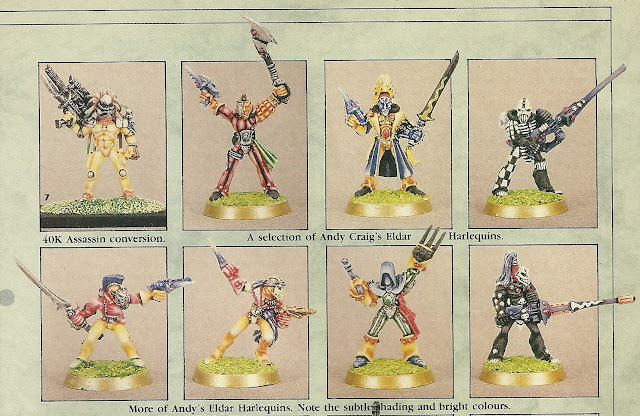
Andy's first White Dwarf spread- Eldar Harlequins.
I remember reading of his arrival in the pages of White Dwarf 112. A small note in Culture Shock told me that a new brush was at the studio. You see, the news pages were always my first port of call (I liked to know what was coming out next), while my second was ' Eavy Metal. And there I saw some of his work, the gorgeous harlequins above. There was much debate about this Andy Craig that month on the bus, around the paint station or and elsewhere. So it gives me great pleasure to say that I can present to you a major interview to a fellow painter who ' had the thought' and through his skill and dedication made it his profession.

But that is enough waffle fro me, I'll hand you over to Andy who will tell his remarkable story, supported by many images from his career. Its a personal, and intimate, tale of his time in ' Eavy Metal

Enjoy,

Orlygg.

RoC80s: How did you get into miniature painting and what led you from Lincoln Council to the GW design studio?
AC: I got into miniature painting around 1983. My friend, and still my closest friend to this day, Chris Gent told me about Dungeons & Dragons. I'd always been a fan of all things fantasy; books, art and the like, so we decided to have a game. What caught my eye was the miniatures, in particular ones that were painted to a pretty good standard. I started buying and painting miniatures within weeks. I was shown a copy of White Dwarf showcasing the work of the Godfather of miniature painting, John Blanche. It blew me away and the hooks were in!  Inspiration was high..... I just wanted so badly to be that good. 

It was then I knew this was what I wanted to do as a profession.
So, the first Golden Demon was announced of which I did not enter, as I was no where near good enough. The next year I entered the Golden Demon regional heats 1988 and was placed first. I didn't win in the finals but did get my work ( a cheerleader emerging from a cake ) in the demon year book. The next year I also came first in the regional heats, and it was then that that the Rep from Games Workshop HQ who was judging, suggested I write a letter to Phil Lewis applying for a position at the studio as a miniature painter. I sent the letter and two weeks later got a reply from Phil asking me to go see them in Nottingham. I could not believe my luck and remember well the day of my interview. Can you believe the first person I met on entering the studio was John Blanche himself? 'You the Figure painter?' were his words. The studio (in Enfield ) was like a rabbits warren, we went straight to the figure painters room where Mike McVey, Ivan Bartleet, Darren Mathews and Phil Lewis were busy doing their thing. John and Phil took me into an adjoining room to discuss my work I'd brought along. They had high praise for my painting and offered me a job at the studio right there on the spot, which of course I took. I was given a tour of the studio, met Jes Goodwin, who at the time was working on the Eldar snipers. The Perry twins, Kev Adams, all the game designers; Rick Priestley, Richard Halliwell etc. To say I was shell shocked by what was going on would be an understatement. Started working at the studio two weeks later. The first figure I was given to paint was a Blue Horror, quite difficult to paint but I pulled it off.


RoC80s: How was the studio set up and run? Could you just pick models and get on or were you directed?
AC: Good Question! Like I mentioned above, the studio was like a rabbits warren. It was hard to find your way around for the first few days. The miniature painters room was large enough for six painters and there was a very small room near the back where we primed the miniatures ... We would often emerge from that room feeling very sick due to the spray primer toxins as the extractor was so caked up with paint residue it didn't function properly.
Phil Lewis was the figure painter co-ordinator. He basically gave us the the 'Green- light' as to if the figure was good enough for White Dwarf. Most of the time when we placed a miniature in front of him that blew him away he'd say, jokingly, 'put your hands on the table', we'd say, 'Why?', Phil would say, 'because i'm going to break your hands.....nobody can be that good!'.
There wasn't that much directing as far as painting went and we were given free reign on almost all we painted apart from the obvious Codex conformity regarding Ultra-marines, Space Wolves and Orks etc. I remember been given a brat and a scavvie for the then new and up and coming Necromunda. John Blanche had just completed the cover art for the box which he brought down to me and placed on my desk to use as colour reference. He looked at me and said, 'don' t get any paint on it!'.


RoC80s: What was the working atmosphere like among the 'Eavy metal painters?
AC: Tim Prow sat at a joining table facing myself while Mike, Ivan and Darren were to the other side of us. Tim came to us as an Apprentice aged seventeen, within days he was up to our standard. Of all the miniature painters Tim and I were the closest, always having a laugh. When we were working on Waagghh the Orks, the revamped 40k and all the other Codex (Titans, Eldar etc) the board games....so much stuff, things were not so good. We were painting Orks for what seemed like months. We were asked to create colour schemes for the then new Space Marines which are still used till this day.
Atmosphere for the best part was good. We'd often listen to audio books while we worked; The Lord Of the Rings audio book always went down well when painting Warhammer Fantasy. Every day was Christmas for us, Phil would ask almost every morning 'anything you guys want from the factory', the answer would often be 'Nah'. My desk had a foot deep draw full to the top with miniatures which I sent back to the factory. We were given copies of every figure we painted plus whatever our hearts desired. You have to remember that we too were fans of the miniatures, the difference being we got to see things first hand and probably were as exited as you guys.
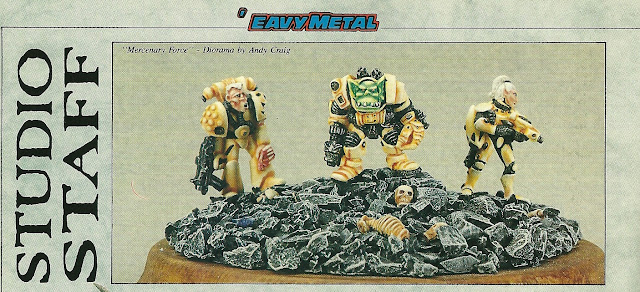
My favourite Andy Craig piece, I think - I spent hours trying to paint yellow like this back in the '80s. Andy has said that this was intended to be his next entry to the Golden Demons, but he got the job at the studio before the competition.
RoC80s: You mention lots of the other famous '80s figure painters, what about Colin Dixon, Sid, Steve Mussuard, Pete Taylor, Richard Wright and Steve Blunt. Did you work closely with any of these legends? 

AC: Sid had left by the time I'd started work at the studio, Colin was a figure designer and a really good guy. I was chatting to him one day in his studio at the top of the building, when all of a sudden there was blood all over his work top, he was cutting a slice of green stuff, thumb down on the blade, sharp side up! I think we all looked forward to seeing Steve Mussuard whenever he visited the studio, lovely guy, very funny, unique style, always gloss finished his figures but he used most of his work for gaming. Pete Taylor? OK, I met Pete many, many times, and still to this day I'm scratching my head as to the speed and high standard this guy could paint. Richard Wright didn't paint that many figures but when he did they were off the planet......outstanding, he applied the paint in an almost ink form, very hard to do and a very long process. Mike Beard came to work with us as a kind of holiday, one of the greatest diorama modellers there has ever been, awesome painter to boot and a very dear friend. Fraser Gray, who I would say is in my view the greatest figure painter of all time (just my opinion) was also a regular visitor. The fact he used enamels and white spirit to blend while most of us used saliva! This was very tricky to apply but it didn't seem to phase him. I'm very lucky to be the owner of one of his orks, I think it was in the first Golden Demon year book, an Ork with just a loin cloth holding an axe above its head. He exchanged it for one of my figures although he didn't get the initial figure he wanted, which was my pink 'Kinky Chaosette', so settled for an Amazon limited edition I painted for him. 


RoC80s: When working on technique, how did the team influence and support each other? Was there any other particular painter or painters who supported/inspired you?

AC: Well, for me John Blanche was my biggest inspiration, as with many figure painters. He pushed the boundries and laid the foundations for what exists now. Just before I left GW, John took me to one side and said 'there's two figure painters I'd have paint figures for me and that's you or Mike (McVey)'. 

I was in tears, for this guy to grace me with such a honour kind of completed me as a figure painter.

Between the rest of the figure painters technique/ideas were always shared. I used to buy pots of Humbrol acrylic matt red paint from a model shop in Lincoln for Mike as it was hard to come by. the only red Mike used and probably still does. We had to be at the top of our game back then, so support for each other was always there.


RoC80s: Where you limited to 'Citadel' only products, ie: the original paint sets (colour, monster, creature, ink etc...) or were other products used too?

AC: Basically, whatever it took for us paint to the highest standard in terms of paint we got elsewhere. We just went down to petty cash, were given the money to buy whatever paint. I hated the Citadel red, awful stuff. And the ink back then wasn't up to much. Most of us used Windsor and Newton ink, but having said that most of the Citadel colour was great.


RoC80s: You attended Games Day as part of the 'Eavy Metal display team, as well as a punter. Any juicy memories of those events?

AC: We were just flooded by people at Games Day, couldn't walk more than ten feet without being stopped and asked to sign something, It was a great feeling. I helped take entries in one year to put in the relevant displays and this guy hands me his entry (a standard bearer) and just as he does it broke, my he was pissed, but lucky for him we fixed it and I think he got silver.

Definitive Orks by Darren Matthews (the red noble) and Andy Craig. From the collection of Bryan Ansell. 
RoC80s: Where did your career take you after you left GW?

AC: Freelance figure painter for a while and now a freelance artist with a few publishing deals under my belt. I had many jobs over the years since then, all art related. Theatre design was good fun. Now live in the country with my wife (Renee) and dog (Sparky).

More of Andy's orks, though the middle model was painted by Tim Prow. From the collection of Bryan Ansell.

RoC80s: Did you actually play any of the GW games back in the 80s, and if so which were your favourites?

AC: Talisman, loved that game. never thought I'd be working on it, Talisman City, Space Hulk, we all got photo copies of the games months before release. 


RoC80s: Still painting miniatures today?

AC: Some times, I moved way up in scale and was mostly painting 1/6 scale models for various companies around the world. and felt natural for me to make that transition. Who knows what the future holds?
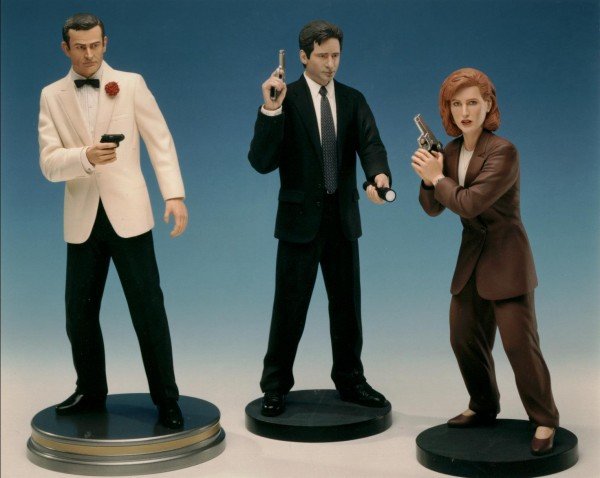

Bond, Mulder and Scully. Gorgeous, gorgeous blending... From the collection of Andy Craig.

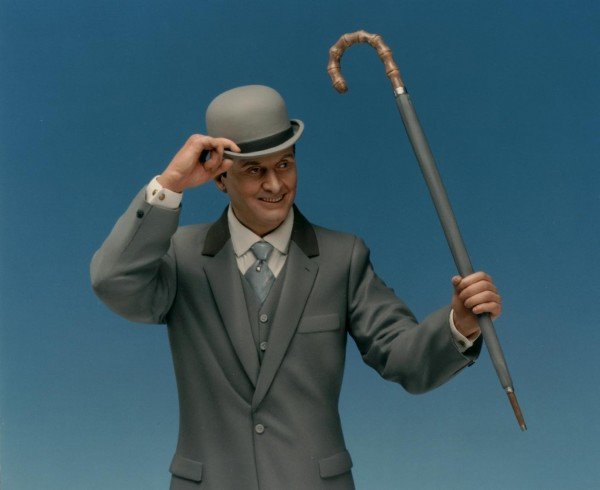
You'd think that that was a real grey jacket, wouldn't you? Phenomenal painting. From the collection of Andy Craig.
Silent Dawn - one of Andy's more recent, and more traditional, works of art.
RoC80s: Life as an 'Eavy Metal painter in the '80s seems very Rock 'n' Roll at times! Any wild stories to share?

AC: OK! Funny memories and one in particular; the studio toilet was on the next level down from us, and for some reason the light switch was outside in the corridor, so Tim and I thought it would be funny to turn the light off when someone went for a shit, the funniest thing is that I forgot to turn the light back on and all I could hear is someone shouting; 'TURN THE FUCKING LIGHT ON!' 

Kev Adams was a really funny guy, often bursting into our room, sitting on a chair and lighting his farts, or painting a figure really badly then putting it in front of Phil for approval. One thing we all loved, and still love, about Phil Lewis is that he was so proud of us all and kept our spirits high.

Brian May of Queen came to meet us with his then young son, the one day I wasn't at work. Phil gave him a painted figure and in return Brian sent him a letter of thanks. The Heavy Metal band Gwar came to meet us in full stage costume, they were big fans of ours. 

I should mention the artists. Tony Ackland, Paul Bonner, Wayne England etc, who were great guys to chat to, you had to see the work these guys did as they were doing it at the speed they did.

One question a lot of people asked us was 'how many figures we painted a day?' This was usually 1 maybe 2. I painted the elves for dungeon bowl, and had to paint them in two hours! Ivan painted the dwarfs. The one and only time I had a mental block with a figure was when we were painting the Ork clans for Warrgghh. It was a Goth with the new plastic arms, it was shit! We just couldn't make this bad boy look bad, so it was shelved.

RoC80s: You have mentioned Fraser Grey several times, and many fans are of a similar opinion to yourself that he was the greatest painter in the history of the miniature - but fandom has no idea what happened to him. Is there anymore that you could tell us about him?

AC: Fraser was a lovely guy. he could make any, and I mean any figure look good. Before the days of the internet, we'd write to each other as back then he worked for a record company but can't remember his role. Fraser would only paint chaos, orks, or paint the figures to look evil- just a personal preference on his part. I tried his method of painting and failed badly. Sadly, I've not seen him for years, where ever he is, I hope he is well and painting.


RoC80s: Why did you feel compelled to move on?

AC: I left GW because of the impending change (Bryan selling the company to a group of bankers) and it was a terribly sad day, lots of tears... Even Rick Priestley came down to say how sad he was I was leaving. Mike McVey handed me a fist full of paint brushes as he was, by then, figure co-ordinator.


And here the story ends. All I can say is a big thank you to Andy for his time and support of this blog. When I first approached him for interview he felt that both he, and his friend Tim Prow, contribution to classic Citadel and 'Eavy Metal had been forgotten.

I hope that this article goes a little way in remedying that injustice.

Orlygg.

Andy today.