Showing posts with label Cole Porter. Show all posts

28 April 2024

Lee Wiley Sings Cole Porter

The fourth composer songbook recorded by vocalist Lee Wiley was devoted to Cole Porter, issued in a 1940 Liberty Music Shop album.

It's the fourth songbook, that is, in its appearance on this blog; the Porter album actually was second in its date of recording, preceded by a George Gershwin set from 1939, and succeeded by the music of Rodgers and Hart (1940) and Harold Arlen (1943).

As before in this series, I've augmented the eight-selection Porter album with other Wiley recordings from the same general period. The bonuses brings the total number of songs to 11.

This collection displays the talents of the singer in both the clever and romantic songs associated with Porter, as well as her sensitivity in reflective pieces such as "Why Shouldn't I?"

Cole Porter Songs by Lee Wiley

The album leads off with an accomplished reading of "You Do Something to Me," one of two songs here from 1929's Fifty Million Frenchmen, and surely the more popular.

The next item is one of my favorite Porter compositions: "Looking at You," which is popular with some cabaret singers but otherwise ignored. Wiley is a persuasive advocate.

The song comes from the London revue Wake Up and Dream, where it was overshadowed by two of Porter's best known inspirations - "What is This Thing Called Love?", which doesn't appear in this collection, and "Let's Do It (Let's Fall in Love)" which does. The latter had actually been introduced by Irene Bordoni in 1928's Paris before being added to the London show.

Lee sings the third and fourth choruses of "Let's Do It," which are delightful and not often heard. She does not favor us with the seldom-performed verse, alas.

"Easy to Love" is from the 1936 Eleanor Powell musical Born to Dance, where it is sung by a game Jimmy Stewart, among other performers. The song is notably well constructed lyrically and memorable melodically. Lee is entirely comfortable with it.

"Why Shouldn't I?" is a treasurable song from Jubilee, a 1935 musical. It has become a standard but even so is superseded in popularity by that same score's "Begin the Beguine" and "Just One of Those Things." Wiley handles "Why Shouldn't I?" supremely well.

Paul Weston
As with other albums in this series, the eight selections were distributed between two sets of accompanists. The songs above, except "Let's Do It," are with a small band led by Paul Wetstein, in later years better known as Paul Weston. The accompaniment is discreet; the only musician who stands out is pianist Joe Bushkin, who is well matched to Wiley's style.

Joe Bushkin
The other songs are with a group identified as "Bunny Berigan's Music," which is far more assertive. The trumpeter has several characteristic solos; Bushkin is again on the piano bench.

Bunny Berigan
"Let's Fly Away" is one of the two most recognized songs from 1930's The New Yorkers. (The other is "Love for Sale.") It is an example of Porter's marvelous ability to produce smart lyrics. Parenthetically, I am fond of Noël Coward's second set of lyrics for this tune. They can be heard on the album Bobby Short Is Mad about Noël Coward.

Wiley is faultless in "Find Me a Primitive Man" ("I don't mean a kind that belongs to a club / But the kind that has a club that belongs to him"), supported by Berigan's growl trumpet and George Wettling's tom-toms. I don't even mind the slight bowdlerization of the lyrics because Wiley delivers the extended verse so well. The song is from Fifty Million Frenchmen.

The final song - "Hot-House Rose" - is almost unknown. The album notes date it to 1929, but the sheet music bears a 1927 publication date. It's a good but sad song that may have remained unrecorded until this collection: "When I saw those flowers all in bloom / I almost forgot my basement room. / I'm hot-house Rose from God knows where / the kind that grows without fresh air."  Wiley is attuned to this lament, although it was much different from her typical repertoire.

Cole Porter
Porter was pleased with the set. "I can't tell you how much I like the way she sings these songs," he wrote the annotator. "The combination of voice and musical accompaniment is excellent. Please give my congratulations to Lee Wiley."

As with other Liberty Music Shop records, the sound quality is reasonably good. Working from the Internet Archive 78s provides better fidelity than the LPs in my collection.

One final note: many alternate takes of these performances have been in circulation. I find such compilations to be too much of a muchness, but let me know if you disagree.

More Porter from Lee Wiley

Despite the composer's professed affinity for the vocalist, she did not make all that many recordings of his work. I've found only three more from this general time period.

Two are of the same song: "I've Got You Under My Skin" is from Born to Dance, where it was performed by the talented actor Virginia Bruce. Wiley recorded it in 1937 for Decca in a performance led by her mentor Victor Young. The vocalist was second-billed, and as usual in these circumstances, the orchestra performs a few choruses before the singing begins. We also have another reading of the song from an 1938 aircheck, done with an unidentified band.

Lee Wiley and Victor Young
Our final selection is a live performance of "Why Shouldn't I?" from a 1945 live set with an Eddie Condon-led band that included the ever-present and invaluable Joe Bushkin. Lee was having some vocal problems at this date. She never had much range, but here she misses notes that she previously could reach. It somehow makes this wistful song even more affecting.

These Wiley collections have been popular. While I've completed posting the 1939-43 songbooks, I have other collections coming up.

29 September 2023

Songs from (or Cut from) 'Out of This World'

Previously in this series about the musical stage, we've tried to reconstruct original cast recordings where there were none. For this post, we'll look at a show where a cast LP exists, by exploring some of the commercial recordings by the popular artists of the day.

The subject is Cole Porter's score for Out of This World, a 1950 opening that lasted for about five months on Broadway. Not one of the composer's greatest hits, and a show whose best-known number was cut before the opening.

Still and all, it offered an entertaining collection of songs that were eagerly adopted by the record companies, providing plenty of grist for this musical mill. The inspiration for my post - if "inspiration" is the right word - was the following trade ad that ran in Billboard in early 1951.

Click to enlarge
As you can see (if you enlarge the ad, that is), nine songs from the score were recorded, eight of which are in this group. ("Hark to the Song" only appeared on a transcription that I haven't found.) The ad also touts the original cast LP, which has been reissued a number of times. Ironically, it lists the cast album right below the song "From This Moment On," which does not appear on said cast LP because director George Abbott cut it in tryouts. It is surely the best known (and best) piece that Porter wrote for the score. Fortunately it came to glorious life in the 1953 movie adaptation of his Kiss Me Kate. We'll eventually get to it in this collection, along with another song that was cut. And we'll add the song "Out of This World," which came from a 1945 film and wasn't by Porter.

Cole Porter and Charlotte Greenwood
Before I get to the music, let me pay homage to the show's star, Charlotte Greenwood, a wonderful comic actor who brightened vaudeville, Broadway and the films for several decades. Out of This World, based on Plautus' Amphitryon, had Greenwood playing Juno and George Gaynes Jupiter. While she does not appear in this collection, she can be heard on the cast album.

The songs below appear in show order - until we get to the cut items, that is.

Songs from the Show

"Use Your Imagination" was popular with the record companies, if not the record buyers, attracting many of the most popular artists of the day. That said, it's a lumbering creature that didn't bring out the best from the best. My favorite is the fresh-voiced Vic Damone with a band led by Harry Geller. Vic does sound fine, but even so, more animation might not have been amiss.

Jo Stafford and Paul Weston pose in the studio
"Where, Oh Where" is given a lush arrangement by Paul Weston that sets off Jo Stafford's lovely voice very well. It was her first Columbia single (and was backed by her own version of "Use Your Imagination," not included here).

Vic and Jo are well remembered, but our next artist is less so. She was a fine singer, though, and here takes up the most popular item from the score as it appeared on Broadway - "I Am Loved" - and does it wonderfully even when compared to such competitors as Frank Sinatra. She was Evelyn Knight, who recorded a great number of songs for Decca from 1944-52 and was often heard on radio. She retired from the business in the 1950s.

One oddity is that the Discography of American Historical Recordings lists Knight as being backed by Guy Lombardo and His Royal Canadians. However, no label credit is given to the band, and the aural evidence does not point to the Lombardo clan, for sure.

Peggy Lee
With "Climb Up the Mountain," Porter decided to dabble again in the folk-spiritual realm, which he had mined in "Blow, Gabriel, Blow," for 1934's Anything Goes. This new song is similar, and it generated only one commercial recording, that of Peggy Lee. I am an admirer of the singer, but this is an execrable record, starting with the braying band vocal and carrying on through Lee's shrill, overemphatic singing. I'd say it is unlistenable, but then I am asking you to listen to it, and for all I know you might like it!
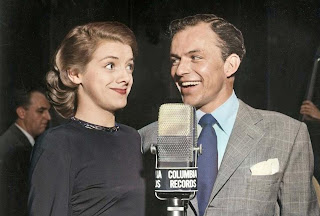
Rosemary Clooney and Frank Sinatra
Next, Porter tried to replicate the success of "You're the Top" with another simile song, "Cherry Pies Ought to Be You," which Columbia assigned to Frank Sinatra and the up and coming Rosemary Clooney. It's a tad abstruse, what with Porter comparing the loved one to "asphodels" and "Ambrose Light," a light tower in the waters off New York. (At the latter mention, Frank interjects, "Hey, that's a good one!", but then he was from around those parts.) Porter exercises his penchant for mildly risqué lyrics at several points, causing Frank to caution, "Hey, watch it!" when Rosie makes vague reference to Errol Flynn's sexuality. A fun record, even though the singers go out of tune at the end. (The 78 was also mastered considerably flat, which I fixed.)

Dinah Shore - nobody was chasing her
Another song from the show that was heard occasionally was "Nobody's Chasing Me," which was Juno's closing lament in the show but here improbably assigned to RCA Victor's Dinah Shore. It's another example of Porter revisiting an earlier song idea - instead of an entreaty for love, as in "Let's Do It," it's a lament for its absence: "The bull is chasing the heifer, but nobody's chasing me." Henri René accompanies Dinah with slide whistles and accordions.

Songs Cut from the Show

Now on to the songs cut from the show. First is "You Don't Remind Me," dropped during the tryouts but even so recorded by several notables, including Frank Sinatra. It's another list song, but this time a ballad, and Frank makes the most of it. Let me put in a word for arranger Axel Stordahl. This is more for his body of work, because here he and Sinatra seem of two minds about the tempo. It's a beautiful song, nonetheless.

As noted above the best known tune written for the show was "From This Moment On," recorded by several artists in 1950-1, but not achieving great popularity until it was used in the 1953 film version of Kiss Me Kate. It happens to be one of my favorites, so I've included three varied recordings from the later time period.
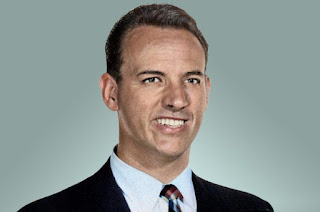
Dick Noel
First is a disc by the strong voiced Dick Noel, who never achieved great popularity as a record artist, but was hugely successful in the jingle field. It's a pleasure to hear his forthright singing, well suited to the material and ably backed by Decca mainstay Jack Pleis.

One oddity is that Noel has the same name as a well-known studio musician, trombonist Dick Noel, who appears on the next version of "From This Moment On," that by Les Brown's powerhouse band, with a superb chart by Skip Martin. This is exciting, but not more so than the version from the film itself.

There's also a link between Les Brown's record and the film version, because Skip Martin was one of the credited orchestrators on the film, along with Conrad Salinger, with uncredited contributions by Robert Franklyn and Wally Heglin. Any or all of them could have handled "From This Moment On." It is a wonderful chart, performed by the M-G-M Orchestra conducted by André Previn.
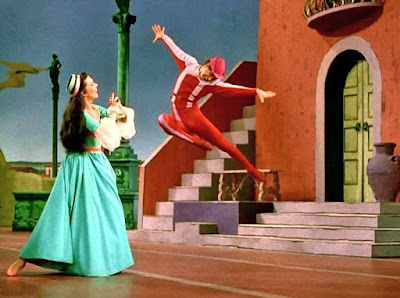
'From This Moment On'
On screen, the music's impact is heightened by the colorful set design and dancing. The film's choreographer was Hermes Pan, but at least some of this dance has more than a whiff of Bob Fosse about it, particularly his section with Carol Haney. Vocally, he is credited on the record label along with Tommy Rall, Ann Miller and Bobby Van. The strongest singing voice you hear is Rall's.

The download includes the audio version from the M-G-M commercial issue, along with the longer version directly from the film soundtrack. I prefer the edit because it seems better integrated and doesn't reflect the dancer's footfalls. The soundtrack is in stereo, though. (You can watch the dance on YouTube, of course.)

The Song "Out of This World"

Finally, let's discuss the song "Out of This World," which is unrelated to Porter's musical and predates it. It comes from a 1945 Eddie Bracken film of the same name, with a wonderful title song by Harold Arlen and Johnny Mercer. Bracken plays a Bing-style crooner; his singing voice is, appropriately enough, dubbed by the man himself.

Sheet music from the film, George Paxton ad and vocalist Alan Dale
Crosby's Decca disc is desultory, so I turned instead to a relatively obscure recording, that of George Paxton, who had a strong band in the brassy mid-40s manner also adopted by Stan Kenton and Boyd Raeburn. Singing is the young Alan Dale, a very good romantic baritone. The Paxton-Dale record represents the Arlen-Mercer song very well.

These records are remastered primarily from Internet Archive needle drops. The sound is generally excellent ambient stereo.

29 July 2023

Cole Porter's 'Let's Face It!' - The Early Recordings


That's the young Danny Kaye riding in a Jeep on the Let's Face It! program cover above. He was the motive force behind Cole Porter's 1941 hit show following his breakout performance in Kurt Weill's Lady in the Dark, which had its opening early that same year. Just nine months later Kaye's name appeared above the title on the Imperial Theater marquee for Let's Face It!

The exclamation point in the title was apparently optional

The book by Herbert and Dorothy Fields was basically a sitcom - three suspicious wives decide to bribe some soldiers at a nearby base to take up with them in a jealousy ploy. The soldiers' girlfriends find out. Complications (and Kaye specialties) ensue.

The cast was a starry one, at least in retrospect. The three wives were Eve Arden, Vivian Vance and Edith Meiser, two of whom became famous. (So did Arden's understudy, Carol Channing.) The soldiers' sweethearts were Nanette Fabray, Sunny O'Dea and Mary Jane Walsh, one of whom became famous (Fabray), and one of whom recorded several songs from the show (Walsh).

Edith Meiser, Vivian Vance and Eve Arden show Danny Kaye the big bucks 
As usual with the musicals of the time, there was no original cast album; however, Kaye did record three of its songs for Columbia, and Walsh did four for the Liberty Music Shop label. As far as I can tell, those four were exactly half of Walsh's total recorded output. Earlier, Columbia had engaged her for four songs from her other notable Broadway appearance, in Rodgers and Hart's Too Many Girls. That 1939 show is coming up in this series.

As was the practice back then, an original cast member's presence didn't mean they recorded the numbers they sang on stage. So for the first item in this collection, "Farming," we have recorded versions by Kaye, who did perform it on stage, and Walsh, who did not. The song was a sendup of the then-current fashion of the elite taking up the rural life, a topic that also inspired movies, an S.J. Perelman book, and latterly television's Green Acres.

Next in running order (at least here; this post covers only a minority of the show's score) is possibly the best known song in the show, "Ev'rything I Love." As the title might suggest, it's a tender song, and a good one. It was certainly the most popular with the record companies: Victor alone had four recordings of it - by Glenn Miller, Sammy Kaye, Dinah Shore and Tito Guizar. It has quite a lovely melody, and Liberty Music Shop broke the budget to bring in a chorus to support Walsh in her fine recording. In the show, Kaye and Walsh sang it in duet.

Mary Jane Walsh
Leading the orchestra in Walsh's recordings was Max Meth, who also conducted the theater performances. I don't know whether the stage orchestrations are used here, but I doubt it. In any case, the show's orchestrators were Hans Spialek, Don Walker and Ted Royal, a formidable trio.

I've added a second recording of "Ev'rything I Love" to the playlist because it includes the verse, which I hadn't heard before, and because the disc is by Buddy Clark, who makes frequent appearances around here.

Cole Porter
A contrast with the previous number is "Ace in the Hole," one of Porter's best and a song long beloved by cabaret performers. On stage, Mary Jane Walsh was joined by the other two girlfriends of the soldiers, but she does a solo on record. Her flinty performance of this cynical anthem is a great contrast to the romantic "Ev'rything I Love," as are Porter's clever lyrics:

     Maybe, as often it goes
     Your Abie may tire of his rose.
     So baby, this rule I propose:
     Always have an ace in the hole!

The next song, "You Irritate Me So," is the antithesis of Porter's famous "You're the Top." I've assigned it to the appropriately acerbic Nancy Walker, who recorded it in 1959. On the stage it was a duet between Nanette Fabray and Jack Williams. I imagine the song worked better with two singers flinging Porter's lyrics at one another, but Walker is pretty good, if you can handle Sid Bass' Space Age pop arrangement. When Let's Face It! opened, Walker was appearing a few blocks uptown in Best Foot Forward, her first Broadway role.

Kaye and Arden up the creek with a paddle
In the show, Danny Kaye and Eve Arden sang "Let's Not Talk About Love," but only Danny appears on the Columbia record. (Kaye and Arden had a long affair, according to Kaye biographer David Koenig, but I'm not sure when that transpired.) The song is a specialty both for Porter's clever, topical lyrics, and for Kaye, who indulges his trick of singing complex words as fast as possible. The song was an attempt to replicate his show-stopper "Tchaikowsky" in Lady in the Dark. It works fairly well.

At the time, r(h)umbas set the fashion in dance rhythms, so Porter produced one of his own - "A Little Rumba Numba." Marguerite Benton, who appeared in several Broadway musicals of the time, was the primary vocalist on stage, but did not record the piece. So I've included the contemporary disc by cabaret's Hildegarde, who handles this attractive and unfamiliar song very well. Harry Sosnik's band makes a brave attempt at the rhumba rhythms.


The final Mary Jane Walsh song is "I Hate You, Darling," which presents a typical Porter conceit - "I hate you, darling, and yet I love you so." In the show, she was joined by Kaye, Vivian Vance and James Todd, but she is solo here.

"Melody in 4F" still from Up in Arms
Perhaps surprisingly, the show included two Kaye specialty songs not written by Cole Porter. "A Fairy Tale" and "Melody in 4F" were contributed by Danny's wife Sylvia Fine working with Max Liebman. 

"Melody in 4F" is largely an auctioneer's rapid-fire spiel punctuated by words sketching the travails of the draftee - "Oh the mailman!", "Hiya, doc!" and so on, ending in "1A!" (that is, draft eligible). Much of the effect depended on Kaye's verbal acrobatics and his visual punctuations, so you may want to watch the version he did for the 1944 film Up in Arms (available here). The download includes what was probably a radio aircheck that seems to have been captured shortly after Kaye left the show, to be replaced by José Ferrer, a much different personality to be sure. Danny took Sylvia's songs with him when he decamped. The show closed a month later.

The Pierre Hotel
To complete the set, we have two instrumental medleys from William Scotty and His Cotillion Room Orchestra. The Cotillion Room is presumably the swank venue in the Pierre Hotel on Central Park East. I haven't been able to find any information on Scotty. The actual Cotillion Room bandleader at that time was probably the well-known Emil Coleman. I don't think the name on the label was a pseudonym for Coleman; as far as I can tell, that maestro did not have a recording contract at the time. It may have been the pianist or another member of the ensemble. 

The recorded selections are "Ev'rything I Love," "You Irritate Me So," "I Hate You, Darling," "Ace in the Hole" and "Farming." The polished performances are in the overripe society-band style that the Liberty Music Shop favored. (This is the musical mode that was parodied by the Glenn Miller band in "You Say the Sweetest Things, Baby," recently featured here in the Orchestra Wives recordings.)

Let's Face It! was made into a film in 1943, sans the exclamation point and most of Porter's songs. Danny Kaye became Bob Hope and Mary Jane Walsh turned into Betty Hutton, but Eve Arden remained Eve Arden. From the songs above, only "Farming" and "Let's Not Talk About Love" were retained, along with "Milk, Milk, Milk" and the title song. I don't believe that Hope or Hutton recorded anything from the score; the recording ban was still in effect for most of the year - all of it for a few of the big labels. 

Some of these same recordings were reissued by the Smithsonian in 1979, but the transfers in my set are not from that LP. The Mary Jane Walsh numbers come from my collection and most of the rest from Internet Archive. The sound from the 78s is generally quite good. 

The Smithsonian LP included detailed notes on the Let's Face It! production by Richard C. Norton, which I've included in the download. The package also includes a substantially complete souvenir program, which dates from relatively late in the show's run, after Carol Goodner had replaced Eve Arden. Finally, there are three articles from the New York Times - a story on the opening, Brooks Atkinson's rave review, and a follow-up on the production's history. The latter reads as if it was ghost-written by producer Vinton Freedley's publicist.

Let's Face It! may not be one of Porter's best known scores, but the songs are splendid - characteristic of the composer, varied and worth remembering. The performances by the leads are all you could desire.

This post is the result of a request by old friend David Federman, who wanted to hear some records by Mary Jane Walsh. More to come, David.

Kaye toasts the ensemble

08 July 2019

Kurtz Conducts Rodgers and Porter Suites

Let's return to the 10-inch LP format and to conductor Efrem Kurtz for today's selection. This is the other album resulting from Kurtz's six-year tenure as the music director in Houston - suites from the mega-musicals South Pacific and Kiss Me, Kate.

Efrem Kurtz with members of the Houston Symphony
Cole Porter's Kiss Me, Kate had appeared on Broadway in late December 1948, with Richard Rodgers' South Pacific in April 1949. Kurtz and the Houston Symphony recorded the two suites from these tremendously popular scores on December 14, 1949, the day all the Kurtz-Houston records were made. Their coupling of Satie and Auric ballets appeared here in February of this year. The only other work taped that day was Fauré's brief Pavane. The latter work became, incongruously, a fill-up for the 78 set of the Rodgers and Porter suites, but was jettisoned for the LP release.

Robert Russell Bennett
Robert Russell Bennett, the orchestrator of both shows, assembled the suites contained on this LP. He called the Kiss Me, Kate suite a "Selection for Orchestra," but grandly titled the South Pacific potpourri a "Symphonic Scenario," whatever that might mean. Both are smoothly done, as you might expect from Bennett, and well handled by the Houston Symphony and by Kurtz, who could not have had much experience with this type of material.

Columbia had issued the original cast albums for both South Pacific and Kiss Me, Kate, and may have seen this 10-inch LP as an attractive alternative for those who didn't want or couldn't afford the full albums.

Columbia's sound is good. The album sports a characteristic cover by Alex Steinweiss.

A reader requested this LP a few months ago - I didn't have it then, but, as sometimes happens, I stumbled across a nice copy not long ago.

The Houston Symphony Orchestra and Chorus, 1949

19 October 2009

Cole Porter's Aladdin Demo


Back in television's early days in the US, the networks scheduled prestige programming on an occasional basis, including new musicals from the leading lights of the theatre. The CBS network presented Rodgers and Hammerstein's Cinderella in 1957 and Cole Porter's Aladdin in 1958.

While neither were considered the best that the composers had to offer, Cinderella was better received than Aladdin, which was Porter's final score.

While the music for Aladdin is not well remembered, in truth it is not as bad as its reputation would suggest. This may be because the songs were presented on the program by character actors (Cyril Ritchard, Dennis King) and weak singers (Sal Mineo, Anna Maria Alberghetti). The music itself is far better served by this single-sided promotional LP that CBS issued some time before the telecast, using unidentified but quite good vocalists and elaborate choral and orchestral arrangements, presumably the work of Robert Russell Bennett.

It's not at all clear how this LP was to be used for promotion. The show was scheduled for the DuPont Show of the Month, but the LP doesn't mention the sponsor at all, so it wasn't DuPont's doing. Because the show was part of an ongoing series, the LP probably wasn't used to drum up a sponsor. It could well have been instigated by Porter himself, in the twilight of his career, and the LP is introduced by the great man himself.

If you have the CD reissue of the Aladdin LP issued by Columbia after the television show, you will have heard these four promotional recordings, but not Porter's brief introduction. So what's new here is Porter's voice and the record covers. Perhaps a meagre offering, but a fascinating one - and one of the personal favorites from my collection.

For our non-US friends, the giant orb below is the CBS logo, as seen on the LP's back cover.

REMASTERED VERSION - JANUARY 2015