Showing posts with label Spanish cinema. Show all posts

Sunday, December 16, 2018

Attack of the Robots, aka Cartes Sur Table (France/Spain, 1966)


The Lemmy Caution movies are unique among Eurospy series by virtue of one of their entries being directed by one of the leading lights of the French New Wave—that entry being Alphaville, a deadpan masterpiece of dystopian surrealism helmed by Jean-Luc Godard. This makes Cartes Sur Table, aka Cards on the Table (American title Attack of the Robots) all the more interesting, because it was the next film to follow Alphaville in the series and, as such, gives us some idea of what the Caution films were like minus the symbiotic burden of the Godarian style.


As a first point of contrast, Cartes Sur Table was directed by Jesus Franco, a director whose fulsome self-indulgence was as far removed from Godard’s stark modernism as possible. Though it must be said that this was Franco circa 1966, when he had not yet succumbed to his impulses and was still capable of working within studio restrictions to craft an entertaining little B picture that purrs along like a well tooled engine. That is unquestionably what Cartes Sur Table is. Which is not to say that Franco didn’t work a couple of languidly erotic night club numbers into the picture to mark it as distinctly his own.


Hardboiled FBI man Lemmy Caution was created by British author Peter Cheyney and was the subject of ten novels written by him between 1936 and 1945. The character made his film debut in a Dutch compilation film called Brelan D’as in 1952, but would not receive the feature treatment until 1953’s La Môme Vert de Gris, produced by French producer Bernard Boderie, which was followed by two more Caution films within the same year. For his lead, Boderie chose American Eddie Constantine, a singer turned actor who had studied under Edith Piaf.

With his pocked, craggy features, Constantine was far from a glamor-puss. In fact, Godard had played on the actor’s rough looks in Alphaville by refusing to let him use makeup in some scenes. Nonetheless, Constantine was possessed of a rough-edged charisma and good-natured affability that made him perfect for the role of Caution, who, in the films, was portrayed as a wisecracking rogue who prevails as the result of a kind of bemused indomitability.


Cartes Sur Table begins with a series of political assassinations carried out by assailants who are, to a one, bespectacled, bronze-skinned, and capable only of saying the last thing said to them. It is later determined that these robotic killers all share the rare blood type Rhesus 0, a blood type also shared by the subjects of a number of recent missing person cases. The higher ups at Interpol decide to bring retired agent Lemmy Caution (“Al Anderson” in the English dub), who also has the same blood type, back into the fold to investigate and also serve as unwitting bait for the mysterious organization behind the killings.

When we first meet Caution, he is gleefully cleaning up the table at an Asian gambling den, where he first meets the character played by Franco regular Mara Lasso, the requisite beautiful woman of mysterious origins who serves as his companion throughout the rest of the film. After leaving the club, he is accosted by a gang of men in the employ of Asian crimelord Lee Wee (Vincente Roca) and taken back to their boss’ hideout. We will later learn that Lee Wee is also interested in using Caution as bait to entrap the rival gang, but for now Caution just beats the hell out of his men and escapes.


Once dispatched to Spain under the guise of globe-hopping businessman Frank Froebe (likely a nod to Goldfinger’s Gert Froebe), Caution learns that the villains behind the murders are relying on a pair of dissolute aristocrats with a knack for mad science to create their zombie-like assassins. These are Sir Percy, portrayed by reliable Eurospy villain Fernando Rey, and Lady Cecilia Addington Courtney, played by French actress Françoise Brion. It is in the scene where these two appear that Franco’s B Movie instincts really come to the fore, complete with flashing control panels, gothic atmosphere, and screaming captives being lowered into a giant test tube.

What surprised me about Cartes Sur Table is that, on top of being satisfyingly action packed, with a number of memorable fist fights and car chases, it is also quite funny at times. One of the most successful comedic sequences takes place when a quartet of robot assassins breaks into Caution’s hotel room, only to find a gang of Lee Wee’s men, who summarily kill all of them, then tidy the place up before an irate Caution can return with the hotel manager to complain about the mess.


This kind of deft genre alchemy combines with Eddie Constantine’s rakish charm and Franco’s pacey direction to make Cartes Sur Table a disarmingly captivating watch. Although Alphaville is one of my favorite films, I can confidently say that, without it, Cartes would still be a worthwhile investment of time for any fan of the Eurospy genre.

Thursday, July 27, 2017

Der Fluch Des Schwarzen Ruben, aka Thirteen Days To Die (Germany/France/Spain, 1965)


To my knowledge, Thirteen Days to Die is the only cinematic attempt to modernize Rolf Torring, the adventuring hero of a series of German pulp novels that rose to popularity during the years leading up to World War II. It seems the idea was to present Torring as a sort of James Bond figure, and that’s not an improbable fit. Both Bond and Torring put a dashing face on the privileges of empire, each treating the exotic lands of the developing world as mere theaters for their ever more destructive antics (and, in Bond’s case, procuring grounds for his harem.) Of course, each man was the face of a different empire in a different time, which might account for why one of them had a lot more holding power than the other.

One need only look at the cover illustration of one of the Torring novels from the 30s to see why the character has aged badly: In each, he is presented as the great white hunter, charged with taming a savage land with the assistance of his loyal companion, a muscle bound and perpetually shirtless black brute who is often depicted wrestling an alligator or tossing opponents overhead like ragdolls. This is Pongo (you heard me) and he looks as if he could have been one of the “noble savages” so notoriously fetishized by Leni Riefenstahl in her later years. He is also likely to be one of the reasons that the Rolf Torring novels are less well remembered (and have less cross-cultural appeal) today than other, less potentially controversial German pulp series, like, say, Perry Rodan or Jerry Cotton.


Fans who are well versed in the Eurospy genre will find much that is familiar within Thirteen Days to Die, and for good reason. The film’s director, Manfred R. Kohler, had his hand in a number of Eurospy efforts, including the Kommissar X entry Three Golden Serpents, which he wrote. 13 Days bears a lot of similarities to the Kommissar X films, from its snappy, lighthearted tone to its shrewd use of an exotic Asian location (Thailand, in this case.) Like them, it plays out as a series of well-staged and mildly farcical fight scenes punctuated by well-shot tourist footage of local landmarks and customs.

What Thirteen Days to Die lacks that the Kommissar X movies had is a magnetic central presence of the caliber of Tony Kendall, or even Brad Harris. As Torring, who is rechristened “Ralph Tracy” for the English dub, Bavarian actor Thomas Alder doesn’t leave much of a footprint. This may be because he delegates so much of the action to one of his two associates, who, thankfully, are a lot more entertaining to watch. One of these if a hulking Swede by the name of Warren (“Hans” in the original, “Hank” in the English dub) who is played by Euro-genre stalwart Peter Carsten (Dark of the Sun, And God Said to Cain) with a lot of good natured bravado.


And then, of course, there is Pongo, who is played by French body builder Serge Nubret. In this incarnation, Pongo is at least allowed to keep his shirt on for the most part—that is, until the final act, for the entirety of which Nubret wears nothing more than an abbreviated pair of cut-offs (which, to be fair, he looks amazing in.) While outshining his co-stars in terms of charisma, Nubret’s character is treated like a houseboy by his companions—making their drinks, fetching their mail—far too often for his performance to be enjoyed without a fair amount of cringing. That’s a shame, really, because Pongo is clearly the muscle of the group, the heavy lifter, and the energy and physical mastery Nubret brings to his action scenes make them the highlights of the picture.

The film’s action begins when Torring and his team arrive in Bangkok to investigate the theft of a necklace belonging to the Thai royal family. The perpetrator of the theft is a gang led by Perkins, whose portrayal by Euro villain extraordinaire Horst Frank is a master class in effete menace. Perkins answers to a mysterious number one who is none to pleased when it is found that the necklace is missing a section, the absence of which makes it impossible to decipher the code contained within its pattern of jewels. Thus begins a campaign of extortion against Thai Prince Gulah in an effort to get him to divulge the location of the missing piece.


Meanwhile, Torring and his crew are assisted by Barrington (Carlo Tamberlani, also seen in the Kommissar X films The Green Hounds/Death Trip and Kiss Kiss, Kill Kill), the director of the museum that the necklace was stolen from. Also lending a hand is his assistant, Chitra, who is played by Metta Rungrat. Rungrat is a Thai actress whose meager credits included a bit part in the ill-fated Jim Kelly vehicle Hot Potato. She also co-starred with Thai superstar Sombat Methanee in a Thai Krasue film called Krasue Sao. Her part here is fairly substantial, as her character turns out to have more to do with the affair of the necklace than even she imagined at the outset.

Of course, this being a Eurospy film, Rolf, Hans and Pongo are assailed by myriad assassins from the moment they set foot in Thailand. To the filmmakers credit, each of these attempts in pretty nutso, one involving a little girl throwing a pot full of acid into Hans’ face and another a poison-coated butterfly. Pongo, of course, gets to wrestle and alligator, and Rolf, a tiger. Unfortunately for Perkins, none of this manages to prevent Team Torring from getting closer to finding the missing piece of the necklace—and with it the solution to the code that will lead them into the stunt and explosion filled climax.

Oh, and there’s also a monkey. He’s named Kango.


I would be lying if I didn’t admit that, despite my deep reservations about its racial attitudes, I enjoyed Thirteen Days to Die. It’s resemblance to a missing Kommissar X movie pretty much guarantees that. It’s got everything that makes any competently made Eurospy movie cozily diverting. The score, by German sexploitation veteran Gert Wilden, is a jazzy spy movie delight, complete with a chugging, Peter Gunn-style theme tune. And then there are familiar faces like Horst Frank and Carlo Tamberlani, whose very presence lulls you into a sense of security, false or otherwise. Nonetheless, it’s hard to enjoy any of these old spy movies without acknowledging the extent to which their heroes are simply defending the status quo, rather than working from any innate sense of justice. I guess in the 60s, people thought that was cool—until they didn’t anymore.

Monday, November 19, 2012

Man Chased by a UFO, aka Man of Ganimedes (Spain, 1976)


As movie titles go, Man Chased by a UFO is about as descriptive as they come. The film is the product of Spanish amateur filmmaker and UFO enthusiast Juan Carlos Olaria, who shot it in 16mm over the course of a few months in 1972, using a park in the scenic Garraf region of Barcelona for most of his locations. The film then remained largely unseen for several years, only finding distribution in 1976 once Olaria had spiced it up with some nudie and soft core footage. Why it is today known by the alternate title Man of Ganimedes I can’t say, but I mention it here because that’s the only way you’re going to find it on IMDB.

Man Chased by a UFO kicks off with a flying saucer heading toward Earth with its crew intent on abducting a human being. For reasons undisclosed, the hapless schmo they’ve set their sights on is Alberto (Richard Kolin), a middle-aged author of pulp fiction in the middle of one of those episodes of writers’ block that movies think suffice as character development when dealing with writers. And so the chase begins. Unfortunately for the aliens, Alberto is from the Bloody Pit of Horror School of writing, and is just as willing to bring Jack Johnson and Tom O’Leary to the party as a steno pad when confronted with extraterrestrial aggression. (“I gave them a good beating”, he later tells an interlocutor.)


Rather than dirtying their hands with the whole abducting business, the aliens delegate the task to a team of “mutants”. These are basically a bunch of guys in turtlenecks and slacks with what look like plastic shopping bags tied over their heads, and their first order of business is to undo the parking brake on Alberto’s car and roll it off a cliff. To further punk Alberto, they then take off with his car and set it adrift in space, so that when he returns to show the authorities what happened, there is no evidence to support his story. And this is central to Alberto’s dilemma: despite his distinguished bearing and all around tweedy-ness, no one believes him when he tells them he was “assaulted by aliens” who want to abduct him. WHY WON’T THEY BELIEVE HIM?

On a positive note, Alberto does seem to find a sympathetic ear in police detective Duran, who’s played by the director’s dad, Juan Olaria (Juan Jr., for his part, can be seen playing the pilot of the UFO). While not buying all of what Alberto’s selling, Duran suggests that he retreat to his summer cottage to wait things out, which Alberto does. Once there, he’s unexpectedly joined by his mistress, Carmen, whose open marriage with Alberto’s friend Ricardo seems to have Alberto as its primary beneficiary (just in case you forgot this was a European movie from the 70s). This sets the stage for a Night of the Living Dead style siege upon the cottage by the mutants, and finally those scenes of Alberto being chased around by a flying saucer that the movie’s title has lead us to expect -- or, dare I say, demand.


Man Chased by a UFO was Olaria’s first feature length film, following upon a series of 8mm shorts that he made throughout his youth. Because of this, it will likely surprise no one that it’s an amateur affair, as evidenced by its dopey special effects, unfathomable editing choices, numerous under-lit shots, and leaden dialogue. On this last count, Olaria displays one of the common weaknesses of novice screenwriters: never knowing when to stop writing words into people’s mouths. As a result, we get a lot of expositing about things that don’t need to be exposited. Until, that is, the final act, when the aliens finally divulge to Alberto their reasons for wanting to kidnap him. This involves something about the alien’s planet being a mirror image of Earth, as well as something about “anti-matter”, and ultimately ends up sounding like something that should be scrawled in very tiny writing on a sandwich board.

In a recent interview with Fantastique magazine, Olaria reconciled himself to being referred to as the “Spanish Ed Wood” by noting with approval that Wood often sacrificed quality for the sake of fun and entertainment. And in this I think he is spot on; while Man Chased by a UFO doesn’t provide much evidence that Olaria is capable of quality, it nonetheless continues a tradition of which he should be proud.

Tuesday, October 18, 2011

Night of the Skull (Spain, 1976)


[This review is part of the M.O.S.S. inaugural Round Table, Skeletons in the Closet.]

There are two unfortunate givens for those like myself who work the unforgiving cult cinema beat on the internet. One is that you will eventually have to review Zombie Lake. The other is that you will eventually have to review a film by Jess Franco. While the first of those trials I have happily put long behind me, the other still looms ominously on the horizon. You see, because Franco only wrote the screenplay for Zombie Lake -- and because acceptance of that fact requires that you also sign off on the idea that Zombie Lake had a screenplay at all -- you can’t count fulfillment of the first given as a twofer.

Of course, this also means that, as it is with Zombie Lake, an awful lot of people have written about Jess Franco films on the internet. And because the internet is known to conduct snark at a rate and volume twice that of praise, a loud plurality of that writing is pretty negative. This makes the prospect of addressing one of his films all the more a subject of dread for those of us yet to cross the threshold. Yet, for me, I sensed the time had come when my contribution to the inaugural M.O.S.S. Roundtable -- an examination of the lofty cinematic tradition of grown adults running around in skull masks and skeleton suits -- came due. With my usual investigatory rigor, I ran searches of the terms “skull” and “skeleton” on Netflix and voila!: Franco’s 1976 thriller Night of the Skull (aka La Noche de los Asesinos) leapt out at me like… well, like a scary Halloween skeleton, of the type, perhaps, that you might buy at Walgreens.

Of course, it has to be said that Franco has his share of fans along with his detractors. And for them I think part of his appeal is the same juvenile impulsiveness that makes his films so hit or miss. As a director, Franco follows his muse wherever it takes him, no matter how well that serves the goal of making a film that is coherent or even watchable. And when the inspiration isn’t there, he has no problem with handling things in the most perfunctory and slapdash manner possible. (Also, as Keith has pointed out, Franco is a notorious lone wolf, which removes from the equation any equal collaborators who might rein in his more imprudent tendencies.) These indications of a personal artistic vision make it difficult to dismiss Franco as a hack, even if the term “auteur” rolls no more easily off the tongue where he’s concerned. And it can’t be denied that his approach often bears some interesting results, albeit ones that frequently have to be sifted from a surrounding preponderance of narrative flotsam.


As for Night of the Skull, it’s a mystery, which on first consideration would not seem like the best fit for Franco’s elliptical style. But when one considers the flaky internal logic and dreamlike atmosphere of the typical Italian giallo, there’s room for optimism that things might work out okay for those of us obligated to watch it. However, Night of the Skull, while boasting some gialli-like elements, is in fact more of a gothic mystery in the “old dark house” vein, which renders thing a little dicier. For starters, the Victorian setting largely prohibits those jazzy flourishes that are so often the saving grace of a Franco film, such as his signature psychedelic nightclub sequences.

What Night of the Skull does have, though -- and which makes it ideal for my purposes –- is a guy running around in a skull mask who is both heavily featured and central to the film’s plot. This gentleman is our killer, who is offing his victims in accordance with a passage, detailing the punitive nature of the four elements, which is found in a made up tome called “The Book of the Apocalypse”. These thematic murders require quite a stretch in some cases, one that Franco doesn’t really seem bothered to make. For instance, one victim, tied up on a rock by the seaside, writhes around for a bit before expiring unconvincingly. Later she is said to have been “killed by the force of the wind”, even though it didn’t appear to be all that windy at the time and, barring being strapped to a jet engine or the wind bearing large chunks of architecture as in a tornado, that can’t actually happen.

All of the aforementioned murders are filmed in dim lighting and are virtually bloodless, which is one of Night of the Skull's primary disappointments. On top of that, the sex and nudity is near non-existent, even though the ever-willing Lina Romay, Franco’s partner and muse, is on hand in a central role. Instead, the director languorously rolls out a “greedy heirs get theirs” drama that is, despite some unexpected turns, pretty pedestrian. We start out with the murder of Marian family patriarch Lord Archibald (Angel Menendez), which is followed by the inevitable gathering of the deceased’s assorted scheming and ungrateful siblings, spouses and offspring for the reading of the will.
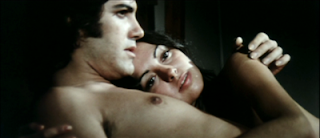
Among this group we have most of the usual suspects, including a couple of twitchy servants (Luis Barboo and Yelena Samarina), a dissolute black sheep cousin (William Berger) and the alcoholic second wife (Maribel Hidalgo) who is hated by all and sundry. In a more unusual turn, there are also among the bereaved a his-and-hers set of adult illegitimate children (Lina Romay and Antonio Mayans), who, previously unknown to each other, begin an affair that is only by a later plot twist (spoiler!) revealed to be not incestuous, even though that comes too late to prevent the “ick” factor from setting in. Once the blood begins to tastefully and moderately spill, we also have the arrival on the scene of Major Oliver Brooks (Alberto Dalbes), a renowned Scotland Yard inspector whose jurisdictional authority is a bit suspect given that the film is putatively set in Louisiana -- and more obviously shot in Spain.


Night of the Skull’s credits claim as its inspiration John Willard’s The Cat and the Canary, while in turn mistakenly crediting that famous stage play to Edgar Allan Poe (other sources suggest that Franco was inspired by a book by Edgar Wallace, which sounds a little closer to the mark). Whatever its patrimony, the story manages to be both complex and internally consistent -- with a resolution that, if not too surprising, at least makes sense – and if that’s all you ask from your mysteries, you’ll be happy. As for its direction, looking on the plus side, Franco does a professional job of laying out all of the various plot mechanics in a coherent and linear fashion. On the negative side, a coherent and linear Jess Franco, in my experience, is a Jess Franco who’s not all that invested, and hence the film lacks the unpredictable digressions and directorial quirks that might have otherwise made it less sleepy viewing.
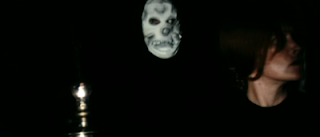
I’ll admit that it’s a little disappointing that, having resigned myself to riding the wave of Franco’s insanity, I came upon him in such a restrained mood with this film. Yet it’s just such unpredictable dips and lapses, set alongside the manic peaks and detours, that have earned him his reputation as the frustrating and maddening director that he is. Consistency is one thing, but it perhaps speaks more highly of Franco that, whenever one dips blindly into his massive 180 film filmography, one truly doesn’t know what they’re going to come up with. In the case of Night of the Skull, what one comes up with is a fairly boring and conventional film, but the fact that that in itself is somehow shocking speaks volumes.

Tuesday, June 14, 2011

Italian Superhero Roll Call: Supersonic Man (Spain/Italy, 1980)


Up until now, the subjects of Italian Superhero Roll Call have been exclusively products of the 1960s. That’s because, with the exception of the mysteriously unkillable Three Fantastic Supermen franchise, the boomlet of Euro superhero films seen in that decade petered out well before the advent of the 1970s. This would change briefly in 1980, when the worldwide success of Richard Donner’s Superman: The Movie would inspire a mini resurgence of European costumed hero films –- a resurgence that would consist pretty much entirely of Alberto De Martino’s soberingly incompetent The Pumaman and the film that I am reviewing here, Spanish director Juan Piquer Simon’s Supersonic Man.

Plot-wise, Supersonic Man doesn’t waste any energy on originality. A super-powered alien called Supersonic is sent by his superiors to Earth to intervene in Man’s war-like, nuclear aspirant ways. Once there, he assumes human guise as the luxuriantly mustached private detective Paul (Supermen Against the Orient star Antonio Cantafora). Paul lacks Supersonic’s super abilities, and is, in fact, extremely susceptible to head trauma, which makes it all the more baffling that he so often insists upon taking on the bad guys on his own without assuming his infinitely more powerful alter ego. This never works out for him, and, as a result, he ends up spending a lot of time unconscious in the trunks of henchmen’s cars.

On the other hand, in addition to super strength and being able to fly, Supersonic counts among his super powers the ability to make objects both large and small dematerialize at will. At the same time, he is also equipped with a keen awareness of the need to pad Supersonic Man out to feature length, and so uses this particular power very sparingly. Benefitting from this conservative application of super resources is our super villain, Dr. Gulik, who is played by Cameron Mitchell. Handily filling out the remaining blanks in the “Superhero Movies for Dummies” Mad Lib, Gulik has kidnapped a prominent (scientist), with the intention of using his knowledge to build a powerful (death ray), with which he hopes to (rule) the (world). Of course, that scientist also has a (beautiful daughter) who enlists our hero’s aid, forming a romantic attachment with his earthbound alter ego, while at the same time harboring something of a (lady boner) for Supersonic himself.

 Not even Hall & Oates are safe from the wrath of the evil Dr. Gulik!

Given its steadfastly generic narrative, the only thing we can count on from Supersonic Man to provide any kind of entertainment value is its cheesiness, and thankfully there is that in abundance. Not only do we have laughable dialog augmented by overwrought English dubbing (“Liar! You Lie! You Lie!!”), but also a blissful abundance of remedial special effects in which everything in the toy box is subjected to the torments of lighter fluid and homemade fireworks. And that’s all not to mention the much talked about scene in which Supersonic mightily raises above his head a steamroller that has obviously been substituted for by a two dimensional balsa wood cut-out.


Unfortunately, some of the bad aspects of Supersonic Man have the unexpected quality of being actually unpleasant. Chief among these is the musical score by Gino Peguri, Carlos Attias and Juan Luis Izaguiree, which sounds like a vaguely melancholy reinterpretation of John Williams’ Superman theme played using the factory settings on a dollar store Casio knock-off. It’s hard to conceive of something being at once so overpowering and underwhelming, but this music could indeed make even the experience of someone repeatedly punching you in the face boring.

Also consigned to the negative column is the film’s aforementioned tendency to pad. For example, the captured scientist Professor Morgan’s principled bickering with Dr. Gulik, which would be fine for one scene, is instead turned into something of a motif. The man seems so inexhaustible in his ability to righteously hector a guy that it’s a wonder the villain doesn’t muzzle him, if not outright put him out of our misery. And then there is the near omnipresence of the film’s comic relief drunk, who is hauled out to do a drunken double-take every time something putatively out of the ordinary occurs.


Still, it can’t be said that Supersonic Man doesn’t deliver the exact kind of good natured stupidity that one hopes for in a movie of this type. Cameron Mitchell’s voracious scenery chewing, a killer robot that looks like a giant wind-up toy, the goofy shots of Supersonic flying over the New York skyline, and other such elements should be enough to make the kind of person who’s drawn to this type of film in the first place forgive its less charming flaws. The film’s singularity also serves to imbue it with a bit of mitigating underdog appeal; like most European screen superheroes –- excepting Superargo and, again, the Fantastic Supermen -- Supersonic never returned for a second adventure. I doubt it was only the unimaginative mad scientists of the world who were untroubled by that fact.

 Mama mia!