skip to main |
skip to sidebar
DISCOVERY - BODIES, BRAINS AND COMPUTERS (320kbs-m4a/61mb/26mins)
BBC World Service broadcast: 17th July 2023
We've been building computers to think like us for years, but our ability to replicate human senses has been impossible. Until now.
Evolutionary biologist and broadcaster Professor Ben Garrod, is off to meet some of the sensory innovators and technological pioneers who are developing human like-sensing technology. From skin patches that can read our sugar levels, to brain implants that could use our thoughts to control computers. This is the technology that could blur the boundary between body, mind, and computer chip.
We meet Jules Howard, a zoologist who uses VR to help us explore the anatomical worlds inside animals. Jules shows us the inner-workings of a ducks vagina. We meet Anagram, who's augmented reality experiences can visualise the inner-worlds of those experiencing schizophrenia and ADHD. We play with the health monitors and wearable tech that claim they could make us fitter, happier, and more productive humans. And meet Dr David Putrino, a clinician with Mount Sinai in New York, who's conducting some of the first medically-approved surgery for brain implants.
Presenter: Professor Ben Garrod
Producer: Robbie Wojciechowski
Production co-ordinator: Jonathan Harris
(Image: Artificial intelligence robot and binary. Credit: Yuichiro Chino/Getty Images)
DISCOVERY - REMOTE TOUCH (320kbs-m4a/61mb/26mins)
BBC World Service broadcast: 10th July 2023
We've been building computers to think like us for years, but our ability to replicate human senses has been impossible. Until now. This technological revolution is starting to profoundly change not only how we interact with the world around us, but is allowing us to see, hear, smell, taste and even touch things we never imagined possible before.
An artificial intelligence revolution is super-charging sensing technology, promising us eyes with laser precision, ears that can distinguish every sound in a mile's radius and noses than can sniff out the early signs of forest fires before the first flame forms.
Evolutionary biologist and broadcaster Professor Ben Garrod is off to meet some of these sensory innovators and technological pioneers - the programmers, robotics engineers and neuroscientists, who are turning our world upside down and inside out.
In episode four - we'll explore touch and what role does it plays for our nearest living relatives. Ben tries to give his mum a hug from 5,000 miles away. We discover what brain scans show when Ben given both painful and pleasurable touch. We explore what role the body could play in our use of computers in the future. We hear about remotely-operated sex toys. And learn about how all this might shift our understandings of intimate relationships in the future.
Could these new technologies and natural evolutions be redefining what it is to touch? Ben takes us through the amazing adaptations, and technological developments that could help touch become digitised.
Presenter: Prof Ben Garrod
Producer: Robbie Wojciechowski
Production Co-ordinator: Jonathan Harris
(Photo: Hands touching fingers. Credit: Kelvin Murray/Getty Images)
DISCOVERY - SMELLY PEOPLE (320kbs-m4a/61mb/26mins)
BBC World Service broadcast: 3rd July 2023
We've been building computers to think like us for years, but our ability to replicate human senses has been impossible. Until now. This technological revolution is starting to profoundly change not only how we interact with the world around us, but is allowing us to see, hear, smell, taste and even touch things we never imagined possible before.
An artificial intelligence revolution is super-charging sensing technology, promising us eyes with laser precision, ears that can distinguish every sound in a mile's radius and noses than can sniff out the early signs of forest fires before the first flame forms.
Evolutionary biologist and broadcaster Professor Ben Garrod, is off to meet some of these sensory innovators and technological pioneers. The archaeologists, ecologists and medics, who are turning our world upside down and inside out.
Could these new technologies and natural evolutions be redefining what it is to smell? Ben takes us through the amazing adaptations, and technological developments that could help broaden how we think of our noses.
Presenter: Professor Ben Garrod
Producer: Robbie Wojciechowski
Production co-ordinator: Jonathan Harris
(Photo: Close up of human nose smelling an animated smell. Credit | Getty Images)
DISCOVERY - SOUND SOLUTIONS (320kbs-m4a/61mb/27mins)
BBC World Service broadcast: 26th June 2023
We've been building computers to think like us for years, but our ability to replicate human senses has been impossible. Until now. This technological revolution is starting to profoundly change not only how we interact with the world around us, but is allowing us to see, hear, smell, taste and even touch things we never imagined possible before.
An artificial intelligence revolution is super-charging sensing technology, promising us eyes with laser precision, ears that can distinguish every sound in a mile's radius and noses that can sniff out the early signs of forest fires before the first flame forms.
Evolutionary biologist and broadcaster Professor Ben Garrod is off to meet some of these sensory innovators and technological pioneers; The archaeologists, ecologists and medics, who are turning our world upside down and inside out.
In episode two, Ben finds sound solutions to tricky problems. We’ll hear about the ear which works up to depths of 500m below the ocean. In this light-deprived oceanic environment, we’ll find out how sound has become the most important sense. We’ll learn how noise pollution has inspired a number of revolutionary scientists to create sound-based solutions to better animal conservation. Along the way, we’ll meet engineers and computer programmers who’ve been able to find animals we thought previously extinct, and learn how one colour blind ornithologist mapped the entirety of a Caribbean archipelago so he could help protect his favourite species from storms and freak climate events.
Could these new technologies and natural evolutions be redefining what it is to hear? Ben takes us through the amazing adaptations and technological developments that could help stretch our hearing further than ever before.
Produced by Robbie Wojciechowski
Presented by Professor Ben Garrod
Production Coordinator: Jonathan Harris
(Photo: Field mouse with large ears. Credit: Zoological Society of London/PA Wire)
DISCOVERY - SEEING MORE (320kbs-m4a/61mb/26mins)
BBC World Service broadcast: 19th June 2023
We've been building computers to think like us for years, but our ability to replicate human senses has been impossible. Until now. This technological revolution is starting to profoundly change not only how we interact with the world around us, but is allowing us to see, hear, smell, taste and even touch things we never imagined possible before.
An Artificial Intelligence revolution is super-charging sensing technology, promising us eyes with laser precision, ears that can distinguish every sound in a mile radius and noses than can sniff out the early signs of forest fires before the first flame forms.
Evolutionary biologist and broadcaster Prof Ben Garrod, is off to meet some of these sensory innovators and technological pioneers. The archaeologists, ecologists and medics, who are turning our world upside down and inside out.
In episode one, Ben tries seeing further. The visible world to us is tiny, and we are able to detect just a fraction of the light spectrum that is out there. But new technology is pushing the boundary of what is visible. Ground penetrating LIDAR arrays are helping us to peel back the layers of planet Earth, and see the remains of ancient civilisations, previously invisible to us. The same technology is being used on the moons of Jupiter to provide 3D maps of the craters of faraway worlds. In the forests of west Africa, we meet the psychologists using infrared to monitor the stress levels of silverback gorillas being returned to the wild. And in a lab in central London, we meet the extraordinary animals that see hidden patterns in the natural world and perhaps even fields that are entirely invisible to us.
Could these new technologies be redefining what it is to see, hear, smell, and feel? Ben takes us through the amazing adaptations and development under the bonnet, and speculates where else these all seeing eyes may yet gaze.
Presenter: Professor Ben Garrod
Producer: Robbie Wojciechowski
Production co-ordinator: Jonathan Harris
(Image: Concept illustration of eye seen through clouds. Credit: Hans Neleman/Getty Images)
DISCOVERY - THE JAMES WEBB SPACE TELESCOPE (320kbs-m4a/78mb/34mins)
BBC World Service broadcast: 13th December 2021
The launch of the James Webb Space Telescope is only days away. Scheduled for lift off on 22 December, the largest and most complex space observatory ever built will be sent to an orbit beyond the moon.
James Webb is so huge that it has had to be folded up to fit in the rocket. There will be a tense two weeks over Christmas and the New Year as the space giant unfurls and unfolds. Its design and construction has taken about 30 years under the leadership of NASA's Goddard Space Flight Center.
With its huge 6.5 metre-wide primary mirror, the giant observatory promises to extend our view across the cosmos to the first stars to shine in the early universe. That's a vista of Cosmic Dawn: the first small clusters of stars to form and ignite out of what had been a universe of just dark clouds of primordial gas. If the James Webb succeeds in capturing the birth of starlight, we will be looking at celestial objects more than 13.5 billion light years away.
Closer to home, the telescope will also revolutionise our understanding of planets orbiting stars beyond the solar system.
BBC science correspondent Jonathan Amos reports from the European Space Agency's launch site in French Guyana from where James Webb will be sent into space. He talks to astronomers who will be using the telescope and NASA engineers who've built the telescope and tested it in the years leading to launch.
Producer: Andrew Luck-Baker
Picture: James Webb Space Telescope, Credit Northrup Grumman
NASA: James Webb Space Telescope
DARE TO REPAIR: FIXING THE FUTURE (320kbs-m4a/61mb/26mins)
BBC World Service broadcast: 26th July 2021
Mark Miodownik, explores the environmental consequences of the throwaway society we have become and reveals that recycling electronic waste comes second to repairing broken electronics. He asks what we can learn from repair cultures around the world, he looks at manufacturers who are designing in repair-ability, and discovers the resources available to encourage and train the next generation of repairers.
Producer: Fiona Roberts
(Photo: Teen boy solders wires to build robot. Credit: SDI Productions/Getty Images)
DARE TO REPAIR: THE FIGHT FOR THE RIGHT TO REPAIR (320kbs-m4a/63mb/26mins)
BBC World Service broadcast: 19th July 2021
Many electronics manufacturers are making it harder for us, to fix our broken kit. There are claims that programmed obsolescence is alive and well, with mobile phone batteries designed to wear out after just 400 charges. They claim it's for safety or security reasons, but it pushes constant replacement and upgrades. But people are starting to fight back. Mark Miodownik talks to the fixers and repairers who are heading up the Right to Repair movement which is forcing governments to act, and making sustainability and value for money part of the consumer equation.
Producer: Fiona Roberts
(Photo: A pile of discarded computer circuit board. Credit: Tara Moore/Getty Images)
DARE TO REPAIR: HOW WE BROKE THE FUTURE (320kbs-m4a/61mb/26mins)
BBC World Service broadcast: 12th July 2021
Materials engineer Professor Mark Miodownik looks back to the start of the electronics revolution to find out why our electronic gadgets and household goods are less durable and harder to repair now. As he attempts to fix his digital clock radio, he reveals that the drive for cheaper stuff and advances in design and manufacturing have left us with a culture of throwaway technology and mountains of electronic waste.
Producer: Fiona Roberts
(Photo: Apron housewife at kitchen dish washer. Credit: George Marks/Getty Images)
DISCOVERY - WHAT NEXT FOR THE MOON? (96kbs-m4a/18mb/27mins)
BBC World Service broadcast: 22nd July 2019
The Moon rush is back on. And this time it’s a global race. The USA has promised boots on the lunar surface by 2024. But China already has a rover exploring the farside. India is on the point of sending one too. Europe and Russia are cooperating to deliver more robots. And that’s not to mention the private companies also getting into the competition. Roland Pease looks at the prospects and challenges for all the participants.
(Image caption: Chinese lunar probe and rover lands on the far side of moon. Credit: CNSA via EPA)
DISCOVERY - EARTHRISE (96kbs-m4a/18mb/27mins)
BBC World Service broadcast: 24th December 2018
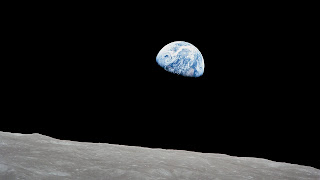
On Christmas Eve in 1968 Bill Anders was in orbit around the moon in Apollo 8 when he took one of the most iconic photos of the last fifty years: Earthrise. The image got to be seen everywhere, from a stamp issued in 1969 to commemorate the success of Apollo 8, to posters that are still available today. Gaia Vince explores the impact of this image on the environmental movement and our understanding of our place in the universe.
“Oh my God. Look at that picture over there. Here’s the earth coming up. Wow, isn’t that pretty.”
Bill Anders was on the fourth of the ten orbits of the moon on Apollo 8, along with James Lovell and Frank Borman. Bill had spotted the earth through one of the hatch windows and grabbed his camera to take a black and white photo. But just in time, he picked up another camera with a colour film loaded, and the rest is history. When they returned from space – the first mission to orbit the moon – Nasa used Bill Anders’ image of Earthrise in its publicity. Nasa had understood there was an added value of going into space: taking pictures of our home planet.
Stewart Brand was part of both the counterculture and the environmental movement; he’d hung out with Ken Kesey and his merry pranksters and put on happenings. He went on to found the Whole Earth Catalog, which brought together all kinds of alternative thinkers. Stewart Brand put the Earthrise photo on the front cover of one of the editions of the Whole Earth Catalog.
Gaia Vince talks to Stewart Brand, and to scientists and artists, about the continuing importance of seeing Earth from above.
Picture: Earthrise - The rising Earth is about five degrees above the lunar horizon in this telephoto view taken from the Apollo 8 spacecraft on December 24th 1968, Credit: Nasa
Presenter: Gaia Vince
Producer: Deborah Cohen

ALEKS IN WONDERLAND: THE HISTORY OF THE INTERNET - INTERNET OF THINGS (96kbs-m4a/19mb/26mins)
BBC World Service broadcast: 18th September 2017
Can we Control the Dark Side of the Internet?
The Internet is the world's most widely used communications tool. It’s a fast and efficient way of delivering information. However it is also quite dumb, neutral, treating equally all the data it passes around the world. From data that forms scientific research papers, the wealth of social media to keep us all connected with friends and relatives, entertainment or material we would rather not see- from political propaganda to horrific violence, the Internet makes no distinction.
Is it time to change that? And can we?
In this programme Aleks Krotoski looks at whether it’s possible to use technological fixes to regulate the internet or whether a more political approach is needed to governance of this vital but flawed communications medium.
Picture: Human Hand Using Application on Mobile Phone, Credit: Onfokus
ALEKS IN WONDERLAND: THE HISTORY OF THE INTERNET - DARK SIDE OF THE WORLD WIDE WEB (96kbs-m4a/19mb/26mins)
BBC World Service broadcast: 11th September 2017
With the coming of the World Wide Web in the 1990s internet access opened up to everybody, it was no longer the preserve of academics and computer hobbyists. Already prior to the Web, the burgeoning internet user groups and chat rooms had tested what was acceptable behaviour online, but access was still limited.
Aleks Krotoski asks whether the Web through enabling much wider use of the internet is the villain of the piece in facilitating not just entertainment and commerce, but all aspects of the darker side, from malicious computer hacking attacks, worms and viruses, to new channels for criminality, online extortion and identity theft.
(Photo: Internet sign. Credit: code6d)
ALEKS IN WONDERLAND: THE HISTORY OF THE INTERNET - THE ORIGIN OF THE INTERNET (96kbs-m4a/19mb/26mins)
BBC World Service broadcast: 4th September 2017
Just how did the Internet become the most powerful communications medium on the planet, and why does it seem to be an uncontrollable medium for good and bad? With no cross border regulation the internet can act as an incredible force for connecting people and supporting human rights and yet at the same time convey the most offensive material imaginable. It has become the most useful research tool on earth but also the most effective way of delivering threats to the security of governments, the health service and on a personal level our own identities.
In this series Aleks Krotoski unravels the complexity of the internet, meeting the people who really invented it, looking behind the myths and cultural constructs to explain what it actually is and how it came to exist outside of conventional regulation. We’ll ask whether the nature of the net itself really is cause for concern - and if so what can be done to reign in the negatives of the internet without restricting the positives?
In this first episode we go back to the days before the internet to look at the cultural and technological landscape from which it grew, and unravel some of the key moments - now lost in time and obscured by technology folklore, which mark when the internet lost its innocence.
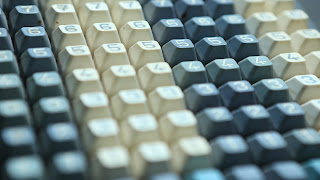
Picture: Mechanical computer keyboard blurred, credit: OSchaumann/Getty
DISCOVERY - THE FAR FUTURE (96kbs-m4a/19mb/26mins)
BBC World Service broadcast: 26th March 2018
How do we prepare for the distant future? Helen Keen meets the people who try to.
If our tech society continues then we can leave data for future generations in huge, mundane quantities, detailing our every tweet and Facebook 'like'. But how long could this information be stored? And if society as we know it ends, will our achievements vanish with it? How do we plan for and protect those who will be our distant descendants and yet may have hopes, fears, languages, beliefs, even religions that we simply cannot predict? What if anything can we, should we, pass on?
Picture: Filing cabinets, Credit: fotofrog
CAN ROBOTS BE TRULY INTELLIGENT? (96kbs-m4a/19mb/26mins)
BBC World Service broadcast: 6th June 2017
From Skynet and the Terminator franchise, through Wargames and Ava in Ex Machina, artificial intelligences pervade our cinematic experiences. But AIs are already in the real world, answering our questions on our phones and making diagnoses about our health. Adam Rutherford asks if we are ready for AI, when fiction becomes reality, and we create thinking machines.
ROBOTS - MORE HUMAN THAN HUMAN? (96kbs-m4a/19mb/26mins)
BBC World Service broadcast: 30th May 2017
Robots are becoming present in our lives, as companions, carers and as workers. Adam Rutherford explores our relationship with these machines. Have we made them to be merely more dextrous versions of us? Why do we want to make replicas of ourselves? Should we be worried that they could replace us at work? Is it a good idea that robots are becoming carers for the elderly?
Adam Rutherford meets some of the latest robots and their researchers and explores how the current reality has been influenced by fictional robots from films. He discusses the need for robots to be human like with Dr Ben Russell, curator of the current exhibition of robots at the Science Museum in London. In the Bristol Robotics Laboratory Adam meets Pepper, a robot that is being programmed to look after the elderly by Professor Praminda Caleb-Solly. He also interacts with Kaspar, a robot that Professor Kerstin Dautenhahn at the University of Hertfordshire has developed to help children with autism learn how to communicate better.
Cultural commentator Matthew Sweet considers the role of robots in films from Robbie in Forbidden Planet to the replicants in Blade Runner. Dr Kate Devlin of Goldsmiths, University of London, talks about sex robots, in the past and now. And Alan Winfield, Professor of Robot Ethics at the Bristol Robotics Laboratory, looks ahead to a future when robots may be taking jobs from us.
Image; BBC ©
HISTORY OF THE RISE OF THE ROBOTS (96kbs-m4a/18mb/26mins)
BBC World Service broadcast: 22nd May 2017
The idea of robots goes back to the Ancient Greeks. In myths Hephaestus, the god of fire, created robots to assist in his workshop. In the medieval period the wealthy showed off their automata. In France in the 15th century a Duke of Burgundy had his chateau filled with automata that played practical tricks on his guests, such as spraying water at them. By the 18th century craftsmen were making life like performing robots. In 1738 in Paris people queued to see the amazing flute playing automaton, designed and built by Jacques Vaucanson.
With the industrial revolution the idea of automata became intertwined with that of human workers. The word robot first appears in a 1921 play, Rossum's Universal Robots, by Czech author Carel Chapek.
Drawing on examples from fact and fiction, Adam Rutherford explores the role of robots in past societies and discovers they were nearly always made in our image, and inspired both fear and wonder in their audiences. He talks to Dr Elly Truitt of Bryn Mawr College in the US about ancient and medieval robots, to Simon Shaffer, Professor of History of Science at Cambridge University and to Dr Andrew Nahum of the Science Museum about !8th century automata, and to Dr Ben Russell of the Science Museum about robots and workers in the 20th century. And Matthew Sweet provides the cultural context.
Picture credit: BBC
DISCOVERY - LIFECHANGERS: GEORGE TAKEI (96kbs-m4a/19mb/27mins)
BBC World Service broadcast: 11th April 2017
In the start of a new series of Lifechangers, Kevin Fong talks to three people about their lives in science.
His first conversation is with a man better known for his life in science fiction, George Takei, the Japanese American actor who played Sulu in the TV series, Star Trek. They discuss the voyages of the Starship Enterprise and the ideas of other worlds featured in Star Trek. He talks about his own epic life journey – how his family was imprisoned when the US joined the Second World War and his campaigning against social injustice.
Photo: George Takei making the Live Long and Prosper symbol, © Suhaimi Abdullah/Getty Images