skip to main |
skip to sidebar
PARADISE LOST: THE RISE AND FALL OF THE ELDONIAN DREAM (320kbs-m4a/85mb/37mins)
BBC Radio 4 podcast: 13th December 2022
A few hundred yards from the shiny new waterfront of the City Centre you'll find a unique urban oasis, carved out of the post-industrial dereliction of 80's Liverpool.
The Eldonian Village was designed to create community the residents would be proud to call home, and to cater for their lives from the cradle to the grave.
But 40 years on there are questions around what was a shining example of community-lead regeneration - so what has happened to this example of urban living which caught the eye of the then Prince Charles? Why is the urban idyll now a dilapidated weed-strewn shadow of its former self and how is it that the assets which made it such an enviable place to live now held thousands of miles away in off-shore accounts in the Caribbean?
The Eldonian Dream - Paradise Lost, BBC Radio 4, Produced and Presented for BBC Audio North by Matt O'Donoghue
HENDRIX: EVERYTHING BUT THE GUITAR (320kbs-m4a/122mb/53mins)
BBC Radio 4 podcast: 25th November 2022
When you think of Jimi Hendrix, you think of the guitar. Since the 1960s he's consistently topped polls of the greatest guitarist of all time. But there are so many other remarkable layers to this man and musician.
On what would have been his 80th birthday, fans from music, literature and academia weigh up all of the other things that should be celebrated about Jimi, but so often aren't: Leon Hendrix remembers his big brother as a spiritual force. Professor Paul Gilroy analyses Jimi's commitment to peace. Kronos Quartet violinist David Harrington discusses Jimi the composer. The Happy Mondays vocalist Rowetta appreciates Jimi the singer. Poet and cultural critic Hanif Abdurraqib unpicks Jimi's approach to wordplay. And author and academic Sarita Cannon evaluates Jimi as a mixed heritage icon.
Meanwhile, 1960s archive interviews from Hendrix give us a fresh perspective on the man himself.
Narrator: Cerys Matthews
Producer: Redzi Bernard
Executive Producer: Jack Howson
Sound Mix: Olga Reed
A Reduced Listening production for BBC Radio 4
MUSIC TO SCREAM TO - THE HAMMER HORROR SOUNDTRACKS (320kbs-m4a/66mb/29mins)
BBC Radio 4 broadcast: 28th October 2022
Curse of the Werewolf, The Brides of Dracula, Frankenstein and the Monster from Hell – films from the height of Hammer Films' prolific output in the late 1950s and 1960s. Many of the horrific music soundtracks, carefully calibrated to set the pulse racing, were composed by leading British modernists of the late 20th century. Hammer's music supervisor Philip Martell hired the brightest young avant-garde composers of the day – the likes of Malcolm Williamson (later Master of the Queen's Music), Elisabeth Lutyens, Benjamin Frankel and Richard Rodney Bennett made a living scoring music to chill the bones to supplement their concert hall work.
Prising open Dracula's coffin to unearth the story of Hammer's modernist soundtracks, composer and pianist Neil Brand explores the nuts and bolts of scary music – how it is designed to psychologically unsettle us – and explores why avant-garde music is such a good fit for horror. On his journey into the abyss, Neil visits the haunted mansion where many of the Hammer classics were made, at Bray Studios in Berkshire, and gets the low-down from Hammer aficionado Wayne Kinsey, film music historian David Huckvale, composer Richard Rodney Bennett, and one of Hammer's on-screen scream queens, actress Madeline Smith.
Producer: Graham Rogers
BREAKING THROUGH (320kbs-m4a/64mb/28mins)
BBC Radio 4 podcast: 10th August 2021
Breaking, also known as break-dancing, born in New York City in the 1970s, is set to make its debut at the Olympic Games in Paris in 2024.
Four-time breaking world champion, BoxWon (Benyaamin Barnes McGee), traces how breaking went from Bronx block parties to NYC's downtown art scene, to the world.
Speaking to legends of breaking, such as Rock Steady Crew's Ken Swift and B-Boy Glyde from Dynamic Rockers, BoxWon reveals how punk impresario, Malcolm McLaren, helped breaking become a worldwide craze in the 1980s - before it vanished.
But when the mainstream got bored, breaking didn't die - it just went back underground, only to re-emerge a decade later more extreme than ever.
Breaking is once again a global phenomenon, with pro dancers coming from all corners of the world - Russia, Japan, and South Korea are now home to some of the world's very best.
But when the International Olympic Committee confirmed breaking as a new sport for the Olympic Games in Paris 2024, many people were taken by surprise.
The last time they had heard of breaking was back in the 1980s - a fad which swiftly disappeared with shoulder pads and leg warmers.
Breaking Through tells the fascinating story of how this dance-form survived and evolved outside of the media spotlight, fuelled by the scene's die-hard devotees.
Now, as it attracts global corporate sponsorship and demands for more stringent rules and regulations, we hear about the breaking world's own internal battle to maintain its integrity.
Presenter: BoxWon (Benyaamin Barnes McGee)
Producer: Simona Rata
Research: Emmanuel Adelekun
Studio Mix: James Beard
Editor: Richard Fenton-Smith
KING LOUIS THE FIRST OF BRITAIN (320kbs-m4a/63mb/27mins)
BBC Radio 4 podcast: 20th July 2021
The great jazz trumpeter and vocalist Louis Armstrong died 50 years ago today, in New York. In his near 70 years on Earth, the man known to his fans as "Satchmo" and "Pops" made friends and created admirers wherever he played. It was no different in Britain.
Louis came here first in 1932 and lastly in 1968. He influenced many jazz performers including one of this country's finest trumpeters, Byron Wallen, who first picked up the trumpet after hearing "Satchmo" play.
In this programme- "King Louis the First of Britain", Byron sets out to find out just why Louis made such a connection with people here - a connection that is just as strong today.
A 6foot6 production for BBC Radio 4
WHY TIME FLIES (AND HOW TO SLOW IT DOWN) (320kbs-m4a/64mb/28mins)
BBC Radio 4 podcast: 4th June 2021
Armando Iannucci travels through time - discovering why it seems to accelerate alarmingly as he gets older and what, if anything, can be done to slow it down.
How exactly does the human brain calculate the passing of time? Why are the results often so distorted, with time either dragging or flying by? Armando meets physicists, psychologists and philosophers who help him unravel the emotional, physical and cultural factors which affect our perception of time.
Along the way he finds out how time flies... for flies.
Neuroscientist David Eagleman explains how he attempted to simulate the experience of time slowing down during a road accident, by throwing participants off a 150 foot high platform. Would they be able to decipher flickering images which would normally flash by too quickly?
Physicist Adrian Bejan suggests that Armando's brain has simply worn out, generating temporal discrepancies. He argues that as people age, the rate at which their brain processes visual information slows down, making time speed up.
Can the phenomenon be explained by mathematics. Kit Yates explains that each moment of our lives, every hour, day or week, becomes a smaller and smaller fraction of our entire life.
Psychologist Ruth Ogden, has conducted experiments to test how people of all ages estimate the passage of time, including under lockdown conditions. She says the reason our perception of time varies so dramatically lies in the way we form memories. Children’s lives are filled with new experiences, creating rich memories which make time seem to pass slowly. As we age, we have fewer new experiences, fewer vivid memories, and time rushes by.
To slow down time we must inject new, exciting experiences into our lives... like listening to this programme for example.
Producer: Brian King
A 7digital production for BBC Radio 4
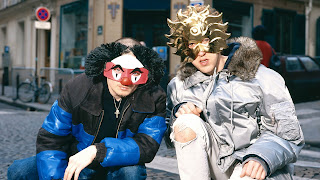
DAFT PUNK IS STAYING AT MY HOUSE, MY HOUSE (320kbs-m4a/64mb/28mins)
BBC Radio 4 broadcast: 25th May 2021
It was 1994, and legendary techno duo Slam were booked to play an event in Disneyland Paris. "We had a couple of days to kill, and a friend got in touch to say he knew these two young French musicians who wanted to give us music they'd made."
The "young French musicians" Thomas Bangalter and Guy-Manuel de Homem-Christo were still in their teens at that point, and Daft Punk was under a year old. Stuart McMillan distinctly remembers hearing their 4-track demo for the first time; "We were blown away!"
Composed of Orde Meikle and Stuart McMillan, Slam launched independent electronic record label Soma in 1991. It had a very DIY ethos. Along with manager Dave Clarke, they'd overseen a number of influential releases. It was Slam's own track ‘Positive Education' that piqued Thomas and Guy-Manuel's interest. They recognised Slam as kindred spirits, and Soma as the label they wanted to launch Daft Punk, and that's when things went really wild.
This is the story of Daft Punk's earliest beginnings on Glasgow's techno scene.
Narration written by Kirstin Innes
Narrated by Kate Dickie
Mixed by Alison Rhynas
Produced by Victoria McArthur
DANCERS AT DAWN (320kbs-m4a/64mb/28mins)
BBC Radio 4 broadcast: 7th May 2021
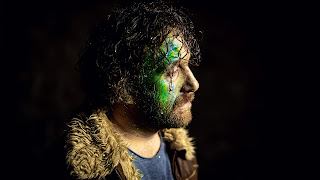
On the 1st May 1987 Martin Green's dad takes him Morris dancing before dawn on Wandlebury Hill outside Cambridgeshire. Many years later, at sunrise on his twenty-third birthday, he walks home from a rave over this same hill.
This uncanny coincidence has got him thinking. To most people, Morris dancing and [raving] rave culture seem so far apart. We like to think we know what sorts of people do what. So, what do these two groups have in common that drives them out into the fields to dance at dawn?
As an accordionist, producer and storyteller, Martin's own work lives somewhere between traditional music, electronic music and theatre. In 2020 he made a piece of audio theatre that linked the ancient traditions of English dancing to the birth of rave in the 1980s, which led him to draw on events from his own life, of dawn Morris dancing and sunrise raves. This documentary explores those themes. Why do we dance at dawn? Is there an innate desire to do so?
Recollecting his experiences with his father and rave friend Becky, Martin uncovers the traditions and rituals surrounding each activity. He speaks to others who have danced at dawn and seeks expert advice from [the] DJ Lee Burridge, who's famous for his full moon parties in Thailand and sunrise sets at Burning Man festival.
Taking all this experience on board, Martin undertakes a solo experiment. Removing all people and connections he drives on his own, in the dark to a remote field near his house with a mission. He wants to find out what it is about the music, the dancing and the surroundings that makes dancing at dawn truly special.
Produced by Rebecca Gaskell
Photography by Sandy Butler
A Sparklab production for BBC Radio 4
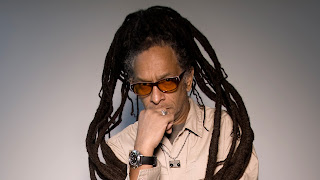
DUB REVOLUTION: THE STORY OF KING TUBBY (320kbs-m4a/64mb/28mins)
BBC Radio 4 broadcast: 22nd January 2021
28 January 2021 would have been legendary sound engineer King Tubby's 80th birthday. The sonic experiments he created in his tiny studio in the ghettos of Kingston Jamaica during the early seventies helped create a genre that's now part of the very fabric of contemporary music – Dub.
Tubby's productions pre-empted today's remix culture, were instrumental in the creation of rap an inspired an eclectic mix of artists from Massive Attack to Primal Scream. Dub went on to inform Jungle, Rave,Techno, Ambient right up to Grime in the 21st century.
Don Letts celebrates the godfather of Dub, with contributions from Dennis Bovell, Adrian Sherwood, Hollie Cook and Mad Professor.
A TBI Media production for BBC Radio 4.
Augustus Pablo - King Tubby Meets Rockers Uptown
Augustus Pablo & The Crystalites - Silhouettes (Bass & Drum Version)
The Upsetters - V/S Panta Rock
The Aggrovators - Bag O Wire Dub
King Tubby - How Long Dub
King Tubby - Blood Dunza Dub
Mafia All Stars & King Tubby - Don't Think About Dub
U Roy - Hold On
Barry Brown & Prince Jammy - Step It Up/Youthman Dub
Augustus Pablo - Cassava Piece
King Tubby - Cus-Cus Dub
Jah Shaka - Kumbia Dub
Matumbi - Dub Planet (Frenz)
Mad Professor - Dub So Hard
Dub Syndicate - Stoned Immaculate
The Clash - Robber Dub
Massive Attack - I Spy (Spying Glass)
Leftfield - Release The Pressure (Adrian Sherwood Mix)
Primal Scream - Dub In Vain
King Tubby - North Circular Dub

GOLDIE THE ALCHEMIST (320kbs-m4a/63mb/28mins)
BBC Radio 4 Extra broadcast: 17th December 2020
Musician and artist Goldie passionately describes his challenging story, from the roots of a broken home to his commercial success and subsequent struggle to come to terms with personal issues and a painful past.
Featuring contributions from Pete Tong, DJ Fabio, Marc Mac, Nihal Arthanayake and Dr Anamik Saha, the programme explores the real character behind Goldie, who produced Timeless, one of the most iconic British albums of the nineties.
Produced by Paul Thomas
A Three Street Media production
First broadcast on BBC Radio 4 in 2014.
Goldie - Timeless
Miles Davis - Blue In Green
Thomas Newman - Komodo Dragon
The Neil Richardson Orchestra - Mastermind (Theme From) (Approaching Menace)
George Frideric Handel - Water Music No.2 In D
Goldie - Angel
Stevie Ray Vaughan - Tin Pan Alley
Steve Reich And Musicians - Electric Counterpoint
Supertramp - Logical Song
Thomas Newman - Any Other Name
Coolio (Feat. L.V.) - Gangsta's Paradise
Terry Callier - Dancing Girl
Soul II Soul (Feat. Caron Wheeler) - Back To Life (However Do You Want Me)
Aga Khan - Vamp
Rufige Cru - Darkrider
Goldie - Timeless
Goldie - Sense Of Rage
Goldie - Sea Of Tears
Massive Attack - Teardrop
Goldie - Mother
Goldie - Temper Temper
Brian Eno - An Ending (Ascent)
Pat Metheny Group - First Circle
Zurich - A Harsh Truth
[re:jazz] (Feat. Jhelisa) - Inner City Life
ZIGGY STARDUST CAME FROM ISLEWORTH (320kbs-m4a/65mb/28mins)
BBC Radio 4 Extra broadcast: 16th December 2019
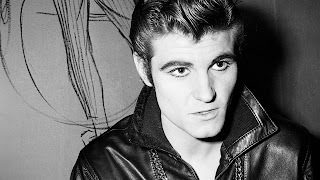
Martyn Day explores the life the British-born singer Vince Taylor, who inspired David Bowie's mythical rockstar.
Ziggy Stardust was a rock and roll fantasy. But David Bowie's fictional rockstar, around whom his 1972 album, stage show, and film were built, was inspired by a real performer, Vince Taylor, born in Isleworth, Middlesex. This programme uncovers the truth about a singer whose wild lifestyle ultimately destroyed him, but in so doing he gave rise to a myth that transcended glam-rock and science fiction.
His record "Brand New Cadillac" remains to this day a British rock 'n' roll classic, covered later by The Clash.
But Vince was frustrated by his limited success in Britain and, already displaying the unpredictable behaviour and volcanic temper that were to dog him for the rest of his days, he moved to France where the "yé-yé" crowd really went wild for him. They called him 'Le Diable Noir' - the Black Devil.
Decked out in black leathers, chains, kohl eye make-up and with his hair greased up into a high pompadour he was immediately signed to the French Barclay label. But fuelled by alcohol and drugs Vince's behaviour became increasingly erratic. At a party he tried LSD for the first time. In his state of mind at the time it was absolutely the very last thing that he needed.
Vince Taylor underwent a kind of public breakdown at his next gig, where he started claiming he was a divine being. David Bowie bumped into him in London and later said: "Vince Taylor was the inspiration for Ziggy...He always stayed in my mind as an example of what can happen in rock n roll. I'm not sure if I held him up as an idol or as something not to become. There was something very tempting about him going completely off the edge."
The programme, presented by Martyn Day, tracks down many of the people who worked with Taylor, including members of his original band and his family.
First broadcast on BBC Radio in August 2010.
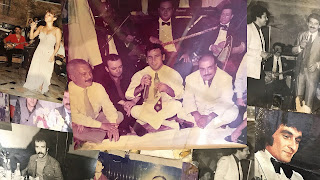
THE ART OF NOW: ISTANBUL'S FACTORY OF TEARS (320kbs-m4a/64mb/28mins)
BBC Radio 4 broadcast: 21st June 2019
Writer Isobel Finkel takes us to Istanbul, where art and censorship are never too far apart. The state’s attempts to protect citizens from illicit sounds have taken absurd forms over the years, from the banning of all Turkish-language music from the radio in the early 30s to more recent attempts to control and interfere with Arabesk, the kitsch and mournful soundtrack of the 70s and 80s which was excluded from the radio even while it was so popular it made up for three-quarters of the country's record sales.
We travel to the IMC, a vast modernist complex in the heart of Istanbul's old city that once formed a production line for Arabesk; a community unto itself where agents, record producers and record shops all crowded in on top of one another. Musicians seeking to make their name in Turkey of the 70s and 80s would turn up and audition on the steps of the IMC, where they found fame, fortune and official censure.
Isobel interviews producers, fans and stars of the genre to find out what the state was so troubled by - and speaks to a new generation of musicians who are rediscovering and reworking these once-forbidden sounds in today's Istanbul.
Presenter: Isobel Finkel
Producer: David Waters
An SPG production for BBC Radio 4
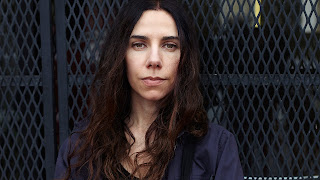
BEHIND THE SCENES: PJ HARVEY (320kbs-m4a/64mb/28mins)
BBC Radio 4 broadcast: 12th February 2019
John Wilson follows PJ Harvey as she creates the score for a new West End theatre production of All About Eve.
Singer songwriter Polly Jean Harvey is the only artist to have twice won the Mercury Prize for Album of the Year – for Stories from the City, Stories From the Sea in 2001 and Let England Shake a decade later. After 12 critically acclaimed albums and more than 25 years as an international touring artist, she is now focussing on her work as a soundtrack composer, having written scores for theatre and television for more than a decade.
Starring Gillian Anderson (making her first return to the stage since her acclaimed 2014 performance in A Streetcar Named Desire) and Lily James (star of Downton Abbey and Mama Mia), All About Eve is one of the most anticipated theatrical events of 2019. Adapted from the 1950 film, which was nominated for 14 Oscars and won six including Best Actress for Bette Davis, it’s a story of an ageing Broadway star and a young fan who usurps her place in the spotlight.
Over several weeks in the run up to opening night, Polly shows John how she works at home, writing and recording demos for the soundtrack to the play, and how one musical element of the original film – Liebestraume by Franz Liszt – has become the creative touchstone for her own compositions.
Presented and Produced by John Wilson.
A Whistledown production for BBC Radio 4
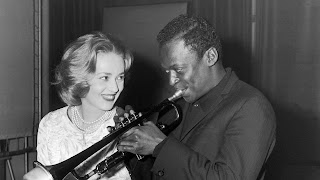
PARIS BLUE (320kbs-m4a/65mb/28mins)
BBC Radio 4 broadcast: 8th February 2019
Jazz writer Kevin Legendre explores the encounter between American modern jazz and the French New wave in Paris in the late 1950s and 60s.
Paris in the civil rights era was a hub of artistic collaboration as well as a kind of political refuge - a destination for American jazz musicians escaping racial prejudice and turbulence at home, finding new creative encounters abroad.
As segregation raged in the US, artists from Miles Davis and Bud Powell to Art Blakey and Thelonious Monk felt liberated in the city. Paris was the first foreign city Miles Davis ever visited and it was here he met Picasso. Sartre and Jean Cocteau. "It was the freedom of being in France and being treated like a human being...” he wrote, “It changed the way I looked at things forever. I loved being in Paris and Paris was where I understood that all white people were not the same; that some weren't prejudiced."
The admiration was mutual - French cinephiles loved American jazz. The film score became a key area of collaboration as jazz musicians worked closely with a younger generation of radical directors that made up the French new wave. These scores elevated French films to new levels of intensity, cool and atmosphere.
Some of the musicians' great but little known work is recorded in these movies. But underlying the beautiful work, this story is one of political exile as well as cultural refuge. For a moment Paris became a jazz capital of the world as well as the free-thinking centre of Europe - a rebuke to prejudice in America, even as it had growing racial tensions of its own.
Recorded in and around the city, Kevin Legendre meets musicians, filmmakers and writers to explore this incredible moment of exile and exchange, and asks if Paris is still the city of freedom and tolerance it once was for Black artists.
Guests include jazz singer Dee Dee Bridgewater, film director Bertrand Tavernier, composer Martial Solal, jazz writer Geoff Dyer, historians Kevi Donat and Ginette Vincendeau, bass player Henri Texier and playwright Jake Lamar.
Producer: Simon Hollis
A Brook Lapping production for BBC Radio 4

SHINE LIKE TOKYO - NORTHERN SOUL GOES EAST! (320kbs-m4a/63mb/27mins)
BBC Radio 4 broadcast: 5th February 2019
It's 40 years since DJ Russ Winstanley unleashed the Wigan Casino on the world playing Northern Soul to thousands of young people in the club's legendary all-nighters.
The 70s were the heyday of the music genre and the Wigan Casino even beat New York's Studio 54 for title of Billboard Magazine 'best disco in the world' in 1978.
Northern Soul is often thought to be firmly rooted in place and time but four decades on from the opening of the Wigan Casino, Annie Nightingale discovers how it's capturing the imagination of people as far east as Japan.
She looks back at the roots of Northern Soul before hearing from DJs spinning their discs in Kobe, a Northern Soul band in Tokyo and regulars at night spots in several Japanese cities.
Soulies in England and Japan reflect on what it is that helps them 'keep the faith' while Annie tries to work out if there's a connection between the Northern England of the 70s and the Japan of 2013.
Producer: Liam Starkey
A Made in Manchester production for BBC Radio 4.
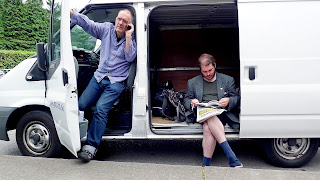
DRIVING BILL DRUMMOND (320kbs-m4a/71mb/31mins)
BBC Radio 4 broadcast: 18th August 2017
Bill Drummond is many things. As well as an artist, a writer and former pop-star - he's the owner of an old curfew tower in Northern Ireland which he runs as an artists' residency. Last year some poets from Belfast's Seamus Heaney Centre for Poetry stayed there and Bill published their collected work in a little black book called The Curfew Tower is Many Things.
Except for a poem the award-winning Belfast poet Stephen Sexton wrote. Apparently that one went missing. So Bill has left two pages blank in the book for Stephen to fill in with poetry as they drive through all of Ireland's 32 counties in 5 days in a white Ford Transit hire-van, giving out copies as they go.
But what exactly is driving Bill Drummond?
Producer Conor Garrett is there to find out. As they cross the Irish border and over each county boundary, Conor is becoming increasingly concerned he may not have a good enough story for his radio programme. It's a problem further complicated by the fact Bill won't talk about his chart-topping '90s pop band who once famously set fire to a very large pile of their own cash. Then, when a narrative arc does eventually develop, Conor can't be sure how authentic it is. And what's all this stuff about eels?
Producer: Conor Garrett.
LET'S GO ROUND AGAIN - THE STORY OF THE MAGIC ROUNDABOUT (320kbs-m4a/64mb/28mins)
BBC Radio 4 broadcast: 26th December 2015
In October 1965, a new version of the French children's television programme Le Manège Enchanté was shown on the BBC. Scripted and voiced by the Playschool presenter Eric Thompson, and broadcast with its English title - The Magic Roundabout, it soon became a firm favourite with viewers of all ages. So much so, that when the transmission time was changed to an earlier timeslot, there were so many complaints to the BBC from outraged adults, that it was moved back to its place just before the six o'clock news.
To celebrate the programme's 50th anniversary, Sophie Thompson, Eric's daughter, and his wife Phyllida Law tell us the story behind the much-loved series. We'll hear tales of Zebedee, Florence and Ermintrude, and how Dougal the dog nearly caused international relations with France to break down.
With contributions from Fenella Fielding, Nigel Planer and Mark Kermode, climb aboard for one more spin on the Magic Roundabout.
Producer: Elizabeth Foster
Presenter: Sophie Thompson & Phyllida Law.
RAVE: THE BEAT GOES ON (320kbs-m4a/64mb/28mins)
BBC Radio 4 broadcast: 22nd October 2015
In the early 90s, a group of young people thought they'd found an entire new way of living, powered by music, dancing, love, and drugs. Just as the world seemed to be getting more materialistic, they went in the other direction, living without money, usually without homes, with life as one long noisy illegal party. But can you keep that up? What about when the state tries to crush you? What about when children come along? When the drugs scene turns bad, and when you just get older and more tired?
This is the story of a small group of friends that came together in 1990, who called themselves Spiral Tribe. On the rave scene, they are legendary. Now 25 years on, many of them are still together, still partying across Europe, but now with money and a keen sense of the value of their historic brand. Are they still living the dream, or has the dream changed? Jolyon Jenkins reports.
Interviews and research by Milly Chowles.
WHEN VAN PLAYED CYPRUS AVENUE (320kbs-m4a/65mb/28mins)
BBC Radio 4 broadcast: 3rd October 2015
"And I'm caught one more time
Up on Cyprus Avenue..."
Van Morrison made a number of references in his songs to the east Belfast neighbourhood in which he grew up, none more directly than in Cyprus Avenue from his 1968 album Astral Weeks. Romantic images of leaves shaking on a tree, rainbow ribbons in a young girl's hair and a mansion on the hill evoke memories of Cyprus Avenue in the years before Van left Northern Ireland to pursue his career in the States.
Cyprus Avenue - with its intricate arrangement of flute, harpsichord and strings - was recorded in New York, far from the well-heeled, tree-lined avenue along which the young Van would pass on his way home to the working class area of Hyndford Street. This was in the years before the Troubles. East Belfast was steadfastly loyalist and protestant.
When the arts broadcaster Marie-Louise Muir moved into the area, she was already aware of the iconic quality of street's name - not just from Van Morrison's song, but from the fact that the Reverend Ian Paisley lived on Cyprus Avenue. Marie-Louise was a Catholic 'blow-in'. So, when Van announced that he'd be celebrating his 70th birthday by playing a gig literally feet from her front door, she was curious to see how the community would respond.
Produced by Alan Hall.
A Falling Tree production for BBC Radio Four.