skip to main |
skip to sidebar
MOON NIGHT: CHAPTER 5. WANING CRESCENT (320kbs-m4a/204mb/1hr29mins)
BBC Radio 4 Extra broadcast: 25th March 2024
It sits around 240, 000 miles away from earth, yet it dominates our night sky, moves our oceans and has been a source of cultural and artistic wonder for thousands of years.
Across this full moon night, Kevin Fong takes a journey through the BBC Archive for a long look at our relationship with the moon.
Programmes include a lunar adventure with Jarvis Cocker, a study of werewolves with Mark Radcliffe, Helen Sharman hears from those who have stood on the moon itself, and Bill Nighy stars in a drama about how love and the moon could destroy the world.
Going through the night, from 10pm until 5am, join Kevin Fong for a unique night of radio adventures, taking you all the way to the moon and back.
In Chapter 5: Waning Crescent programmes include;
- The Music That Melted - Richard Coles hears musicians gather under the full moon in Norway to make ice music.
- Re: The Moon - by Ross Sutherland, first heard in Short Cuts - Moonlight.
- I Wish to Apologise for My Part in the Apocalypse - Bill Nighy stars in Duncan Macmillan's romantic comedy about the end of the world, a woman who falls in love with the moon, and her husband who falls back in love with her.
MOON NIGHT: CHAPTER 4. WANING GIBBOUS (320kbs-m4a/213mb/1hr33mins)
BBC Radio 4 Extra broadcast: 25th March 2024
It sits around 240, 000 miles away from earth, yet it dominates our night sky, moves our oceans and has been a source of cultural and artistic wonder for thousands of years.
Across this full moon night, Kevin Fong takes a journey through the BBC Archive for a long look at our relationship with the moon.
Programmes include a lunar adventure with Jarvis Cocker, a study of werewolves with Mark Radcliffe, Helen Sharman hears from those who have stood on the moon itself, and Bill Nighy stars in a drama about how love and the moon could destroy the world.
Going through the night, from 10pm until 5am, join Kevin Fong for a unique night of radio adventures, taking you all the way to the moon and back.
In Chapter 4: Waning Gibbous programmes include;
- Ticket To The Moon - Patrick Moore tells Peter Scott why we should travel to the moon. From 1956.
- Moonwalk Memoirs - Helen Sharman recalls the Apollo missions with some of the men who left their footprints on the lunar surface.
Plus we hear from Mahesh Anand about the future of lunar exploration, and the amateur astronomer Roger Hutchinson shows us how to get close to the moon.
MOON NIGHT: CHAPTER 3. FULL MOON (320kbs-m4a/164mb/1hr11mins)
BBC Radio 4 Extra broadcast: 25th March 2024
It sits around 240, 000 miles away from earth, yet it dominates our night sky, moves our oceans and has been a source of cultural and artistic wonder for thousands of years.
Across this full moon night, Kevin Fong takes a journey through the BBC Archive for a long look at our relationship with the moon.
Programmes include a lunar adventure with Jarvis Cocker, a study of werewolves with Mark Radcliffe, Helen Sharman hears from those who have stood on the moon itself, and Bill Nighy stars in a drama about how love and the moon could destroy the world.
Going through the night, from 10pm until 5am, join Kevin Fong for a unique night of radio adventures, taking you all the way to the moon and back.
In Chapter 3: Full Moon programmes include;
- A Sleepwalk on the Severn - The poet Alice Oswald's evocation of the experience of moonrise over the Severn Estuary.
- 28ish Days Later - Day Twenty-One: In the Moonlight
- Ramblings - we join Clare Balding for part of her walk along the South Downs Way, this time at night under a full moon.
MOON NIGHT: CHAPTER 2. WAXING GIBBOUS (320kbs-m4a/195mb/1hr25mins)
BBC Radio 4 Extra broadcast: 24th March 2024
It sits around 240, 000 miles away from earth, yet it dominates our night sky, moves our oceans and has been a source of cultural and artistic wonder for thousands of years.
Across this full moon night, Kevin Fong takes a journey through the BBC Archive for a long look at our relationship with the moon.
Programmes include a lunar adventure with Jarvis Cocker, a study of werewolves with Mark Radcliffe, Helen Sharman hears from those who have stood on the moon itself, and Bill Nighy stars in a drama about how love and the moon could destroy the world.
Going through the night, from 10pm until 5am, join Kevin Fong for a unique night of radio adventures, taking you all the way to the moon and back.
In Chapter 2: Waxing Gibbous programmes include;
- The Lunar Effect: The Cycle - Michelle Gomez reads John Connolly's short story.
- Howling At The Moon - Mark Radcliffe investigates the cult of the werewolf.
- Why The Moon, Luke? - Artist Luke Jerram is obsessed with the Moon. So he has made one.
Plus; the writer Nell Frizzell shares a personal story about finding connection and companionship with the moon.
MOON NIGHT: CHAPTER 1. WAXING CRESCENT (320kbs-m4a/182mb/1hr19mins)
BBC Radio 4 Extra broadcast: 24th March 2024
It sits around 240, 000 miles away from earth, yet it dominates our night sky, moves our oceans and has been a source of cultural and artistic wonder for thousands of years.
Across this full moon night, Kevin Fong takes a journey through the BBC Archive for a long look at our relationship with the moon.
Programmes include a lunar adventure with Jarvis Cocker, a study of werewolves with Mark Radcliffe, Helen Sharman hears from those who have stood on the moon itself, and Bill Nighy stars in a drama about how love and the moon could destroy the world.
Going through the night, from 10pm until 5am, join Kevin Fong for a unique night of radio adventures, taking you all the way to the moon and back.
In Chapter 1: Waxing Crescent programmes include;
- Jarvis Cocker's Wireless Nights: Full Moon
- Soul Music - Harvest Moon. How Neil Young's 1992 song, about growing old and enduring love, still has an impact on listeners today. From 2020.
Plus; Rutherford and Fry find out how the moon formed, and we ask the astronomer Patricia Skelton to explain where our names for Full Moons derive from.
ARCHIVE ON 4 - APOLLO 13: THE RESCUE (320kbs-m4a/130mb/57mins)
BBC Radio 4 broadcast: 4th July 2020
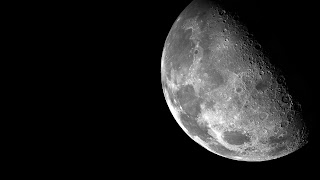
NASA has never known anything like it. An explosion hundreds of thousands of miles from Earth; a spacecraft leaking oxygen and losing power; a crew freezing in the darkness, at risk of suffocation. Will they survive long enough to get home? Will their damaged spacecraft even get them home? This is the incredible story of the flight of Apollo 13, as told by the astronauts who flew it and the teams in Mission Control who saved it.
The launch of Apollo 13 on April 11th 1970 was NASA’s third bid to land people on the moon. It came just nine months after the triumph of Apollo 11, which saw Neil Armstrong’s famous small step win the space race, leaving the United States victorious over the Soviet Union. Apollo 12 followed suit a few months later, executing its lunar landing with pinpoint accuracy. By the time of Apollo 13, NASA appeared to have found its rhythm. And yet to the public and the media, a feat that had appeared impossible less than a year earlier, now began to seem routine.
But Apollo 13 would turn out to be anything but routine. Flawed from the start, its fate was sealed by a faulty oxygen tank installed months earlier that would later explode, triggering a catastrophic series of events that threatened the spacecraft and the lives of the crew, over and over again. At first the teams in mission control are puzzled by astronaut Jack Swigert’s seemingly innocent message: “Houston, we’ve had a problem” and insist that what they’re seeing on their consoles in Houston must be an instrumentation failure. But then the truth emerges – the mission is over and now they’re in the fight of their lives to save the crew.
Kevin Fong relives the rescue with access to the mission audio archives as well as new interview material with surviving astronauts Jim Lovell and Fred Haise and a host of characters who worked round the clock to save Apollo 13 and NASA, from disaster.
Presented by Kevin Fong and produced by Andrew Luck-Baker.
DISCOVERY - WHAT NEXT FOR THE MOON? (96kbs-m4a/18mb/27mins)
BBC World Service broadcast: 22nd July 2019
The Moon rush is back on. And this time it’s a global race. The USA has promised boots on the lunar surface by 2024. But China already has a rover exploring the farside. India is on the point of sending one too. Europe and Russia are cooperating to deliver more robots. And that’s not to mention the private companies also getting into the competition. Roland Pease looks at the prospects and challenges for all the participants.
(Image caption: Chinese lunar probe and rover lands on the far side of moon. Credit: CNSA via EPA)
ENO AND COX ON THE MOON (320kbs-m4a/129mb/56mins)
BBC Radio 6 Music broadcast: 21st July 2019
Celebrating 50 Years since the Apollo 11 landings, Brian Cox and Brian Eno share their passion for the Moon. Discussing the science behind it, the technology it drove forward, the art it inspired, and picking their favourite music about it, the Two Brian’s spend an hour exploring all things lunar.
Dinah Washington - Destination Moon [Roulette Jazz]
Barry Gray - Space 1999
Creedence Clearwater Revival - Bad Moon Rising [Fantasy]
The Marcels - Blue Moon [Old Gold]
Public Service Broadcasting - Go! [Test Card Recordings]
David Bowie - Starman [EMI]
Brian Eno - An Ending (Ascent)
Brian Eno - Deep Blue Day
Frank Ocean - Moon River
Isao Tomita - Clair De Lune (Suite Bergamasque No. 3) [RCA]
JAMES BURKE: OUR MAN ON THE MOON (320kbs-m4a/130mb/57mins)
BBC Radio 4 broadcast: 20th July 2019
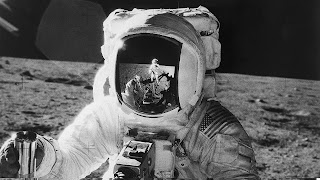
Fifty years ago, when the Apollo 11 mission landed the first human beings on the moon, James Burke was the voice of science for the BBC. Join him to relive the dramatic days in the studio, sharing the moment-by-moment drama to a live audience. You'll remember his excited voice counting down the seconds and desperately trying to avoid talking over any communication with the astronauts. Here is your chance to find out what went on behind the scenes as James revisits the final moments of the Apollo mission. He'll recreate the drama, struggling to make sense of flickering images from NASA and working with the limitations of 1960s technology. We'll hear what went wrong as well as what went right on the night! Illustrated with amazing archive material from both the BBC and NASA, this will be the story of the moon landings brought to you by the man who became a broadcasting legend. A night neither he nor we will never forget.

JARVIS COCKER'S GIANT LEAP (320kbs-m4a/266mb/1hr56mins)
BBC Radio 6 Music broadcast: 19th July 2019
Jarvis Cocker returns to the airwaves in place of Iggy Pop tonight as part of our celebration of Apollo 11 putting man on the moon.
Join us from 7pm as he rifles through his record box of celestial sounds to create a two hour sonic journey into inner and outer space. Expect eclectic and exotic sounds, spoken word gems and random nuggets of interstellar information.
It's one small step for Jarvis...
Life - 2001
The Birthday Party - Blast Off
Spiritualized - Ladies And Gentlemen We Are Floating In Space
The Sun Ra Arkestra - Space Is The Place
Clear Spot - Moonman Bop
Tom Dissevelt - Waltzing Matilda
Bobby Womack - Everyones Gone To The Moon
The Langley Schools Music Project - Calling Occupants Of Interplanetary Craft
The Arnold Corns - Moonage Daydream
Peter Thomas Sound Orchestra - Bolero On The Moon Rocks
Richard Hawley - Cry A Tear For The Man On The Moon
W.H. Auden - Moon Landing
Gil Scott‐Heron - Whitey On The Moon
Dick Hyman & Mary Mayo - Maid Of The Moon [Ace]
Frank Sidebottom & Frank Little - First Puppet On The Moon
Rockets - Space Rock
Slick - Space Bass (12" Disco Mix)
Sun Ra & His Intergalactic Solar Orchestra - Outer Spaceways Incorporated
Brian Eno & David Byrne - Moonlight In Glory
The Orb - Man In The Moon (Feat. Lee “Scratch” Perry)
The B‐52s - Planet Claire [Reprise]
The Electric Moog Orchestra - The Conversation (from Close Encounters Of The Third Kind)
Geoff Love's Big Disco Sound - Close Encounters Of The Third Kind
Leonard Nimoy - A Visit To A Sad Planet
John Grant - Outer Space
Moon Duo - Stars Are The Light
Felt - Space Blues [Immediate/Complete]
Elvis Presley - Blue Moon
Teho Teardo & Blixa Bargeld - Alone With The Moon
The King’s Singers - After The Goldrush [Broken Arrow/Broken Fiddle/Sharandall]
Ernie & Sesame Street - I Don't Want To Live On The Moon
MOONBASE 2029 (320kbs-m4a/63mb/27mins)
BBC Radio 4 broadcast: 19th July 2019
Fifty years after Apollo astronauts first walked on the lunar surface, the world is heading back to make the Moon a new home.
“We left flags and footprints,” said the head of NASA Jim Bridenstine recently. “This time when we go, we’re going to go to stay.”
The United States has pledged to return by 2024 and NASA is building an orbiting space station near the Moon, called the Lunar Gateway, and is planning a field station as a base.
But the return to the Moon will be international. The European Space Agency (ESA), for instance, is building the service module for NASA’s Orion spacecraft - which will take humans to the Moon using its new giant SLS rocket. China aims to get its own astronauts on the Moon within the decade. Meanwhile ESA is constructing a lunar simulator facility in Cologne, Germany.
Space expert and TV science presenter Dallas Campbell hears from scientists at NASA, ESA and the German Aerospace Centre DLR who are working to make the practicalities of building a Moonbase reality.
Dallas meets those who are experimenting with solar ovens to build lunar bricks and one researcher who is making filters for human urine to produce fertiliser for crops on the Moon.
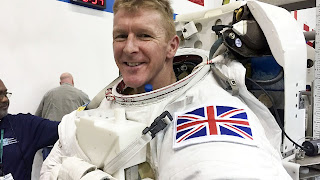
British astronaut Tim Peake discusses his recent lunar training underwater and Dallas travels to Bavaria to discover why current astronauts are training there for a lunar landing.
Producer: Sue Nelson
A Boffin Media production for BBC Radio 4
DISCOVERY - EARTHRISE (96kbs-m4a/18mb/27mins)
BBC World Service broadcast: 24th December 2018
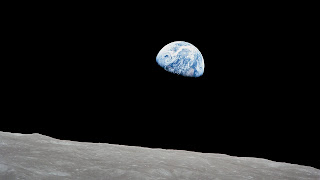
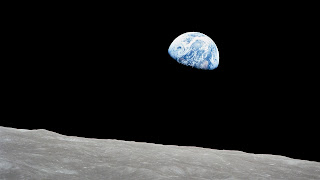
On Christmas Eve in 1968 Bill Anders was in orbit around the moon in Apollo 8 when he took one of the most iconic photos of the last fifty years: Earthrise. The image got to be seen everywhere, from a stamp issued in 1969 to commemorate the success of Apollo 8, to posters that are still available today. Gaia Vince explores the impact of this image on the environmental movement and our understanding of our place in the universe.
“Oh my God. Look at that picture over there. Here’s the earth coming up. Wow, isn’t that pretty.”
Bill Anders was on the fourth of the ten orbits of the moon on Apollo 8, along with James Lovell and Frank Borman. Bill had spotted the earth through one of the hatch windows and grabbed his camera to take a black and white photo. But just in time, he picked up another camera with a colour film loaded, and the rest is history. When they returned from space – the first mission to orbit the moon – Nasa used Bill Anders’ image of Earthrise in its publicity. Nasa had understood there was an added value of going into space: taking pictures of our home planet.
Stewart Brand was part of both the counterculture and the environmental movement; he’d hung out with Ken Kesey and his merry pranksters and put on happenings. He went on to found the Whole Earth Catalog, which brought together all kinds of alternative thinkers. Stewart Brand put the Earthrise photo on the front cover of one of the editions of the Whole Earth Catalog.
Gaia Vince talks to Stewart Brand, and to scientists and artists, about the continuing importance of seeing Earth from above.
Picture: Earthrise - The rising Earth is about five degrees above the lunar horizon in this telephoto view taken from the Apollo 8 spacecraft on December 24th 1968, Credit: Nasa
Presenter: Gaia Vince
Producer: Deborah Cohen
BETWEEN THE EARS - MESSAGE FROM THE MOON (320kbs-m4a/68mb/30mins)
BBC Radio 3 broadcast: 22nd December 2018
In the beginning, God created the heavens and the Earth…
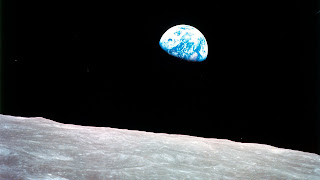
On Christmas Eve 1968, as the crew of Apollo 8 orbited the Moon, they read extracts from Genesis live on TV to tens of millions of people around the world. Later, they would also capture – by accident – a photograph of the Earth rising above the lunar landscape: Earthrise. Both events would have a profound and influential effect that continues to this day.
In Message from the Moon, we follow the Apollo 8 mission from launch to splashdown – including the reading from Genesis – and hear from astronauts giving their unique perspective on creation, faith and God. Their thoughts are interwoven with music from Hannah Peel's composition, Mary Casio: Journey to Cassiopeia.
The programme features original interviews with Apollo 8 commander, Frank Borman, Apollo 16 astronaut and Moonwalker Charlie Duke, Shuttle astronauts Nicole Stott and Mike Massimino, as well as serving NASA astronaut Jeff Williams and European Space Agency astronaut Paolo Nespoli.
Archive includes NASA commentary from the mission, previously un-broadcast extracts from the Apollo 8 capsule flight recorder and BBC TV commentary.
And God bless you all, all of you on the Good Earth.
The producer is Richard Hollingham, with sound engineering by Sam Gunn.
Message from the Moon is a Boffin Media Production for BBC Radio 3
A BRIEF HISTORY OF... APOLLO 8 (320kbs-m4a/96mb/42mins)
BBC Radio 6 Music broadcast: 21st December 2018
Chris Hawkins and Public Service Broadcasting's J Willgoose Esq. tell the story of the second manned spaceflight mission in the United States Apollo space programme, launched on December 21, 1968, at the height of the space race.
This special programme features archive audio from on board the Apollo 8 space craft, including a reading from The Book of Genesis, the astronaut's amazing Christmas eve message to planet earth and from the crew that were responsible for ‘Earthrise’ - a photograph that has been described as "the most influential environmental photograph ever taken”.
The story will also include a soundtrack which includes music by Radiohead, The Who, Clint Mansell, Pink Floyd and Brian Eno.
Richard Strauss - Also Sprach Zarathustra, Op. 30
Beastie Boys - Intergalactic [Grand Royal]
Pink Floyd - Is There Anybody Out There?
Inspiral Carpets - Saturn 5 [Cow]
David Bowie - Space Oddity [EMI]
The Who - I Can See For Miles [Polydor]
Radiohead - Sail To The Moon [Parlophone]
Clint Mansell - We're Going Home
Brian Eno - An Ending (Ascent) [Editions EG]
ARCHIVE ON 4: APOLLO 8 (320kbs-m4a/130mb/57mins)
BBC Radio 4 broadcast: 15th December 2018
Six months before Neil Armstrong’s ‘one small step’ came humanity’s giant leap. It was December 1968. Faced with President Kennedy’s challenge to land a man on the Moon before the end of the decade, NASA made the bold decision to send three astronauts beyond Earth orbit for the first time. Those three astronauts spent Christmas Eve orbiting the moon. Their legendary photograph, "Earthrise" showed our planet as seen from across the lunar horizon - and was believed to have been a major influence on the nascent environmental movement. Through extraordinary NASA archive, the first British astronaut Helen Sharman goes inside the capsule to tell the story of the first time man went to another world.
Written and produced by: Chris Browning
Researchers: Diane Richardson and Colin Anderton.