Showing posts with label Manifest. Show all posts

Tuesday, July 1, 2025

A SEVEN INCH SPECIAL, VOL. 3: Hard & heavy


 UPPÅT VÄGGARNA – Jag hatar politik / Jag färdas (Efel, 1971)
Swedish vocals
International relevance: ***

One of the best Swedish heavy rock singles ever! No wonder originals are dead expensive. ”Jag hatar politik” was also on the third volume of ”Who Will Buy These Wonderful Evils” as well as ”The Essence Of Swedish Progressive Music 1967-1979”, the 4CD box set released in conjunction with Tobias Peterson's progg encyclopedia. But the B side is almost as good with an inescapable riff and great soloing. Thankfully, the single was reissued in 2022 by Regain Records as a 12”. Not only that, Regain also unearthed two previously unreleased tracks, doubling Uppåt Väggarna's frustratingly slim discography. The two ”new” tracks, one sung in English, are from a radio session, and while the second of those aren't up to snuff, it's great seeing them out. Let's hope someone will find more archival material soon – Subliminal Sounds?


AFTER LIFE – Help Me / Into The Fire (Playback, 1971)
English vocals
International relevance: ***

Another classic single and another ”Who Will Buy These Wonderful Evils, Vol III” selection, namely ”Help Me”. It's a decent track, not on the same level as Uppåt Väggarna, but it's better than the unnecessary and pretty tame Deep Purple cover ”Into The Fire” on the flip.


ZANE – Step Aside / Damage (MM, 1976)
English vocals
International relevance: ***

If After Life found their inspiration in Deep Purple, then Malmö's Zane are closer to Black Sabbath. With their seedy underground vibe, both tracks were comped on different volumes in the often great ”Brown Acid” series successfully exhuming obscure raw and rare hard rock singles from near and far. Both tracks are good, especially ”Step Aside”. A third track was recorded in 1980 and released on ”Vykort från Malmö”, an Amalthea V/A compilation of wildly disparate bands. The song, ”Malmö City”, shows a Zane then a wee bit closer to punk. Still OK though. 


BARON BULT – 75 ton stål / Gamla hjältar (PETCLA, 1979)
Swedish vocals
International relevance: **

Baron Bult came from Stockkholm but sounds more like a Gothenburg band. ”75 ton stål” has some heavy aspirations but is essentially just dull rock typical to the turn of the decade. The B side is too close to youth center disco. It's not particularly expensive but I wouldn't pay even a small sum for it. They had another single out on RCA Victor in 1980 before fading into well-deserved obscurity. Prior to Baron Bult, main man Peter Wartin made an album with Claes Nordenskiöld in 1978, also on private label PETCLA.

E.F. BAND – Night Angel / Another Day Gone
(Aerco, 1979)
English vocals
International relevance: **

E.F. Band, where E stands for bassist Pär Ericsson and F stands for guitarist/singer Bengt Fisher, became a rather successful band with some longevity, releasing three albums and as many singles during their lifetime. They were part of the FWOSHM, i.e. The First Wave Of Swedish Heavy Metal, the domestic equivalent to NWOBHM, the New Wave Of British Heavy Metal. Only their debut 45 ”Night Angel” is remotely relevant to this blog, simply because it's a pretty effective track with an unexepected almost-Hawkwind drive to it. B side ”Another Day Gone” isn't too exciting though.
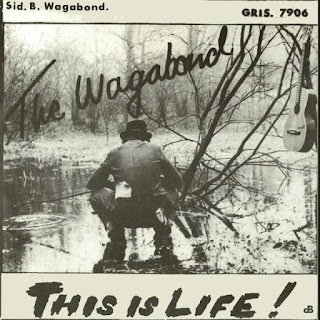

THE WAGABOND – This Is Life! / Wagabond
(Grisbäck, 1979)
Swedish vocals
International relevance: *

Released on Ulf Bejerstrand's Grisbäck label, a fact that should put you off immediately. ”This Is Life!” is a clumsy attempt at hard rock with faint punk elements. B side ”Wagabond” seems to aim for a more progressive style with tempo changes that they handle with the same elegance as if they were a poo snake in their hands. Terrible.


TIDEN LIDER / IMPULS – Norrland Export / Andetag (Manifest, 1979)
Swedish vocals
International relevance: **

A split single on the Northern Manifest label. ”Norrland Export” by Tiden Lider is a rather ambitious track perfectly ruined by Helena Tewolde Berhan's painfully piercing vocals. She sounds like Savage Rose's Anisette on 78 rpm. ”Andetag” by Impuls may or may not have a Pink Floyd influence, depending on what you're references are. Non-descript vocals are a relief after Tewolde Berhan's ear assault, but the entire track is uninteresting with an overlong guitar solo that leads nowhere.
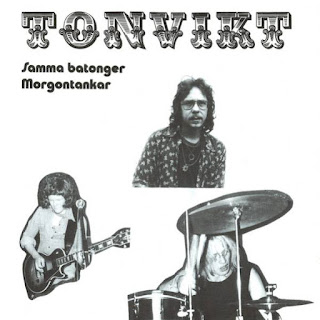

TONVIKT – Samma batonger / Morgontankar
(HRM, 1979)
Swedish vocals
International relevance: **

Somewhat expensive 45, possibly because of the guitar playing which probably is the best thing about it. The A side is an anti-police brutality statement with clichés well-known from a plethora of punk songs of the same era. ”Morgontankar” is a kind of a ballad which is better than ”Samma batonger” but still not very good. An album's worth of 1978-80 material, some of it better than the 45, has been added to the single on guitarist Hans Hogedahl's Youtube channel. The band came from Kungälv outside Gothenburg.

FROZEN FIRE – Den mogna kvinnan / Eller hur
(Pang, 1982)
Swedish vocals
International relevance: **

Released on the shady Pang Records. ”Den mogna kvinnan” is little less than a revamp of ”Ballroom Blitz” and the B side is a bit too much boogie rock. Most surprising feature is an organ rarely associated with this kind of music. Pang had a few hard rock releases out, some more sought after than others. 


VAMPA – Plugget E.P. (BMP Produktion, 1982)
Swedish vocals
International relevance: *

An extremely rare three-track EP with an adolescent take on punk inclined hard rock/heavy metal but not without progressive touches. Title track ”Plugget” is a hate song to school and the weakest song on the seven-inch. ”Tåget” is pretty effective with a couple of tempo changes which is a far cry from anything Yes plus an endearingly bad guitar solo. Best track is the 6/8 instrumental ”Blackout”. Not for everyone but I find it all pretty charming. Reissued with new cover art in 2021 by Swedish reissue label On The Dole Records. 


CHRISTER NAHRENDORF 
 Sju minuter kvar (Återblick på år 2003.2) / En existensiell blues
(Musiklaget, 1978)
Då e're alright / Hard Rock (Metronome, 1982)
Swedish vocals
International relevance: **/*

Solen Skiner frontman Christer Nahrendorf made three solo singles between 1978 and 1986. None of these two here is that interesting but ”Sju minuter kvar” and ”En existensiell blues” both have a a slight symphonic vibe to them that might attract some listeners. At least if you can stand Nahrendorf reciting the dystopic lyrics of ”Sju minuter kvar”.

His second single has back-up band Hårt Regn (=”hard rain”) and is entirely ignorable. ”Då e're alright” sounds like a blatant attempt to get airplay. The B side's ”Hard Rock” in turn sounds like a parody ot exactly that.

Baron Bult full single
E.F. Band full single playlist
The Wagabond full single
Tiden Lider - Norrland Export full single
Impuls - Andetag full single
Tonvikt full single playlist + bonus
Frozen Fire full single playlist
Uppåt Väggarna full single playlist + bonus tracks
(Bandcamp)
Vampa full single playlist (Bandcamp)
After Life:
Help Me
Into The Fire
Zane:
Step Aside
Damage
Christer Nahrendorf:
Sju minuter kvar / En existensiell blues full single playlist
Då e're alright / Hard Rock full single playlist

Sunday, June 8, 2025

A SEVEN INCH SPECIAL, VOL. 1: 3 POLITICAL SINGLES

Three political various artists singles with a strong local flavor.


VARIOUS ARTISTS – Historien går igen (Manifest, EP 1977)
Featured artists: Ted Ström / Thores Trio / Magnus Nilsson
Swedish vocals
International relevance: *

A four-track EP released on Manifest – the premier label of Northern Sweden – to raise money for a feature length documentary on the fate of small town Karlsvik, directed by Kerstin Wixe and Ylva Mårtens. The subtitle for ”Historien går igen” is ”Stöd filmen om Karlsvik!” (=”support the Karlsvik movie!”). An early example of fundraising.

Karlsvik is a very small town, a village really, just outside of Luleå (home of the Manifest label), with a population of then only 280, and once dependent on the local ironworks before it was blown-up in the early 20th century which almost forced the village to shut down completely. The same thing was about to happen again in the late 70s (hence the title ”Historien går igen”, ”history repeats itself”) when the local grocery store was about to shut down. According to the EP's liner notes. a municipal commissioner says in the movie that they'd prefer if they just could let Karlsvik cease and desist altogether. This was actually not uncommon in Sweden during the 70s when many a rural area bled both financially and populationwise to the bigger cities in the South. Several artists, especially from the affected regions, dealt with it in their songs, most notably Bernt Staf and Ted Ström. Not surprisingly, Ted Ström contributes to the lead-off title track to this EP, an acoustic number also included on his ”Kärva lägen” album.

The remaining three tracks are shared between obscure band Thores Trio (who had one full album out in 1981), and Magnus Nilsson who gets two songs. Nilsson was actually a member of Gothenburgians Text & Musik, and although none of the tracks on this EP is any good, Nilsson's ”Den första butiken” is the best. The style of all four selections is rather typical political songs, and if I am to point out any certain value of this release, it would be exclusively historical.

If the movie and its accompanying EP had anything to do with it is beyond my knowledge, but the village of Karlsvik still exists; population 232 in 2020. 

VARIOUS ARTISTS – Norrbottenplattan 1 (Manifest, 1977)
Featured artists: Anton Swedbergs Swängjäng / Contraband / Thores Trio / Norrlåtar / Håkan Rudehäll
 
Swedish vocals, other languages
International relevance: *

The second of the two volumes of ”Norrbottenplattan” is already on this blog. This first volume was released a year earlier than volume 2, in 1977. Featured on both releases are Anton Swedbergs Swängjäng, the nebulous musical collective who had different members on any given occasion. Their track here is one of their weakest – ”Playa Plannya” is several songs in one mixing show tunes with trad jazz, like a miniature cabaret.

Contraband is featured with a song named ”Euskefeurat” which soon also became the name of the band. As such they had a long career which earned their mix of folk sounds and comedy quite some popularity for reasons that will remain obscure with me.

Thores Trio is back again here with a track in the same sort of old timey folk vein and just as forgettable as the one on ”Historien går igen”.

Norrlåtar is the most credible band in this lot but their contribution is among their weakest tracks.

Håkan Rudehäll released at least one album on his own, and at one point contributed an essay on the lack of work in Northern Sweden to an anthology book published in 1973. His track on ”Norrbottenplattan” is a jolly ditty of which there are seemingly thousands in the field of political song. And none of them is worth hearing.

All in all, this is for local patriots only. Others should steer clear.


VARIOUS ARTISTS – Livet i Kvarnbyn / Vi bygger landet (no label, 1982)
Featured artists: Pär Holmertz / Leif Moe / Maria Samuelsson / Mats Sköldberg / Stefan Sporsén 
Swedish vocals
International relevance: *

Quite possible one of the most obscure and secretive releases on the blog, this was a local release from Mölndal, a neighbouring town to Gothenburg. The two songs on the single was culled from a stage play about the labourers movement's development in the Mölndal region in the early 1900s. Info on this release is scarce to say the least; it's not even listed on Discogs and I don't recognize most of the names on the cover either, but it appears that Leif and Ole Moe (brothers, assumably) later had a couple of private releases out, and Pär Holmertz (guitar, bass, drums) could possibly be the Per Holmertz who later did some engineering work for bands in the Gothenburg area. Trumpeter Stefan Sporsén however has had a long career afterwards, playing with several of Sweden's best known artists in more recent times. Not that any of this really matters because it's nothing worth hunting down. ”Livet i Kvarnbyn” is an undistinguished track that reminds me of equally undistinguished Christian singer/songwriter rock from the same time (but without the Christian message). B side ”Vi bygger landet” sounds like any old laborers movement song, and without any proper songwriter's credit here it might very well be. The production is pretty good, especially for a release like this, so I assume somebody put a little cash into its realization.

from Historien går igen:
Ted Ström - Historien går igen
Thores Trio - Hit kom dom

from Norrbottenplattan 1:
Contraband - Euskefeurat

Anton Swedbergs Swängjäng - Playa Plannja
Thores Trio - Norrbottenssången
Norrlåtar - Lakkolaulu Pajalasta

Livet i Kvarnbyn:
No links found.

Sunday, June 12, 2022

J.P NYSTRÖMS – Låtar i Norrbotten (Manifest, 1979)


Swedish vocals, instrumental
International relevance: *

Formed way up in the Swedish north in small Malmberget (current population of around 6,000), a part of municipality Gällivare, J.P. Nyströms took their name from a prominent 19th century harmonium builder. Harmonium was indeed part of their gear along with fiddle and the diatonic button accordion. Much like Norrlåtar, J.P. Nyströms repertoire consisted of tunes from the Norrbotten region, and they are a bit like a poor man's Norrlåtar, with a lighter touch and a softer edge. The dance tunes and songs are mostly upbeat, and if you're not well versed in the deep traditions, a lot of it come off as pretty lightweight (especially when compared to Norrlåtar). Perhaps that's why the slower, more melancholy ”Villiruusu (Vildrosen)”, ”Rimppa” and ”Matalan torpan balladi (Det låga torpets ballad)” stand out, breaking the otherwise rather samey flow.

This was J.P. Nyström's first album, and they have infrequently released a few more over the years. They're still active to this day.

Full album playlist

Monday, June 6, 2022

VARIOUS ARTISTS – Norrbottensplattan vol. 2: Kom igen! (Manifest, 1978)

 
Swedish vocals
International relevance: **

It's not often that a seven-inch finds its way to the blog, but this is is one of them. (It's not that I don't care about singles, it just hasn't happened very often yet.) Then again, it's almost like half an album, with five tracks running at 33 1/3 rpm. It's the second volume of two, with volume 1 being released by Manifest the previous year, 1977. It features a couple of lesser-known outfits, as well as members from familiar bands from Sweden's Northern regions, such as Rekyl, Skottes Musikorkester and Anton Swedbergs Svängjäng.

The weakest track shares the A-side with the best one. Lule Stassteater, a local independent theatre group, contributes a 'funny' stinker called ”Flyttvisa från Norrbotten” quickly followed by the excellent "Snålblåst" by members of Rekyl's, Skottes Musikorkester and Det Rivna Pianot collectively named Snålblåstgänget. If ”Snålblåst” sounds familiar, it's probably because you've heard songwriter Tomas Forsell's own version of it on his second album ”Nya tider” from 1980. Forsell's recording is the better of the two, but the song is simply excellent you just can't fail with it. To my ears, it's one of the Great Songs of the progg era.

The B side offers up three tracks, none of them particularly good. Folket I Ton's ”Vi vägrar att flytta” is run-of-the-mill shout-your-propaganda-message crap; Pyramid's contribution ”Arbete och liv” sounds like a late 70s Christian MOR track with the religious theme replaced by unexeciting political lyrics, and Anton Swedberg Svängjäng's ”Kom igen!” is probably their weakest ever outing and another ”shout-your-propaganda” track even worse than Folket I Ton.

If you like ”Snålblåst” as much as I do, you might want to seek this one out, otherwise you can safely pass on this.

Lule Stassteater - Flyttvisa från Norrbotten

Folket I Ton - Vi vägrar att flytta
Pyramid - Arbete och liv
Anton Swedbergs Svängjäng - Kom igen!

Saturday, September 15, 2018

TED STRÖM – The complete 1970's albums

Following Contact's demise in late summer 1972, Ted Ström swiftly embarked on a solo career. Some of his songwriter characteristics prevailed. You can trace Contact's well known folk influence also on his solo albums, especially in the instrumentation of mandolin, clarinet, accordion etc.

Knut Teodor Ström (Grammofonverket, 1973)
Swedish vocals
International relevance: **

”Knut Teodor Ström” is not only the title of Ström's first solo album, but also his full birth name. The album was written shortly after Contact broke up. with some fine musicians of which Göran Lagerberg, and Fläsket Brinner's Erik Dahlbäck deserve a special mention, as does Björn Holmsten adding a special nuance to the music with his sax, clarinet and accordion. The album sounds what Contact could have sounded like within a somewhat rockier framework. Fine songwriting, with ”Anders Jansson, nyckelbarn” (written with a little help from Ström's friends), ”Frost” and the jazz tinged ”Tidig morgon” highlighting the set.

Kärva lägen (Manifest, 1977)
Swedish vocals
International relevance: **

With the formation of Norrbottens Järn following ”Knut Teodor Ström”, it took Ström four years to complete his second solo album, using Luleå band Rekyl as a back-up band, and augmented by Nynningen's Tomas Forsell on guitar and mandolin, and Christer Ödberg on horns. Writes Ström about the album on his website (my translation): ”The album is largely influenced by the time and place; an interest in social issues and the environment of Luleå in those days. Ray Davies and Randy Newman were my idols which is obvious on the tracks 'Alkohol' and 'Idolen' which are translations of songs of theirs.”

However, the album opens with Ted Ström's own version of ”Låt i framstegstakt”, originally written for Norrbottens Järn (released on their 1977 album ”Järnet”). The reggae beat here unfortunately doesn't do the song much good, and to be honest, ”Kärva lägen” is generally not Ström's finest hour. It has some good songs for sure but the album sounds dry and surprisingly unspired. Is it because of Rekyl, or is it because it was mixed by Nacksving producer Johannes Leyman? 

För evigt ung (Sonet, 1979)
Swedish vocals, instrumental
International relevance: **

Involving Kornet might not look like a good idea on paper – they're probably the most boring of all Swedish fusion bands of the 70's – but they adapt well to the circumstances and don't let loose too many of the instrumental acrobatics that make their own albums so unlistenable. Lasse Englund also appears with his typical acoustic sound, but he too is sympathetic to Ström's songs. Not all of them are good – the title track is just dreadful, and the reggae influence spilling over from ”Kärva lägen” is still awkward. But some songs are fine, better than ”Kärva lägen” including the Dire Straits influenced (yes, Dire Straits, you may stop choking now!) ”Vinterresa” bearing Ström's melancholy stamp.

Ted Ström has continued making records to and fro over the years. Monica Törnell's version of Ström's ”Vintersaga” became a huge hit in 1984. One of the best songs Ström has written, so good you can hear the qualities even through the layers and layers and layers of production polishes smeared all over Törnell's recording.

Sunday, September 2, 2018

NORRBOTTENS JÄRN – Drömmarnas värld (Manifest, 1975) / Järnet (Manifest, 1977)

Drömmarnas värld (Manifest, 1975)
Swedish vocals, instrumental
International relevance: **

Norrbottens Järn was the band Ted Ström was in after leaving Contact.

”Drömmarnas värld” features several ironic comments to the commercial society, its music and fashion (the album cover is an obvious mockery of ABBA). However, some of the lyrics just sound stingy and grumpy, but they're indeed valuable as examples of the leftist reactionary era the album was made in. Also, too many pastiches make ”Drömmarnas värld” theatrical. A couple of quite good songs nevertheless, especially ”Jag och du”, ”Flugornas hage” and ”Puttes barn” (the last two actually written by guitarist Bo Sundberg).

Järnet (Manifest, 1977)
Swedish vocals
International relevance: **
 
Ted Ström left the band after their first album but wrote some of the songs on ”Järnet”. It's similar in style to ”Drömmarnas värld” and shares most of its weaknesses. Too many corny and/or irritating pastiches and too few good songs. The best are the last two last tracks, the dramatic ”Chile” and the dreamy ”Vaggvisa” (with some easily detectable Hendrix quotes). Also, the version of "Låt i framstegstakt" is better than the one Ted Ström himself did on his "Kärva lägen" album.

A 1975 radio appearance is available in "Progglådan".

KYLANS ROCKORKESTER – Välfärdsblues (Manifest, 1980)

International relevance: *
Swedish vocals

Kylans Rockorkester hailed from Umeå and came off like a little brother to Rekyl – they're even on the same level – with Kylans a little more towards Creedence Clearwater Revival than The Rolling Stones, and with a few more punk and/or new wave shadings than Rekyl. ”Välfärdsblues” was their first album and is forgettable. ”Inte bara vi” is decent compared to the other tracks but doesn't save the album.

They also had a couple of singles out, with the 'A' side of their second one ”I Lycksele finns ingen hundpsykolog” (1981) possibly being the best track they ever released. 1983 saw the release of their second album ”Kylans snapshot”. The original band split up in 1974 but a demo CD-R by a reunited Kylans Rockorkester was produced by Manifest in 2004. 

Sunday, August 12, 2018

REKYL – Rekyl (Manifest, 1976) / I himlen är det för sent (Manifest, 1979) / Vi blir aldrig som ni vill (Manifest, 1980)

Rekyl was an important part of the Northern Luleå scene. Apart from being a much appreciated band in their own right, their members participated in other projects such as Anton Svedbergs Swängjäng and Vi Var Tolv Man I Laget, and helping Tomas Forssell out on his ”Ingenting står stilla” album, and Ted Ström on his ”Kärva lägen”.

Rekyl (Manifest, 1976)
International relevance: *
Swedish vocals

Rekyl appeared as a fully fledged band already on their maiden work. Blues based rock with an obvious Rolling Stones bent (not only because of their Swedish take on ”Street Fighting Man”, ”Slagskämpens sång”) with political and sometimes very graphic lyrics. I'm sure it helps getting along with Rekyl if you're a Stones fan. Which I'm not, so the best tracks to me are ”Mardröm” (more progg than Stones) and the melancholy album closer ”Grå grönska”. Great cover art though!

I himlen är det för sent (Manifest, 1979)
Swedish vocals
International relevance: *

The second album follows along the tracks of the first, with more Stones infused rock, only a little tighter production-wise with horns added to ”Låt dom inte få dej” and ballads ”Då behöver jag dej” and ”Vi behöver dina ögon”. Tight playing and often well written lyrics. I can understand how this appeal to a lot of people but the album fails to move me. 

Vi blir aldrig som ni vill (Manifest, 1980)
International relevance: *
Swedish vocals

The horns introduced on ”I himlen är det för sent” come further up on Rekyl's final album for Manifest. Rolf Hedberg's sax has a strong Clarence Clemons vibe, pushing tracks like ”Arbeta hårt” and ”Gasen i botten” closer to Bruce Springsteen than the Stones. I don't consider that as a problem per se, but there's something about ”Vi blir aldrig som ni” that makes it the weakest of the band's Manifest albums. There's still some good lyric work going on here but the bigger production makes the songs unnecessarily fluffy. 

Following ”Vi blir aldrig som ni”, Rekyl signed with the Frituna label and released live album ”Levande i Luleå” plus two 45's on the same label. They're also featured on ”Norrbottenplattan 2", ”Tonkraft 1977-78”. A 1975 radio recording can be found in the ”Progglådan” box set.

Rekyl full album playlist

I himlen är det för sent full album playlist
Vi blir aldrig som ni vill full album playlist

Tuesday, July 24, 2018

ANTON SVEDBERGS SWÄNGJÄNG – Anton Svedbergs Swängjäng (Manifest, 1975)

Swedish vocals, English vocals, instrumental
International relevance: **

Anton Svedbergs Swängjäng (sometimes spelt differently) was a Luleå based collective of musicians also involved with other bands including Rekyl, Norrlåtar, Kornet and Norrbottens Järn. With input from a whopping 36 members from such different genres the music moves wildly between folk, rock, jazz, progg, and singer/singwriter music. The style changes from track to track and one could almost think the band's main purpose was to confuse as many people as possible. Because of its entertainment value mention should be made of their cover of ”Sgt. Pepper's Lonely Hearts Club Band”, in Swedish with the original title appropriately changed to ”Anton Svedbergs Swängjäng”. Best track is the hard driving ”Den olympiska maskinen”. The album was recorded live and features some amusing between song banter (in Swedish). 

A curio more than anything.

A live recording was also released as part of  ”Progglådan”.

Tonkraft 1975

Sunday, July 22, 2018

KORNET – Kornet (Manifest, 1976) / Fritt fall (Manifest, 1977) / III (Pick Up, 1979) / Digital Master Direct Cut (Sony, 1979)

If Earth had been as antiseptic following the Big Bang as Kornet was, evolution would never have happened. They're the perfect example of why I loathe most jazz rock. It's so wrapped up in perfection that if there was even one tiny duff note, the members would still lie sleepless at night soaked in the cold sweat of terror.

Kornet (Manifest, 1975)
Instrumental 
International relevance: ***
 
Drenched in endless guitar acrobatics, electric piano and slippery synths, Kornet's debut album is the epitomic fusion album of the kind you play to your enemies to punish them, and punish them hard. Well, maybe not even to them. I can't even find one track that makes it remotely worthwhile to sit through this laughably impeccable exercise in sterility worth it.

Fritt fall (Manifest, 1977)
Instrumental 
International relevance: ***
 
Add some more funk to it and it gets even worse. If your enemies didn't get the drift the first time around, then try "Fritt fall". This bloated act of self-aggrandizing ostentation should teach them a lesson. This is the very antithesis to what I want music to be. 

III (Pick Up, 1979)
Instrumental 
International relevance: ***
 
Take the worst things out of the previous two albums, steep them in a production that would even put the drum sound of Frank Zappa's revisionist remix of ”We're Only In It for the Money” to shame, and voilà! Kornet's third. 

 Digital Master/Direct Cut (12”, Sony, 1979)
Instrumental
International relevance: ***

The last Kornet release is also their best but only because it's short, 15 minutes on a 12”. Sweden's first digital vinyl release. How appropriate to Kornet test tube music conservatory bragging contest hogwash.

As if this wasn't enough, three Kornet tracks can be found on ”Progglådan”.

Wednesday, July 18, 2018

NORRLÅTAR – Complete albums 1975-1980

Folk music was a big deal in Sweden in the 70s. It connected well with the progg ideals of a locally cultivated music against the American influence on Swedish culture that was often declared an example of US imperialism. The importance of Swedish folk music is obvious when listening to bands like Kebnekajse, Contact and Arbete & Fritid, but there were several bands that took it one or several steps further, such as Skäggmanslaget and Norrlåtar.

Norrlåtar evolved out of Lulelå's ever-changing musical collective Anton Svedbergs Swängjäng and were situated in Norrbotten, a large area in the northernmost of Sweden bordering on Finland to the east. Despite being important to the national economy due to the mining and forest industries, a lot of Sweden's Northern areas weren't properly recognized politically, slowly exposing them to the risk of being depopulated regions. This caused alarm especially among the people living there, generating a sense of protectionism of the local communities. Several progg bands addressed these problems, such as Fria Proteatern and Norrbottens Järn. Norrlåtar dealt with it in their own way, trying to preserve as much as possible of the regional music, including making field recordings of the local musical traditions. Being geographically close to Finland, Norrlåtar's music has a strong Finnish strain, including several songs sung in the Finnish language.

Folkmusik från Norrbotten (Manifest, 1975)
Instrumental, Finnish vocals
International relevance: **

Norrlåtar's first album was aptly titled ”Folkmusik från Norrbotten”, ”folk music from Norrbotten”. It's a straight up traditional album of dance tunes predominantly performed on fiddles but also includes a few vocal tracks in Finnish. Perhaps an acquired taste to many, but tracks like ”Visa från Erkkiheikki” and ”Lanna-Villes schottis” have a transcendent mournful and touching quality about them.

Meikäläisiä/Folk som vi (Manifest, 1976)
Instrumental, Finnish vocals, Swedish vocals
International relevance: *

The bilangual title means ”people like us” in English and further emphasizes Norrlåtar's concern with their native region. The instrumentation is augmented by bass and acoustic guitars, possibly making ”Meikäläisiä/Folk som vi” more accessible to people unfamiliar with Swedish traditional music. In a way a more fluent and upbeat album than the previous one, but still with dashes of fine melancholy in ”Ringlek från Övertåernå”, ”Emigrantvisa” and ”Visa från Roknäs”, the latter sung a capella by Maria Rosén.
 
Urminnes hävd (Manifest, 1978)
Instrumental, Finnish vocals, Swedish vocals
International relevance: *

Similar to Meikäläisiä/Folk som vi”, and again the elegiacal songs are the most touching tunes – ”Trälens sång”, ”Astridin Valssi”, ”Sorgmarschen”, ”Maa un mustta” and ”Farväl till Jokkmokks skogar”. With more songs of that feel than previous albums, this might be Norrlåtar's best album.

Framtidshopp (Manifest, 1980)
Instrumental, Finnish vocals, Swedish vocals
International relevance: *

”Framtidshopp” is the last and weakest Norrlåtar album for the Manifest label. While the style isn't much different from their previous outings and a decent share of sad and beautiful tunes, the album just doesn't sound as inspired as the ones before it. 

Mention should also be made of ”Dans på Sörsidan” by accordion virtuoso Börje Zettervall. While not a progg album (although some people want you to believe it is), it was released by Manifest in 1979 and features several Norrlåtar players, including key member Hans Alatalo.

Norrlåtar continued releasing albums in the 80's and 90's.

Folkmusik från Norrbotten full album playlist

Saturday, July 14, 2018

NJUTÅNGER – Grodden/Vem leker med dockor? (7”. Fest Produktion, 1981) / Njutånger (12”, Fest Produktion, 1982)

International relevance: **/**
Swedish vocals

A band from the northern town of Skelleftehamn, and that enjoy some interest from progg fans. Their debut 45 ”Grodden” b/w ”Vem leker med dockor” is straight ahead rock in a Rekyl/Kylans Rockorkester vein, with heavy guitars working in its progg favour. The self-titled, four track 12” EP is a bit different, with a few post punk shadings unusual to progg on ”Havet är djupt”.

Both discs were released by Manfest's subsidiary label Fest, but for their full length debut ”Bitterljuv” from 1983, the band moved to the main imprint. A reformed Njutånger recorded a couple of demos more interesting than their early material. Those and more can be heard on Njutånger's Youtube channel.

7"

”Njutånger” 12" EP
"Havet är djupt"

Saturday, July 7, 2018

TOMAS FORSSELL – Ingenting står stilla (Manifest, 1977)

Swedish vocals, instrumental
International relevance: **

First solo album from former Nynningen member Tomas Forssell, here with back-up from Luleå bands Rekyl and Skottes Musikorkester, including an appearance from Contact's Ted Ström on grand piano. Noted singer/songwriter Turid also makes a vocal appearance. The music sounds like expected with the people involved, steadfast rock music with sprinkles of folk music from Europe and the Near East. The playing is competent but the songwriting isn't particularly exciting. The album has a dull edge and fails to satisfy.

One 1977 track appears on "Too Much For Sale", a 2021 compilation album of previously unreleased recordings.

Forssell appeared on several albums by other artists over the years and later turned to children's entertainment. He's also the father of Swedish TV personality Gry Forssell.

Full album playlist

Thursday, September 28, 2017

GRACE – Blind (Manifest, 1981)

Swedish vocals, English vocals
International relevance: **

Luleå based six-piece Grace had been around for five years when Manifest released their sole album in 1981. Although somewhat symphonic, song structures and guitar riffs display an obvious heavy metal influence. However, ”Blind” is a mainly keyboard driven album which does nothing to hide its 1981 recording date. Grace is occasionally reminiscent of 80's generation pomp rockers Tribute, but sometimes come off like a fourth-rate lightweight AOR version of Kaipa. While not a Christian album per se, it still has a kind of Jesus metal vibe to it. It's low on original characteristics, and bass player Bernt Ek's bland vocals certainly doesn't help saving ”Blind” from being an effort best neglected.

Ek and drummer Janne Lundberg went on to form the exceedingly dreadful Wildliw which released a couple of 45's in the years to come before changing their name to Bedlam. Organ player Mikael Junell ended up in Drift, while keyboardist Henrik Thall joined Grave whose self-released 7” ”Screaming From The Grave” is now highly sought after by metal collectors.

Full album playlist

Tuesday, September 26, 2017

ANDREAS AARFLOT – Det rivna pianot (Manifest, 1978)

Swedish vocals
International relevance: ***

When speaking of progg domestically, a lot of people instantly think of the ”everyone can play” aesthetics signifying some of what was performed and released in Sweden in the 1970's. While true that a lot of progg were made with Träd, Gräs & Stenar's and Blå Tåget's expression-before-skills credo as a starting point, it's vastly unfair limiting the musical outcome of the progg era to such a simple slogan-defined modus operandi. After all, no-one could possibly argue that such technically driven bands such as Samla Mammas Manna, Fläsket Brinner and Panta Rei fit the progg bill perfectly.

Keyboard player Andreas Aarflot was one of the many – many! – members of the ever-changing Anton Swedbergs Swängjäng clan based in Luleå in the north of Sweden. Several of Swängjäng participants also appear on Aarflot's lone solo effort, a ingeniously performed album with poetic touches (as Tobias Petterson correctly points out in his book ”The Encyclopedia of Swedish Progressive Music 1967-1979”), striding the line between jazz fusion and symphonic rock; the appearance of fusion band Kornet's guitarist Stefan Björklund ought to give a clue about the album's characteristics.

”Det rivna pianot” is well worth hearing for genre fans, but it should be noted that while emphasizing the slick techniques of the instumentalists, singer Britt Nilsson comes to the fore on several of the tracks. Perhaps not a problem to others but I find her jazz stylings a bit overbearing and her voice a tad shrill. It should be noted though that fusion isn't quite my cup of tea; still I think that ”Det rivna pianot” would have been a more listenable – albeit more pedestrian – album had it been all instrumental.

During the 80's, Aarflot turned to soundtrack composing, before setting up his own music production company in 1994, providing music to various events including an orchestral arrangement of the Polar Music Prize vignette and music celebrating the National Day of Sweden.