Showing posts with label Tilda Swinton. Show all posts

31 December 2014

Best of 2014: #10. Only Lovers Left Alive (Jim Jarmusch)


#10. Only Lovers Left Alive. Jim Jarmusch. UK/Germany/France/Greece/Cyprus.

Director Jim Jarmusch (Stranger than Paradise, Mystery Train, Dead Man) is no stranger to a certain kind of "cool," and it's probably no surprise that he managed to transport his signature love of dark music and deadpan delivery into a vampire tale. "Tale" might be misleading, as it's far more of "a brief episode in the eternal lives of two vampires in love," played by Tom Hiddleston and Tilda Swinton (who also stole every scene in this year's Snowpiercer). Once you accept that Jarmusch is more concerned with the mood of his world (which bounces between Tangiers and Detroit) and the tools that his vampires use to occupy themselves in their eternity than he is with narrative conflict, Only Lovers Left Alive becomes a sumptuous little film with plenty of delights. Hiding behind sunglasses, Swinton with her long windswept white hair and Hiddleston with his rock star saunter are about as alluring a vampire couple as Catherine Deneuve and David Bowie were in The Hunger some thirty years earlier.


With: Tilda Swinton, Tom Hiddleston, Mia Wasikowska, John Hurt, Anton Yelchin, Jeffrey Wright, Slimane Dazi

24 January 2010

DVD Release Update, 24 January

More DVD updates. You'll find a number of new additions to the TCM Vault/Universal catalogue for 27 April. From Facets, the performance art piece Roy Cohn/Jack Smith (which stars Ron Vawter as Cohn and Smith, produced by Jonathan Demme), Raoul Ruiz's Dialogues of the Exiled and Harun Farocki's documentary How to Live in the German Federal Republic will all be available on 27 April as well. There's a slew of Roger Corman-produced B movies from Shout! Factory. And from Microcinema, a remastered re-release of Hal Hartley's Surviving Desire and the second set of short films from Hartley will hit shelves on 27 April (a busy week, no doubt). Surviving Desire will also include the shorts Theory of Achievement and Ambition, which were also featured on the now long out-of-print Wellspring disc. Via Microcinema's website, they are also planning new DVDs of Lynn Hershman-Leeson's Conceiving Ada and Teknolust, both starring Tilda Swinton, as well as a set of her early experimental works, which should be out by the end of the year.
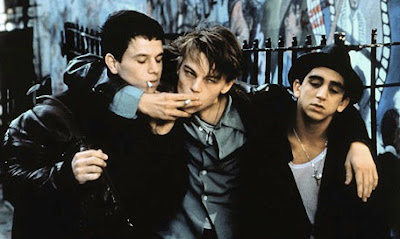
On the Blu-ray front, Palm will be releasing The Basketball Diaries on 20 April. The Who's The Kids Are Alright will be released by Sanctuary Records on 2 March. Troma will be releasing Steve Balderson's teen slasher satire Pep Squad and Peter George's Surf Nazis Must Die on 25 May. And it looks as though Hannover House will be releasing a Blu-ray in addition to the DVD of Abel Ferrara's Chelsea on the Rocks on 4 May.
- Tell Them Anything You Want: A Portrait of Maurice Sendak, 2009, d. Lance Bangs, Spike Jonze, Oscilloscope Pictures, 2 March, w. Maurice Sendak, Jonze, Catherine Keener, Meryl Streep, James Gandolfini
- Up in the Air, 2009, d. Jason Reitman, also on Blu-ray, Paramount, 9 March
- William Kunstler: Disturbing the Universe, 2009, d. Emily Kunstler, Sarah Kunstler, Arthouse Films/New Video, 30 March
- Irene in Time, 2009, d. Henry Jaglom, Breaking Glass Pictures, 6 April, w. Karen Black
- Jade Warrior [Jadesoturi], 2006, d. Antti-Jussi Annila, Lionsgate, 6 April
- Party Down, Season 1, 2009, d. Fred Savage, Bryan Gordon, Anchor Bay, 6 April
- Tetro, 2009, d. Francis Ford Coppola, also on Blu-ray, Lionsgate, 6 April
- Humanoids from the Deep, 1980, d. Barbara Peters, Jimmy T. Murakami, Shout! Factory, 13 April
- Tenderness, 2009, d. John Polson, Lionsgate, 13 April, w. Russell Crowe, Jon Foster, Laura Dern
- Three Kingdoms, 2008, d. Daniel Lee, Lionsgate, 13 April, w. Andy Lau, Sammo Hung, Maggie Q
- Duska [Dushka], 2007, d. Jos Stelling, Cinema Vault/MVD, 20 April
- Return to Hansala [Retorno a Hansala], 2008, d. Chus Gutiérrez, Cinema Vault, 20 April
- Wind Man, 2007, d. Khuat Akhmetov, Cinema Vault, 20 April
- Beginning of the End, 1957, d. Bert I. Gordon, Hens Tooth Video, 22 April
- Because of Him, 1946, d. Richard Wallace, Universal/TCM Vault, 27 April, w. Charles Laughton
- Dialogues of the Exiled [Diálogos de exiliados], 1975, d. Raoul Ruiz, Cnemateca/Facets, 27 April
- For the Love of Mary, 1948, d. Frederick De Cordova, Universal/TCM Vault, 27 April
- How to Live in the German Federal Republic [Leben - BRD], 1990, d. Harun Farocki, Facets, 27 April
- Mad About Music, 1938, d. Norman Taurog, Universal/TCM Vault, 27 April
- Possible Films, Volume 2: New Short Films by Hal Hartley, d. Hal Hartley, Microcinema, 27 April
- Red Rowan [Jarzębina czerwona], 1970, d. Ewa Petelska, Czesław Petelski, Polart/Facets, 27 April
- Roy Cohn/Jack Smith, 1994, d. Jill Godmilow, Facets, 27 April
- Surviving Desire, 1991, d. Hal Hartley, Microcinema, 27 April, w. Martin Donovan
- Sympathy, 2007, d. Andrew Moorman, Breaking Glass Pictures, 27 April
- That Certain Age, 1938, d. Edward Ludwig, Universal/TCM Vault, 27 April
- Three Smart Girls Grow Up, 1939, d. Henry Koster, Universal/TCM Vault, 27 April
- The Unquiet Death of Julius and Ethel Rosenberg, 1974, d. Alan Moorman, Facets, 27 April
- The Muse, 1999, d. Albert Brooks, Universal, 4 May, w. Brooks, Sharon Stone, Andie Macdowell, Jeff Bridges, Cybil Shepherd
- Suburbia, 1984, d. Penelope Spheeris, Shout! Factory, 4 May
- Love Games [Sette ragazze di classe], 1979, d. Pedro Lazaga, MYA Communication, 25 May
- Phyllis and Harold, 2008, d. Cindy Kleine, Breaking Glass Pictures, 25 May
- Sandok [Sandok: La montagna di luce], 1965, d. Umberto Lenzi, MYA Communication, 25 May
- Somebody's Knocking at the Door, 2009, d. Chad Ferrin, Breaking Glass Pictures, 25 May, w. Noah Segan
- True Blood, Season 2, 2009, also on Blu-ray, HBO, 25 May
- The Red Baron [Der rote Baron], 2008, d. Nikolai Müllerschön, Monterey Video, 1 June, w. Til Schweiger, Joseph Fiennes, Lena Headey
- Forbidden World [aka Mutant], 1982, d. Allan Holzman, Shout! Factory, 20 July
- Galaxy of Terror, 1981, d. Bruce D. Clark, Shout! Factory, 20 July, w. Robert Englund, Sid Haig, Grace Zabriskie

13 January 2010

Moi, ailleurs

In addition to my own proceedings, I participated on two other sites' '00s round-up, both of which were posted today. Firstly, over at The Auteurs Notebook, a collection of writers submitted a single image from a single film from the past ten years and then defended that with a single sentence. The image I selected came from Claire Denis' L'intrus.

Over at Out 1 Film Journal, I was asked to contribute my Top 13 Films of the '00s (which you can find here), as well as 5 performances and directors (for their entire output over the past ten years). You can see the results at the link above.

The performances I selected, in order, were:

1. Isabelle Huppert - La pianiste
2. Daniel Day-Lewis - There Will Be Blood
3. Tilda Swinton - Julia
4. Laura Dern - Inland Empire
5. Ryan Gosling - Half Nelson

So to conclude my list-making of the '00s, I came up with 20 runners-up, alphabetically. It's predictably female-heavy. Had I seen Inglourious Basterds before a few days ago, I probably would have included Mélanie Laurent... but I'm always reluctant to make such high claims without allowing time to set in first.

Asia Argento - Boarding Gate
Javier Bardem - Before Night Falls
Juliette Binoche - Code inconnu (or Le voyage du ballon rouge)
Björk - Dancer in the Dark
Maggie Cheung - Clean
Penélope Cruz - Volver (or Vicky Cristina Barcelona)
Béatrice Dalle - À l'intérieur
Julie Delpy - Before Sunset
Emmanuelle Devos - for really every single film I saw her in during the '00s, I couldn't choose just one
Charlotte Gainsbourg - Antichrist
Olivier Gourmet - Le fils
Gene Hackman - The Royal Tenenbaums
Sally Hawkins - Happy-Go-Lucky
Ashley Judd - Bug
Samantha Morton - Morvern Callar
María Onetto - La mujer sin cabeza
Clive Owen - Closer
Rebecca Romijn-Stamos - Femme Fatale
Carice van Houten - Zwartboek
Jürgen Vogel - Die freie Wille

20 November 2009

The Decade List: Julia (2008)

Julia – dir. Erick Zonca

[Edited from a previous “defense” of Julia, which was written before a number of US critics got on board with the film]

Over the past ten years, a number of films have showcased the many talents of Tilda Swinton, whose uncanny screen presence can’t really be likened to anyone else working today. Other than maybe Asia Argento, I can think of no other actor who garnered what one might call a “cult following,” a status infrequently reserved for thespians. Granted, the gay community has often championed actors (or, more accurately, actresses) that most straight people just don’t “get” (examples of which include Bernadette Peters, Gina Gershon, Maria Montez in hindsight), and during the 1990s, it was the gays who made up the cult of Tilda, thanks to her involvement with Derek Jarman and her notable turns in queer flicks like Orlando, Female Perversions and Love Is the Devil. While the cult has certainly expanded, its core members have remained persistent.

The cult of Tilda began multiplying somewhere around The Deep End, a relentlessly mediocre film only to be remembered as the film that introduced the mainstream arthouse crowd to Swinton’s “strange powers.” From there, Swinton showed up in a number of minor roles in a range of lousy Hollywood productions (Vanilla Sky, The Chronicles of Narnia, Constantine) and notable, acclaimed features by independent cinema darlings (Adaptation., Broken Flowers), none of which provided her with enough screen time to truly radiate. The three films that placed her at the center (Teknolust, Young Adam, Stephanie Daley) were only remarkable as a result of the directors’ realization of an unyielding truth: the more Tilda, the better. That Swinton would win an Oscar for a supporting role in Michael Clayton says nothing of that truth, for director Tony Gilroy gave Swinton the best platform of the “Aughts” to shine in an auxiliary form (at least until Jarmusch’s The Limits of Control). Though fans started accumulating through the years without sacrificing its founding members, that Oscar win would become the benchmark for the cult of Tilda, the moment where both Hollywood and the movie-going public finally caught up.

Lynn Hershman-Leeson may have had the right idea giving us not one, but four Tildas in Teknolust, but I’m sticking with Erick Zonca’s Julia as the zenith of Swinton’s twenty-first century output. After a nine-year hiatus following Le petit voleur, Zonca returned to the world of filmmaking with his first English-language picture, a loose remake of John Cassavetes’ Gloria with Swinton in the Gena Rowlands role. On the surface, Julia and The Deep End have quite a few commonalities. Both films rest their ample plot contrivances on Swinton’s shoulders as she barrels through ethically gray domains. On a critical level however, Zonca succeeds where Scott McGehee and David Siegel fail. Julia exudes an intensity that The Deep End severely lacks, and that intensity never falters during the film’s two-and-a-half hours, even if Zonca takes it into the realms of the highly implausible. Though to be fair, Julia isn’t any more illogical than its Hollywood equivalents, but I suppose the film’s built-in “prestige” makes critics remark on this more than something like Flightplan.

What really makes Julia undoubtedly superior to The Deep End is the focus Zonca gives his film. The camera (operated by Yorick Le Saux, a frequent collaborator of Olivier Assayas and François Ozon) hardly ever leaves Swinton’s Julia; in fact, there isn’t a single scene in the film that ever pushes her aside. It may be hard to remember that Swinton’s role of a modest suburban mother in The Deep End was a radical role choice for her at the time, but it’s pretty hard to think of a more vibrant character Swinton has produced for the screen than Julia Harris, an alcoholic, opportunistic floozy who gets in over her head with an ill-fated kidnapping scheme. It’s a loud performance, but it’s wholly without vanity, from lying on a stranger’s bed in a drunken haze with her tit hanging out to recklessly tossing about the ten-year-old boy (Aidan Gould) she kidnaps.

Like the film itself, believability is not paramount when appreciating Swinton’s performance. Taking Sally Potter’s Orlando as the easiest indicator of such, there’s never a moment where you buy Swinton, despite her androgynous features, as the masculine half of a French boy who turns into a woman midway through the film. It’s what she brings out in her performance that’s so uncanny. She exudes a rare classiness in each of her delicate performances, no matter how rough around the edges she may look, something that seems both long-forgotten and new. Even at Julia’s most belligerent, Swinton never drops her put-on American accent, and yet it’s still an accent that doesn’t sound terribly authentic. And again, it doesn’t really matter. It’s Swinton’s glances and delivery and the way she moves herself through the film that is so stellar. Whereas an actress like Naomi Watts, who seems to seek out roles that allow her to showcase her impressive crying/snotting abilities, Swinton is consistently surprising, never allowing the grittiness and possible familiarity to run stale.

The word “fearless” is one I’ve read several times to describe Swinton, and it’s certainly appropriate. In Julia, Swinton finds the core of this woman, as dark and unlikable as it may be, and vehemently brings her to life on the screen. A virile presence like Swinton’s makes it difficult to believe that she doesn’t really consider her an “actor,” but it’d be more difficult to imagine a trained “actor” to produce the sort of raw power Swinton does with nearly every single performance.

With: Tilda Swinton, Aidan Gould, Saul Rubinek, Bruno Bichir, Kate del Castillo, Jude Ciccolella, Horacio Garcia Rojas, Kevin Kilner, Eugene Byrd, John Bellucci
Screenplay: Erick Zonca, Aude Py
Cinematography: Yorick Le Saux
Music: Pollard Berrier, Darius Keeler
Country of Origin: France/USA/Mexico/Belgium
US Distributor: Magnolia

Premiere: 9 February 2008 (Berlin International Film Festival)
US Premiere: 4 October 2008 (Woodstock Film Festival)

23 September 2009

Miscellaneous Updates for 23 September

I mentioned my friend Stewart Copeland's film Jennifer playing on PBS' POV the other day; well, James Hansen posted the interview he conducted with Copeland yesterday on the Out 1 Film Journal. If you missed its airing last night, you can watch it here. Also, for the bored, you can watch the "web series" All the Young Dudes, which Stewart and I both worked on, via his website. I play a slightly exaggerated version of myself in three episodes. Look out, Courtney Love.

Canada has selected Xavier Dolan's I Killed My Mother [J'ai tué ma mère] to be their representative for the Oscars next year, which, if nominated, would make its director (one of?) the youngest director to be nominated for a narrative feature (correct me if I'm wrong). Canada last claimed the prize in 2004 with Denys Arcand's The Barbarian Invasions [Les invasions barbares]. Poland has chosen Borys Lankosz's The Reverse [Rewers], and Bosnia and Herzegovina named Namik Kabil's Guardians of the Night [Čuvari noći] as their official submission. According to Movie On, the Netherlands will be submitting The Silent Army, Italy's choice of Giuseppe Tornatore's Baarìa is not official and Serbia is reconsidering their choice of Here and There due to its prevalent English dialogue.

In acquisition news, Magnolia will add another Tilda Swinton to their roster (after Julia) in Luca Guadagnino's I Am Love [Io sono l'amore]. The film premiered at Venice and also played at Toronto... and was, according to Vice President Tom Quinn, "unanimously [Magnolia's] favorite film at Toronto." Sony Pictures Classics also picked up Aaron Schneider's Get Low, which stars Bill Murray, Robert Duvall, Sissy Spacek and Lucas Black.

And finally, I also have a few DVD updates for you. Though few, there are some noteworthy titles that have been announced, including the doc Beautiful Losers from Oscilloscope and Pascal-Alex Vincent's feature debut Give Me Your Hand [Donne-moi la main] from Strand, which I have yet to see.

- The Carter, 2009, d. Adam Bhala Lough, Virgil Films, 17 November
- Funny People, 2009, d. Judd Apatow, Universal, also on Blu-ray, 24 November
- Beautiful Losers, 2008, d. Aaron Rose, Joshua Leonard, Oscilloscope, 8 December
- Hollywood, je t'aime, 2009, d. Jason Bushman, Wolfe, 9 December
- 20th Century Boys: Chapter 1, 2008, d. Yukihiko Tsutsumi, Viz Media, 15 December
- Murder by Decree, 1979, d. Bob Clark, Lionsgate, 15 December
- The Tudors, Season 3, 2009, Showtime/Paramount, 15 December
- Ichi: The Movie, 2008, d. Fumihiko Sori, FUNimation, also on Blu-ray, 22 December
- Downloading Nancy, 2008, d. Johan Renck, Strand, 12 January
- Give Me Your Hand [Donne-moi la main], 2008, d. Pascal-Alex Vincent, Strand, 26 January

05 June 2009

Without a Paddle

The Limits of Control - dir. Jim Jarmusch - 2009 - USA/Spain/Japan - Focus Features

Written for Gone Cinema Poaching.

Though also structured around a series of vignettes, Jim Jarmusch's latest, The Limits of Control, is a welcome departure from his last two films, Broken Flowers and Coffee and Cigarettes. Bearing a much closer resemblance to Dead Man and, perhaps, Ghost Dog: The Way of the Samurai, The Limits of Control is Jarmusch at his most coded and narratively "avant garde." Setting aside his usual influences (Yasujiro Ozu and Seijun Suzuki, for example), Jarmusch opts for a strange fusion of Jean-Pierre Melville, Alejandro Jodorowsky and, even, Jacques Rivette. Using these comparisons might suggest a dismissive act of deduction, but, like so many of his other films, The Limits of Control owes everything to the familiar and mysterious world of the cinema.

Though I suspect this is how I feel about most films that would qualify, it isn't until Tilda Swinton appears onscreen that the film begins to work. With a white-blonde wig and cowboy hat, Swinton delivers the film's best line, "Movies are like dreams you're never really sure you've had." The line was taken directly from a speech Swinton gave at the San Francisco Film Festival in 2006 and ultimately serves as both the guiding light of The Limits of Control as well as the point of surrender. As the third visitor for Isaach De Bankolé, the hero of the film simply credited as 'Lone Man,' her arrival onscreen is when the viewer is forced into deciding whether or not they wish to accompany Jarmusch and De Bankolé on their strange, covert journey through Spain.

In a series of arcane, frequently misleading codes, the viewer follows De Bankolé on this cryptic quest, adorned with mostly familiar faces (De Bankolé, Swinton, Bill Murray, Alex Descas, John Hurt and Youki Kudoh have all starred in at least one other film by the director). While the partnerships with cinematographer Christopher Doyle and musicians Boris and Sunn O))) are firsts for their director, they certainly recall the directors' best visual and musical collaborations. In the end, what one takes from The Limits of Control is a matter of decision and acceptance. The film never reaches the unbeatable heights of the films it aspires to (Céline and Julie Go Boating and The Holy Mountain, to name a few), but I'd be ridiculous to slight any film that. For the patient viewer though, The Limits of Control has a lot to offer and is the most assured film the director has made in a decade.

23 February 2009

Faggy-licious

Why I bother reading user comments about the Oscar show is an issue that I should address with my analyst, but as I did again this year, hearing people bitch and moan about Hollywood's "liberal agenda" being thrown out in acceptance speeches just annoys me to no end. "I want escapism," I heard one person say... well, fine, go see Taken again. The Oscars are, and have always been, self-congratulatory, so unless that's your idea of "escapism," I'd suggest going elsewhere (although Slumdog Millionaire being named the Best Picture of the year does suggest that the commenter isn't alone in his thoughts). However, what people fail to mention is how the Academy Awards are the perfect platform for such "liberal agenda." Sean Penn isn't wrong in calling Hollywood a bunch of "homo-lovin', commie bastards," but emphasis should be on homo-lovin', not actually "homo." As much as I reject earnestness in most of its forms, Dustin Lance Black's acceptance speech actually struck a chord with this cynic. People fail to recongize that for a young homo, there's really no one to look up to. Sure, they've got plenty of support, with GLAAD commercials with Rachel Griffiths and celebrities like Ricki Lake, Rose McGowan and Drew Barrymore marching for their equal rights, but who do they have to look up to? Hollywood's still so gay shy that outside of Ian McKellan, who can they even look up to? I'm not saying that having support from the heterosexual community isn't sufficent enough, but when you've got your pick of Boy George, Rupert Everett, Clay Aiken and some guy on Gray's Anatomy, it's still a pretty sad state of affairs. The Oscars, thus, form the perfect media outlet to spread Hollywood's "liberal agenda." I suppose things are heading in the right direction (albeit slowly), but I'll take that "liberal agenda" any day of the week. PS: Can Tina Fey and Steve Martin host the Oscars next year? And yeah, I can never resist posting photos of Tilda Swinton.

15 February 2009

Winners at Berlin

Despite all the bad press the Berlinale received this year (check out IndieWire to see the bulk of it), it looks as if Tilda Swinton and jury made the right decision in awarding Claudia Llosa's The Milk of Sorrow [La teta asustada] the Golden Bear, the fest's highest prize. Adrián Biniez's Gigante and Maren Ade's Alle Anderen [Everybody Else] shared the Silver Bear. David Husdon has the list of winners over at The Daily at IFC.com.

31 January 2009

César Nominees 2009

The nominees for this year's Césars, better known as the French equivalent to the Academy Awards, were announced over a week ago, and for some reason I'm only just now getting a chance to go over them. A French copaine of mine tells me that, similar to several of my favorite Gallic films (Betty Blue, anything by Assayas), the French don't seem to care much for Laurent Cantet's The Class, even though it won the Palme d'Or, was France's official submission for the Oscars and is apparently nominated in several categories at the Césars. Obviously, I haven't seen most of the year's nominees, but I think it's a bit criminal to have ignored both Mathieu Amalric and Emmanuelle Devos for A Christmas Tale in favor of Jean-Paul Roussillon and Anne Cosigny. I'd put my money on Guillaume Depardieu for best actor, à la Heath Ledger in The Dark Knight. You can see the full awards via the Alternative Film Guide, and the ceremony will be held on 27 February. The nominees are as follows:

Meilleur film français [Best French Film]

Entre les murs [The Class] - dir. Laurent Cantet
Il y a longtemps que je t'aime [I've Loved You So Long] - dir. Philippe Claudel
Mesrine (Mesrine: L'instinct de mort; Mesrine: L'ennemi public n° 1) - dir. Jean-François Richet
Paris - dir. Cédric Klapisch
Le premier jour du reste de ta vie [The First Day of the Rest of Your Life] - dir. Rémi Bezançon
Séraphine - dir. Martin Provost
Un conte de Noël [A Christmas Tale] - dir. Arnaud Desplechin

Meilleur réalisateur [Best Director]

Rémi Bezançon - Mesrine
Laurent Cantet - Entre les murs
Arnaud Desplechin - Un conte de Noël
Martin Provost - Séraphine
Jean-François Richet - Mesrine

Meilleur acteur [Best Actor]

Vincent Cassel - Mesrine
François-Xavier Demaison - Coluche, l'histoire d'un mec
Guillaume Depardieu - Versailles
Albert Dupontel - Deux jours à tuer
Jacques Gamblin - Le premier jour du reste de ta vie

Meilleure actrice [Best Actress]

Catherine Frot - Le crime est notre affaire
Yolande Moreau - Séraphine
Kristin Scott Thomas - Il y a longtemps que je t'aime
Tilda Swinton - Julia
Sylvia Testud - Sagan

Meilleur acteur dans un second rôle [Supporting Actor]

Benjamin Biolay - Stella
Claude Rich - Aide-toi, le ciel t'aidera
Jean-Paul Roussillon - Un conte de Noël
Pierre Vaneck - Deux jours à tuer
Roschdy Zem - La fille de Monaco

Meilleure actrice dans un second rôle [Supporting Actress]

Jeanne Balibar - Sagan
Anne Consigny - Un conte de Noël
Edith Scob - L'heure d'été
Karin Viard - Paris
Elsa Zylberstein - Il y a longtemps que je t'aime

Meilleur premier film [Best First Film]

Home - dir. Ursula Meier
Il y a longtemps que je t'aime - dir. Philippe Claudel
Mascarades - dir. Lyes Salem
Pour elle - dir. Fred Cavayé
Versailles - dir. Pierre Schoeller

Meilleur scénario original [Original Screenplay]

Séraphine - Marc Abdelnour, Martin Provost
Le premier jour du reste de ta vie - Rémi Bezançon
Bienvenue chez les Ch'tis [Welcome to the Sticks] - Dany Boon, Alexandre Charlot, Franck Magnier
Il y a longtemps que je t'aime - Philippe Claudel
Un conte de Noël - Arnaud Desplechin, Emmanuel Bourdieu

Meilleur scénario adaptation [Adapted Screenplay]

Deux jours à tuer - Eric Assous, Jérôme Beaujour, Jean Becker, François d'Épenoux
Le crime est notre affaire - François Caviglioli, Pascal Thomas
Entre les murs - François Bégaudeau, Robin Campillo, Laurent Cantet
Mesrine - Abdel Raouf Dafri, Jean-François Richet
La belle personne - Christophe Honoré, Gilles Taurand

Meilleure photographie [Best Cinematography]


Séraphine - Laurent Brunet
Mesrine - Robert Gantz
Un conte de Noël - Eric Gautier
Home - Agnès Godard
Faubourg 36 [Paris 36] - Tom Stern

Meilleur film étranger [Best Foreign Film]

Eldorado - dir. Bouli Lanners - Belgium
Gomorra [Gomorrah] - dir. Matteo Garrone - Italy
Into the Wild - dir. Sean Penn - USA
Le silence de Lorna [Lorna's Silence] - dir. Jean-Pierre Dardenne, Luc Dardenne - Belgium
There Will Be Blood - dir. Paul Thomas Anderson - USA
Two Lovers - dir. James Gray - USA
Valse avec Bashir [Waltz with Bashir] - dir. Ari Folman - Israel

Meilleur film documentaire [Best Documentary]


Elle s'appelle Sabine [Her Name Is Sabine] - dir. Sandrine Bonnaire
J'irai dormir à Hollywood [Hollywood, I'll Sleep over Tonight] - dir. Antoine de Maximy
Les plages d'Agnès [The Beaches of Agnès] - dir. Agnès Varda
Tabarly - dir. Pierre Marcel
La vie moderne [Modern Life] - dir. Raymond Depardon

Meilleur espoir masculin [Best Male Newcomer]


Ralph Amoussou - Aide-toi, le ciel t’aidera
Laurent Capelluto - Un conte de Noël
Marc-André Grondin - Le premier jour du reste de ta vie
Grégoire Leprince-Ringuet - La belle personne
Pio Marmai - Le premier jour du reste de ta vie

Meilleure espoir féminin [Best Female Newcomer]


Marilou Berry - Vilaine
Louise Bourgoin - La fille de Monaco
Anaïs Demoustier - Les grandes personnes
Déborah François - Le premier jour du reste de ta vie
Léa Seydoux - La belle personne

Meilleur court métrage [Best Short Film]


Les miettes - dir. Pierre Pinaud
Les paradis perdus - dir. Hélier Cisterne
Skhizein - dir. Jérémy Clapin
Taxi Wala - dir. Lola Frederich
Une leçon particulière - dir. Raphaël Chevènement

25 December 2008

2008 List #4: 25 (or so) Great Performances

Acting will always be something that fascinates me from afar, and nothing I'd prefer to talk about at any length. There's something scary about the whole process of becoming someone else, something that's beautifully mirrored in Juliette Binoche's performance in Abel Ferrara's Mary. And then there's the whole Heath Ledger thing. I didn't include him on this list, partially because he's making everyone else's lists, and partially because that shit is scary. The following list of 25 (or really more, as I've included some multiple performances for the year) is in no special order and has minimal annotation (because writing about acting for any length of time is sure to induce a pretty bad headache).

Sally Hawkins - Happy-Go-Lucky

As successful a writer/director Mike Leigh often is, Happy-Go-Lucky hinged on her entire performance. No matter how worthwhile his screenplay was, Hawkins' believability made the film.

Rebecca Hall - Vicky Cristina Barcelona

Although the film didn't completely rest on her shoulders, Hall's performance worked in the same way Hawkins did, as she accepted the challenge of making "natural" what seemed so "fake." Her Vicky thrived upon a façade of happiness (I realize, for Hawkins, it wasn't a mask), and when everything fell out of place, it just made Hall that much more radiant.

Michael Shannon - Shotgun Stories; Revolutionary Road

Like J.K. Simmons in Burn After Reading, Shannon was the only thing to really fuck-start the whole fiasco that was Revolutionary Road (more on that later), and in Shotgun Stories, he made his untrained co-stars look all the more inexperienced.

Juliette Binoche - Flight of the Red Balloon [Le voyage du ballon rouge]

Binoche makes acting look effortless, and Flight of the Red Balloon is probably one of her most complex, nuanced endeavors in a career full of brilliance.

Colin Farrell, Brendan Gleeson, Ralph Fiennes - In Bruges

Rethink all the bad stigma you attach to Farrell (honestly, he wasn't the worst part of Alexander). All three actors are as good (or better) as they've ever been here.

Asia Argento - Boarding Gate

Yeah, she made a striking turn in The Last Mistress, but it was in Boarding Gate that Argento was given the best platform for astounding. More on this when I publish my best of the year.

Frank Langella - Frost/Nixon

It ended up not mattering much that Langella didn't resemble Tricky Dick physically or vocally, which is tremendous for playing someone ingrained so deeply in the public's eye.

Sean Penn, James Franco, Josh Brolin - Milk

If I had more space or time, each of these actors would deserve their own inclusion. Harvey Milk could end up being the role best associated with the often over-the-top Penn. The chemistry between Penn and Franco was intense (even if the film could have gone a little bit deeper), and Brolin, as I'm sure you've already heard or witnessed, gives remarkable shape to what could have been a one-dimensional, unsympathetic individual.

Inés Efron - XXY

In XXY, Efron is perfect, in both her demeanor and chilling despair. It’s the sort of performance you see, without knowing much about the actress, and assume, “Well, the director must have found her on the street and knew she was exactly what was needed for the role.” However, XXY is her fourth film, and not only is her role sizable in its challenges, Efron is both delicate and rough and handles the conflicting femininity and masculinity like an actress twice her senior. Fabulous stuff. (Taken from a post I wrote earlier this year)

Tilda Swinton - Julia; The Curious Case of Benjamin Button

In both leading and supporting roles, Swinton has the capacity to captivate no matter how long she's onscreen.

Richard Jenkins - The Visitor; Step Brothers

As excellent as he was in The Visitor, look for his "emotional" speech near the end of Step Brothers. Thanks to both films, Jenkins should no longer remain an untapped resource.

Mathieu Amalric, Emmanuelle Devos - A Christmas Tale [Un conte de Noël]

As they did in Desplechin's Kings and Queen, Amalric and Devos again play lovers, this time in the present tense, and it's quite a compliment to stand out in a cast this impressive.

Béatrice Dalle - Inside

Perhaps inspired by the flesh-eating nymphomaniac she played in Claire Denis' Trouble Every Day, Inside flipped the coin on her usual persona of being sexy (but a little bit scary) in making her scary (but a little bit sexy) as the black-donning, scissors-holding home invader in Inside. It's probably one of the most frightening performances in a horror film that I've ever seen.

Anamaria Marinca - 4 Months, 3 Weeks and 2 Days

As the roommate of the pregnant girl, Marinca was mesmerizing, devestating and even a little bit funny.

Emily Mortimer - Transsiberian

In looks, Mortimer might not have what it takes to pull off the former bad girl, but in Transsiberian, she's absolutely believable and utterly captivating.

Jason Patric - Expired

Hysterically rude, Patric was like the broken down version of his character in Your Friends & Neighbors.

Julianne Moore - Savage Grace

Taking on roles as difficult as that of Barbara Baekeland is what lifts Moore into the masterclass. Though Savage Grace is quite flawed, there's nothing at all wrong with her (you could say the same about Blindness, though she's more effective here), and, as I said before, I don’t think any actress today can utter the word “cunt” with as much ferocity as Moore, and after you see the film, try to think of another actress who would have even tried to pull of that scene.

Jürgen Vogel - The Free Will

Serving as co-writer as well, Vogel is shattering the film's serial rapist in one of the year's most troubling performances.

Michael Fassbender - Hunger

It would be too easy to applaud Fassbender for pulling a Christian Bale and losing an ungodly amount of weight for the second half of Hunger, so it certainly helps that he would have been commanding at any weight. I'll even forgive him for being in 300.

Rosemarie DeWitt - Rachel Getting Married

In the less showy performance, DeWitt is the rock of Rachel Getting Married. Again, more on this when my best films list rolls out.

Penélope Cruz - Vicky Cristina Barcelona

Cruz lights my F-I-R-E, as you probably know by now, but who knew she could be as savagely funny as she was in the role of Maria Elena? Cruz and Hall were so night-and-day that I had to include them separately.

Peter Mullan - Boy A

Though Andrew Garfield was also quite good in the title role, Mullan was Boy A's shining light as the social worker who assists Garfield's rehabilition in society.

Michelle Williams - Wendy and Lucy

You can see Wendy's entire world buckle under inside Williams' face. She's a revelation here, and one of the most promising actresses of her generation (surprising from a girl who rose to fame on Dawson's Creek and lasted the show's entire run).

Mickey Rourke - The Wrestler

No matter how you feel about The Wrestler (yes, more on that later), it's hard to resist Rourke's career-capping turn as a faded pro "wrestler." Whether this leads to a string of roles or not is unclear, but he definitely deserves all the accolades that have been thrown upon him thusfar.

Sigourney Weaver - Baby Mama

Too often (even in my case) does appreciation for dramatic work overshadow the great comedic performances of any year, which are (so I hear) a lot more difficult a task to pull off. Weaver, as the owner of the surrogate adoption agency, isn't just hilarious on her own, but she does what every lead actor wishes the supporting players would do and makes them even funnier. Tina Fey's reaction to finding her in the hospital with a set of twins is the highlight of the whole film.