Yesterday, I addressed the acquisition of "raw" feathers, as well as the associate costs, etc. Today, I'll address preparing those feathers for use a quill
Cleaning, Curing, and Cutting
Once a feather has been obtained, it must be cured, cut, and trimmed in order to be used for writing.
First, the feather must be soaked (to make it more pliable) in preparation for curing. For the feathers of ordinary and extraordinary creatures, this can be accomplished by soaking the feather for approximately 24 hours in water that has been purified (by a cleric of any level). For the feathers of magical creatures, the water must also be blessed by a cleric of at least 7th level, and the feather must be soaked in that water for a number of days equal to the difference between an AC of 10 and the AC of the creature from which the feather was procured (e.g., a feather from a magical creature of an AC of 7 would need to soak for 3 days in purified and blessed water.)
Once a feather has soaked, it is tempered to give the tube resilience and toughness (making it less brittle). For the feathers of ordinary and extraordinary creatures, this is accomplished by first heating purified sand (through the use of the cleric spell purify food and drink), then removing the sand from the heat source, and third plunging the tip of the feather into the hot sand, allowing it to remain there until the sand cools. For magical creatures immune to the effects of heat, this tempering process is normally impossible to achieve, and will affect the success of trimming and cutting the feather (as outlined below).
Once the feather has been tempered, it is ready to be cleaned, trimmed, and cut. First, the barbs nearest the tip are removed, giving the hand a clean area to grip the quill. Next, the tip is trimmed to create a small opening at the end of the barrel, allowing access to remove membranes from the inside of the barrel. Finally, the tip is shaped (adding both a point, as well as a “slit” to aid ink flow). For the feathers of ordinary and extraordinary creatures, the chance of success for this process is 10% per level of the spellcaster plus 10% for each point of dexterity above 15 (e.g., a 7th level magic-user with a dexterity of 16 would have a 80% chance to successfully clean and cut an ordinary/extraordinary feather for curing.) For the feathers of magical creatures, the chance of success is the same as above minus the difference between an AC of 10 and the AC of the creature from which the feature was procured times 5% (e.g., the same magic user attempting to clean the feather of a magical creature with an AC of 5 would have a 55% chance of success.) Furthermore, if a magical creature is immune to the effects of normal weapons, the tools being used by the scribe preparing the feather must be of a sufficient level to affect the creature (e.g., if a +2 or better weapon is required “to hit” the creature normally, the tools of the scribe must likewise be sufficiently magically endowed.) For the feathers of creatures immune to the effects of heat (and therefore immune to the effects of the heated sand), the chance of success is similar to that of magical creatures (as above) with the AC modifier multiplied by 10% instead of 5% (e.g., the same magic user attempting to prepare the quill of a magical creature immune to the effects of heat would have only a 30% chance of succeeding.)
Showing posts with label scrolls. Show all posts
Thursday, November 29, 2012
Wednesday, November 28, 2012
Scroll Week Day 3: Feather Availability and Pricing
Today's scroll week entry will take a look at "raw" feather pricing and availability, while tomorrow's entry will address the process for preparing a raw feather for use as a quill.
Suitability of Feathers
The most suitable feathers for writing come from the outer rear edge of the wing of a bird and are denominated by the order in which they are fixed to the wing, with the first of these feathers (the “pinion”) being the most desirable for scribes. The second and third feathers are also generally acceptable, even for the more discerning scribe.
Feather Pricing
Though "raw" feathers (those feathers not yet prepared for use as a quill) of extraordinary and magical creatures are not widely available for sale, some varieties may be found in more esoterically-stocked magic shops. To determine the “fair market” price in g.p. for a raw (unprepared) pinion feather, multiply the experience point value of the creature (including XPs for the creature's average hit points) by the "frequency factor" of the creature as below:
Feather pricing example - griffon (per 1e DMG):
Experience point value = 375 + 10/hp (w/ 28 average hp = +280) = 655 XP
Griffon = uncommon = frequency factor of 2
655 x 2 = 1,310 gp fair market price for a griffon pinion feather
Normally, “second” and “third” position feathers are priced respectively at 95% and 90% the value of pinion/prime feathers.
Prepared Quills
Prepared quills of an extraordinary or magical nature are nearly impossible to come by, but spellcasters/merchants who specialize in the trade (of preparing quills) are not unheard of, often demanding ten times or more the cost of a “raw” feather for a prepared quill of the same type.
ABOUT THE GRIFFIN IMAGE AT THE TOP OF THIS PAGE...
The griffin image on this page came from Wikimedia and was donated by educational publisher Pearson Scott Foresman. I will posting soon about their donation from 2007 and the help Wikimedia still needs to finalize those images so they are ALL available the public.
Suitability of Feathers
The most suitable feathers for writing come from the outer rear edge of the wing of a bird and are denominated by the order in which they are fixed to the wing, with the first of these feathers (the “pinion”) being the most desirable for scribes. The second and third feathers are also generally acceptable, even for the more discerning scribe.
Feather Pricing
Though "raw" feathers (those feathers not yet prepared for use as a quill) of extraordinary and magical creatures are not widely available for sale, some varieties may be found in more esoterically-stocked magic shops. To determine the “fair market” price in g.p. for a raw (unprepared) pinion feather, multiply the experience point value of the creature (including XPs for the creature's average hit points) by the "frequency factor" of the creature as below:
| Frequency | Freq. Factor |
| Common | .5 (one-half) |
| Uncommon | 2 |
| Rare | 5 |
| Very Rare | 10 |
Feather pricing example - griffon (per 1e DMG):
Experience point value = 375 + 10/hp (w/ 28 average hp = +280) = 655 XP
Griffon = uncommon = frequency factor of 2
655 x 2 = 1,310 gp fair market price for a griffon pinion feather
Normally, “second” and “third” position feathers are priced respectively at 95% and 90% the value of pinion/prime feathers.
Prepared Quills
Prepared quills of an extraordinary or magical nature are nearly impossible to come by, but spellcasters/merchants who specialize in the trade (of preparing quills) are not unheard of, often demanding ten times or more the cost of a “raw” feather for a prepared quill of the same type.
ABOUT THE GRIFFIN IMAGE AT THE TOP OF THIS PAGE...
The griffin image on this page came from Wikimedia and was donated by educational publisher Pearson Scott Foresman. I will posting soon about their donation from 2007 and the help Wikimedia still needs to finalize those images so they are ALL available the public.
Tuesday, November 27, 2012
Scroll Week Day 2: Attribute Modifiers
I'm not sure why attribute modifiers aren't taken into account in the DMG regarding scroll inscription. Honestly, I can't even take a cap off a fountain pen without getting ink all over my index finger. I can't imagine having to spend days (or weeks if you use the BX time requirements) trying "not to mess up" a scroll. The real question is how much or how little modifier there should be?
On the chart at left, my thinking is this... after a certain point toward the "high end" of the attributes (in this case, around 15), the chance of failure "flattens out" if you're "following directions" to create the scroll. But below that point, I think it would get proportionately easier to screw up. No offense to those magic-users out there with the absolute minimum attributes required for the class, but a magic-user with INT and DEX of 9 each should face a much higher failure rate for successful scroll creation than a magic-user with INT and DEX of 18 each, regardless of the level of the spellcaster or the spell. BTW, modifiers are cumulative, so yes... a spellcaster with a DEX and INT of 9 each would modify their chance of success by -150%!)
Monday, November 26, 2012
Scroll Week Day 1: Number of Spells per Scroll
Ever since I wrote the post Scrutinizing the Scroll: Papyrus, Parchment and Vellum back in February of this year, it has continually been the most-viewed page in the history of this blog. With Comprehending the Quill and Investigating Ink, it's formed a trilogy that I hope someday finds life as a stand-alone supplement with a comprehensive approach to scroll creation for OSR editions (generically). After all, no matter which old-school edition you prefer, the rules regarding scroll creation are skimpy at best. So with that in mind, I put forth this week's post to cover some of the bases that I feel are uncovered by the rulebooks, but easily addressed. Today, I'll address the need for rules regarding the number of spells that may be inscribed on a single scroll...
Scroll Space Requirements
More than one spell may be inscribed on a single piece of papyrus, parchment, or vellum. However, the total space required for inscription is dependent upon the level and type of spells being inscribed, as well as the level of the spellcaster inscribing the scroll.
The maximum number of spells that a spellcaster may inscribe on a standard-sized sheet is a sum of spell levels no greater than the level of the spell caster (e.g., a 9th level magic-user may inscribe one 4th level spell and one 5th level spell on the same page, but may not inscribe two 5th level spells on the same page).
The maximum number of spells allowed on a standard-sized sheet (while not accounting for the scribe's spellcasting level) is a sum of spell levels no greater than 20 (e.g., two 9th level spells and one 2nd level spell would fit on the same scroll, but two 9th level spells and one 3rd level spell would not.)
Scrolls requiring more space must utilize a larger sheet, rather than a series of “attached” sheets. Any attempt to glue or bind multiple sheets together will cause impurities and “blemishes” to the scroll’s surface, hindering or possibly even nullifying the intended effects of the scroll.
Scroll Space Requirements
More than one spell may be inscribed on a single piece of papyrus, parchment, or vellum. However, the total space required for inscription is dependent upon the level and type of spells being inscribed, as well as the level of the spellcaster inscribing the scroll.
The maximum number of spells that a spellcaster may inscribe on a standard-sized sheet is a sum of spell levels no greater than the level of the spell caster (e.g., a 9th level magic-user may inscribe one 4th level spell and one 5th level spell on the same page, but may not inscribe two 5th level spells on the same page).
The maximum number of spells allowed on a standard-sized sheet (while not accounting for the scribe's spellcasting level) is a sum of spell levels no greater than 20 (e.g., two 9th level spells and one 2nd level spell would fit on the same scroll, but two 9th level spells and one 3rd level spell would not.)
Scrolls requiring more space must utilize a larger sheet, rather than a series of “attached” sheets. Any attempt to glue or bind multiple sheets together will cause impurities and “blemishes” to the scroll’s surface, hindering or possibly even nullifying the intended effects of the scroll.
Tuesday, October 16, 2012
Of Scroll and Scribe (Revisited)
Back in February of this year, I put a post together talking about parchment and papyrus, in the context of scroll creation for D&D. I had no idea it would go on to become my most-viewed blog entry of all time.
For my newer followers, here are the links to what became a trilogy of articles related to the subject (and founding the basis for a project that, for now, is on the back burner... but staying warm).
Scrutinizing the Scroll Part I: Papyrus, Parchment and Vellum
Scrutinizing the Scroll Part II: Comprehending the Quill
Scrutinizing the Scroll Part III: Investigating Ink
For my newer followers, here are the links to what became a trilogy of articles related to the subject (and founding the basis for a project that, for now, is on the back burner... but staying warm).
Scrutinizing the Scroll Part I: Papyrus, Parchment and Vellum
Scrutinizing the Scroll Part II: Comprehending the Quill
Scrutinizing the Scroll Part III: Investigating Ink
Monday, June 25, 2012
Scrutinizing the Scroll Part III: Investigating Ink
I had not originally intended to followup my previous two posts (Scrutinizing the Scroll:" Papyrus, Parchment and Vellum and Scrutinizing the Scroll Part II: Comprehending the Quill) with a third post about pigments and dyes. That being said, I also had no intention of following the original Scrutinizing the Scroll post with an additional post on writing utensils. However, based on speculation on other blogs, as well as the potential for application to game play, it was inevitable. I'm just sorry it took this long to get to it.
IT STARTS WITH SCIENCE
That may be blasphemous to certain clerics or to those wizardly sorts that think of magic as an art but, when it comes to color, it starts with the science of light. Without getting into a whole discussion of the basic difference between additive color (e.g., TVs, PDAs and computer monitors) and subtractive color (e.g., physically written and printed matter), know that this discussion will be limited to the realm of subtractive color as we are restricting ourselves to a consideration of the written scroll and its game world implications and applications.
PIGMENTS & DYES
In subtractive color, certain wavelengths are "removed" from (the total spectrum of visible) light. This is done through the use of pigments and dyes that filter out certain wavelengths to reflect the remaining wavelengths back from the substrate, and allowing those wavelengths back into the eye. So a pigment or dye that appears blue, actually filters out all of the other colors, allowing only the blue wavelengths to enter the eye. (NOTE: fluorescent, phosphorescent, and other forms of luminescent materials actually emit light.) Pigments and dyes are quite similar in the way they react with light (especially in terms of their color properties), but are vastly different in the way they react with the substrate to which they are applied. Simply put, the difference between pigments and dyes as color substances is this: pigments are insoluble and dyes are soluble.
PIGMENTS
For a pigment (as insoluble matter) to be applied to paper, it must be accompanied by a binding agent that will both: A) hold the pigment into a form that can be held/applied, and B) allow the pigment to be held to the writing substrate. Some binders are naturally darker than others (e.g., walnut oil compared to linseed oil), and each has particular way of reacting to temperature—and that's what it all comes down to. Dependent upon the binder being used (and, on occasion, the pigment), the key considerations of clarity, finish, smoothness of application, and so on usually come down to the temperature. How quickly does the oil/fat heat? And to what temperature should it be heated in order to remove the most impurities, most readily incorporate the pigment, best sustain or achieve the desired color, and produce the consistency desired for application? And then there's drying time.
Regardless of the method of application (brush, finger, stick, et al.), because the pigment is insoluble, it must "rest" on the surface of the substrate (paper, papyrus, et al.) Though the oils from the binder may bleed into the substrate and have affinity with it (see "Dyes" below), and some particles of the pigment may stain the substrate, as a whole the pigment does not.
DYES
Dyes, because they are soluble (unlike pigments), are normally applied in an aqueous solution which may or may not include a mordant (from the Latin "mordere", meaning "to bite) to give it fastness (usually included in dyes used to dye fabrics so the dye doesn't "wash out" from the fibers.) Also because they are soluble, dyes are able to form a bond with the surfaces to which they are applied (having affinity). Whereas the binder acts a "holding agent" for pigments, the aqueous solution acts as a "carrier", bringing it to the surface in a form that will allow the dye to form its bond.
SOURCES OF PIGMENTS AND DYES
Pigments and dyes come from both organic sources (vegetable and animal matter) or inorganic sources (minerals).
Example Plant Sources: roots, berries, bark, leaves, wood, fungi, lichen
Example Animal Sources: insects, cephalopods
Example Mineral (Inorganic) Sources: clay, iron oxide, lapus lazuli (an ultramarine semi-precious stone)
INK
For the purpose of this discussion, we will use the term "ink" in a broader way than the restricted definition many have for ink (as something you use to write with) vs. paint (which is not something used to write with.) In this discussion, ink is simply a viscous substance (liquid or paste) that holds/carries pigments or dyes and is used to apply coloring/marking to a surface.
Regardless of formula, an ink commonly comes down to four components: 1) colorants (pigments and dyes), 2) vehicles (binders/suspenders), 3) additives (to control flow and thickness), and 4) carrier substances (to keep the pigment/dye even distributed in the fluid matrix). Additionally, the additives and/or carrier substances may perform the duty of inhibiting the growth of infectious agents (like mold).
Additionally, inks generally fall into four classes: 1) aqueous, 2) liquid, 3) paste, and 4) powder. While the viscosity of an ink will determine whether a quill can be used of if a brush or some other writing utensil (e.g., a stylus) is required, powdered "inks" are much more contemporary and are most commonly found in thermographic printing (you know.. those cheap "raised letter" business cards... yup... that's a powder that's "melted" onto the paper.) Powders, however, may be used as an addition to a written sheet to aid in drying.
GAMING CONSIDERATIONS
MATERIAL SOURCES
Dyes can often be removed from plant and animal sources by boiling (or capturing/extracting in the case of insect or cephalopod secretions) and pigments are simply ground into a fine powder (putting that stereotypical mortar and pestle to good use). Colors can often be changed, enhanced, and/or synthesized through other means (e.g., interaction with other substances or through exposure to certain temperatures).
USE OF PIGMENTS VS. DYES
While pigments are usually much more color-fast (hold their color longer without fading), they can often be more expensive for a couple of reasons: 1) their source (e.g., semi-precious and precious stones and metals) and 2) the quantity of pigment required compared to dyes (which are much easer to "thin" with the use of a carrier.) The strength of a dye can also affect the strength of a scroll's desire effect. For example, a scroll written with a "watered-down" ink may produce a much weaker effect than a scroll written with a deep, rich, "uncut" source ink.
ULTRAVIOLET SPECTRUM
What of those pigments and dyes that absorb and re-emit light in the ultraviolet spectrum? Yes, they are invisible to the human eye, but in 1e many creatures are capable of seeing into that spectrum. That "blank" piece of vellum could easily be a True Seeing scroll written in an otherwise "invisible" ink that is easily seen by vision in the ultraviolet spectrum.
FINAL THOUGHTS
There is almost no limit to what pigment or dye source can be used to create an ink, or what you can do to it to achieve an effect; just understand the other (non-coloring) components required to create the ink, and that the process by which the ink is applied to the surface (per the Comprehending the Quill post) is dependent upon all the factors discussed above.
Now all that's left is to incorporate all of these posts into a game system for creating scrolls.
I guess I better get started on that.
IT STARTS WITH SCIENCE
That may be blasphemous to certain clerics or to those wizardly sorts that think of magic as an art but, when it comes to color, it starts with the science of light. Without getting into a whole discussion of the basic difference between additive color (e.g., TVs, PDAs and computer monitors) and subtractive color (e.g., physically written and printed matter), know that this discussion will be limited to the realm of subtractive color as we are restricting ourselves to a consideration of the written scroll and its game world implications and applications.
PIGMENTS & DYES
In subtractive color, certain wavelengths are "removed" from (the total spectrum of visible) light. This is done through the use of pigments and dyes that filter out certain wavelengths to reflect the remaining wavelengths back from the substrate, and allowing those wavelengths back into the eye. So a pigment or dye that appears blue, actually filters out all of the other colors, allowing only the blue wavelengths to enter the eye. (NOTE: fluorescent, phosphorescent, and other forms of luminescent materials actually emit light.) Pigments and dyes are quite similar in the way they react with light (especially in terms of their color properties), but are vastly different in the way they react with the substrate to which they are applied. Simply put, the difference between pigments and dyes as color substances is this: pigments are insoluble and dyes are soluble.
PIGMENTS
For a pigment (as insoluble matter) to be applied to paper, it must be accompanied by a binding agent that will both: A) hold the pigment into a form that can be held/applied, and B) allow the pigment to be held to the writing substrate. Some binders are naturally darker than others (e.g., walnut oil compared to linseed oil), and each has particular way of reacting to temperature—and that's what it all comes down to. Dependent upon the binder being used (and, on occasion, the pigment), the key considerations of clarity, finish, smoothness of application, and so on usually come down to the temperature. How quickly does the oil/fat heat? And to what temperature should it be heated in order to remove the most impurities, most readily incorporate the pigment, best sustain or achieve the desired color, and produce the consistency desired for application? And then there's drying time.
Regardless of the method of application (brush, finger, stick, et al.), because the pigment is insoluble, it must "rest" on the surface of the substrate (paper, papyrus, et al.) Though the oils from the binder may bleed into the substrate and have affinity with it (see "Dyes" below), and some particles of the pigment may stain the substrate, as a whole the pigment does not.
DYES
Dyes, because they are soluble (unlike pigments), are normally applied in an aqueous solution which may or may not include a mordant (from the Latin "mordere", meaning "to bite) to give it fastness (usually included in dyes used to dye fabrics so the dye doesn't "wash out" from the fibers.) Also because they are soluble, dyes are able to form a bond with the surfaces to which they are applied (having affinity). Whereas the binder acts a "holding agent" for pigments, the aqueous solution acts as a "carrier", bringing it to the surface in a form that will allow the dye to form its bond.
SOURCES OF PIGMENTS AND DYES
Pigments and dyes come from both organic sources (vegetable and animal matter) or inorganic sources (minerals).
Example Plant Sources: roots, berries, bark, leaves, wood, fungi, lichen
Example Animal Sources: insects, cephalopods
Example Mineral (Inorganic) Sources: clay, iron oxide, lapus lazuli (an ultramarine semi-precious stone)
INK
For the purpose of this discussion, we will use the term "ink" in a broader way than the restricted definition many have for ink (as something you use to write with) vs. paint (which is not something used to write with.) In this discussion, ink is simply a viscous substance (liquid or paste) that holds/carries pigments or dyes and is used to apply coloring/marking to a surface.
Regardless of formula, an ink commonly comes down to four components: 1) colorants (pigments and dyes), 2) vehicles (binders/suspenders), 3) additives (to control flow and thickness), and 4) carrier substances (to keep the pigment/dye even distributed in the fluid matrix). Additionally, the additives and/or carrier substances may perform the duty of inhibiting the growth of infectious agents (like mold).
Additionally, inks generally fall into four classes: 1) aqueous, 2) liquid, 3) paste, and 4) powder. While the viscosity of an ink will determine whether a quill can be used of if a brush or some other writing utensil (e.g., a stylus) is required, powdered "inks" are much more contemporary and are most commonly found in thermographic printing (you know.. those cheap "raised letter" business cards... yup... that's a powder that's "melted" onto the paper.) Powders, however, may be used as an addition to a written sheet to aid in drying.
GAMING CONSIDERATIONS
MATERIAL SOURCES
Dyes can often be removed from plant and animal sources by boiling (or capturing/extracting in the case of insect or cephalopod secretions) and pigments are simply ground into a fine powder (putting that stereotypical mortar and pestle to good use). Colors can often be changed, enhanced, and/or synthesized through other means (e.g., interaction with other substances or through exposure to certain temperatures).
USE OF PIGMENTS VS. DYES
While pigments are usually much more color-fast (hold their color longer without fading), they can often be more expensive for a couple of reasons: 1) their source (e.g., semi-precious and precious stones and metals) and 2) the quantity of pigment required compared to dyes (which are much easer to "thin" with the use of a carrier.) The strength of a dye can also affect the strength of a scroll's desire effect. For example, a scroll written with a "watered-down" ink may produce a much weaker effect than a scroll written with a deep, rich, "uncut" source ink.
ULTRAVIOLET SPECTRUM
What of those pigments and dyes that absorb and re-emit light in the ultraviolet spectrum? Yes, they are invisible to the human eye, but in 1e many creatures are capable of seeing into that spectrum. That "blank" piece of vellum could easily be a True Seeing scroll written in an otherwise "invisible" ink that is easily seen by vision in the ultraviolet spectrum.
FINAL THOUGHTS
There is almost no limit to what pigment or dye source can be used to create an ink, or what you can do to it to achieve an effect; just understand the other (non-coloring) components required to create the ink, and that the process by which the ink is applied to the surface (per the Comprehending the Quill post) is dependent upon all the factors discussed above.
Now all that's left is to incorporate all of these posts into a game system for creating scrolls.
I guess I better get started on that.
Monday, March 19, 2012
Scrutinizing the Scroll Part II: Comprehending the Quill
As a followup to my earlier post Scrutinizing the Scroll, I've decided to expand on the paper discussion there with some additional information about the various writing instruments associated with the various writing forms. As mentioned in that original post, all writing requires both a substrate (e.g., paper, papyrus, and wet clay) as well as a medium and, often, a utensil. In this post, I'll take a deeper look at those utensils in an attempt to provide the inventive DM additional fodder for scroll-related quests and the like.
Prehistoric Writing Instruments
The theories about what the cavemen used as a utensil are widely varied, but are nonetheless pretty interesting. While most of the following utensil types supposedly originate during prehistoric times, their use goes far beyond and, in many cases, continue through to today.
Reed Styluses (Sumerians)
As mentioned in the last post, the Sumerians living in the fertile valley between the Tigres and the Euphrates went straight to the most available materials... reed styluses and wet clay. As the writing utensils developed, so did the style of writing.
Brushes Made From Rush Stems (Egyptians)
This baby was really a sort of hybrid pen/brush. A thin-stemmed rush, or reed, plant was cut (usually to a length of about nine inches.) Then, via a similar method to their caveman precursors, the chewed or hammered it at one end to soften it. The rush stem was easily frayed, and held enough ink to get through (at least) a few letters before having to re-ink.
The Qalam (Arabia/Persia)
The qalam is an reed pen with a flat nib, the word "qalam" being a derivative of the Greek word for "pen." The angle of use evolved with the various forms of Aramaic (khufic and naskhi) and, later, Hebrew and Sanskrit, all of which feature strong contrast between thick and thin strokes.
The Evolved Stylus (Romans)
The Romans used a couple of basic forms of stylus. For writing with ink (on parchment), they used a very simple pointed wood stylus. For writing on wax, they used a metal stylus with a pointed tip on one end, and a flat end on the other which was used to "wipe out" their mistakes. For some applications, the writing tip of the stylus might have a slightly chiseled tip to allow for variation in stroke width.
The Quill Pen
Invented around 700 A.D., the quill pen was the dominant writing instrument for most of our recent history (pretty much until the fountain pen was invented in the late 1800s A.D.) Essentially, the feather of a bird is cleaned and then sharpened using a special knife (thus the origin of the term "pen-knife.") This is actually a lot more laborious than it sounds, especially because each quill lasted only about week (which is still much longer than a rush brush would last.)
Hair Brushes
It is likely that the Chinese have been using hair brushes for over 3,000 years, though the oldest example only dates back about 2,000. If an animal has hair, and the hair is long enough, it can be made into a brush. Consider the brushes that have been made using the hair of weasels, rabbits, deer, chickens, goats, pigs, and tigers. Moreover, using a brush for calligraphic purposes is a true art form, with almost unlimited potential for beauty and finesse. In fact, in China, it's considered the highest art form, each example being judged on its bones (authority and size), meat (texture of the fluid ink), and muscle (spirit and vital force.)
Prehistoric Writing Instruments
The theories about what the cavemen used as a utensil are widely varied, but are nonetheless pretty interesting. While most of the following utensil types supposedly originate during prehistoric times, their use goes far beyond and, in many cases, continue through to today.
The Finger
Anyone who's ever had dust, food, or the blood of your recently killed prey on your fingers, and then wiped them off on whatever's nearby, knows it's not a far stretch to imagine that the human finger was the original writing instrument.
In game terms, the finger is not necessarily the most suitable writing instrument for producing a successful scroll. But if all you've got is the blood of that troll you just killed, and you need to draw a protective rune on the door you're about to lock, it will have to do.
Chewed Twigs
The basic concept of a twig roughened at the end to produce a set of "bristles" may find its origin with prehistoric cave-dwellers, but reaches it true place as an accepted writing instrument with the likes of the Egyptians, who wrote with both pointed sticks and, later, brushes made from rush stems.
Obviously chewing the end of a common stick to create a brush is not going to always produce the most advantageous of writing instruments. However, if the wood is forgiving and the production methodology is a step up from the standard combination of saliva and molar, an acceptable utensil can be created with meager of means. The Egyptians proved that.
Bone "Pencil"
This is a truly interesting device. It begins by taking a bone of an animal--preferably one that's straight and thick, like a leg bone. Then one end is carved into a diagonal point, resembling a pencil. The marrow-filled inside of the bone, being full of holes like a sponge, is used to "suck up" the medium (die, paint, blood, et al) to give it stability. Then the bone can be used like a pencil.
In game applications, the success and usefulness of any particular bone specimen would depend on: 1) the size of the bone, 2) the finesse of the scribe carving the bone, 3) the quality of the tools being used to carve the bone, 4) the flexibility/rigidity of the bone, 5) the fluidity of the medium being used, and 6) the "sponginess" of the bone (birds, for example, have a much higher air to bone ratio than a tiger.)
Charcoal
In some cases, the medium was the utensil too. Charcoal is a prime example of this. In its simplest form, it really nothing more than burnt stick with carbon residue. In it's more advanced forms (still in historical terms/not modern production methods) billets of wood are piled on their ends to make a conical pile. Openings at the bottom allow the center to then act as a flue for the flame to start underneath and spread rapidly through the wood. The whole pile is covered with turf or moistened clay to reduce outside the inclusion of outside oxygen, making for a stronger end product.
For characters attempting to make their own charcoal (from whatever obscure vine or tree wood is appropriate to the spell type), success is dependent upon combustion rate. But even when successful, the end product for small scale production is about 50% by volume and 25% by weight.
Anyone who's ever had dust, food, or the blood of your recently killed prey on your fingers, and then wiped them off on whatever's nearby, knows it's not a far stretch to imagine that the human finger was the original writing instrument.
In game terms, the finger is not necessarily the most suitable writing instrument for producing a successful scroll. But if all you've got is the blood of that troll you just killed, and you need to draw a protective rune on the door you're about to lock, it will have to do.
Chewed Twigs
The basic concept of a twig roughened at the end to produce a set of "bristles" may find its origin with prehistoric cave-dwellers, but reaches it true place as an accepted writing instrument with the likes of the Egyptians, who wrote with both pointed sticks and, later, brushes made from rush stems.
Obviously chewing the end of a common stick to create a brush is not going to always produce the most advantageous of writing instruments. However, if the wood is forgiving and the production methodology is a step up from the standard combination of saliva and molar, an acceptable utensil can be created with meager of means. The Egyptians proved that.
Bone "Pencil"
This is a truly interesting device. It begins by taking a bone of an animal--preferably one that's straight and thick, like a leg bone. Then one end is carved into a diagonal point, resembling a pencil. The marrow-filled inside of the bone, being full of holes like a sponge, is used to "suck up" the medium (die, paint, blood, et al) to give it stability. Then the bone can be used like a pencil.
In game applications, the success and usefulness of any particular bone specimen would depend on: 1) the size of the bone, 2) the finesse of the scribe carving the bone, 3) the quality of the tools being used to carve the bone, 4) the flexibility/rigidity of the bone, 5) the fluidity of the medium being used, and 6) the "sponginess" of the bone (birds, for example, have a much higher air to bone ratio than a tiger.)
Charcoal
In some cases, the medium was the utensil too. Charcoal is a prime example of this. In its simplest form, it really nothing more than burnt stick with carbon residue. In it's more advanced forms (still in historical terms/not modern production methods) billets of wood are piled on their ends to make a conical pile. Openings at the bottom allow the center to then act as a flue for the flame to start underneath and spread rapidly through the wood. The whole pile is covered with turf or moistened clay to reduce outside the inclusion of outside oxygen, making for a stronger end product.
For characters attempting to make their own charcoal (from whatever obscure vine or tree wood is appropriate to the spell type), success is dependent upon combustion rate. But even when successful, the end product for small scale production is about 50% by volume and 25% by weight.
Reed Styluses (Sumerians)
As mentioned in the last post, the Sumerians living in the fertile valley between the Tigres and the Euphrates went straight to the most available materials... reed styluses and wet clay. As the writing utensils developed, so did the style of writing.
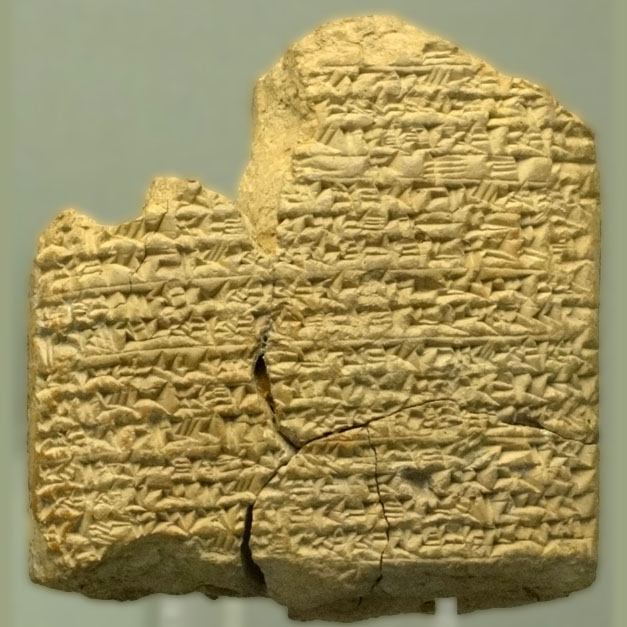
Honestly, the only simpler solution than a stick is a finger. Fingers, however, make pretty big indentions, requiring massive clay tablets. Let's face it, clay isn't exactly the lightest stuff on Earth. By comparison, reed styluses (okay, that's not technically "a stick", but for the sake of this discourse let's assume it is) provide and economy of space on such a substrate. And when you're drawing everything pictographically, everything pretty much takes a lot of space. So the Sumerians developed an economical system of writing based on an evolved utensil. By chiseling the tip of the stylus, it allowed for easier mark-making, and the pictorial form of writing (which required a lot of organic forms and lines) evolved into a more abstracted form (using fewer lines, mostly straight), eventually being replaced by cuneiform writing (a set of minimal markings, pressed instead of drawn into the clay.)
Given that cuneiforms are not unlike runes, a chisel-tipped writing instrument would be suited to such. It is not, however, conducive to more script-like forms of writing, particularly elvish. From a sourcing standpoint, any type of tubular shaped item will do (claw, bone, reeds, bamboo, wood, wax.)
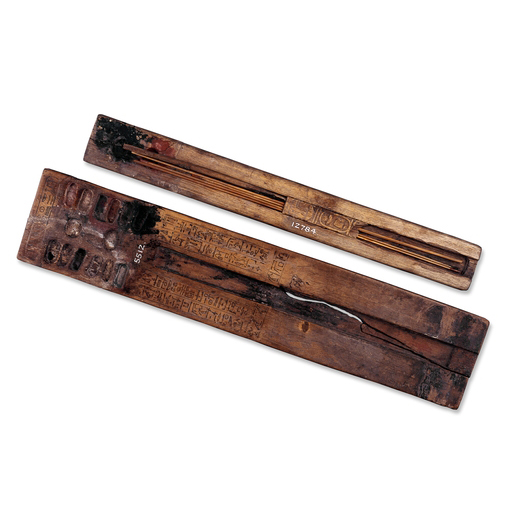
Brushes Made From Rush Stems (Egyptians)
This baby was really a sort of hybrid pen/brush. A thin-stemmed rush, or reed, plant was cut (usually to a length of about nine inches.) Then, via a similar method to their caveman precursors, the chewed or hammered it at one end to soften it. The rush stem was easily frayed, and held enough ink to get through (at least) a few letters before having to re-ink.
There are a couple of things to keep in mind here from a practicality standpoint. First, the more you use something like a rush brush, the more frayed and worn it will become over time. However, trimming it down and re-chewing or hammering the end will "freshen it up." From a material standpoint, whatever sort of stem or reed is used, it must be soft and thready. Again, from a sourcing standpoint, any sort of hollow (or semi-hollow) tubular resource (within reason) will suffice.
The Qalam (Arabia/Persia)
The qalam is an reed pen with a flat nib, the word "qalam" being a derivative of the Greek word for "pen." The angle of use evolved with the various forms of Aramaic (khufic and naskhi) and, later, Hebrew and Sanskrit, all of which feature strong contrast between thick and thin strokes.
The Evolved Stylus (Romans)
The Romans used a couple of basic forms of stylus. For writing with ink (on parchment), they used a very simple pointed wood stylus. For writing on wax, they used a metal stylus with a pointed tip on one end, and a flat end on the other which was used to "wipe out" their mistakes. For some applications, the writing tip of the stylus might have a slightly chiseled tip to allow for variation in stroke width.
When it comes to metal styluses, casting or forging is required. Wooden styluses, on the other hand, are really not much more than a wood dowel with a pointed or chiseled end, requiring very little from a manufacturing standpoint.
The Quill Pen
Invented around 700 A.D., the quill pen was the dominant writing instrument for most of our recent history (pretty much until the fountain pen was invented in the late 1800s A.D.) Essentially, the feather of a bird is cleaned and then sharpened using a special knife (thus the origin of the term "pen-knife.") This is actually a lot more laborious than it sounds, especially because each quill lasted only about week (which is still much longer than a rush brush would last.)
In an historical context, different types of birds yield different types of instruments for different types of styles (chicken and turkey being most prevalent due to availability.) Others were prized for their beauty (like the swan's.)
In a game context, there is the most potential here, particularly given the types of creatures that possess the feathers, and the increased chances of success for particular types of scroll creation. The questing here is almost unlimited. Take, for example, the mythological caladrius, a snow white bird that supposedly would not look at any patient that was not going to make a full recovery. Smells like the perfect quill for a healing scroll.
Quills do have a major drawback, though. While they seem more desirable for their durability (compared to reeds/stems) and variety, they are less flexible in terms of writing style and, therefore, somewhat limited. For example, they do not lend themselves to the calligraphic thin/wide strokes required for the likes of elvish and other hands. Furthermore, unless that magic-user is going to keep a particular creature caged, the supply of quills from it will be limited.
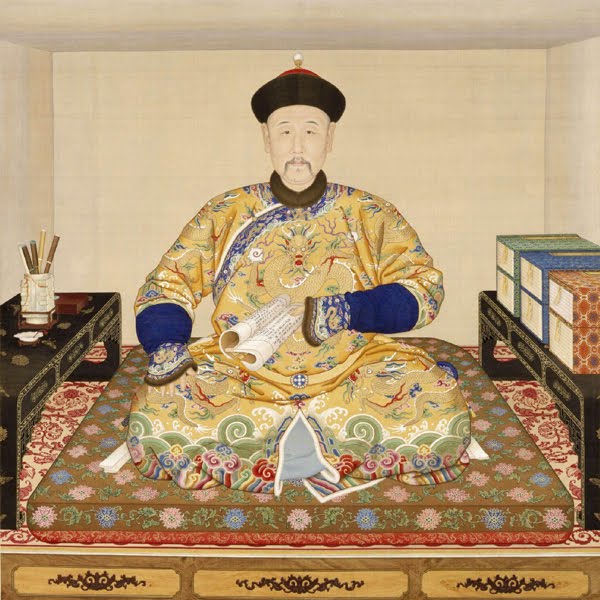
In a game context, there is the most potential here, particularly given the types of creatures that possess the feathers, and the increased chances of success for particular types of scroll creation. The questing here is almost unlimited. Take, for example, the mythological caladrius, a snow white bird that supposedly would not look at any patient that was not going to make a full recovery. Smells like the perfect quill for a healing scroll.
Quills do have a major drawback, though. While they seem more desirable for their durability (compared to reeds/stems) and variety, they are less flexible in terms of writing style and, therefore, somewhat limited. For example, they do not lend themselves to the calligraphic thin/wide strokes required for the likes of elvish and other hands. Furthermore, unless that magic-user is going to keep a particular creature caged, the supply of quills from it will be limited.
Hair Brushes
It is likely that the Chinese have been using hair brushes for over 3,000 years, though the oldest example only dates back about 2,000. If an animal has hair, and the hair is long enough, it can be made into a brush. Consider the brushes that have been made using the hair of weasels, rabbits, deer, chickens, goats, pigs, and tigers. Moreover, using a brush for calligraphic purposes is a true art form, with almost unlimited potential for beauty and finesse. In fact, in China, it's considered the highest art form, each example being judged on its bones (authority and size), meat (texture of the fluid ink), and muscle (spirit and vital force.)
If you though the potential for questing quills was unlimited, imagine the questing potential for any animal with hair! The hair brush is also superior to the quill for variety of line weight. And given it's potential for beauty and impact (bones, meat, muscle), the potential benefits for using a scroll created by the hands of a master calligrapher is almost overwhelming. Can you say, "dexterity bonus?"
Thursday, February 16, 2012
Scrutinizing the Scroll: Papyrus, Parchment and Vellum
In the original DMG, this is about as far as EGG goes into the differences between paper, papyrus, parchment and vellum... "A scroll of spells may be inscribed only upon pure and unblemished papyrus, parchment, or vellum - the latter being the most desirable."
As an educator on the history of graphic communication, I'm familiar with the origins of and differences between the various writing substrates (as well as the writing utensils and "inks" that correspond to each), but it struck me that many of you may not be. So what follows is a top-line overview of the various writing surfaces (particularly those used for spell scrolls) and considerations for incorporating those into game play.
Cave Walls and Ceilings
30,000+ B.C.
Obviously, the point of a scroll is to make the magic portable, convenient, and disposable. And, obviously, you can't do that with a cave wall or ceiling, but it was the first writing substrate. Every type of writing medium requires both a pigment and a medium and, in these cases, the pigments included red and yellow ochre, hematite, manganese oxide and charcoal, held in a medium of animal fat to bind the pigment.
Wet Clay
In common use from 3500-1750 B.C.
As nomads became farmers in the fertile lands between the Tigres and the Euphrates, village culture necessitated the need for records of properties, laws, ets. So the Sumerians when straight to the most available materials... reed styluses and wet clay. Pictographic writing gave way to symbolic writing in the form of cuneiforms (quick marks made with a triangular tipped version of the stylus.)
So... get out your copy of Deities and Demigods, go to the Sumerian Mythos section, and consider that in the earliest of the time period reflected here, clerics of these gods would (most likely) not see papyrus for at least 1,000 years (if they saw it at all.) And parchment? Forget about it. By the time the Sumerian language was fading away as a sacred, ceremonial, literary and/or scientific language in Mesopotamia, parchment was just being invented. Now, go the Babylonian section of the book. Those clerics... maybe.
As far as incorporating clay tablets into game play, it's obviously not conducive to carrying even one spell tablet with you into a dungeon, unless you happen to possess a Bag of Holding. However, in more primitive cultures, spell tablets are an option. I could see clerics or magic-users going into battle accompanied by horse-drawn carts filled with spell tablets prepared with summoning and protection spells (the tablets would disintegrate upon use, similarly to their papyrus and parchment counterparts.)
Papyrus
Invented c. 1,000 B.C.
This is an Egyptian invention that dates to around 1,000 B.C. However, it was adopted soon after by the Greeks (being supplanted later in Greece by parchment, a Roman invention), and was used widely through Europe and the Roman and Byzantine empires until it was replaced by the less expensive paper (invented in China, but introduced to the West by way of Arabia.)
Papyrus as a substrate is made from the pith (the inner portion) of the Cyperus papyrus plant. It essentially consists of two layers (or sides) with the fibers in each side aligned with the same side, and perpendicular to the other side. The fibers in the top (recto) side run horizontally, and the fibers in the bottom (verso) side run vertically. For longer scrolls, multiple pages of papyrus were glued together. In regards to writing utensils, the Egyptians used brushes made from rush stems, whereas Greek scribes used hard reeds, cut with a nib and split at the tip to aid ink flow.
As for game play, consider this... sure, papyrus is cheaper, but it also has a +5% chance of failure (per DMG.) Why? Firstly, in dry climates (like Egypt) papyrus is fairly stable, but in more humid climates it is highly susceptible to mold. No reason to not up that % chance of failure in more humid climates, especially the longer that papyrus has been sitting around in a less-than-airtight scroll tube. Second, those striations in the recto and verso sides do not exactly make for the smoothest of writing experiences, especially with "loopier" writing forms. It serves the Eqyptian Demotic ("priestly") script well, given its strong vertical and horizontal strokes. But Elvish is a little on the loopier side. Consider upping that % chance of failure based on the quality of the papyrus, as well as the form of the writing being used by the scribe.
Parchment
Invented c. 500-200 B.C.
According to the Roman Varro, Pliny's Natural History notes parchment was invented under the patronage of Eumenes of Pergamon, as a substitute for papyrus, which was temporarily not being exported from Alexandria, its only source. ("Parchment" is actually an English word derived from the name of the city where it was reportedly invented.) Though a Roman invention, it was quickly adopted by the Greeks, and was used popularly throughout Europe, even concurrently with the use of paper up through the invention of the printing press (mid 1400s A.D.) In fact, though most copies of the Gutenberg Bible were printed on paper, a few parchment copies exist. Papermaking was mechanized around this time, which made paper inexpensive enough to allow it to become pervasive.
As a substrate, parchment is made from calfskin, sheepskin or goatskin, often split. Think of parchment as a "half-ass" version of leather in that it's limed (the part of the leather-making process that removes the flesh, fat and hair from the skin) but it's not tanned (which helps protect leather from weather/humidity.) The skins are then soaked, stretched and scraped to finalize the process. However, additional treatments could make the parchment smoother or more writing-friendly (like rubbing pumice powder over the flesh side while it was still wet.) But let's go back to that not-being-tanned thing for a minute. Uh-oh... guess what that means...
Parchment, like papyrus, is extremely affected by its environment and changes in humidity, which can cause buckling. Books with parchment pages were bound with strong wooden boards and clamped tightly shut by metal (often brass) clasps or leather straps; this acted to keep the pages pressed flat despite humidity changes. Even after the use of paper made such fittings unnecessary, they continued to be used as decorative element on bound books of paper. But let's face it, buckling is not molding. I guess that explains the "± 0% chance of failure" in the DMG.
Vellum
Popularized c. 500-1500 A.D.
Simply put, the difference between vellum and parchment is the difference between veal and beef, respectively. Vellum is really just a finer version of parchment made from the skins of calves and/or kids, depending on whether you believe the English or the French; it is either the split skin of any of several species (English) or the split skin specifically of the calf (French.) Now, when it comes to anything animal-related (particularly food-related, or quasi-food related) I tend to defer to the French over the English (but don't let them know I said that.) If this helps settle the argument, the term "vellum" comes from the French word "veau," which means "calf" or "veal." Most of the finer sort of medieval manuscripts, whether illuminated or not, were written on vellum. The Gutenberg Bibles mentioned above are (more specifically) on vellum.
In game, the thing to remember about vellum is that, for scribes, vellum's finer, smoother surface is the cream of the crop when it comes to writing anything. (Okay, that explains that -5% chance of failure from the DMG.) BUT!!! There is that climate thing to consider again. When store in areas with less than 11% relative humidity, it tends to get brittle. And in areas with 40%+ relative humidity, it has a propensity for mold and fungus growth. (Yummy!)
Paper
Invented c. 105 A.D.
Though the actual invention of paper is "shrouded in mystery," its invention was reported to the Chinese Emperor by Ts'ai Lun, an official of the Imperial Court. Even though paper was most likely invented 200 years earlier, WAY before Ts'ai Lun was born, Ts'ai Lun is nonetheless deified in China as the "god of the papermakers." By 600 A.D., paper was all over the far east. After the defeat of the Chinese in the Battle of Talas in 751 (present day Kyrgyzstan), the invention spread to the Middle East. By the 9th century, Arabs were using paper regularly (reserving the use of parchment/vellum for more important documents/manuscripts.) The oldest European paper documents date to around 1100 A.D. (most likely introduced to the West via The Crusades.)
In its more primitive forms (though still made essentially the same way today, albeit mechanized) plant fibers are soaked and pulped, set in a frame on a screen, shaken to cross the fibers and grains, the excess water pressed out, then the frame set aside for the paper to dry. The dried sheet of paper is removed from the mold, allowing the mold to be reused.
While the 1e DMG makes no mention of paper at all, by 3e you start to see mention of "high-quality" papers for use in scrolls. The more important thing to remember about paper, though, is the immense varieties of type based on the fibers and binders/additives used during the papermaking process. Vulnerability to weather and other conditions are completely dependent upon this.
LARGER-SCALE GAME CONSIDERATIONS
Again, I refer back to the 1e DMG. This time I refer to the entire "Manufacture of Scrolls" section beginning on page 117. Note how much attention is given to the ink formulas and to the quill types being used, going as far as including the formula for the ink required to scribe a protection from petrification spell. And note how little attention is given to the writing surface. Even the BX Expert rule book (as limited as it is) goes further than the DMG on the subject matter when it suggests a "scroll might require a special parchment." Given the information in the post above, I don't see why you couldn't require the same thing of the writing surface that you might of a quill or ink. Scroll types could necessitate that parchments or vellums be made from specific animals, perhaps prepared particularly by alchemical or magical means (beyond the standard liming process.) I don't see why you couldn't require paper for certain scrolls be made from the pulp of specific plants or trees. Or papryus prepared from cyperus papyrus plants that grow in particular waters. What would happen if the PCs were to get ahold of a particular type of parchment or paper but, having been lied to by the merchant, procure the wrong type? It might accidentally turn that summon dryad scroll into a summon dragon one.
As an educator on the history of graphic communication, I'm familiar with the origins of and differences between the various writing substrates (as well as the writing utensils and "inks" that correspond to each), but it struck me that many of you may not be. So what follows is a top-line overview of the various writing surfaces (particularly those used for spell scrolls) and considerations for incorporating those into game play.
Cave Walls and Ceilings
30,000+ B.C.
Obviously, the point of a scroll is to make the magic portable, convenient, and disposable. And, obviously, you can't do that with a cave wall or ceiling, but it was the first writing substrate. Every type of writing medium requires both a pigment and a medium and, in these cases, the pigments included red and yellow ochre, hematite, manganese oxide and charcoal, held in a medium of animal fat to bind the pigment.
Wet Clay
In common use from 3500-1750 B.C.
As nomads became farmers in the fertile lands between the Tigres and the Euphrates, village culture necessitated the need for records of properties, laws, ets. So the Sumerians when straight to the most available materials... reed styluses and wet clay. Pictographic writing gave way to symbolic writing in the form of cuneiforms (quick marks made with a triangular tipped version of the stylus.)
So... get out your copy of Deities and Demigods, go to the Sumerian Mythos section, and consider that in the earliest of the time period reflected here, clerics of these gods would (most likely) not see papyrus for at least 1,000 years (if they saw it at all.) And parchment? Forget about it. By the time the Sumerian language was fading away as a sacred, ceremonial, literary and/or scientific language in Mesopotamia, parchment was just being invented. Now, go the Babylonian section of the book. Those clerics... maybe.
As far as incorporating clay tablets into game play, it's obviously not conducive to carrying even one spell tablet with you into a dungeon, unless you happen to possess a Bag of Holding. However, in more primitive cultures, spell tablets are an option. I could see clerics or magic-users going into battle accompanied by horse-drawn carts filled with spell tablets prepared with summoning and protection spells (the tablets would disintegrate upon use, similarly to their papyrus and parchment counterparts.)
Papyrus
Invented c. 1,000 B.C.
This is an Egyptian invention that dates to around 1,000 B.C. However, it was adopted soon after by the Greeks (being supplanted later in Greece by parchment, a Roman invention), and was used widely through Europe and the Roman and Byzantine empires until it was replaced by the less expensive paper (invented in China, but introduced to the West by way of Arabia.)
Papyrus as a substrate is made from the pith (the inner portion) of the Cyperus papyrus plant. It essentially consists of two layers (or sides) with the fibers in each side aligned with the same side, and perpendicular to the other side. The fibers in the top (recto) side run horizontally, and the fibers in the bottom (verso) side run vertically. For longer scrolls, multiple pages of papyrus were glued together. In regards to writing utensils, the Egyptians used brushes made from rush stems, whereas Greek scribes used hard reeds, cut with a nib and split at the tip to aid ink flow.
As for game play, consider this... sure, papyrus is cheaper, but it also has a +5% chance of failure (per DMG.) Why? Firstly, in dry climates (like Egypt) papyrus is fairly stable, but in more humid climates it is highly susceptible to mold. No reason to not up that % chance of failure in more humid climates, especially the longer that papyrus has been sitting around in a less-than-airtight scroll tube. Second, those striations in the recto and verso sides do not exactly make for the smoothest of writing experiences, especially with "loopier" writing forms. It serves the Eqyptian Demotic ("priestly") script well, given its strong vertical and horizontal strokes. But Elvish is a little on the loopier side. Consider upping that % chance of failure based on the quality of the papyrus, as well as the form of the writing being used by the scribe.
Parchment
Invented c. 500-200 B.C.
According to the Roman Varro, Pliny's Natural History notes parchment was invented under the patronage of Eumenes of Pergamon, as a substitute for papyrus, which was temporarily not being exported from Alexandria, its only source. ("Parchment" is actually an English word derived from the name of the city where it was reportedly invented.) Though a Roman invention, it was quickly adopted by the Greeks, and was used popularly throughout Europe, even concurrently with the use of paper up through the invention of the printing press (mid 1400s A.D.) In fact, though most copies of the Gutenberg Bible were printed on paper, a few parchment copies exist. Papermaking was mechanized around this time, which made paper inexpensive enough to allow it to become pervasive.
As a substrate, parchment is made from calfskin, sheepskin or goatskin, often split. Think of parchment as a "half-ass" version of leather in that it's limed (the part of the leather-making process that removes the flesh, fat and hair from the skin) but it's not tanned (which helps protect leather from weather/humidity.) The skins are then soaked, stretched and scraped to finalize the process. However, additional treatments could make the parchment smoother or more writing-friendly (like rubbing pumice powder over the flesh side while it was still wet.) But let's go back to that not-being-tanned thing for a minute. Uh-oh... guess what that means...
Parchment, like papyrus, is extremely affected by its environment and changes in humidity, which can cause buckling. Books with parchment pages were bound with strong wooden boards and clamped tightly shut by metal (often brass) clasps or leather straps; this acted to keep the pages pressed flat despite humidity changes. Even after the use of paper made such fittings unnecessary, they continued to be used as decorative element on bound books of paper. But let's face it, buckling is not molding. I guess that explains the "± 0% chance of failure" in the DMG.
Vellum
Popularized c. 500-1500 A.D.
Simply put, the difference between vellum and parchment is the difference between veal and beef, respectively. Vellum is really just a finer version of parchment made from the skins of calves and/or kids, depending on whether you believe the English or the French; it is either the split skin of any of several species (English) or the split skin specifically of the calf (French.) Now, when it comes to anything animal-related (particularly food-related, or quasi-food related) I tend to defer to the French over the English (but don't let them know I said that.) If this helps settle the argument, the term "vellum" comes from the French word "veau," which means "calf" or "veal." Most of the finer sort of medieval manuscripts, whether illuminated or not, were written on vellum. The Gutenberg Bibles mentioned above are (more specifically) on vellum.
In game, the thing to remember about vellum is that, for scribes, vellum's finer, smoother surface is the cream of the crop when it comes to writing anything. (Okay, that explains that -5% chance of failure from the DMG.) BUT!!! There is that climate thing to consider again. When store in areas with less than 11% relative humidity, it tends to get brittle. And in areas with 40%+ relative humidity, it has a propensity for mold and fungus growth. (Yummy!)
Paper
Invented c. 105 A.D.
Though the actual invention of paper is "shrouded in mystery," its invention was reported to the Chinese Emperor by Ts'ai Lun, an official of the Imperial Court. Even though paper was most likely invented 200 years earlier, WAY before Ts'ai Lun was born, Ts'ai Lun is nonetheless deified in China as the "god of the papermakers." By 600 A.D., paper was all over the far east. After the defeat of the Chinese in the Battle of Talas in 751 (present day Kyrgyzstan), the invention spread to the Middle East. By the 9th century, Arabs were using paper regularly (reserving the use of parchment/vellum for more important documents/manuscripts.) The oldest European paper documents date to around 1100 A.D. (most likely introduced to the West via The Crusades.)
In its more primitive forms (though still made essentially the same way today, albeit mechanized) plant fibers are soaked and pulped, set in a frame on a screen, shaken to cross the fibers and grains, the excess water pressed out, then the frame set aside for the paper to dry. The dried sheet of paper is removed from the mold, allowing the mold to be reused.
While the 1e DMG makes no mention of paper at all, by 3e you start to see mention of "high-quality" papers for use in scrolls. The more important thing to remember about paper, though, is the immense varieties of type based on the fibers and binders/additives used during the papermaking process. Vulnerability to weather and other conditions are completely dependent upon this.
LARGER-SCALE GAME CONSIDERATIONS
Again, I refer back to the 1e DMG. This time I refer to the entire "Manufacture of Scrolls" section beginning on page 117. Note how much attention is given to the ink formulas and to the quill types being used, going as far as including the formula for the ink required to scribe a protection from petrification spell. And note how little attention is given to the writing surface. Even the BX Expert rule book (as limited as it is) goes further than the DMG on the subject matter when it suggests a "scroll might require a special parchment." Given the information in the post above, I don't see why you couldn't require the same thing of the writing surface that you might of a quill or ink. Scroll types could necessitate that parchments or vellums be made from specific animals, perhaps prepared particularly by alchemical or magical means (beyond the standard liming process.) I don't see why you couldn't require paper for certain scrolls be made from the pulp of specific plants or trees. Or papryus prepared from cyperus papyrus plants that grow in particular waters. What would happen if the PCs were to get ahold of a particular type of parchment or paper but, having been lied to by the merchant, procure the wrong type? It might accidentally turn that summon dryad scroll into a summon dragon one.
Subscribe to:
Posts (Atom)