Showing posts with label Scelsi Giacinto. Show all posts

Friday, 9 May 2014

Giacinto Scelsi, the Hölderlin of New Music?

If Hölderlin had written music might he have written like Giacinto Scelsi (1905-88)?   Scelsi's music  and Hölderlin's poetry have a similar moonstruck quality. Both were artists for whom the term "from another planet" could have been devised. Scelsi's music is fragmentary and eclectic, but fascinates me because it opens out strange vistas one might not otherwise access, just as Alice in Wonderland follows a rabbit into a hole in a tree and discovers bizarre, alternative reality.

Scelsi, the great grandfather of microtonality, was born  into the Italian aristocracy. A cosmopolitan sophisticate, he hung out with Cocteau in Paris, and was received as an honoured guest at Buckingham Palace. Yet when he died died only 25 years ago, he was something of a mystery, a recluse who had spent most of his life in secure institutions. His music is as strange as his life was: bizarre, obsessive, and elusive. Assuming, of course that it was his music, since there are claims that it wasn't. Perhaps Scelsi is as kin to Ferdinand Pessoa as he is to Hölderlin?  Pessoa used many identities that corresponded with each other –  a precursor of the modern internet troll, though he was genuinely creative rather than destructive as trolls are.

At last a new book, in English, Music as Dream: Essays on Giacinto Scelsi. edited by Franco Sciannameo & Alessandra Carlotta Pellegrini. Please read the review here in Soundproof Room, one of the finest blogs on new music, for a detailed summary. Please also read this article the late Peter Graham Woolfe wrote in 1986, when Scelsi was still alive - very perceptive. More on Scelsi, Xenakis, Murail etc on this site, too, please explore.,

Sunday, 5 April 2009

More about Giacinto Scelsi

Definitely an odd bird, was Giacinto Scelsi. He was odd enough that he spent years in institutions. He was born an aristocrat, and was received at Buckingham Palace. He died only 20 years ago, a recluse, and there are only three known photos of him, taken in his youth. His music is unusual, but conceptually fascinating as it's way ahead of its time. Including ours, too, in some ways.

Scelsi has influenced many – even Tristan Murail, whose own music is much more accessible, visited him in Rome. Last week there was a concert in London by Ensemble Liquid Architecture, whose name alone is interesting. I didn't go, which is a pity, as Scelsi fests don't happen every day.

Scelsi's piano music is a good way into him as the piano is like a lone voice. and Scelsi was definitely a lone voice. Perhaps it's a flavour of the man ? Nothing is too difficult to get into if you try, and this is early work for him. Here is a very useful article and review of Scelsi's piano music. Since there is so little available about him, this is an important resource! The major article was in fact written in 1986 when Scelsi was still alive - definitely prescient.

Also look at the labels on the right for more, including PGW's obituary of Scelsi written for the Independent in 1988. This blog is becoming a link to many Scelsi resources on the net.

Monday, 9 February 2009

Tristan Murail Total Immersion


This is why I pay taxes. Each year the BBC sponsors a series at the Barbican in London for “total immersion” in a particular composer. It’s intense: whole days of music, talks, extra activities. In fact so intense that this year they’ve divided it into three separate days. Stockhausen Day was described earlier (follow the subject link on the right). Next month it’s Xenakis, and on Feb 7th it was my favourite, Tristan Murail. Anyone who still thinks that Messiaen had no influence (and there are some) is totally deluded.

Messiaen taught people to find themselves, said Murail to Julian Anderson. In the evening, Pascal Rophé conducted the BBC Symphony Orchestra in two early Murail works.

Gondwana was the land mass formed when the continents we know were once joined together. Very loosely, this describes Murail’s Gondwana (1980) when densely textured blocks of sound gradually evolve. The concept is Messianique, recalling Et exspecto resurrectionem mortuorum, even The Quartet for the End of Time. Murail also references Sibelius’s Leminkäinnen in Tuonela, from the Kalevala saga, grounding the piece in tradition even though the harmonies were derived from frequency modulation (FM).

Time and Again (1985) was commissioned by Simon Rattle, with whom Murail played ondes Martenot on the famous CBSO recording of Turangalíla. Themes from Turangalíla pop up joyously, but the real tribute is in the way Murail unites Messiaen’s wayward exuberance with electronic techniques made possible by Murail’s use of FM and synthesized sound. If Turangalíla bothers some with its “cinematic” wildness, Murail makes it a virtue. Time and Again moves back and forth, as Murail says “replete with flashback, premonitions, loops…as if the listener were inside some sort of time machine”.

Murail’s more recent work is even more inventive. So much so, that I’ll write about ...amaris et dulcibus aquis….(1994/5 rev 2004) and Terre d’ombre (2003/4) in much greater depth later. Come back to this blog for more.

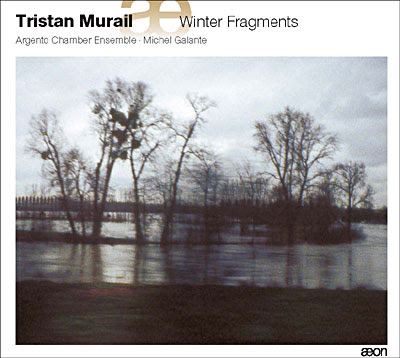
Murail’s “greatest hits”, Winter Fragments (2000) and Treize couleurs du soleil couchant (1978), were played by students of the Guildhall School of Music in the afternoon, joined by Rolf Hind in Territoires de l’oubli (1977), a thundering turbulence for piano. Plus the Hugues Dufourt Hommage á Charles Négre which is described below. But there’s only so much I can write at one go. So “watch this space”, as they say.

Saturday, 10 January 2009

Giacinto Scelsi alternative reality


Nice, sheltered Alice is sitting with her boring sister by a river when suddenly a rabbit runs past. But not any rabbit. This one wears clothes, walks and splutters "I'm late ! I'm late!" while looking at his watch. Suddenly reality ceases to mean anything. Alice seizes the moment and chases the rabbit down the tunnel......

That sums up how it feels to to discover Giacinto Scelsi. Of course Alice could simply have observed the rabbit's outward features and drawled "Odd bunny, eh ? neurotic, middle aged, urban" and stayed, cocooned and half asleep on the sunny riverbank. Instead she leaps out of "her" reality and enters a weird new dimension.

Until I realized I had to forget everything I thought I knew about singing, I couldn't get into Scelsi's Art song. Better to have approached him via some other route (as I later discovered). There are three "songs", Sauh, Taigarù and Hô. Say the words together like a chant and hear how they flow into one. Then imagine the chant stretched out, varied, over an hour. Just like Alice's rabbit, Scelsi's universe operates on completely different concepts of time and connection.


Scelsi was a mystery. Even though he died barely 20 years ago, there's little information available about him. He's managed to slip through the cracks of modern society where everything seems under surveillance. So here's a link to a very useful article by someone very much on the ball. Read it, this is good writing, no mental blinkers.

Also read the other posts on this blog - SOME NEW ! -one of the few places on the net where you can find out stuff about this composer and those he influenced. http://www.musicalcriticism.com/recordings/cd-scelsi-chukrum-1008.shtml

and Peter Graham Woolf's Scelsi obit from The Independent
http://musicalpointers.co.uk/reviews/cddvd08/Feldman&Scelsi.html


And here is a free download !

http://soundpedia.com/listen/Marianne+Schuppe/Art+Song+Of+Giacinto+Scelsi:+Incantations