Showing posts with label mondo movies. Show all posts

Sunday, April 17, 2011

Fellini's CLOWNS (1970)

Why "clowns?" Why did Federico Fellini call his made-for-TV essay film I Clowns in Italian? It's not as if Italian doesn't have a word for the vocation, but it eventually sunk in to my initially obtuse skull that had he called the movie I Pagliacci, both Italian and English speaking audiences would have gone in expecting a very different movie. With the title accounted for, that leaves us the film itself to ponder. I Clowns comes from a period when Fellini seemed to be adapting the devices of Italian mondo movies to his particular sensibility. Working for television with a documentary mandate apparently sparked a creative process beginning with his American TV special, Fellini: A Director's Notebook, which he made while transitioning from an aborted sci-fi film to his Roman spectacle Satyricon. With Satyricon done, he returned to essay mode for Clowns, Roma and Amarcord. By the end, he'd personalized the format enough to dispense with any pretense of documentation, and what sets his work apart from mondo in general is the understanding that Fellini will show us re-enactments of actuality without pretending to show us "reality." Mondo pioneers Giacopetti & Prosperi were headed in the same direction with Goodbye Uncle Tom, but even then, while recreating the distant past, there was a pretense of objectivity, an implicit claim to show things as they were, that Fellini doesn't really require us to accept. Clowns actually invites us to call every documentary pretense into question. The director shows himself directing the film and has his assistant Maya Morin read much of the narration on screen, as if we were seeing "The Making of I Clowns" rather than the thing itself. The tactic also creates the impression that everything we see, and not just the obvious re-creations, could be scripted rather than spontaneous. Anita Ekberg's allegedly accidental appearance (she's supposedly shopping for a panther)only adds to that impression.


Fellini admits to being fascinated by grotesque freaks throughout his life. How do you feel about that, Anita?

Fellini also plays with the question of whether cinema can capture or preserve reality. In two different scenes, he makes an appointment to see rare film footage of famous clowns. The first time, at the home of a collector, the old film breaks and ignites in the projector. The second time, at a Paris archive, Fellini has a hard time determining whether the clip shows the clown he's looking for, and in any event the footage is much too short to make any impression. The director's disappointments seem linked to his implicit thesis about the incompatibility of cinema and classical clowning. The film opens with a surprising confession: the young Fellini (so the older man claims) was, if not frightened, then strongly disturbed by clowns when he first attended a circus. They reminded him too strongly, he recounts, of the disturbed or merely grotesque people he saw everyday in the real world. Those people, to a great extent, became the subject of Fellini's cinema, which evolved into an often literally circus-like spectacle of eccentricity. When the RAI TV project (originally broadcast in black-and-white on Christmas Day 1970 and subsequently released to theaters in color) gave Fellini the opportunity to film a literal circus, the result is problematic.

Circus clowning is arguably uncinematic when it involves bunches of clowns doing their shtick simultaneously while playing to different sections of the audience in different directions. The individual performance style is also uncinematic, as studios learned when they recruited circus clowns for silent comedies. Fellini can show us presumably acclaimed clowns doing their stuff, but as long as he sticks to documentary mode much of it leaves a moviegoer feeling underwhelmed. Things change when the director stages a center-ring funeral for "Augusto," one of the archetypal clown characters, for his climax. This is a true Fellini-esque spectacle, but the director portrays himself taking things too far. He wants to close it with the big Fellini finish, with clowns parading around the ring, but he makes the veteran clowns hustle around and around repeatedly, faster and faster each time, as if he were shooting They Shoot Clowns, Don't They? Many of the clowns simply can't keep up and have to step out of the ring to recuperate. While clearly sending up his own reputation for excess, Fellini also seems to answer his film's question, "Where are the old clowns?" by showing us symbolically that cinema did them in. While the film actually closes with a sentimental horn duet for two clowns in an empty ring, the climax that comes before gives the more modest scene the air of a requiem.

Like many a mondo, I Clowns is a hit-or-miss project. Most of the film lacks the creative engagement Fellini brings to the funeral scene, and while many individual scenes are beautifully done (particularly the Fratelli brothers' tense performance on wires in an insane asylum) many are also empty spectacles that exist only for illustration. As someone who knew next to nothing about clown history, I found the discussions of augustos and white clowns fascinating, but Fellini's presentation only whetted my appetite for more detailed accounts of famous personalities like the Fratellis than his format allowed. The film's limitations show Fellini grappling with a new mode of moviemaking that will bear fruit in the much superior Roma and Amarcord. Clowns itself remains a historically important film as an episode in the director's creative evolution, with one brilliant sequence to redeem it for movie fans in general.


I don't know if this is an authentic theatrical trailer, but rarovideousa has posted it to YouTube to promote last month's U.S. DVD premiere of the movie.

Friday, October 22, 2010

NAKED AND VIOLENT (America...Cosi' Nuda, Cosi Violenta, 1970)

After Riz Ortolani scored a global hit and earned an Oscar nomination for "More," the theme song for the genre-defining Mondo Cane, it became a convention of the "mondo" genre of episodic, dyspeptic and salacious quasi-documentaries to have a sweepingly romantic theme song, ideally with English lyrics and optimally with music by Ortolani himself. Director Sergio Martino had to make due with the not-contemptible Bruno Nicolai, and in English this is what they came up with for Naked and Violent:


Look away...from misery,
From bitterness and hate,
And poverty...
And men who cannot wait
For you,
Anymore.


Look away, sweet Liberty,
From what you cannot see,
But Liberty,
You swore to set men free,
So why, tell me why,
Look away?


Probably no other national cinema has been so fascinated by the United States -- made so many films set there -- as Italy. America...cosi nuda, cosi violenta (America, how naked, how violent) is contemporary with spaghetti westerns and with mondo innovators Jacopetti and Prosperi's slavesploitation apocalypse Goodbye Uncle Tom, while later in the decade it was almost a ritual obligation for zombie and cannibal films to start in New York City. Martino's mondo purports to give audiences a warts-'n-all look at America, but it clearly caters -- panders, even -- to Italians' preconceived notions of our fascinating nation...as well as their desire for a realistic exploration of naked women. For every clip above there's an obviously and often absurdly staged sex scene. We get a Las Vegas sideshow where you get to see a girl strip and dance if you hit the target with the ball; an orgy in which the participants all wear fright masks and nothing else, inhibition being easier with anonymity; a purported recreation of a Manson Family ritual involving the devouring of fresh chicken blood with a side of melted wax on a naked woman's torso; and that mondo standby, painting on live, naked female canvasses.

Mondo movies have an obligation to offer pretentious moral or sociological commentary to legitimize their more sexploitative elements, and the sex scenes in Naked and Violent arguably advance the film's apparent thesis that Americans have grown so alienated from each other and from nature that they simply can't associate with one another in any normal, natural way. Americans seem to role-play in every aspect of their lives; both NFL football and drag racing are described as atavistic re-enactments of old-time rodeos (so what about modern-day rodeos?), while blacks, in a sequence possibly more racist than anything in the controversial Goodbye Uncle Tom, are shown reverting all the way to primitive Africa in a booga-booga dance and circumcision (?) rite of Martino's likely imagination. Some people are so incapable of forming relationships that they have to rely on sex dolls for company and comfort.Traditional kinship ties have deteriorated to the point that the elderly who can't afford to settle in admittedly paradisaical Florida communities are relegated to rot in wretched old-folks homes, or wander the Bowery, or stagger out to Times Square to sell their blood along with the other losers. Cancer is a blessing to the elderly poor because it means hospitalization: a warm bed and three squares a day.

But there's something unnatural even to the fortunate elderly, a reversion to childishness shared with the often naked and sometimes violent hippies who attended the big Altamont concert in 1969. Martino himself lurked at the fringes of Altamont but didn't have access to the real action on stage or nearby and had no rights to the music played there. Your first conclusive proof that Naked and Violent isn't going to be all it could be is when you hear its Altamont footage scored to that lousy Look Away song. You get the same effect, though it can't be helped, when Martino interviews various Americans; their words are drowned out almost immediately by an Italian translator. For an American viewer, it's hard to shake the impression that Martino and his writers weren't really interested in what Americans were saying or singing.

Mondo in a nutshell: this scene is supposed to show Americans' denial of death's reality with a corpse getting a makeup job at an undertaking parlor, but its most prominent feature is the trio of miniskirted assistants, filmed by Sergio Martino in the glamorous manner of a future giallo master.

Back when I reviewed Martino's All the Colors of the Dark I wrote that I was going to seek out more of the director's films. At first I had his giallos in mind, but then I found that Netflix was offering this rare mondo that had been brought to my attention months earlier by my frequent correspondent, the Vicar of VHS. As a mondo fan, I had to give it a shot. As a prospective Martino fan, I was disappointed. The quasi-documentary format doesn't exactly play to the man's stylistic strengths, and Naked and Violent (his third feature and his second mondo) is clearly a cheap project. Jacopetti and Prosperi's epics will make almost any other mondo look impoverished, but this one looks objectively impoverished. Moving down the mondo checklist, it boasts some of the most hopelessly obvious staged action (all of the sex scenes and, more offensively, an episode of white-on-black violence building up to a presumed lynching) and possibly the most revolting bit of animal cruelty in the whole genre. That comes when we see some cowboy gun-nuts taking target practice on helpless rabbits hung upside-down like midway targets. The cowboys, we're told, simply enjoy destroying life, and the moralizing tone of mondo narration never seemed more hypocritical. On the other hand, the scene sets up Martino's cleverest transition, as he cuts from exploded rabbits to the shimmying tail of a Playboy Bunny at a Chicago photo shoot.

The film finally finds some redemptive potential for America in its discovery of a little city built for the care of mentally handicapped children. The caregivers and their unselfconscious charges presumably exemplify the instinctive, unconditional bonds of affection the filmmakers failed to find elsewhere in the U.S. But Naked and Violent actually closes with a recitation of some purported blues poetry imploring the Statue of Liberty to "put out your light," "turn your back to the ocean" and "put a little love in me." This ties in (I guess) to the Look Away song, and I'm going to take another guess that it all means that Americans need to turn inward and deal with their hang-ups without taking them out on the rest of the world. A scene near the end of soldiers on leave embracing their wives in Hawaii helps make that point.

A mondo movie with the U.S. as its subject will always have some interest, just because of the novelty of presenting America as the exotic, decadent nation. Naked and Violent doesn't make the most of the premise's potential, but it'll retain historical interest for its conjuration of fact and fake into an America of the Italian imagination.

Wednesday, August 26, 2009

Farewell to GOODBYE UNCLE TOM

One more post and I should have this strange film out of my system, to the likely relief of readers everywhere. The big question about Jacopetti & Prosperi's American epic, of course, is whether the film designed to prove that they weren't racists was, in fact, racist. For many viewers, its salacious gaze at the collective humiliation of a race can't help but be racist; it fails all conventional sensitivity tests, after all, and the objects of the filmmakers' solicitous concern can be excused for feeling that the film rather rubs their noses in it. Nevertheless, J&P say that they wanted to make a different impression, though they also admit failing at it. Taking them at their word, can we figure out what they thought they were saying?


Depravity: A slave is about to be castrated for the unauthorized deflowering of virgins. The American cut enhances this scene by having the kid with the tool chant, "Cut! Cut! Cut!"


Bearing in mind that the Director's Cut has a present-day political agenda of explaining the failures of Black Power uprisings in the late 1960s, both that and the American cut, which is stripped of most present-day context, also have something to say about slavery itself. The scenes at the slavery processing plant at Fort Bastille implicitly equate slavery with the modern assembly line, with the slave as the end product instead of a Model T Ford. Slaves are rushed from station to station for cleaning, grooming and feeding. At one point they're sent down a slide in the most obvious assembly-line metaphor. J&P are never explicit about this, but they appear to be saying that the industrialization of slave-processing contributed to a dehumanizing of the enslaved, their metamorphosis into parts on a conveyor belt. Throughout the film, this implicit thesis that the institution of slavery degraded Africans comes up against imagery that (perhaps) unintentionally encourages a belief that Africans were innately degraded, and hence easily adaptable to slavery.


In the second half of the film, the "traveling photographers" visit Dr. Samuel Cartwright, a racist scientist determined to prove that Africans are a separate species from humans. Among his caged slaves are a handful of American Indians who sit or stand in sullen silence. Cartwright explains that Indians are useless for slavery and can't be made to breed in captivity. The difference between blacks and Indians, he says, is like the difference between a dog and a coyote. You can beat a dog all the time, he elaborates, but he'll still lick your shoes, while the coyote, like the Indian, would rather die than live in captivity.

The words are put in the mouth of an odious crank, but as is consistent with the strategy of Addio Zio Tom they go unrefuted, and they leave a question hanging in the air. Were blacks incapable of even the passive resistance of willing themselves to die rather than endure slavery? Were they all too ready to adapt to their degraded condition by making themselves even more abject? Jacopetti and Prosperi took a risk in expecting that the historic racists would damn themselves with commentary that should have been obviously wrong to the modern movie audience. They felt no need to have someone in the film, even themselves as the time travellers, actively challenge the racist assertions of the 19th century. The only time they really go after a character in the film is when (in the American cut) they meet an educated slave who considers himself better off than the working-class poor. They express no comparable indignation to their white hosts. Since I get their point, I can agree with the idea that the shouldn't have had to go constantly through the film yelling, "this is wrong!" But something is unmistakably missing from either version of Tom that could have grounded the audience in a way that might have assured the correct response to the racist opinions expressed in the film. Simply put, while the Italian version is very much concerned with the "after" side of the story that plays out in the modern day, neither version is concerned with "before." In other words, Tom doesn't tell us what Africans were like before they were enslaved, and thus forces viewers to grapple with the either-way-loaded question of whether blacks were depraved by slavery or inherently depraved. There is no default state shown of free Africans in their native culture, and this is a fatal omission for the film's documentary ambitions. If J&P wanted to argue that American blacks were somehow changed for the worse by slavery, they needed to give us some idea of what they might have changed from. By their omission they left themselves vulnerable to the charge of racism since their cinematic argument had not effectively excluded the possibility of innate depravity as an explanation for the sordid spectacles presented.

Part of the problem may have been conceptual and tied to the "Addio" theme that links the film with Africa Addio, the movie for which Tom is allegedly an apology. "Africa Addio" refers both to the European imperialists' farewell to Africa and the disappearance of a certain European idea of Africa as Africans attempted to enter the modern world on their own terms. "Addio Zio Tom," in turn, refers as much to the extinction of the "Uncle Tom" archetype as it does to the end of slavery and its consequences. This is made clear in the prologue to the Director's Cut, in which Black Power radicals use "Uncle Tom" as a pejorative accommodationist blacks, while an elderly Southern matron retains a chauffeur who bears the infamous name. Wandering amid plantation ruins on her property, she babbles on about how much has remained the same while much has changed, as Tom smokes contemptuously nearby.


The literary Uncle Tom, as some may recall, was a character who resisted evil but refused violence, preferring to die rather than compromise his Christian principles. Sixties radicals rejected this proto-Gandhian archetype, preferring to fight, kill and live. Jacopetti and Prosperi's judgment seems to be that the radical stance was a surrender to hate, a tit-for-tat form of racism, and a fantasy of revenge.

All of this is embodied in the anonymous, clerical-looking man we find in the present day struggling to concentrate on the more violent chapters of William Styron's novel The Confessions of Nat Turner. A controversial best-seller and prize-winner in its day, Confessions anticipated the scandal of Goodbye Uncle Tom by a few years as black and leftist critics questioned a white novelist's ability and right to get inside the head of a rebel slave, especially when Styron gave Turner's rebellion a sexual context. In all likelihood Jacopetti & Prosperi were aware of the controversy. For all I know they may have wanted to do a full-scale adaptation of Styron at some point. I do know from the Godfathers of Mondo documentary that one of their inspirations for Tom was, of all things, the novel Mandingo, which awaited adaptation by other hands a few years later.


The Confessions of Nat Turner seems to have influenced Tom's thesis that the intimate, perhaps inevitably sexualized milieu of slavery provoked thwarted desires in black men that played out, on rare occasions, in violent outbreaks of revenge against masters. The reader in Tom translates scenes from Turner into wild fantasies of modern murder raids on white families that segue into assaults on consumer goods possibly modeled on the explosive finale of Zabriskie Point. This is J&P's somewhat unsubtle way of saying that Black Power is no different from Nat Turner's purported pathology. Consciously associating themselves with Styron (whether Styron might have liked the idea or not) was only asking for trouble from an audience already inclined to conclude that any white men who imagined black men having violent thoughts had to be racists. Maybe this was the cynicism so often attributed to Jacopetti coming through, since the controversy surrounding Styron probably sold more books and may have seemed like a model for marketing a successfully controversial film. But whether the filmmakers' motivations were cynical or sincere, releasing Tom when they did was a catastrophic miscalculation.

One more difference between versions: In the Director's Cut, this scene comes when the traveling photographers leave the Old South in their helicopter. In the American cut, it plays during the pre-credits sequence as they arrive.

For some people, the only way for Jacopetti & Prosperi to absolve themselves of racism would have been to show blacks in a constant state of heroic resistance to slavery. That would have gone against their apparent conviction that slavery was as they showed it in Tom, and their rule was to call things as they saw them. Is it possible that a refusal to indulge in idealization is a form of racism, or that a willingness to idealize humanity as a whole is a prerequisite for democracy itself? I suppose those aren't questions for a movie blog, but it's a way of getting to the point that, due to sins of omission and commission, despite their best intentions, Goodbye Uncle Tom will never fully shake the charge of racism. And if the filmmakers' intent was to be positively provocative, maybe that isn't necessarily a bad thing. It is definitely a testimony to the enduring visionary and emotional power of one of history's most provocative films.

Tuesday, August 25, 2009

Sexploitation and Slavery in GOODBYE UNCLE TOM

When the Italian filmmakers Gualtiero Jacopetti and Franco Prosperi visited a Southern plantation sometime in the early 1850s, their plan to conduct an inquiry into the peculiar institution of slavery was met with polite skepticism from their hosts and various other guests. While an envious Harriet Beecher Stowe decided on the spot to write Uncle Tom's Cabin in order to scoop the strangers from the flying machine, others at the dinner table questioned the researchers' motives. Noting that they were Italian and Catholic, one man opined that the visitors were slaves of a sort themselves -- "slaves to the fascination of sin."

Of course, this was but a hint of self-awareness if not self-criticism on the part of the infamous duo, not to mention a warning of their methodology in the making of Goodbye Uncle Tom. Tom is meant to be an anti-racist film in order to make up for misinterpretations of their African documentary. As Quentin Tarantino might put it, their way of answering critics amounted to putting out fires with gasoline. Their challenge was complicated by a more persistent charge against them: that their affectations of seriousness only masked a sleazy cynicism that approached its subject matter in a spirit of exploitation. Their films from Mondo Cane forward were called "shockumentaries," not documentaries, as if sensationalism belied any claims of serious purpose on the part of J&P.


In The Godfathers of Mondo Franco Prosperi says that "violence is another form of objectivity." You can see what he means: violence is a necessary component of showing the world as it is, or at least as he and Jacopetti see it. But can violence be viewed as objectively as Prosperi wants? In their own script for Tom, that crack about "the fascination of sin" hints at how the choice to show violence or other sins might betray a lack of objectivity on the part of the filmmakers. And if the fascination of sin influences their pictorial and editorial choices, what will the audience make of it all? I've described Tom as an attempt to show compassion toward the victims of slavery. But someone might well question whether it's compassionate to stare at someone's absolute subjugation and humiliation -- or to have people re-enact the subjugation and humiliation of their ancestors. After all, as some racists believe, the Bible relates that Noah cursed Ham and his son Canaan, turning their descendants black, because Ham stared at Noah's drunken nakedness. Jacopetti & Prosperi's reading of scripture raises the stakes even further. They have a white preacher state that Ham and Canaan were cursed for castrating Noah. This may have been another, even more subconscious warning to the audience about the implications of what they would see in Tom.

The American cut of Goodbye Uncle Tom is supposed to be toned down from the Italian original (or its modern incarnation as the 2003 Director's Cut), but that toning down turns out to be no more than a dumbing down of the film's present-day political context. The American cut is at several points more violent than the Director's Cut, for instance, and it retains most of the Italian version's sex scenes. The one exception is significant, as is the fact that the scenes that stayed are rape scenes. One has a gang of four poor white "Crackers" invading a slave compound and raping several women. The other has a teenage "mare" delivered to Jason, the imbecilic prize stud of a slave-breeding farm.


Both scenes are brutally filmed but scored to disturbing counterpunctual effect by Riz Ortolani with soaringly romantic yet more insistently percussive variations on the movie's theme song. Ortolani is a master of this kind of counterpoint, as he'd show again with the pastoral lyricism of Cannibal Holocaust. The intent of composer and filmmakers alike is to convey idealism under physical assault, but the effect is not necessarily unlike a more conventional sex scene scored to build toward a climax. It's understandable if critics wonder whether J&P want to have it both ways, outraging and infuriating some viewers but titillating and arousing others. But I doubt whether anyone has ever admitted being aroused by these scenes from Tom. However, if they presume that others will be titillated, isn't their only evidence their own feelings? Beware "the fascination with sin"...

More problematic yet is the sex scene left out of the American cut. In the Director's Cut, a wax museum proprietor relates the legend of Madame La Laurie and her companion Caesar, who purchased slaves for the purpose of stocking a unisex harem of opium addicts upon whom the devious pair could play out all their perverse whims. Caesar tends to go overboard with them sometimes the way Lennie does with mice, while the Madame practices a more refined sensuality. Here she is almost literally swimming in an undulating pool of black flesh, in a scene more insistently, indisputably erotic than the rape scenes.


But look out! All of a sudden it's Bathory time, and out come the pliers. I don't know if this legendary personage made as much use of precious bodily fluids as her Euro counterparts, but what we see is bad enough. It's as if this time J&P dared you to be aroused by the waves of nudity they present, only to throw the pliers at your head. There's an evil sensuality on display in Tom, not so much because sensuality is evil but because evil has a sensuality of its own.


The sensuality and sexuality is an important part of the story of slavery as told by Jacopetti & Prosperi. Slavery as practiced on the plantations had an inevitably sexual aspect because of the intimacy shared by slaves and masters. Tom makes the controversial and perhaps unacceptable suggestion that sex was not only a way for masters to dominate slaves, but also a way for slaves to negotiate their standing with masters. We see a heavy-footed Mammy castigating a girl for going to bed with Massa while still a virgin, and a supposed 13 year old girl urging the man behind the camera (in the Director's Cut this is supposed to be a historical person relating an actual experience, but in the American version it may be one of our time-travelling narrators) to take her maidenhead. She helpfully offers the man a whip in case he needs that to get into the right frame of mind.


At the slave market the diminutive General, whip in hand like a ringmaster, takes us on a tour of the seamier side of human commerce. In separate compartments slave girls learn to dance sensuously, a flaming white man body-paints twin pairs of boys for the trade that dare not speak its name, and the piece de resistance stands stoically like a cartoon ghost under a sheet. What's so special about this guy? "He's got three!" the General explains gleefully, "One, two, three!" The thrice-endowed individual himself has the self-respect to put his hands in front of the camera before the "three what?" question is answered.


Do you see a problem here? J&P claim that they want us to sympathize with the plight of the slaves, but our initial assumption of sympathy often depends on a further assumption that the slaves desire freedom. But what we see more often than not is accommodation, behaviors that begin to look like self-degradation rather than survival strategies. Think about it a little and you may realize that the filmmakers are trying to say that all of this is forced on the slaves, that it's a consequence of slavery rather than proof of their suitability for slavery, as the whites take it to be. But Tom's argument that slavery degraded blacks while fueling a simmering shame-based hatred for whites that limited their political imagination is itself, however well-intended, unacceptable for many American viewers. We want to believe in an unassailable dignity and perseverance that could only have been expressed in the sort of perpetual resistance that J&P do not show. If the filmmakers don't give these traits to the slaves, it makes people think that J&P do think slaves are subhuman. Worse yet, there's one scene that I haven't discussed yet that does seem, in some way, to blame blacks for their own degradation, but I want to save that for the next post, in which I try to determine whether Tom is, in fact, a racist film.

Monday, August 24, 2009

The Two Versions of GOODBYE UNCLE TOM

In my last post on the subject I equated Jacopetti & Prosperi's Mondo apocalypse on American themes with The Birth of A Nation. As far as they were concerned, however, it was their Intolerance, an answer to critics of their previous documentary, Africa Addio. When that film was released in 1966, the filmmakers were accused of having executions staged for their cameras, but what really stung was the charge of racism against Africans. Africa Addio is a survey of the changes underway in the title continent, with too much emphasis on civil war and atrocities for many people's tastes. The argument was that Europe had withdrawn from Africa too soon, leaving Africans unprepared for self-rule. Critics interpreted this as if J&P had said Africans were incapable of self-rule, and no more than savages. Jacopetti resented the charge, and thought that a compassionate account of the ordeal of slavery suffered by Africans would prove the critics wrong. How naive.

In the Godfathers of Mondo documentary included with Blue Underground's historic Mondo Cane Collection, Jacopetti deems Goodbye Uncle Tom a failure, since it left many viewers only more convinced that he and Prosperi were racists. If the viewers didn't get the point, he concludes, that's his fault, not theirs. This is an unusually generous attitude for a controversial filmmaker, but it begs a question: what didn't audiences get? Is the argument of Goodbye Uncle Tom nothing more than "We're not racists?" There are more economical ways to make that point, but when you consider the actual film you realize that J&P are trying to say something else -- and what that is depends on the version of the film you watch.

As Blue Underground puts it, the original version of Addio Zio Tom "was an experience so incendiary that distributors forced the filmmakers to completely re-cut the film and radically re-write its extreme narration, removing more than 13 minutes of race-war politics and inserting alternate scenes -- creating what would become an entirely different film -- before it could be released!"

Today, we have at least two versions of the film: the American cut and what Blue Underground bills as a "Director's Cut" restored by Jacopetti, "presented uncut and uncensored for the first time anywhere in the world." This implies that the version that played in Europe, which we might otherwise deem the original release version, is not the same as the Director's Cut. How it differs from the final Jacopetti version and the American version remains a mystery. But we can compare the Director's Cut (hereafter Zio) and the American cut (hereafter Uncle), the latter being the version I saw on videotape a decade ago, but spruced up for DVD by Blue Underground. They are profoundly different from one another, but I wouldn't exactly define the American cut as toned down. Dumbed down, maybe, but it's still an incendiary film.

Zio is 136 minutes long, Uncle 123. The difference is accounted for only partly by subtraction. What's subtracted is almost all present-day footage, which in Zio is spread throughout the film. Uncle preserves only the most controversial and inflammatory part of this footage, the fantasy sequence inspired by William Styron's controversial novel The Confessions of Nat Turner, which I'll discuss further in a later post. In one instance, Uncle presents some of the present-day footage, shots of Civil War re-enacters, as if it were actually portraying the Civil War. The other major footage from Zio missing from Uncle is the sleazyrotic Madame La Laurie sequence, which we'll examine more closely in a post on the (s)exploitation aspects of both films.
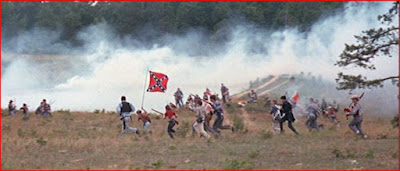
Uncle shows men playing at war, but Zio shows them picking up their toys and going home.
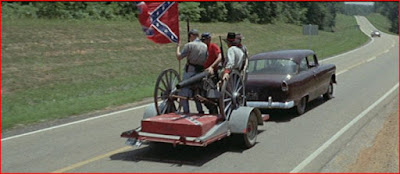

Zio is structured more like a mondo movie than Uncle. The American cut drops us right into the phantasmagoric premise of the film, that Jacopetti & Prosperi are able to travel back in time in a helicopter to the Old South and see for themselves how slavery worked. Zio actually attempts, in a joking way, to explain this at the end of a prologue that establishes what else they intend to explain. Zio opens with footage of Martin Luther King's funeral, perhaps filmed by J&P's own team given the great picture quality compared to news footage that appears later. They include an unusually moving shot of automobiles going about their business in complete indifference to the massive procession going on behind them, as if to assert an ultimate insignificance of the mournful demonstration.
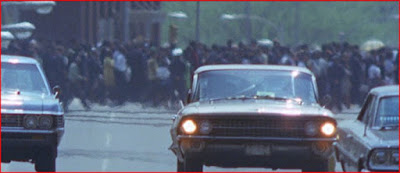

Riot footage follows, along with quotes from radical Black Power leaders calling for violence. The filmmakers argue that the proposed or hoped-for uprising was a dismal failure, with whites suffering little damage from black rage. It becomes clear that Zio is meant, in part, to explain by reference to the slavery experience why the black uprisings failed and how the heritage of slavery remains a handicap for American blacks. The prologue closes with a protest at Cape Canaveral during a moon shot, as the narrator invokes Einstein's relativity theory to suggest that a journey into the future can actually take us back to the past, and the film proper begins.
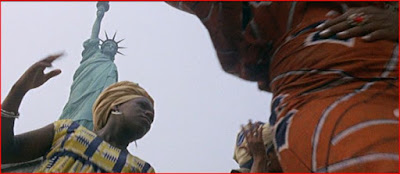

Zio returns to the present frequently for mondo-style actualities (i.e., very possibly staged) showing different aspects of modern race relations, ranging from a hippie repentance ritual on top of a Manhattan skyscraper to rampant race and gender mixing during Mardi Gras in New Orleans. The narrators return often to the concept of "Negro-ness" (the subtitle substitute for what used to be called negritude) as a wrong direction for blacks to take. As if pre-empting criticism of their own humiliating treatment of black extras, the filmmakers show Old South re-enactment tours in which blacks are paid to pretend to be slaves.
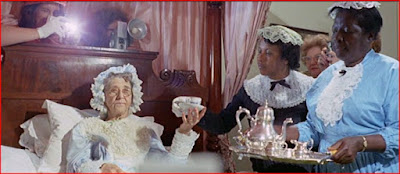

The final present-day scenes, apart from the Nat Turner fantasy, show an anonymous black leader riding through a ghetto in a police car, telling the hood that repaying race hatred with race hatred (the filmmakers' reading of "Negro-ness") is not the way for blacks to solve the race problem. In retrospect, the slavery footage in Zio seems intended to establish a purely racial grudge that explains a lack of genuine radicalism on the part of the Black Power movement. That footage also allows for a different explanation of ineffective protests, but I'll defer that discussion to another post.

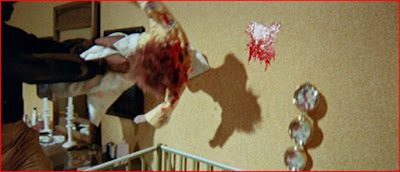
Uncle leaves the Nat Turner fantasy as the only present-day response to the slavery experience. Let me stress again against charges that Uncle is toned down that the Turner footage is the most inflammatory part of the film because (in Uncle especially) it portrays the random slaughter of white families as the black response to slavery. In fact, the American cut of the Turner section goes further than Jacopetti now wants to. In his Director's Cut, he cuts at the last possible moment from the scene of a black radical about to dash a baby against a bedroom wall to a shot of a live baby at the beach. The American cut lets the baby-bashing scene last a few seconds longer.
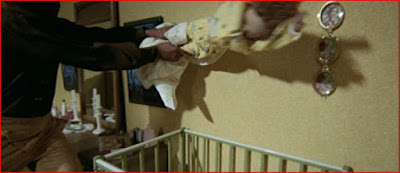
Uncle (below) boldly goes forward where Zio hesitates at the brink of infanticide.

In at least one counter-instance, Uncle tones down a scene from Zio. A violent action sequence portraying a hunt for fugitive slaves ends in the Director's Cut with the slave hunters posing for a photo beside a mound of dead bodies. Uncle lets the scene run a few moments longer for a comic coda: the slaves in the photo are only playing dead so the hunters can get a good picture. The shot made, they're ordered to scatter.
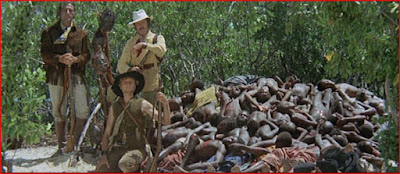
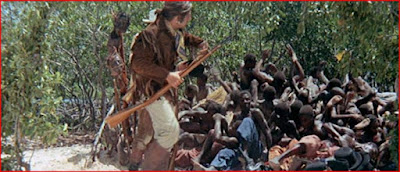

These are two small instances in which Uncle has footage missing from Zio. There are many more substantial additions to the American cut. I'll close this installment out by listing the most important bits unique to Uncle.

The "flashback" Civil War footage (i.e. the present-day re-enactment footage from Zio) is followed by a scene of slaves burying the dead, followed by an aerial shot of a cemetery, while the Italian-accented narrator explains that "for every negro brought from Africa, a white man fell in battle." The commentary that follows is the part of the American script most clearly designed to exculpate the U.S. from special moral responsibility for slavery, as the narrator states that the nation went on to liberate most of the world from slavery, "an institution America had not invented, but had inherited and endured."

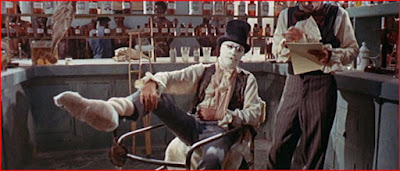
To the assembly-line footage of slavery processing at Fort Bastille is added a visit to the "Veterinary" office, where the bizarrely bandaged Doc White presides over inspections for genital infections and mass enemas.

A nearly idyllic stop by a river during the inland slave march is made more sinister by the burial of a dead baby, the convulsions of sick slaves, and the abrupt murder of fellow slave trader Charlie Wilson by the "benevolent" Mr. Schultz, who warns the narrators off with his pistol to end the scene.
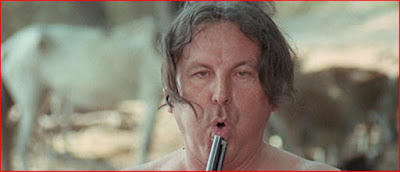

Harriet Beecher Stowe makes a cameo appearance at the plantation first visited by the narrators, announcing her belief in black inferiority but crediting them with "embryonic intelligence" and condemning slavery while declaring her plan to write Uncle Tom's Cabin.

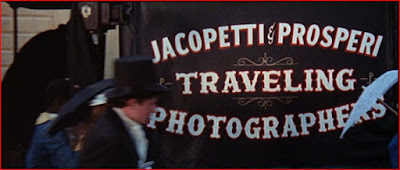
The narrators arrive at the big slave market scene in a wagon decorated with a "Jacopetti & Prosperi Travelling Photographers" sign that for some reason is one of my most vivid memories of my first viewing of the American cut. The filmmakers are more modest in the Director's Cut, cutting their self-advertisement out of the film.

At the slave market, there are three extra scenes. In the first, a white instructor teaches the slaves proper deportment in the presence of whites; they are not to look whites in the eye. "Look at me!" he demands of one of his students, who is slapped for doing so. "Thank you, master," he says. The second is a visit to a dusty insurance office where the narrators learn that individual body parts of slaves can be insured and give the clerk a ballpoint pen. Finally, the narrators encounter an educated slave who gives a speech out of Southern pro-slavery propaganda favorably comparing his situation with that of working-class whites who have no job security and no paternal authorities to look after them. "You ought to be ashamed of yourself!" the narrators tell him, "You're a dishonor to your race!"
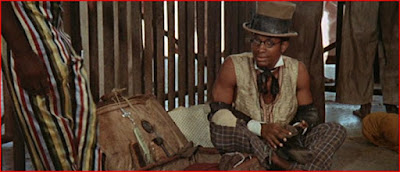

The visit with the racist pseudo-scientist Dr. Cartwright is extended with a demonstration of one of his inventions, an anti-masturbation device consisting of a big board the slave can't get his arms around.
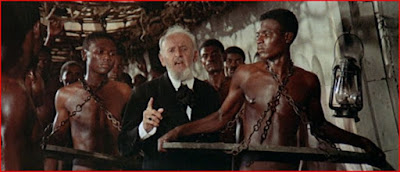

Overall, Uncle comes across as something more like Fellini's Satyricon (to the point of Riz Ortolani seeming to ape Nino Rota in some more decadent scenes) than an all-out mondo movie, dropping us in an utterly strange world that's even more alien than we thought it would be. It's less overtly political than Zio but is inescapably political because of its subject matter, though its only contemporary relevance, in its own imagination, is its ability to provoke murderous thoughts in certain black people. Whether blacks come off better in Uncle than in Zio, or whether one version is more or less "racist" than another, is a topic for another post. It's enough for now to say that both films pack a visionary wallop with potentially oppressive force, as Jacopetti & Prosperi dare you to look or look away. The American cut is slightly more violent and gory than the Director's Cut, but the sheer conceptual violence of slavery is so omnipresent and overwhelming that the relative use of special effects seems trivial. Choose your poison, some might say, but either way Tom is a one-of-a-kind viewing experience that film buffs can add to their memories like a badge of courage.

Saturday, August 22, 2009

Hello to GOODBYE UNCLE TOM (1971)

Of D.W. Griffith's The Birth of a Nation Woodrow Wilson supposedly said it was like "history written with lightning." The magnum opus of Gualtiero Jacopetti and Franco Prosperi could well be described in the same way.


Griffith made his film, in part, in defense of slavery. The makers of Mondo Cane made Addio Zio Tom, in part, to condemn slavery. Yet both Birth of a Nation and Goodbye Uncle Tom have been called racist films. Worse yet, the Italians have been accused of exploiting slavery, even while condemning it. That's a sort of backhanded tribute to the incendiary, provocative power of the film's images. But there's also a kind of instinctual recognition that such a visceral re-enactment of historic atrocity can, maybe must stir up ugly emotions, including titilation as well as indignation. Add to the brew the fact that some of the most horrific scenes were filmed in Haiti with the cooperation of a monstrous tyrant, and people can't be blamed for feeling that there's something wrong with and about this film. And the filmmakers aren't playing innocent, either. They meant the movie as a provocation as well as an explanation -- but what was being explained, and what did they mean to provoke?


Those questions wouldn't be worth asking if Addio Zio Tom wasn't one of the most powerful visual statements ever filmed. I first saw the American edition on a dupey videotape about a decade ago, having never heard of it before, and I was stunned by its epic scope, not to mention the majestic, feverish score by Riz Ortolani. I've now had a chance to see what Jacopetti considers the definitive Italian version of the film, which includes material left out of the American edition and excludes stuff I remember from my first viewing. Since this is Blue Underground's DVD, the imagery is even more powerful.


This is an introduction to a series of posts I'm going to do on one of my favorite movies, one which I rank among the greatest of the 1970s. My approach to Uncle Tom emulates that of Nigel M.'s I Spit On Your Taste blog, where he dissects movies one theme or idea at a time. With Uncle Tom I have a lot of ground to cover: what were Jacopetti & Prosperi trying to say about slavery and its relevance to America in their own time? Were they racist? Were they exploiting the heritage of slavery, and how would we know if they were? Why did they go the extra mile to associate themselves with the controversy over William Styron's novel The Confessions of Nat Turner when they were probably in enough trouble before the final act? What are the differences between the Italian and American editions of the film, and is one more racist or exploitative than the other? There might not be one post per question, but I have a lot to say about this film and it seems advisable to present it in digestible chunks. Numerous posts also allow me to use a lot of screen captures. Just bear in mind that what you'll see here is the tip of an artistic iceberg, or volcano if you prefer.

Now that I've announced my preview, here's the trailer for the international version (known only as Uncle Tom), uploaded to YouTube by HumanoidCableDreads. Anyone likely to offended by mass display of naked breasts or the simulated dashing of babies against a bedroom wall had better not look.