
The Bunny Game
Directed by: Adam Rehmeier
USA 2010
Horror/Thriller, 76min
Out of the frying pan into the fire. That’s a pretty good way to sum up Adam Rehmeier’s intriguing and provocative debut feature The Bunny Game. There’s a fistful of flicks that come around each year with a buzz from their festival circuit reputation. Movies alleged to be more than the average horror flick, movies that dig deeper than the usual genre fare, movies that leave an aching pain of seeing something disturbing, beautiful and important at the same time. Movies that stay in your head after the end credits have rolled… and if you are a regular reader, you know just how much I enjoy these kinds of movies. These are the specks of gold amongst the black sand we sift through on a regular basis.
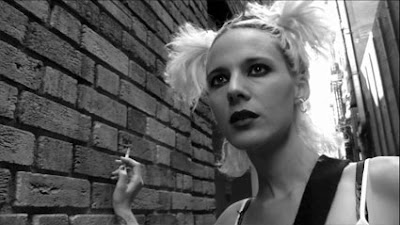
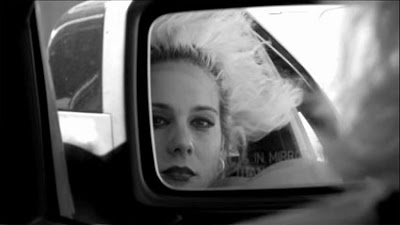
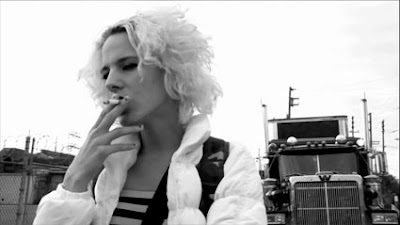
Bunny [Rodleen Getsic] is a prostitute taking it day by day. One day she encounters an elderly trucker called Hog [Jeff F. Renfro]. Hog abducts Bunny and drives far into the desert where he begins a series of sadistic games. Games where Bunny’s life is at stake. This is the basic synopsis of The Bunny Game. A movie that causes controversy when watched by people who do not understand what they are seeing.
The Bunny Game has already been banned in the UK, or rather refused a certificate, which may be a gratuitous tool to present distributors outside of Great Britain with. A movie rejected due to it’s sadistic and sexual content will certainly find it’s audience – after all we do live in 2012, and banned discs are only a click away on foreign online stores. But despite a great promotional tool, keep in mind that the BBFC have previously “banned” movies on grounds that they obviously lack the insight to understanding movies. Such as
Kôji Shiraishi’s Gurotesuku (
Grotesque 2009), a movie I’ve previously explained how the BBFC completely misunderstood. It's a unfortunate day when one has to point out that they have made the same kind of misinterpretation of
The Bunny Game as they did with
Grotesque.

This isn’t a movie about what is going on on-screen, this is a movie that pushes deeper than the screen images. A movie that burrows into the mind of its audience, taking them on a dark and captivating ride. I am dead serious when I say that this movie isn’t about exploitation or cheap thrills. This is a really dark trip with mesmerizing performances and a captivating narrative brought to life through it’s part improvised, part scripted – if only in the easiest form – and part therapy. Getsic and Rehmeier based the foundation story on Getsic's personal experiences and the line between performance, acting and realism is very vague with this one. Nothing feels fake here, it all feels real, because it is real, and Getsic gives such a powerful performance I doubt she will ever top it.
Whist watching, I frequently found myself thinking of the short anarchistic works of Richard Kern, Lydia Lunch and Nick Zedd that seeped up from the underground art circuit during the eighties. Undoubtedly, The Bunny Game could be seen as the Cinema of Transgression maturing into a potent art form. The movies share certain themes, imagery and have a similar aura of authenticity to them. But I also find myself thinking of grand classics like Carl T. Dreyer’s Le passion de Jean d'Arc (The Passion of Joan of Arc 1928… Perhaps Bunny becomes the Patron Saints of all Women of the Night. The associations are not to farfetched, as The Bunny Game is a mystic combination of improvisation and performance, channelling some very dark places, and there are at least two instances of religious imagery to be found. One subtle in a characters name, the other deliberate image that brought the mentioned film above to mind.
From here on out, I think a spoiler warning should be issued. Yeah, a rare thing on this site, but to be able to discuss The Bunny Game seriously some details may slip out that could harm your initial viewing. So if you haven’t seen the movie ye, then you may want to do that before we go on. If not, you have been warned slight spoilers ahead.
OK so if we break it down it could go something like this.
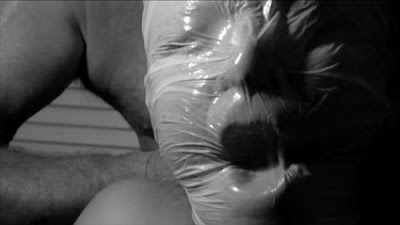
Setting an ordinary world is of importance in any genre, I ramble on about this frequently so it should come as no shock that I do so here too. Rehmeier establishes it quickly and effective with a pre-title shot of a face being suffocated inside a plastic bag, then hard cut to the titles. I’d actually call this the initial attack, the moment that establishes what genre we are in and what we may come to expect of the film. The image is not only a disturbing one, but also a symbolic description of the movie, because there will be more terror to come, and it also works as a metaphor for the feeling of asphyxia, which the film brings on. Following the titles, we are presented with the ordinary world of Bunny. A graphic depiction of Bunny giving oral sex, a variation of customers, drug abuse, aimlessly wandering the streets in search of the next john, and this is where the BBFC miss their first cue. In this establishment of Bunny’s ordinary world she’s given dimension through small actions she takes during this establishing act. She says No to a customer’s request, she has flashbacks to happier times – I’ll return to the flashbacks later, as they also hold an important key to the movies climax - she resists certain acts, she makes a telephone call somewhere which makes her cry – we can only suppose that it’s to some long gone safety zone which no longer exists such as family or friends or such. Then there’s two final defining moments in establishing Bunny’s character. After one encounter with a john she cries in the shower, and after a second customer steals her backpack she breaks down. There’s a complexity to the character. When she reacts to the stolen bag, we realize that despite only owning a few possessions, these items are of value to Bunny. She does care about things, which help us to connect with her. The crying in the shower scene is important as Bunny’s rueful reactions help us empathize with her. This signifies that walking the streets isn’t her occupation of choice; it is something she’s forced into by circumstance. It’s her fight for survival. This brings dimension to the character. We gain insight, we empathize with her as she’s already a victim… and she hasn’t even met Hog yet.
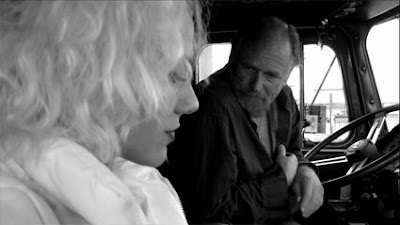
Staying with the characters, Hog is a fascinating one indeed. Almost everything I have read about this movie after watching it describe Hog as the most evil serial killer in a long time… I’m not going to back that statement. Hog isn’t the most evil serial killer in a long time, although he is perhaps one of the most complex and sadistic antagonists that I’ve encountered in a long time, but a serial killer. Nah.
I think that anyone who watches
The Bunny Game and doesn’t become fascinated by the Hog character – and the stunning performance
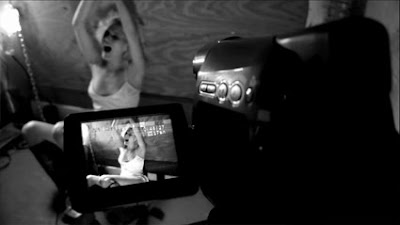
Jeff F Renfro gives, is probably blind and emotionally shut down. Because the thing that fascinates with Hog is that he too, just like Bunny is filled with dimension. He’s not just a coldblooded killer, he’s much more. There are several things that point to this. The first is that he doesn’t jump Bunny straight away. There’s a shared moment of time before he attacks. Like a cat playing with its prey, Hog tauntingly pokes, tugs and gropes Bunny whilst she’s unconscious. He videotapes her – which in a larger perspective reminds me of
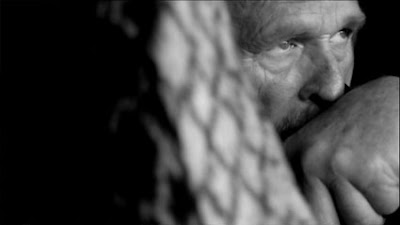
Hisayasu Sato’s use of voyeuristic themes – and then walks away. He could have started the game there already, but he doesn’t. When he does initiate the game, he’s almost reluctant, and wanders back and forth before setting the game in motion. Following the bursts of insanity Hog frequently sits in the cabin of his rig with something of a remorseful look on his face. There’s no giggling and indulging in past or current trophies, instead there’s almost a regretful tone to his persona. Hog isn’t a dark hearted serial killer but a complex man with dark sexual deviations that torment him. He knows he’s doing wrong, but can’t constrain himself from indulging in the pleasure of his sadistic games. This if obvious in the scene where he stands smoking at the back of the truck and his entire body language is that of guilt. He wanders back and forth, frustrated and restless. There’s no pride in his actions. That’s complexity within a character, which makes him so much more than a plain old generic serial killer.
With the characters explored, let’s take a look at the dramatic structure of the movie. Again, this is where the BBFC prove their ignorance and lack of understanding movies, because if you choose to judge this movie by what you see at a first glimpse, then it will be lost on you.
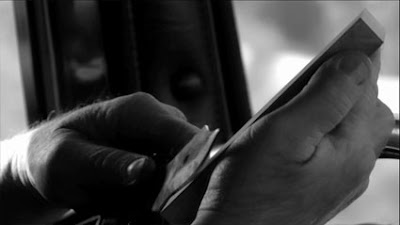
There’s a fine thread of images that seep through the film telling more about the characters than the images up front are showing. It’s important to point out that the entire movie thrives on expectations. From the first screen… no really before that, from the moment you started reading this text, well actually from the first second you made the conscious decision to read or watch The Bunny Game, it starts building expectations. From the first scene it starts building anticipation, what was that scene, who was it, where is it. What part does it fill? It’s an initial attack and we know that they present the threat to come during the movie’s course. Every scene builds tension. Up to moment when Bunny enters hog’s rig, the music, with the exception of one early Death Metal track, shifts from the mellow atmospherically ambient style of score to a dronish growl. A dronevilish growl that will seep through the most of the coming events that when the music stops and the soundtrack only consists of diegetic sound it amplifies the moment on screen and helps set the audience in the realism of the moment. When music is used, it helps build the tension, and I know it’s going to snap at any given moment. Every encounter between Bunny and Hog builds tension. When Hog approaches the back of the truck armed with his razor sharp army knife, the editing taunts us, Hog walks back and forth, he slowly approaches the makeshift torture chamber, and Rehmeier teases the audience by keeping Hog from approaching his destination as long as possible… building tension.
This is where the videotape flashbacks come into play. Don’t confuse these with the narrative flashbacks, they are of a completely different fashion, and I’ll get back to them in a moment. The videotape flashbacks are moments of torture, bondage and sadism from Hog’s previous victim, fittingly named Martyr [Dretti Page] in the credits. These more or less act as videotape segue ways into the next session between Hog and Bunny and with them in mind, we obviously become intrigued to see what will happen. What will Hog do that he hasn’t done before, and knowing that he has committed similar acts earlier, is there anything that can stop him.
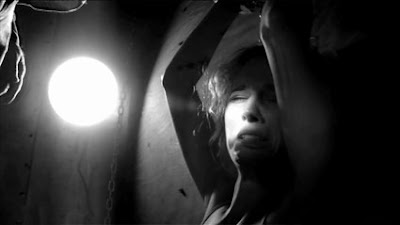
Looking at the style and form of The Bunny Game, I really like the retrained dialogue, the lingering shots that contrast with the hard rapid bursts of fast edits, the feeling of spontaneity found in the cinematography which captures some highly intense moments. It’s here that the bursts of rapid edits from a seemingly happier past create an eclectic narrative filled with questions and answers. Because the flashbacks are not only flashbacks, they are non-linear time capsules. If you pay attention upon repeated viewing you will see the past, and future, of Bunny.
This is how The Bunny Game works. We want to know where it’s going to go, how far will Hog push the envelope this time, how much will Bunny be able to take… fragmented short inserts which we take in and try to put into some context – we do this compulsively weather we choose to or not, it’s in our human nature all add to building tension. Even the final scene works in the same way, who, what, why… Tension is built to a maximum. More questions are posed and not a single answer is given… or is there?
Ok, remember that warning earlier on. Well for real, this is where I crack it wide open. If you haven’t seen the movie think twice before progressing, this is spoiler turf.
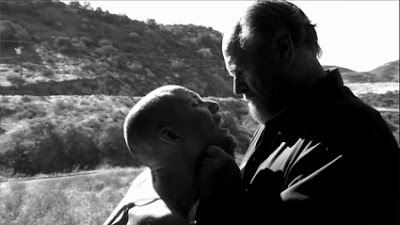
In the early flashback scenes whilst still in Bunny’s ordinary world you will see images of Bunny with her shaven head. She’s lying on what is obviously a mortician’s table. So yes Bunny does die. Although I’m not certain that it’s Hog who is the killer. Again looking at the videotape flashbacks these work as a blue print for Hog’s torture games. If you take time to think about it, there’s a structure to Hog’s atrocities. Each moment from previous victims is repeated with Bunny. There’s really nothing that says that Hog actually murders his victims. Also, Hog gives Bunny the chance to live with the last game, the age-old straws game. He gives no indication of deception here, instead he calls out to his buddy Jonas [Gregg Gilmore] who in the last long, almost tedious shot arrives in his pickup van and takes off with Bunny. The mystery of Jonas is wide open. Is he some kind of cleaner, taking care of Hog’s mess? An accomplice perhaps who takes the torture to a whole new level from where Hog left off. This scene open the door to a whole new devastating world, and from the flash forward moments, it’s fair to suspect that Jonas is the real killer, although the world and games he plays with Bunny are seemingly too dark for the audience to participate in.
This is why I constantly claim that movies like
Pascal Laugier’s Martyrs, Simon Rumley’s Red White and Blue,
Lucky McKee’s The Woman,
Miguel Ángel Viva’s Kidnapped,
Srdjan Spasojevic’s A Serbian Film,
Eric Stanze’s Ratline, even something like
Gareth Edwards Monsters are much more rewarding than the common closed book movies that we constantly watch. Perhaps movies of this specific kind loose the repeated viewings they deserve, as their key moments of suspense are bust. Although these movie do stand up to the tests of time, and do indeed deserve a second or third viewing, as you will discover more dimensions to the movie, and you will see more detail that has been hidden away from you the first time around. The possibility of Hog’s Bunny game only being the first in a circle of many isn’t quite the climax we are expecting. Of course anyone who watches cutting edge genre flicks knows that the nihilistic climax is a common one. But at the same time convention teaches us that villains are to be captured and punished, justice must be served. Be it the law, a chance rescue or Bunny herself we crave justice. Instead we get yet another layer of hell, and we wanted that too. We stuck with the movie as our morbid curiosity drove us to see how far Hog would go... How much will Bunny take? A certain part of us chooses to watch the sadistic games, which also discloses uncomfortable truths about us as an audience… why are we watching? In more than one metaphorical way we are Hog. We also want to know where will this lead us. Well, it takes us to a dark place and a climax where we neither see Bunny survive nor die. We see her vanish into the light of the horizon and what we presume is further degradation and torture. It poses disturbing and uncomfortable questions that we most certainly will be thinking about when the movie is ended.
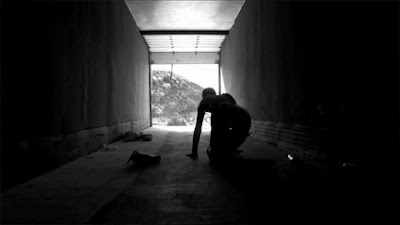
Keep your inhaler close at hand, The Bunny Game will leave you gasping for breath…