Showing posts with label Florinda Bolkan. Show all posts

Monday, October 14, 2013

Last House on the Beach


Last House on the Beach
Original title:  La settima donna
Directed by: Franco Prosperi
Italy, 1978
Drama/Thriller, 86min


Franco Prosperi, no not the Mondo maverick, but the other Franco Prosperi, writer of such classic films as Jess Franco’s Mondo Canibale (White Cannibal Queen) 1980, Mario Bava’s La ragazza che sapeva troppo (The Evil Eye) 1963 and Ercole al centro della Terra (Hercules in the Haunted World) 1961 - which he co-directed with Bava, and director of low budget and exploitation films such as Un uomo dalla pelle dura (The Boxer) 1972 and this one, Last House on the Beach, serves up a decent home invasion rape revenge yarn with a solid set of actors like Ray Lovelock, Florinda Bolkan, Sherry Buchanan and Laura Trotter in the cast!
Basically, and vaguely, The Last House on the Beach is yet another take on Ingmar Bergman’s Jungfrukällan (The Virgin Spring) 1960, written by Ulla Isaksson. The same movie that inspired sardonic grit-fests like Wes Craven’s Last House on the Left, Aldo Lado’s L’ultimo treno della note (Night Train Murders) 1975 and Ruggero Deodato’s La casa sperduta nel parco (House on the Edge of the Park) 1980, and also this variant Franco Prosperi’s La settima Donna (Last House on the Beach).

Three bank robbers, under the lead of Aldo [Ray Lovelock], take to hiding in a summerhouse inhabited by Sister Christina [Florinda Bolkan] and half dozen young women. The men take the young woman hostage – after beating the maid to death with a hot iron.  Tension builds as the thugs start to rape and abuse the women one by one, eventually forcing Sister Christina to go against her faith, refuse to turn the other cheek and start to take revenge!
Romano Migliorini and Gianbattista Mussetto wrote a screenplay from the story by Ettore Sanzò. Ettore Sanzò had previously written screenplays to Aldo Lado’s Night Train Murders and Massimo Dallamano’s magnificent La polizia chiede auto (What have they done to Your Daughters) 1974, so Sanzó had been up the “young women in peril” street before. Despite being gritty, misogynistic and grim, the movie is still somewhat cheesy, possibly more due to the shoddy dubbing more than the actual performances or narrative.  But not all is lost, some effective passages of dialogue work in a timeframe that helps set a time limit and a tension builder in the shape of the returning buss that will arrive and pick up Sister Christina and the young women. In some ways it works as a reliever as we know help – or possible salvation – will be on the way, but when the Nuns at the convent call, without getting through, to tell them that the buss will be a da late, it works as a tension builder instead. Sister Christina is relying on keeping everyone safe until the buss arrives on the third day, but as this isn’t going to happen, tension builds to a boiling point… well kind of.
Characters are polarized; the male bank robbers are sinister, randy and somewhat dumb, whilst the girls are gentle, savvy and innocent– despite an early scene where they slip out of their tops whilst sunbathing, but quickly put them back on when Sister Christina approaches the pool area. This is simply Good versus Evil, with the exception of Lovelock who, in this mix, comes off as a dimensional character. (Which he isn’t really.)
Lovelock acts as something of a red herring, as he at times steps in to stop abuse, or help a girl out, but on the other hand provokes the two other kidnappers to go over the edge, holds a knife to Sister Christina and forces her to watch the other two thugs rape one of the young women. He also has a strange flirt with Margret [Luisa Maneri] who he bonds with and shows some form of affection for… but we all know that just below the surface it’s old school manipulation!
As all rape-revenge flicks, the main narrative is to push the god-fearing protagonist as far as possible until this character snaps and becomes a like worthy or equal force of antagonism towards the antagonists. In Last house on the Beach, a very symbolic act is used to show Sister Catherine's transition as she steps up and takes on the villains who have molested, terrorized, raped and murdered members of her young flock!
Early on you can hear a super weird Roxy Music sound-alike track “Place for the Landing” courtesy of Roberto Pregadio with Ray Lovelock blurting out vocals in his best Bryan Ferry imitation. But there’s a really neat title track with the great Edda Dell’Orso that adds the versatile mix of this movie. If nothing else, I take the great soundtrack with me from this film.
A lurid piece of trash that possibly becomes grittier as the groovy Roberto Pregadio soundtrack is blasted loud over almost every scene of violence and misogynist moments are depicted in surreal fashion mixing extreme close ups, victim point of view, and slow-motion whilst eerie dronish beats play over the sadistic acts. Last House on the Beach is rape revenge, home invasion cheapie done the book, worth the time, but not one that left an imprint in time.
Oh, and if anyone knows if there’s two or one Franco Prosperi, and if so, who made what, then please let me know. Personally I can’t decide if there actually where/are two or really just one. They both worked at the same time, in the same industry, in the same country in the same genre and at times on the same film it seems… Reading filmographies, their paths cross a few steps to close of each other on several occasions to be just coincidental. Right now, I’m leaning towards there being only one, as THIS Franco Prosperi supposedly edited Jacopetti & the other Prosperi’s Addio zio Tom (Goodbye Uncle Tom) 1971… it’s confusing, so anyone who actually KNOWS, you are more than welcome to let me know.


Friday, May 04, 2012

Don’t Torture a Duckling


Don’t Torture a Duckling
Original title: Non si sevizia un paperino
Directed by: Lucio Fulci
Thriller/horror, 1972
Italy, 98min
Distributed by: Shameless Films

I won’t start this with a rant on how Lucio Fulci made so much more than the classic video nasty’s he’s infamous for.  I’m quite convinced that anyone who really bears a passion for the works of the late master of genre, will already have ventured back past those seminal works and discovered the real masterpieces of suspense and thrill, hidden away in his back catalogue. If you haven’t seen the movie, I’d recommend that you first check it out before we get into this, as certain spoilers are featured in this text. If you know the movie, then buckle up and let’s go.
I’ve already covered some of the early pre-Gialli thrillers such as Una sull’altra (One on Top of the Other) 1969, Sette note in nero (The Psychic) 1977, and even a couple of the comedic works such as All’onorevole piaccino le donne (The Senator Prefers Woman) 1972, Il cav. Constante Nicosia demoniac, ovvero: Dracula in Brianza (Young Dracula) 1975, and even a few of the Spaghetti Westerns; Le colt cantarono le morte e fu… tempo du massacre (Massacre Time) 1966 and I quattro dell’apocalisse (Four of the Apocalypse) 1975. It’s time to take a look at the bookend movie of the early thriller trilogy, Non si sevizia un paperino (Don’t Torture a Ducking). On one of the greats from his early period, one of those movies where he was started to perfect the themes that would make him a god amongst fans of genre cinema in the years to come.
In a small rural village, someone is murdering young pre-adolescent boys. The Carabinieri are stood almost helpless as they have a hand full of suspects ranging from the village idiot, to the witch who roams the landside, to the shaman who taught her his magic. A curious journalist arrives in the village and together with a somewhat strange choice of companion, starts to poke around the case, coming to a shocking conclusion about the killer’s identity.
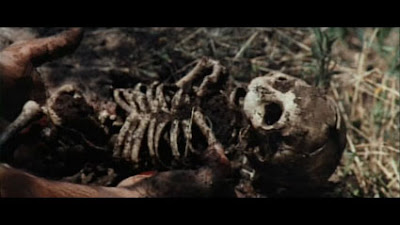
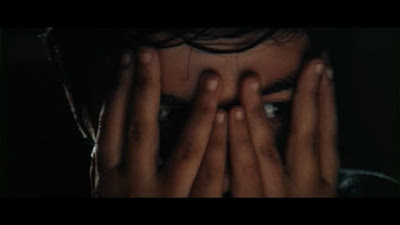
I often talk about setting tone as early as possible… Well try this on for size: a woman [Florinda Bolkan] claws at the dirt under a motorway overlay. Her thin soiled and bloodied fingers produce the skeleton of an infant from a shallow grave in the dirt. A young boy (Tonino) shoot’s a stone from his slingshot that upon impact crushes the small lizard he was aiming at whist he sits keeping lookout for a specific car to swoosh by. Editor Ornella Micheli (Fulci’s frequent editor before Vincenzo Tomassi made his entrance) rapidly establishes the small village with a series of fast edits to the diegetic sound of church bells ringing. We enter a church in mass, were two young boys  (Bruno and Michele) sneak out to share a gauloise under the same overlay we saw earlier. Tonino comes running towards them whilst screaming, “They’re here, they’re here” and the trio run off to a shack, where some blokes greet the two prostitutes who have exited their car. The women have  “tits like water melons” in the excited boys’ opinions – but the village idiot Giuseppe wrecks their intended session of sordid voyeurism. Instead they turn their attention on him and start verbally bullying him, as he too was planning to watch the two men shag the prostitutes. As they boys taunt Giuseppe, he screams that he will get they, he will get them…
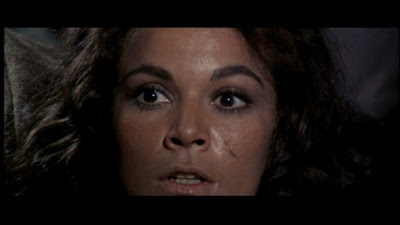
Potent stuff, and definitely an impressive couple of minutes which accompanied by Riz Ortolani’s short but harsh stinger cues, establishes a lot of stuff, which will come to play within the movies narrative later on. But be alert, those moments establish more than you could ever have guessed. The location is set, a small rural village, where the church is the centre of the town. The crazy woman – Florinda Bolkan’s is presented, and we understand that there’s a dark secret in her past. We learn that the kids are adolescent young men with a budding curiosity of the opposite sex. But they are still kids and can easily turn from their sexual curiosity to a taunting mob, which evokes fear in those they decide to single out. In the subtext we can assume that sex is something sacred and kept within the confinement of the family unit. This can be presumed as the village is most likely a stern follower of catholic values, and the men take their “imported” prostitutes to a shack outside of the village vicinity. But it’s not all presumptions, this is all true, and will give you a rush of insight upon the conclusion of the film.
If you know your Fulci, then you know that he enjoyed giving the church a kick in the ass on any given moment. My theory is that it's due to the tragic events in his personal life. I can’t really see a creative person being a devout follower of religion, when that religion takes away loved ones. Somewhere that bitterness has to vent, and I’m saying that the way Fulci aimed critique towards the clergy was one of them.
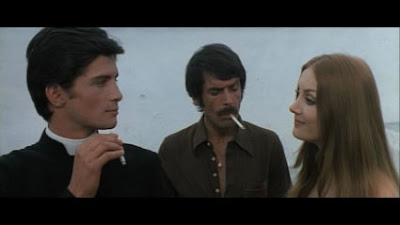
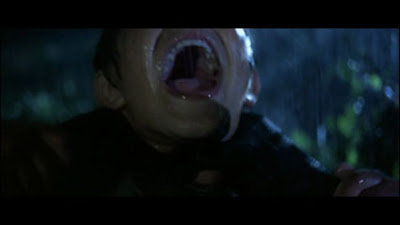
There’s a delightful irony that motivates the murders and definitely a provocative one in more than one way. The village priest, Don Avalone [Marc Porel], is the murderer of the piece, and it’s not only a stern poke at the church, but it also presents a delightful dilemma as one can in some strange way empathize with what Don Avalone is trying to do. In his complex state, his philosophy is to kill the yearning young lads as to protect them from committing sin, hence allowing them to enter heaven instead of the burning pits of hell. I’m a sucker for the moral twists of doing bad, for doing good, and Fulci nails this one on the head. Then he makes the priest – or the clergy in the larger picture – pay a most terrible and harrowing death as he has his face torn to pieces against the rock walls, before breaking every body in his bone when he smashes into the hard rock below. If there was one thing Fulci could do, it was provoke.
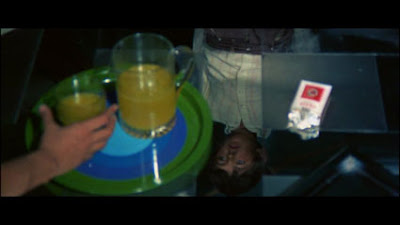
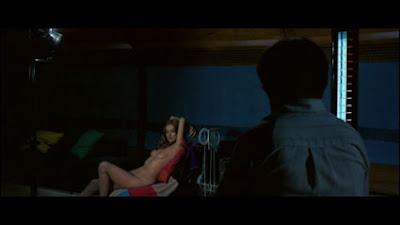
But perhaps the most provocative moment of the movie is found early on when Barbara Bouchet’s character Patrizia, who oddly enough rents a penthouse flat above the Spriano family, reveals herself as a paedophile! Now this isn’t a Feliniesque moment like the opening one, where the lads merely want to catch a glimpse of the prostitutes “tits like melons”. This is a raw, confrontational, full on flirtation where the fully naked Patrizia invites Michele to go to bed with her. If not for being saved by his mother who calls him back to the first floor. Patrizia, talk about a complex character, and it’s later revealed that she not only has an appetite for young boys, but she’s a recouping Junkie too…  Not that this was the first time Fulci, used paedophilia to provoke, it plays a vital part in the narrative of Beatrice Cenci 1969 too, where both Tomas Milian and Georges Wilson are part of the cast. Fulci, no stranger to getting in trouble with the law – i.e. the puppet dog incident following Una Lucertola con la pelle di donna (Lizard in a Woman’s Skin) 1971 – once again ended up facing another trial when the scene where the naked Bouchet takes to seducing Michele caused a stir. Always the one with an ace up his sleeve, Fulci presented the "little person" Don Semeraro (who almost thirty years later stared in Joe D’Amato’s The Hobgoblin) who had been the stand in for the child actor, and the case was dismissed.
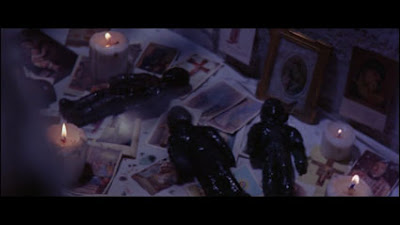
So how does this come together with the opening montage? Well basically Florinda Bolkan’s Macaria character is insane the whole time. Yes, she performs her voodoo-like ritual with the three dolls in the images of the three taunting kids – I told you they where trouble, and they disturbed the grave of her child, hence forcing her to move the dead baby from it’s resting place and have her perform her mumbo jumbo voodoo vengeance. But that’s merely a red herring to toss you off track, just as the trail of village idiot Giuseppe [Vito Passeri] is too. Barbara Bouchet is a red herring too, despite her wonderfully complex character. The church and the whole Catholic Church bit is all about Don Alberto’s modus operandi. Yes, there is a veil of Catholic values draped over the town, and to save the children from corruption – which we see they are on the way to being with the smoking and desire to peek at prostitutes, and possibly masturbate at the same time – Don Alberto saves their souls by murdering them. Then in the last moments of the movie, good Old Catholic guilt comes over him and he takes his own life… ironically as suicide damns the deceased to an eternity in purgatory.
There’s an interesting use of the off-screen space in Don't Torture a Duckling. At first several characters are isolated out  there, the killer, and at least two pairs of hands tampering with the voodoo dolls. The off-screen space had been a safe haven for murderers to lurk around in since Powell’s Peeping Tom and Hitchcock’s Psycho, both 1960, and a genre-defining trait when it came to the Giallo. What Fulci does is use it wisely; he keeps the characters in the off-screen space until he needs to reimburse them into the narrative. Such as when we need to introduce a second red herring, and Bolkan’s character finally comes into frame after tampering with the voodoo dolls off screen since the opening.
It’s said that Don’t Torture a Duckling was Lucio Fulci’s personal favorite amongst his films, well looking at the movie from a retrospective angle, it all rings true, in some way’s the movie is more a piece of Neorealism, with a smidgeon of thriller traits added. It’s definitely the Fulci movie that lies closest to Neorealism, and it is a fair interpretation, which possibly could explain why he was so fond of this little obscure gem. Considering that Neorealism is the big Italian contribution to film history, one can understand his fondness for the film.  With the knowledge that Don’t Torture a Duckling was Lucio’s favourite film, this could explain the reason why he later used several key moments –and beats - from this movie in his later more typical horror films.

Chains whipped against a tender frame of human flesh, creating deep gory gashes, which you all know and love from the “You ungodly warlock” opening of  …E tu vivrai nel terrore! L’alidià (The Beyond) 1981, when a band of villager’s once again take vigilante justice into their own hands. A face being smashing against side of mountain as character plumages to death and presents insightful inner dialogue at the same time, much like the opening visions that torment Jennifer O’Neil in The Psychic. Amusingly enough the film also features a first poke at Disney and primarily Donald Duck. A Donald Duck doll is decapitated and it’s torso dragged around. Originally Fulci wanted the movie to be titled Don’t torture Donald Duck, but when Disney protested, the title was changed. Exactly ten years later the killer of Lo squartore di New York (The New York Ripper) 1982 would disguise his voice and talk like Donald Duck, and Fulci finally got his poke at the cooperate suits of Disney Co.
Don’t Torture a Duckling really is an “all comes together” flick in so many ways. Fulci has an amazing cast, several of which he’d worked previously or would work with again; Florinda Bolkan, Tomas Milian, Marc Porel and Georges Wilson. Not forgetting one-offers like Irene Papas, despite holding a rather small part, and Barbara Bouchet, who delivers a great performance here. Keeping that tight Fulci grip on those he enjoyed working with, the maestro delivers a movie with a water tight script, penned by Fulci, Gianfranco Clerici and Roberto Gianviti (who wrote a stunning twelve screenplays together with Fulci through the years), editing is superb and definitely amongst the best of the eighteen flicks Ornella Micheli cut for Lucio, and without saying, Sergio D’Offizi. Damn, the more I see of this man’s work the more it becomes a mystery to me why he never landed an international career like, say Vittorio Storaro. At least give the man an honorary award because, some stuff like Don’t Torture a Duckling and not forgetting the innovative “found footage” approach of Deodato’s Cannibal Holocaust 1980, is all D’Ofizzi. Someone give credit where it’s due!
Riz Ortolani’s score, which is pretty tender at times, has a short moment that fan’s of the Cannibal Holocaust soundtrack will recognize. Not that it’s a complete tune or anything like that, but there’s a small build which Ortolani later used on Cannibal Holocaust and if you know that soundtrack you will find it. Following the violent beating of Florinda Bolkan one can hear the song Quei giorni insieme a te, performed by the domestically renown Ornella Vanoni. It’s a delicate piece written by Ortolani and Jaja Fiastri which definitely set’s a sentimental mood for Bolkan’s dying moment… but just wait for a moment, things are about to get kinda strange here. I’m more curious about the funky shit-kicker Crazy, here performed by Wess and the Airedales, the same funky ass shakers that played on stage in Umberto Lenzi’s Orgasmo 1969 and Paranoia 1970. The same version of Crazy (originally written by Armando Trovalioli), which is heard on the soundtrack to Dino Risi’s Vero Nudo 1969… Now take a guess who wrote the screenplay to Vero Nudo? Jaja Fiastri, the same who wrote Quei giorni insieme a te with Riz Ortolani. Just another reason why I love Italian genre, it’s all interwoven and connected to and fro for all eternity through captivating intertext.
Unlike other releases, Shameless have given the movie a release with the original Italian soundtrack, and an optional English Dub. Now I do find that these movies are more fun with the English dub, but I also prefer to be able to watch them with the original language option. Thanks to Shameless, that’s now an alternative. If you watch one version of Lucio Fulci’s somewhat overlooked masterpiece Don’t Torture a Duckling, then make sure it’s the Shameless Films Version.

Monday, November 23, 2009

Footprints on the Moon


Footprints on the Moon
Le Orme
Aka: Footprints, aka Primal Impulse
Directed by: Luigi Bazzoni, 1975
Italy, 96min
Distributed by: Shameless Films Entertainment

Footprints on the Moon is a strange little oddity which at first plays out like a well crafted mystery movie with a dash of sci-fi, courtesy of a sub plot where the main character, Alice, keeps having strange dreams of an astronaut being left on the moon. Who are the astronauts and who is Alice are the main questions you will ask yourself while enjoying Luigi Bazzoni’s surreal “lost” movie Footprints on the Moon.

Florinda Bolkan [star of Lucio Fulci’s magnificent Lizard in a Woman’s Skin 1971, Don’t Torture a Duckling 1972, and the nunsploitation classic Flavia the Heretic 1974] pouts and sulks her way through the movie as she tries to understand how she has lost three days of her life. At start Footprints holds a fascinating plot that takes on grand proportions, but is somewhat fumbled at the finale. Alice is a translator and when she gets to work one day in the early stages of the movie, her bosses tell her that she’s been replaced because she’s been missing for several days. Alice can’t for the life of her understand and is completely confused by the claims that she’s been missing. It’s almost Giallo territory as she starts her inquiries to her whereabouts during those three days. After finding a torn up postcard on her kitchen floor, and having a good old chat with her friend Mary [Ida Galli, aka Evelyn Stewart from Mario Bava’s The Whip and the Body 1963, Duccio Tessari’s The Bloodstained Butterfly 1971 and Lucio Fulci’s The Psychic 1977] her search takes her to the mysterious and abandoned resort referred to as Garma.

At Garma, Alice encounters the gallery of odd characters that will be leading her along on her quest, but almost everyone of them give the impression of recognising her, even though she has never seen them before… or has she? At first Alice cannot understand how the people at Garma talk to her with familiarity, until she meets the sinister little girl Paola…

Alongside with Bolkan is one of the most recognisable child actors of Italian genre movies from the seventies/eighties - the wonderful Nicoletta Elmi. Anyone who’s seen a handful of the classic Italian genre pieces will recognise her on sight, her burning red hair, her freckled face and those deep deep blue eyes make her appearance a memorable one to say the least. Elmi featured in her first film when she was four years old and already two years later 1971, she was in Luchino Visconti’s Death in Venice (although uncredited you can’t miss her appearance). The same year she made her entrance in the genre that she’ll forever be associated with, the Italian horror flick. Again uncredited, Elmi plays an important part in Mario Bava’s Twitch of the Death Nerve 1971, in 1972 she’s George Lazenby and Anita Strindberg’s murdered daughter in Aldo Lado’s splendid Who Saw Her Die?, and from there on you can see her in such epics as Flesh for Frankenstein 1973 (Directed by Paul Morrissey or Antonio Margheritti depending on who’s story of the production you want to believe) Dario Argento’s landmark Giallo Profondo Rosso 1975, and Massimo Dallamano’s The Cursed Medallion also from 1975 where Nicoletta gives her best performance as a possessed evil child. A year later Elmi vanished off the screen for several years but when she made her “comeback” it was with Lamberto Bava’s highly entertaining monster/possession classic Demons 1985. Gone were the childlike features so often associated with her previous characters and instead was a beautiful woman with red burning hair, freckled face and deep deep blue eyes. After two TV movies in the back half of the 80’s Elmi gave up acting and completed her studies and became a doctor instead. It’s an amusing though of arriving at the hospital and your doctor turns up and it’s Nicoletta Elmi who you have seen as the sinister child (and as an adult in Demons), it would definitely spook me if it ever happened.

Anyway, back to Footprints. Alice goes about her quest - where did those days go, who is the Nicola character that so many people at Garma keep referring to her as, what is the meaning of the yellow dress and the red wig, and what are those strange dreams all about. As the intrigue tightens, more questions are posed. And the key seems to be held by the mysterious Henry [Peter McEnry]. Henry who at first keeps safe distance to Alice, not revealing that they have know each other for many many years (yet another sub-plot of confusion) eventually comes out of his shell and explains that he and Alice where childhood lovers many years ago and he’s held his distance as not to scare or confuse Alice.

Then there’s the top billed name on most of the marketing materials for this little gem, Klaus Kinski. Now I’d be quite disappointed if I where a Kinski completist searching out Kinski movies and stumble upon Footprints, because of that false marketing with Kinski at the top billing. Kinski as Blackman, the strange leader of the scientific experiment on the moon, is just in the movie for a few minutes and only in flashback sequences, so I don’t really feel that he brings anything to the movie, more than his presence. So don’t expect to see good old Klaus freak out and act sinister as he did in so many other great Italian genre pieces as his part in Footprints is almost on a cameo level. Which is a shame, with some more freaky Kinski in here and perhaps bringing his character into the real world I’m sure that Footprints wouldn’t have stayed lost for so long.

The movie comes to a climax and all of Alice paranoia, confusion and mental illness drive her to devastating conclusions which have her taking terrible and fatal actions against the characters Alice see as her antagonists. It’s a dark ending with a simple, but haunting reveal in the last moments to show what is reality and what is not before Bazzoni takes it to the limit with a very surreal and bizarre final sequence. It’s also here that I feel the ending leaves more to demand s the climax isn’t satisfactory – even though it is very eerie and fitting for the flick – but the easy way out with an explanatory text as the movie comes to an end annoys me. Just imagine how that fascinating insanity thread could have been used so much more. Think of a last reel with Alice in the psychiatric ward after she’s confronted the spacemen, Blackman, now that would have been terrifying exploration of mental illness. What clarity would she reach? What would happen when she realizes her mistakes and what she has done in her state of mental disorder? It would have made for a great ending, and a more effective way of showing Alice time in the institution.

A quick afterthought on the movie and I ’d say that the movie is almost a inverted Fight Club 1999, where Alice sickness breaks her down and leaves her a wreck where Jack [Edward Norton] uses his insanity to develop and emerge a stronger person with insight into his temporary madness. Obviously Bazzari and co-screen writer Mario Fanelli (who supposedly co-directed Footprints and also co-wrote the 1971 Giallo The Fifth Cord with Bazzoni) are after some sort of pseudo psychoanalytical thread here but it unfortunately never really reaches the screen, apart from in several small nods during the movie. Alice employers who accuse her of being “ill” when she can’t recall being missing from work for three days; the Alice charm that she wears is, as told to Alice by the old woman [Lila Kedrova] made by a local craftsman who died several years ago (although as Alice obviously has spent some of her childhood here – she realises later – she may have received it then); after Harry has called his friend the doctor (whom Alice in her state thinks is the Blackman character and thinks that Harry is in on the big conspiracy) and the final text somewhat daft text explaining what the heck has been going on. It’s not really there and it leaves me wanting something more satisfying, even though I finally have clarity on what has happened during the movie. Looking at the overall structure Footprints is all about ambiguity, the lack of insight and uncertainty as each encounter pushes the mystery deeper and awakens more questions, there are no half mark answers here, it’s all one big mystery up till the final reel.

The score by Nicola Piovani is fragile, gentle and haunting when necessary and it’s a great complement to Vittori Storano’s splendid cinematography. Yeah that’s Vittorio Storano, the cinematographer of Dario Argento’s debut feature The Bird With the Crystal Plumage 1970, Guiseppe Patroni Griffi’s sleazy ‘Tis Pitty She’s a Whore 1971, and Bazzoni’s previous Giallo The Fifth Cord 1971. The same Storano who also won Academy Awards for his work on Francis Ford Coppola‘s Apocalypse Now 1979, Warren Beatty’s Reds 1981 and Bertolucci’s The Last Emperor 1987 – who said that exploitation cinema leads to nothing?

Their combo of sensory elements really makes the strange atmosphere that ponders the movie. Now on a side note there is an strange but amusing little story about Nicola Piovani that is fitting to tell in the context of Footprints and not knowing who is who… There was and sometimes is an enduring rumour that has been spinning for many years that Piovani is a pseudonym name of Ennio Morricone. Now with the 140 and still counting titles that Piovani has composed (for the likes of Federico Fellini, The Taviani Brothers’, Nanni Moretti, Gianfranco Mingozzi, Marco Bellocchio, and Bigas Lunas), the award winning scores for among others Fellini’s Ginger and Fred 1986, Moretti’s Caro diario 1993 and The Son’s Room 2001, and definitely the 1999 Academy Award for best Dramatic Score for Roberto Benigni’s Life is Beautiful, I’d think it pretty convincing that Ennio Morricone would have come and said that he is Piovani if this was the case. It’s a strange and sad little story, but Piovani is a good sport and tells it with joy and a twinkle in his eye during the lectures and talks he sometimes gives around the world.

Footprints on the Moon is a difficult movie to slot it into any definitive category as it would be out of place in the Giallo niche as it lacks the traditional traits that define that genre, i.e. red herring plots, nudity, sexy soundtracks and gloved killer. (I use the word Gialli niche as Shameless released Footprints as the last title in their 20 title series that also features several other Gialli) I wouldn’t place it in the Science Fiction genre either as there really isn’t any science fiction in it, apart from the cover artwork and flashbacks which actually are re-imaging’s of Alice’s memories of a movie she saw as a child, hence the Footprints on the Moon title. And it is definitely not a horror film, as there is no value of life at stake. One killing doesn’t make a horror flick, but I’d say that Footprints n the Moon fits nicely into the psychological drama niche with a healthy dose of thriller plot, which is why I used the Fight Club reference earlier. It’s a drama about a woman trying to answer what happened during her three day black out which leads the viewer to understand that her mental health is in question, and an amateur diagnosis comes up with the suggestion of Schizophrenia. This drama is driven by a quest/puzzle that the lead protagonist is trying to solve. In other words a psychological drama with thriller traits.

So if you are up for some superb camera work, delicate soundtracks, confused narratives and a great portrayal of a seriously bewildered woman by Florinda Bolkan with the added value of an ominous chid as played by the one and only Nicoletta Elmi and a sprinkle of Klaus Kinski then Luigi Bazzoni’s Footprints on the Moon is something that you may want to check out.

Image:
Remastered to 16x9 anamorphic widescreen. Although there are a number of varied source materials, the print looks grand.

Audio:
Dolby Digital 2.0 English or Italian dialogue available, with optional English subtitles.

Extras:
The Theatrical Trailer, English credit sequence, a promotional gallery and the US video teaser for the film under the moniker Primal Rage and the marketing scam that the film features Klaus Kinski… Being the last of the 20 titles released by Shameless, they have generously added trailers for the entire back catalogue that makes for quite an entertaining session if you are up for trailer shows. But be warned, there’s a lot of spoilers in those trailers especially the Footprints trailer.


Disney Star Wars and the Kiss of Life Trope... (Spoilers!)

Here’s a first… a Star Wars post here.  So, really should be doing something much more important, but whist watching my daily dose of t...