Showing posts with label Italy. Show all posts

Monday, October 14, 2013

Last House on the Beach


Last House on the Beach
Original title:  La settima donna
Directed by: Franco Prosperi
Italy, 1978
Drama/Thriller, 86min


Franco Prosperi, no not the Mondo maverick, but the other Franco Prosperi, writer of such classic films as Jess Franco’s Mondo Canibale (White Cannibal Queen) 1980, Mario Bava’s La ragazza che sapeva troppo (The Evil Eye) 1963 and Ercole al centro della Terra (Hercules in the Haunted World) 1961 - which he co-directed with Bava, and director of low budget and exploitation films such as Un uomo dalla pelle dura (The Boxer) 1972 and this one, Last House on the Beach, serves up a decent home invasion rape revenge yarn with a solid set of actors like Ray Lovelock, Florinda Bolkan, Sherry Buchanan and Laura Trotter in the cast!
Basically, and vaguely, The Last House on the Beach is yet another take on Ingmar Bergman’s Jungfrukällan (The Virgin Spring) 1960, written by Ulla Isaksson. The same movie that inspired sardonic grit-fests like Wes Craven’s Last House on the Left, Aldo Lado’s L’ultimo treno della note (Night Train Murders) 1975 and Ruggero Deodato’s La casa sperduta nel parco (House on the Edge of the Park) 1980, and also this variant Franco Prosperi’s La settima Donna (Last House on the Beach).

Three bank robbers, under the lead of Aldo [Ray Lovelock], take to hiding in a summerhouse inhabited by Sister Christina [Florinda Bolkan] and half dozen young women. The men take the young woman hostage – after beating the maid to death with a hot iron.  Tension builds as the thugs start to rape and abuse the women one by one, eventually forcing Sister Christina to go against her faith, refuse to turn the other cheek and start to take revenge!
Romano Migliorini and Gianbattista Mussetto wrote a screenplay from the story by Ettore Sanzò. Ettore Sanzò had previously written screenplays to Aldo Lado’s Night Train Murders and Massimo Dallamano’s magnificent La polizia chiede auto (What have they done to Your Daughters) 1974, so Sanzó had been up the “young women in peril” street before. Despite being gritty, misogynistic and grim, the movie is still somewhat cheesy, possibly more due to the shoddy dubbing more than the actual performances or narrative.  But not all is lost, some effective passages of dialogue work in a timeframe that helps set a time limit and a tension builder in the shape of the returning buss that will arrive and pick up Sister Christina and the young women. In some ways it works as a reliever as we know help – or possible salvation – will be on the way, but when the Nuns at the convent call, without getting through, to tell them that the buss will be a da late, it works as a tension builder instead. Sister Christina is relying on keeping everyone safe until the buss arrives on the third day, but as this isn’t going to happen, tension builds to a boiling point… well kind of.
Characters are polarized; the male bank robbers are sinister, randy and somewhat dumb, whilst the girls are gentle, savvy and innocent– despite an early scene where they slip out of their tops whilst sunbathing, but quickly put them back on when Sister Christina approaches the pool area. This is simply Good versus Evil, with the exception of Lovelock who, in this mix, comes off as a dimensional character. (Which he isn’t really.)
Lovelock acts as something of a red herring, as he at times steps in to stop abuse, or help a girl out, but on the other hand provokes the two other kidnappers to go over the edge, holds a knife to Sister Christina and forces her to watch the other two thugs rape one of the young women. He also has a strange flirt with Margret [Luisa Maneri] who he bonds with and shows some form of affection for… but we all know that just below the surface it’s old school manipulation!
As all rape-revenge flicks, the main narrative is to push the god-fearing protagonist as far as possible until this character snaps and becomes a like worthy or equal force of antagonism towards the antagonists. In Last house on the Beach, a very symbolic act is used to show Sister Catherine's transition as she steps up and takes on the villains who have molested, terrorized, raped and murdered members of her young flock!
Early on you can hear a super weird Roxy Music sound-alike track “Place for the Landing” courtesy of Roberto Pregadio with Ray Lovelock blurting out vocals in his best Bryan Ferry imitation. But there’s a really neat title track with the great Edda Dell’Orso that adds the versatile mix of this movie. If nothing else, I take the great soundtrack with me from this film.
A lurid piece of trash that possibly becomes grittier as the groovy Roberto Pregadio soundtrack is blasted loud over almost every scene of violence and misogynist moments are depicted in surreal fashion mixing extreme close ups, victim point of view, and slow-motion whilst eerie dronish beats play over the sadistic acts. Last House on the Beach is rape revenge, home invasion cheapie done the book, worth the time, but not one that left an imprint in time.
Oh, and if anyone knows if there’s two or one Franco Prosperi, and if so, who made what, then please let me know. Personally I can’t decide if there actually where/are two or really just one. They both worked at the same time, in the same industry, in the same country in the same genre and at times on the same film it seems… Reading filmographies, their paths cross a few steps to close of each other on several occasions to be just coincidental. Right now, I’m leaning towards there being only one, as THIS Franco Prosperi supposedly edited Jacopetti & the other Prosperi’s Addio zio Tom (Goodbye Uncle Tom) 1971… it’s confusing, so anyone who actually KNOWS, you are more than welcome to let me know.


Saturday, August 17, 2013

The Haunting of Helena


The Haunting of Helena [QuickFix]
Directed by: Christian Bisceglia & Ascanio Malgarini
Italy, 2012
Horror, 84min

Single parent. Single, female, parent.  Kind of like the archetype of possessed child flick parent. It’s true, just go check! Anyhow, The Haunting of Helena tells the story of Sophia [Harriet MacMasters-Green], who just got divorced from her hubby and now has moved to Italy with their kid Helena. Needless to say it’s only a matter of minutes before weird shit starts to happen when they move a huge cupboard that they find in the basement up into their flat!
Backstory tells us of a man who brutally tortured his wife and pulls out all her teeth before shoving her in the cupboard to slowly bleed to death… yeah, that cupboard! On the eve of Helena loosing her first tooth, the ghost in the cupboard reveals itself and the movie is off to a raving start... this is why that opening sequence of the creepy cupboard and bloody room was all about, to set this threat up!

The movie shifts into kind of a ghostbusting investigation plot as Sophia tries to figure out what the spirit wants and how to stop it trying from haunting them. But things are never quite as easy as we think they will be. The unexpected spin on the piece I will say is probably due to Bisceglia and Malgarini’s Italian genre heritage. The movie has a bunch of cool effects, some really well timed scares and does a lot with small means, just as Italan genre cinema always does.
One of the most disappointing aspects would be the Tooth-fairy angle on it. The Tooth-fairy being a sinister old bitch out to take souls instead of kiddie teeth is pretty much done! Should have just stayed with the “haunting” angle and used the “tooth-fairy” as a metaphor for the adults skepticism about the hauntings. That would have been cool considering that the Tooth-fairy angle has been done one to many times…

But, what I really liked about this flick is that there was a genuine interest in what they Bisceglia and Malgarini where trying to tell, and do with their story. There’s a lot going on in this film and repeated viewings could probably lead to alternative interpretations… after all Sophia and Helena are in a pretty serious car crash early on in the movie. It’s during her “close encounter with death” that Sophia first see’s the child ghost that figures in one of the several subplots. Just as the strange old man on the top floor, is an intriguing part of the puzzle of subplots that come together in the final act. On several occasions Bisceglia and Malgarini flip the expected scenario on its ass and go off somewhere completely different. So what started off looking as being another mimicry of US conventions actually managed to become something delightfully creepy with an authentic Italian genre aura to it.  You know it will get the job done and that will be satisfying enough!
With that fact at bay there’s quite a lot that I'll let a filmmaker get away with, and I’ll always be more tolerant to genre under those conditions. If nothing else, it’s great to see that there’s still a somewhat active stream of horror themed flicks coming out of Italy and that they are keeping the flame alive! 

Thursday, June 06, 2013

Tulpa


Tulpa
Directed by: Federico Zampaglione
Italy, 2012
Giallo, 89Min

The Giallo! One must love the Giallo. There’s possibly no other sub niche that can vary so much under one collective banner as the Giallo. You can find artistic interpretation like AMER, the glamorous homage approach like François Gaillard's Blackaria, or the classic tight, tense, thriller as Federico Zampaglione’s Tulpa!

Tone and atmosphere is everything in Giallo. Establish that tone, and reel the audience in. Keep them captivated and asking questions. Tulpa opens with a fantastic initial attack that hammers the referents to classic Giallo in as if Zampaglione was crossing off the Giallo 101 checklist.


A mysterious encounter leads to a BDSM game where pleasures peak. The man wanders over to a desk and snorts a line of coke; whist the woman still enjoys her state of submission. She catches something out of the corner of her eye as a leather trench coated, black gloved and fedora wearing shadow steps into the room. Gagged and bound she panics as she tries to break free, but this doesn’t catch the attention of the man, who continues to get high on his cocaine. Seconds later profound violence fills the screen; blood, knives, death and mutilated genitals are left resting in front the still bound woman face as she tries to release her muffled screams.

Yes, after this amazing, rough and visually stunning, opening there’s no doubt about it; Federico Zampaglione has created a Giallo that vibrantly resonates with all the right tones, colours and holds a solid atmosphere. Early on Zampaglione has in interviews said that he wanted to make a film that was actual Giallo, and true to his word he’s done exactly that. From a story co-written with legendary Dardano Sacchetti - writer of many fine Gialli and Italian horror classics - and a screenplay penned with his co-writer on Shadow, Giacomo Gensini, Tulpa is everything that we loved about old school Giallo.              
Following the initial attack, a brief moment of time is spent establishing the lead character Lisa Boeri [Claudia Gerini]. This is done swiftly and effectively as we see her in her workspace. She’s rapidly established as a strong and powerful businesswoman, with a key position in the company, fluent in several languages and also someone who even the boss [Michele Placido] holds a secret desire for. We also get to see a third persona of Lisa when we are introduced to her friend, bookshop owner and love sick Giovanna [Michela Cerson], possibly Lisa’s only real friend and the person who she can really be herself with.  

Each well written leading character needs dimension to make them interesting to the audience, and Lisa’s “dark secret” is that she spends her nights at an erotic “members only” nightclub. Here she takes a drug laced cocktail, supplied by the mysterious Kieran [Nuot Arquint – who also played Mortis in Zampaglione's previous film, Shadow], slips out of her clothes and starts the nights carnal encounters with fellow club members.
So starts the intrigue. Being a Giallo, we as an audience are on our feet; paying attention to detail and already placing together the pieces that will make this film click. The initial murder is connected to the club members, the woman Lisa was intimate with at the club becomes the murderers next victim – in a fantastic merry go round, victims face versus barbed wire session – and we realize that the killer is stalking club members… now we start to lay the puzzle of who the killer is, what is the motif and what’s the connection.

Zampaglione plays it by the book; lush settings filled with vibrant lighting, solid camera work and a genre typical soundtrack all written and performed by Zampaglione and Andrea Moscianese as The Alvarius. The soundtrack is contemporary, but at the same time it breaths classic Cipriani, Morricone and Goblin scores, and more than one theme that sticks in my head after the movie is over. I can’t wait for it to be released so that I can listen to it again.
It’s obvious that Zampaglione knows his Giallo traits, and he uses them perfectly. He keeps the killer mysterious and sadistic – which makes for some outstandingly murder set pieces – in the safety of the off screen space until the very last moment. He also tosses in a few red herrings and a few loose ends – which I’d claim are vital Gialli traits as the entire genre is about deceiving and keeping the audience guessing. Then there are the obligatory murders. Oh yes, there are a great variety of murders in Tulpa. Even if you aren’t a fan of the Giallo as a genre, Tulpa has some great special effects that will satisfy your blood lust. Really, there are some really spectacular moments in this film that are top notch. Finally the ultimate trait – the amateur sleuth! Lisa becomes the amateur sleuth as she comes to the same insight that we as an audience do – that someone is murdering the clientele and that only she can solve this mystery. Yes, there is logic and a stern motivation to why she get’s drawn in, which I’m keeping hidden from you as not to spoil the intrigue, and her rush of insight moment is fantastic.
I’ve seen many a neo-Gialli try so hard to be Giallo, and perhaps some of them try to hard and become pretentious and illogical, which makes them fall flat on their faces. Tulpa avoids all those pitfalls, as it stays real, and instead of being a pastiche or homage, it is a pure and simple Giallo, so when the big reveal is made, there’s a logic to the killer’s raison d’etre. Another great detail was the use of cell phones to spy and share information between characters. We all know the classic “camera” POV of early Giallo, Zampaglione brings it up to date and uses it in a smart way in these days of fast access and constant online living.
On a final note, I find that one of the key ingredients of Italian genre fare – or at least one of the features I find ever so enchanting – is the way the films are dubbed. Yes, I love that somewhat out of sync not quite right match of mouth and dialogue. Now let it be made clear that I work with TV productions and have been responsible for several hours of TV during my years in that profession. I’d never for a second accept out of sync sound and image there, but I actually feel that it’s important part of Italian cinema, and if you know your cinema history, you’d know that the main part of Italian cinema was post-synched. Fellini, Pasolini, Visconti, Argento, Fulci, Bava, all of them worked this way, and this makes it kind of sad that some people can’t appreciate this as a key ingredient to what makes Italian genre cinema such a passionate obsession.
Federico Zampaglione’s Tulpa is the slickest and grittiest Giallo since the eighties! I enjoyed this energetic return to the greatest genre in the world so much, that I watched it again, straight away. Tulpa is required viewing for Giallo fans! It get’s right to the point, nails it perfectly and violently rams a razor sharp dagger down the throat of all competition! A showcase of what made that Giallo so great, and unquestionably the best neo-Giallo of the last thirty years!

Tulpa hits Italian cinemas on June the 20th, and is set for a Swedish DVD release later this year.

Monday, April 22, 2013

Dario Argento's Dracula


Dracula
Original title: Dracula di Dario Argento
Directed by: Dario Argento
Italy/France/Spain, 2012
Horror/EuroGoth, min

Why is it that we always want so much for Dario Argento to find his way back the grand shape that he once had? Actually that’s a rhetoric question, we want him back to the greatness that we grew up loving him for, that’s a no-brainer. But if that is the case, why do we love to hate his later movies? There’s very little love for the films he’s made in the last decade… heck some even say it started going down hill after Phenomena almost twenty years ago. So what can one expect of "Dracula 3D" a movie that we’ve heard quite a fair del of and perhaps mostly groaning about.

Story wise, there’s nothing here that really hasn’t been told before, and despite being a free adaptation of the Bram Stoker classic, this is still the tale of the Count [Thomas Kretschmann] and his minions set against Jonathan Harker [Unax Ugalde] , his fiancé Mina [Marta Gastini], her friend Lucy [Asia Argento] and Vampire slayer Van Helsing [Rutger Hauer]. It’s safe territory; almost everyone knows the story, the characters and what goes down. There’s really nothing new added at all… oh, apart from a bloody big praying mantis!
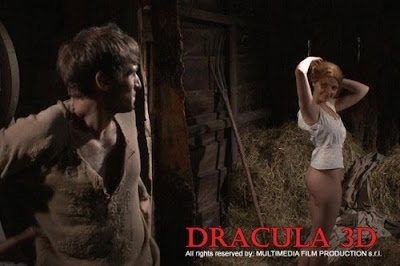


Ok, so let’s start this off. The camera takes us on a CGI journey down towards and through a village into a house. This is exactly what one would expect to find in an Argento movie – flamboyant camera movement, so why not, even if it is CG and looks sort of like Lego. The music – something terribly important in Argento fare - warbles like something pulled off a horror cartoon. Just five minutes in there’s a woman spontaneously getting out of her kit and right into a session of posey, pose-shagging with her boyfriend… the third, rather unusual move for an Argento film…  wait I should be starting this piece somewhere else…  We should be starting with producer Giovanni Paolucci! Giovanni Paolucci may have produced some brilliant pieces of contemporary low budget trash cinema – especially the suite of films that became Bruno Mattei’s last flicks – but when Dario Argento has to turn to Giovanni Paolucci to finance his films, it makes me wonder over the sad state of Italian cinema.

I’m only blurting out gut instict with this theory, but during this film there’s several moments that make me cringe, wonder who the hell OK’d that moment, and come to the conclusion that this time original source material or themes, or genre isn’t being exploited, but it’s actually Dario Argento being exploited by the cunning Paolucci!


So the film then… I’d have to say that a lot of the FX is pretty good, even with the use of CG, there’s still a few grand moments. One effective scene sees Kretschmann’s Dracula speeding through a room slicing off heads as fountains of blood spray all over the place… so as for the gore and effects section, that’s got an OK from me. Well apart from one really shitty wolf to man transition that my kids could have done better with crayons and a notepad, and also the very flat CG train station. Actually the second time the 2D, 3D train station was used I laughed hard a the moment when the horses head moved as I was convinced that it was a mounted prop.

At times the film manages to tap into some kind of Hammers/EuroGoth groove and even if only slightly obtains a good atmosphere. There’s a few neat details have been worked in, or perhaps only one as that’s the one I recall, such as how Lucy hides her bite-marks away from friends who suspect that she’s been seduced by the fangster up in the castle. A moment in the bathtub reveals where and how she’s been drained and put under his spell.

Trying to sum the film up, Dario Argento’s Dracula has some pretty good effects; a couple of successful CG and practical FX combos, do give a decent amount of freaky and gory set pieces (hey we really don’t need very much more do we). The story is safely within the realm of what the title declares – The Dracula story, although it is a lazy adaptation as it all stays in the same location. I’d have loved to see Argento take on the seas, the plague of rats and Whitby. The sets look much better than I feared they would. Hell, even the obvious CG sets get the job done. A fairly familiar crowd surrounds Argento as several of the cast and crew have been with him on earlier productions.
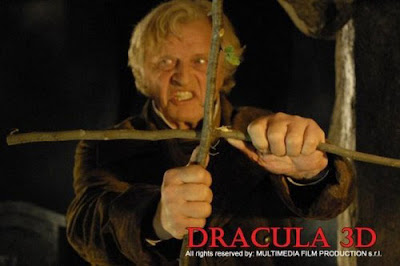

The biggest flaw is that Argento never establishes, invest or develops his characters. He simply lets them run off their own reputations and legacies. There’s no attempt what so ever at bring complexity, dimension or even a vague attempt at actually creating these characters. Nothing is done to blow life into them, give them empathizing traits, or even make us give a damn. This leads to some pretty dull and flat characters and some piss poor acting that never really manages to engage the audience. The result is devastating and the movie really suffers from it.

Also, there’s never really any real value at stake, the threat of death never really feels present. Fights are over in a jiffy, Van Helsing is too cool for school, and Mina never really shows any fear when meeting the Count, her dead friend Lucy or anything else… and spontaneous nudity has never really been a part of Dario Argento’s movies… I know whom I’ll accredit that to.
Dario Argento’s Dracula has several unmistakable Argento traits, and at times his wonderful style shines through with such a powerful ray of light that it would burn any vampire to a cinder…. But the painfully dull characters totally ruin it all. There’s an problem with the film trying a bit too hard, but not managing to reach all the way through. Sure there’s gore, splatter, female nudity, some great moments, and I’m sure that if this one had been delivered somewhere between Tenebrae and Opera it would have been considered a cult classic from the last years of Italian Genre cinema. More importantly, perhaps Dario would have invested more in directing the actors than messing about with technology and trying to do fancy stuff with his camera. Because it’s true, the deeper you get into his filmography, the more his work becomes being about great camerawork and cool shots than great characters and cool story.

Dario Argento’s Dracula, not as terrible as I through it would be, but not as good as I wanted it to be… and believe me, I’ll watch and support Dario Argento no matter what kind of movies he makes. There are great moments, some cool effects, but way shallow on content, story, pacing and passion. In all honestly I don’t think he’s made this as a horror film at all, but as a Gothic pastiche. Style, tone, sets and the little atmosphere that there is, all strafes after some kind of Hammer/EuroGoth style, but in pastiche form.

I don’t think anyone can make Dracula as a period piece horror film these days, and especially not as a Dario Argento film. I’m basing that on the fact that there’s none of the classic Dario Argento sadism in the deaths here – as mentioned, action flashes past before you know the conflict is there, there’ no complexity to the deaths. The story just chugs on, it simply rolls forth without that classic Argentoesque last moment twist or trial. Nobody really seems to give a damn about what’s happening, and Claudio Simonetti’s constant, and somewhat annoying use of Theremin through out the movie, makes it feel like a Scooby-Doo episode. I kind of get the feeling that they played it safe, took a story that everyone knows and used it to see what they could do with modern technology. But taking your genre audience for granted is a deadly mistake.
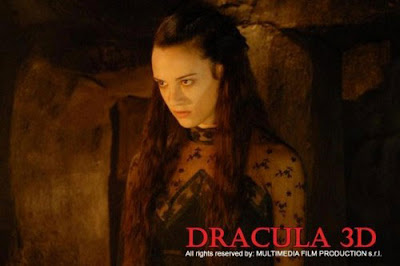
Perhaps, and I’m only guessing, but perhaps this was a lightsome way for Dario and Luciano Tovoli to mess around with 3D cameras? Perhaps, and again I’m only guessing, but perhaps this was a way for Dario Argento and Luciano Tovoli to try out new technology, find out what can be done with 3D, what can be done with CGI, what can they get away with if they push it to the limit? Perhaps there still is one last great masterpiece in there?

I hope so, because Dario can do so much better that this. I feel that each time he brings new writing partners on-board, the story goes right out the window. I’d love to see my dream team constellation of say Luigi Cozzi, Daria Nicolodi, Franco Ferrini to bring story back home, and I also hope that he reconciles his relationship with producer/brother Claudio, because one thing is sure, we don’t need more cheap Dario Argento movies that merely exploit his name and the pure fact that he still wants to make movies.


Disney Star Wars and the Kiss of Life Trope... (Spoilers!)

Here’s a first… a Star Wars post here.  So, really should be doing something much more important, but whist watching my daily dose of t...