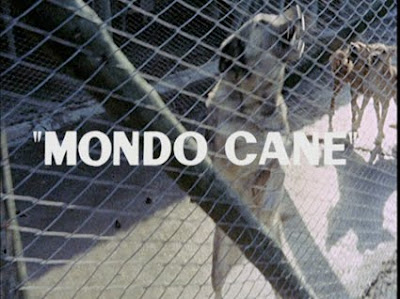
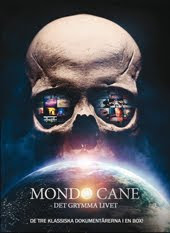
THE MONDO CANE COLLECTION
Directed by: (Paolo Cavara), Gialtiero Jacopetti, Franco Prosperi
Italy, 1962, 1963, 1969
Mondo, 108min, 95min, 128min
Distributed by: Trinity Films
Mondo... Italian for World. Cinematically the world as the Italian exploitation filmmakers saw it… But also a magnificent and disturbing genre, which still delivers a profound punch in the gut amongst the laughs and gasps, which it presents along the way. A genre that definitely brings a series of mental images and conscious emotions with it… Fascination, curiosity, humour, repulsion, shame, guilt… usually in that order too, because almost every Mondo movie entertains up to a certain point and then leaves a sour aftertaste when the morbidity of our voyeurism sets in.
The Mondo genre - a bizarre and eclectic approach to pseudo documentary blending authentic and staged footage that undeniably leaves an impression on it’s audience whatever narrow niche of the genre it determines to explore.
The fascinating part of it is that Mondo taps right into our everyday voyeurism - which we all have weather you want it or not – if you see an ambulance on the side of the road you will start to look for the “accident”. There’s really not much difference between the Mondo genre and an evening of television entertainment. You can watch people get drunk, piss themselves and get intimate if you like, you can see religious self-flagellation on the news every Easter, you can watch animals being killed for food on almost every nature documentary on discovery channel, and since the news channels started making spectacles of live correspondence from war scenes there’s no limit to the amount of mutilated and dead corpses that get air in the midst of prime time, not to forget all those “I’m to fat, sexy, ugly, blah, blah blah” shows that air before midnight on many of the channels offering alternative pseudo documentaries as part of their programming. Not to mention the Internet… if you want to see death in the white of the eye without the psychological safety net that it may be staged footage, then the internet is a lethal swamp filled with crazy stuff to settle your voyeurism.
But Mondo is still very much still part of culture, the main difference being that it’s now packaged as news, or viral videos on the Internet. But there is one point that has to be made and that’s that the movies that make up the genesis of the Mondo genre are still a very powerful and haunting movies that still pack a terribly hard punch in the gut of the audience.
Back in 1962, Mondo was the new kid on the block. Franco Jacopetti & Franco E. Prosperi and Paolo Cavara’s documentary Mondo Cane took to the world with a mission to showcase exactly how strange things where outside of the Italian border. So in a way Mondo Cane is something of a jolly good old travelogue compilation that chooses to focus on the more peculiar things instead of the regular tourist traps. And there’s no argument at bay, because Mondo Cane is a damned entertaining movie indeed. It’s a sinister and delightful chamber of oddities told though suggestive alternate cultures, shocking death and ferocious closures to life.
Friskily taking the piss out of everything by rapid edits to give a polarizing effect between baleful juxtaposition evoking gasps, gags and guff’s, and a wonderfully suave and quirky score by Riz Ortolani’s magnificent score – yes the brilliant Riz Ortolani score that featured the Academy Award nominated track More (Written by Ortolani and Nino Oliviero) which has been covered by a whole bunch of famous artists, even Old Blue Eyes himself. Don’t get this wrong as way to many other do, it was nominated, but it didn’t win the Best Original Song Award, as that went to James Van Heusen’s Call Me Irresponsible from George Marshall’s Papa’s Delicate Condition. That’s the end of that constant error.
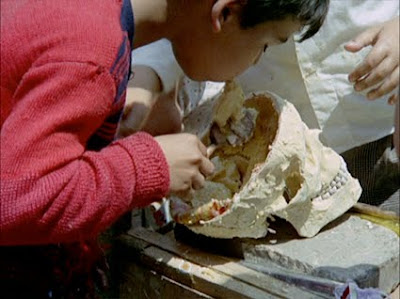
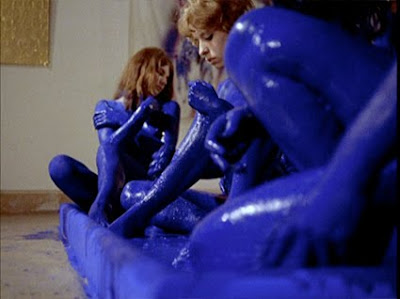
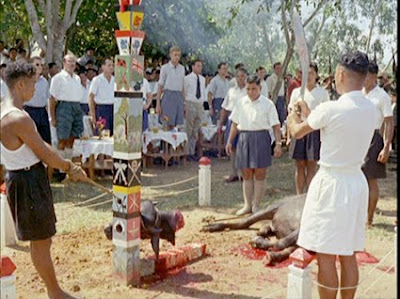
And then there’s the narration; the narration of these movies should have been enough to win an award themselves. Cynical, degrading, misogynistic, blatant lies slandering for our enjoyment but at the same time terribly amusing, and you have to take it for what it is. Idiosyncratic and playful, not actual fact, but rather skilfully crafted text that nails it’s point over and over again with enthralling conviction and skill. Conviction and skill that had the movie nominated for the Gold Palm Award at the 1962 Cannes Film Festival and a win at the David di Donatello Awards the same year. Amongst the highlights of this award winning chamber of the macabre you will see dogs for dinner, pigs beaten to a pulp by tribesmen preparing a feast, snakes skinned alive for their Viagra blood, kids polishing skeletons, Yves Klein’s art piece that serves as the real inspiration for the Blue Man Group and a shocking cow sacrifice that still has me wondering why the executioner turned up in his whitest suit! But keep in mind that this was innovation in the making, and it was award winning!
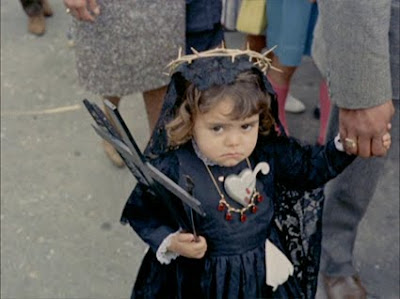
Following the success of Mondo Cane, it’s pretty obvious that it would spurn a sequel, Mondo Cane 2, also known as Mondo Pazzo, which this times sees Prosperi and Jacopetti reunited without without Cavara. Much like it’s predecessor, Mondo Cane 2 tackles the heavy stuff with a healthy dose of comical counterparts, but never really get’s as grim as the first instalment. And these ingredients are needed to make a Mondo movie watch able, there needs to be some kind of release valve, because even though a fair amount of the material is indeed staged and fake, the realism is pretty hefty and the authentic footage is powerful, so there needs to be lighter parts if we are going to be able to endure the movie in its entirety.
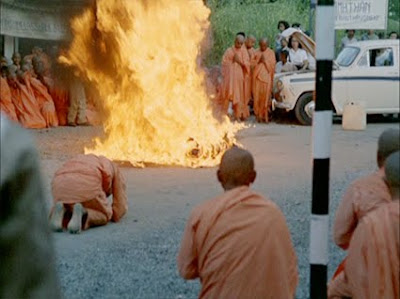
Mondo Cane 2 starts right off the bat by taking the piss out of the British censors who had concerns with the first movie – especially the dogs in the first movie if you where to trust the narrator, which lead them to ban the movie… – and offer up a nice little montage of dog related moments. This all set’s a pretty funny tone for a movie that slowly will squirm it’s way through religious sects, bizarre rituals, Mexican Day of the Dead sugar highs, Grand Gugniol inspired photo shoots and insane male rites of passage. Don’t worry though, the burning monk may be disturbing, but it’s not real. Look for the cut and how the colour on his garb changes if you want, because this is a “fun” game that one can play when watching Mondo; spot the giveaway moments.
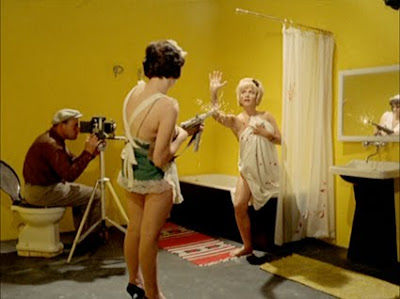
This time around the stupidity, obsessions and evil of Man are in focus and our four legged friends get off lightly – apart from a crocodile which feasted upon whist Nino Oliviero’s xylophone music frenetically plays over the images. The narrator calmly wraps the sequence up with the line “But in the civilized world where we don’t eat crocodile everyday, sex has always been the biggest business ever…” before crashing into a burlesque performance montage. It’s all sex and death, the most primal emotions known to mankind and undoubtedly the firm backbone of any decent Mondo movie. And as I mentioned earlier, the rollercoaster relationship between the humorous and the grotesque are essential to the genre, something that soon would change and take the genre to a completely different level…
I’ve discussed the
rise and fall of the Mondo genre previously on this blog, and this box set, just released by Trinity Films, is a splendid way to see where it was going, as the final disc of the set is the notorious
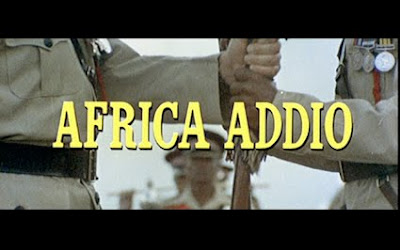
Africa addio. With the supposed intent of making a statement and observation on the decline of the African continent post colonisation
Jacopetti and
Prosperi headed off to Africa with their bag of tricks and cinematic gaze focused on the Dark Continent. And it would get very grim indeed; depressing, cynical and profoundly disturbing,
Africa addio presents its audience with a haunting depiction of violence and death that still is a trial to sit through. Unfortunately the most renowned version of this powerful entry is the heavily edited version missing almost an hour of footage, re-issued under the namesake
Africa : Blood and Guts. A version relied on a concentrate of the blood and guts for it’s voyeuristic audiences to lap up.
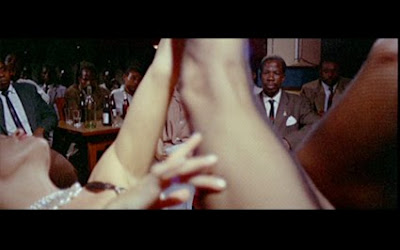
The guy responsible for the “slaughter” was infamous Grindhouse distributor Jerry Gross, the same guy who made sure that, among others, the two previous Mondo Cane movies, Lucio Fulci’s Zombie 1979, Meir Zarchi’s I Spit on Your Grave 1978 and Ulli Lommel’s The Boogeyman 1980 hit the Grindhouse theatres of America. Never the less, the version here isn’t the shortened Grindhouse version, but a longer theatrical version with a run time just close to two hours, and reinstates some of the raison d’être “intended” with the original movie. If you want the full 140min directors cut, then you should try to find the Blue Underground eight disc box set.
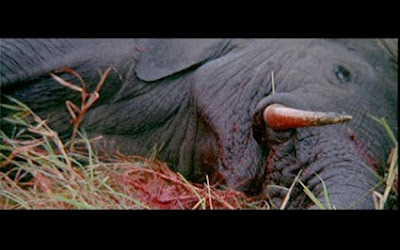
Needless to say Africa addio is complete exploitation galore – a voyeuristic hell if you will. The supposed documentation of a continent in crisis is complete bollocks; it’s merely a façade for one of the most disturbing Mondo movies ever made. Africa addio takes no prisoners and is very low on that vital release valve I say you need to cope through these flicks, and without the release you do start to question how far you can go in the name of entertainment… even if you do package it with yet another soaring Riz Ortolani score.
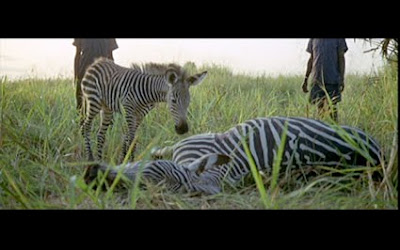
Obviously it’s an almost rhetoric question to ask when discussing the Italian genre scene, as we all know that there’s a lot of questionable moments of animal death in some of the pieces. But at the same time
Africa addio does take it to extremes, and it’s questions that you need to be asking when you see the various hunters chase and kill animals that we in modern time know are facing extinction. It’s no wonder that
Ruggero Deodato’s classic Cannibal Holocaust 1980 points critique towards the genre and questions who the real cannibals are, but with the infamous animal deaths in that flick, the question posed in
Cannibal Holocaust is a mind-boggling paradox indeed.
Following Africa addio, the Mondo genre took a plummet, things got a lot ominous, vile and sensationalistic, possibly peaking in disgust with John Alan Schwartz infamous Faces of Death 1978 which would lead to even darker movies that more or less completely skipped the humoristic and smirky approach and went straight for the jugglar with depraved cocktails of death and violence… To be honest it’s understandable that this would happen. The exploitation genres would take matters into their own hands, setting their pieces in foreign cultures using Mondo traits and effects would become considerably more effective than the real thing, as fictive violence can be exaggerated into levels far beyond realism, and the tantalising sexpose’s of the Mondo genre where nothing compared to the boom of hardcore pornography that soon would sweep over the world. Mondo focused more and more on death and brutality without release the valves, in some later, final, entries like Damon Fox’s Traces of Death series even accompanied by hard death metal and Fox as the corpse painted host growling his way though hard-ass mix tapes of mayhem there’s no room left for a laugh or a smirk at all. It’s nihilistic, brutal and very, very distressing.
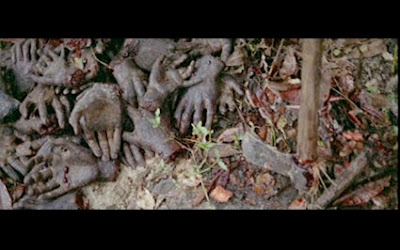
The Mondo Cane Collection is definitely not for the squeamish or sensitive viewer, but at the same time they are a fascinating display of masterful documentary tricks and traits, which with the aid of cynical voiceover and corny, or rather out of place music, become a spectacle of dark comedy and shocking morbidity. Even if audiences may have been considerably more naïve back in the sixties, the Mondo movies are fascinating documents that hold an intriguing cultural aspect, because these movies where controversial at the time they where made – even banned in many places – but looking at them today, the shock factor is not as harsh as it may have been and there is even grimmer stuff on the telly every night. Sensationalism has always been appealing to certain crowds, as we all have a streak of voyeurism in us.
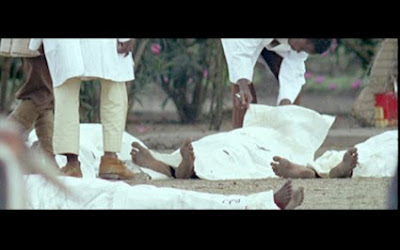
Trinity Films release of this collection is a required addition in any eager cineastes collection. A devouring expose of one of the strangest subgenres to come out of Italy and definitely the finest examples of that genre are collected here, from the rise and the beginning of the end, a excellent starting point to pick up if you still have the fascinating Mondo genre ahead of you in your exploration of Italian genre cinema.
Image:
Full frame 4:3 and Anamorphic Widescreen 16:9
Audio:
English or Italian narration, Danish, Swedish, Finnish and Norwegian subtitles are optional
Extras:
There’s the regular stuff, Italian and US trailers, TV-Spots, image galleries, alternative opening sequences and some amusing Radio Spots that make the most out of Ortolani’s More and the Danish press books for the movies. It’s a satisfying amount of extras, but it’s a bit of a shame that the Godfathers of Mondo 2003 documentary made for the Blue Underground collection released some years back, couldn’t have been included as that would have made it an excellent extras in this box set for Scandinavian audiences. But considering that the movies finally are available with subtitles, this is a very price worthy set indeed. If you don’t already have the movies on your shelf, then this is the way to go.
Here's a bunch of trailers for you, but be warned, this is MONDO!