Showing posts with label Klaus Kinski. Show all posts

Tuesday, May 17, 2011

Nosferatu in Venice

Nosferatu in Venice

Original Title: Nosferatu a Venezia

Directed by: Augusto Caminito

Italy, 1988
Vampires/Horror, 97 min

Available from RareCultFilms

In 1979 Werner Herzog quite boldly took to remaking F.W. Murnau’s expressionistic classic Nosferatu, eine Symphonie des Grauens 1922. A strange move as Herzog already had made himself a name as a director and perhaps even more considering the importance of the original flick. This however didn’t stop Herzog who in many ways surpass the original and neither did it stop other filmmakers from venturing into Nosferatu territory, perhaps to lesser success.
Almost a decade later screenwriter/producer Augusto Caminito got more than he bargained for when he set about making something of a loosely connected sequel to Herzog’s seventies arthouse success. Although being Klaus Kinski and holding the largest ego in the world, Caminito’s production soon ran into trouble when original director, and veteran on the scene of Italian low budget horror fares, Mario Caiano stormed off the project, or was fired depending on which of the myths you want to believe in, after one of many loud fierce arguments with troublesome superstar Klaus Kinski. As the story goes La vittima designata (The Designated Victim) 1971 director Maurizio Lucidi directed parts of the movie, Star Crash 1978 and Contamination 1980 director Luigi Cozzi helped out and directed sections of the film, and according to his autobiography Kinski too directed a fair amount of the flick, although I wouldn’t know about that. Finally Caminito himself stepped away from his producer/screenwriter desk and took over the role of director himself.

After a rather out of place rural opening the movie skips to Venice. Vampire hunter Professor Paris Catalano [Christopher Plummer] arrives at the house of Princess [Maria Cumani Quasimodo] who with her friend and priest Don Alvise [Donald Pleasence] has summoned him to help her with a situation… with the bad dreams she has been corresponding with him about. Helietta Canins [Barbara De Rossi] takes Castelano to an underground crypt where they talk about the possible inhabitant of the large coffin that lies there. Catalano is curious about a painting that Princess has had taken down before he arrived and here starts a series of backstory explanatory flashbacks concerning the family and Nosferatu. They all wind up going to visit a medium to help them dig deeper into the family history and low and behold, the vampire awakens and leaves his crypt!
So far it’s all been a wind up and build towards the vampire movie iconic moment – the ascent of the monster! From here on Kinski wanders around Venice searching for Helietta summons him with some chants when the medium releases him. Unsurprisingly Helietta, and her sister Maria [Anne Knecht] turn out to be the descendants of Nosferatu’s long lost love, Letiza, the woman on the painting. After decades of longing for his lost love, Nosferatu seeks out the woman who summoned him and plans to take her as his mate.
No movie moving within the Gothic realm is complete without at least one scene featuring Gypsies – and Nosferatu in Venice features a splendid Gypsy-queen and her band of happy dancers moment. As the carnival in Venice starts, Nosferatu arrives and starts his rampage which leads him right into the arms of Helietta and the awaiting threat of vampire hunter Pars Catalano and the build up towards the final battle and the last act which has some pretty effective twists luring in the shadows to shake the audience around.
It’s a shame that the movie get’s s much slack and there’s some really decent moments in Nosferatu In Venice, and despite reprising a previous role, Kinski does give a pretty good performance – as he mostly did, even on the movies he supposedly hated working on. Nosferatu In Venice really suffers from that somewhat unjust bad reputation because it is a better movie that it’s said to be. Yes, it plays safe within the realm sticking to rules and regulations of the genre, but at the same time it dares to stick it’s neck out and twist formula around, even if it’s in the smallest ways. It could be because of the somewhat slow pacing, but at the same time it has a few neat effects and some nudity towards the ending. It might be because it's perhaps more of an arty horror flick than your regular gorefest. Anyways, I had fond memories of the movie, and they are still there after revisiting it again.
Being a complex actor to work with, there where obviously issues with Kinski on set. One of the most apparent being his refusal to shave his head and completely dedicate himself to mimicking his former portrayal of Nosferatu, hence the full head of tattered hair he sports here. Caminito’s movie does bring a few of Herzog’s traits with him through, such as the rats symbolising plague, a metaphor for death, and also lifted over from the original sources is the ”totes angst” of the vampire. The totes angst of Nosferatu here is rather straightforward. Longing for love, evading death. It’s a romanticised portrayal, which is not to far from the original source as the vampire quite often holds a since long gone passion for a former lover and realises his own mortality when that fire is later relit by a like worthy character… think of Mina Harker who in the original Bram Stoker book reminds the vampire of his long lost love which makes him obsessed that he moves from Transylvania to England to be near her… not saying that Dracula is the original vampire story. I’m pro John Polidori for that one.
Something that caught my attention this time around and perhaps it’s something that is quite under used in the movie is the angst about dying found in the Plummer’s Catalano character. One of the first lines of dialogue he has is when he tells the Princess that he’s going to die soon. It’s a cheap but effective gimmick that hooks the audience as we want to know why he’s going to die, how will he die, and how come he knows he’s going to die? Unfortunately it’s never taken any further than being mentioned a few times. Neither is it brought up in the final battle between Catalano and Nosferatu – instead Catalano packs up and fuck’s off proclaiming that he’s been defeated. This obviously sets up Kinski as the winner in the battle over life and death. Now it may seem strange, but at the same time it’s a fascinating twist as the vampire genre commonly suffers from the problem that the audience end up rooting for the vampire and not the vampire hunter. There’s an effective little symbolic scene to end his arch in the movie, but it’s still a shame that one didn’t use the “I’m going to die” threat more creative.
The somewhat out of place opening sequence where hunters accidentally shoot a bat sets a tone for the movie. Where it’s considered to be bad luck to kill a bat, there’s no love lost on the ones that suckle blood from the farm animals. Vampires are no longer a threat, but more something that one can toss aside and let the dogs mangle. It’s an odd sequence as the rural landside of the title sequence and opening scene then is discarded for the tight corridors of Venice. This may be a metaphorical moment of the movie as they claim to ignore vampire folklore, i.e. rules and regulations, and that’s exactly what happens in the movie, traditional vampire lore is cast aside. The vampire can survive shotgun blasts to the gut even though it leaves a gaping hole in his stomach, he can roam the streets in daylight and has a reflection. In a sense it says that traditional rules are abandoned, and new ones are put in play. This is obviously a trick that most modern vampire flick tries to do, bend the rules and come up with a new variation, although here it's still quite innovative.
Finally something has to be said about the soundtrack. Luigi Ceccarelli performed a lot of the music on the movie, and if it sounds familiar it’s because a large amount of it is renditions of the 1985 Vangelis album Mask. Although it may be something that can scar a movie with the music is very specific for a certain time period – much like the eighties Metal that plagued several Italian genre pieces, it sounded great at the time, but shit today – the electro orchestrated ambience of Ceccarelli work for Nosferatu in Venice.
Perhaps after getting a taste for directing, Kinski would follow Nosferatu in Venice with Kinski Paganini 1989 a movie he directed all on his own, and which would become his last movie. Caminito on the other hand never directed a movie again but did produce a handful of decent pieces including Kinski Paganini, Abel Ferrara’s King of New York 1990, Tinto Brass Paprika 1991, and Marco Ferreri’s House of Smiles 1992.
Image:
Widescreen 16x9
Audio:
Stereo 2.0, English Dialogue, which means the beloved work of Nick Alexander graces the movie.
Extras:
None, although this is composite of various DVD & VHS resulting in a brilliant version, so that should make up for it.
Here are the Japanese and German trailers.


Monday, November 23, 2009

Footprints on the Moon


Footprints on the Moon
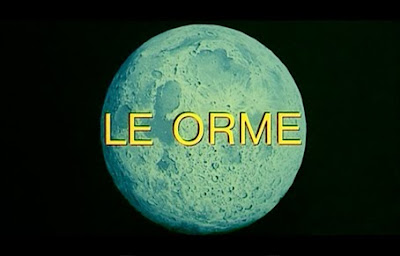
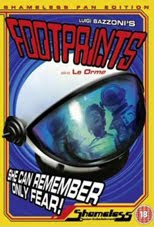
Le Orme
Aka: Footprints, aka Primal Impulse
Directed by: Luigi Bazzoni, 1975
Italy, 96min
Distributed by: Shameless Films Entertainment

Footprints on the Moon is a strange little oddity which at first plays out like a well crafted mystery movie with a dash of sci-fi, courtesy of a sub plot where the main character, Alice, keeps having strange dreams of an astronaut being left on the moon. Who are the astronauts and who is Alice are the main questions you will ask yourself while enjoying Luigi Bazzoni’s surreal “lost” movie Footprints on the Moon.
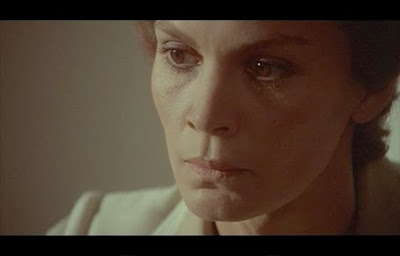
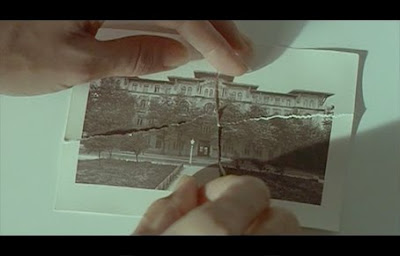
Florinda Bolkan [star of Lucio Fulci’s magnificent Lizard in a Woman’s Skin 1971, Don’t Torture a Duckling 1972, and the nunsploitation classic Flavia the Heretic 1974] pouts and sulks her way through the movie as she tries to understand how she has lost three days of her life. At start Footprints holds a fascinating plot that takes on grand proportions, but is somewhat fumbled at the finale. Alice is a translator and when she gets to work one day in the early stages of the movie, her bosses tell her that she’s been replaced because she’s been missing for several days. Alice can’t for the life of her understand and is completely confused by the claims that she’s been missing. It’s almost Giallo territory as she starts her inquiries to her whereabouts during those three days. After finding a torn up postcard on her kitchen floor, and having a good old chat with her friend Mary [Ida Galli, aka Evelyn Stewart from Mario Bava’s The Whip and the Body 1963, Duccio Tessari’s The Bloodstained Butterfly 1971 and Lucio Fulci’s The Psychic 1977] her search takes her to the mysterious and abandoned resort referred to as Garma.
At Garma, Alice encounters the gallery of odd characters that will be leading her along on her quest, but almost everyone of them give the impression of recognising her, even though she has never seen them before… or has she? At first Alice cannot understand how the people at Garma talk to her with familiarity, until she meets the sinister little girl Paola…
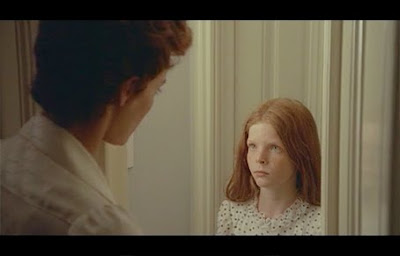
Alongside with Bolkan is one of the most recognisable child actors of Italian genre movies from the seventies/eighties - the wonderful Nicoletta Elmi. Anyone who’s seen a handful of the classic Italian genre pieces will recognise her on sight, her burning red hair, her freckled face and those deep deep blue eyes make her appearance a memorable one to say the least. Elmi featured in her first film when she was four years old and already two years later 1971, she was in Luchino Visconti’s Death in Venice (although uncredited you can’t miss her appearance). The same year she made her entrance in the genre that she’ll forever be associated with, the Italian horror flick. Again uncredited, Elmi plays an important part in Mario Bava’s Twitch of the Death Nerve 1971, in 1972 she’s George Lazenby and Anita Strindberg’s murdered daughter in Aldo Lado’s splendid Who Saw Her Die?, and from there on you can see her in such epics as Flesh for Frankenstein 1973 (Directed by Paul Morrissey or Antonio Margheritti depending on who’s story of the production you want to believe) Dario Argento’s landmark Giallo Profondo Rosso 1975, and Massimo Dallamano’s The Cursed Medallion also from 1975 where Nicoletta gives her best performance as a possessed evil child. A year later Elmi vanished off the screen for several years but when she made her “comeback” it was with Lamberto Bava’s highly entertaining monster/possession classic Demons 1985. Gone were the childlike features so often associated with her previous characters and instead was a beautiful woman with red burning hair, freckled face and deep deep blue eyes. After two TV movies in the back half of the 80’s Elmi gave up acting and completed her studies and became a doctor instead. It’s an amusing though of arriving at the hospital and your doctor turns up and it’s Nicoletta Elmi who you have seen as the sinister child (and as an adult in Demons), it would definitely spook me if it ever happened.
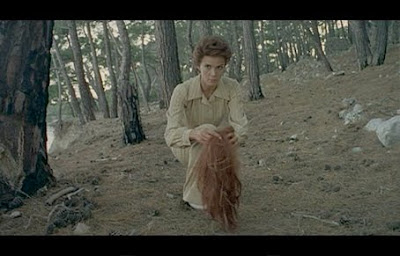
Anyway, back to Footprints. Alice goes about her quest - where did those days go, who is the Nicola character that so many people at Garma keep referring to her as, what is the meaning of the yellow dress and the red wig, and what are those strange dreams all about. As the intrigue tightens, more questions are posed. And the key seems to be held by the mysterious Henry [Peter McEnry]. Henry who at first keeps safe distance to Alice, not revealing that they have know each other for many many years (yet another sub-plot of confusion) eventually comes out of his shell and explains that he and Alice where childhood lovers many years ago and he’s held his distance as not to scare or confuse Alice.
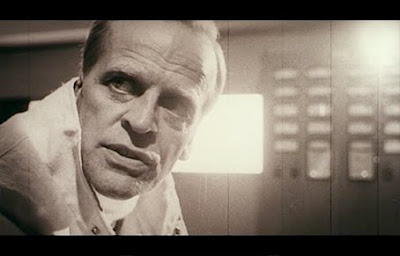
Then there’s the top billed name on most of the marketing materials for this little gem, Klaus Kinski. Now I’d be quite disappointed if I where a Kinski completist searching out Kinski movies and stumble upon Footprints, because of that false marketing with Kinski at the top billing. Kinski as Blackman, the strange leader of the scientific experiment on the moon, is just in the movie for a few minutes and only in flashback sequences, so I don’t really feel that he brings anything to the movie, more than his presence. So don’t expect to see good old Klaus freak out and act sinister as he did in so many other great Italian genre pieces as his part in Footprints is almost on a cameo level. Which is a shame, with some more freaky Kinski in here and perhaps bringing his character into the real world I’m sure that Footprints wouldn’t have stayed lost for so long.

The movie comes to a climax and all of Alice paranoia, confusion and mental illness drive her to devastating conclusions which have her taking terrible and fatal actions against the characters Alice see as her antagonists. It’s a dark ending with a simple, but haunting reveal in the last moments to show what is reality and what is not before Bazzoni takes it to the limit with a very surreal and bizarre final sequence. It’s also here that I feel the ending leaves more to demand s the climax isn’t satisfactory – even though it is very eerie and fitting for the flick – but the easy way out with an explanatory text as the movie comes to an end annoys me. Just imagine how that fascinating insanity thread could have been used so much more. Think of a last reel with Alice in the psychiatric ward after she’s confronted the spacemen, Blackman, now that would have been terrifying exploration of mental illness. What clarity would she reach? What would happen when she realizes her mistakes and what she has done in her state of mental disorder? It would have made for a great ending, and a more effective way of showing Alice time in the institution.
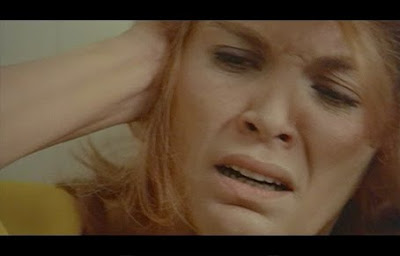
A quick afterthought on the movie and I ’d say that the movie is almost a inverted Fight Club 1999, where Alice sickness breaks her down and leaves her a wreck where Jack [Edward Norton] uses his insanity to develop and emerge a stronger person with insight into his temporary madness. Obviously Bazzari and co-screen writer Mario Fanelli (who supposedly co-directed Footprints and also co-wrote the 1971 Giallo The Fifth Cord with Bazzoni) are after some sort of pseudo psychoanalytical thread here but it unfortunately never really reaches the screen, apart from in several small nods during the movie. Alice employers who accuse her of being “ill” when she can’t recall being missing from work for three days; the Alice charm that she wears is, as told to Alice by the old woman [Lila Kedrova] made by a local craftsman who died several years ago (although as Alice obviously has spent some of her childhood here – she realises later – she may have received it then); after Harry has called his friend the doctor (whom Alice in her state thinks is the Blackman character and thinks that Harry is in on the big conspiracy) and the final text somewhat daft text explaining what the heck has been going on. It’s not really there and it leaves me wanting something more satisfying, even though I finally have clarity on what has happened during the movie. Looking at the overall structure Footprints is all about ambiguity, the lack of insight and uncertainty as each encounter pushes the mystery deeper and awakens more questions, there are no half mark answers here, it’s all one big mystery up till the final reel.

The score by Nicola Piovani is fragile, gentle and haunting when necessary and it’s a great complement to Vittori Storano’s splendid cinematography. Yeah that’s Vittorio Storano, the cinematographer of Dario Argento’s debut feature The Bird With the Crystal Plumage 1970, Guiseppe Patroni Griffi’s sleazy ‘Tis Pitty She’s a Whore 1971, and Bazzoni’s previous Giallo The Fifth Cord 1971. The same Storano who also won Academy Awards for his work on Francis Ford Coppola‘s Apocalypse Now 1979, Warren Beatty’s Reds 1981 and Bertolucci’s The Last Emperor 1987 – who said that exploitation cinema leads to nothing?

Their combo of sensory elements really makes the strange atmosphere that ponders the movie. Now on a side note there is an strange but amusing little story about Nicola Piovani that is fitting to tell in the context of Footprints and not knowing who is who… There was and sometimes is an enduring rumour that has been spinning for many years that Piovani is a pseudonym name of Ennio Morricone. Now with the 140 and still counting titles that Piovani has composed (for the likes of Federico Fellini, The Taviani Brothers’, Nanni Moretti, Gianfranco Mingozzi, Marco Bellocchio, and Bigas Lunas), the award winning scores for among others Fellini’s Ginger and Fred 1986, Moretti’s Caro diario 1993 and The Son’s Room 2001, and definitely the 1999 Academy Award for best Dramatic Score for Roberto Benigni’s Life is Beautiful, I’d think it pretty convincing that Ennio Morricone would have come and said that he is Piovani if this was the case. It’s a strange and sad little story, but Piovani is a good sport and tells it with joy and a twinkle in his eye during the lectures and talks he sometimes gives around the world.
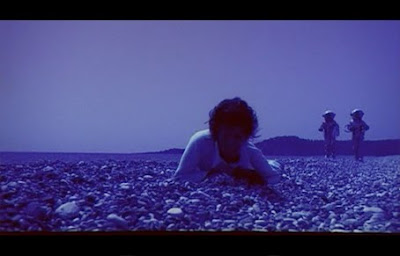
Footprints on the Moon is a difficult movie to slot it into any definitive category as it would be out of place in the Giallo niche as it lacks the traditional traits that define that genre, i.e. red herring plots, nudity, sexy soundtracks and gloved killer. (I use the word Gialli niche as Shameless released Footprints as the last title in their 20 title series that also features several other Gialli) I wouldn’t place it in the Science Fiction genre either as there really isn’t any science fiction in it, apart from the cover artwork and flashbacks which actually are re-imaging’s of Alice’s memories of a movie she saw as a child, hence the Footprints on the Moon title. And it is definitely not a horror film, as there is no value of life at stake. One killing doesn’t make a horror flick, but I’d say that Footprints n the Moon fits nicely into the psychological drama niche with a healthy dose of thriller plot, which is why I used the Fight Club reference earlier. It’s a drama about a woman trying to answer what happened during her three day black out which leads the viewer to understand that her mental health is in question, and an amateur diagnosis comes up with the suggestion of Schizophrenia. This drama is driven by a quest/puzzle that the lead protagonist is trying to solve. In other words a psychological drama with thriller traits.

So if you are up for some superb camera work, delicate soundtracks, confused narratives and a great portrayal of a seriously bewildered woman by Florinda Bolkan with the added value of an ominous chid as played by the one and only Nicoletta Elmi and a sprinkle of Klaus Kinski then Luigi Bazzoni’s Footprints on the Moon is something that you may want to check out.

Image:
Remastered to 16x9 anamorphic widescreen. Although there are a number of varied source materials, the print looks grand.

Audio:
Dolby Digital 2.0 English or Italian dialogue available, with optional English subtitles.

Extras:
The Theatrical Trailer, English credit sequence, a promotional gallery and the US video teaser for the film under the moniker Primal Rage and the marketing scam that the film features Klaus Kinski… Being the last of the 20 titles released by Shameless, they have generously added trailers for the entire back catalogue that makes for quite an entertaining session if you are up for trailer shows. But be warned, there’s a lot of spoilers in those trailers especially the Footprints trailer.


Tuesday, October 10, 2006

Jack the Ripper


Jack the Ripper
Directed by: Jesus Franco, Switzerland/West Germany, 1976
Horror / Thriller, 92min
Distribution by VIP

Story;
Classic tale of the infamous Victorian time murderer who officially slaughtered at least seven women in London's East End.


Me;
So perhaps sleaze monger Jesus Franco isn't everyone’s cup of tea. So it may well be. Crappy acting, terrible dubbing, atrocious camerawork, dreadful lighting and lashings of scantily clad men and women running all over on screen are just some of Franco’s trademarks, but somewhere at the root of all this is a true artist just dying to create that masterpiece to keep his flame alight. Sometimes Franco really gets it right, with the proper backing and people around him has managed to make a few gems of genre cinema, Gritos en la notche 1962, Vampyros Lesbos 1971, Sie tötete in Ekstase 1971, Jack the Ripper 1976,
Loveletters of a Portuguese Nun 1977 and Faceless 1988. These few grains of watch able movies do on the other hand not forgive the other 180+ movies that didn't manage to make an impression. But, and this is a big but, almost every Franco movie I have ever seen has one or a few scenes of brilliance that always make me sit thought the rest of the movie. I will never forget watching the terrible Tendre et perverse Emanuelle 1973*, and just fast forwarding just to get through it, and all of a sudden, there's a wild 360 degree pan round the boat. Round and round two laps, and there's not a ripple in sight on the water, and the way its shot is from the deck and then out away from the boat. I can still to this day not understand how he pulled it off, but it still remains one of the most impressive pan shots I have ever seen. Today with digital technology it would be easy as hell, but in 1973! I have no idea how he did it.

Anyhow, back to Jack the Ripper. Shot on location in Switzerland (with a bunch of stock shots from London of course) there's a decent mood to this one. Shot by cinematographer Peter Baumgartner, it's one of those movies that have a steady camera, instead of the ones Franco shot himself, where he has the camera going everywhere. The Swiss sets and locations in Zurich double for London without any problems. The movie obviously belongs to Klaus Kinski, as the mad Dr. Dennis Orloff/ Jack the Ripper [if you know your Franco you'd laugh now] He stalks women and slashes them to bits. Not much is on screen, but when it is its very seventies Euro gore. Hard and to the point. Constant co-star Lina Romay has a small part and meets the most visual death in the film, and Josephine Chaplin is Cynthia, the now separated wife of Andreas Mankoppf's
Inspector Selby who desperately wants to catch the fiendish Jack. In a sort of bizarre proof of love Cynthia takes upon her self to act as bait to lure the killer into being caught, and boy does he fall for it as she looks just like his whoring mother, who is to blame for his guilt ridden murders. In this, the last of four movies with Franco, I feel that Kinski is sort of under used here because he doesn't say much and mostly sits frowning. But there are parts where Kinski lets it all hang out and goes Kinski. Overall the feeling and obvious production values put into this movie make it the enjoyable piece of Euro horror that it is. There's an almost Hammerish feeling to it, with the period costumes, the sets and the look to the movie. Being a Franco movie it's no surprise that he stays close to the elements that he masters with most confidence and plays safe along the same lines as his other better movies do [his template movie being Gritos en la notche 1962]

Image:
Image wise it's a rather decent print, Anamorphic widescreen, enhanced for 16:9 and the colour tones are solid, and the print
has been supervised by the movies cinematographer Peter Baumgarten.

Audio:
Audio options on the disc are plenty, you can chose from the German, English, French or, Italian. The subtitles are the rather strange options of Finnish, Dutch or Greek. Although the audio of the English version is typical Euro trash standards, I'm positive that the VHS I owned years ago used to have more of a cockney tone to all the dialogue. Perhaps this also has been re-mastered for this director's edition.

Extras:
The extras on this disc almost make it worth the price of the disc itself. A deleted scene of more carnage, short but gruesome taken from an old 16mm print, the kind that you used to be able to hire before the golden age of Vhs claims the text. A seventeen minute long production report about the restoration of the series of Franco films released on DVD by Dietrich’s supervision. Production stills, and trailers for both
Jack the Ripper and Love Letters of Portuguese Nun. Cast & Crew bios, a factual text about Jack the Ripper's 1888 London, and info about the Jess Franco Collection. And finally a full length commentary by Dietrich with English subtitles. But the highlight of the extras on the disc is a rather polite homage/documentary about Franco as told by producer Erwin C Dietrich, who produced some 14-15 of Franco's movies. In one part he tells the tale of how he watched in shock upon the terrible quality of 99 Women 1969, the first movie he produced for Franco. Shot in existing light, focus coming and going, improvisation, etc the film looks nothing like the high quality Dietrich was accustomed to. But Franco stood his ground, he claimed that this was the look of movies now, rough, gritty as close to reality as possible. Dietrich states right out that Franco's ideas of his art, where the same as the Dogme'95 rules set up by Lars Von Trier, Thomas Vinterberg, Levring & Kragh-Jacobsen in 1995. A pretty decent homage if you ask me.

Overall a surprisingly good DVD release of one of Franco's better movies. It's going to be very interesting to check out the other Franco titles coming from VIP to see how long they can keep up the high quality.

*At least that's the film I recall it to be, if anyone knows better, let me know.

Disney Star Wars and the Kiss of Life Trope... (Spoilers!)

Here’s a first… a Star Wars post here.  So, really should be doing something much more important, but whist watching my daily dose of t...