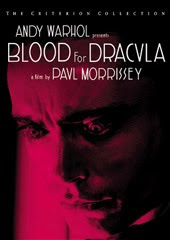
Blood for Dracula
Original Title: Dracula cerca sangue di vergine… e morì di sete!!!
A.k.a : Andy Warhol's Dracula
Directed by: Paul Morrissey
Italy / France, 1974
Horror/EuroGoth, 103min
Distributed by: The Criterion Collection (OOP)
Forget all about Francis Ford Coppola's arty farty sympathy for the Count that seeps through his 1991 film Dracula, forget all about Eli the adolescent vampire in Tomas Alfredsson’s Let the Right One In 2008, forget all about Bela Lugosi’s yearning to sing with the children of the night, forget all about Robert Pattinson’s Edward Cullen the Twilight movies…
The ultimate empathetic vampire is Udo Kier in Paul Morrissey’s 1974 Eurosploitation masterpiece Blood for Dracula.
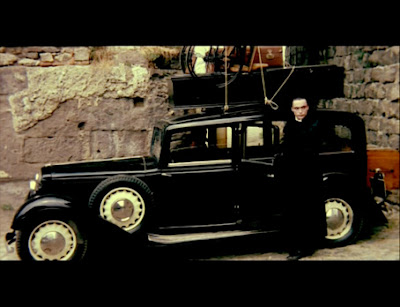
Living in his Rumanian castle with his sister, and servant Anton [
Arno Juerging] Count Dracula [
Udo Kier star of
Michael Armstrong's Mark of the Devil 1970,
Walerian Borowzyck's Doctor Jekyll and his Women 1981, seen in
Argento's Suspiria 1977 and
Mother of Tears 2007, almost every
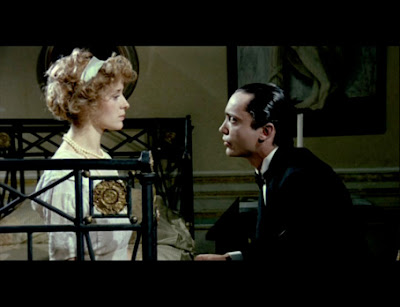
Lars Von Trier film worth seeing and many other great movies over the last four decades.] - after a beautiful opening sequence where he paints life onto his pale gray face, decides to leave his sister in the crypt and take to the road in a desperate search for virgin blood. Heading off towards Italy, the Count, who is growing weaker by the minute, and Anton find a tiny village where the Di Fiore family reside. The Di Fiore family have seen better days, and when they hear word of a Count, whom the presume has a large wealth back in that castle in Rumania, the Marquis [Italian director
Vittorio De Sica] and his wife [
Maxime McKendry – a good friend of
Andy Warhol - possibly why she only ever acted in this one.] quickly start preparing their daughters for courtship. One by one the girls are paraded in front of the Count to handyman Mario’s [
Joe Dallesandro - star of many
Warhol produced movies, and also a decent actor in his own right.
John Waters Cry Baby 1990 and
Stephen Soderberg's The Limey 1999 to name a few.] immense distaste. The four girls are all of interest to the bloodthirsty Count, and at the same time, Mario holds a great lust for their youngest sister Perla [
Silvia Dionisio –
Ruggero Deodato’s Live Like a Cop, Die Like a Man 1976 and
Antonio Margheriti’s Naked You Die 1968], and as she is the most certain source for virgin blood, the Count too has his eyes set on her.
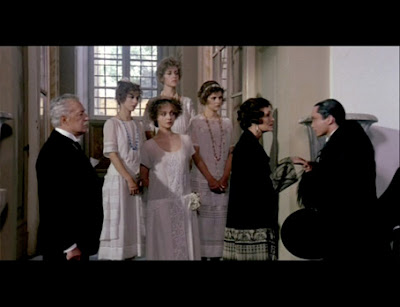
But Mario has a good thing going with the girls of the family, as he pays nightly visits to Saphira [Dominique Darel] and Rubina. [Stefania Casini – Bernardo Bertolucci’s Novecento 1976, Dario Argento’s Suspiria 1977, Antonio Bido’s Bloodstained Shadow 1978 and Peter Greenaway’s The Belly of An Architect 1987. Casini also featured in another Andy Warhol movie in 1977. Andy Warhol’s Bad, the last movie he ever produced, and without Morrissey this time.] Obviously the two girls nightly activities make them tainted flesh in the eyes of the Count, something that he’s going to learn the hard way...
Shot in Italy back-to-back with it’s counterpart Flesh For Frankenstein in a mere six weeks. Three weeks of shooting Flesh, a lunch break and then after haircuts a go-go for Kier, Dallesandro and Juerging, the three actors featured in both movies, they started shooting Blood which wrapped three weeks later.
As the legend goes, after telling producer
Carlo Ponti [
Federico Fellini’s La Strada 1954,
David Lean’s Doctor Zhivago 1965,
Sergio Martino’s Torso,
Umberto Lenzi’s Oasis of Fear 1971 and many, many more] that he could shoot a 3D exploitation flick for $350.000,
Morrissey struck gold when Ponti notoriously said;
”Make TWO!” and doubled the budget. Pop art genius
Andy Warhol also sometimes gets credited for the movie, some prints are referred to as
Andy Warhol’s Frankenstein/Dracula. And again this is merely due to the fact that
Morrissey was
Warhol’s protégé,
Warhol’s star of those
Morrissey movies,
Joe Dallesandro holds the leads and first billing in both films, and several of
Warhol’s friends are in the movies. He most likely also financed some part of the film, and what better for a movie to have one of the most renowned reinventors of modern art as part of the movies credits!
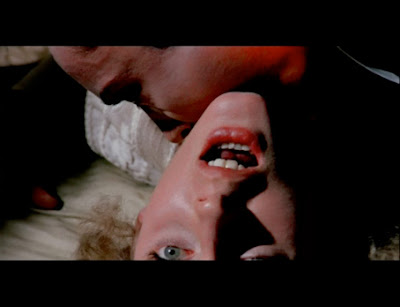
Although Flesh for Frankenstein was shot in 3D which includes some terrific effects, like guts pouring down drains, bats flying, and entrails empaled on spikes all straight into the face of the audience, there where so many technical problems and demanding situations during the shoot, that the decision to shoot Blood for Dracula without the 3D technology was taken. And for the better, as I feel that Blood for Dracula is the better of the two movies, perhaps just because the time consuming process was abandoned.
For many years there where constant debates over who actually directed the movies. As you most likely know, Italian director
Antonio Margheriti was credited as director on the Italian prints, hence causing quite some confusion over the years. Well there’s no doubt about it that
Margheriti played a part on the movies, shooting second unit, and other loose tasks… but his main participation was seen on the first movie,
Flesh for Frankenstein where he shot footage to bring the movie up to feature length and supplied the special effects together with
Carlo Rambaldi – Model maker on
Mario Bava’s Planet of the Vampires 1965, special effects on
Piero Schivazappa’s Femina ridens 1969, the infamous dog sequence of
Lucio Fulci’s Lizard in a Woman’s Skin 1971,
Bava’s A Bay of Blood 1971,
Ferdinando Merighi’s French Sex Murders 1972,
Argento’s Profondo Rosso 1975, not to forget the blockbusters like
John Guillermin’s King Kong 1976,
Ridley Scott’s Alien 1979,
Spielberg’s E.T. 1982 and many other great special effects that the Academy Award Winning
Carlo Rambaldi has supplied throughout the years.
There’s still some discussion on who did what, and there’s no questioning that the movie would have been something completely different without the participation of Margheriti’s supervision. With Morrissey’s previous underground /art movies in mind, it’s easy to see where the euro exploitation ingredients came from – Margheritti, Luigi Kuveiller and the fantastic Cinecitta crew and staff that worked on the movies. Gone are the documentary gritty styles of Chelsea Girls 1966, Flesh 1968, and Trash 1970 and instead there’s a full canon of splendid EuroGoth that makes these movies something else, and still to this day excellent pieces of exploitation horror masterpieces.
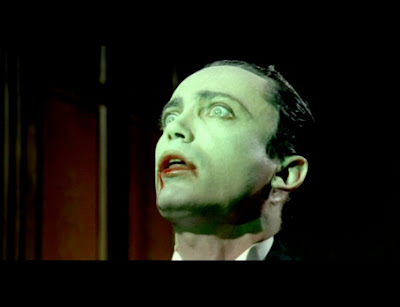
It’s quite easy to take a liking to the fragile count as depicted by Udo Kier in one of his finest roles ever, as he’s such a contrast to the state we are accustomed to seeing the Dracula character portrayed as. Instead of the fertile, agile and dominating blood sucker that seduces his way through each female character he encounters, Morrissey flips genre convention on it’s ass and instead we have a frail, vulnerable count, terribly weak, so weak that he even has to take to riding in a wheelchair, has spasms due to the lack of pure blood, is rejected by the young maidens as old and ugly, and then when he finally gets to suck the fluid of life only to retch, gag and vomit the impure blood of the women, you can’t resist his struggle. You feel sorry for the old geezer and mentally we all love an underdog, so a vampire that can’t claim his all-important virgin blood makes us feel empathetic towards him.
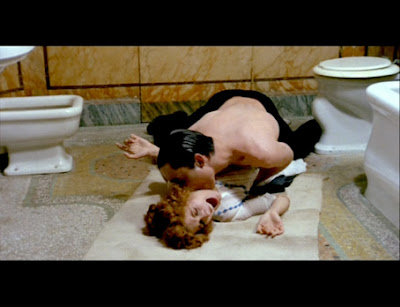
This is a quite common problem with the Vampire genre, as I’ve mentioned previously in other pieces, the vampire almost becomes the protagonist at some point or other in vampire movies, as their charm, wit and characteristics as the great seducer appeals to us. More than often there’s an arc of sadness, longing and despair in their character, and we fall for it almost every time. And along the way we start feeling for the vampire, due to a varied assortment of reasons, be it long lost love, the longing for death, etc, and this automatically makes us feel resistance towards the Vampire Hunters. In Blood for Dracula, we take Count Dracula’s side from the very start of the movie. That “putting on his life mask” sequence during the opening, and his love for his sister that makes him take the risk of leaving the castle all make up for a likeable character who's bad luck and unfortunate situations make us like him all the more.
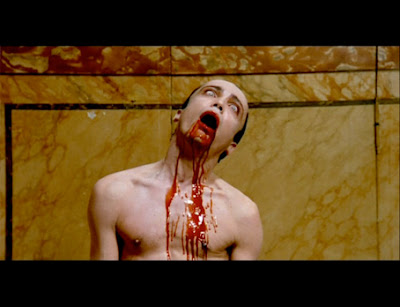
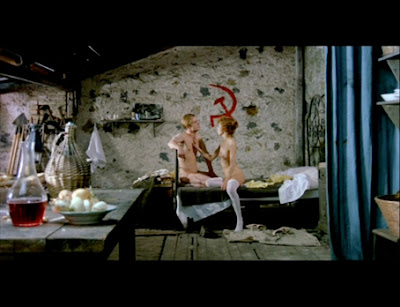
Instead of the common vampire hunter, Morrissey chooses to make a political statement though the character of Marco the handyman. Marco a devout Marxist uses his communist manifesto of everyone is equal to have his ways with the women of the Di Flore family, and it’s also this political platform that makes him oppose the Count’s presence. Even though Marco has a good thing going for him with the sisters, that have lost their wealth, his political values make him take action against the possibility of the family marrying into the Count’s wealth. Herein also lies an interesting paradox, as when he faces loosing the power hold he has through his liaison with the lusty daughters.
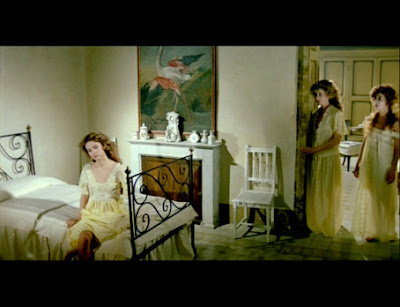
The complex relationship between Marco and the girls is reflected in the Marxist ideology of struggle between classes, critique against capitalism and the quest to overcome the fetters of private property. With these basic ideas of Marxism in mind, it’s easy to see that Marco enjoys his relationship with the girls because he forcefully breaks the class hierarchy and he dominates them. He also degrades the girls into a like worthy level as himself as they have no property to mention, hence they become equal as the girls have to work in the once luscious gardens of the mansion. When the girls are faced with the chance of rejuvenating the family’s status and wealth, Marco reacts as his quasi-Marxist utopia is threatened, and indirectly his “property” – the girls - are slipping though his out of his hands.
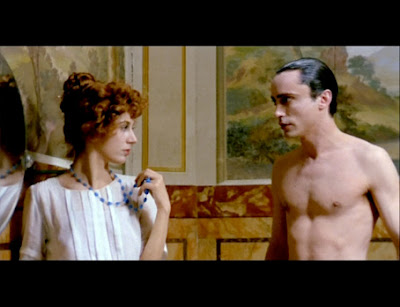
It’s with this complicated political analysis that Marco not only goes against his own manifest, but also what fuels his reluctance towards the Counts presence. It’s for his own personal and ideological reasons that Marco goes up against the Count, and when he learns that the Count is a Vampire, he has an opportunity to once again take action from his political ideas. When he realizes that the Count needs the blood of a virgin, he makes sure to deflower the only virgin left in the house, Perla the youngest daughter. The only girl who has been out of reach for him throughout the movie.
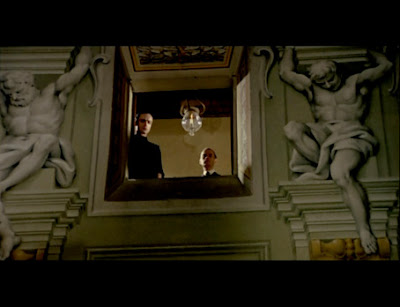
By taking her virginity, he also seals the Count’s fate, and has an opportunity to reinstate his Marxist utopia. It is through taking Perla’s innocence and finally slaying the Count that Marco put’s that much talked about for revolution into action, hence creating a Tabula Rasa that most likely sees the relationships going back to exactly the way they where before the count arrived, but with a third girl added to his tiny harem.
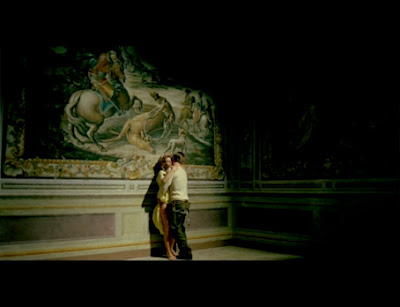
There’s a lot of humour and irony in the movie, which adds to the charm of this fascinating piece. The one sister that really is a virgin, who hasn’t even held any lust for the opposite sex, is the one the villagers refer to as the Slut. Esmeralda [Milena Vukotic who had a small part in Andrei Tarkovsky’s Nostalghia 1983 and Carlo Lizzani’s Giallo The House of the Yellow Carpet 1983 where she also starred against Swede Erland Josephson. Vukotic also features in Walerian Borowczyk’s The Art of Love 1983 and several Luis Buñuel movies], the eldest of the four sisters hasn’t taken a husband yet, and is simply cast aside as damaged goods in the eyes of the people outside of the family. She’s the only one who doesn’t cast longing glances at Marco, she’s the prudish one who tells on the others when they get semi naked during their chores on the farm, she’s the one who could save the count if only given the opportunity. And ironically she’s the only one who actually is attracted to him, which makes for a great scene during the climax of the film.
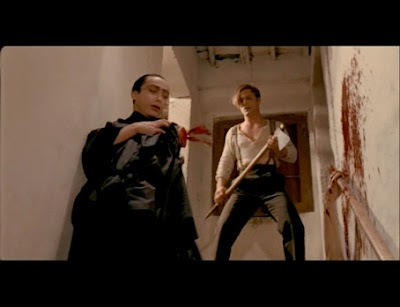
Keeping true to the tradition of Euro Cinema, many of the actors play their parts using their own voices, and instead of dubbing them with well-spoken English actors, or even Nick Alexander, their erroneous English becomes part of the campiness of the film. I guarantee you that once you have heard Kier talk about Wirgins; you will be hooked on his great accent and will find yourself laughing at the way dialogue is delivered. But that’s fine, as this movie isn’t out for the scares, but merely there to put a different spin on the age-old tale of Count Dracula.
The cinematography by Luigi Kuveiller [Lucio Fulci’s Lizard In a Woman’s Skin 1971, New York Ripper 1982, Dario Argento’s Le cinque giornate 1973, Deep Red 1975] is brilliant, and there are some amazing compositions in this movie, which furthers my claim that Morrissey didn’t pull this off by his own, as his previous movies really do not look anything like this one. Thank god that he ended up with the Italians, as they really master this genre. The movie is almost as a tribute to the skill of set designers and prop masters of Cinecitta. There’s a few interesting cameo’s in the movie, not only De Sica in a leading role, but also Stefano Oppedisano and Roman Polanski are seen in a humorous little sequence early on in the movie.
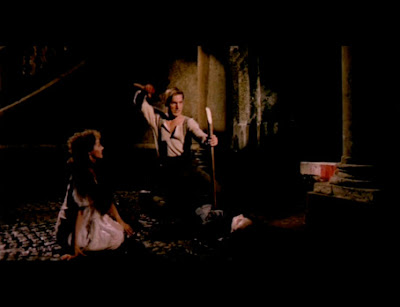
Together the two movies are a perfect double bill – I have seen them together on the big screen once thanks to the guys at KlubbSuper8 who screened them both as a double feature some years ago, Flesh for Frankenstein in 3D and Blood for Dracula uncut - and watching them back to back it’s quite apparent that they belong together and are almost polarized negatives of each other. Where Flesh for Frankenstein is fast and ferocious packing in the over the top special effects and gore gag’s, Blood for Dracula is delicate and poetic, slowly building up to a splendid blood drenched climax that will leave a lasting impression on it’s audience. And what an impression it is. These two movies are masterpieces no matter who did what, who said what, and need to be re-watched at any given opportunity.
Image:
1.85:1
Audio:
Dolby Digital Mono, English dialogue, no subtitles
Extras:
Being an early Criterion title, spine 28, and currently out of print, there’s more to be asked for where the extras go. Although the print is magnificent and it's really is fantastic to see a movie like this (and Flesh for Frankenstein) get the full treatment, even if it is taken from the old Lazerdisc version (Which I have framed on the wall signed by both Kier and Morrissey). And there’s an entertaining commentary track with Morrissey, Udo Kier and film historian Maurice Yacowar to make up for it. Even if Yacowar sometimes does happen to get a bit over analytical, it is an added insight that he brings with him. Although stating that the grains of corn that stick to Saphira’s back after Marco rapes her against a sack of crops symbolises Saphira being soiled is perhaps giving the movie more analysis than it really needs. There’s also a decent photo gallery of stills and marketing materials.