Showing posts with label Jess Franco. Show all posts

Friday, July 13, 2012

Sinner: The Secret Diary of a Nymphomaniac

Original title: Le journal intime d’une nymphomane
Directed by: Jess Franco
France: 1973
Drama/sleaze/thriller, 87min
Distributed by: Mondo Macabro

What a wonderfully lurid little title this is, seductive, enticing, captivating and damn right enchanting. Part of their great re-mastered Jess Franco releases, Sinner is yet another, first on DVD, from Mondo Macabro. Watching it once again reminds me of the brilliance of Franco, and why he deserved every ounce of that Goya Lifetime Achievement Award he was presented with a few years back.

It’s recently become that I find myself laughing along with each Franco release that comes out on DVD. Because every damned Franco release has the obligatory “One of his finest/best/weirdest/etc". quotes on the front. It’s funny because it’s always true! Every damned movie one sits down to watch has that Franco magic that just pulls you in and has you happily going along for the ride, and buying into whatever territory he want’s to take you to. No wonder the damned Franco DVD’s are something of Pokémon’s in the eyes of his enthusiastic followers, you simply can’t stop until you have them all.
Sinner: The Secret Diary of a Nymphomaniac is the exquisite tale of a young woman’s decent into cesspool of sexual depravity, and the series of events that force her to take a drastic exit from this world… after first taking her cunning revenge on the men who shaped her.
Without wasting time, the opening shot establishes that familiar Franco territory, the act/show being performed on stage for an enticed audience in a nightclub. Linda Vargas [Montserrat Prous] is performing with Maria Toledano [Kali Hansa] on stage whist the audience sip champagne and cocktails.  Where many Franco stage performances are revealed to be acts, the tables are changed here and what follows the performance is instead an act of sinister vengance. Linda joins one man in the audience, Mr Ortiz [Manuel Pereiro], entices him into buying bottle after bottle of champagne – making up a grand total of ten bottles, before they drunkenly leave the sleazy parlour and move to a seedy hotel room instead – another rather frequent Franco location. They start making out, but he passes out, and where one would expect Franco to go one path, he takes a completely different one, as Linda calls the cops, reports the murder of a young woman, and then slits her throat. As she lies bleeding to death on top of Mr Ortiz the cops bust in the door and arrest Mr Ortiz… ok, they blatantly walk in as if in a Monty Python Piranha Bros sketch, which bit actors portraying police often do in Franco flicks. It’s a grand set up, it comes completely unexpected and Sinner: The Secret Diary of a Nymphomaniac has its hooks deep into me at this point. I’m ready for the journey and desperately want to know how Franco is going to play this one.
 A brief cameo by Franco as Inspector Hernandez later, and the ball is upp and running. Mr Ortiz claims his innocence and his wife Mrs Ortiz [Jacqueline Laurent, who later ended up in several Torgny Wickman skin flicks!] refuses to believe the outlandish claims that her loving husband has murdered some two-bit prostitute. She takes it upon herself to pursue the truth, and make justice for her husband. This is a superb designation of the characters arc, which will change severely as the film progresses.
This is where the novelty of Sinner: The Secret Diary of a Nymphomaniac turns up, the search for the truth, becomes a post-mortem telling of Linda’s life. Mrs Ortiz goes to Countess Del Anna Monterey, who starts retelling how she met Linda, and the story is set in motion. I love the fact that it’s told in a non-linear fashion, it strikes me that several Franco pieces are done in this way. Linda moves to the big city where she quickly falls prey to sexual predators, Mr Ortiz being the first to violate her fragile tender frame.
There’s a great tone of guerrilla filmmaking throughout Sinner: The Secret Diary of a Nymphomaniac, definitely in the vain of the filmmakers whom Franco sought inspiration from, as he’s got Gérard Brisseau roaming around locations armed with his hand held camera as if it where a documentary shoot.  The funfair segment early on in the movie feels like a genuine piece of grabbing the moment, and the curious stares towards the camera sum it up with their “what the hell’s going on here” glances. It’s also a key scene to the movie, which lingers on for two long, is remarkably subjective for a Franco film, and provides the moment of corruption that will take Linda from childhood innocence into curious female sexuality when Mr Ortiz spoils her by buying cotton candy and the molesting her on the Ferris wheel.
Hence becomes Linda’s hatred of mankind, which leads her into her lesbian relationship with the Countess, but soon the Countess isn’t enough and Linda starts being intimate with everyone she set’s her sights on, especially men forbidden through marriage, making each promise of togetherness be merely words with no meaning. Linda searches on and meet’s raunchy exotic dancer/amateur photo model Maria Toledano, whom she falls for instantly. Her relationship with Maria leads to her participating in photo shoots, forcefully drawn into pornographic photo sessions, which in turn leads to drugs to numb the pain. The otherwise stone cold Mrs Ortiz starts to see that there’s more to this young girl than just being a dead prostitute.
So far, the story has been told to Rosa Ortiz by the Countess, now focus shifts, and Rosa seeks out Toledano to learn more about the young woman who’s death is pinned on her innocent husband. But at the same time this last act also reveals a lot more about Mrs Ortiz and the kind of conservative woman she actually is. Her meeting with Maria Toledano is awkward, Rosa obviously feels out of place when Maria tears off her clothes proclaiming that she hates wearing clothes.  A stern contrast to Mrs Ortiz, who hasn’t even seen herself without her clothes on and only makes love to Mr Ortiz with the lights out, says a lot about her, and perhaps why Mr Ortiz was running around after hookers.
Maria progresses to tell Mrs Ortiz about Linda, and it’s revealed that Maria has in her possession the journal of Linda. Now the insight is right from the heart and soul of Linda as the two women read the entries painfully jotted down by Linda. These pages tell Linda’s childhood, why she left the countryside and came to the big city, how her life changes as she encounters men who only want to use her as a sexual plaything, and also of how she narrowly escapes a jail sentence for drug offences due to a kind-hearted doctor who takes her in, in an attempt to cure her and set her back on the right track. This Doctor is played by Franco backbone, Howard Vernon. Despite Linda basically begging the good Doctor to shag her, he resists, and instead of looking at her as a piece of meat, he treats her with respect and gives back her value as a woman. But old habits die hard, and after a late night out, smoking dope, making out with men and women, Linda is confronted by the good Doctor who screams out that she’s betrayed his trust, and there for he will treat her as the nymphomaniac she is. This is the climax experience that leaves her in despair, when she later performs on stage with Maria Toledano she spots Mr Ortiz in the crowd, and knows how she must seal her fate.
The ending images of the movie, show Rose Ortiz, not only discovering new sides to her own sexuality, but also coming to a painful insight, and by taking the journey she’s become empathetic towards Linda, with whom she now can relate to. By backtracking Linda’s tracks she metaphorically done the same journey, and she too can feel the betrayal by man, and directly through her husband. A ghostly voice pleading to her, awakening guilt in her, triggers her to take sides with her sister in pain, and she seals the fate of her husband there and then.
A brief analysis and storytelling resume would go like this: Sinner: The Secret Diary of a Nymphomaniac is an exploitation gem that uses an Investigation plot to study the post-mortem character, Linda’s, degeneration. It also uses the insight that comes with the “investigation” to evoke empathy within the  “investigator” and affects her into a change of heart. The roles have altered; the victim and perpetrator have changed places. Poetic justice has been created and fates have been sealed.
Being another of the almost dozen films Franco wrote and directed in 1973, Sinner leaves no one disappointed. Again he’s working with Robert du Nesle‘s CFPC (Comptoir Français de Productions Cinématographiques) - who also produced Countess Perverse and Lorna the Exorcist –and all three edited by Gérard Kikoïne, back in Paris. The soundtrack is just a delightfully delirious as the one for Countess Perverse, although Jean-Bernard Retitaux is this time around teamed up with superstar, Vladimir Cosma. I’m still determined that someone release them as soon as possible, they are absolutely awesome, and actually surpass Hübler and Schwab’s pop-kitsch tracks for the German films.
Again, one is struck by the high quality of the production, smart use of simplistic plot and recurrent actors. It shines through when Franco is happy with his cast and crew, as there’s definitely soul in his output of this time. I’m curious to the fact if shooting hardcore films a few years later – as such was the novelty, and competing market of the time - didn’t artistically challenge filmmakers like Franco, Rollin etc. That’s not what they wanted to be shooting, and I’m certain that even they had fine ideas of where eroticism and porn cross, and how far they could go without crossing that line. Going beyond those boundaries must have affected ambition and passion for their trade, and I feel it shines through on those movies. The savvy that makes them shine is missing.
Unfortunately Sinner: The Secret Diary of a Nymphomaniac also suffered the same fate as Countess Perverse and Lorna the Exorcist and was following it’s initial run, crammed packed with hardcore shots, given a new title and tossed out onto the porno circuit, something which is when given the original versions at hand an atrocity, as they have an original story and narrative to them. I could compare it to if someone fixed an obscenely large plaster cast knob to Venus de Milo, or breaking up the frame of Mona Lisa and adding a crudely sketched snatch to the painting. It’s apparent that Franco had a strong vision of the movies shot at this time (as I’m certain he had with the most of his films), and interweaving unsophisticated hardcore shots definitely wrecks that vision. Luckily for us, Mondo Macabro are presenting the movies in their intent versions, and I don’t really see the point in those German box sets with each of the variant versions, as any version other that the Franco one, isn’t a Franco movie!
Sinner: The Secret Diary of a Nymphomaniac is basically a “countryside lass getting gobbled up by the sinister cogs of the big city” story, and it’s not really anything that we haven’t seen before in the sexploitation circuit. Films of the niche ranging from Hardcore 1979, Christiane F 1981, 8mm 1999, the cheap knockoffs, Hanna D, the girl from Vodel Park, 1984, Snuff Killer 2003 etc. have all been down that path. The big difference is found in the way Franco chooses his leading ladies. Franco’s movies could easily have been simple sleaze fests, but I’ve realized that a majority of his leading ladies have one thing in common, and it’s a vital ingredient to Franco’s films. Sinner was shot between the tragic death of Franco muse Soledad Miranda and before he firmly planted his lens on Lina Romay. I find Montserrat Prous, who starred in a half dozen films for Franco during this time period, to fit the formula perfectly. It’s all in the eyes! The movies where Soledad, or Lina, or Montserrat and so on, are the unfortunate victims, there eyes all contain a sadness, a depth, a vulnerability which makes the audience empathize with them. I also see this being the main reason why his later films totally miss the connection with the audience that these early works do, as they lack this vital ingredient. The vulnerable female muse that we are accustomed to seeing in Franco’s films. I’m absolutely determined that this is a vital part of the Franco formula! I even remember one drunken night back in the age of VHS calling up a mate and bemoaning how awfully rotten the antagonist was treating Lina Romay in one of the many Franco movies he'd duped for me.
Do yourself a favour, go out and pick up Sinner: The Secret Diary of a Nymphomaniac today, as this is one splendid movie in the annals of Jess Franco, and I will always be captivated by the simple fact that this Spanish genius directed so many fantastic, and career wise, landmark movies in the year of 1973.

Oh, and don't forget to pick up the Jess Franco mixtape from the right side bar... one hour, fifteen minutes of delightful Franco soundtrack in one nonstop mix, and you can challenge yourself to naming the scores and the soundbites... Enjoy!

Wednesday, June 06, 2012

Countess Perverse

Countess Perverse
Original Title: La comtesse perverse
Directed by: Jess Franco
France, 1973
Drama/Sleaze/Dark Comedy, 78min
Distributed by: Mondo Macabro


I’m a sucker for directors cuts, presumed “lost forever” finds, multiple source prints and stuff like that. There’s something magic with watching re-cut or reassembled with previously missing, but now found in someone’s cupboard footage or sparkling restorations that try to recreate the director’s original vision that completely enthrals me. Perhaps even more so when it’s cheap exploitation fare, as it shows a level of admiration, passion, attention and respect for these fantastic movies that they haven’t’ been getting before.  Celluloid oddity enthusiasts, Mondo Macabro have finally come to the point in time where they follow up their previous selection of pimped Jess Franco titles: Sinner - Diary of a Nymphomaniac 1973, Lorna The Exorcist 1974, and one of my all time favourites, The Diabolical Dr. Z 1966  - with the ultimate, restored version of the "lost" directors cut of La comtesse perverse (Countess Perverse) 1973.
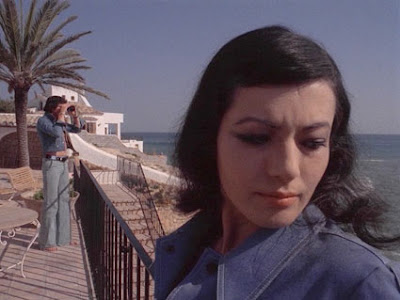
When I first started getting into Franco movies back in the late eighties, early nineties, one of the things that fascinated me was a recurrent tale my peers and fellow Franco enthusiasts would tell me. The tale of how Franco would make several versions of the same film, to cash in on several different areas. Sometimes a rawer horror/thriller version followed by a softcore erotic version and then rounded off by a hardcore version. At the time it felt like an ingenious way to cash in on several different areas and I thought Franco was something of a marvel to have this insight and wisdom. But the more time I’ve spent watching and researching Franco, it’s becomes obvious that the multiple versions are rarely a move of his will. It’s unfortunately more often something forced upon him by producers and distributors who seemingly push the movie – or Franco’s vision if you want – into a completely different pigeonhole.
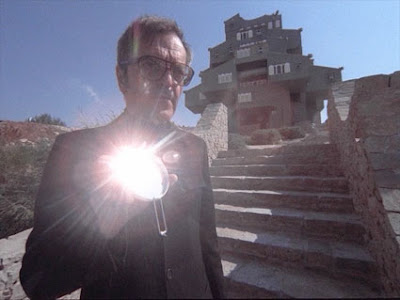
Franco originally shot this movie as an erotic little horror themed black comedy called Countess Perverse in 1973 - which this restored version presents. His producer at the time, Robert De Nesle, feared reactions to the cannibalistic themes presented in the movie and demanded a change to take the edge off the movie’s violent content and down beat climax. So new footage featuring Lina Romay and Caroline Rivere, (stepdaughter of Franco), was shot, bringing a comedic tone to the film and adding amongst other things an “It was only a dream” ending to the film. But it doesn’t stop there, because during the same time period a new cinematic novelty was hitting the screens with the result that exploitation filmmakers – and producers – where loosing out to, the novelty of Porn. The seductive French erotic movies couldn’t compete with imported hardcore porn, and this left the sexploitation films in peril. In 1975 the French government passed a law that permitted screenings of hardcore porn, which allowed French filmmakers to get a piece of the action. So producers started adding inserts into their movies and titles they already had on the shelves. This is quite possibly what led producer de Nesle to, once again, take measures to keep up with what audiences wanted. Hardcore inserts featuring Romay, Pierre Taylou and Monica Swinn where shot and added to the movie to create a third version, Les Croqueuses (The Munchers) which hit the French adult cinemas in 1975. This version later ended up in Italian hands, where further random hardcore footage was added, much like the godawful XXX version of 99 Women 1968, edited by Bruno Mattei. This Italian version is known under the name Sexy Nature!  
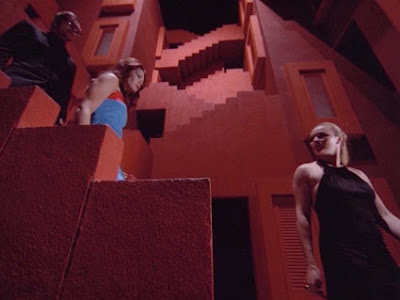
Anyways, back to Countess Perverse, the directors cut:
Now, this might be a little spoilerish, but I'm pretty certain that it won't stop you from watching the movie.

Bob [Robert Woods] and Moira [Tania Busselier] find a naked woman, Kali, [Kali Hansa] washed up on the beach outside their house. The woman is delirious and moans about a house on an island and the people there who are going to kill her, Count and Countess Zaroff!  [Alice Arno and Howard Vernon]

Bob & Moira take the woman back to the island, before they invite a friend to stay at their house by the sea. Sylvia [Lina Romay] eagerly moves in, and the couple lure her into a sinister ménage a trois, which induces jealousy, between the couple. A boat trip takes them to the Zaroff Island where they all sit down for a red meat dinner. The initiated can read a subtext in the dialogue that goes right past Sylvia’s head. Countess and Count Zaroff visit Sylvia late at night, as she ends up in the middle of yet another ménage a trois.

Following their session, Sylvia hears noises and takes up her own investigation which leads not only to an image to make you fall head over heels in love with Romay all over again, but also to revealing the dreaded secret of the Zaroff’s. They are cannibals, Sylvia finds them midst decapitating the body of Kali, and they tell her she’s next. A naked Sylvia runs into the countryside as the prey for the day and just might end up being plat de jour.
Leaning sternly upon the plot of Richard Connell’s The Most Dangerous Game, Franco came up with this frisky and darkly comedic twist to the story immortalized through Pitchel and Schodesack’s 1932 movie, which has then been done to death from there on up through Ken Dixon’s Slave Girls from Beyond Infinity 1987, influencing stuff like Brian Trenchard-Smith’s Turkey Shoot 1982, Lucio Fulci’s New Gladiators 1984, Kinji Fukasaku’s Battle Royale 2000 and inspiring mainstream bollocks like the Hunger Games 2012 along the road.

Countess Perverse was shot back-to-back with Plaisir à trois - featuring the same crew and cast, and mostly improvised. Although I still believe that Franco had some kind of basic idea of what he wanted from his actors, as there are some key scenes that make this a highly enjoyable gem with some amazing visuals, perfectly sleazy moments and sinister dark comedy.

Approaching this film as I would anything else I watch here I’d say that the protagonists of the piece are established effectively as Kali in the opening scene tells of her ordeal, even if in brief form, at the hands of the Zaroff’s. The flashback narrative, shot with extremely wide angles, give an almost dreamlike illusion before the architecture of Ricardo Bofill’s Xanadu - which almost seems to be defying gravitation – pops into frame and the Zaroff’s, like lurking predators, invite her into their web of depravity.
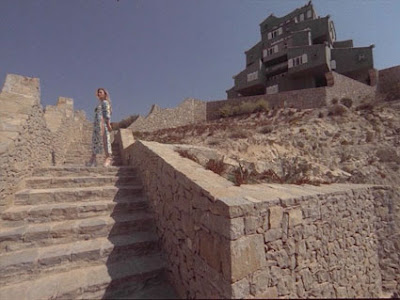
Oh, and on that architecture, the next time in Stockholm, take a walk from Medborgarplatsen to Södra Station, and lookout for the half circle shaped apartment complex near Medis… Yeah, that’s designed by Ricardo Bofill and now you know why it’s called Bofills Båge. It’s our connection to Franco from now on. Franco also uses Bofill’s Xanadu in Sie tötete in Ekstase (She Killed in Ecstasy) 1971, and Eugenie - Historia de na perversion (Eugenie – The Story of Her Journey into Perversion), 1980, and I’m sure that observant viewers will find it used on more occasions.

So the threat of the island, and the Zaroff’s is established. We know what they eat, and cannibalism is definitely on the list of taboos. At the time of Countess Perverse, 1974, Lenzi had only started dabbling with the themes that would in a few years erupt into the Cannibal genre, and Texas Chainsaw Massacre 1974 was just around the corner waiting to pounce, so Cannibalism still was a pretty shocking occurrence on screen.
At the time cannibalism may have been provocative to producers and audiences, but today the cannibalism works as a platform for some wonderfully sinister dark comedy. It gives a fun rush of insight when we realize that the meat is human. Editor Gerard Kikoïne’s juxtaposition of dialogue and close ups of chunks of meat roasting on a grill is splendid, and Vernon sniggering manically each time they asked what meat they are eating is genius. The reason I question the improvisation claim, is that these innuendos are also fond repeatedly in the dialogue. Lines such as “Sorry for the tough meat, next time… oh you won’t be here next time… “ must have required some thought, but perhaps that should be credited to the French dubbing and dialogue added in post. More on that in a moment.
The second major shock comes when Bob and Moira, after hearing Kali’s devastating tale of cannibalism, sexual abuse and daring escape, turn her right over into the hands of the Count and Countess.  This kicks off a subplot concerning morale and doing bad for better cause, as Bob and Moria have an agenda. They want to get away from the life they are living, escape from the current situation.
I find it interesting in the way the Bob character plays out, because he has remorse for what they have done. He’s obviously obsessed by Sylvia – and who wouldn’t be – and the guilt from taking her to the Zaroff’s, leads him to take serious actions against Moria, and later challenge the Zaroff’s to little effect. This character redeems his immoral ways, he tries to correct his wrongdoing and find some kind of redemption as he tries to put things back to normal.

Taking the down beat ending and Vernon’s nihilistic closing speech in mind; it’s fair to see why producer Robert du Nesle became concerned about audience reactions, and took to the drastic measures taken. Today this kind of ending is a predicted narrative tool when it comes to many genre movies, but at the time, I’d dare say that Franco was breaking new turf, which when one thinks about it is outstanding proof to the genius of Jess Franco.
Another reason I adore the films of Jess Franco is that he’s had the balls to experiment with his filmmaking. He always makes the most of what he had to work with, just look at Paula-Paula, 2010 for an instance. Armed with a simple DV-Camera, Franco presented us with a concentrate of aesthetics that saturate most of his work, and even worked in a small final part for Romay as Alma Pereira - another returning Franco character. Or the excessive zooming that the unfaithful unfortunately associate with his films in a negative way. In reality the zoom technique was a result of the tight schedules given to him by producer Arthur Brauner during the suite of movies shot in 1971 – She Killed in Ecstasy, X312 – Flight to Hell, Vampyros Lesbos, and Der Teufel kam aus Akasava. Instead of grinding the production to a halt to reposition cameras and lighting for cut away shots, a rapid zoom back and forth, gave the same kind of result, whilst saving valuable time and money.
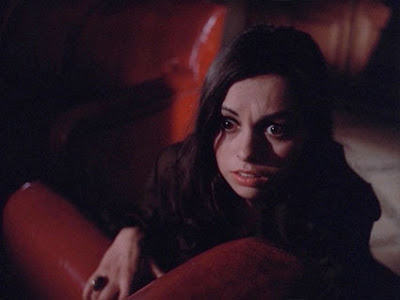
In Countess Perverse, he’s obviously experimenting with camera lenses and composition. Many scenes start with a distanced master shot, lingering there as long as possible, before cutting in to wide or mid shots. A lot of these mid shots are shot with wide-angle lenses that give a fisheye effect, which is really effective, creepy and surreal. It also hit me that there’s a lot of great dolly work going on in Countess Perverse too, something I rarely associate with the cinematography on Franco films. I have to point out the gorgeous compositions because Gérard Brisseau’s cinematography is outstanding, and he really makes the most of the fantastic Bofill architecture. Pacing is almost flawless, and Gérard Kikoïne’s editing moves the movie forth in a steady flow.

Immaculately restored, with a stunningly crispy HD image, Countess Perverse has been returned to the original vision Jess Franco had in mind thirty-eight years ago by Stéphane Derdérian and screenwriter/actor Alain Petit (Jean Rollin’s La morte vivante (The Living Dead Girl) 1982, Franco’s Justine 1979 and Tender Flesh 1997). Petit is said to have been present when Franco edited the movie back in the day, and I seem to recall reading somewhere that he’d confirmed the original aspect ratio as the presented 1.33:1 – there’s even an onscreen guide to make sure you get it right.
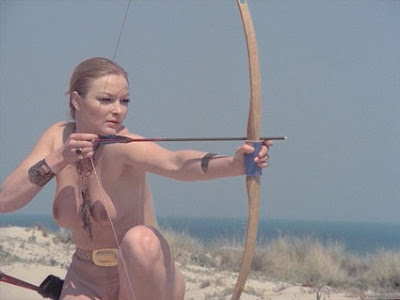
Franco started editing his own movies early seventies – uncredited on Plaisir à troisKikoïne get’s the credit. So perhaps he (and Petit) where present, but didn’t physically cut and splice film together himself.  As it’s told, Franco shot the scenes, assembled a mute rough cut which was then sent back to the offices of CFPC (Comptoir Français de Productions Cinématographiques). There Kikoïne edited the movie and this is most likely this is where co-credited writer, Elisabeth ledu de Nesle, wrote dialogue for the movie. After all, Countess Perverse was only one of a whopping fourteen films - eleven completed - several iconic Franco titles amongst them - and three which where never completed or released, that Franco directed in 1973.

Some food for thought - if Countess Perverse was shot back to back with Plaisir à trois, a movie Franco without receiving onscreen credit, edited and shot, then there’s a pretty good chance that he also worked the camera and the assisted the editing of Countess Perverse.
Returning readers, will know that I love old soundtracks – hence the stacks of vinyl in my home and mixtapes for your pleasure to the right. The Countess Perverse soundtrack is a gem; Jean Bernard Raiteaux and Olivier Bernard supply the movie with a fantastically cool fuzzy guitar progressive rock opera kind of track. at times reminds me of a aggressive take on Gene Moore’s theme from Carnival of Souls 1962. Just how often do you hear fuzzy guitar, flute and monkey screams in the same tune! Amazing stuff, someone (hint hint Finders Keepers) should get this out there as soon as possible.

Countess Perverse is visually stunning, psychotronic wonder of sleaze, mystery, dark humour and features wonderful performances from the cast. Romay may never have given a more vulnerable performance – although that could just be me being emotional at seeing her in HD - Vernon is superbly sinister and oozes evil. Choosing this movie is a no-brainer, it’s Franco at his finest (which both I and every DVD quote will tell you, of every Franco movie) Countess Perverse will perfectly fit into the void next to the Mondo Macabro releases of The Diabolical Dr. Z, Sinner and Lorna the Exorcist that you already have – or should have- standing in your shelf.
Countess Perverse is to be released on June 12th, by Mondo Macabro. You can preorder it on Amazon or pick it up from our friends at Diabolik DVD.

Sleazy Succubus...


Writing about Jess Franco generates a lot of love and compassion, which deserves a good soundtrack.

So here's the Sleazy Succubus - The Sounds of Jess Franco mixtape once again, just incase you missed it the first time around of didn't notice the links on the right hand side...

Enjoy.

Saturday, June 25, 2011

99 Women

99 Women
Directed by Jess Franco
Spain/England/Italy/
West Germany, 1968
Women In Prison, 89min
Distributed by: Njuta Films


Harry Allen Towers
, may he rest in peace whilst he rest of us enjoy his legacy. Towers is an important character for me and my introduction to the world of Jess Franco. I’ll get back to that in a moment, but first some stuff about the story of Harry Allen Towers.

He started out as a child actor, I know nothing of what movies he was in nor does anyone else when trying to find stuff our. But this probably came in handy when he started scriptwriting for radio and DJ’ing in the 30-40’s. He landed a gig at the BBC where he came up with the programme March of the Movies, a good fashioned movie show. During the 50’s he distributed radio shows to abroad and through his company Towers of London, he helped pirate radio like Radio Luxembourg. When commercial TV hit Britain, Towers was the goo to man and pretty soon he was supplying ITV with cheap programmes shot on film. After a string of generic TV theatre productions he more or less invented the English version of the TV movie. Finally – or rather the start of the career we will remember him for - came during the sixties, when he started producing movies.

Towers produced some one hundred plus movies, nine of them with Jess Franco between 1968-1970. But for me the introduction came through the satellite station Super Chanel. Super Chanel was an odd little bastard as it was a rabid mix of old TV serial re-runs, music magazines, music videos, live concerts and old movies. This is where I first saw Franco’s La Conde Dracula (Count Dracula) 1970 at the end of the eighties and damn did it leave an impression. Tracking down more Franco movies – from the UK – the titles I could get hold of where more of the Harry Allen Towers produced Franco movies. Amongst these I found several movies that laid something of a Franco foundation for me.

The quickfix for 99 Women is that a bunch of women are boated out to Castillio de Muerte – the Castle of death – where they spend time for crimes they supposedly have committed - guilty or not. The best ingredient for seedy women in prison flicks, is to fill the movie with sexual harassment, vile prison staffers and scantily clad inmates. 99 Women has it all. Superintendant Thelma Diaz [Mercedes McCambridge] runs her camp with an iron fist. Prisoners who are ill during the night do not deserve treatment and inmates who try to help end up getting punished. On the other side of the island lies an all male work camp run by Governor Santos [Herbert Lom] sinister, sleazy friend of Diaz who runs the all male camp on the other side of the island, lets him have his way with the female inmates. A second executive, Leonie Caroll [Maria Schell] comes to inspect rumours of poor prisoner conditions and strikes up an odd friendship with new inmate #99 [Maria Rohm]. No W.I.P. film is complete without a daring escape plan and 99 Women blasts into its last act with just such a moment.

Co-written by Franco and Towers – under his nom de plume Peter Welbeck99 Women sports a good solid script with several details that make it a splendid movie. Pay attention to the first fifteen minutes of this movie. These are amongst the finest establishing minutes you may ever see, and just one example of what I mean with a detailed script where threads run fluently through the narrative. The boat is on its way to the island, the three women are introduced and their archetypes are established.

They are all very determined archetypes that are all established within the first fifteen minutes. Marie [Rohm - Towers wife, hence her starring in many of his movies.] soon to be renamed #99 is concerned and almost naively asks where they are being taken already on the boat and not half as cocky as Helga [Elisa Montés]. This makes the audience understand that Helga is aware off her crime, and Marie most likely isn’t… it plant’s the thought that she may be innocent. After all this is a women in prison flick, and they ain’t never fair. Nathalie [Luciania Paluzzi] cowers in a corner of the boat and when later locked up all the signals of a claustrophobia attack are there.
Following the presentation of our leading lady #99, it’s time to establish the antagonists, head warden Thelma Diaz [McCambridge] walks in to Governor Santos who eats his roast chicken sloppily and praises Diaz for the women she has selected for him today. Although he raises a finger or warning as he tells her that the woman who died that morning had visible bruises. An issue that may get them in trouble, if officials start to ask questions about the several dead women and how Diaz goes about taking care of discipline. The scene ends with McCambridge out of focus in the background and the only thing in focus is a book in the foreground. A copy of Arnold J. Toynbee’s La Europe De Hitler is at the front, Diaz apparently holds Nazi sympathies. We are not going to like warden Diaz and pretty soon she confirms our suspicions.

Back to the ladies… During the first night Zoie #76 [Rosalba Neri] wakes #99 from a bad dream only to be disturbed by Natalie, #98 writhing and moaning in pain. #99 tries to get help by calling for the guards. Instead she get’s Warden Diaz who screams that she’s up for punishment as she’s interfering and creating a disturbance. The next morning #99 gets involved in a fight where she’s caged in isolation for her further provocations. The night before her isolation she’s raped by #76 as the Governor drooling watches on.

Through showing her sympathetic sides – caring for others, wanting to do right, putting her in situations she has no control over - the audience feels empathy for 99 - or should we call her Marie, and as soon as we feel empathy we start to bond with the character. We wan Marie go have hell in the next hour and a half, but we want her to break out and live a better life too.

Two “alarming”, or rather “helper” characters are also introduced early on. Characters that help the audience invest in the plot. Also characters that will drive it forth and generate a disturbance in the ordinary world of Thelma Diaz hell camp for women.

One is presented after the death of #98 in the shape of the Doctor [José María Blanco]. As he leaves the island he complains that the women are always dead by the time he arrives… and that’s about to change. This external force obviously contacts officials hence the arrival of the second challenger to Thelma Diaz corrections facility.

The second is Superintendant Leonie Caroll [Maria Schell] who poses a threat to Warden Diaz when she arrives on the island and demands to inspect the prison. This threat stretches past Diaz and towards Governor Santos too. The two try to set her up by reporting to the officials that she pays attention to the young female inmates in the wrong fashion… anything to avoid a rupture of the good thing they have going.

Two things come out of this introduction of Superintendant Caroll. The positive tension between #99 as Caroll somewhat acts as a “parent/Helper” to her as she suggests to help her clear her case and possibly clear her name. Then there’s the harsh tension between Caroll and Diaz. The provocation of being scrutinised by external parts drives Diaz round the bend and frequently lands in her screaming out brilliant dialogue along the lines of “Purpose of a prison is punishment for crime, it is not meant a happy place! To which Caroll calmly replies, “In that case you efforts here can be extremely successful!”

Storylines are somewhat linear with the odd flashback now and again as the girls explain why they are incarcerated, some fair - some not. But by delivering their raison d’être in this way Towers and Franco keep the movie interesting, as I want to know what situation had the women end up in the prison to start with. The flashbacks see cinematographer Manuel Merino’s best moments in the movie, and are highlights for the movie where the typical Franco nightclub act and minimalistic sets, suggestive lighting are used. This is the sort of imagery and compositions I associate with Franco. Merino worked with Franco and Towers on almost all the films produced under the Towers of London period, and on approximately twenty something Franco movies in all.

Propelling the movie into it’s final act, #76 rallies a disappointed 99 – who by now has been lead on by Superintended Caroll with a promise to look into her case. But after a rejection, #99 looses all faith and is left disillusioned. She needs something new to latch onto, which makes #76’s timing perfect. #76 and Rosalie #81 suggest that #99 come in on their cunning plan to escape from the otherwise inescapable prison.

They make it into the surrounding jungles where they meet “Buster” one of the male interns from Governor Santos all male prison on the other side of the island A previous subplot concerning # 81 and her lover who used to sneak back to forth between the male and female prison comes to an end. Instead of finding him, it’s buster who tells her of her partners’ untimely death during their own escape. But after taking a few minutes to grieving she snuggles up and gets it off with Buster… who had a sinister plan to steal his cellmates girlfriend all the time.
The jungle scenes are claustrophobic – even more than the prison – as the women are chased deeper and deeper into the green web of bush and leaves. Dogs chase them and escape seems almost impossible. Although the peril of the jungle is nowhere near as hazardous as the next obstacle in their way. The men of the all male prison are out on a chain gang, Buster and the women daringly approach them begging for food, but instead the men become so overwhelmed by the sight of the scantily clad beauties that their primal instincts take the upper hand and they chase the women into the jungle like a pack of hungry wolves. Rosalie falls and now she pays the ultimate price for her insatiable lust – the chain gang tear off her clothes and use her for their own means. It’s a harsh moment and not to unlike the climactic death scenes found in the cannibal and zombie movies to follow a decade later. Pawing, clawing tearing hands ripping their victims to shreds.

There’s some brilliant detail in the escape, as they refer to places and locations that already have been pointed out as traps and perilous territory by Warden Diaz in earlier scenes between prison staff. We the audience know that there is going to be trouble if they take this path of that path. Moments of insight like this work wonders for the movie, and bring a deep cynicism to the final moments of this masterpiece of Women in Prison classic.

Overall the tone is seedy, but never really goes to far, there’s always a safe, almost artistic approach to the physical moments. 99 Women is undoubtedly an exploitation masterpiece, with moments of degradation and sensuality. If you want to see the movie as it was intended make sure to watch the shorter 89min version as this is the better movie. This is also the way Franco & Towers wanted you to see the film and you don’t really need the graphic inserts. At the same time the harder version obliterates several great moments such as the entire flashback that explains why Rohm is in prison. This is a classic Franco moment – much like Neri’s burlesque show flashback earlier – where a lot of the style and minimalism work in his advantage. I would go as far as saying it’s one of his most poetic conceptions of a rape and revenge, because it looks fantastic, plays with your imagination and rings back to early experimental black and white movies. It’s a scene, which elevates the movie a thousand miles higher than the pale smutty beach rape that replaces it in the adult version

But if you are looking for dirt then I guess you will want to watch the longer harder french version assembled by Bruno Mattei some years later. The golden age of the adult movie was just around the corner and more than one low budget sexploitation movie was re-edited with new footage to cash in on the new fascination and new French laws concerning film and pornographic material.

If you where to watch the old Redemption release, you would find that to be cut too, as there are pieces of the quite unsettling stabbing of an anaconda snake in the jungle snipped away. Why they didn’t use that penknife earlier I will never know. Escape had been so much easier.

99 Women, is really nowhere near the sleaziness of the Franco W.I.P. movies that where to follow, but this is a great place to start if you want to see just how easy one Franco template could be re-edited into something completely different with a few minutes of extra footage here and there – and believe me, Mattei took every opportunity available to get some triple X action into the movie. It’s also a template in the way that it’s a theme that Franco returned to on several occasions too. The unjustly condemned woman either sentenced to prison or by society, as she knows it. The main drive, to prove one’s innocence and settle the score isn’t too far away from punishing those who have done her wrong and settling the score. And as mentioned, this is really at the other end of the spectrum compared to the W.I.P. flicks to come, but at the same time proof that Franco could put together a really artistic flick.

Soundtrack by frequent Franco collaborator Bruno Nicolai is a gem. I challenge you to listen to the lead track “The Day I Was Born” and not hum it to yourself. It’s addictive just like Jess Franco’s movies.
There used to be an odd rumour that Towers of London where to make a 3-D remake of 99 Women after an announcement in 1983. Although that never happened, it boggles the mind to imagine a Jess Franco movie in three dimensions.

Jess Franco and Harry Allen Towers worked on nine movies together. If you still haven’t seen them I suggest that you go find them now. If you are a fan of Franco already they you perhaps should revisit them, if you are a newcomer, then they definitely want to go to the top of your list. These movies see Franco at what may be his most mainstream, but at the same time they are some damn fine movies that stand the test of time.

Image:
Colour, Anamorphic Widescreen 1.66:1

Audio:
Dolby Digital Stereo, English dialogue (French Dub on longer version) Swedish, Finnish, Danish or Norwegian subtitles are optional.


Extras:
For some odd reason the original softer version is enclosed as an extra and the french version as the main feature. Again, this is the one you want to watch. The main version is the French dialogue, hardcore-insert version clocking in at almost 98min. There’s biographies, Franco trailers and trailers for other Njutafilm releases.


Disney Star Wars and the Kiss of Life Trope... (Spoilers!)

Here’s a first… a Star Wars post here.  So, really should be doing something much more important, but whist watching my daily dose of t...