Showing posts with label super-heroes. Show all posts

Thursday, August 24, 2017

Groove's Fave Posts Week! Super-Hero Super-Groups of the 1970s

Greetings, Groove-ophiles! Ol' Groove is having a birthday this coming Saturday, I've got a brand new grandchild (#4!) on the way, and school has started back. Instead of struggling to keep up or (heaven forbid) getting behind, Ol' Groove is going to try something I've been toying with for a long time: re-runs! Yep, there are a lot of old posts that I'm really proud of that don't seem to have gotten the attention I'd have liked, so I'm going to run them this week. Next week, Ol' Groove'll be back with new posts, but 'til then, enjoy and comment on these Favorite Posts!

From February 26, 2009...


Super-teams have been popular ever since the Justice Society got together to swap stories back in the Golden Age. Super-teams catapulted superheroes back into prominence during the Silver Age when DC put together the Justice League and Marvel rocked us with the Fantastic Four. By the time the Groovy Age was getting underway, the Justice League, Fantastic Four, and Avengers were holding steady, but the Doom Patrol, Metal Men, Blackhawks, Teen Titans, Legion of Super-Heroes, and the X-Men were on their last legs.

Things kind of went up and down for super-teams for a couple of years. The Inhumans got a strip in Amazing Adventures. Kirby went to DC and gave us a team of gods, the New Gods, and revived the Newsboy Legion in Jimmy Olsen. Roy Thomas played around with teaming the Hulk, Sub-Mariner, and the Silver Surfer in a couple issues of Subby's mag, and that morphed into the Defenders (in which the Surfer was quickly replaced by Dr. Strange). The Defenders clicked. Suddenly, here was a super-team comics fans went a little bonkers for. Not long after that, Cary Bates and Dave Cockrum renovated the LSH in Superboy--another hit!
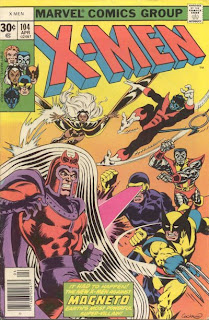
Then in early 1975, Marvel released two new teams in their "Giant-Size" format: the Invaders and the All-New, All-Different X-Men. Soon, Marvel followed up with the Champions and revived the Inhumans and the Guardians of the Galaxy. DC got into the act by bringing back the Justice Society in the revived All-Star Comics, and putting the Teen Titans, the Blackhawks and the Metal Men back into their own titles. DC created a team of super-villains and gave them their own mag with the Secret Society of Super-Villains. The New Gods were put back on DC's schedule (sans Kirby), and they gave us a new Doom Patrol in their revival of Showcase. Marvel even teamed their monster-heroes up in an issue of Marvel Premiere and called them the Legion of Monsters. Super-teams were hot again, and have rarely cooled down since.

Ol' Groove really dug those team comics. Got all of 'em. There's nothing like the thrill of seeing a bunch of costumed heroes banding together to beat up bad guys. Here are a few quick thoughts on some of my faves:

Invaders: Roy Thomas took a one-shot idea he had way back in Avengers #71 (September, 1969) which teamed Captain America, the Sub-Mariner, and the Human Torch, along with side-kicks Bucky and Toro, as a strike force to take the battle right to the Nazis in Europe, nabbed the name he and Stan Lee originally wanted to give to the Defenders, and handed the art chores to Frank Robbins. The Invaders was the perfect mag Robbin's newspaper-strip style of cartooning. His art gave the strip an authentic Golden Age feel, and his knowledge of the details of the era added much needed realism. Author Thomas would revive old Marvel heroes (the Destroyer, Liberty Legion), and even create Marvel versions of other companies' Golden Age heroes (Scarlet Scarab, the Crusaders), but he and Robbins were at their best when they created their own heroes of WWII, like Union Jack and Spitfire. They also created some memorable villains, like Master Man, Warrior Woman, U-Man, and Baron Blood. After their debut in Giant-Size Invaders #1 (March, 1975), the team got its own regular comic in May, 1975. The mag ran 41 issues, ending in June, 1979. The Invaders also appeared in their own annual (1977) which told the Invaders' side of their battle with the Avengers (in Avengers #71--what, your forgot already?), appeared in a few crossovers with the Liberty Legion (Marvel Premiere #'s 29-30, January-March, 1976), the Fantastic Four (Fantastic Four Annual #11, Spring, 1976), the Thing (Marvel Two-In-One Annual #1 and Marvel Two-In-One #20, both in the summer of '76), and an issue of What If? (#4, May, 1977) in which the Thomas revealed the Invaders' fate post-WWII. The team has appeared in flash-backs, revivals, and even a new, modern incarnation over the years, but nothing compares to the original run.

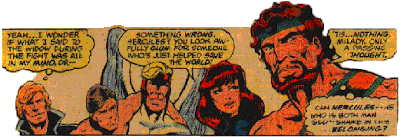
The Champions: In 1975, Tony Isabella had a great idea: team former X-Men Angel and Iceman with his new hero Black Goliath and make them Los Angeles' first super-team, the Champions. But then, according to legend, the editorial powers-that-were (the usually very with-it Len Wein) stepped in and told him that since Black Goliath was getting his own title, he couldn't use him in the Champions. Isabella would have to find another "strong guy" 'cause every super-team has to have a strong guy, so in came Hercules. Editorial also demanded the team have a female member, since every team had to have one, so they brought in the Black Widow. Then, editorial decided every team book should have a member who has his own mag (for sales' sake). Didn't Isabella have to give up Black Goliath for that same reason? So they shoe-horned in the Ghost Rider. Oh, one more change: too many characters in dark blue/black (Angel, Black Widow, and Ghost Rider), so the Angel, who had the coolest costume of all, got stuck with the most hideous red-and-yellow ensemble (complete with open chest and headband!) ever to appear in a Marvel comic. Did I say "one more change"? Oops. The Champions was to have been part of Marvel's Giant-Size quarterly line, but that line was cancelled, so the debut story had to be reworked into a multi-part epic to fit in the standard comic length. So onto the stands limped the Champions #1 (June, 1975), sporting a gorgeous Gil Kane/Dan Adkins cover. The interior art was uninspired, handled by Marvel workhorse Don Heck who by that time was probably bored to death with superheroes. Despite all the hassles, though, Isabella managed to pull off a fun mag. He managed to give the Champions a great hook, "heroes for the common man" and come up with a really topical and fun villain in Rampage, the first super-villain ever created by an economic recession! Heck was quickly replaced by George Tuska whose powerful figurework and storytelling skills livened things up considerably. Still and all, this wasn't the mag Isabella had wanted to write, so he left with ish #7 (May, 1976) passing the writing chores on to Bill Mantlo who added some interesting supporting cast members, including a new Russian-super-villain-turned-heroine, Darkstar (who made her debut under Isabella). Emerging super-star John Byrne took over the art chores for a few issues (11-15), but the series was cancelled with issue #17 (October, 1977). Too many creative changes, too little focus. The team was officially disbanded in Spectacular Spider-Man #'s 17-18 (January-February, 1978). The Champions crossed over with a few other Marvel comics: Super-Villain Team-Up #14, Ghost Rider #17, Godzilla #3, Iron Man Annual #4, and Avengers #163. The Champions had become sort of a "in-joke" at Marvel over the years, but was recently revived as the Order (since Marvel had lost the rights to the Champions trademark to Heroic Publishing back in the 1980s).
Doom Patrol: Inspired by the success (and carrying on the tradition of giving fandom the fun of comparing the two teams' similarities) of the All-New, All-Different X-Men, DC handed the chore of creating an all-new, all-different Doom Patrol to the able hands of Paul Kupperberg and Joe Staton in the newly revived Showcase #94 (May/June, 1977). Though Kupperberg and Staton took on pretty much the same trappings of the All-New, All-Different X-Men, with the introduction of international members (Celsius from India, Negative Woman from Russia, and Tempest from the U.S.--but with the added dimension of being a Viet Nam vet/deserter) and keeping a former member Robotman on the team (serving as DP's link to the old team, as Cyclops linked the old X-Men to the All-New--aw, you know who I'm rappin' about), the feel of the team was quite different. This team was more edgy, less of a team than a group of individuals thrown together by circumstances. Kupperberg's scripting was as with-it as any Marvel scripter's, and he was able to give the series a very dark, dangerous feel, very different from the usual DC fare. Staton's art was glorious, from his faux-Dave Cockrum costumes for the new members to his Rog-2000 inspired redesign of Robotman (which from what I've been able to gather Rog creator John Byrne kinda dug, especially since he and Joe had been buds working at Charlton), he gave the Doom Patrol a good, solid artistic identity. The try-out, which ended with Showcase #96 (August/September, 1977), sadly didn't lead to an ongoing series. The new Doom Patrol was relegated to occasional guest appearances such as Superman Family #'s 191-192 (July-September, 1978) and other mags in the 1980s. The DP has been revived a few more times since the Groovy Age, and is due yet another shot at starring in their own mag later this year.

Whew! Did I say "a few quick thoughts"? I'll have to return to this topic later, Groove-ophiles! Still lots of teams to cover! Meantime, what are some of your fave super-groups of the 1970s? Which ones would you like me to give more in-depth coverage to? Let me know, 'cause Ol' Groove aims to please!


Thursday, February 26, 2009

Super-Hero Super-Groups of the 1970s

Super-teams have been popular ever since the Justice Society got together to swap stories back in the Golden Age. Super-teams catapulted superheroes back into prominence during the Silver Age when DC put together the Justice League and Marvel rocked us with the Fantastic Four. By the time the Groovy Age was getting underway, the Justice League, Fantastic Four, and Avengers were holding steady, but the Doom Patrol, Metal Men, Blackhawks, Teen Titans, Legion of Super-Heroes, and the X-Men were on their last legs.

Things kind of went up and down for super-teams for a couple of years. The Inhumans got a strip in Amazing Adventures. Kirby went to DC and gave us a team of gods, the New Gods, and revived the Newsboy Legion in Jimmy Olsen. Roy Thomas played around with teaming the Hulk, Sub-Mariner, and the Silver Surfer in a couple issues of Subby's mag, and that morphed into the Defenders (in which the Surfer was quickly replaced by Dr. Strange). The Defenders clicked. Suddenly, here was a super-team comics fans went a little bonkers for. Not long after that, Cary Bates and Dave Cockrum renovated the LSH in Superboy--another hit!

Then in early 1975, Marvel released two new teams in their "Giant-Size" format: the Invaders and the All-New, All-Different X-Men. Soon, Marvel followed up with the Champions and revived the Inhumans and the Guardians of the Galaxy. DC got into the act by bringing back the Justice Society in the revived All-Star Comics, and putting the Teen Titans, the Blackhawks and the Metal Men back into their own titles. DC created a team of super-villains and gave them their own mag with the Secret Society of Super-Villains. The New Gods were put back on DC's schedule (sans Kirby), and they gave us a new Doom Patrol in their revival of Showcase. Marvel even teamed their monster-heroes up in an issue of Marvel Premiere and called them the Legion of Monsters. Super-teams were hot again, and have rarely cooled down since.

Ol' Groove really dug those team comics. Got all of 'em. There's nothing like the thrill of seeing a bunch of costumed heroes banding together to beat up bad guys. Here are a few quick thoughts on some of my faves:

Invaders: Roy Thomas took a one-shot idea he had way back in Avengers #71 (September, 1969) which teamed Captain America, the Sub-Mariner, and the Human Torch, along with side-kicks Bucky and Toro, as a strike force to take the battle right to the Nazis in Europe, nabbed the name he and Stan Lee originally wanted to give to the Defenders, and handed the art chores to Frank Robbins. The Invaders was the perfect mag Robbin's newspaper-strip style of cartooning. His art gave the strip an authentic Golden Age feel, and his knowledge of the details of the era added much needed realism. Author Thomas would revive old Marvel heroes (the Destroyer, Liberty Legion), and even create Marvel versions of other companies' Golden Age heroes (Scarlet Scarab, the Crusaders), but he and Robbins were at their best when they created their own heroes of WWII, like Union Jack and Spitfire. They also created some memorable villains, like Master Man, Warrior Woman, U-Man, and Baron Blood. After their debut in Giant-Size Invaders #1 (March, 1975), the team got its own regular comic in May, 1975. The mag ran 41 issues, ending in June, 1979. The Invaders also appeared in their own annual (1977) which told the Invaders' side of their battle with the Avengers (in Avengers #71--what, your forgot already?), appeared in a few crossovers with the Liberty Legion (Marvel Premiere #'s 29-30, January-March, 1976), the Fantastic Four (Fantastic Four Annual #11, Spring, 1976), the Thing (Marvel Two-In-One Annual #1 and Marvel Two-In-One #20, both in the summer of '76), and an issue of What If? (#4, May, 1977) in which the Thomas revealed the Invaders' fate post-WWII. The team has appeared in flash-backs, revivals, and even a new, modern incarnation over the years, but nothing compares to the original run.

The Champions: In 1975, Tony Isabella had a great idea: team former X-Men Angel and Iceman with his new hero Black Goliath and make them Los Angeles' first super-team, the Champions. But then, according to legend, the editorial powers-that-were (the usually very with-it Len Wein) stepped in and told him that since Black Goliath was getting his own title, he couldn't use him in the Champions. Isabella would have to find another "strong guy" 'cause every super-team has to have a strong guy, so in came Hercules. Editorial also demanded the team have a female member, since every team had to have one, so they brought in the Black Widow. Then, editorial decided every team book should have a member who has his own mag (for sales' sake). Didn't Isabella have to give up Black Goliath for that same reason? So they shoe-horned in the Ghost Rider. Oh, one more change: too many characters in dark blue/black (Angel, Black Widow, and Ghost Rider), so the Angel, who had the coolest costume of all, got stuck with the most hideous red-and-yellow ensemble (complete with open chest and headband!) ever to appear in a Marvel comic. Did I say "one more change"? Oops. The Champions was to have been part of Marvel's Giant-Size quarterly line, but that line was cancelled, so the debut story had to be reworked into a multi-part epic to fit in the standard comic length. So onto the stands limped the Champions #1 (June, 1975), sporting a gorgeous Gil Kane/Dan Adkins cover. The interior art was uninspired, handled by Marvel workhorse Don Heck who by that time was probably bored to death with superheroes. Despite all the hassles, though, Isabella managed to pull off a fun mag. He managed to give the Champions a great hook, "heroes for the common man" and come up with a really topical and fun villain in Rampage, the first super-villain ever created by an economic recession! Heck was quickly replaced by George Tuska whose powerful figurework and storytelling skills livened things up considerably. Still and all, this wasn't the mag Isabella had wanted to write, so he left with ish #7 (May, 1976) passing the writing chores on to Bill Mantlo who added some interesting supporting cast members, including a new Russian-super-villain-turned-heroine, Darkstar (who made her debut under Isabella). Emerging super-star John Byrne took over the art chores for a few issues (11-15), but the series was cancelled with issue #17 (October, 1977). Too many creative changes, too little focus. The team was officially disbanded in Spectacular Spider-Man #'s 17-18 (January-February, 1978). The Champions crossed over with a few other Marvel comics: Super-Villain Team-Up #14, Ghost Rider #17, Godzilla #3, Iron Man Annual #4, and Avengers #163. The Champions had become sort of a "in-joke" at Marvel over the years, but was recently revived as the Order (since Marvel had lost the rights to the Champions trademark to Heroic Publishing back in the 1980s).

Doom Patrol: Inspired by the success (and carrying on the tradition of giving fandom the fun of comparing the two teams' similarities) of the All-New, All-Different X-Men, DC handed the chore of creating an all-new, all-different Doom Patrol to the able hands of Paul Kupperberg and Joe Staton in the newly revived Showcase #94 (May/June, 1977). Though Kupperberg and Staton took on pretty much the same trappings of the All-New, All-Different X-Men, with the introduction of international members (Celsius from India, Negative Woman from Russia, and Tempest from the U.S.--but with the added dimension of being a Viet Nam vet/deserter) and keeping a former member Robotman on the team (serving as DP's link to the old team, as Cyclops linked the old X-Men to the All-New--aw, you know who I'm rappin' about), the feel of the team was quite different. This team was more edgy, less of a team than a group of individuals thrown together by circumstances. Kupperberg's scripting was as with-it as any Marvel scripter's, and he was able to give the series a very dark, dangerous feel, very different from the usual DC fare. Staton's art was glorious, from his faux-Dave Cockrum costumes for the new members to his Rog-2000 inspired redesign of Robotman (which from what I've been able to gather Rog creator John Byrne kinda dug, especially since he and Joe had been buds working at Charlton), he gave the Doom Patrol a good, solid artistic identity. The try-out, which ended with Showcase #96 (August/September, 1977), sadly didn't lead to an ongoing series. The new Doom Patrol was relegated to occasional guest appearances such as Superman Family #'s 191-192 (July-September, 1978) and other mags in the 1980s. The DP has been revived a few more times since the Groovy Age, and is due yet another shot at starring in their own mag later this year.

Whew! Did I say "a few quick thoughts"? I'll have to return to this topic later, Groove-ophiles! Still lots of teams to cover! Meantime, what are some of your fave super-groups of the 1970s? Which ones would you like me to give more in-depth coverage to? Let me know, 'cause Ol' Groove aims to please!

Saturday, January 24, 2009

Those Groovy Saturday Mornings: Shazzan and Space Ghost

What's happening, Groove-ophiles? Ready for some more great Saturday morning memories? Then check out these sensational Shazzan and Space Ghost strips from Gold Key's Hanna-Barbera Super TV Heroes #3 (cover-dated October, 1968)!

Monday, January 12, 2009

Star-Crossed Superheroes Part 1: Sub-Mariner/Dorma and Spider-Man/Gwen Stacy

The death of a loved one is a time-honored tradition in comics. It is often the catalyst that sends a character on his superheroic journey. Secret identities for superheroes were created for the express purpose of safeguarding loved ones. So what happens to superheroes whose careers are going about as well as they could be expected (especially for guys who are often wanted by the law they uphold), and even their love lives are falling into place. What happens when a superhero is happy and in love? Well, in the Marvel Universe of the Groovy Age, Ol' Groove tends to believe that there was some sort of law against such happiness. Witness the abject misery of this quartet of Star-Crossed Superheroes: Sub-Mariner, Spider-Man, the Hulk, and Captain America.

Superhero: Sub-Mariner
Object of Affection: the Lady Dorma
First Appearance of OoA: Marvel Comics #1, November, 1939
Death of OoA: Sub-Mariner #37, February, 1971 by Roy Thomas and Ross Andru

Many of you have probably never heard of Dorma, and those of you who have might be surprised to learn that she was actually one of the original Marvel Universe characters. So, Prince Namor had an on-again/off-again romance with this blue-skinned beauty for over 30 years (off-again because Subby seemed to forget about Dorma whenever Sue (Invisible Girl) Richards of the Fantastic Four was around). In fact, Namor and Dorma were to marry in issue #36, but the evil Lemurian Llyra had captured and replaced Dorma in an effort to trick Namor into marrying her, instead. The Sub-Mariner learned (in the nick of time) of Llyra's trickery and set out to rescue his lady love. Unfortunately, Llyra saw Namor coming and...

Using the last of her quickly-waning strength, Dorma lashes out the only way she can...

Free from the leeches, the Sub-Mariner makes haste to Dorma's side as Llyra slips away to plague Namor another day. Our hero is too late. His lady love has but one breath left...

Carrying his beloved's lifeless body out to the surf that spawned them, Namor is left alone with his monumental grief. In the Sub-Mariner's next issue, overcome by despair, Namor gives up the throne to his beloved Atlantis and seeks to find answers as to why his life has taken such an awful turn.

Why was Dorma killed? Perhaps it was because poor Dorma had been written as such a boring, wishy-washy character since her Silver Age resurrection. Perhaps Marvel didn't want to seem like they were ripping off DC who had married Aquaman to his lady, Mera, a few years earlier. Though we don't know the specifics, there is no doubt that Dorma was killed because the writers wanted to take Namor off in a different, less "Antlantis-centric" direction, leaving no interesting role for Dorma to fill.

Superhero: Spider-Man
Object of Affection: Gwen Stacy
First Appearance of OoA: Amazing Spider-Man #31, September, 1965
Death of OoA: Amazing Spider-Man #121, March, 1973 by Gerry Conway and Gil Kane

If ever there was a couple destined to become star-crossed it was Peter (Spider-Man) Parker and Gwen Stacy. Gwen was always frightened and mistrustful of Spidey, so Peter was never able to reveal his identity to her. The situation was made even worse when Gwen's policeman father, Captain Stacy, was accidentally killed during a battle between Spidey and Doctor Octopus (ASM #90). Shortly after her father's death, Gwen broke up with Peter, but they soon reunited with a stronger bond than ever. Pete was even making plans to find a way to reveal his identity to Gwen to clear the way for marriage. Fickle fate, in the form of the Green Goblin stepped in to ruin all of those plans. Y'see, the Goblin knew Spidey and Peter are one and the same, so he did the thing that all superheroes most dread: kidnapped Spider-Man's girlfriend to lure him into battle. Taking Gwen to the top of the Brooklyn Bridge (erroneously labelled by editor Stan Lee as the George Washington Bridge in the text), the Goblin waited ever-so-patiently for our web-slinging hero to swing into action, and of course Spidey didn't let him down. During a lull in the battle, Spidey rushes to Gwen's side, intent on getting her out of harm's way, but nope...

In one of comics' most (in)famous scenes, Spidey shoots a web to grab the legs of the girl he loves before she plummets to her death...

This panel has been a source of controversy for decades, but I think that creators Conway and Kane made the cause of Gwen's death perfectly clear...

Look at the same scene just a little more closely. See the motion lines around Gwen's head? And if that's too subtle for you, check out the sound effect in the vicinity of Gwen's neck. The reason for the controversy? For one thing, in many reprintings of this story the "snap" sound effect was left out. For another--well, we'll get to that shortly. First, let's leave Spider-Man alone to come to grips with his lady-love's demise...

Now, here's where the confusion about the cause of Gwen's death comes in. Although the art and sound effects leave no doubt that Gwen's neck was broken due to being grabbed by Spider-Man's super-strong webbing, the Green Goblin, himself, gives Spidey a reason for Gwen's demise that completely exonerates our hero. Why? Neither Spider-Man nor the Goblin could have heard the snap, for one thing. Did Conway, as some have debated, simply want to "torture" his reader's with the possibility of our hero being responsible for Gwen's death? Doubtful, but if that was the case, editor Roy Thomas ruined his "fun" in the letters page of Amazing Spider-Man #125 (July, 1973) when he answers a fan's letter about Gwen's death thusly:

"...it saddens us to have to say that the whiplash effect she underwent when Spidey's webbing stopped her so suddenly was, in fact, what killed her. In short, it was impossible for Peter to save her. He couldn't have swung down in time; the action he did take resulted in her death; if he had done nothing, she still would certainly have perished. There was no way out."

The real reason for Gwen's death? Writer Conway (as well as other prominent Marvel Bullpenners including the legendary John Romita, Sr.) thought that the only other place for the Peter/Gwen relationship to go was marriage, which he thought just wouldn't be cool at all. Yep, Gwen's death was a cop-out, Groove-ophiles. One of the few true missteps of the Groovy Age, to be sure.

Gwen's death also opened the door to a decidedly darker Age of Marvel comics. Before this, no matter how bad things got, Spidey could wise-crack his way out of it. Now our friendly neigborhood superhero was ready to murder his arch-enemy. That "darker age" was still many years off, but it was coming, as the deaths of Gwen, the Goblin (in ASM #123), the coming of characters like the Punisher and Wolverine, and the emergence of creators like Jim Starlin, Steve Englehart, and Frank Miller (to name but a few who would take the Marvel Universe in particular and comicbooks in general to a new level of sophistication) would prove.

Come back tomorrow for the cataclysmic conclusion to this epic essay, as we look at the Hulk's heartbreak and Captain America's anguish. Miss it not, Groove-ophiles!

LinkWithin

Blog Widget by LinkWithin
Special thanks to Mike's Amazing World of Comics and Grand Comics Database for being such fantastic resources for covers, dates, creator info, etc. Thou art treasures true!


Note to "The Man": All images are presumed copyright by the respective copyright holders and are presented here as fair use under applicable laws, man! If you hold the copyright to a work I've posted and would like me to remove it, just drop me an e-mail and it's gone, baby, gone.


All other commentary and insanity copyright GroovyAge, Ltd.

As for the rest of ya, the purpose of this blog is to (re)introduce you to the great comics of the 1970s. If you like what you see, do what I do--go to a comics shop, bookstore, e-Bay or whatever and BUY YOUR OWN!