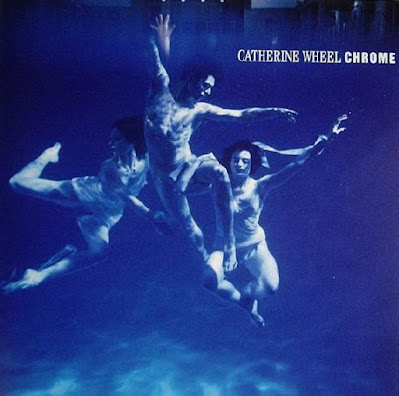
The original title, Crank, would have been apt. Producer Gil Norton (Pixies, Echo & the Bunnymen) was brought in to toughen this band's sound and set them apart from the wave of U.K. upstarts who were pounding U.S. shores. That he did. But it's not necessarily progress; Talk Talk's master experimentalist, Tim Friese-Greene, gave Catherine Wheel's brilliant debut, Ferment, a dripping beauty, opulent textures illuminating barely hidden firepower. On even the most angry, aggressive tracks, such as "Texture" and "Shallow," this shimmering, shuddering mist was still ever-present. Many of those glistening touches have indeed been subtracted by Norton, and they're missed. That Chrome is still a terrific LP proves Catherine Wheel capable of eclipsing the overload. Like another sharp LP that "cranked" for an hour without much sonic letup, Chrome reminds one of Sugar's Copper Blue. Not because Catherine Wheel covered Hüsker Dü on the 30 Century Man EP; it's because that was the last LP that combined this kind of songwriting prowess, raging playing, dynamics, pop tunes gone kablooey, and huge, bonfire sound. And unlike that toasty Sugar LP, this twin-guitar quartet knows how to bring it down: both the spindly single "Crank" and the resplendent "The Nude" seem almost tearful, they're so pretty through the thickness, and the knockout "Strange Fruit" is as fulsome as it is fierce. Rob Dickinson sings as if to choke on his words, yet never loses a gritty determination backed soundly by his and Brian Futter's guitars. Add in heavier versions of previous B-sides-that-deserved-better "Half Life" and "Ursa Major Space Station," and you've got a double play from a band too resolute to fall victim to sophomore slump wimp out, too talented to write half-baked tunes in two minutes, and too strong to glaze out in a shoegaze haze some pigeonholed them in after Ferment.
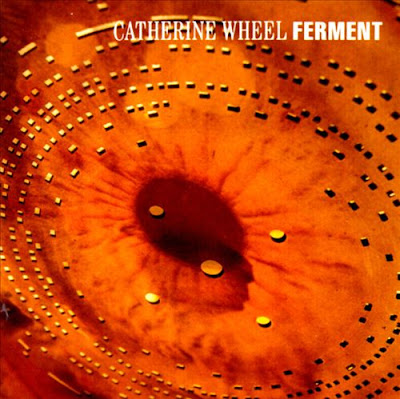
Centered around re-recorded versions of four songs from the band's two Wilde Club singles and the seven minute lovelorn "Black Metallic" - which was referred to as the "Like a Hurricane" of the ‘90s - the deeply rich Ferment firmly established Catherine Wheel amongst the shoegaze contingent of the early ‘90s. The band would proceed to denounce the shoegaze tag, but it was a fitting one, at least with everything they released prior to 1993's harder edged Chrome. Along with bands like Lush, Ride, and Slowdive, Catherine Wheel buried their sing-along melodies in wafts of distortion and blurry production values. Rob Dickinson had yet to find comfort as a lead singer, so his somewhat fey and dazed emoting blended perfectly with Tim Friese-Greene's comfy production. A fair amount of the bands thrown into the same category as Catherine Wheel were criticized for lacking knowledge of their instruments, but a couple listens to Ferment should prove that they were hardly amateurish. The employment of numerous guitar pedals didn't serve as a smoke-and-mirrors ruse, and Friese-Greene knew enough to allow room for bassist Dave Hawes and drummer Neil Sims to flex their able muscles. Dickinson and lead guitarist Brian Futter were immensely skilled and complementary to each other from the band's inception; certainly they were one of the most unrecognized guitar duos of their stylistic brethren. Like all fine debuts, Ferment is varied emotionally, ranging from lust ("I Want to Touch You") to bliss ("Shallow" and "Salt"). It's a record that makes you want to crawl inside its sleeve and remain. It's as welcoming as it is insular and sheltered.
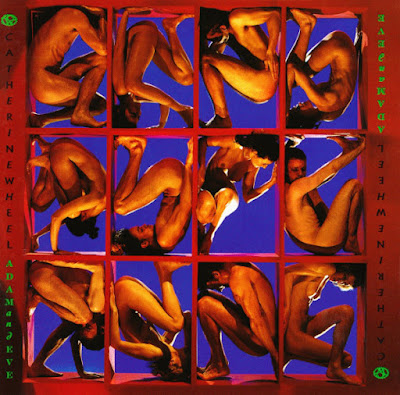
Even by Catherine Wheel's lofty standards, Adam and Eve is boldly realized. It's infused with unusual moods, textures, and ambitious touches -- such as built-up volume shifts, or keyboards and acoustic guitars that suggest endless wide-open spaces. The album is also an impressive thematic whole formed by two untitled tracks that start and finish the LP, with gentle connectors between songs in which chords of one tune drift quietly into the start of the next. In markedly lowering the volume throughout large passages of the album, they shine the spotlight on singer/guitarist Rob Dickinson, who alternates his smooth, cool, meditative cooing with a more yearning, emotional, arresting wail. Other guitarist Brian Futter, bassist Dave Hawes, and drummer Neil Sims negotiate a maze of hues and tints, from peaceful, pretty solitude to the most desperate pathos. 1996's release of Like Cats and Dogs (a collection culled from the group's more ponderous, subdued, nearly ambient B-sides) precipitated the album's more restrained approach and more ambitious scope. More importantly, like much of Like Cats and Dogs, the LP is again greatly influenced by Talk Talk's Spirit of Eden and Laughing Stock. So it's significant that Talk Talk's Tim Friese-Greene, who'd already produced Ferment and played on Happy Days, was called in again to play keyboards and ended up playing a major role in the album's sound, along with vaunted Pink Floyd producer Bob Ezrin and Garth Richardson. The more moody, reflective qualities that resulted are evident throughout, in the low-rumbling crash of "Broken Nose," the twinkling tones of "Ma Solituda," the near-Pink Floyd pastoral sweep of "Future Boy," the whimsical, throbbing ecstasy of "Delicious" and "Satellite," and the penultimate epic space-floaters, "Goodbye" and "For Dreaming." To put it bluntly, Adam and Eve is brilliant -- as playful as it is gripping, and as sweet as it is contentious.