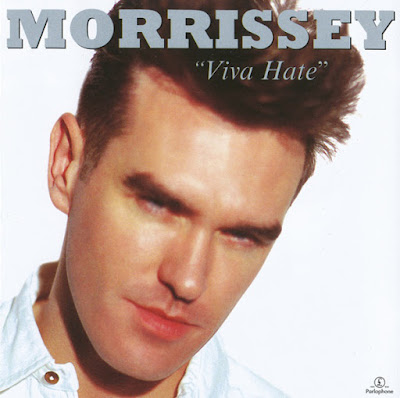
Following the breakup of the Smiths, Morrissey needed to prove that he was a viable artist without Johnny Marr, and Viva Hate fulfilled that goal with grace. Working with producer Stephen Street and guitarist Vini Reilly (of the Durutti Column), Morrissey doesn't drastically depart from the sound of Strangeways, Here We Come, offering a selection of 12 jangling guitar pop sounds. One major concession is the presence of synthesizers -- which is ironic, considering the Smiths' adamant opposition to keyboards -- but neither the sound, nor Morrissey's wit, is diluted. And while the music is occasionally pedestrian, Morrissey compensates with a superb batch of lyrics, ranging from his conventional despair ("Little Man, What Now?," "I Don't Mind If You Forget Me") to the savage political tirade of "Margaret on a Guillotine." Nevertheless, the two masterstrokes on the album -- the gorgeous "Everyday Is Like Sunday" and the infectious "Suedehead" -- were previously singles, and both are on the compilation Bona Drag
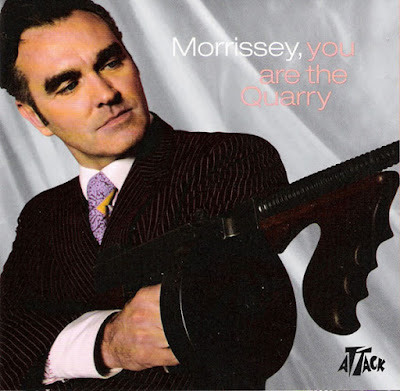
At his core, Morrissey has always been conservative -- not in his politics, of course, but in how he romanticizes the past and plays by the rules of a different time. His passions, whether it's the New York Dolls or '60s British cinema, exist out of time, and he's gone to great lengths to ensure that his music also can't be pinned to a particular era, which means all his solo albums share similar musical and theatrical traits, and they're subject to the whims of fashion. In the years following the Smiths, he could rarely set a foot wrong, but sometime after releasing his best solo album, Your Arsenal, in 1992, the British music press turned on him and he was not much better than a pariah during the mid-'90s heyday of Brit-pop, the very time that he should have been celebrated as one of the great figures of British pop music, particularly since the Smiths inspired every band of note, from Suede and Blur to Oasis and Pulp. By the time he released Maladjusted in the summer of 1997, he was a forgotten legend, not even given approval of his album art, and instead of cranking out records to the diehards, he chose to move to Los Angeles and wait out the storm. He stayed quiet for seven years. During that time, fashions changed again, as they're prone to do, as Brit-pop turned toward the sullen art rock of Radiohead and Coldplay, the mainstream filled up with teen pop, and American rock music was either stuck in the death throes of grunge and punk-pop or in emo's heart-on-sleeve caterwauling, which owed no little debt to Mozzer's grandly theatric introspection in the Smiths. Instead of being seen as a has-been, as he had been in the latter half of the '90s, Morrissey was seen as a giant, name checked by artists as diverse as Ryan Adams and OutKast, so the time was ripe for a comeback. But Morrissey had waited long enough to do it on his terms, rejecting major labels for Sanctuary (on the condition that they revive the reggae imprint Attack Records) and recording You Are the Quarry with his longtime touring band, with producer Jerry Finn, best-known for his work with neo-punk bands blink-182, Sum 41, and Green Day.
Finn's presence suggests that Morrissey might be changing or modernizing his sound, designing a large-scale comeback, but that runs contrary to his character. Apart from some subtleties -- the glam on Your Arsenal, the gentleness on Vauxhall and I, the prog rock on Southpaw Grammar -- he's worked the same territory ever since Viva Hate, and there's no reason for him to change now. And he doesn't. There are no surprises on You Are the Quarry. It delivers all the trademark wit, pathos, and surging mid-tempo guitar anthems that have been his stock-in-trade since the beginning of his solo career. It's not so much a return to form as it is a simple return, Morrissey picking up where he left off with Maladjusted, improving on that likeable album with a stronger set of songs and more muscular music (even if no single is as indelible as "Alma Matters"). If You Are the Quarry had been delivered in 1999, it would have been written off as more of the same, but since it's coming out at the end of a seven-year itch, he's back in fashion, so its reception is very warm. Frankly, it's nice to have his reputation restored, but that oversells the album, suggesting that it's either a breakthrough or a comeback when it's neither. It's merely a very good Morrissey album, living up to his legacy without expanding it greatly. But after such a long wait, that's more than enough.
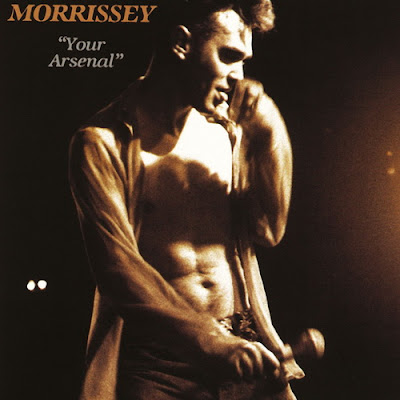
After the disaster that was Kill Uncle, in 1992 Morrissey revamped his band by adding Boz Boorer who was the musical driving force of the rockabilly revival act, The Polecats. Boorer added the creative push that Morrissey needed in the instrumental department. Gone were the “soft” singles like Suedehead and Everyday Is Like Sunday, and in replacement, we are provided with singles such as, "You're The One For Me Fatty", and "Tomorrow" which has much more power in them. Unlike Viva Hate where the music were mostly in the background and Morrissey’s lyrics on the forefront, both the Instruments and voice compliment eachother. Neither overpower the other.
The albums opening song, “You’re Going To Need Someone On Your Side”, displays this new found power and aggression. It is unlike any song he has done before, the instruments pound the way for Morrissey's lovely singing voice. It provides a taste of what musical onslaught of euphoria and aggression that will inevitably provide.
Morrissey’s wit and humor is still present as shown in the single, “You’re The One For Me, Fatty”, very few pop artists would sing a love song in such a brash way, and it works for him. It is something he would write, and it is one of the shining moments in the album. It starts off with a gentle Guitar rhythm, in which the drums and the Voice joins in on the fun. Throughout the song, the bassist really brings down the groundwork and works well with the drummer to tie into the music. Musically, it is filling slice of necessity.
“Seasick, But Still Docked”, is what I believe is one of his most brilliant songs and it is also the most gentle, it begins with an acoustic number, soon after Morrissey begins to softly sing, it relates to the Smiths single, “How Soon Is Now?”, not in the musical aspect, but the context of what he is singing about. It is such a depressing song, but Morrissey does sad well. It really will pull on your heartstrings and wreck them. The Albums closer, "Tomorrow", is such a catchy tune. It'll have you dancing on the top of a Chair, facing a mirror emulating the unmistakable voice. Again, this songs instrumental department takes a step on the forefront and really lays down all backing that Morrissey needs.
Overall, it is one of Morrissey’s shining albums. It is in league with “Vauxhall And I” and it is what Morrissey needed after Kill Uncle meanwhile shooting him up with success in the United States. It has both feeling and power, both Morrissey and band really work together to provide the best in each other.

Morrissey has always favored compilations, releasing such hodgepodges of singles, B-sides, and album tracks as Bona Drag and World of Morrissey, but the 19-track The Best of Morrissey: Suedehead is the first official "hits" collection he has released in his solo career. Spanning his years at EMI -- from 1988's Viva Hate to 1994's Vauxhall and I, with the 1995 single "Sunny" added as a bonus -- Suedehead is an imperfect collection, especially since it's sequenced out of chronological order, but it's pretty great all the same, featuring a basic selection of singles such as "Suedehead," "Everyday Is Like Sunday," "Tomorrow," "Interesting Drug," "Our Frank," "Piccadilly Palare," "We Hate It When Our Friends Become Successful," "The Last of the Famous International Playboys," "Boxers," and "The More You Ignore Me, the Closer I Get." There's also a handful of rarities, such as the extended version of "Interlude" and his cover of the Jam's "That's Entertainment," but at its core, this disc is a solid collection that may convince skeptics that Morrissey's solo records did indeed have a lot to offer.

In 1994, Morrissey told the world that he was retiring from music. After ten albums in ten years, and a life of near-constant touring, the recent deaths of three close colleagues was the final straw. The grand dame of pop music was bowing out. Vauxhall & I was to be Morrissey’s last stand. Of course, it didn’t pan out that way – the man came back with a new album the very next year – but it sure sounds like goodbye. Vauxhall & I is portentious, doom-laden, dripping with pathos and the settling of scores. It’s also the best record Morrissey has ever been involved with.
No other album in the man’s storied career sounds like this; the spry glam rock of its predecessor Your Arsenal is missing in action – no doubt down to the tragic passing of that album’s producer Mick Ronson in 1993. Instead, Vauxhall offers eleven tracks which belie the influences Morrissey always touted, but never actively showed off. It’s a balladeer’s album – there are shades of Dion, Joe Meek and, of course, chansonnier extraordinaire Jacques Brel.
If ever there was a modern-day equivalent to Scott Walker’s peerless first four LPs, this is it.
The first five little words of “Now My Heart Is Full” set the tone: “There’s gonna be some trouble.” Screw the punctured bicycles on the last night of the fair – at the age of 35, Morrissey really meant business. The lights are low, the mood is sombre; a nagging two-note riff drifts eerily underneath proceedings. It’s the sound of autumn at its most tempestuous – the clouds are black, everyone has a storm headache, and it’s only a question of when the heavens will open. Come the chorus, they do. Morrissey’s voice rises out of the murk, and the rain starts lashing down:
“Tell all of my friends…” Of course, from the murk, a smirk – “I don’t have too many…”
From here, it’s a swirl of images, characters, situations; Graham Greene’s Brighton Rock gets a look-in, as do some “loafing oafs in all-night chemists.” Chorus after chorus goes by (the verse, by now, long vanished into the distance), occasionally broken up by some patented Bowie-style jangle-and-chug in the guitars. The drama continues to unfold (personal highlight: “Underact, express depression, aaahhhhhh,” [pause for effect] “But Bunnie, I loved you…”), but all we’re supposed to do is “pass by.” As if that’s going to be possible.
Vauxhall‘s character studies are richer and more mysterious than any he had previously concocted – just what did the child in “Used to Be a Sweet Boy” do that caused his narrating parents to be so in denial? – and the wit and wordplay is deeper still. Take lead single “The More You Ignore Me, The Closer I Get”: three years on, Morrissey’s court woes would get an equally woeful song of their own in “Sorrow Will Come in the End”, but here, they’re dismissed in one wave of the hand – “Beware, I bear more grudges than lonely High Court judges.”
And if at this point, Morrissey’s lyrics were untouchable, his composers-in-chief Alain Whyte and Boz Boorer took the bait and matched them to the best music of his career. Whyte’s delicate touch on the woozy “Hold on to Your Friends” is revelatory, while the wistful acoustics of “Why Don’t You Find Out for Yourself” are astonishing; one of Vauxhall‘s most unassuming numbers, it may just be the finest thing here. Boorer’s contributions are no slouch either, though, and his baroque “Lifeguard Sleeping, Girl Drowning” is unlike anything Morrissey had ever done; this is where all of Steven Patrick’s dreams of being Sinatra finally came to fruit. Nowhere else in his discography can you hear Morrissey acting in front of the microphone like this - almost engulfed by Boorer’s clarinet and Steve Lillywhite’s gossamer production, his whispered croon, bordering on the androgynous, is revelatory. “Please don’t worry,” he intones near the song’s end, “there’ll be no fuss - she was…nobody’s nothing,” before being swallowed up in the undertow of shimmering cymbals and his own wordless cries for help.
And then there’s “Speedway”. The savage, violent, brutal “Speedway”, the sound of Morrissey tearing the curtain down, all the scenery and props crashing around him while he petulantly plays to the peanut gallery. The song opens with him literally cutting his critics down with the sampled sound of a chainsaw, laughing at his foes. “You won’t smile,” he sneers just before the song’s thundering final act, “until my loving mouth is shut good and proper…FOREVER.” The music stops dead for a second, Morrissey having seemingly been silenced (for once). But then the ebow of death sneaks back up into the mix, Woodie Taylor’s drums slam down like hammers, and Morrissey continues to deliver his ultimate malediction: “All those lies, written lies, twisted lies - well, they weren’t lies.” Everything somehow continues to get louder and more intense, before the final twist of the knife for anyone who loves him, hates him, or dares to stand in his way - “In my own sick way, I’ve always been true to you.” Taylor nonchalantly clatters the song to its conclusion, seemingly not realising that he’s responsible for the climax to what might just be the greatest album of all time.
Oh, and that bonus live disc? For once, it’s a revelation. In the illustrious setting of London’s Drury Lane, the Vauxhall tracks retain their atmosphere, while also gaining some balls. A rendition of “You’re the One for Me, Fatty” is almost improved by the sound of Moz constantly being groped away from the microphone by adoring stage-invaders, long-time live favourite “Jack the Ripper” is as tender as it is tough, and the segue from the freak-out finale of “The National Front Disco” into a stately version of ‘Moonriver’ is spellbinding. “I wrote that,” Morrissey deadpans at the end of the latter. He commands the song so well, you’d almost be inclined to believe him.
It can’t be coincidence that, twenty years on, Vauxhall is the only album in his catalogue reissue campaign to remain unfuckedwith in any way, shape or form. For once - artwork aside - he knows when to leave well alone. Vauxhall & I is barely an album. It’s a performance, a recital, an audition monologue. It’s the synthesis of everything Steven Patrick Morrissey ever tried, finally succeeding in one glorious forty-minute burst. It’s a rock and roll suicide, and if you don’t understand what I mean, well…if you need anything more from me, I just can’t explain. So I won’t even try to.