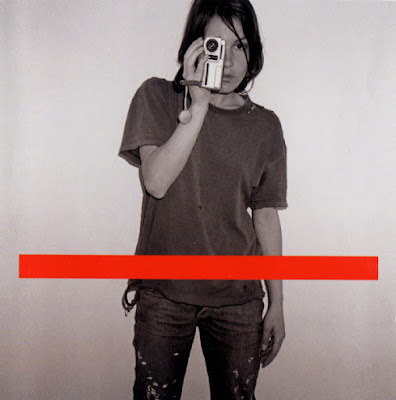
Instead of settling down in front of the mixing board for another dance album (a lá Technique or Republic), New Order returned in 2001 with a sound and style they hadn't played with for over a decade. Unsurprisingly bored by the stale British club scene circa 2001, the band opened Get Ready with a statement of purpose, a trailer single ("Crystal") featuring a host of longtime New Order staples: a sublime melody, an inscrutable set of lyrics, a deft, ragged guitar line kicking in for the chorus, and Peter Hook's yearning bass guitar taking a near-solo role. Though there are several allowances for the electronic-dance form New Order helped develop, Get Ready is a very straight-ahead album, their first work in 15 years that's focused on songwriting and performance rather than grafted dance techniques. (Of course, the band proved themselves far more than studio hands at several points, stretching back over twenty years to Joy Division's landmark Unknown Pleasures, as well as later New Order LPs like 1985's Low-life and 1986's Brotherhood.)
Listeners familiar with the blueprint of early New Order work will find much to love on Get Ready, from the tough rockers "60 Miles an Hour" and "Primitive Notion" to pastoral downtempo material like "Turn My Way," "Vicious Streak," and the melodica-driven closer "Run Wild." This naked songcraft, however, does reveal a few of the band's deficiencies. Bernard Summer's lyrics drift toward the inane: "I'll be there for you when you want me to/I'll stand by your side like I always do/In the dead of night it'll be alright/cuz I'll be there for you when you want me to." And the band can't help but identify with a younger generation of music-makers, inviting Primal Scream's Bobby Gillespie over for "Rock the Shack" and turning in a dense, chaotic production that's all but de rigeur for Gillespie but very strained for New Order. (The other main collaborative track, with stranded Smashing Pumpkins frontman Billy Corgan, is surprisingly unembarassing.) Even for fans who don't need any convincing, Get Ready is a true "grower," an album that reveal its delicious secrets -- sublime songcraft, introverted delivery, collaborative musicianship -- slowly and only after several listens.
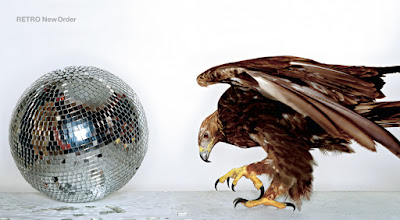
Add Retro to the dizzying stack of New Order compilations and best-ofs. Actually, it was the second comp to come out in the last half of 2002 (International was released in October and contains nearly every song that is on Retro). With that said, Retro is probably the most expansive and interesting New Order compilation since 1987's Substance. Keeping an eye and ear on the amazing Joy Division set Heart and Soul, Rhino stepped in to publish this box as well (that alone will give Retro a bit more credibility). The packaging is more or less identical to Heart and Soul's four-CD orientation and comes complete with its own Peter Saville-directed artwork and 70-plus-page booklet. Unlike the Joy Division set, Retro makes no attempt to create a comprehensive or complete look at New Order's expansive catalog. Rather, it is set up as an ultimate mix tape that might be made for someone's cousin who knows nothing of this band. And like a mix tape, everyone's track list would be different and would probably carry on a different mood. This one is curated by four individual selectors, and each disc carries on with a major theme. The first disc, "POP," is compiled by U.K. journalist Miranda Sawyer and contains all the major New Order favorites: "Blue Monday," "Bizarre Love Triangle," "Confusion," and a few minor surprises such as "Brutal" (featured on the Beach soundtrack). John McCready, journalist and Hacienda DJ, put together a "FAN" disc that contains some moodier album cuts like "Your Silent Face" and "Sooner Than You Think." Mike Pickering (M People, Hacienda DJ), selects New Order's dance-friendly material on the "CLUB" disc. Finally, Bobby Gillespie (Primal Scream) picks up some "LIVE" tracks -- which proves to nicely distill New Order's generally hit-or-miss concert performances. While Retro may not be a complete necessity it does pull together into one spot enough rarities (nothing too impossible to find, though) and a rather entertaining track list for obsessives.
 |
|
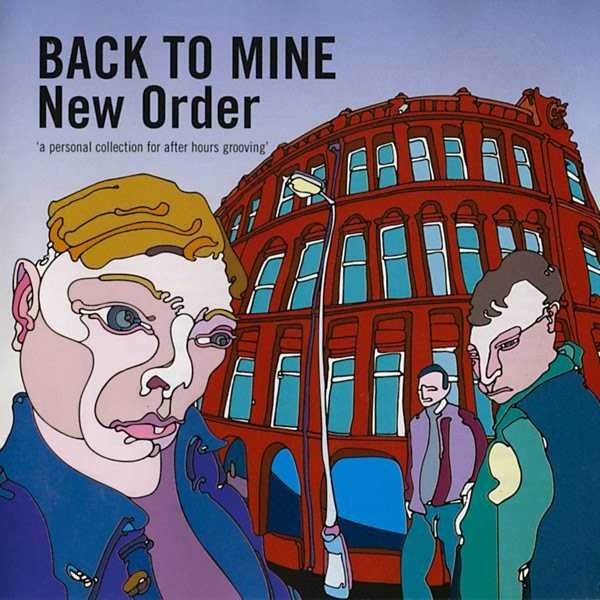
Easily the most popular act to deliver a volume in the after-hours mix series Back to Mine, New Order have been much more than artists, but true tastemakers, over their two-decade history. Accordingly, instead of the narrow swath of downbeat usually found on this type of compilation, the quartet (minus Gillian Gilbert) selected tracks by 14 artists whose only clear connections are as iconoclasts. Rock experimentalists from the '60s and '70s like Captain Beefheart, Cat Stevens, Roxy Music, and Can stand next to a trio of classics from the acid house explosion of the late '80s: Derrick May's "The Dance," Joey Beltram's "Energy Flash," and Primal Scream's "Higher Than the Sun." The Velvet Underground follows on from Missy Elliott, and the end of Mantronix's electro-rap classic "Bassline" butts heads with the Groundhogs' roadhouse blues "Cherry Red." Obviously, this is leagues away from a Sasha mix album, or even a David Holmes Essential Collection for that matter. It's an informed mixtape, the type you get from one of your hipper friends; and, depending on how much you care about music history (or how much you follow New Order), this is either downright essential or slightly conceited. It's perfectly in line with New Order's history of quality control, though, which is a high recommendation in and of itself.
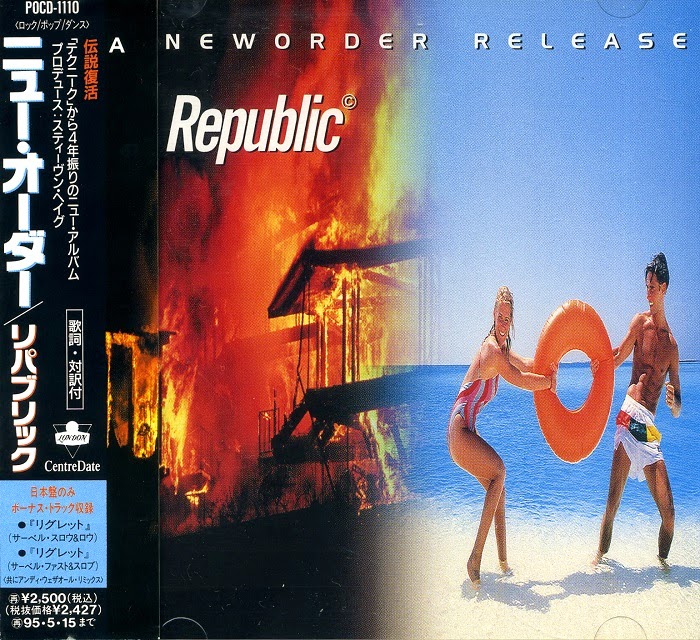
Review Summary: Often overlooked, occasionally dismissed, rarely appreciated. Republic is a band rising from the ashes of the home they knew and loved/hated for just a little over a decade. Before their first real breakup, 4 years was a long time to wait for a New Order album. Just 3 years before Technique, Brotherhood followed its predecessor Low-Life by only a year, and before that the waiting periods between N.O. releases weren't exactly excruciating either. At least, not by today's standards, seeing as when it comes to New Order in particular, the wait is just much as much on whether or not they're even continuing as a band as it is for any hope of new material getting a release. Even last year's Lost Sirens was a full 8 years after the one before it, and that was basically just an outtakes compilation. But 4 years was the space between them in 1993, Technique had come out in '89 setting a whole new standard for the band - with the most common descriptor seeming to be "Ibiza," since that's where they had been vacationing during the initial sessions for this album, though really what set it apart was the unified sound and execution of it all. The Cure had Disintegration, Depeche Mode had Violator, and being the questionable third in that trilogy of 80s "sad rock" were New Order with their classic album Technique. The difference with Technique in comparison with those other two records, however, is that the fan consensus, even the casual listener consensus doesn't necessarily seem to err as drastically toward it in terms of classic status or even being the definitive album for the band. It is a great record that came out within the same year/year-and-a-half span of the other two and being a concise and focused effort it makes sense to include it as New Order's representative classic, but in reality if you go around any amount of New Order fans, casual or hardcore, you'll more than likely get a pretty fair ratio between at least the Factory-era albums in terms of which are the favorites. Brotherhood splitting the rock and dance sides to an extent, showing various facets of the band on a song-by-song basis, Low-Life being a real early era classic with the first inclusion of actual singles on the record, and Power Corruption and Lies being the album that even Joy-Division-fans-slash-New-Order-detractors admit to loving. Technique was just the "right place right time" record that nevertheless does deserve its heaping of respect and veneration. While this may seem like a lot of information about the status and reception of an album that is not even the subject of this review, it's part of what sets up its successor Republic on both a musical level, and a level of response from both fans and critics. What fans may have expected from the follow-up to Technique is questionable, though after "World in Motion," it may have just been an upgraded Technique; but between the albums, something happened that would become a big part of Republic's subject matter. As of 1992 Tony Wilson's Factory Records, the home of not only New Order, but their initial incarnation of Joy Division, as well a host of other bands for the past decade-plus, had ceased to be a functioning label. Years of funding the Hacienda, Factory's resident nightclub, had kept New Order’s collective band bank account draining, and inevitable frustration toward the workings of this particular label finally came to a head, and it was all over. Songs like "Liar," "Ruined in a Day," and, debatably, "Times Change" had lyrics revolving around the demise, along with a sense of bitterness that the group, as well as others who had been involved in funding Factory and keeping it afloat had been victim to false promise and, put simply, lies from Wilson. How much of it is justified is debatable, since with any conflict there are often if not always valid justifications for both sides, but in the case of Republic, we’re getting the full-force anti-Wilson argument. New Order are pissed off, but that isn’t all they are. The band’s first album in the four years following Technique has Bernard re-introducing himself with a track about having nothing he regrets, whether or not the line is fully or even a little bit dry is debatable, but as 1993’s lead single “Regret” goes, it sure doesn’t sound like it. As breezy as the Baywatch beach the band recorded the video on, “Regret” opens with airy synth chords and a brighter-than-the-sun guitar line, Hooky’s iconic bass work following not too far behind; a song considered by some to be the “only good one” on the album, it’s the most obviously New Order track on here. Down to the charmingly naïve and lyrics, this was a practically instant classic among fans and casual listeners alike, with even Peter Hook saying it was their “last good song.” This is where the divisiveness, begins however, because after this track is where the “love it or hate it” majority of the album takes off. Jumping right in with an uncompromising breakbeat/bassline combination is “World,” another single from the album that, in my own opinion, is better than the lead single; in retrospect, it really isn’t that “standard” a New Order track in any sense, but damn is it good. The track, along with remaining singles “Ruined in a Day” and “Spooky,” does a good job in not only being a definitive track on the album, but also highlighting what people seem to love and hate about the record. The aforementioned breakbeat and bassline combination – oh my god, those aren’t Steve Morris and Peter Hook! What is this, a Bernard solo album? The same thoughts were more than likely on Hooks mind in the weeks/months/years before he left the group, having voiced his opinion several times (the recording of “True Faith,” for instance) on his basswork being slowly but surely pushed out of the mix as the group continued to release and pursue a more dance-oriented direction. By this point in the game, Hook’s bass was being thrown in almost as a gimmick, to assure people “Yes, this is New Order! The players are all still here, hear them!” Yet it does still go beyond that, the basslines played by Hook do still lend a necessary element to these songs that bring them out of what might have been a bit more anonymous dance numbers in some cases. However, this argument of “who’s doing what” or “who’s NOT doing what” is irrelevant when you look at the simple fact that New Order were a unit who did not even print their individual names in the liner notes. They were supposed to function as a unit, one who’s respective parts played/programmed/whatever on an album were really nobody’s business but their own. This was just about equally true for the dance-centric tracks on Technique, but Republic really takes it all to another level. Barring “Regret,” there really aren’t ANY traditional “New Order rock songs” on here; the energetic numbers such as “Spooky” and “Young Offender” are propelled by something other than traditional rock instrumentation, while earlier N.O. “electronica” may have been a bit more brooding, these tracks thrust forward with an urgency that actually rivals some of their earlier rock material. “Young Offender” being in particular a hidden and lost gem that may have never even been played live. Technique may have been N.O.’s most dance-infused album to date upon its own release, but Republic is the band, or at least the part of it making the decisions by this point (understandably, Hooky never seemed as enthusiastic about “going dance” as the other three) being absolutely CONSUMED by contemporary electronic and dance music. The album is just soaked in a culture of breakbeats, synth stabs, and pulsating electronic basslines, just another dividing factor, but one that really ups the ante for those who love it. It is the conclusion of everything they were working toward in the Factory years, no longer are they a band making “rock tracks” and “dance tracks,” seemingly at war with themselves during certain parts of the conflicted yet undoubtedly interesting and rewarding journey they’d had in the past decade, this is New Order doing New Order in ’93. There are dynamic changes, no doubt, but the abrupt (though admittedly enjoyable) shift from say “Fine Time” to “All the Way” aren’t exactly present here. It has the consistency and unification of an album that would have been made by a solo artist or even perhaps a duo, and though this aesthetic is probably a large part of why we wouldn’t hear from the group for another five years, it still pays off as a hugely accessible but exciting and involving listen. The front-loaded nature of all singles being right upfront, tracks 1-4, may be a detracting factor on the album as a whole, but with detours such as the semi-rapped “Times Change” and “Chemical” to seek out later on, it’s really not that negative a factor. Other sleeper hits include “Everyone/Everywhere” and “Special,” though admittedly the former seems to have been mainly dropped from the band’s set because of Bernard’s alleged wrist-issues playing it live (the “chords were strange” apparently.) The whole of the record is generally accused of riding on its production, and while the electronic-heavy instrumentation and beat programming is a big part of what makes the album, honestly, when you really sit down and imagine some of these as being played in a more stripped-back setting, or even just hearing someone play them in such a way/doing it yourself, you can see that that’s not really true at all. Even the final track, “Avalanche,” is brought to life by its sparse but ethereal vocals and arpeggiated guitar lines, all backed by a pounding, tribal drum section. Considering the fact that even Low-Life was a stretch for listeners who were giving this band previously known as Joy Division a shot, New Order had become practically the polar opposite of their Ian-Curtis-fronted selves by the time of Republic. Whether it was the possible revelations and/or epiphanies come across during the recording of their immediately preceding work, the effect of everyone going out and doing some things on their own between releases (after all, Bernard had done some things with Johnny Marr as Electronic, Peter Hook worked in Revenge, and Steven Morris and Gillian Gilbert both tried their hand at the side-project game with The Other Two by this point,) Republic marks the point in which the band had truly hit a 180 degree turn. Though, when you consider that it’s not exactly sunshine and dance tunes all the way through
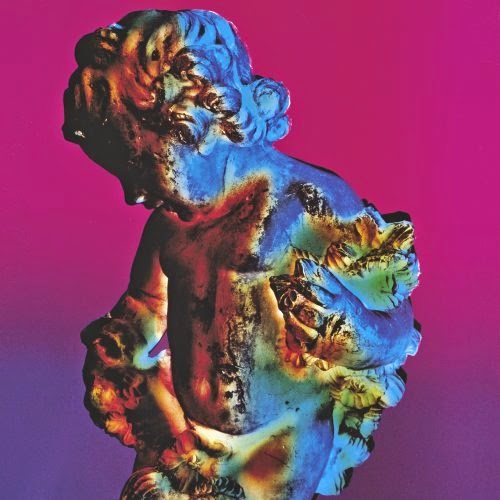
Following Ian Curtis’ suicide in 1980, Joy Division renamed themselves New Order with the addition of Gillian Gilbert on keyboards. Although they were the ultimate alternative indie band with plaintive, vulnerable lyrics, all four band members were multi-instrumentalists and were soon coating their basic guitar sound in swathes of synthesizers and bass (played almost as a lead guitar), backed up with expansive drum patterns and sequenced beats. They played a prominent role in most of the music movements of the 80s, ranging from the synth pop of the New Romantics to the dance rock of Madchester Rave, from the ground-breaking dance electro of Blue Monday to the acid house of Fine Time. The recording of this album coincided with Bernard Sumner undergoing a divorce from his first wife and this is reflected in many of the bitter lyrics: "I worked hard to give you all the things that you need, and almost everything that you see, I spent a lifetime working for you, and you won’t even talk to me" (Love Less). Drug problems with heroin and ecstacy also played their part to create a band that was falling apart at the seams: "You work your way to the top of the world, and then you break your life in two. What the hell is happening? I can’t think of everything. I don’t know what day it is or who I’m talking to" (Run). Compared to the all-knowing doom and pretend lyrics of Ian Curtis, what makes the record is Sumner’s searing honesty as he gropes for half-truths in his emotional confusion. Moments of epiphany "it takes years to find the nerve to be apart from what you’ve done, to find the truth inside yourself, not depend on anyone" (All The Way) rub shoulders with those of despair "I can’t find my piece of mind, ‘cos I need you with me all the time, used to think about you night and day, didn’t care what other people would say. I’ve tried but I can’t find you, tell me now, what do I do?" (Mr Disco). If Ian Curtis’ personal problems were part of the attraction of Joy Division, then the same could be said of Bernard Sumner’s own issues. With father unknown and his mother suffering from cerebral palsy, calling himself at various junctures Bernard Sumner, Bernard Dickin and Bernard Albrecht, this is a man desperately searching for his own identity: "The picture you see is no portrait of me, it’s too real to be shown to someone I don’t know" (Round & Round). He also hints darkly at child abuse in the song Vanishing Point (as he had done in the previous album in All Day Long). If this all sounds a bit grim, then there is also an ever-present sense of humour here as well. You could never imagine Joy Division calling a song Mr Disco, impersonating the soul singer Barry White’s bass profondo with a ridiculous lyric such as "you know, I’ve met a lot of chicks, but I’ve never met a girl with all her own teeth", opening a song with a fit of coughing or closing out with the sound of bleating sheep. Technique was New Order’s first UK no.1 album and they followed it up in the summer with their first UK no.1 single World in Motion. It was the last of a quartet of outstanding studio albums, with the various musical components competing for supremacy: the bass and drums of Power, Corruption and Lies, the synthesizers of Lowlife, the guitars of Brotherhood and the dance beats of Technique. However, the tensions that helped to fuel the creativity of the album, spawning perhaps their strongest collection of songs with lyrics to match, inevitably entailed the band’s implosion. They have re-formed to make three further (unfortunately fairly average) albums over the last fifteen years, undoubtedly tarnishing their reputation by doing so, but nothing can take away the legacy they left behind throughout the 80s.