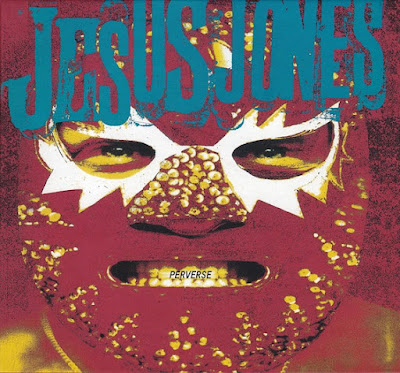
Doubt remains to be the highlight of Jesus Jones’s career, but its immediate followup – 1993’s Perverse – would have fared as well if not for the seemingly inescapable change of musical landscape as the decade progressed. But because it is celebrating its silver anniversary, Perverse deserves a keen reassessment and an affectionate reconsideration—something that eluded it back in the days.
Released on Monday, January 25, 1993, through Food/SBK Records, Perverse opened with the laser-lit Rave energy of “Zeroes and Ones.” The ensuing “Devil You May Know” was a different kind of beast – while it exuded faint echoes of the preceding album’s “International Bright Young Thing,” it certainly stood out with its Indian-inspired Psychedelic Pop, predating similar sonic trips made by the likes of Cornershop (“My Dancing Days Are Done”), Kula Shaker (“Govinda”), and Elephant Stone (“Between the Lines”). The techno-jangly “Get a Good Thing” then took the listener back to the smoky and musky dancefloor of the discothèque. And then there was the sinister sound and undulating melodies of “From Love to War.”
Jesus Jones then dove into Trip-Hop territories with the lava lamp–conjuring minimalist globules of “Yellow Brown,” after which they launched into something softly metallic in the form of “Magazine.” With the following “The Right Decision,” the band delved into something melodic and progressive, almost Art Rock and New Wave.
“Your Crusade” explored again Jesus Jones’s Industrial tendencies, owing to the dreamy synth melodies and buzzsaw-sharp guitar lines. Albeit still in the same dancey and spacey rhythm, the mood then slowed down with “Don’t Believe It.”
A sudden shift of style occurred as “Tongue Tied” played next – percussive with a hint of R&B, only to burst into shards of razor-sharp guitar strums and bouncy synth embellishments. The same dizzying and hypnotic effect flowed into the penultimate track – the ominous and cacophonic, aptly titled “Spiral.”
Finally, Jesus Jones concluded their aural perversion with the initially filmic vibes of “Idiot Stare,” which eventually transformed into an Alternative Dance stomper in the veins of New Order (“Thieves like Us”), during the legendary band’s Haçienda days.
Perverse may have not been as decidedly Pop like its successful predecessor, but it proved as cohesive, more diverse, and nonetheless compelling. It simply got swiftly sidetracked by the slew of new scene darlings that gradually arrived in the mid-’90s. So, by the time Perverse started to surf the mainstream, the ever-restless commercial spotlight had already shifted its focus onto this new batch of bands that came to represent the new faces of what became Britpop.
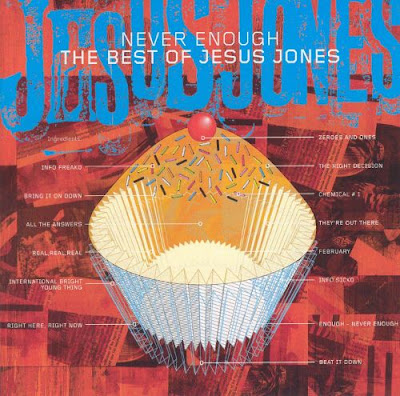
In 2001, shortly after a new album and a new tour of England and America, EMI announced plans to release Never Enough: The Best of Jesus Jones. Although the label had released Greatest in Japan in 1999, the collection had many holes -- most notably, the complete lack of material from Already. Building on Greatest, Never Enough adds classics like "Move Mountains" and "All the Answers" from Liquidizer; the hidden gem "Blissed" from Doubt; and the electro-rock shaker "Idiot Stare" from Perverse. Making a strong showing from Already are the singles "The Next Big Thing" and "Chemical #1," the poppy "They're Out There," and the haunting "February." Closing out the first disc is "Come On Home," a new track that bridges Jesus Jones' signature sound of the past with their garage rock influence of the present. Disc two offers rare B-sides and a generous helping of remixes by the Prodigy, Aphex Twin, Ben Chapman, Phil Harding, and Martyn Phillips. A true catch-all of both the group's popular and more obscure material, Never Enough serves as the ultimate companion for hardcore Jesus Jones fans, and an eye-opener to more casual listeners who may only be familiar with hits like "Right Here, Right Now" and "Real, Real, Real."
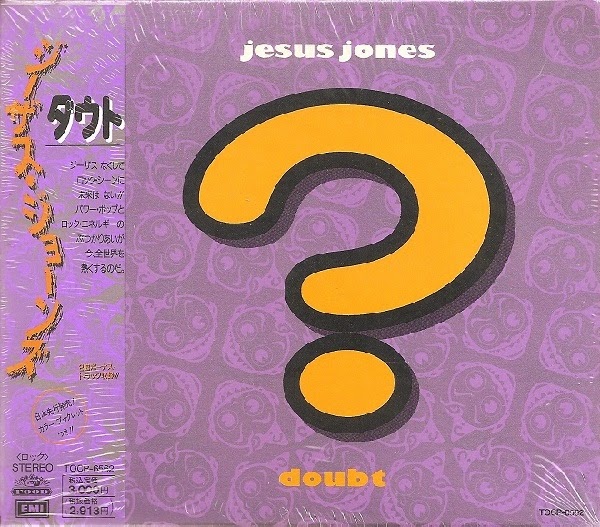
Jesus Jones's Liquidizer was one of the most assured debuts of recent years, an exhilarating but solid presentation of a band who, though mindful of modern musical developments such as samplers, refused to allow their essential guitar-band nature to be swamped by keyboard technology. Unlike the Pop Will Eat Itselfs and Gaye Bykers that occupied similar post-modern territory, their raw rock attack was always in the service of shiny, user-friendly pop tunes. Here it seems, was an individual and imaginative alternative to the burgeoning baggy consensus. Jesus JonesSince then, a certain desperation seems to have crept into the Jones camp, discernible in their all-purpose hipness - the skateboards, the samplers, the Mary Chain guitar washes, the hooded paisley tops - and now in the variegated nature of their second album, which lacks the solidity and sense of unity of the debut. It's as if, wary of the ephemerality of pop trends, they've approached that difficult second album as a kind of portfolio of possible stylistic variations, ranging from the marginally baggy (Right Here, Right Now and International Bright Young Things, unsurprisingly their two most recent singles) to the slack-strung, legs-akimbo hard rockin' (Two And Two and the opening rush of Trust Me, which brandishes sturdy punk roots). Call it cowardice, call it insurance: the way is open for them to be regarded simultaneously as fashionable indie-dance fellows over here and post-punk hard rock types in America - which might not be that stupid, judging by the poor performance of contemporary Mancunians in the latter marketplace. Meanwhile, the only really all-round pop presence on the album belongs to Real Real Real. The sad part of this is that though Doubt - an apt title - has plenty of fine moments, it has effectively reduced the sense of purpose and direction of the debut to a series of textural flourishes. Chief among these is Mike Edwards' slurred delivery , so drenched in echo and ADT that at times it sounds as if it's running backward - an effect heightened on I'm Burning by reversing the attack and delay characteristics of the accompanying drum beats. The sampling that was such an integral part of the debut, however, is now so integrated it's barely noticeable: only Stripped features the kind of exhilarating sound-collage maelstrom that could stand muster as a Public Enemy backing track, and in truth it's the only track here with a substantial "What's that bloody row?" factor. But there are compensations, especially in the album's quieter moments. Nothing To Hold Me plays a deadpan background rap vocal against a low-key mood-music backdrop, the result being rather like conscience nagging at the back of the mind. The album's finale, Blissed, uses a gently rolling pulse and occasional electronic bleeps, swelling into a mist of ethereal synth-tones for the chorus. The effect is numbing, an abrupt suspension, as if suddenly forced to tread water. An appropriate end.