Showing posts with label Suede. Show all posts

Wednesday, 21 February 2018

Suede ‎Coming Up Deluxe Edition


Get It At Discogs
"Pick a fight with Suede, you gonna pick a fight with the Suede fanbase," warned Matt Lucas on Shooting Stars in 1997. Leave aside the fact that Lucas was then dressed as a menacing man-baby: the truly surreal thing about this pop culture nugget is its target. Suede, suburbia’s moodiest, druggiest misfits, were now so mainstream-famous that they could be knowingly mocked on primetime, thanks to their biggest album yet, the hit-rammed, melody-overloaded Coming Up. 22 years later, it seems obvious that Britpop’s John the Baptists would rise from the grave to claim some of the rewards being lavished on lesser lights like Kula Shaker and Shed Seven, but it wasn't at the time. Despite their punchy 1993 debut generating a whirlwind of hype, the loss of wunderkind guitarist Bernard Butler and the sprawling darkness of 1994’s subsequent Dog Man Star read like a two-part commercial suicide note. Replacing Butler with a teenage fanboy and the drummer’s cousin was hardly encouraging. Yet amongst the B sides, lost songs and demos lovingly collected in this third lavish re-issue from the Suede back catalogue (the compilers clearly taking Matt Lucas’ threat seriously) lies the first clue that everything was about to go magically right. Together, a 1994 B side, was the first collaboration between Brett Anderson and new guitarist, Richard Oakes: its shamelessly poppy ebullience, fizzy guitars and breezy bubblegum vocal created a blueprint for the album which followed. And what a dazzling, spangly pop album Coming Up, remains, made shinier still by expert remastering. Anderson cites the surging outsiders anthem Trash as the pinnacle, but Beautiful Ones is more remarkable, the urgent, knotty wordplay of its verses giving way to an ecstatic chorus which embodies the album's title (the demo fascinatingly reveals that the song began life as Beatles-y whimsy). That these big pop beasts were interspersed with savage melodramas like She and swooning love songs like Picnic by the Motorway made Coming Up more alluring and enduring.

Wednesday, 22 March 2017

Suede Sci-Fi Lullabies


Get It At Discogs
Few debut singles have the impact of Suede's "The Drowners," which helped set the course to Britpop and established Suede as one of the U.K.'s most important bands. In that light, it isn't surprising that the B-sides were considered as important as the A-side -- the slow, grinding "My Insatiable One" was covered in concerts by Morrissey weeks after its release, while the band often closed shows with the majestic "To the Birds." The strength of the "Drowners" B-sides wasn't an anomaly -- it established a precedent of high-quality B-sides that Suede strove to maintain on their first three albums. The double-disc Sci-Fi Lullabies collects the majority of those B-sides, leaving behind the odd live track and remix, as well as the worthy "Painted People" and "Asda Town" and the non-LP single "Stay Together." What's included is stellar, offering an alternate history of Suede. In fact, the first disc -- comprised of Suede and Dog Man Star B-sides, plus the haunting "Europe Is Our Playground" -- is as strong as any of their albums, featuring such essentials as the sleazy "He's Dead," "The Living Dead," "My Dark Star," the storming "Killing of a Flash Boy," the sighing "Where the Pigs Don't Fly," and "Whipsnade," all strong enough to be A-sides. Disc two isn't quite as consistent, which might be because they're all drawn from the singles for Coming Up, but it does find the band exploring their darker, more adventurous side, which they largely suppressed on that record. Unlike most B-sides compilations, Sci-Fi Lullabies is far from extraneous -- for any Suede fan, and most fans of contemporary Britpop, this is absolutely essential material, confirming the group's status as one of the '90s' greatest bands.

Saturday, 23 July 2016

Suede ‎Suede Deluxe Edition


Get It At Discogs
The album emerged into an era when British music had precious little identity. Cowered into trembling submission by grunge, too terrified to fully open the door to acid house, still attempting to reconcile the death of the overblown synth-pop era that had preceded it. And so, their debut album rose from the mist; not so much into daylight but into day-glo, wide-pupil fluorescence with a record drenched in individuality, bound with delicious confusion and crackling with sexual charge. The rest (as described wonderfully by John Harris in his excellent book The Last Party) is history: Blur, Elastica, Oasis, Britpop, overexposure, New Labour, Be Here Now, death. Somewhere in that whirl of celebrity and cocaine, Suede got lost. But time corrects the crossing out. For a debut, especially considering how out-of-place it was at the time of release, Suede - remastered here by the band, including Butler - is a staggeringly confident and forthright statement. It embraces complicated lyrical themes with maturity and genuine pathos, masking the darkness of the concepts with dense imagery and double-meaning without sacrificing any transparent musical premise or thrill. Despite this, it remains a remarkably bleak record at times, especially on the windswept film noir piers of ‘Sleeping Pills’, bedecked in the most beautiful trailing fronds of lead guitar, and the ethereal, trembling ‘She’s Not Dead’. It also contains moments of genuine threat, tension and fear; notably in the perverse promise of ‘So Young’ and the personality crisis of ‘Pantomime Horse’. Studded in between all this are the indie-disco gems: the glam-rock stomp of ‘Metal Mickey’ and the immortal incandescence of ‘Animal Nitrate’, Anderson’s voice almost cleaved in two by the hacking slashes of Butler’s overdriven guitar. Finishing with the heartbreakingly beautiful, perfectly understated conclusion of ‘The Next Life’, the entire record is a complex combination of emotions, thoughts and feelings into one intensely fuelled, yet perfectly coherent statement. It’s hardly surprising that Suede found such a niche among the wandering teenagers of early Nineties Britain: Suede is practically the teenage experience defined in album form. Musically, they were intensely skilled, at a time when the there was a tendency to lean on dull, grunge-lite dirges. Bernard Butler, arguably the most naturally talented musician, was one of a number of quintessentially British lead guitar players to emerge between 1985 and 1994 who eschewed cliché in favour of a no-nonsense, unadorned yet forward-thinking approach to lead guitar playing. Alongside him, the hugely underestimated rhythm section of Simon Gilbert and Matt Osman pin the whole thing down to prevent it falling off its own axis (Osman’s bass playing in particular is a perfect foil to Butler: solid when required, brilliantly melodic when called upon). And then there is Anderson. Never the most natural singer and a polarising voice, but utterly compelling and committed; able to flip from deep growl to searing falsetto with his estuary accent still preserved within his utterances, pleas and exaltations. They never limit themselves and never repeat, striving to outdo themselves at every turn. The reason that their debut succeeds so gloriously is that it somehow manages to breathlessly dash around so many corners of the musical map in under 45 minutes, without ever compromising its quality or clarity of vision. Reissues can be problematic in that too often they effectively attempt to sell the same product with a smattering of inconsequential add-ons. What is thoroughly impressive about the Suede reissue is the considerable lengths that Edsel Records have gone to in drawing together a genuine snapshot of the context of the band at the time of release. The extras here are truly breathtaking in scale, including a full CD of B-Sides from the album, taking in the likes of the fizzing glamour of ‘My Insatiable One’ and the still-beautiful ‘To The Birds’ from the flipside of ‘The Drowners’: as equal quality of anything on the record. A collection of assorted demos also grace the second CD, outlining that Suede had their masterplan in place from the beginning: the embryonic versions are directly comparable to the finished items in composition and structure. Amongst the demos sits a rough-hewn demo of Anderson and Justin Frischmann singing along to ‘Just a Girl’; a sweet folk ditty that will intrigue those aware of the incestuous London Britpop scene, but ultimately sounds like any other bedroom demo, giving little warning of what was to come.This reissue serves to remind those outside of the bubble of just how astonishingly exciting guitar music can be when it throws all caution to the wind and embraces the past and the future in a fierce, passionate bear hug. It hasn’t aged; it still sounds magnificent. With the right moon, the right time and the right place, it still has the potency and power to change your life. And that is the alchemy that the truly great albums retain over the years. What does it take to turn you on?

Saturday, 18 October 2014

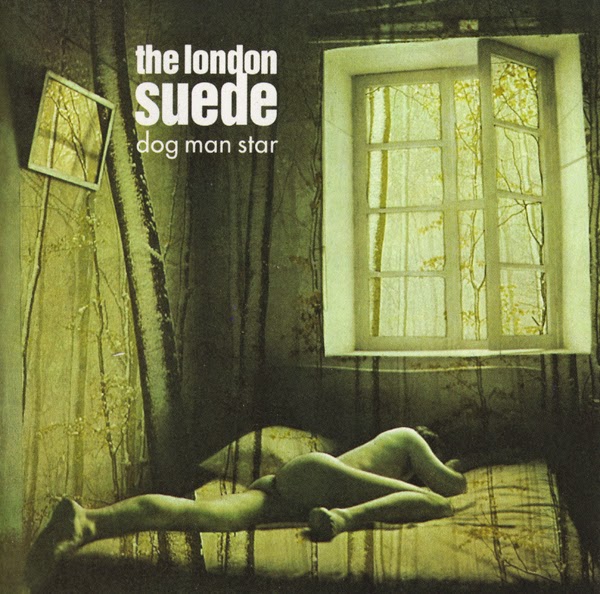
(The London) Suede Dog Man Star US Album


(The London) Suede Dog Man Star

Also Available Dog Man Star Deluxe Edition 

Get It At Discogs

What exactly are you supposed to do when following up on one of the seminal albums of British music in the 1990s? Such was the conundrum facing Suede in 1994 as the critical acclaim of their out-of-nowhere debut and the subsequent burden of expectations regarding the sophomore record was taking its toll on the group. Relations between the wispy, effeminate, and at the time, unbearably egotistic vocalist Brett Anderson and lead guitarist Bernard Butler had soured to the point where Butler eventually left the band before completing the record. Anderson ended up recruiting the seventeen year-old Richard Oakes to replace him on the tour, and was forced to complete some of the guitar parts on his own. And, if things weren’t bad enough, Suede’s star was beginning to fall as a little-known band called Blur was running away with the Britpop crown with their smash 1994 record, Parklife. It was especially damaging as Anderson’s girlfriend, Justine Frischmann of Elastica fame had recently left him for Blur’s Damon Albarn. When the record was eventually released, it caused barely a ripple on the music scene; Blur and Oasis were already sharing the spotlight with Pulp. The only enthusiastic group seemed to be the critics, having found an excuse to write ‘sophomore slump’ on yet another review. And on its surface, that’s what it is. Where their self-titled 1993 debut was packed with hit singles celebrating working-class fantasies of decadent excess, the oddly named Dog Man Star was intensely cold and reclusive. Where 1993's Suede explored the seedy side of England’s drug-addled, sex-obsessed youth in the glam-rock tradition of Bowie and T. Rex, the follow-up lacked Anderson’s trademark androgynous swagger, and Butler’s infectious, hip-shaking, Smiths-influenced riffs. ‘Introducing the Band’ captures the new sound best; Within two-and-a-half minutes, they manage to stuff in Anderson’s new overdubbed, layered vocal style, the heavily reverbed, distant-sounding Eastern-tinged guitars, and the strange, almost hallucinatory lyrics: I want the style of a woman/ The kiss of a man/ Introducing the band. ‘Daddy’s Speeding’ is equally unsettling, with minimal guitar arrangements and a somber piano rhythm. Anderson’s voice, almost childlike here, give the song, ostensibly about James Dean, a powerful, impending sense of dread. Seemingly a million miles away, Butler’s guitar drones away in the background before a sudden, forceful strike of the piano keys ends the song abruptly, while keys plink quietly before fading out. ‘The Wild Ones’ presents far more accessible territory; the radio single. Though it’s far from the dance floor-ready effervescence of ‘Animal Nitrate’ or ‘Metal Mickey’ off their debut, it is a pitch-perfect ballad, where Butler’s trademark layered guitar work is toned down to a shimmering, mid-tempo, and supremely effective rhythm. Anderson’s extraordinary voice and lyrics add volumes to the song, making it wholly undeserving of the indifference it received upon release. All the more confusing when you consider the wealth of single-material songs on the record. ‘Heroine’ boasts remarkable guitar work and use of sly double-entendres on its otherwise sincere, and brilliant sing-along chorus. ‘New Generation’ finds Brett Anderson in the arms of drug-induced love, and its pounding drums, upbeat vocals make it perfect once again for broadcast audiences. It’s a shame that so much focus was placed on the darker material on the album, and a bigger shame that the scrutiny failed to uncover gems like the pounding ‘This Hollywood Life’, abrasive even when it isn’t preceded by Anderson screaming ‘***ing kick it! as it is in concert. The heartbreaking piano ballad ‘The 2 of Us’ may similarly have gone unnoticed as the album drew to a close. The baroque finale ‘The Still Life’ is heavy on strings, and gets better with repeated listens, though Anderson’s marvelous, soaring vocal work here certainly expedites the process. The American version of the record features the non-LP track ‘Modern Boys’ as the albums’ thirteenth song; it would show up again on the 1998 B-sides release Sci-Fi Lullabies. It’s an OK track, but seems out of place with the rest of the record. As difficult a listen as this album is purported to be, there are a couple of songs that few could have missed. The defiantly political ‘We are the Pigs’ trades the typical Britpop tales of bank holidays, slacker life, and low-rent love espoused by Blur and Pulp for the relatively less chirpy images of civil unrest, burning police vehicles, and Anderson mocking public announcements to ‘stay at home tonight’. Butler delivers a searing solo, after the chorus, as the song ends with Anderson’s cry of ‘We’ll watch them burn’, followed by a fading coda of children’s voices echoing his words. While not thematically parallel with the rest of the record, it’s possibly the most defining statement of Suede’s new style, and the most recognizable song on the record. The other exceptional track on Dog Man Star is its centerpiece; the massive, sprawling ‘The Asphalt World’. One of several songs on the record possibly about Justine Frischmann, it’s a far cry from the comparatively jovial poke at Frischmann/Albarn that was ‘Animal Lover’ off the first album. Written and recorded while Anderson had isolated himself in a Victorian mansion and in a state of drug-induced fear, loneliness and paranoia, it’s sincere, yet vitriolic, endearing yet unsettling. At nearly ten minutes long, it’s also Suede’s most carefully thought out, and brilliantly fleshed out accomplishment. Admittedly, DMS is not the ideal starting point for a listener new to Suede. It’s somewhat similar to how OK Computer might not be the right Radiohead album for people to start with. That said, if OK Computer was the first album you started out with, and liked it enough to listen to the band’s other material, then by all means, grab a copy of Dog Man Star.
Related Posts Plugin for WordPress, Blogger...