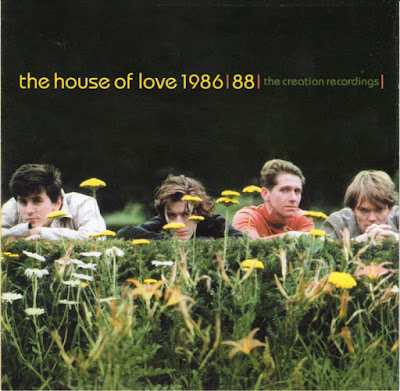
Guitar pop -- British or otherwise -- was nearing wasteland status when the House of Love debuted with "Shine On" in the spring of 1987. The Smiths and Hüsker Dü were months away from their respective breakups, Echo & the Bunnymen were about to issue their less-than-great self-titled album, and the Go-Betweens were flirting with yuppiedom. Aside from the short-lived, often-gutless C-86 scene and the then brilliant Jesus & Mary Chain, the House of Love really didn't have that much competition. It's almost as if the bands that influenced them subconsciously faded to give them the much-deserved spotlight. Now that over a decade has passed since the release of the material collected here -- everything they released on Creation, meaning 1988's self-titled debut and four singles racked with lithe greatness -- those who claimed the band's popularity had to do with their existence during a dry era can finally be silenced. Why, you ask? Because most everything here smacks violently of timelessness. "Christine," the penultimate combination of gorgeously spectral pop and noise, still sounds every bit spectacular, as if the eras of acid house, shoegaze, grunge, Brit-pop, post-rock, etc., have done nothing to erode its effect. That song alone should be as well-known as "Light My Fire" or, at the very least, "How Soon Is Now." Without a doubt, time has been extremely good to this era of the band, who, after 1988, was on the brink of leaving Creation for Fontana following a legendary bidding war. While Chadwick's boastfulness didn't help things, his band wasn't the group of underachievers many would like to say they were. Not a bit. If they were in fact underachievers, it was because not enough people bought their records when they were first released. Behold, for here is your penance.
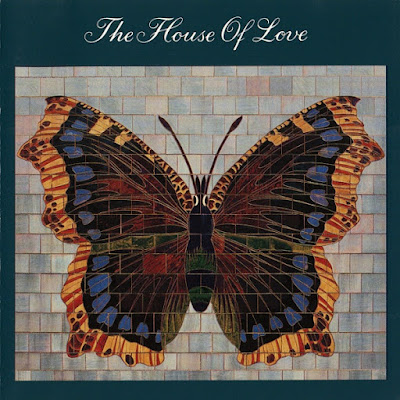
Following the combination of indie success and massive hype leading up to the band's first album proved to be too much for the original lineup, with Bickers leaving after a series of problems and pressures once the group signed to Fontana. Yet rarely has a fraught series of recording sessions resulted in something so flat-out stunning. The House of Love's second self-titled album in a row -- third counting the German singles comp -- remains something of a high-water mark in what can loosely be termed U.K. post-punk music, acting as an effective final statement before the onslaughts of Madchester, grunge, and Brit-pop. It's almost impossible to tell who is more responsible for what on the album, given its stitched-together nature, but whatever Bickers contributes matches Chadwick's cool but never cold performances note for note, and the result is deep blue rapture. Starting with the snaky crawl of "Hannah," sidling in over a series of echoed guitar notes, the 12-song collection does everything from revisiting past heights to scaling new ones. "Shine On" gets re-recorded in an arguably much more powerful performance, Evans' drums and Bickers pounding away out in front, while one early B-side, "Hedonist," is turned from a light acoustic number into a evocative modern blues. Another, "Blind," is changed very little, its simple fragility still holding a soft sway. Everything else is new and quite often stunning, building on the combination of power and emotion from the first album perfectly. "I Don't Know Why I Love You" remains the group's definitive single, three and a half minutes of romantic angst matched by a fiery, perfectly arranged performance. "Beatles and the Stones," meanwhile, far from being a nostalgia piece, refers to the bands in question as "[making] it good to be alone," with a rich, melancholic acoustic performance to boot. Add in the fiery performances on songs like "32nd Floor" or "In a Room" and the result is a true lost classic.
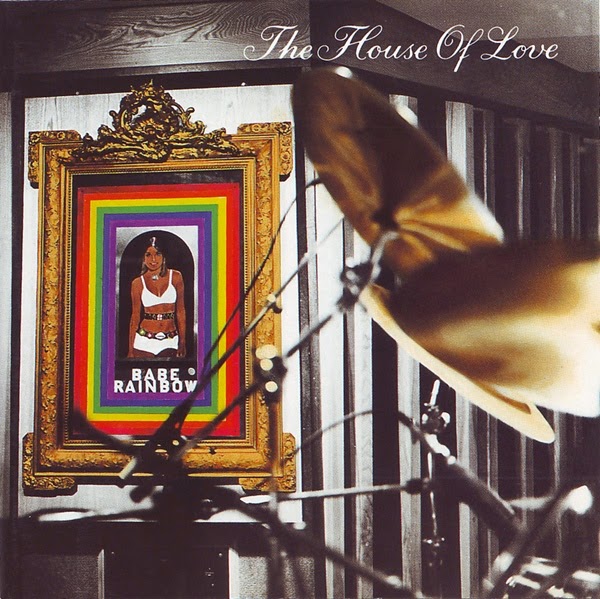
If I were to ask you, really quick, to name five great alternative guitar-pop bands: yes, yes, yes, yes, and yes. All of you are correct. But I’m going to go out on a limb and guess that none of you included Britain’s House of Love on your list, which is too bad. The Guy Chadwick (guitars, vocals)-led band, other than The Smiths and The Church, might just be the best of the lot, The House of Love formed in the mid-1980’s in London, and despite label and personnel problems, developed quite a following in Europe thanks to a shimmering guitar sound that even sometimes had a bit of a bite. After some infighting that led to lead guitarist Terry Bickers’ departure to form the underrated Levitation, Chadwick solidified his lineup (drummer Pete Evans, bassist Chris Groothuizen, and guitarist Simon Walker,) and set about creating a serious string of top-notch, near-perfect guitar-pop records (there are pretty much three debut albums, which were available depending upon which country you lived in, and their second “album” was an album of outtakes and alternate takes, a panic move by Fontana, their record label. Despite the confusion, Chadwick and company soldiered on, eventually releasing 1992’s Babe Rainbow, which pretty much defined the House of Love sound that began on (for some, at least) their 1990 Fontana self-titled initial offering (often referred to as “The Butterfly Album.”) Babe Rainbow is pretty much a near-perfect album (ok, there ain’t one single misstep on the entire record, other than that a few songs sound similar--yes, it’s that good.) Except that “You Don’t Understand” probably threw listeners that were used to perfect pop songs such as “Shine On” for a bit of a loop. Musically, it’s as aggressive as the band’s lyrically-brilliant “I Don’t Know Why I Love You,” although angrier, only with one of alternative music’s all-time great dance backbeats (the drums and bass are fantastic and are perfect for getting your dance groove on--how danceable? Even more so than The Smiths’ “How Soon is Now?”) It’s every bit as perfect as “Shine On,” only amped up to the bejezus belt in terms of guitar-pop. It’s one of the great alternative tunes that you’ve likely never heard. Don’t worry, though, the band settled back into “beautiful shimmering guitar-pop” with “Crush Me,” a gorgeous mid-tempo tune that, as if the guitars weren’t enough, adds some lovely keyboards to keep things interesting. “Cruel,” meanwhile, while it sounds somewhat similar to “Crush Me” at times (other than the lack of keyboards,) is yet another perfect pop tune, building to a crashing crescendo full of loud guitars and some damn heavy drumming (and Chadwick has a very pleasant voice that tends to fit perfectly with the song at hand, all of which makes for some very listenable stuff.) “High in Your Face,” meanwhile, is very bass-heavy with soaring vocal harmonies and layers of subtle guitars that makes for a song that would fit on any House of Love album (if nothing else, these guys were hella-consistant.) “Burn Down the World,” on the other hand, is “dark” without actually being “dark” (credit Evans’ drumming, which sets the tone for the entire thing, and there are guitars coming in from all over the damn place, all of which perfectly fit the mood.) Like “Cruel,” this thing builds and builds, except there’s really no payoff, it just builds to a fittingly gloomy ending. And yet, thanks to the multi-layered guitar thing going on, shimmers almost as much as “Crush Me,” even if it sounds nothing like it. And “The Girl With the Loneliest Eyes” is a sad mid-tempo acoustic guitar-dominated ballad with a beautiful electric guitar section ( and just check out that very brief acoustic solo, which doesn’t overstay it’s welcome at all but maybe should have.) This is a guitar-heavy track and should be revered as such, despite it’s ballad-nature. I mentioned, earlier, The Smiths and The Church. The House of Love should have occupied the same stratosphere as those (in alternative circles) legendary acts. As it is, you can get Babe Rainbow and blow everyone’s minds with how good it actually is. If you dig alternative guitar-pop, this is one that your collection is sorely missing.