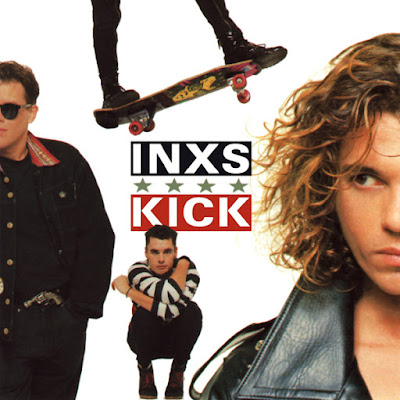
The Australian band INXS reached their absolute commercial peak with the well-crafted pop/rock/dance album Kick in 1997. This was the band’s sixth overall studio album since 1980 and marked a distinct migration from their New-Wave roots towards a more funk and soul oriented refinement of late eighties pop. It yielded four Top Ten hits, more than any other album in their career. The album’s sound was perfectly in sync with the visual media and the image forged by iconic front man Michael Hutchence which, in turn, also translated well into the non-visual radio and dance club formats. It ultimately transformed the band from the status of an alternative niche to that of a mainstream pop headliner, a status which they maintained well in the 1990s.
Produced by Chris Thomas, the album was initially rejected by Atlantic records who felt the funk and dance elements would alienate INXS’s traditional rock following. They were reportedly offered $1 million to “go back to Australia and start again” but the band persisted in sticking with their plans and the label eventually relented.
The result is amazingly accessible while still maintaining a level of originality from track to track, with each song possessing a different feel from the one previous. Still there are some common elements throughout, especially the simple, direct, and upfront drum beats of drummer John Farriss and the unambiguous guitar riffs forged by brothers Andrew Farriss and Tim Farris. This mixture proved to be a winning formula which the band soon rode to international stardom.The drum infused, monotone “Guns In the Sky” starts the album off, complete with opening grunts by Hutchence. The song barely leaves the repetitive, two-chord structure but sets up as a nice contrasting intro for the subsequent, more melodic pop song “New Sensation”. The first of several funk-infused rockers on Kick, “New Sensation” is a fun ride led by a twangy and flanged guitar riff and containing some direct, shouting vocals and well-timed breaks for effects.
The album then moves to a dance oriented semi-suite which contains some of their most popular songs ever. “Devil Inside” is a cool and riff-driven tune with dynamic vocals in both range and style. The lyrics are sexually-fused and nicely complimented by the crisply distorted guitar riff, which cuts through the otherwise smooth sound scape. The song eventually builds towards a strong, climatic ending with building keyboard presence by Andrew Farriss. “Need You Tonight” continues the same general theme and feel, while adding a bit more funk in it’s constant, rotating riff. A well arranged song with overlapping elements, each catchy and memorable in its own right, which helped to make this the band’s top overall hit. “Mediate” is an interesting extension to “Need You Tonight” with a droning rap set over a constant beat and sunrise key pad, before finishing with a well-placed saxophone lead by Kirk Pengilly. Each of these songs contains strong video counterparts, with “Mediate” intentionally replicating the format of Bob Dylan’s classic video for “Subterranean Homesick Blues” right down to the point of apparently deliberate errors.
The sides are bookmarked with strong but middle-of-the road tunes. “The Loved One” has elements of blue-eyed soul with a more modern 1980s arrangement and beat, which gives the impression it could have been a hit in its own right. “Wild Life” is another funky song with a good pop hook and an anthemic vocal hook.Never Tear Us Apart”. Driven by fast strings and accented by strategic rests, this song stands out from the band’s other radio hits as a brilliantly composed ballad, complete with counter-harmonized backing vocals and a Pengilly sax solo that doesn’t sound like it was put there just to satisfy some formula. This song proves that the band can, in fact, succeed by stretching the limits of their musical scope.
The album concludes with a series of less popular yet very strong songs (there is no filler on this album). “Mystify” is an upbeat swing tune, which is held down to earth by the rock guitars and drums. The title song “Kick” features 1960s style, soul-rock with liberal use of horns throughout and a great driving bass by Garry Gary Beers. “Calling All Nations” returns to the funk formula driven by bright guitars and “Tiny Daggers” is pure 80s pop, keyboard led with slightly interesting vocals.
In total, Kick did just about everything you can expect from a high-end pop/rock album of the 1980s. It forged incredibly catchy and modern sounding songs, while not giving way to the mind-numbing, formulaic trends on many contemporary artists of the time.
From the vantage of 2001, the year Rhino released the double-disc retrospective Shine Like It Does: The Anthology (1979-1997), it's a little hard to believe that the Australian sextet really rivaled U2 for popularity in 1987/1988, when Kick worked its way to multi-platinum global success. At the time, they belonged next to the likes of U2 and R.E.M., two post-punk legends that worked their way into the mainstream because they were a quintessential college rock band of the '80s, thrillingly balancing style with substance. This, of course, means that they can still sound tied to the times, but that's leavened by their heritage as an Australian rock band -- which means no matter how stylish they got, they could still rock really, really hard. Unfortunately, at the height of their popularity, they made records that camouflaged their raw talents with synthesized bass and drums, which is what rock bands did in the late '80s. And, throughout their career, INXS did tend to favor the sounds of the time, whether it was the angular new wave of Shabooh Shoobah, the evocative Listen Like Thieves, the Stonesy funk of Kick, or the alt-rock explorations of Welcome to Wherever You Are. This can make Shine Like It Does sound a bit like a music travelogue of its time, especially because its 42 songs do have their fair share of songs that seem like filler, but what stands out when the collection is finished is how damn good INXS was when it all clicked. That could mean such new wave classics as "The One Thing," "Don't Change," or "Original Sin," the college rock staples of "Kiss the Dirt (Falling Down the Mountain)" and "Listen Like Thieves," or such mainstream breakthroughs as "What You Need," "Need You Tonight," "Devil Inside," "New Sensation," "Never Tear Us Apart," "Suicide Blonde," and "Disappear." And it didn't stop there, either, because such latter-day songs as "Heaven Sent," "Not Enough Time," "Beautiful Girl" and "Elegantly Wasted" may not have been big hits, but they did hold their own against those hits. All these are here, along with some rarities, album tracks, and quasi-rarities, such as the Jimmy Barnes duet "Good Times" from The Lost Boys soundtrack and a number of remixes and single edits, giving this a reason to spread out over two discs.
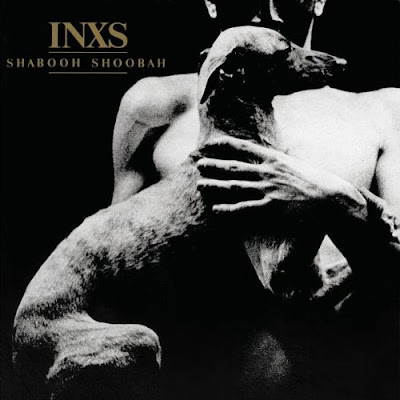
Shabooh Shoobah is an example of a talented bunch of performers still finding their own identity. There's a smart, slick punch to the album that suggests late-period Roxy Music crossed with a younger, brasher energy, which perfectly explains the sly grooves of songs like "To Look at You" and "Here Comes." It's all very pleasant and a good listen, with all six performers showing the skill and energy that made their live reputation so strong at the time, but mostly the songs aren't really anything deathless. The truest highlights were at the start and end, with the group creating not one but two hands-down early-'80s rock classics that stand the test of time. "The One Thing" is a great way to start, a strutting number that gives Hutchence a real chance to shine as a singer, strong and commanding, while the combined synth/guitar/sax hook that drives the song is instantly memorable. But if "The One Thing" is grand, "Don't Change" is just flat out fantastic, one of the best album closers ever dreamed up. Soaring in on a just dreamy enough synth line from Andrew Farriss and then a quick guitar burst, the rest of the band then explodes into action -- it's some of the best rock-without-apology-or-quotes sound anyone could ever hear, crisp, fierce, and clean. Hutchence takes charge of that action like the vaunted frontman he was, delivering one of the more cryptic but still just right romance lyrics from that time with aplomb and fire. The chorus is simply killer, while the concluding, extended calls of the title phrase over the song's last notes make up the icing on the cake.
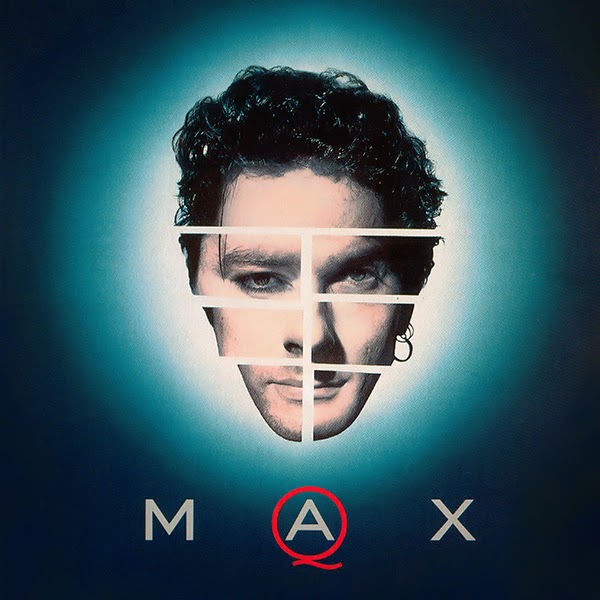
In 1989, an interesting change of pace for watchers of INXS came in the form of a collaborative album involving Michael Hutchence and Ollie Olsen. Olsen, ex-Whirlywirld mastermind, and a Melbourne-based musician and DJ of some repute, had worked with Michael on music for the Richard Lowenstein film Dogs In Space a couple of years before, and scored an Australian hit with the alluring track 'Rooms For The Memory' (from the film and soundtrack LP). Dubbed Max Q (after Ollie's dog of the same name), the band consisted of mainstays Olsen and Hutchence with an attachment mob of musicians drawn from the underground scene.
Held in high regard by fans and critics alike, but unsuccessful commercially, Max Q is a remarkable album indeed. Considered ahead of its time upon release and now out of print (when it could be most appreciated); Max Q deserves some long overdue attention. Constructed around Olsen's hybrid electronic song structures, Max Q explodes with invention at every turn. 'Sometimes' and 'Way Of The World', both featured tracks on the album, bristle with a vibe of punk/agro meets disco/house splendor - an area bands like Depeche Mode and Massive Attack have explored in depth. Jittery guitars clash with looped percussion attacks, and Michael's raging vocal workouts head butt powerful orchestral flourishes and the odd sonic bleep. There's a lot of raw noise going on here, but some of it is certainly beautiful - i.e. 'Monday Night By Satellite' and 'Ot-Ven-Rot'. Faint traces of Talking Heads, Eastern influences and the specter of Barry White also frame this exciting music.
Before the release of the album the Australian master tapes were taken to New York City to be given a further polishing in the mix department by genius musical innovator Todd Terry from Chicago. A famous DJ who is one of the founding fathers of House music, Terry worked on the album and the attendant remixes (issued as b-sides and bonus tracks around the world). Michael and Ollie accompanied the movement of the music to NYC, and rooming together on the upper west side of town, finished the record and set plans and strategies into place for its release, promo and publicity.
Upon release, Max Q would go through the Atlantic (WEA) pipeline stateside for the albums distribution, Mercury in the UK and Europe, and CBS/Sony in Australia. Coming on the heels of INXS's triumphant KICK album and tour didn't hurt, but also did not guarantee attention in the marketplace or translate to sales necessarily. Both of those areas suffered as far as Max Q was concerned - not for lack of trying though. With an intriguing Richard Lowenstein concept video for 'Way Of The World', and a mad dancing workout performance clip for 'Sometimes', exposure on music video channels globally was assured. Another little-seen (but highly innovative) video for third single 'Monday Night By Satellite' was also created and issued in some territories outside the US. Sadly, Max Q was doomed without 100% commitment from all participants (musicians, managers, etc.) and enough touring to make a difference (there were no Max Q live dates).
In the context of INXS, Max Q draws insights into Michael's musical leanings away from the powerful funk/rock super band. An artistic triumph, the special album project established Michael Hutchence as no mere 'hood ornament' fronting a globe-trotting pop group (witness his understated presence on the mosaic-like cover image and associated band photos). This was not a typical vanity trip by a rich rock star and his cronies by any means - quite the opposite. Even the provocative shearing of his golden locks into a smart "short, back and sides" cut further distanced the Michael of Max Q and INXS.
In hindsight, Max Q proved to be a worthwhile side project that had a positive creative impact on INXS when they reconvened to record X in 1990, and future recordings throughout the next decade. One can hear the Max Q influence on INXS in songs such as 'Faith In Each Other', 'Strange Desire', 'The Gift' and 'She Is Rising'. Interestingly, the b-side to the band's very next single, 'Suicide Blonde' (after Max Q was released), a sassy track called 'Everybody Wants U Tonight' by Jon Farriss, bears a strong likeness to the Max Q material, showing that Michael was not the only one exploring new musical areas within the band at this time.
A must-have item in any comprehensive INXS collection, Max Q also connects in a very linear way with the Michael Hutchence solo album released in 1999 (U.S., 2000). Though Ollie Olsen is not part of that new album's makeup, the style is similar in its assimilation of current left-field influences and odd recording approaches and performances. The biographical aspects of both records cannot be ignored either. 'Possibilities' from the posthumous solo album echoes sentiments of 'Concrete' from Max Q, and so on. In essence, Max Q was Michael's first solo album, but to his credit he went to great lengths to establish it very much as a freestanding band apart from 'Michael Hutchence of INXS,' allowing for the project to stand or fall on its own merits.
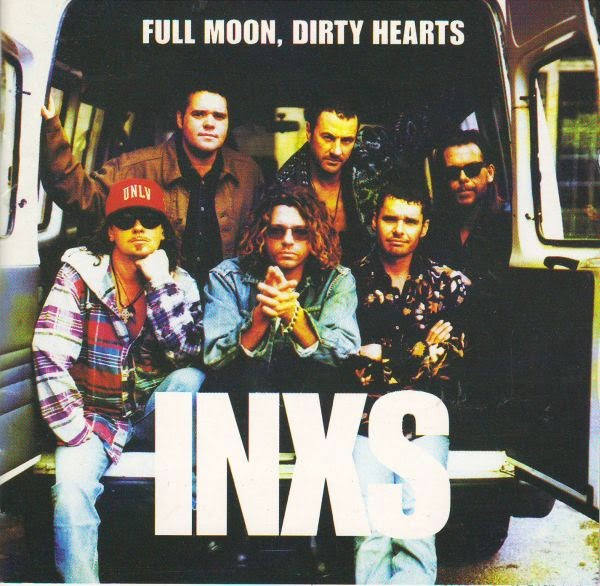
INXS is one of those rare bands who has proved their staying power album after album and tour after tour,With their tenth album, Full Moon, Dirty Hearts, the band doesn't stray too far from the formula that has brought them fame and fortune throughout the world. Their combination of straightforward rock with an R&B flavor—not to mention lead singer Michael Hutchence's undeniable charisma —has brought the formerly struggling Australian band this far, so why mess with success? However, this is not to say that Full Moon, Dirty Hearts isn't a few solid steps forward —both musically and artistically. Tire album definitely rocks. This is perhaps due to the environment in which it was recorded, on the secluded Isle of Capri. Hutchence stated, "It was the kind of atmosphere that we hadn't had in a while—all of us living together. It was very immediate. We could really get things done." Get things done indeed. With the exception of a couple songs ("Freedom Deep" and "Kill the Pain"), INXS get back to their raucous roots on their new album and deliver the highenergy sound, combined with skillful production, that gives the album an extra kick that was missing from their earlier releases, particularly 1990s X. Full Moons, Dirty Hearts is full of great songs, but things really come together on "Please (You Got That...)," a funky duet with Ray Charles. Hutchence and Charles get so down and dirty on this one that the testosterone is almost visible. Other standouts include "Make Your Peace," a radiofriendly track with addictive hooks, and "Viking Juice," which capitalizes on Hutchence's cool and haunting voice that was just made for the spoken word. "The Messenger" is another winner, and as keyboardist Andrew Farriss commented, "was done under reasonably salubrious circumstances in Michael's house." The result is an album that showcases the group's individual strengths. Bassist Garry Beers and drummer Jon Farriss combine to provide the pounding backbeats that power every song, while Tim Farriss, Kirk Pengilly and Andrew Farriss shine as well (although Kirk Pengilly's saxophone talents could have been displayed to a greater extent). On Full Moon, Dirty Hearts, INXS comes full circle, retaining the roughness of their humble beginnings, while taking advantage of the production resources now available to them. This is nowhere better stated than on the track "The Messenger," where Hutchence declares, "Look around/ Give your eyes a new adventure/ What we see/Is a mix of past and future." INXS
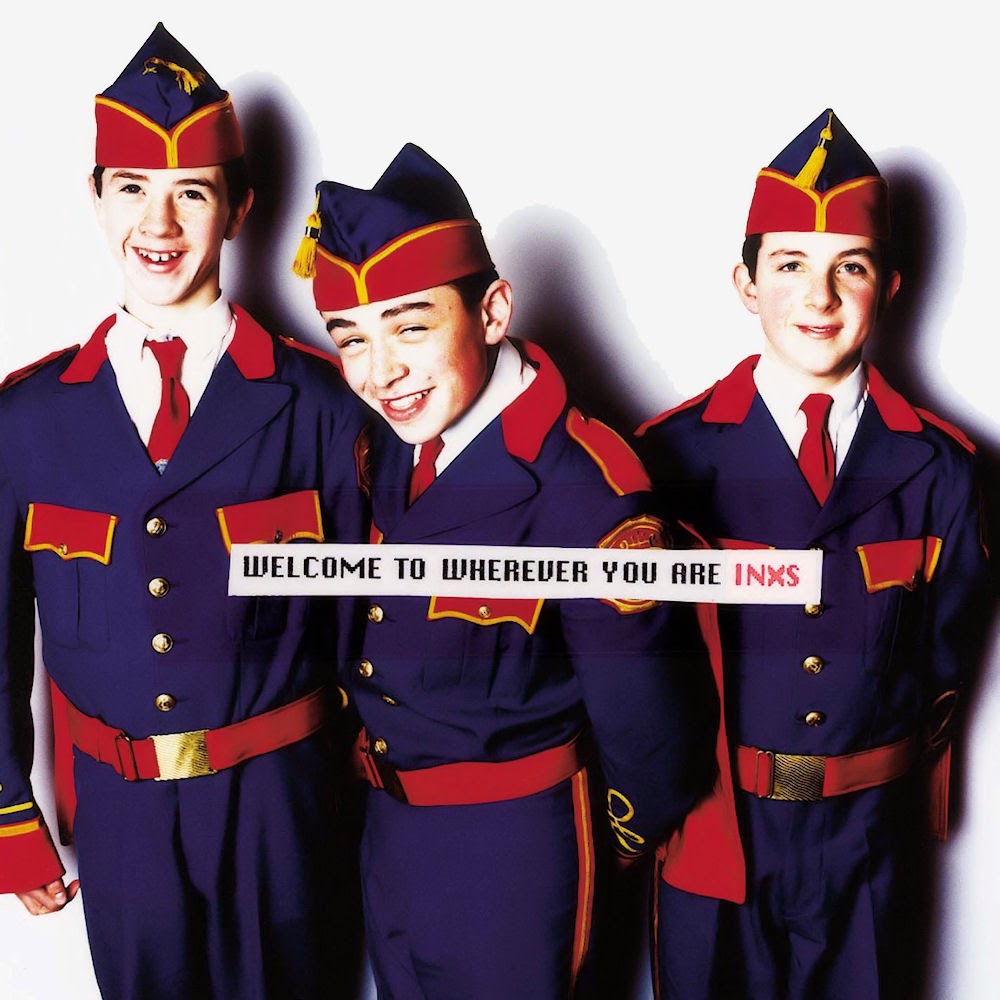
Kick was a great album, but very much a Faith, or Born In The USA, a runaway train of an album. After experiencing some diminishing returns with the more-of-the-same follow-up X (1990), they wisely decided that a new approach was needed for the next album. With a new producer, Mark Opitz, on board and the sound of Achtung Baby ringing in their ears, INXS were about to produce their most adventurous, and creatively successful album of their career. Like U2 with Achtung Baby (an easy, but appropriate comparison), Welcome To Wherever You Are was an attempt to deconstruct the band’s sound, and rebuild what INXS had to offer, as something fresh, new, and exciting. Bored of stadium rock, the new album would contain pulsing beats from the dancefloor, clever use of percussion, horns and orchestration and even some eastern influences thrown in for good measure. The willingness to change the sound and production of their music was always going to make for interesting listening, but the real success of Welcome To Wherever You Are lies with the quality of the songs. The album really doesn’t contain a weak track and is sequenced brilliantly from the curveball opener that is the sitar and tabla-backed Questions, to the chilly finale of Men and Women. Taste It, Communication, Not Enough Time, Baby Don’t Cry… so many incredible songs, but each with their own identity and sound, from the classic, breezy pop of Beautiful Girl to the only real ‘rock’ moment, Heaven Sent. Everything is performed with such conviction and nothing is predictable or pedestrian. There are delights and surprises all over the record and it is no exaggeration to claim this is one of the very best rock/pop albums of the 1990s, it really is that good. One wishes this album had been a cheeky follow-up to Kick, because INXS had the world at their feet at that point. Instead, five years down the line, and a moderately successful follow-up in between, their audience had shrunk somewhat, and, particularly in the US, they simply failed to ‘get’ Welcome To Wherever You Are. Grunge ruled, and the album was probably in the wrong place at the wrong time with its adventurous sonic textures and ‘anything goes’ attitude. The band also chose not to tour the album, feeling as if they needed a break after some punishing schedules from the previous two records. Probably costly, in terms of US promotion and exposure. In Europe, and particularly the UK, things were quite different. Not only did Welcome To Wherever You Are top the UK album chart, but such was the popularity of the record that five singles were released from it.