Something really unique and tre cool to share with all of you this fine morning, courtesy of my equally pop-culture obsessed colleague Kevin Maher of Kevin Geeks Out fame. So sit back and marvel at this video concoction, combining death scenes from 36 different Alfred Hitchcock films--all synchronized to climax at the same moment. Beautiful, chilling and utterly jaw-dropping...
Showing posts with label Alfred Hitchcock. Show all posts
Showing posts with label Alfred Hitchcock. Show all posts
Tuesday, March 8, 2011
Friday, June 25, 2010
Psycho Semi-Centennial: The Movie That Changed Everything
As bizarre as it always seems to me, up until Psycho it was common practice for moviegoers to enter at any point during the movie, and stay into the next showing until they got up to the part they walked in on. This disjointed practice went out the window thanks to Hitchcock's vehement insistence that people come in at the start of the movie for the full effect. When they did so, resulting in lines around the block thanks to everyone arriving at the same time, they understood why.
First Flush
This may seem like a trivial matter to many post-modern viewers, but Psycho was the first American film in history to depict a toilet being flushed. Granted, it was only Marion disposing of her note, and not dropping a deuce, but this was a historic moment nonetheless, and encapsulated the frank, realistic tone Hitchcock and his screenwriter Joseph Stefano were going for. In fact, Stefano was adamant that a flushing toilet be shown for this very reason, and wrote the scene specifically so it would be integral to the plot.
Following, as it did, on the heels of the somewhat conservative (on the surface, at least) 1950s, Psycho's shower scene was shocking not just because of the violence, but because of the sheer amount of bare flesh on display. Both Janet Leigh and her body double show off quite a bit for the time, and it reportedly put censors--and more dour film-goers--into a tizzy. While still nothing beyond a PG-13 by today's standards, it was certainly pushing the envelope for a mainstream American film, and to this day viewers argue over how much was actually shown--a testament to the editing skills of George Tomasini.
No One Is Safe
Psycho sees its central protagonist, the character is which the audience has invested all its attention and interest, killed off roughly halfway into the movie. This was unheard of, and literally threw all traditional standards of cinematic storytelling out the window. If the main character could die so soon, all bets were off. Anything could happen. Viewers knew they were experiencing something truly new.
To give you an idea of the level of censorship common at the time, the MPAA took issue with the word "transvestite" being used in the film's epilogue scene. Psycho deals with sexual subject matter in a manner that was very frank and open. Even from its opening scene, showing Marion and Sam enjoying a nooner in their little love nest, Psycho pushes the boundaries. Then you have an antaganist--Norman--whose entire character revolves around psycho-sexual issues. The whole speech given by Dr. Richmond at the end, though admittedly a bit forced and tacked-on, was a somewhat shocking explanation which took some of the more sheltered moviegoers of 1960 into territory they would have been far less familiar with than the average viewer of today.
Mother, Blood!
Hammer Films may have popularized blood in horror with their technicolor '50s spectacles, but Psycho was a mainstream Hollywood A-movie showing it, which was something entirely different. One of Hitchcock's reasons for filming in black and white was to make the gore of the shower scene more acceptable. But the sight of that Bosco syrup pouring down the shower drain helped prepare American audiences for the copious showers of red stuff to come in the future of the horror genre.
Musical Minimalism
The score of Psycho is one of the movies' most memorable thanks to the genius of Bernard Herrmann. Up to then, most Hollywood productions featured epic scores performed by vast studio orchestras, but Hermmann insisted on a pared-down, strings-only score performed by a small group of musicians. And although the John Williams-era of the late '70s brought back the epic score to a degree, the Psycho influence is still felt.
Big Screen/Little Screen
During the '50s, the movie biz did everything it could to compete with the introduction of TV. This usually involved going as big and bold as possible with things like widescreen and 3-D, showing all the things that TV didn't do. Hitch's genius was to go in the other direction. Thanks to his own TV show, Alfred Hitchcock Presents, the director gained an appreciation for the sparse, basic, low-budget style of TV film-making, and adapted that to the silver screen, bringing a bare-bones sensibility to Hollywood.
Though not the first horror movie to feature a non-supernatural villain, Psycho certainly set the standard to come, and changed the course of the genre in the process with its depiction of a "real" human being as the threat. Monsters were the order of the day up to that point in time, but Psycho showed that reality-based horror could work--that the creepy guy next door could potentially be far scarier than vampires or werewolves. And although Psycho may not technically be a slasher film (debatable), it certainly set the stage.
Friday, March 26, 2010
Psycho Semi-Centennial: The Underrated Genius of Saul Bass
Let me take you back to the days of the cut and paste board, and the color wheel; when miracles could not be accomplished with a keystroke. Don't get me wrong, I have great respect for artists and what they can accomplsih with the tools currently at their disposal. But I lose a bit of awe watching giant 3-D letters float above the NYC skyline when I know my nephew probably has a halfway clever friend who could do the same thing on his Macbook.
An accomplished visual designer, Bass was responsible for the unforgettable opening title sequence of Psycho. A longtime Hitchcock adviser, he had also done titles for Vertigo and North by Northwest previously. More than just a titles designer, his graphic abilities were put to use by Hitchcock in the design of storyboards and even shot composition. Only a few years into his career by Psycho, Bass would go on to design stunning opening sequences for decades to come. But Psycho would remain his best known work--an urgent, hypnotic, brilliant set-piece that instantly sets the tone for a cinematic classic.
In fact, Bass would become known for his ability to do exactly that, to let the viewer know just what he or she was in for. If you've never seen them before, his credits for Psycho grab you from literally the first second the film unspools, and positively demand that you give yourself over to the rich tapestry of intrigue Hitchcock is about to present to you. With Hermmann's unmistakable strings pulsing, screeching and lilting menacingly behind it, Bass' opener throws a series of spiraling linear shapes and interlocking words our way, and right off the bat we're sent into a state of tense confusion.
Following Psycho, Bass was tapped for the title credits to such '60s favorites as the original Ocean's 11, Exodus and the beloved film adaptation of Leonard Bernstein's West Side Story. His opening for Stanley Kramer's It's a Mad, Mad, Mad, Mad World are especially memorable, showing he could employ the same kind of energy and movement to inspire hilarity as well as he could tension.
Saul continued to work his magic in later decades, including title credits for another horror classic, Ridley Scott's Alien. In the '90s, he fell in with Martin Scorsese, providing credits for Goodfellas, Cape Fear and The Age of Innocence. In fact, his last project was Scorsese's Casino, which he completed a year before his death in 1996.
Psycho, needless to say, provides many reasons to love it, and to take it with you always. The riveting performances of Anthony Perkins and Janet Leigh. Herrmann's score. Hitch's pacing, sense of suspense and overall genius. But whether you realized it or not, another important reason why you love Psycho is the work of Saul Bass--a visionary in the truest sense of the word.
Friday, March 12, 2010
Psycho Semi-Centennial: A Fella Named Arbogast
When one looks at the breadth of his prolific career, it becomes easier to understand why Balsam may have had mixed feelings about Psycho. The role of Det. Arbogast may have made him a household name, but there was far more to Martin Balsam than just that gruff, ill-fated private investigator.
He was born Martin Henry Balsam on November 4, 1919 in the Bronx, the eldest child of a women's sportswear manufacturer. Acting was an interest from very early on, with young Martin joining the drama club in high school, and going on in 1938 to enroll in Manhattan's progressive New School, where he studied dramatics. As with many who aspired to great things in those days, Balsam's aspirations were put on hold after graduation, when he served out a stint in the Army Air Corps during World War II.
After the war, Balsam got down to the business of making some headway in the New York acting world. While working as an usher at Radio City Music Hall, he managed in 1947 to land a spot in Elia Kazan and Lee Strasberg's prestigious Actor's Studio, where he would be instructed in the Stanislavsky method. Balsam would eventually be one of a veritable legion of method actors to wash over Hollywood in the following decade.
But first he had to prove himself. He suffered through a string of Broadway flops in the late 1940s, before finally scoring a hit in 1951 with Tennessee Williams' The Rose Tattoo, in which he appeared alongside Maureen Stapleton, Eli Wallach and Sal Mineo. This led to a number of TV appearances, until in 1954 Balsam made his big-screen debut in Kazan's On the Waterfront, co-starring with fellow method disciples Rod Steiger and Marlon Brando.
But it was one of those TV roles in particular that may have made all the difference for Balsam's career. In 1958, he starred in an episode of the mystery series Alfred Hitchcock Presents, in which he plays a cuckolded husband who seeks a violent revenge. Balsam was officially on the radar of the series' famous creator, and when it came time to cast one of the crucial supporting roles in his next thriller, the director remembered his earlier TV star.
Balsam was pretty much the most established actor in the film, and his character is notably the only other victim of Norman Bates aside from Janet Leigh herself. And in the end, there is a powerful sense of loss created when we watch him meet his doom after so closely following him along every step of his meticulous investigation. In a way, it reminds me very much of this poor gentleman:
Psycho made "the Bronx Barrymore" a much more recognizable star, and during the 1960s, the movie roles came more frequently. He followed up Hitch's picture with an appearance alongside Audrey Hepburn and George Peppard in the beloved Breakfast at Tiffany's (1961). He appeared with Robert Mitchum and Gregory Peck in the original Cape Fear (1961)--the trio would all turn up some 30 years later in Martin Scorsese's remake. The Carpetbaggers (1964) brought him major critical acclaim. Then, in 1965 his turn in the screen adaptation of A Thousand Clowns earned him not just acclaim, but also the Academy Award for Best Supporting Actor. It would be the critical highlight of his career.
It would also be during this decade that Balsam began taking roles overseas in Italy. For whatever reason, he came to be in demand by Italian filmmakers, and would continue traveling there to take on film roles for the remainder of his film career. It engendered a true love for the country that would also continue for the remainder of his life.
In fact, a dozen Italian films followed in the 1970s. Balsam was also one of Hollywood's favorite supporting players by this point, and he turned up in numerous iconic '70s movies, like Tora! Tora! Tora! (1970), The Taking of Pelham One Two Three (1974), Murder on the Orient Express (1974) and All the President's Men (1976).
In 1990, Balsam returned to the horror genre with an appearance in the George Romero/Dario Argento collaboration Two Evil Eyes. The film was originally intended to be a TV series based on the works of Edgar Allan Poe, but the production was canceled after only two episodes were made, and so it was re-edited into a feature film. Balsam starred in the second, the Argento-directed The Black Cat, in which he appeared with Harvey Keitel, John Amos and Kim Hunter.
Despite all the years since Psycho, and all the countless other parts, it would still be Det. Arbogast for which he was best known, right to the end. One of his final roles, in fact, had come in the abysmal 1994 spoof The Silence of the Hams, in which he played "Det. Martin Balsam", an obvious parody of the Arbogast character.
Balsam's contribution to Hitchcock's classic film is a large one. It may have been just one job in a sprawling career in theater, cinema and television--but what a job it was. If you're going to be remembered for a single role, you can do a lot worse than have it come from one of the most popular and important motion pictures ever made.
So in honor of the Psycho Semi-Centennial, The Vault of Horror salutes you, Martin Balsam--and for the record, we're very glad you fell down those stairs.
For more Hitchcock goodness, check out yesterday's post on Hitch cameos. Plus, go take a look at a damn fine blog whose very title was inspired by the good detective--Arbogast on Film!
Thursday, March 11, 2010
The Many Faces of Alfred Hitchcock
"Where's Alfred?": Hitch Cameo Edition!
Immense thanks go out to Andre "Don't Call Me Alexandre" Dumas of The Horror Digest for both suggesting this idea, and arduously collecting all the DVD screen grabs! Please visit her blog immediately and often, and comment vigorously.
* * * * * * * * * *
And on a side note, Day of the Woman's BJ-C and myself were featured guests last night on the premiere edition of Heidi Martinuzzi & Stacie Ponder's new podcast, The Scare-ening! Take a listen here and partake in the hilarity.
* * * * * * * * * *
And on a side note, Day of the Woman's BJ-C and myself were featured guests last night on the premiere edition of Heidi Martinuzzi & Stacie Ponder's new podcast, The Scare-ening! Take a listen here and partake in the hilarity.
Friday, January 22, 2010
Psycho Semi-Centennial: This Movie's for the Birds
Let me explain. I won't be the first one to break any new ground here, as anyone who's ever taken a rudimentary film course is likely to have come up against this interesting phenomenon. Nevertheless, I've always been fascinated by it, and figured this would be the perfect opportunity to expound upon it. What I'm talking about is Hitchcock's very apparent avian obsession. Because there is a bird motif about a mile wide running through his 1960 masterpiece.
Hitch was a master of symbolism, and he weaves it all in with great dexterity, but it's there--watch the flick closely a couple times and the bird imagery will start hitting you in the face like guano from the sky.
Let's break it down, shall we?
- The opening shot of the film appears to occur in mid-air, as we approach the window-ledge of an apartment building. Like a bird flying over the city.
Our story begins in the city of Phoenix. Phoenix, get it? The legendary bird that rises from its own ashes? Myth and folklore majors, quit looking through the unemployment section and help me out here.
- Our main character (well, until she's bumped off halfway in) is named Crane.
- This same woman is later described as "eating like a bird" by Norman Bates.
- Speaking of Norman, and this is a bit more abstract, but Anthony Perkins actually is somewhat bird-like in his physical features. I'm willing to bet this was a conscious casting criterion. (Oooh--alliteration!)
- OK, where was I? Oh, Norman. Yes, our favorite momma's boy has a creepy little hobby, doesn't he? Taxidermy! Specifically, stuffing dead birds. Many of which are birds of prey.
My favorite of all: During Norman and Marion's lunch conversation, Norman turns away from her and twists his neck in a very odd way to look up at something. The camera shoots him at such an angle that the silhouette of his neck, chin and nose actually resemble the head of a bird. Check it out if you don't believe me -------->
- During conversation, Norman mentions that his mother is "as harmless as one of these stuffed birds". Hence directly comparing her to the predators.
- Bernard Herrmann's famous score, with its instantly recognizable screeching violins, literally sounds like birds attacking. And when do we hear it most prominently? During the shower murder scene.
- And finally, what was Hitchcock's next movie? Yeah, I think you know.
And there's lots more too, including the picture of the bird that Norman knocks off the wall upon "discovering" Marion dead in the bathroom (oops, spoiler y'all! *rolls eyes*). It's all there right in front of you--birds, birds, birds. But what's it all mean?
More than anywhere else, the bird motif seems to hinge upon Norman himself. Marion may be the one with the bird name, but Norman is the one actually represented as a bird-like character. Yet, he's certainly not a mature bird--rather, he's more a child, a weak little chick, who needs to be protected by his momma, the mother bird. The mother who is not only compared to a bird, but literally stuffed like one by Norman.
This mother bird is, even after her death and living only in the mind of her offspring, out to shelter and protect him from the harsh outside world. The home, or nest, is high on a hill, elevated off the ground like an actual nest. And it's most imperative that Norman, the baby bird, be kept in that nest, that he not leave and go out into the world to become a mature adult. In this way, the bird motif serves the purpose of driving home the relationship between Norman and his mother, how it warps his development, and how it informs his sublimated murderous rage.
Just a theory, but I'm pretty convinced of it after repeated viewings. Let me know if the bird thing has ever occurred any of you as well. And if it has, what's your take on it?
Tuesday, December 15, 2009
High Anxiety, You Win: Mel Brooks' Masterful Hitchcock Spoof
To even call it a parody does it a disservice--it's actually a loving tribute, an homage. Yes, it helps to have a knowledge and understanding of Hitchcock when watching the movie, but it remains hysterically funny and very well written, even if you don't know criss-cross from apple sauce.
I had the pleasure of re-watching it again recently for the first time in many years, and I was completely taken aback by how excellent a comedy it is. For my money, it's completely at the level of the other ones previously mentioned, yet never seems to get the recognition it deserves. Some of that may be due to the fact that Brooks' other thriller/horror spoof, Young Frankenstein, is such an unquestioned classic that it's caused people to overlook this other Mel Brooks thriller comedy.
Brooks himself takes the lead role--unlike with the three earlier classics--and is a study in understated straight-man comedy as Dr. Richard Thorndyke, the put-upon new director of the Psychoneurotic Institute for the Very, Very Nervous. It isn't typical for him to play it straight, yet he does it perfectly, almost appearing to be an actual lead character from a Hitchcock film, dropped into the madcap chaos of this parody--which is exactly the point.
Then there's that classic vintage era Brooks supporting cast. The late, great Harvey Korman as the masochistic Dr. Montague; Cloris Leachman, just as terrific as she was in Young Frankenstein as Frau Blucher, here as the sinister Nurse Diesel; Madeline Kahn, who in hindsight was clearly one of the finest comic actresses of all time, as prototypical Hitchcock vamp Victoria Brisbane. These people are excellent, and all click to form one of the great ensemble comedy casts.
Brooks can be erratic with his scripts, and some of his later material in particular falls flat. Not so here. This is a comedy screenplay filled with one gem after another. Again, not as well-remembered as some other Brooks movies, but so many great lines:
"What a dramatic airport!"
"I got it! I got it! I got it!... I ain't got it."
"That kid gets no tip."
"Professor Lil' Old Man!"
"Lilolman! Lilolman!"
"I beeped! I beeped! Take me away! Take me back to Russia! Put me in irons! I beeped! The mad beeper is loose!"
"You're the cocker's daughter?"
"Are we talking about number one, or cocky-doody?"
Did I mention that, during Thorndyke's hotel stay in the movie, he is granted a room on short notice thanks to the sudden cancellation of another occupant? The occupant's name? Mr. McGuffin.
Then, of course, there are the specific spoofs, peppered throughout. After YF, Brooks made movie spoofs his bread and butter, and some would argue they got a bit stale later on. But here he truly is at the height of his powers, parodying moments from Hitchcock that are genuinely clever and laugh-out-loud funny.
The take-off on The Birds in which the avian creatures shit all over a fleeing Thorndyke may be obvious, but no more so than the campfire fart scene in Blazing Saddles--just as funny, but far more legendary. And of course, the overarching parody of most of the movie is of Vertigo, the Jimmy Stewart featuring a guy who's afraid of heights...
Speaking of this, we all know now that Brooks has an ear for music given the success of The Producers on Broadway, but it really should've come as no surprise, as the guy has composed tunes for almost all his movies. Here we also get the eminently hummable "High Anxiety" theme itself, performed by Brooks in another of my favorite scenes--in which he puts over a Frank Sinatra impression that manages to be amusing, yet not over-the-top. An extra bonus for a Frankophile like myself...
If you're like me, a Mel Brooks fan who hasn't checked this one out in a while, do yourself a favor and re-evaluate it. If you're a Hitchcock lover who's never seen it, give yourself a treat and watch it. It's one of Brooks' very best, and belongs right alongside Young Frankenstein as another loving tribute to the horror/thriller genres.
Friday, October 24, 2008
Satellite Radio Gets Into the Halloween Spirit
As a proud XM subscriber, I'll try not to be too biased here... hell, who am I kidding? Both companies are the same thing these days, and that's only going to be more and more the case over time. But in any event, Sirius XM (boy, am I having trouble getting my head around that one) is offering a whole bunch of very cool satellite programming to help you get in the right spooky state of mind.
For example, starting Sunday, Sirius serves up Scream 113, and XM offers Gore 134. Both will be "uninterrupted channels devoted to all things Halloween." That means Halloween-themed interviews and features, and on Halloween itself, 24 hours of creepy sound effects perfect for parties or trick-or-treating. Kind of like those cassettes and CDs that are always for sale at discount stores around this time of year.
 Perhaps most interestingly of all, Sirius channel 119 becomes Alfred Hitchcock Radio starting Wednesday, hosted by Hitch's granddaughter Mary Stone. It will play vintage radio dramatizations of the director's classic films, including The Birds starring Herbert Marshall and Suspicion starring Cary Grant.
Sirius 118, already a Radio Classics channel, will present the Halloween Spooktacular, boasting some of horror's all-time legends in gripping old-time radio dramas. This includes the likes of Orson Welles' Mercury production of Dracula, Boris Karloff in the Inner Sanctum Mysteries and Peter Lorre in Mystery in the Air. And of course, you better believe they'll be broadcasting Welles' 1938 War of the Worlds on Halloween, 70 years to the day from its original broadcast.
Fan-favorite XM channel Cinemagic will be turned over completely to horror movie clips and music starting tonight, so you can tune in right now. And there's plenty of other stuff going on, too: XM Kids gets into the act with "trick-or-treating music" all afternoon and night on Halloween; even XM's Hair Nation poser metal channel will be cranking out cheesy horror-themed rockers on Halloween and beyond.
But, as Ron Popeil said, that's not all. There's even more stuff going on, and it's all included on the official press release, which you can read here.
* * * * * * * * * *
The Vault of Horror continues to spread its icy tentacles across the cultural landscape, dear readers, and in the latest example, I'd like to direct your attention to my Barnes and Noble's Quamut.com, where you'll find my Halloween viewing guide to great, underrated horror flicks. It's called "How to Scare Yourself Silly", and just keep in mind that it's written for a mainstream readership--meaning not a bunch of depraved horror lunatics like all of you. So for all you cool people, many of these titles may be old hat. But hey, it helps me get credit among the "normals". So check it out.
For example, starting Sunday, Sirius serves up Scream 113, and XM offers Gore 134. Both will be "uninterrupted channels devoted to all things Halloween." That means Halloween-themed interviews and features, and on Halloween itself, 24 hours of creepy sound effects perfect for parties or trick-or-treating. Kind of like those cassettes and CDs that are always for sale at discount stores around this time of year.
Sirius 118, already a Radio Classics channel, will present the Halloween Spooktacular, boasting some of horror's all-time legends in gripping old-time radio dramas. This includes the likes of Orson Welles' Mercury production of Dracula, Boris Karloff in the Inner Sanctum Mysteries and Peter Lorre in Mystery in the Air. And of course, you better believe they'll be broadcasting Welles' 1938 War of the Worlds on Halloween, 70 years to the day from its original broadcast.
Fan-favorite XM channel Cinemagic will be turned over completely to horror movie clips and music starting tonight, so you can tune in right now. And there's plenty of other stuff going on, too: XM Kids gets into the act with "trick-or-treating music" all afternoon and night on Halloween; even XM's Hair Nation poser metal channel will be cranking out cheesy horror-themed rockers on Halloween and beyond.
But, as Ron Popeil said, that's not all. There's even more stuff going on, and it's all included on the official press release, which you can read here.
* * * * * * * * * *
The Vault of Horror continues to spread its icy tentacles across the cultural landscape, dear readers, and in the latest example, I'd like to direct your attention to my Barnes and Noble's Quamut.com, where you'll find my Halloween viewing guide to great, underrated horror flicks. It's called "How to Scare Yourself Silly", and just keep in mind that it's written for a mainstream readership--meaning not a bunch of depraved horror lunatics like all of you. So for all you cool people, many of these titles may be old hat. But hey, it helps me get credit among the "normals". So check it out.
Tuesday, July 15, 2008
Fear Invades the Living Room: A History of Horror TV, Part 1
It's an intimacy that the more communal movie experience doesn't allow (even more true in the pre-VCR age). And when it comes to a genre whose purpose it is to get under your skin, to exploit that which unsettles and frightens you, that level of intimacy is a major advantage.
Even though the phenomenon of TV didn't take root until after World War II, the concept of horror entertainment within the privacy of one's own home wasn't quite novel even then--after all, horror programs had already been a staple of radio stations going back decades. Perhaps that was why, in the beginning, horror was able to get its footing on television by drawing directly on that earlier medium.
It was Lights Out, a hugely popular horror/thriller anthology radio show of the 1940s, that was the first to make the transition. In 1946, the first of four Lights Out specials aired on American TV, the nation's first real taste of the boob tube's power to send a tingle down the spine using both audio and video components. They were followed in 1949 with a regular Lights Out series that ran for two seasons, presenting tales of the supernatural, some even based on the horror stories of authors such as Nathaniel Hawthorne and Edgar Allen Poe.
Once Lights Out was a hit, the door was open for a slew of anthology series, most based on the old radio format. In those early days, TV programmers were eager to fill their schedules with whatever they could get their hands on, and further radio adaptations such as Suspense (1949-53) in the U.S. and Appointment with Fear (1949-55) in the U.K. fit the bill. Even horror movie legend Boris Karloff got into the act with a short-lived anthology he hosted called Mystery Playhouse (1949).
Aside from anthology programming, the other distinguishing feature of horror TV in the '50s was an obvious one. After all, what easier way for content-crazed programmers to fill their slates than by showing previously released movies? B-grade horror films were among the most easily acquired, and thus soon became a late-night staple. Across the nation, hordes of "horror hosts" sprang up. These campy personalities were hired by TV stations to introduce the movies, as well provide entertaining segues to run before and after commercial breaks. The first of these was Vampira, whose 1954-55 program out of Los Angeles set the standard. Among later hosts, New York's Zacherley--"The Cool Ghoul"--was the epitome.
The biggest windfall ever enjoyed by these types of programs was the 1957 leasing to TV by Universal Pictures of its impressive library of 1930s and '40s horror classics. Packaged as "Shock Theatre", the collection of movies that included Dracula, Frankenstein, The Wolf Man, etc., managed to repopularize those moldy oldies with a whole new generation of youngsters that ate them up with relish. An explosion in monster movie popularity resulted, producing the generation that would forever after be lovingly known as "monster kids".
Nevertheless, the Americans stuck to their anthological guns. In 1959, the series One Step Beyond debuted, showcasing paranormal tales based on supposed real-life accounts. Although a well-produced program, it would be totally eclipsed by another anthology which debuted the very same season, and which ironically did take horror TV one step beyond.
Or more accurately, to another dimension. One of sight, and sound.
Other major shows:
- The Clock (1949-52)
- The Web (1950-54)
- Danger (1950-55)
- Topper (1953-55)
- The Veil (1958)
Soon to come: Part 2 - Terror Comes of Age
Saturday, January 19, 2008
The Times, They Are A-Changin': A History of Horror Movies, Part 4
Perhaps never in our history was there a time as rife with drastic change as the 1960s. Indeed, the chronology of popular culture can be divided into two periods: before the '60s, and after. 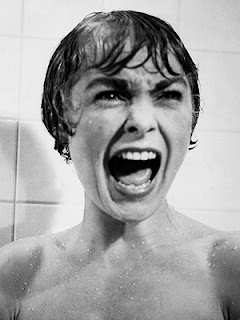
Practically every aspect of our lives were changed, owing to a variety of reasons pundits have debated about ever since: the eye-opening horrors of the Vietnam War--America's most cynical conflict to that point--and the manner in which it was so directly brought into our homes; the brutal assassinations of John F. Kennedy, Robert F. Kennedy and Dr. Martin Luther King; the rise of a youth movement that gave young people more power than ever before; relaxing social mores that led to a sexual revolution and an overall loss of innocence.
Whatever the reasons, America was a very different place in 1969 from what it had been in 1960.
Like everything else, entertainment was not immune to the dramatic changes. And perhaps more than any other genre, horror films underwent a transformation that was as dramatic as it was shocking. By the end of the decade, the modern horror genre would be born.
Even as early as 1960, change was in the air. The first shot would be fired by one of the business' most established and respected directors, Alfred Hitchcock, whose seminal suspense/slasher flick Psycho set a standard that would be a sign of things to come. Here, it was not some outlandish monster, but the guy next door who was the instrument of terror. It was not some baroque fantasy world in which the action was set, but the very real world in which we lived. This w ould become a hallmark of the modern horror movie.
Still, some vestiges of the old school would persist, most notably in the classic series of Edgar Allen Poe-inspired films from low-budget king Roger Corman and starring Vincent Price. The supernatural aspect of horror was not about to go away in the face of the new reality-based terror. But it was being transformed, as evidenced by films like The Haunting, a superb modern ghost story from 1963.
The modern setting was one thing, but there were many more changes in store. These would be facilitated by the collapse of the restrictive Hays Code in 1964. The code, established 30 years prior by studio heads looking to silence moral watchdogs by toning down the content of their movies, had long held the horror genre in handcuffs. Why it was lifted when it was can be attributed to many causes, but it is impossible to overstate how important the Hays collapse was to the evolution of horror movies. Now the gloves were off.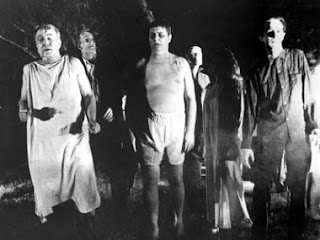
Two films in particular would signal the arrival of the "new" horror movie. Fittingly, they would also be among the first movies to receive an R rating from the brand-new Motion Picture Association of America (MPAA).
The first was actually filmed in 1965, the year after the code fell, but wouldn't be released until three years later. The brainchild of a young Pittsburgh filmmaker inspired by both Vincent Price's The Last Man on Earth (1964) and Hitchcock's The Birds (1963), Night of the Living Dead was the ultimate indicator of where horror movies were headed. Mixing strong social commentary with unprecedentedly horrifying imagery, George Romero's landmark vision was a grim and unrelenting nightmare. And the graphic violence depicted--although somewhat tame by today's standards--was enough to inspire revulsion and even condemnation from many critics of the time. Yet it is quite telling that today that very film is included in th e Library of Congress National Film Registry.
The other groundbreaker of the era was Rosemary's Baby (1968) from director Roman Polanski. A product of the culture's growing fascination with the occult, the film was blunt in its depiction of Satanic themes, something that would continue to a much greater degree in the next decade. Also worthy of note was the fact that unlike most horror movies of the past, which were B-level flicks, Roesmary's Baby was a top-of-the-line A-level picture--another trend that was to continue.
By the end of the '60s, the change was complete, and horror was more mainstream than ever before. The limits of what it could portray, both thematically and visually, had been pushed beyond anything anyone could have imagined. The decades to come would feel the effects of this overwhelming shift in tone, and take it still further.
Other major releases:
Part 1: The Silent Dead
Part 2: Gods & Monsters
Part 3: It Came from Hollywood
Soon to come: Part 5 - Blood & Guts
Practically every aspect of our lives were changed, owing to a variety of reasons pundits have debated about ever since: the eye-opening horrors of the Vietnam War--America's most cynical conflict to that point--and the manner in which it was so directly brought into our homes; the brutal assassinations of John F. Kennedy, Robert F. Kennedy and Dr. Martin Luther King; the rise of a youth movement that gave young people more power than ever before; relaxing social mores that led to a sexual revolution and an overall loss of innocence.
Whatever the reasons, America was a very different place in 1969 from what it had been in 1960.
Like everything else, entertainment was not immune to the dramatic changes. And perhaps more than any other genre, horror films underwent a transformation that was as dramatic as it was shocking. By the end of the decade, the modern horror genre would be born.
Even as early as 1960, change was in the air. The first shot would be fired by one of the business' most established and respected directors, Alfred Hitchcock, whose seminal suspense/slasher flick Psycho set a standard that would be a sign of things to come. Here, it was not some outlandish monster, but the guy next door who was the instrument of terror. It was not some baroque fantasy world in which the action was set, but the very real world in which we lived. This w
Still, some vestiges of the old school would persist, most notably in the classic series of Edgar Allen Poe-inspired films from low-budget king Roger Corman and starring Vincent Price. The supernatural aspect of horror was not about to go away in the face of the new reality-based terror. But it was being transformed, as evidenced by films like The Haunting, a superb modern ghost story from 1963.
The modern setting was one thing, but there were many more changes in store. These would be facilitated by the collapse of the restrictive Hays Code in 1964. The code, established 30 years prior by studio heads looking to silence moral watchdogs by toning down the content of their movies, had long held the horror genre in handcuffs. Why it was lifted when it was can be attributed to many causes, but it is impossible to overstate how important the Hays collapse was to the evolution of horror movies. Now the gloves were off.
Two films in particular would signal the arrival of the "new" horror movie. Fittingly, they would also be among the first movies to receive an R rating from the brand-new Motion Picture Association of America (MPAA).
The first was actually filmed in 1965, the year after the code fell, but wouldn't be released until three years later. The brainchild of a young Pittsburgh filmmaker inspired by both Vincent Price's The Last Man on Earth (1964) and Hitchcock's The Birds (1963), Night of the Living Dead was the ultimate indicator of where horror movies were headed. Mixing strong social commentary with unprecedentedly horrifying imagery, George Romero's landmark vision was a grim and unrelenting nightmare. And the graphic violence depicted--although somewhat tame by today's standards--was enough to inspire revulsion and even condemnation from many critics of the time. Yet it is quite telling that today that very film is included in th
The other groundbreaker of the era was Rosemary's Baby (1968) from director Roman Polanski. A product of the culture's growing fascination with the occult, the film was blunt in its depiction of Satanic themes, something that would continue to a much greater degree in the next decade. Also worthy of note was the fact that unlike most horror movies of the past, which were B-level flicks, Roesmary's Baby was a top-of-the-line A-level picture--another trend that was to continue.
By the end of the '60s, the change was complete, and horror was more mainstream than ever before. The limits of what it could portray, both thematically and visually, had been pushed beyond anything anyone could have imagined. The decades to come would feel the effects of this overwhelming shift in tone, and take it still further.
Other major releases:
- The Brides of Dracula (1960)
- Village of the Damned (1960)
- Pit and the Pendulum (1961)
- Carnival of Souls (1962)
- Whatever Happened to Baby Jane? (1962)
- The Raven (1963)
- The Masque of the Red Death (1964)
- Hush, Hush, Sweet Charlotte (1965)
- The Fearless Vampire Killers (1967)
Part 1: The Silent Dead
Part 2: Gods & Monsters
Part 3: It Came from Hollywood
Soon to come: Part 5 - Blood & Guts
Subscribe to:
Posts (Atom)