Félicien Tramel (1880 - 1948) was a French singer and actor. He made more than 30 78’s at Odeon with such hits as T'en fais pas Bouboule (Do not worry Bouboule) and Y me faut mon patelin (I miss my hometown). Between 1911 and 1947 he played in dozens of films. In a series of silent and sound comedies he starred as the character Alfred Bicard or le Bouif.
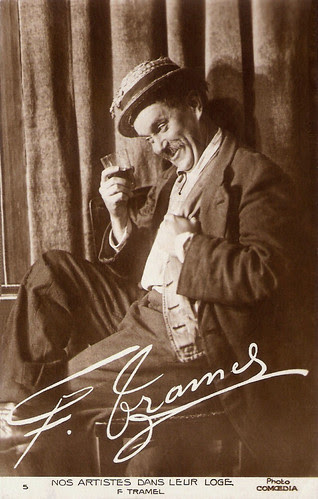
French postcard in the series Nos artistes dans leur loge, no. 5. Sent by mail in 1923. Photo: Comoedia.
Anagram
Tramel or Félicien Tramel was born in La Crau, France in 1880 (and not in Toulon as IMDb writes). His birth name was Antoine Martel Félicien, so Tramel was an anagram of Martel. His career started slowly. He made his film debut in the short La Femme-cochère/The Coach-lady (1911, Henri Desfontaines). However, his film career got in full swing ten years later with the short, silent comedies about Alfred Bicard or le Bouif (the cobbler). He introduced this character in Le Crime du Bouif/The Crime of Bouif (1921, Henri Pouctal. The character was based on the novels by Georges de La Fouchardière. Tramel’s co-stars were Henri Gouget and Therese Kolb who played madame Bicard, Le Bouif’s wife. Soon followed more films featuring le Bouif: Le Filon du Bouif/The Vein of Le Bouif (1922, Louis Osmont), La Résurrection du Bouif/Resurrection of Le Bouif (1922, Henri Pouctal) and Son Excellence le Bouif/His Excellency Le Bouif (1923, Louis Osmont) with Vera Korène. Tramel appeared also in other roles. In 1924 he played in the melodrama Enfants de Paris/Children of Paris (1924, Albert-Francis Bertoni) with Lucien Dalsace, and a year later in another melodrama L'Orphelin du cirque/The Orphan of the Circus (1925, Georges Lannes) with André Nox and Suzy Vernon. One of his best silent films was Julien Duvivier’s Le Mystère de la Tour Eiffel/The Mystery of the Eiffel Tower (1927, Julien Duvivier) also with Jimmy Gaillard. Reviewer Seldom at IMDb: “Considering the equipment that had to be carried in those days, it is quite a marvel how advanced this thing is shot. Any available story is rendered inferior to the slapstick-packed action which includes a downhill chase by plane, vertical fighting in the iron skeleton of the Eiffel tower—apparently without safety gear involved—, combined with brilliant characters—later eagerly copied; e.g. George Remi, author the Tintin books.” But soon Tramel returned as Alfred Bicard in Le Bouif errant/The wandering Bouif (1926, René Hervil) with Albert Préjean.
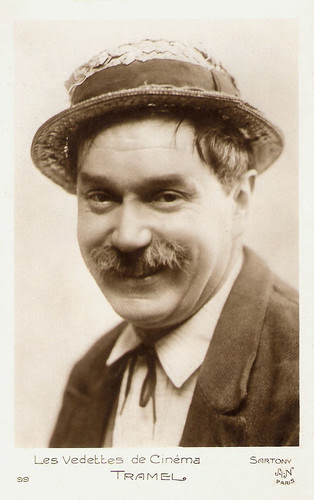
French postcard in thre series Les Vedettes de Cinéma by Editions A.N., Paris, no. 99. Photo: Sartony.
The Idiot
Tramel made an easy transition to sound film with his character. In 1931 he starred in La Fille du Bouif/Le Bouif’s Daughter (1931, René Bessy), Le Bouif au salon/Le Bouif in the salon (1931, Louis Mercanton) and the sound remake of Le Crime du Bouif/The Crime of Le Bouif (1932, André Berthomieu), now with Marcel Vibert and Mady Berry. He also appeared in a sound remake of the silent classic Crainquebille (1933, Jacques de Baroncelli), in Visages de femmes/Faces of Women (1938, René Guissart) starring Huguette Duflos, and in Pagnol’s La Fille du puisatier/ The Well-Digger's Daughter (1940, Marcel Pagnol) with Raimu and Fernandel. His final Le Bouif film was the short Le Bouif chez les purs-sangs/Le Bouif in thoroughbreds (1934, Léo Joannon). Tramel continued to make films. He also made more than 30 78’s at Odeon records. He had such hits as T'en fais pas Bouboule (Do not worry Bouboule) and Y me faut mon patelin (I miss my hometown). He also worked on stage, often in the music halls but also in the revue Tout va trop bien (Everything is going too well) (1936) at the Théâtre des Nouveautés. During the occupation of France he found supporting parts in films such as Les deux timides/The Two Timids (1941, Yves Allégret) staring Pierre Brasseur and Jacqueline Laurent, and La Cavalcade des heures/Love Around the Clock (1943, Yvan Noé) starring Gaby Morlay and Fernandel. After the war he played in the Fyodor Dostoevsky adaptation L'Idiot/The Idiot (1945, Georges Lampin) featuring Gérard Philippe. His last films were Miroir/Mirror (1947, Raymond Lamy) with Jean Gabin, and Parade du rire/Laugh Parade (1948, Roger Verdier) with Claude Dauphin and Jane Marken. Félicien Tramel died in La Crau (and not in Paris as some sources say) in 1948. He was 67.
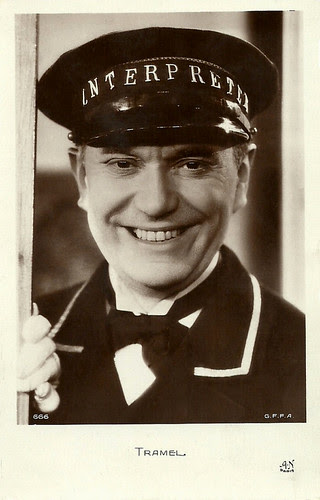
French postcard by Editions A.N., Paris, no. 666. Photo: G.F.F.A.
Sources: Paul Dubé & Jacques Marchioro (Du temps des cerises aux feuilles mortes) (French), Wikipedia (French) and IMDb.
French postcard in the series Nos artistes dans leur loge, no. 5. Sent by mail in 1923. Photo: Comoedia.
Anagram
Tramel or Félicien Tramel was born in La Crau, France in 1880 (and not in Toulon as IMDb writes). His birth name was Antoine Martel Félicien, so Tramel was an anagram of Martel. His career started slowly. He made his film debut in the short La Femme-cochère/The Coach-lady (1911, Henri Desfontaines). However, his film career got in full swing ten years later with the short, silent comedies about Alfred Bicard or le Bouif (the cobbler). He introduced this character in Le Crime du Bouif/The Crime of Bouif (1921, Henri Pouctal. The character was based on the novels by Georges de La Fouchardière. Tramel’s co-stars were Henri Gouget and Therese Kolb who played madame Bicard, Le Bouif’s wife. Soon followed more films featuring le Bouif: Le Filon du Bouif/The Vein of Le Bouif (1922, Louis Osmont), La Résurrection du Bouif/Resurrection of Le Bouif (1922, Henri Pouctal) and Son Excellence le Bouif/His Excellency Le Bouif (1923, Louis Osmont) with Vera Korène. Tramel appeared also in other roles. In 1924 he played in the melodrama Enfants de Paris/Children of Paris (1924, Albert-Francis Bertoni) with Lucien Dalsace, and a year later in another melodrama L'Orphelin du cirque/The Orphan of the Circus (1925, Georges Lannes) with André Nox and Suzy Vernon. One of his best silent films was Julien Duvivier’s Le Mystère de la Tour Eiffel/The Mystery of the Eiffel Tower (1927, Julien Duvivier) also with Jimmy Gaillard. Reviewer Seldom at IMDb: “Considering the equipment that had to be carried in those days, it is quite a marvel how advanced this thing is shot. Any available story is rendered inferior to the slapstick-packed action which includes a downhill chase by plane, vertical fighting in the iron skeleton of the Eiffel tower—apparently without safety gear involved—, combined with brilliant characters—later eagerly copied; e.g. George Remi, author the Tintin books.” But soon Tramel returned as Alfred Bicard in Le Bouif errant/The wandering Bouif (1926, René Hervil) with Albert Préjean.
French postcard in thre series Les Vedettes de Cinéma by Editions A.N., Paris, no. 99. Photo: Sartony.
The Idiot
Tramel made an easy transition to sound film with his character. In 1931 he starred in La Fille du Bouif/Le Bouif’s Daughter (1931, René Bessy), Le Bouif au salon/Le Bouif in the salon (1931, Louis Mercanton) and the sound remake of Le Crime du Bouif/The Crime of Le Bouif (1932, André Berthomieu), now with Marcel Vibert and Mady Berry. He also appeared in a sound remake of the silent classic Crainquebille (1933, Jacques de Baroncelli), in Visages de femmes/Faces of Women (1938, René Guissart) starring Huguette Duflos, and in Pagnol’s La Fille du puisatier/ The Well-Digger's Daughter (1940, Marcel Pagnol) with Raimu and Fernandel. His final Le Bouif film was the short Le Bouif chez les purs-sangs/Le Bouif in thoroughbreds (1934, Léo Joannon). Tramel continued to make films. He also made more than 30 78’s at Odeon records. He had such hits as T'en fais pas Bouboule (Do not worry Bouboule) and Y me faut mon patelin (I miss my hometown). He also worked on stage, often in the music halls but also in the revue Tout va trop bien (Everything is going too well) (1936) at the Théâtre des Nouveautés. During the occupation of France he found supporting parts in films such as Les deux timides/The Two Timids (1941, Yves Allégret) staring Pierre Brasseur and Jacqueline Laurent, and La Cavalcade des heures/Love Around the Clock (1943, Yvan Noé) starring Gaby Morlay and Fernandel. After the war he played in the Fyodor Dostoevsky adaptation L'Idiot/The Idiot (1945, Georges Lampin) featuring Gérard Philippe. His last films were Miroir/Mirror (1947, Raymond Lamy) with Jean Gabin, and Parade du rire/Laugh Parade (1948, Roger Verdier) with Claude Dauphin and Jane Marken. Félicien Tramel died in La Crau (and not in Paris as some sources say) in 1948. He was 67.
French postcard by Editions A.N., Paris, no. 666. Photo: G.F.F.A.
Sources: Paul Dubé & Jacques Marchioro (Du temps des cerises aux feuilles mortes) (French), Wikipedia (French) and IMDb.