For my second dose of British b-pictures, I decided to hit the NFT for a double bill of movies that formed part of an apparently long-running series of low budget films based on the work of famed mystery writer Edgar Wallace. These films, it seems, were always introduced by a wonderfully campy title sequence featuring a bust of the great man slowly rotating toward the camera amid a cloud of mist, as a cut price imitation of The Shadows’ ‘Man of Mystery’ plays on the soundtrack. I can only speak for myself, but I found that bit worth the price of the ticket alone.
The programme notes accompanying the screening initially refer to the Wallace series as being “wildly popular”, but both some contradictory comments later in the same text and the reminiscences of the two old gents sitting behind me would seem to somewhat undermine this assumption. Circumstantial evidence suggests that these homegrown quickies were rarely popular with audiences, with cinema crowds regularly groaning, throwing projectiles at the screen or ducking out for a drink when the lugubrious Wallace title sequence hoved into view. Disrespectful behaviour, you might think, but having now seen a few of these movies, I know exactly where they were coming from. While both the films screened tonight undoubtedly have their points of interest and saving graces, they also can’t help but emerge as spectacularly dull and unengaging pieces of filmmaking. Frankly, if these two have been picked out as the best in the series, it’s small wonder they found little favour with audiences and critics, at a time when Hollywood, bloated though it may have been in the early ‘60s, was still offering romance, decadence, shoot-outs, musical numbers, casts of thousands and Charlton Heston parting the red sea in glorious technicolor.
 Flat Two
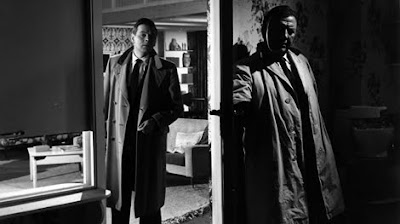
 (Alan Cooke, 1962) is a drearily sordid tale in which a sleazy casino boss is found dead in his lavish apartment on the same night that two men with entirely unconnected motives for the crime happened to break in, and a selection of police detectives and barristers proceed to hang around in a gentlemen’s club, casually trying to get to the bottom of things. The main point of interest here is an appearance by the superb John LeMesurier, and as ever he’s a class act, although the script gives him precious little to work with. The mannered British performances and stiff upper lip approach to drama is as hypnotically charming as it ever is in these things, but the rest of the cast is dry to the point of dehydration, and the story – which doles out alibis and motives as dispassionately as cards in a Cluedo game – is a bore for anyone who likes their murder mysteries to carry some sort of emotional weight alongside the logic puzzles. Oh, and the only female character is an empty-headed hussy and all the working class characters are small-time crooks on the make – because that’s the way things were done back then. One best kept for the long, dark teatime of the soul, I fear.
Never Back Losers (Robert Tronson, 1961) is altogether more lively, a tale of a rookie insurance investigator stumbling his way into uncovering a South London race-fixing scam. The plot is hokey and unconvincing, but there are some great attempts here to try and imbue the material with an American sense of hardboiled pulp squalor, as our man traipses through the sordid streets of Soho, doing the rounds of crooked bookies and basement clubs, receiving a beating in a dark alleyway for his troubles and falling down the stairs to land at the feet of sultry, fishnet-clad cigarette girl Jacqueline Ellis. Yowza. Also thoroughly entertaining is the presence of the one and only Patrick Magee, playing menacing gang boss ‘Big’ Ben Black with all the subtlety and restraint you’d expect. One of the funniest things I’ve seen in months is the scene in which our insurance man, his dame and her jockey kid brother leave their house in an archetypally dreary South London suburb, only to find they’re being followed! Turning around, they see Macgee and his goons in extremely slow pursuit, in a gigantic, tailfinned Cadillac Eldorado, with Magee leaning out of the window, cheroot in hand, wobbling along like a big, angry toad! Wonderful! A few more scenes like this raise a chuckle, but can’t quite keep the slight story afloat – especially when most of the film’s enjoyable moments result from the director’s brave but doomed attempts to make exciting and striking things happen within the inherently drab and self-deprecating context of pre-Beatles Britain.
And in a sense, maybe that’s the key to why these British b-pictures so rarely hit the mark. Perhaps it’s just a matter of distance, but when British viewers watch an American crime movie, there’s a sense that *anything* can happen – that we’re watching a bulletin from a world where life is dangerous, where deals go down, tough guys live and bad things happen. What’s more, the minutiae of American life can fit INTO this world – Sam Spade could munch a Hershey bar, and it would be cool. Move things across the Atlantic though, and any attempt to inject a stylised sense of danger and excitement into proceedings is sabotaged by the knowledge that just around the corner there’s Weetabix and Marmite, Morris Minors and policemen with funny moustaches, making anything remotely dramatic or threatening just seem implausible and silly. Of course, the true British crime idiom would come into its own over the course of the next decade, crystallised through iconic films like ‘Performance’ and ‘Get Carter’, a whole universe away from the milieu of these tired and anachronistic Wallace adaptations.
The irony of course is that at the same time as the British studios were knocking out these sub-par timewasters, the German film industry was busy transforming the Edgar Wallace back catalogue into the swathe of far more daring, controversial and exciting movies that comprised the much-loved ‘Krimi’ sub-genre, bringing us such shockers as “The Fellowship of The Frog” (1959), “Strangler of Blackmoor Castle” (1963) and “The Phantom of Soho” (1964), whose titles alone probably tell you all you need to know about the continental approach to the same material that was putting British audiences to sleep, and whose influence eventually helped birth the Giallo in Italy, drawing a direct line between Wallace’s work and some of the most eye-popping excesses of European cult cinema in the ‘60s and ‘70s. Score one for the foreigners I’m afraid, Major. Well at least we had Hammer, eh?