Showing posts with label big cats. Show all posts

Monday, 2 October 2023

Hammer House of Horror:
The Silent Scream
(Alan Gibson, 1980)


Continuing last October’s trawl through the ‘Hammer House of Horror’ archives where we left off, here we go with episode # 7, originally broadcast on ITV on 25th October 1980. 

Probably the most unsettling and seriously intentioned instalment of the series thus far, this one tells the tale of a feckless safebreaker (Chuck, played by Brian Cox), who, having just completed a debilitating prison sentence, grudgingly accepts a part-time job offered by sinister pet shop owner Martin Blueck, played by your friend and mine, Mr Peter Cushing.

Beginning with the unfortunate death-by-electrocution of a caged tiger, followed by Chuck’s return to the isolated roadside cottage he shares with his wife Annie (Elaine Donnelly), the first half of Francis Essex’s script is almost comically over-loaded with themes and imagery related to imprisonment and confinement.

Upon his return home, Chuck tells Elaine that she can’t possibly understand the misery he has experienced as a result of being incarcerated, causing her in turn to point to the virtual imprisonment she has faced while he was inside, as a result of poverty, isolation and societal disapproval. (To hammer home the point, her introductory shots are even framed through the bar-like partitions on the kitchen window.)

When Chuck visits Blueck’s shop, initially to thank him for visiting him in prison and gifting him with some money as part of a charitable programme, he scarcely finds much reassurance. Backed by the budgerigars and puppies he keeps caged in the shabby, public facing front room of his shop, Blueck quietly acknowledges his history as a concentration camp survivor, before inviting Chuck into the secret back room where his real work is done.

Therein, we find an appalling mockery of a zoo, in which a variety of flagrantly illegal animals (a panther, a leopard, assorted other big cats, a few apes and even a wallaby) subsist in cramped, bare cages, trained via the application of massive electric shocks to remain within their allotted spaces until a bell is sounded to let them know the circuits have been disengaged, at which point the sorry creatures can poke out their heads and gobble up the raw meat which comprises their chow.

For any animal lovers in the audience, the footage of these obviously unhappy beasts prowling around their tiny cages will prove immediately upsetting, whilst the idea that a veteran of the holocaust has become obsessed with imprisoning and controlling his fellow creatures - like a victim of familial abuse growing up to perpetrate the same cycle over again - is horribly perverse and disturbing.

As you’d imagine, it doesn’t take a huge leap of logic for us to realise that Blueck is set upon expanding his unsavoury “research” to human subjects, and that his motives in offering a questionable job to a hapless ex-con - and placing a very tempting safe in plain view when he leaves Chuck to look after the joint - are less than wholly philanthropic.

In fact, Blueck makes this fairly plain from the outset, expounding upon his Orwellian dream of creating “prisons without bars”, in which the terror-stricken inmates are ostensibly free, but paralysed by mind-destroying Pavlovian conditioning - a concept which pushes the story into the realm of the truly nightmarish. (Again, note the insane perversity of a man who finds the physical paraphernalia of imprisonment so repugnant, he is fixated on removing it, even as he craves the power of control over others which it represents.)

Perhaps inevitably given that we’re watching a mainstream TV production here, Essex’s script rather sidesteps the darker psychological implications of this tale, downplaying the whole concentration camp angle just, just as Cushing likewise rather downplays his characterisation of Blueck. Providing something of a call back to his always fascinating portrayals of Baron Frankenstein in previous decades, he keeps the character soft-spoken, slow and pointedly non-emphatic in his gestures, allowing his evil and mental instability to reveal themselves more in his actions than through any displays of cackling villainy, but still managing to radiate a certain, implacable coldness.

As his fans will be aware, accents could sometimes prove Cushing’s Achilles’ heel as an actor, but he handles this one very well, betraying just a hint of Blueck’s Eastern European origins, gradually eroded over decades spent settled in a particularly seedy corner of England, allowing him to add just the right amount of unholy relish to his dialogue.

(There’s scarcely a bigger chill in the whole episode meanwhile than the lazy, off-hand cruelty Cushing manages to inject into his character’s tired attempts to fob off an investigating police officer visiting his shop with “..a hamster for the boy, perhaps?”)

Relatively few of the big-hitters from Hammer’s feature film era deigned to lend their talents to Roy Skeggs’ venture into TV, so it is of course wonderful to see the ever-loyal Cushing stepping up for what I believe was his penultimate horror role (followed up only by his touching farewell to the genre in Pete Walker’s ‘House of Long Shadows’ two years later). Needless to say, the producers of the series could scarcely have found a better, more challenging role for him to get his teeth into.

Cox and Donnelly are both excellent too (the former doing a fine thick-yet-sympathetic turn, the latter convincing as the brains of their marital operation), allowing ‘The Silent Scream’ to develop into a strongly played three-hander drama, lending these characters a sense of realism which transcends the excesses of the increasingly far-fetched premise.

Perhaps mercifully, the second half of the episode becomes slightly less distressing, as the script concentrates more on the nuts-and-bolts survival horror of Chuck and Annie’s attempt to contend with the fiendish travails Blueck has devised for them, temporarily turning ‘The Silent Scream’ into what feels perhaps like an early prototype for the ‘Cube’-style “puzzle box” horror film.

A less high profile veteran of Hammer’s feature film era, Alan Gibson directs efficiently, with a certain amount of style, as befits the voluminous CV of TV work he’d racked up since helming the last two Christopher Lee Dracula movies in the early ’70s. Rather ironically in view of the episode’s subject matter, there is also some very nice location work to enjoy here; both Chuck and Annie’s remote rural cottage, lonely and isolated just off the motorway, and the thoroughly seedy row of commuter-belt businesses which houses Cushing’s shop (perhaps just a few doors down from Denholm Elliot’s estate agents from Rude Awakening), are very well chosen.

In view of my above observations on Cushing’s character however, I can't help but feel that Essex fumbles the ball rather dreadfully in the final act, when he drops what is clearly intended to be the blood-and-thunder revelation that Blueck was not actually a prisoner within the concentration camp, but a captor.

As well as stealing the punch-line to my all-time favourite bad taste gag, this misfiring twist actually succeeds in making the story far less disturbing than would otherwise have been the case. (After all, a mad Nazi on the loose is a far easier threat to deal with than that of a traumatised victim becoming secretly obsessed with exercising control over others.)

Sadly, this casual revelation also robs Cushing of the opportunity to give Blueck a touch of that sublime, sympathy-for-the-devil pathos he always did so well in his villainous roles - or indeed to invest the character with any of the knotty complexity we may have hoped for. (It’s perhaps no coincidence that the scene in which this twist is revealed is also that in which Blueck finally bursts out in a fit of ol’ fashioned villainous cackling.)

An unfortunate misstep, this can’t help but make the episode’s conclusion feel a little flat in dramatic terms, but regardless - on the surface of it, we still get a satisfyingly nasty and hopeless denouement, worthy of any grimy ‘70s British horror shocker, cementing ‘The Silent Scream’s place as easily the best episode of ‘Hammer House of Horror’ I’ve watched thus far.

Be sure to tune in this time next week, and we’ll learn whether episode # 8 proves a contender to the throne…

Tuesday, 16 December 2014

The Songs of Herman Cohen:
Black Zoo
(Robert Gordon, 1963)


Where can you possibly go, after Horrors of the Black Museum and Konga? Forsaking such obvious destinations as ‘prison’, ‘self-imposed exile’ and ‘a career in real estate’, the indomitable Herman Cohen instead added two and two to make five and gave us BLACK ZOO, the grimly unspectacular finale to his Michael-Gough-as-mad-bastard trilogy.

Like its predecessors, ‘Black Zoo’ is a curious film, but it is never “weird” in quite the same way that we might enthusiastically describe a lunatic aberration like ‘Konga’ as “weird”. On the contrary, what we have here is a gloomy and utilitarian bit of sizzle-not-the-steak drive-in schlock, saved from oblivion only by vestige of the fact that, like all good gutter pulp entertainment, it occasionally blunders into situations and concepts that are just so damn peculiar they seem entirely beyond the ken of a well-ordered mind.

Unlike ‘Konga’, ‘Black Zoo’ is not a film that’s ever likely to be revived for any raucous midnight screenings, or championed as some wild, way-out b-movie triumph - basically it’s too cheap and depressing to really make for a fun time for any but the most jaded or dedicated of trash-horror viewers. But nonetheless - to stretch Friedman’s famed maxim to breaking point, you’re not lacking the steak here, so much as you’re getting some pretty strange-looking steak, liberally flavoured with something you can’t quite place and really aren’t too sure about.
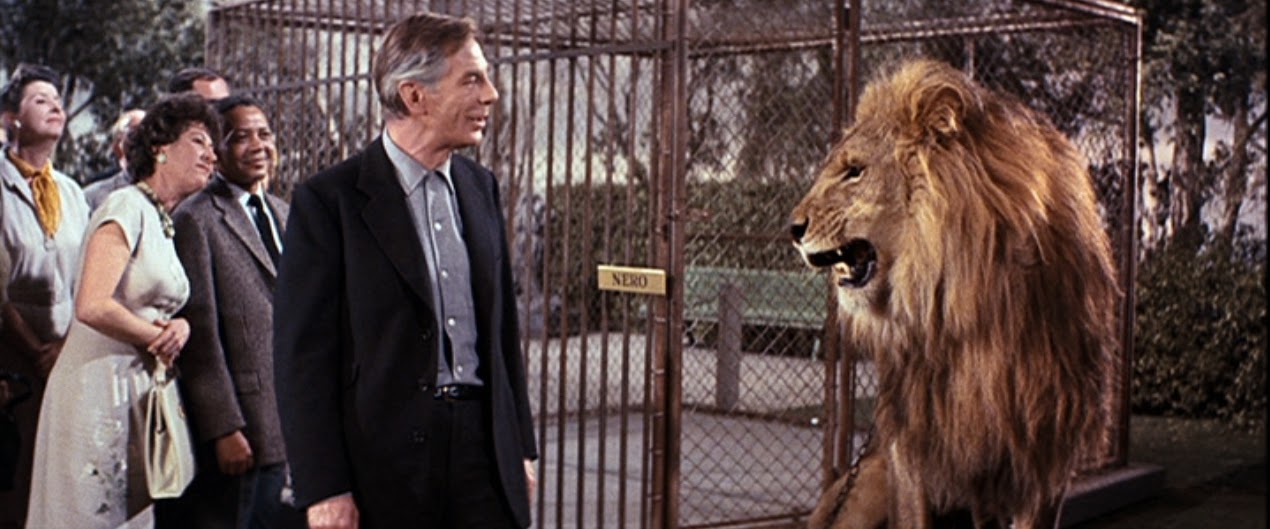


The most immediately notable difference between ‘Black Zoo’ and the two previous Cohen/Gough collaborations is that this one is shot, and apparently set, in America rather than the UK. Southern California to be precise, although you wouldn’t know it from the bare sets and featureless suburban exteriors on display.

It is here that we find Gough’s by now thoroughly familiar villainous, egomaniacal bastard character (this time named Michael Conrad) operating a small zoo, ‘Conrad’s Animal Kingdom’, wherein members of the public can gawp at his prized collection of caged big cats, delight at the antics of the performing chimpanzees trained by Conrad’s wife Edna (Jeanne Cooper), and attempt to spot the seams on the costume of a rather familiar looking moth-eaten gorilla. All this assuming that visitors can duck the constant threat of being cornered by the smarmy, faux-aristocratic proprietor himself and regaled with patronising homilies about the beauty of the natural world (“don’t forget, animals have feelings, just like you or me”), his obvious psychopathic streak just barely concealed beneath his philanthropic posturing.

Even more so than in his earlier horror roles, Gough presents a abominably hateful presence here – truly one of the nastiest, most cringingly dislikable protagonists ever to grace the screen, with the threadbare nature of the ‘Black Zoo’s production values placing the emphasis almost entirely upon his performance, thus driving him on to unprecedented and frankly quite upsetting outbursts of spittle-flecked, lip-curling mania. Harsh vibes, to say the least.
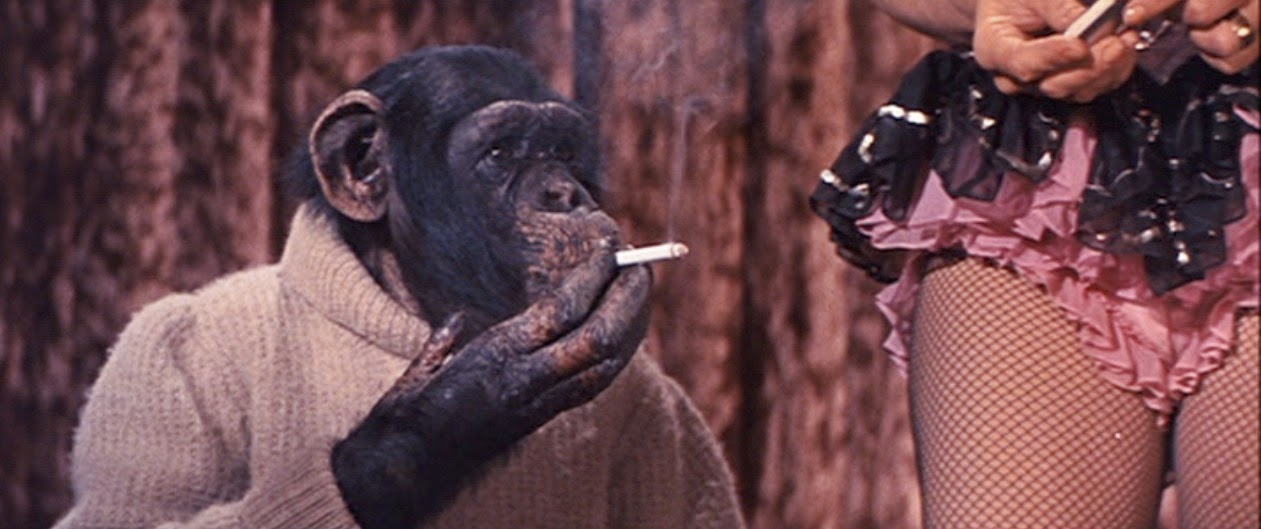

Given the baronial, ubermensch-like self-regard with which Gough’s character carries himself, I kept waiting for him to draw our attention to his renowned scientific expertise, the results of his ground-breaking research, his cursed aristocratic ancestry or his unrivalled academic prowess. But no – apparently Michael Conrad is just some bloke who runs a zoo and thinks a lot of himself. This is a Crazy Zookeeper Movie, take it or leave it, and when a highly strung Michael Gough starts gnashing his teeth in fits of paranoid rage as he fingers the keys to the leopard cages, you can probably more or less guess where such a disappointingly reductionist plot set-up is headed.

I say ‘more or less’, because as mentioned, Cohen & Aben Kandel’s script throws in some otherly inspired curveballs that are arguably worth sticking around for. Before that though, things initially proceed in thoroughly dispiriting fashion, rehashing many elements of the two earlier films with no great enthusiasm but plenty of mean-spirited zeal, as Conrad stomps around treating his wife like shit, treating their mute servant/adopted son Carl (Rod Lauren) like his own personal slave, and exploding with ill-founded jealousy when Edna dares suggest that Carl might appreciate being treated like a human being once in a while, eventually culminating in Herman Cohen’s ultimate expression of gruesome domestic dysfunction, as a red-faced Gough hurls a foul-looking dish of casserole straight at the kitchen lino.

Little known actress Cooper just about manages to retain her dignity, putting in a pretty good turn as Edna, though she might as well be carrying a sign reading “you just try getting work in this industry as a middle-aged woman”, such is the feel of grim, get-the-job-done professionalism her presence conveys.
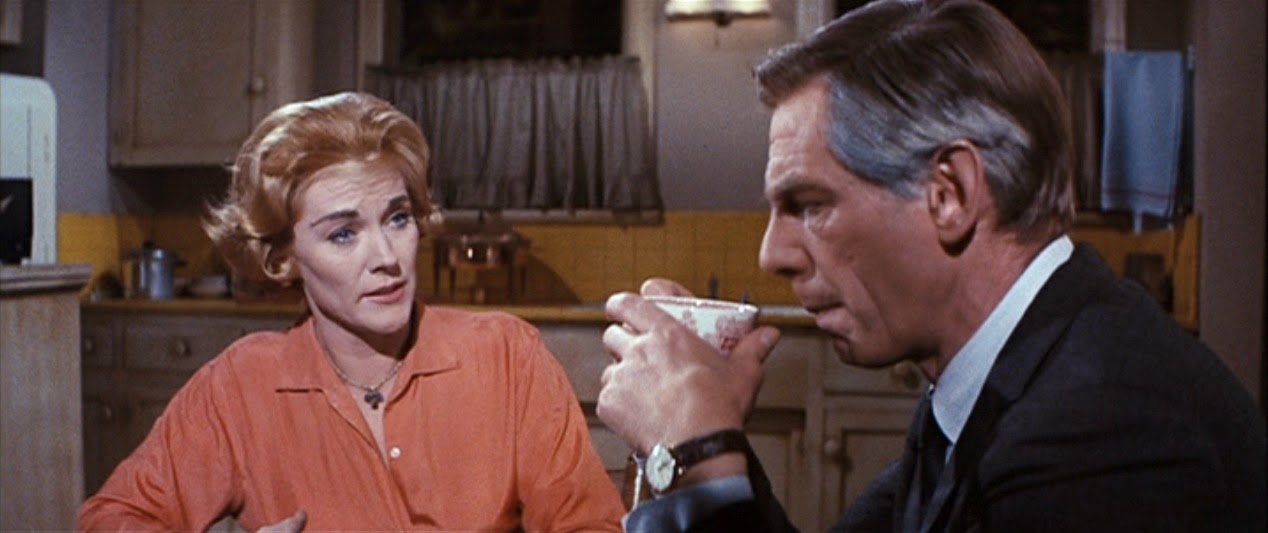
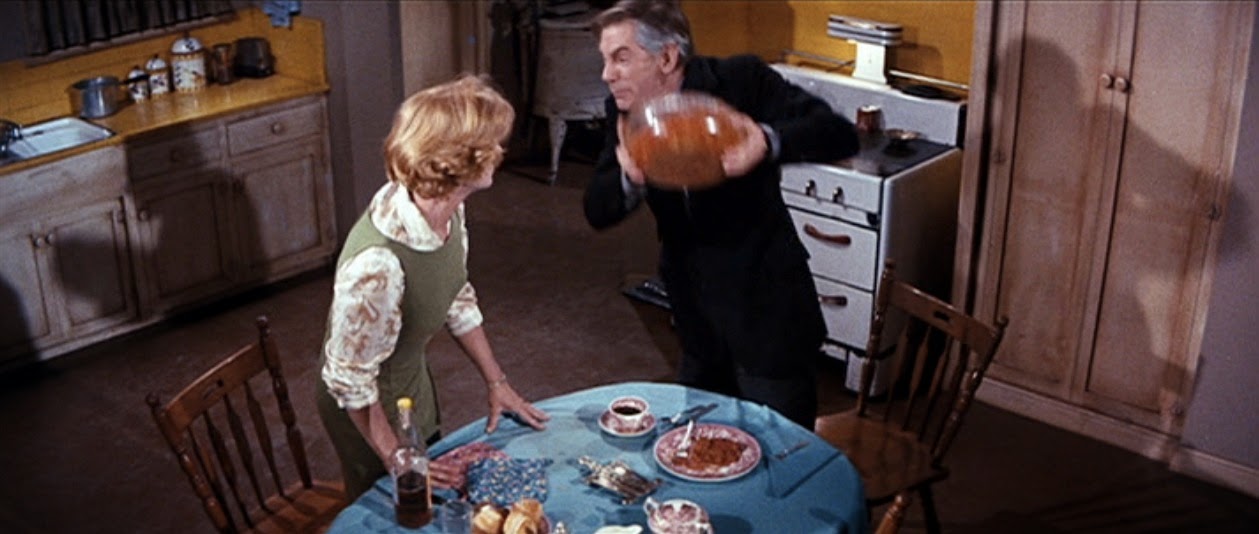


Meanwhile of course, Conrad, reveling in hypocrisy wherever he can, goes into ‘lecherous creep’ mode at warp-speed as soon as spies some busty, be-sweatered art students (one played by Marianna Hill, who went on to appear in BITR favourites like ‘Messiah of Evil’, ‘Blood Beach’, and, oh yeah, something called ‘The Godfather: Part II’) making sketches of his prized tiger, sparking a contrived courtship just as hellish as the one he cooked up with Claire Gordon in ‘Konga’. Add a “big shot property developer” trying to muscle in on the zoo’s real estate into the mix, a show biz friend of Edna’s trying to persuade her to ditch her husband and take her performing chimp act back on the road(!), and, yeah, here we go again, etc.

Bullying people, leering at college girls and murder are really only sidelines for Conrad though. What he loves most in life is animals, and specifically HIS animals. Quite how, why and where he acquired this obsession fixation with wild beasts is never really explored, but then, neither is his justification for worshipping his feline chums like living gods whilst remaining largely indifferent to their day-to-day discomfort as they prowl around their sad, bare cages being gawped at by gangs of insultingly cartoonish American holiday-makers.

As in ‘..Black Museum’, Cohen & Kandel have come up with the potential for a pretty interesting “insight into the mind of a psychopath” character study here, but once again they seem completely uninterested in building upon it in any meaningful fashion. “He’s just NUTS,” seems to be about as far as their thought process deigns to venture. Pay attention though, because this is where things start to get weird, with the lack of anything resembling a conventional back story / psychological justification for our anti-hero’s antics rendering things stranger still.


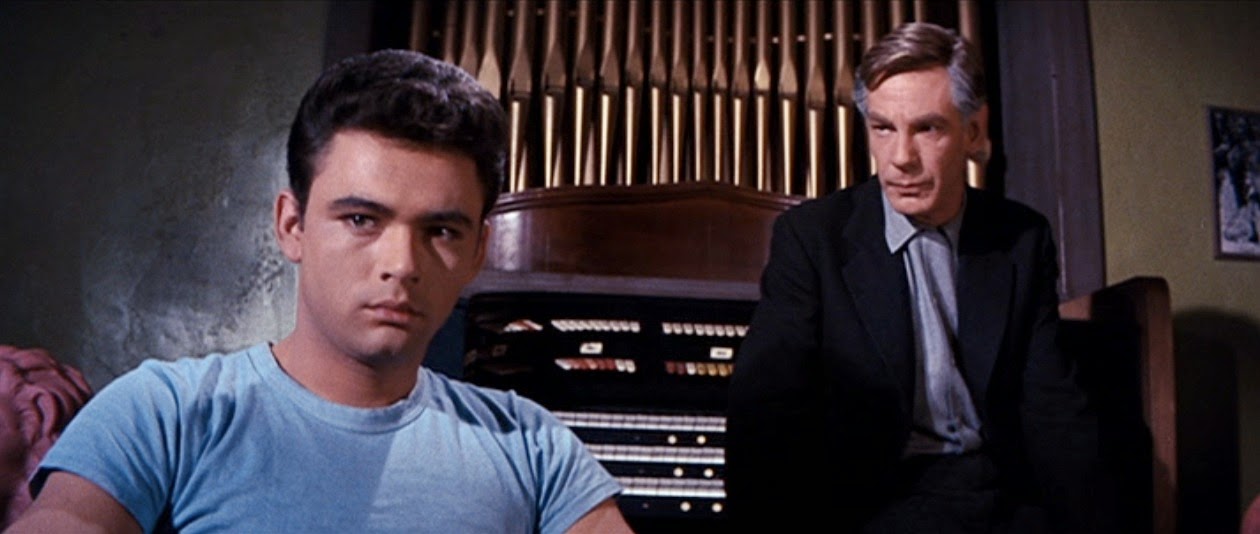
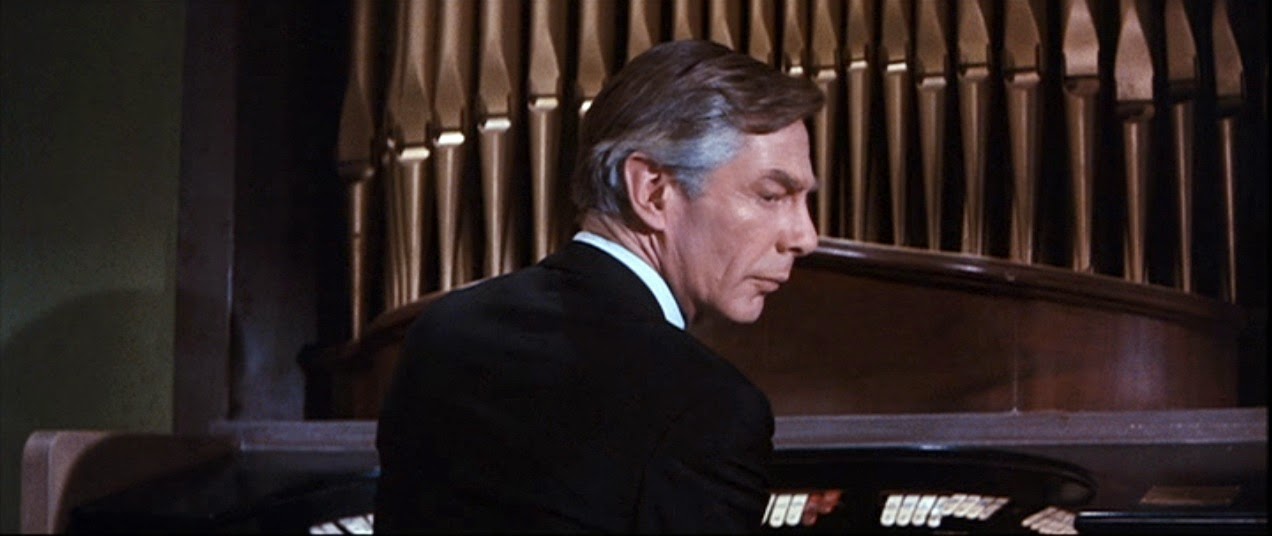
‘Black Zoo’s first real “rub your eyes and shake your head” moment arrives once business at Conrad’s Animal Kingdom is concluded for the day, when, his daily quota of snarling and belittling presumably met, Conrad strides over to the pipe organ installed in the corner of his living room (never a good sign, let’s face it), and begins to play a slow, lonesome fugue.

Carl opens the study door, and one by one the zoo’s big cats are ushered in, where they deposit themselves on a selection of moth-eaten furniture to listen to the conclusion of their master’s recital. “My children,” he addresses the animals after the music is concluded, “I brought you here because we have to face to problem..”. Evil, scheming men out in “the so-called world of humans” are out to destroy their home, Conrad tells his ‘children’.

No prizes for guessing what Conrad’s proposed solution to this problem is, but let’s just say that, as in ‘Konga’, I’m driven to wonder how visiting your perceived enemy’s home and throwing a wild animal in their face is in any way less conspicuous than visiting their home and just, say, killing them using more conventional means – especially given the speed which you’d assume even the most incompetent police force might join the dots between a case of murder-by-tiger and a local zoo managed by an egotistical nutcase.
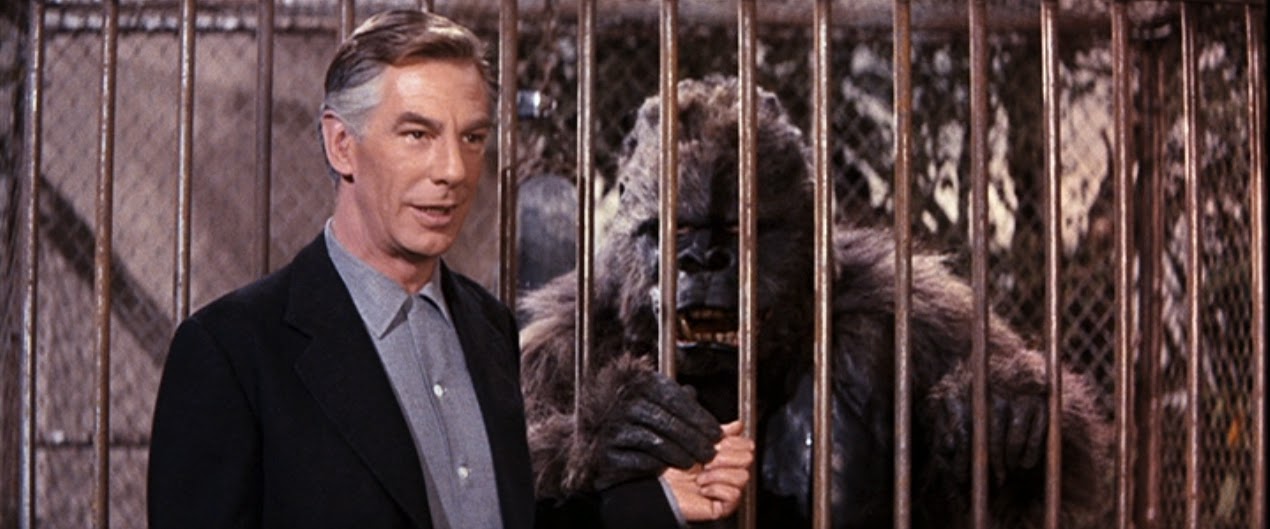
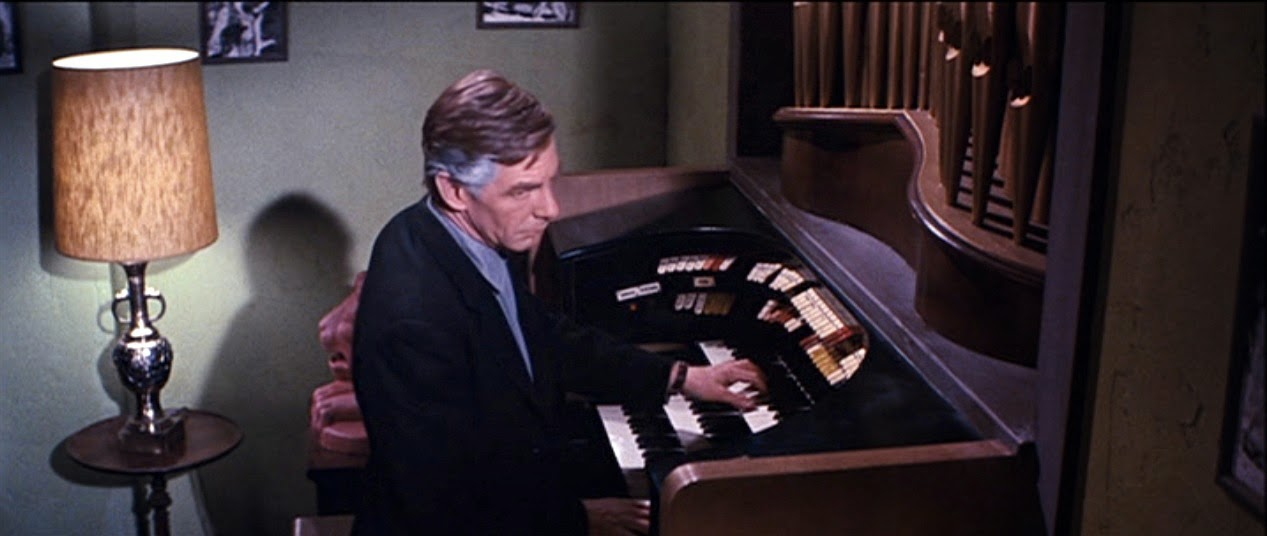


As a jaded 21st Century viewer, I may not share the simplistic “Wow, zoo animals!” shuck upon which much of this ‘Black Zoo’s presumed entertainment value seems to rest (as ever, Cohen’s sheer disdain for his audience knows no bounds), but even I’ve got to admit – the sight of Michael Gough delivering a lecture to a room full of docile big cats, speaking to them much in the manner of a condescending school headmaster before treating them to another demonstration of his baleful organ mastery, is a somewhat peculiar bit of business to say the least.

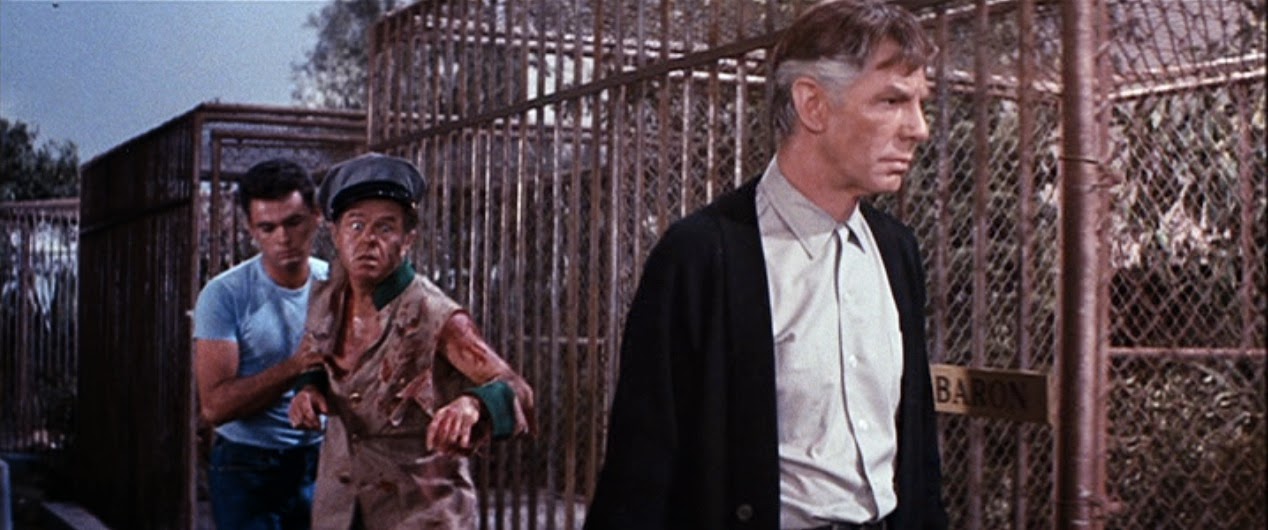
The best (by which I mean ‘weirdest’) scenes in ‘Black Zoo’ are yet to come however, and the next obvious stand-out as the funeral Conrad holds for his prize tiger, Baron, who has regrettably been shot by ill-fated junior zookeeper Elisha Cook Jr (for more on him, see below).

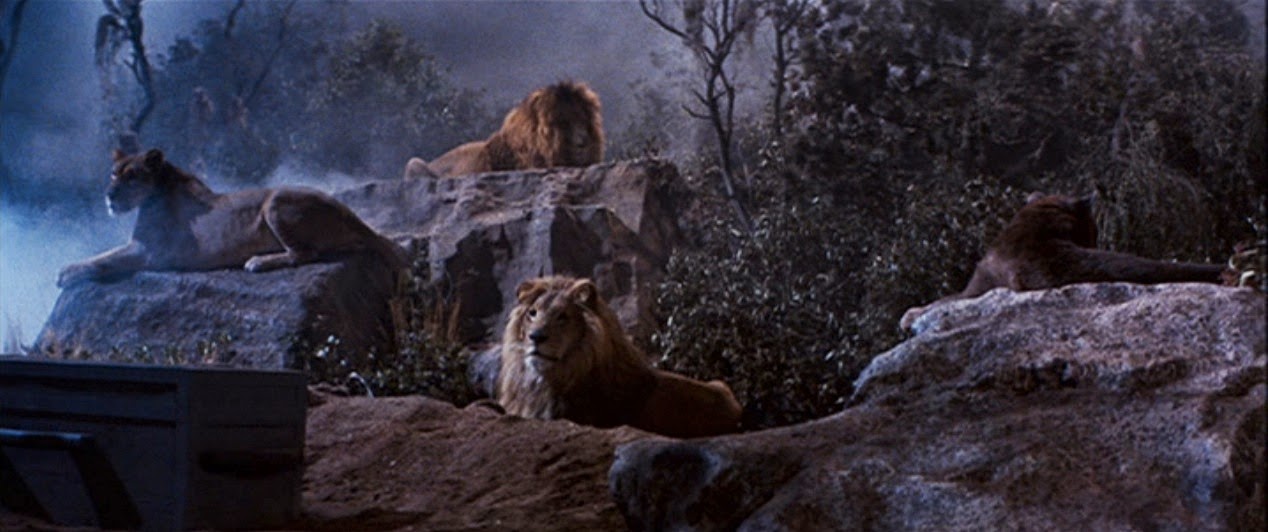
This solemn ceremony takes place in a beautiful, fog-shrouded forest grove that seems to belong to a completely different world from the cramped interiors and concrete car parks seen elsewhere in the film. Carl even pulls the tiger’s coffin to its final resting place on a kind of antiquated wooden cart that seems to have been stolen from the set of some period Euro-horror film, and as the other animals file one by one through drifting banks of bright blue fog and past neo-classical statues and gnarled tree-roots, silently observing the burial from their apparently purpose-built, rock-carved seats in a forest clearing, ‘Black Zoo’ briefly becomes an utterly phantasmagorical experience, temporarily assuming the aspect of a Corman/AIP Poe adaptation that’s gone slightly insane.

(This is perhaps not an entirely unexpected development, given that ‘Black Zoo’s Director of Photography Floyd Crosby had overseen pretty much all of the best entries in the AIP gothic horror cycle up to 1963. Considering the uniqueness and popularity of the atmosphere he helped create on those pictures, it’s possible that the entire funeral sequence here might have been developed as an excuse for him to strut his stuff.)



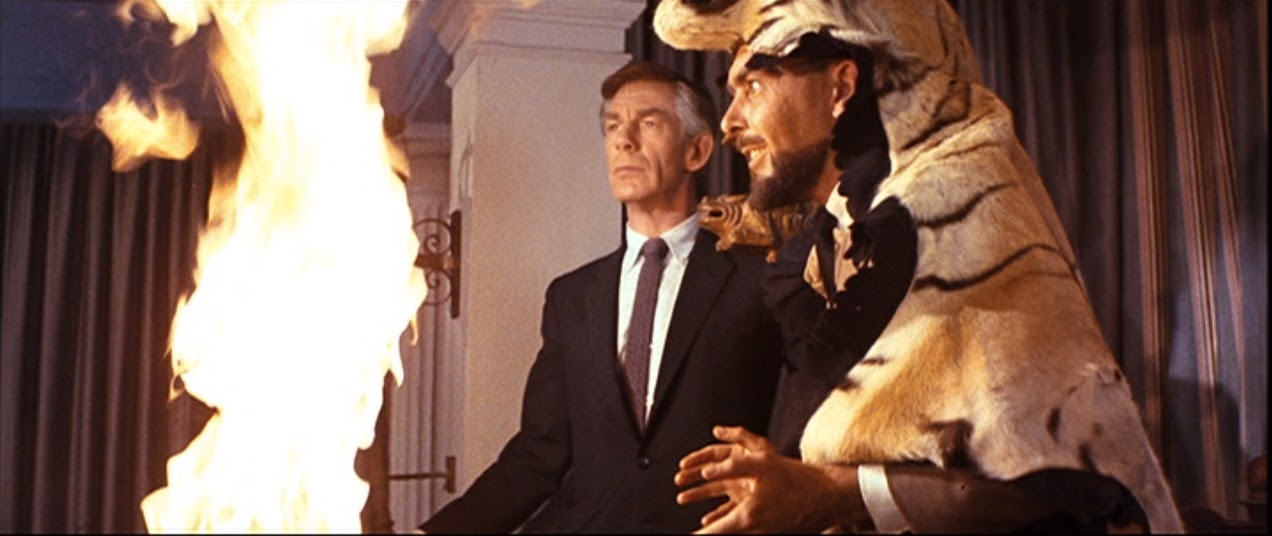
Whilst we’re still trying to get our heads around this sylvan gothic tiger funeral, Cohen & co. ratchet up the weirdness up even further, as we’re suddenly dropped into a meeting of what appears to be some kind of illicit cult of animal worshippers of which Conrad is a member (the “True Believers”, as led by “The Great Radoo”, he tells us). I really don’t know where the script-writers are going with this, or how in the hell they came up with such a bizarre notion, but the results seem like some ill-thought out mixture of Christian snake-handlers, a Wheatley-esque satanic coven and one of those eerie Hollywood huckster cults that Phillip Marlowe and The Continental Op used to tangle with back in the day.

‘The Great Radoo’, it turns out, is a chap with a bit of a Lenin-esque look about him, who begins to lead the ceremony after an attendant ritualistically places a mangy-looking tiger-skin rug on his head(!). Radoo then calls upon his brethren (including of course several white-pearled society ladies, several swarthy ‘foreign’ looking gentlemen and a cheery fellow in a turban) to console Conrad on the tragic loss of his beautiful feline soul-mate.

“The soul of Baron, expelled before its time, is now adrift”, Radoo announces, as he and Conrad begin a bizarre fire ritual aimed at guiding Baron’s soul to its reincarnation in a new body. Right on cue, some dinner-jacketed voodoo guys begin beating their drums, and the congregation begin chanting a half-hearted litany of some kind (“enter, enter, enter”). Then, another attendant appears and hands Conrad a whole new tiger-cub – the recipient of Baron’s soul! How’s that for generosity? I mean, I don’t know what kind of subscription fees this animal cult charges, but on the basis of this exchange I certainly can’t fault the benefits.
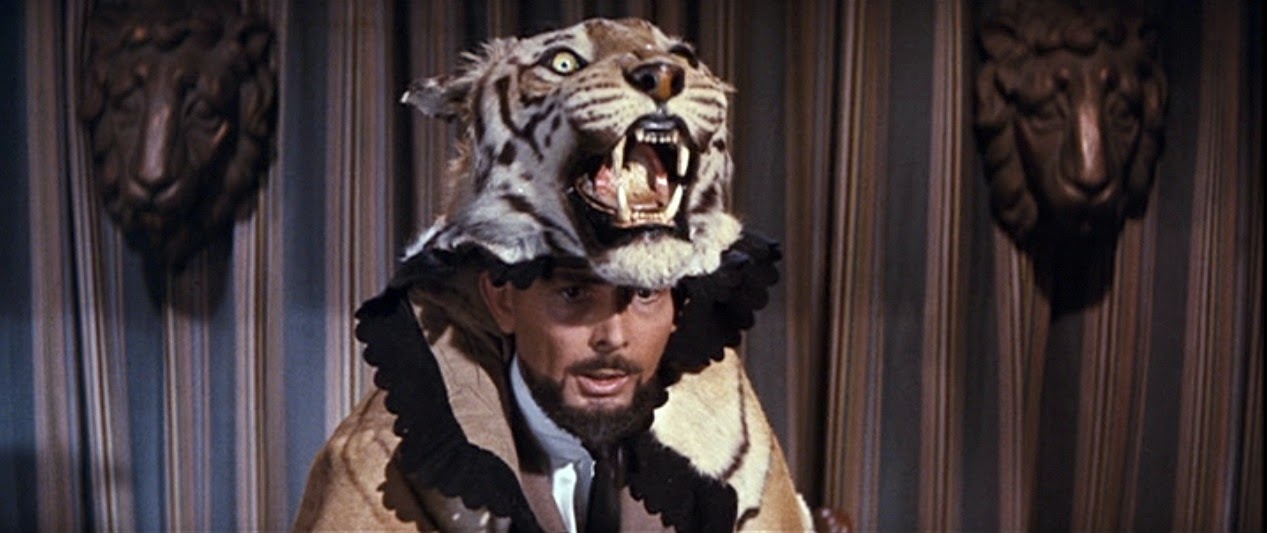
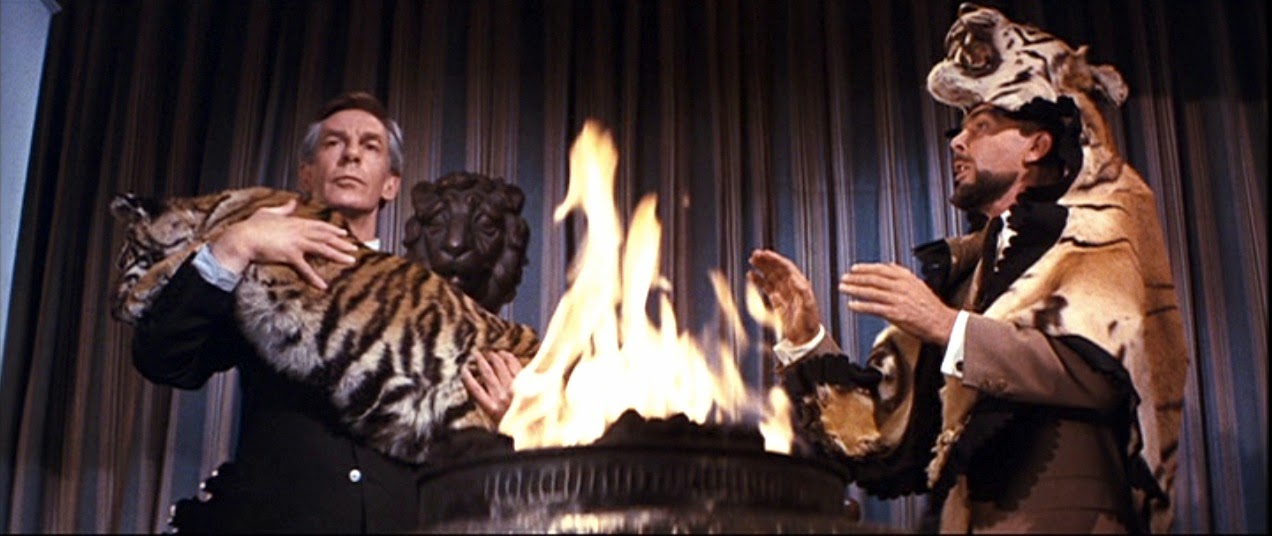

Where did all this animal cult stuff come from? What does it all mean? I’ve never heard of anything like it before. Really one for the psychotronic brain-wrong hall of fame, I think – one of those prime moments of unintentional surrealism that can be found in all three of these Cohen/Gough collaborations, irrespective of their other merits as motion pictures or works of creative expression. Needless to say, the greater implications of Conrad’s association with this strange group are never really explored, and subsequent to the meeting scene, they are scarcely mentioned again.

As far as other stuff worth a mention in ‘Black Zoo’ goes, well, as mentioned above, there’s good old Elisha Cook Jr to look out for - one of my favourite old time Hollywood character actors, and no doubt yours too. Branching out ever so slightly from his stock “pitiful loser” persona (see the If Charlie Parker Was A Gunslinger blog’s Elisha Cook Jr Gets the Shaft Again strand), Cook’s character here is a rather more surly, dim-witted sort of brute, who, as discussed, incurs Conrad’s psychopathic wrath by cruelly doing away with Baron Mk. I.

Though it’s always a pleasure to see him in action, it’s also kind of sad to see Cook’s stand-in being unconvincingly chomped by a lion midway through ‘Black Zoo’, just a few years after his definitive performance in Kubrick’s ‘The Killing’ – a career slump that perhaps suggests Cook’s real life luck might have been just as lousy as that of the characters he played, at least if the kind of thankless roles he was taking at this point were anything to go by. (For a further connection to the AIP/Poe cycle, look out for Cook’s touching portrayal of a deformed wretch in ‘The Haunted Palace’ the same year. He also of course reunited with Marianna Hill in ‘Messiah of Evil’ a few years later.)
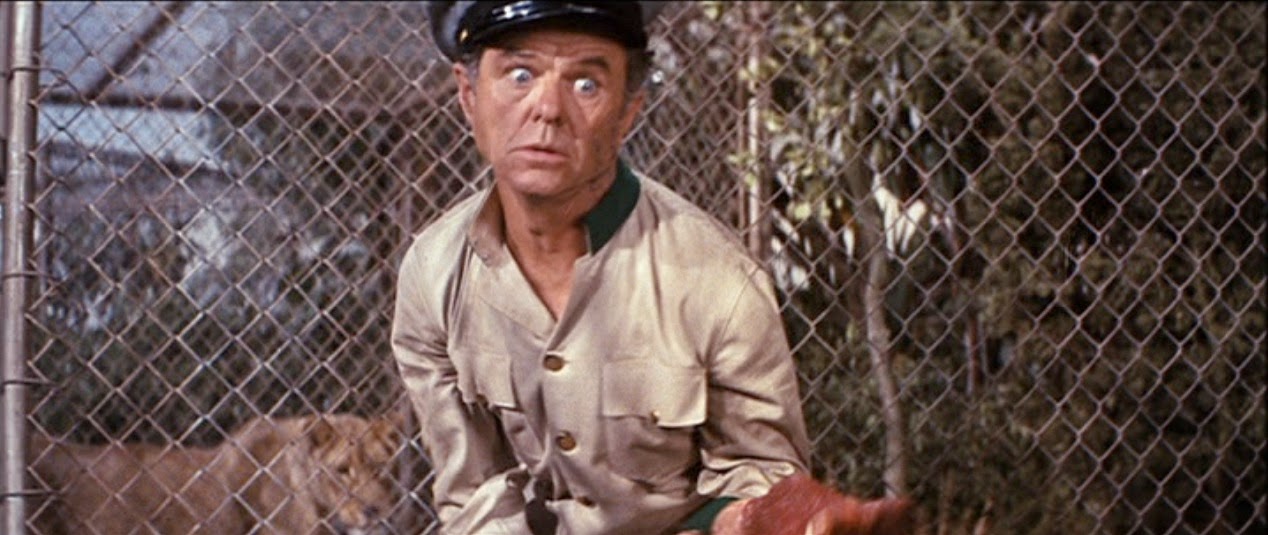

Thus far, we haven’t mentioned the credited director of this particular farrago, and, as with the previous films, Cohen seems here to have gone for his usual MO of hiring a washed up has-been in need of a quick pay cheque, and guiding the poor sap’s career straight to an undignified full-stop. Robert Gordon (not to be confused with much-loved British horror producer Richard Gordon) began directing with a series of low budget boxing pictures in the ‘40s, before making probably his biggest impression with ‘It Came From Beneath The Sea’ in 1955. After that he helmed a couple of unheralded western programmers, and was subsequently relegated to TV-land until Cohen brought him back into the world of features for ‘Black Zoo’.

Gordon’s direction here is as flatly competent as you might fear, with static medium shots predominating, and the same ugly framing and uninspired use of the widescreen frame that blighted ‘..Black Museum’. In fairness though, other aspects of ‘Black Zoo’s technical side fare a lot better, even as the film’s production design rarely stretches much beyond a dispiriting ‘filmed in a prison camp’ kind of look.

Floyd Crosby’s photography is actually rather superb, sometimes verging into the kind of over-saturated pastel Technicolor you’d expect of a ‘60s b-movie, but more frequently pulling off a combination of deep, dark shadows and richly muted primary colours very much reminiscent of his work on the Poe films, lending things a painterly feel that ‘Black Zoo’s cheap-jack situations and minimal set-dressing scarcely merit. Music, by b-movie vet and Sam Fuller collaborator Paul Dunlap, is similarly a lot better than this film really deserves – a testament perhaps to Cohen’s ability to pull an unexpected level of talent into his productions when back on his Hollywood home turf.
Though it for the most part remains an unremarkable bit of mean-spirited drive-in filler, there is nonetheless a kernel of utter craziness at the heart of ‘Black Zoo’ that forever guarantees it a place on my shelves, and on the shelves of all those who consider strangeness for its own sake to be one of the highest virtues a movie can attain.

Basically, whilst watching ‘Black Zoo’, I find myself imagining some middle-aged guy slumped in front of a late night TV screening, suddenly looking incredulous and calling to his wife in the kitchen: “Maude, get out here, you gotta see this! This movie I’m watching, it’s… it’s kinda…strange…”. Then he shivers and rubs his eyes before taking a deep breath and changing the channel. You know – that kind of strange. The kind of strange that has you thoroughly settled into dreary, verge-of-sleep plod, then imperceptibly shifts gears into “is this really happening… where are they going with this?” territory. And, as much as all the out-and-out crazy movies of the world might rant and rave and throw spectral snake-gods and regurgitated robot worms in our faces, isn’t it this more subtle incursion of inexplicable delirium into the midst of an otherwise prosaic time-waster that really represents the strangest strangeness of all..? I dunno. Discuss.

Such a feeling of course offers no excuse for my having used probably the best part of 10,000 words discussing the Cohen/Gough trilogy when I could have been doing something useful instead, but what can I say, at least it’s DONE now, and I can hopefully go a few months without having to contemplate Michael Gough’s smarmy, grinning villain-face… well, until I finally get around to starting my long-awaited Norman J. Warren review thread and get stuck into ‘Satan’s Slave’ at least. As for Cohen, I’ve had quite enough of him for the time being too, and hope I can spend slightly more of 2015 writing about some films that actually deserve such lengthy contemplation. But wait, what’s that you say, IMDB? He moved back to the UK after this one? ‘Trog’, with Joan Crawford? ‘Beserk’, with Joan Crawford AND Michael Gough? ‘Craze’, with Jack Palance? Dear god. Help me, please, I - - [communication ends].


Friday, 28 November 2014

Two-Fisted Tales:
The Lost Continent
by Edgar Rice Burroughs

(Tandem 1977, originally published 1916)


After posting the covers of some Edgar Rice Burroughs paperbacks a few months ago, I promised myself I’d finally give some of his writing a try, and, well, here we go.

Moreso than a Tarzan jungle adventure or Martian daring-do with John Carter, this curious little volume seemed a good entry point. (Nifty cover art too – sort of psychedelic/abstracty yet peculiarly specific and detailed at the same time… sure I recognize the style, but my mind is sieve-like as usual and I can’t put a name to the uncredited artist.. any ideas?)

Anyway: published just prior to the USA’s entry into the First World War, ‘The Lost Continent’ posits a 22nd Century future wherein the continent of America, combined into a single confederacy, has thrived in utopian fashion for over two centuries whilst maintaining a policy of strict isolationism from the rest of the world.

The Americans, we infer, more or less washed their hands of an increasingly war-torn Europe at some point during the 20th century, and henceforth, knowledge and discussion of the world beyond America was actively discouraged, whilst Pan-American ships continue to patrol the 30th and 175th meridians on each side of the continent, ensuring that nothing crosses in either direction. (This is the origin of the novella’s original title, “Beyond Thirty”, wisely dropped here lest anyone think ERB had turned out some introspective work of pre-middle age ennui.)

It is on-board one of these patrol vessels that we meet Lieutenant Jefferson Turck, a hero in what I assume to be the classic Burroughs mold, his achievements exaggerated to the extent that he quite possibly makes Tarzan look like a wuss. Though only twenty one years of age, Turck tells us in his first person narration, he has made love to innumerable women of a wide range of age groups and social classes, has successfully fought numerous duels, and has risen to the rank of Lieutenant in the proud Pan-American navy, gaining him sole command of a mighty Aero-submarine.

Winding down after presumably spending the day cracking granite blocks with his chin, Lieutenant Turck is also quite the scholar, and in particular has spent a great deal of time covertly studying the forbidden, ancient texts of Old Europe, giving him a persistent fascination with the world that lies “beyond 30”, and a burning curiosity about what may have become of it since America severed contact.

As readers might well have anticipated, a series of unfortunate events soon see Turck and a few of his men stranded on the wrong side of the dreaded 30th in a small motor launch, and, with no hope of making it back to American shores before fuel and provisions run out, the captain, natural leader that he is, takes the bold decision to continue Eastwards towards the British Isles, making he and his comrades the first Americans in over two centuries to set foot on those hallowed shores.

Much to our hero’s disappointment however, very little remains of the grand empire he has read about. England itself is little more than an overgrown wilderness with all traces of civilization apparently obliterated. This savage wasteland is populated, somewhat improbably, by ravenous hordes of lions, tigers and elephants (the descendants of zoo escapees, we’re told), with its human inhabitants limited to just a few scattered groups of stone-age primitives (who helpfully speak English, and have names like “Buckingham” and “Johnson”).

Clearly a man who likes to get things done, barely a chapter has passed before Turck has blasted his way through hordes of the local wildlife, floor-punched a few cavemen and hooked up with ‘Victory’ (wink wink), the beautiful, fur-clad teenage princess of what remains of the once proud nation of “Gerbriton”.

It is in her company that Turck finds himself navigating the lion-infested ruins of London’s South Bank, where the pair explore the remains of what was once a grand royal palace. I'm not quite sure where this might have been, as the action is still definitely South of the river at that point (maybe Burroughs’ grasp of London geography wasn’t all that?), but nonetheless, it is here that our hero finally gets an insight into the horrors that transpired in the decades after America turned its back.

“Beneath the desk were a pair of spurred military boots, green and rotten with decay. In them were the leg bones of a man. Among the tiny bones of the hands was an ancient fountain pen, as good, apparently, as the day it was made, and a metal covered memoranda book, closed over the bones of an index finger. It was a gruesome sight – a pitiful sight – this lone inhabitant of mighty London.

Only here and there was a sentence or part of a sentence legible. The first that I could read was near the middle of the little volume:

‘His Majesty left for Tundridge Wells today, he… jesty was stricken… terday. God give she does not die… am military governor of Lon…’
And further on:
‘It is awful… hundred deaths today… worse than the bombardm…’
[…]
‘Thank god we drove them out. There is not a single… man on British soil today; but at what awful cost. I tried to persuade Sir Philip to urge the people to remain. But they are mad with fear of the Death, and rage at our enemies. He tells me that the coast cities are packed… waiting to be taken across.”

And the last entry:
‘…. Alone. Only the wild beasts… A lion is roaring now beneath the palace windows. They say the people feared the beasts even more than they did the Death. But they are gone, all gone, and to what? How much better conditions will they find on the continent? All gone – only I remain. I promised his Majesty, and when he returns he will find that I was true to my trust, for I shall be awaiting him. God save the King!’

Some of the entries had been dated. From the few legible letters and figures which remained I judge the end came some time in 1937, but of that I am not at all certain.”

With Victory in tow, Turck and his men make it as far as Germany without encountering anyone remotely civilised, at which point they find themselves falling into the hands of an advance party from the Abyssinian Empire, a black super-state who, having solidified their command of Africa and the Middle East, are starting to have a bash at repopulating Europe too.

Refreshingly, the appearance of this black empire in the story doesn’t prompt quite as much out-right racism as you might have expected from WW1-era pulp, even if the standard eugenic fallacies of the era are still in full effect. Though they are eventually revealed as a bit of a barbarous rabble in comparison to the book’s other global superpowers, Burroughs does at least find time to credit the higher ranks of African society with at least some level of intelligence and ‘nobility’, whilst the scenes depicting whites being enslaved and generally belittled by their black ‘superiors’ tend to read more as a “flip the script” condemnation of contemporary racism than as a nightmare offered up to the (presumably white) readership.

All this is pushed into the background however at the book’s conclusion, when the Abyssinians’ European capital on the site of the former Berlin is violently overrun by their main competitor in the Eastern hemisphere – the fearsome Pan-Asian coalition overseen by the Emperor of China. Oh dear.

Well, thankfully, ERB seems pretty chilled out with the notion of a Far Eastern military empire too, despite this being the era of Sax Rohmer and the “yellow peril”, and it turns out that these the Asians, brutal suppression of the Africans notwithstanding, are the height of politeness, and treat Turck splendidly, acknowledging his position as a dignitary of a distant kingdom and treating him and his barbarian bride to an all-expenses paid tour of their happy and enlightened empire before arranging to send him home across the Pacific. So there ya go – a happy ending to a rip-roaring, all-action pulp rollercoaster of wanton brutality, barely suppressed eroticism, universal heroism and speculative genocide, all delivered by Burroughs in fast-paced, no nonsense fashion – a writing style as blunt and reliable as a Victorian train schedule.

Although numerous films named ‘The Lost Continent’ have appeared over the years, none of them have actually been based on this story, which to my knowledge has never been adapted for the screen at all - perhaps understandable given a) the kind of budget necessary to realise Burroughs’ vision, b) the story’s historical irrelevancy post-1917, and c) the fact that the hero spends much of his time shooting endangered species in the face.

Regarding point b), as is usually the case with science fiction of a certain age, ‘The Lost Continent’ tells us more about the time in which it was written than anything else, with the thinking that led to its now utterly fantastical prediction for the future anchoring it squarely within the brief window between the outbreak of WW1 in Europe and the USA’s decision to join the conflict in April 1917.

To modern readers, ERB’s take on things will seem odd and rather hypocritical – numerous allusions in the text make it clear that the author must have been deeply horrified by reports of trench warfare in Europe, yet he still seems keen to judge the merits of a civilization by the size and prowess of its armies, and seems happy to leave us with a conclusion in which the Earth is equally divided between two vast and apparently benevolent military powers (the question of how long they’ll be able to co-exist in harmony is never raised).

Clearly the overriding “war to end all wars” mentality and the humbling of Europe’s empires that followed 1918 had not yet taken hold when Burroughs was writing, and as an example of an everyday (non-academic/philosophical) voice struggling to find a way to square up the terrible events of 1914-16 with an ingrained faith in the sureties of 19th century imperialism, the rather conflicted point of view expressed through ‘The Lost Continent’ is quite fascinating.

A bit of a weird historical cul de sac admittedly, and one that was rendered wholly irrelevant mere months after ‘Beyond Thirty’ was published in magazine form (perhaps accounting for the story’s swift disappearance and relatively low profile within the ERB canon), but - interesting nonetheless, and maybe even slightly poignant too; there is a shaky thread of humanitarianism and fear for the future here that endures despite the story’s super-charged pulp bluster.


And the ‘worst cover’ award goes to...


File just above Tutis in the "conscious thought but just barely" category.