Showing posts with label girl gangs. Show all posts

Thursday, 8 November 2012

THINK PINK, Round II:
Girl Boss Blues:
Queen Bee’s Counter-attack

(Norifumi Suzuki, 1971)


Putting on make up in pale neon light rouses my blood
A beautiful flower in Nerikan secretly finds her own way
Only with her beauty… Sukeban Blues

The night in Nanka is cluttered with chaotic flowers
The battle flower blossoms to fight all her foes in the world
Only with her beauty… Sukeban Blues

Between 1971 and 1974, Norifumi Suzuki directed about a dozen pinky violence-related films for Toei*, putting him very much in the driving seat of this short-lived genre, at least in terms of its sleazier and crazier ‘70s incarnation. Given the director’s seemingly all-consuming obsession with dysfunctional sexual weirdness, one could legitimately raise concerns about leaving the guy in charge of a laundry room, let alone a whole cinematic sub-genre, but, four decades down the line, we can hopefully at least enjoy the chaos that resulted.

The first of four Suzuki-directed entries in the ‘Girl Boss’ series, ‘Queen Bee’s Counter-Attack’ is actually one of his earliest shots at the genre, but, though somewhat light on the vengeance and bloodshed side of things, it still manages to deliver just about everything else you could ask of a wild & woolly pinky violence adventure, in industrial strength quantities.

In keeping with many other sukeban movies, the emphasis here is very much on celebration of the hippie/outlaw lifestyle – a kind of hyper-caffinated exploitation version of the previous generation’s ‘sun tribe’ films, but even further removed from reality. Whilst Western movies of this ilk usually purport to represent a kind of “torn from today’s headlines” realism (with an accompanying moral sting), Japanese culture was under no such illusions, with films such as this happily acknowledging that their characters are totally unreal figures living a life of promiscuous sex and comic book mayhem, presumably allowing the devious girl-gangers and long-haired, devil-may-care bikers herein to become irresistible escapist fantasy figures for male and female viewers alike.

Suzuki helpfully signals this by staging the action in a deliberately ‘flat’, cartoonish style, lining up characters on screen like bowling pins and using their exaggerated reactions to move from one set-piece to another at a frenetic pace, allowing for a constant stream of zany incident that leaves us in little doubt as to the director’s tongue-in-cheek intentions. And let’s be glad he keeps his tongue where we can see it, because, this being a Suzuki film, it’s naturally crammed with sordid antics guaranteed to alternately enrage, offend and astound any well-adjusted individuals who find themselves accidently watching ‘Girl Boss Blues: Queen Bee’s Counter-Attack’ of an evening.

The promise of casual sex is ever-present in these ‘Girl Boss’ flicks, with the female characters agreeing to sleep with men at the drop of a hat, offering a taste of paradise to sweating, cowardly salarymen or a good night in the sack to the slightly more appealing young bikers or yakuza… provided they can turn a profit on the exchange. In fact, the code adhered to by the film’s inexplicably named ‘Athens Gang’ strictly forbids members from “dating or being manipulated by one particular man”, and women who refuse to use their sexuality for personal gain, or else harbour dreams of a conventional, monogamous relationship, are treated as fools or neophytes throughout.

Suzuki of course can always be relied upon to go further and get crazier with this material than anyone else on the block, and the #1 jaw-dropping exploitation highlight here is undoubtedly the infamous ‘bike fuck’ sequence, wherein the film’s (male) biker gang – perhaps inspired by the cover of Flower Travellin’ Band’s debut album, perhaps not – decide to race their machines naked as the lord intended, but this time with their ladies (mostly Athens Gang members, in a curious deviation from their ‘no profit/no sex’ philosophy) strapped on beneath them. The starting line is set and the rules are simple: stop when you come, and the last one motoring is the winner! What more of a perfectly ridiculous, OTT exploitation sequence could you possibly ask for!? It’s all in good fun too (well, I thought it was pretty fun at least), but, as mentioned, there is no shortage of other material here that sets out purely to offend.

If you get past the opening twenty minutes – during which a teenage girl is forced to break her hymen with her fingers as a gang initiation rite – you might think there’s not much more the film can throw at you, but for sheer I-can’t-fucking-believe-this nastiness, it’s hard to beat the later sub-plot in which an ‘uppity’ pop idol who ignores her former friends pays rather severely for her assumed transgressions when the gang get their yakuza allies to ambush her in a lift and brutally gang rape her. Objectionable enough in itself, this scene attains jaw-dropping heights of crassness by accompanying the action with a jaunty, swanny-whistle based party tune, and when we cut straight to a bar where the girls are celebrating the violation and subsequent ruined career of their rival, the combined effect is unbelievable – an astoundingly tasteless bit of business, even by the shaky standards of a Toei pinky violence movie.

As is usually the case in these PV flicks though, Suzuki seems determined to have his cake and eat it as regards the film’s approach to its female characters, balancing out such horribly exploitative moments with a solid, pro-female emotional core that remains weirdly convincing in spite of all the outrages that surround it. As noted, the ‘Athens Gang’ live according to a strict set of rules that not only governs their sexual behaviour, but also encourages them to avoid falling under the influence of men and to strive for “power, courage and strength” through their sisterhood (look closely and you’ll see that the gang’s cramped apartment hang-out is decorated with pictures of armed revolutionary fighters). The gang’s current boss and the instigator of their code (Reiko Ike, natch) didn’t sign off on the aforementioned rape scheme, and it is this that leads her into a conflict with returning former boss Jun (played as a total bad-ass by Teruo Ishii regular Yukie Kagawa) that dominates much of the film’s run time. Ike confesses to her second in command (Miki Sugimoto) that she was driven to reject conventional society and join a gang after being raped as a young girl, and, one by one, several of her comrades reveal similar tales of grief, allowing for some moments of genuine catharsis that are hard to write off entirely.

As you might imagine, this sort of thing makes for a movie that is wildly uneven in tone, and the waters are muddied further when things veer heavily into yakuza territory for a whole other male-dominated plotline that plays like a pastiche of one of Kinji Fukasaku’s ‘Battles Without Honour & Humanity’ movies, with Hawaiian shirted thugs facing off all over the place as whisky is gulped, teeth are spat out and dearly-held principles are abandoned. (I was quite surprised to see Tôru Abe, one of Japan’s most respected actors, popping up as a yakuza boss, but actually a quick look at his CV reveals that he paid the rent with cameos in a number of sukeban and PV-related movies in the early ‘70s.) “Without money, honour and humanity can be lost in a second” one character opines over a glass of Johnny Walker, as a highly Fukasaku-esque tale of old-fashioned, principled yakuza being ploughed under by brute economics proceeds to unfold.

All of which strikes me as pretty curious to be honest, given that, although he’d made a few lesser known crime movies up to this point, Fukasaku’s game-changing ‘Battles..’ series didn’t even BEGIN until two years after this movie came out, which makes me uncertain quite what Suzuki was riffing on here, but, well… my knowledge of Japanese cinema being what it is, I’ll leave any further speculation to the better-informed amongst you. Just thought I’d throw that out there.

You won’t have much time to ponder such matters whilst ‘Queen Bee’s Counter-Attack’ is actually in progress mind you, as Suzuki somehow manages to also cram in a hefty dose of parental melodrama, enough bawdy behaviour to fuel the scripts for several ‘Porkys’ sequels, masses of gratuitous dirtbike racing footage, a musical interlude featuring what appears to be a transvestite or transsexual club singer, a devious plan involving blackmailing the head of a pharmaceutical company to provide raw materials for a hyper-addictive new street drug, and, well… you get the idea. Frankly how he manages to crow-bar so much STUFF into an 80 minute run-time is one of cinema’s great mysteries - it’s like that clowns-emerging-from-the-car trick, only infinitely more entertaining.

I guess the final, plot-heavy quarter of an hour drags slightly, and the dirt road shoot-out conclusion is rather po-faced and ineffective, but after a film that’s given us this much joyous mayhem & taboo-smashing craziness, such failings are hard to criticise too much. Provided as you can put your ‘morally upstanding member of the human race’ badge aside for a while and roll with the punches, ‘Queen Bee’s Counter-Attack’ is yet another perfect, mindless slice of everything that makes early ‘70s Japanese exploitation movies so exhilarating.

*Not that stopped him also finding time to fit in such classy-sounding pinku productions as ‘Tokugawa Sex Ban: Lustful Lord’ and ‘Modern Porno Tale: Inherited Sex Mania’ during these years. Bit of an autobiographical slant going on there, Nori…?

Mp3 > The Sukeban Blues

Friday, 2 November 2012

THINK PINK, Round II:
Stray Cat Rock: Machine Animal
(Yasuharu Hasebe, 1970)


The second or possibly third entry in the Stray Cat Rock series (as they were filmed back to back and realised in pretty quick succession, the chronology is kinda unclear), ‘Machine Animal’ is a more substantial venture than Toshiya Fujita’s light-weight Wild Jumbo, but it’s still pretty throwaway stuff in the grand scheme of things, and can probably best seen as a warm up for Yasuharu Hasebe’s more accomplished work on the exhilarating Stray Cat Rock: Sex Hunter, released later the same year.

Far milder and less salacious than the Toei pinky violence movies that quickly followed, the ‘Stray Cat Rock’ films (with the notable exception of ‘Sex Hunter’) stick pretty closely to the format of post-‘Hard Days Night’ youth/pop music movies, assuming a jaunty, upbeat tone and interspersing their gang war/crime caper storylines with cod-psychedelic musical interludes, way-out fashion shows and assorted goofy montage sequences, rich in gratuitous split screen, camera swirl and other low budget visual effects. What differentiates these Japanese youth movies from their Western counterparts though is of course the fact that they’re prepared to go so much further with their counter-cultural mischief. Restrained as ‘Machine Animal’ may be in view of what came later, it’s still hard to imagine a similarly light-hearted American film in which the heroines get ahead in life by hot-wiring cars, fighting with knives and wantonly guzzling LSD, and it’s that spirit of unrepentant, amoral wildness that keeps us coming back to these films, helping to render even such comparatively minor efforts as this solidly entertaining.

And speaking of wildness, the promise of crazy shenanigans would certainly seem to be on the table when it becomes clear that the plot-line here concerns Meiko Kaji’s gang (the same one seen in ‘Sex Hunter’, to all intents and purposes) getting mixed up with a couple of lively characters who have arrived on their Yokahama turf harbouring an American deserter from Vietnam, and hoping to pay their way out of the country using profits from the 500 hits of acid they’re carrying. Crikey. Contemporary or what?

Sadly, our dreams of a wild sukeban trip sequence are never quite realised – the girls who initially sample the goods just act a bit dopey for a while then get over it, whilst limited means and sparse production design prevent the later ‘freak out’ sequence from really scaling the heights of psychedelic delirium the way we might have hoped, although it’s nice enough as far as these things go.

It’s also nice to note that, whilst they may have been slightly more enthusiastic about it than their American counterparts, Japanese filmmakers were apparently just as clueless about the emerging drug culture, as witnessed by the fact that LSD in the Stray Cat Rock world comes in the form of industrially produced pharmaceutical capsules that can be gulped down by the dozen with no apparent ill effects – a goofy detail that sits well alongside the ridiculous stream of beatnik-via-blaxploitation banter that the fan sub-titles on my copy of the film subject us to. (I mean, not that I’m saying the characters aren’t presumably busting out their best Nippon hep-cat moves at any given point, but if you’re reading sub-title dude, I’d love to know the precise Japanese vocab for “you jive turkey!” or “friggin’ dames!”)

Though it’s only fully manifested in ‘Sex Hunter’, one interesting aspect of all the SRC films – missing from many of Toei’s later PV flicks – is their political undercurrent, particularly as regards the tensions raised by the influx of foreign culture and foreign visitors into post-war Japan (even the air-headed ‘Wild Jumbo’ features buried crate of WWII weaponry and a scene in which Meiko Kaji and Tetsuya Fuji humiliate some American tourists). Of course much of the angst-ridden contradiction that makes ‘Sex Hunter’ such fascinating viewing arises from the fact that, socially and culturally speaking, these youth movie owe their entire existence to the influence of American culture, and as such, ‘Machine Animal’ seems to present a proudly internationalist vision of Japan, with scenes taking place in a Greek bar, a German bakery and an American bowling alley.

The presence of a sympathetically portrayed Vietnam deserter meanwhile seems like a particularly daring inclusion, especially as by far the film’s most harrowing moment comes when he’s mercilessly gunned down by Japanese police, in what seems like a clear nod to the agenda of Japan’s militant student protest movement. (It must be said however that the effectiveness of this storyline is undermined somewhat by one of the film’s strangest time/budget-enforced inconsistencies, vis-à-vis the fact that this brave refugee from the good ol’ USAF is portrayed by a bemused looking teenage Asian guy who speaks broken English in a broad Japanese accent.)

In keeping with a lot of other sukeban flicks, the girl gangers here are initially presented as being somewhat subordinate to their male counterparts, with the opening scenes seeing them riding as passengers with the male ‘Dragon Gang’, rather than conducting their own gang business. In fairness though, the plot does swiftly move in the direction of a male/female gang war (just like in ‘Sex Hunter’, actually), and ‘Machine Animal’ is one of the relatively few sukeban movies I can think of in which the girls actually DO get to do some bike-riding at one point.

But again, the inept / tongue-in-cheek execution of said sequence tends to foul things up a bit; “Jeepers! We need our Hondas!” Meiko (allegedly) exclaims about an hour into the film, and the subsequent scenes in which the girls putter about on two-stroke mopeds sporting groovy goggles & colour-coordinated helmets as they slowly negotiate a series of carefully placed ramps and obstacles are pretty hilarious to be honest – obviously shot as quickly and cheaply as was humanly possible, presumably without the use of any stunt personnel, and generally played for laughs.

And, as in ‘Sex Hunter’, the girls’ street gang abilities are compromised to the extent that they don’t even take part in the fighting during the movie’s final showdown, instead standing round helplessly as the two male heroes duke it out with their opponents – disappointing, to say the least.

Ah well. One thing Stray Cat Rock movies are usually good for at least is rockin’ music and awesome psychedelic nightclub scenes, and, although some of the incidental music is pretty square, ‘Machine Animal’ certainly delivers the goods in this respect. In the Astro Go-Go Club, the girls’ hang-out of choice, silver-clad girls dance suspended above the stage on an elaborate scaffolding type arrangement, whilst a female organist/flautist busts out some wild prog moves, leading a Sunset Strip styled garage band through a couple of loungey yet enjoyable tunes (a soundtrack note on IMDB identifies the band as Zee Nee Voo, if that means anything to Group Sounds aficionados out there). I’d love to tell you that Hasebe’s presentation of these performances matches the psychedelic splendour of ‘Sex Hunter’s club scenes, or the director’s earlier pop-art triumphs in 1966’s ‘Black Tight Killers’, but sadly that’s not the case, and again, things seem rushed, with unimaginative lighting and awkward jump cuts giving things of bit of a ‘70s Top of the Pops vibe (UK readers will know what I mean).

Elsewhere, Michi Aoyama – a singer/actress who turned up in at least a couple of other films for different studios during the ‘60s – makes a memorable appearance as a 12-string strumming folk goddess who hangs out in the aforementioned Greek bar, where she dissolutely belts out a couple of ballsy, low-register blues numbers that are genuinely rather fantastic. Further information on her life and career would certainly be welcomed, should anyone have any.

Meiko Kaji too is her usual cool self, with her trademark vengeance-hat present and correct and the solemn, untouchably bad-ass persona that she’d adopt in so many classic movies over the next few years already well in evidence – more-so than this material demands or deserves, really. It’s notable that her character doesn’t take drugs or join her sisters in the gang acid freakout, and maintains a discreet distance from the rest of the film’s goofy hi-jinks too. Basically it doesn’t take a genius to spot that she had her eye on more demanding, tonally ‘serious’ roles than Nikkatsu were offering her here. Naturally the beautiful, lonesome ballad she sings to an empty boat-shed is another of the film’s highlights (although sadly, for all his/her jive-talkin’ fortitude, the sub-titler of my copy has neglected to provide translated lyrics for the film’s songs – always one of my favourite aspects of watching these movies).*

Regular SCR male lead Tatsuya Fuji also fares pretty well in ‘Machine Animal’, as one of the two acid-dealin’, deserter-shelterin’ dudes, and Meiko’s presumed love interest. This time playing neither a raging psychopath nor an insufferable goon, he’s surprisingly effective as a kinda rough-hewn, free-wheeling leading man in the Peter Fonda mould, revealing some of the charisma that made him a minor star in the Nikkatsu cosmos, prior to his later ascent to cinematic immortality in Nagisa Oshima’s ‘In The Realm of The Senses’ in ’76.

If it seems like I’m concentrating a lot on such incidental detail here, that’s largely because the actual thread of this movie’s plot after the initial set-up has been established is crushingly simplistic and repetitious, as drugs, then money for drugs, then hostages go back and forth and back and forth between film’s feuding factions like some infernal merry-go-round, seemingly for a lack of any other ideas to keep the narrative ticking over, until we just want the damn thing to end.

Nonetheless, Hasebe does his best to maintain interest, throwing in a lot of the kind of “just for the hell of it” formal experimentation that the SCR series does so well, with split screens, slo-mo etc. all present and correct, helping to generate a real out-of-nowhere emotional charge for the film’s few serious/violent moments, and pointing the way toward the stylistic tour de force of ‘Sex Hunter’, a film that sees all the best elements hinted at here magnified ten-fold.

In keeping with previous ‘Think Pink’ entries, I’ve uploaded a few of the film’s best musical moments for you here.

*Although it may seem like I’ve dissed the poor subber(s) a few times in this review, I’d nonetheless like to earnestly thank them for their efforts – I realise it’s a lot of hard work for zero reward, and without their help I’d probably never get the chance to watch films like this one with even the slightest understanding of what was going on, so please, keep up the good work guys – it’s appreciated.

Monday, 12 March 2012

Think Pink:
Terrifying Girls' High School: Lynch Law Classroom
(Norifumi Suzuki, 1973)


“A cold wind is blowing
Not a soul on campus
The shadows cast are full of lies
That’s me in my school uniform

Days of songs are so far away
They’ll never come again for me”


If you’re looking for a demonstration of what makes Japanese exploitation cinema from the early ‘70s so unique, consider the fact that not only did they routinely make movies called things like ‘Terrifying Girls High School: Lynch Law Classroom’, but that, after watching them, you’re often able to sit back and think “yes, on reflection, that would seem to be an entirely appropriate name for this particular film”.

Certainly, renowned maniac Norifumi Suzuki wastes no time in letting us know just how terrifying life at Kanto’s ‘School of Hope for Girls’ is, throwing us straight into an alarming, horror movie-esque sequence that sees the school’s fascistic ‘Disciplinary Committee’ clad in red rubber gloves and surgical masks, using equipment in the science lab to drain the blood from a half-naked victim, calculating how long she’ll be able to remain conscious as she slowly bleeds to death.

Thus we’re introduced to the shock troops of the film’s institutional villains, but frankly the three new transfer students who comprise our heroines are scarcely much less terrifying. Denim-clad Noriko (Miki Sugimoto) – called ‘The Boss with the Cross’ on account of her crucifix pendant - actually manages to get arrested whilst en-route to the school, kicking a cop in the balls as her attempts to steal a car outside the train station. Cowgirl-attired Remi the Razor meanwhile does.. well, exactly what you’d expect really, landing a transfer to Kanto after cutting up a bunch of hooligans in a street brawl, and bisexual Kyoko (“I only do it with guys to wash out the taste, have sex with me once and I’ll drive you insane”, she announces within her first few minutes on-screen) finds herself in hot water after being caught masturbating a truckdriver as he crashes into a police checkpoint.

Plot-wise, ‘Lynch Law Classroom’ quickly establishes itself a variation on yr standard Women In Prison set-up, with a corrupt, authoritarian institution, bungling, ineffectual principal, scheming vice-principal, sadistic guards (in the form of the aforementioned Disciplinary Committee). Gratuitous shower scenes, cat fights and demeaning initiation rituals are all present and correct. Suzuki never lets things trundle along dull WIP rails for long though, concentrating on an astounding array of exploitation set-pieces, taking in lesbian toilet seduction, genital light bulb torture, boob electrocution, and one particularly memorable sequence in which a girl is prevented from going to the toilet until she wets herself in public.

After my review of ‘Zero Woman: Red Handcuffs’ last week, you might anticipate some tut-tutting from this corner, but remarkably, Suzuki just about manages to get away with it all I think. Rather than throwing this stuff around just for the sake of sheer cruelty, he invests it with a kind of grotesque, anarchic humour that renders these scenes freaky and blackly hilarious, rather than merely offensive. At a push, you could maybe even compare Suzuki’s approach here to early John Waters - whilst still unrepentantly prurient and gratuitous, he seems less concerned with providing unwholesome titillation for his audience, and more with simply getting a reaction out of people any way he can. Not content to merely introduce these icky concepts, he seems determined to milk them for as much visceral impact as possible, handheld camera spinning crazily, zooming in for hair-raising close-ups as victims struggle, scream and generally freak-out, often to the accompaniment of incongruous action-scene funk-rock.

Although the film’s universe is pretty sketchy at times (for instance, the way the girls seem to be able to leave the confines of the school when they feel like it and even have access to vehicles, money etc., but nonetheless spend most of their time hanging around in the playground in approved school uniform, is never quite explained), one gets the feeling that any concept of ‘coherence’ was wisely left eating dust as Suzuki simply raced from outrageous sequence to the next, and, rejoicing in their own ridiculousness, the results are really something to behold.

A harder sell for Western viewers perhaps is the film’s middle section, wherein our heroines collaborate with a suave blackmailer guy to try to bring down the school’s top brass by means of a series of ‘honeypot’ stings, wherein the men (who are naturally all lecherous comedy bozos of one kind or another) are coerced into having sex with the pupils, photos and tape recordings of their shameful depredations subsequently ruining their careers. As well as introducing us to the uncomfortable notion that young women don’t really mind being violated by disgusting fat men as long as it serves their eventual goals, these Porkys-goes-to-hell style japes are just a bit predictable and repetitive, causing the otherwise lightning fast pacing to sag somewhat.

Fear not though, sukeban fans, as, as if realising things are starting to drag a bit, Suzuki orders 20 CCs of Reiko Ike, stat, and verily she appears, gate-crashing the classroom on her motorbike as the leader of a chapter of rival Kanto girl gangs with a score to settle with Noriko. As joint queens of the pinky violence era at Toei, it seems to have been written into their contracts that Ike and Sugimoto have to square off for a knife fight in every film they appeared in together, and, well, say what you like… their showdown certainly got me back on-side.

Somewhat surprisingly given his no holds barred approach to sleaze though, Suzuki’s more serious anti-authoritarian agenda creeps up on us with a certain degree of subtlety amid the mayhem. About an hour in, the corrupt political big-shot who acts as the school’s patron takes a look at the school yearbook, and decides to rape Tomoko, the film’s pure-hearted, hard-working innocent girl. Despite what has gone before, this scene and the victim’s subsequent suicide are handled in a surprisingly restrained and harrowing fashion that not only seems to cast a dark reflection back on the more casual instances of sexual degradation we’ve seen earlier in the film, but also conveys an unmistakable feeling of genuine rage against a system that allows the wealthy and powerful to ruin the lives of those beneath them.

As the big-shot prepares for the arrival of his victim, he sits in tranquil ryokan surroundings, reading aloud from a passage in the ‘Compendium of the Law’ praising the Imperial family. Sparing us the gory details of the assault itself, Suzuki’s camera subsequently pulls away, zeroing in instead on the book, which has fallen open on a page detailing the sentencing of rapists.

Tomoko’s subsequent death (she hangs herself in a classroom) signals a definite shift in the film’s tone, as gross-out exploitation is increasingly sidelined in favour of a more tangible attack on institutional hypocrisy. Angry and disgusted at their friend’s fate, the pupils hold a vigil around her corpse and, led by Noriko, Remi and Kyoko, instigate a full scale insurrection against the powers that be, destroying the campus in a fit of rage, barricading the entrance gates and attacking riot police with rocks, water cannons and wooden clubs – a breath-taking outburst of anarchy, like some crazed Japanese exploitation take on Lindsay Anderson’s ‘If..’.

In the closing minutes of the riot, a Japanese flag burns on an overturned limousine as Reiko Ike, clad in a red mini-dress, beats the crap out of a policeman with a giant wooden pole, and, finally overwhelmed, the girls laugh defiantly, sharing gestures of solidarity as they’re carted off to an even sterner detention centre. Hell yeah! Right on, comrades! Every school you trash takes us one step closer to a world in which delinquent gang girls can go about their business unmolested by weaselly comic relief men with Hitler moustaches. And that, I think, is a cause we can all get behind.

I suppose it should go without saying by this point that ‘Terrifying Girls High School: Lynch Law Classroom’ comes with a ‘NOT FOR THE EASILY OFFENDED’ warning in ten foot high neon letters, but beyond that, it’s an unruly, punk-ass masterpiece that anyone with a taste for the crazier end of world cinema owes it to themselves to check out.

Mp3> Ballad of the Lynch Law Classroom

Sunday, 20 February 2011

Teens on the Rampage!
A JD Paperback Special

I recently acquired a stash (well, if three can be said to constitute a ‘stash’) of classic Juvenile Delinquent paperbacks, so, uh, here goes…

The first one I had a bash at is “Savage Delinquents” by Alan Bennett (not that Alan Bennett, I’m assuming), copyrighted 1959, although this awesome looking McFadden Books edition dates from 1968.


I love the moody photo-cover and the font used on the title, and that “GANG GIRL” panel on the back is a stone-cold classic, but despite the enthusiastic seller’s blurb scribbled on the inside cover I’m afraid I found “Savage Delinquents” pretty thin gravy – a by-the-numbers tale of a good girl who goes off the rails cos her parents don’t understand her. A tough guy called ‘Bull’ takes her to ‘the club’, an ahead-of-its-time DIY community space (that’s probably not the idea Mr Bennett intended to convey) in which bad teens give in to their untamed desires, dancing to modern jazz records and indulging in some PG-rated flirting… until midnight that is, when a guy turns up with a box of ‘tea sticks’ to distribute (it’s free until they jack up the price!). Then it’s flashing colours and feelings of ‘ecstasy’ all the way.

This being some strictly “Reefer Madness” style jive, naturally it’s about a week before Lissa is stalking the streets, a wreck of her former self, prepared to sell out her best friend for one sniff of the evil weed.


Stodgy, uninspired prose wrapped around a plot consisting entirely of reheated cliché, I stuck it out for a few more chapters than turned my attention elsewhere. I’m no advocate of teen drug abuse (well, not very often anyway), but the complete failure shown by writers like Bennett to even try to investigate or understand the social, economic or practical realities of drug usage always strikes me as kinda depressing.


Much more enjoyable overall was “The Violent Ones”, edited by Brant House, here presented as a 1958 British edition from Digit Books (the classic cover to the American edition from Ace can be seen here).


“The Violent Ones” is a short story anthology, not that you’d know it from the cover blurb or the lack of any contents page, and actually contains some really killer nuggets of hard-boiled prose from writers like Evan Hunter, Hal Ellson and Murray Wolf, leavened out with a few absolute stinkers from Robert Turner and a rather out of place Robert Silverberg.

The subject matter of the stories is generic and repetitive in the extreme, establishing a formula for the JD story almost as archetypal as that of the western, with the protagonists’ life divided between weak/abusive/misunderstanding parents stuck in the cramped inner city apartment, the ‘good’, trusting girlfriend at the soda foundation, the ‘bad’ kids on the corner, the rival gang from the next block, and so forth.

What they lack in originality though, the best of these stories more than make up for in guts, with Hunter’s “See Him Die” and Wolf’s “Knives in the Street” in particular standing out as tight, violent urban tragedies, vaguely reminiscent of Chester Himes, or of one of my favourites pieces of ‘modern pulp’ writing, Jack Womack’s post-apocalyptic JD update “Random Acts of Senseless Violence”. Highly recommended.

The aforementioned Hal Ellson, author of The Knife, could make a pretty good claim to being the king of JD literature, having seemingly specialised in the genre throughout his career. But by far his best known work is 1952’s “Tomboy”, which had been continuously in print in the UK for twenty years when this 19th printing from Corgi hit the shelves with a new cover design in ’72;


From a distance, this cover could be mistaken for a photo, but it’s actually a painting (uncredited, natch). The early ‘70s date is also given away I think by the exaggerated retro ‘50s font used for the title – a motif that seems to turn up on tons of music/youth culture books through the early/mid ‘70s, perhaps prefiguring the mainstream explosion of baby-boomer teen nostalgia that emerged toward the end of that decade with American Graffiti, Happy Days, Grease et al?


Like previous editions I’m assuming, this “Tomboy” comes complete with an introduction by Dr. Fredric Wertham, the insufferable jackass best known for his 1954 book “The Seduction of the Innocent” and the subsequent moralist witch-hunt that almost destroyed the American comic book industry. Wertham thinks that Ellson’s books bring “truth” to the literature of juvenile delinquency, which we can pretty much take as a guarantee that they do anything but, and indeed, “Tomboy” takes place in a phantasmagorical pulp netherworld that bears very little resemblance to life in 1952, 1972 or any time in between.


Like “The Knife” or his stories in “The Violent Ones”, "Tomboy" is a great bit of vivid, sordid, slightly unhinged pulp, with a style that easily leapfrogs the boilerplate storyline. Any deep social relevance is entirely coincidental as Ellson gives us a rousing tale of a chain-smoking, chain-wielding, sailor’s cap clad “dirty blonde” fifteen year old notably NOT depicted on the above cover, although this US Bantam edition gets a little closer to the action;

Sunday, 10 October 2010

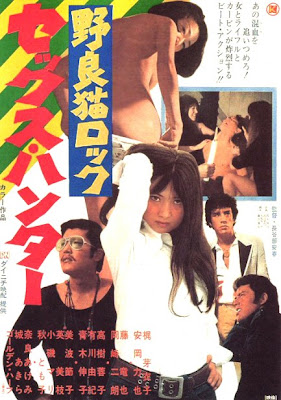
Stray Cat Rock: Sex Hunter
(Yasuhara Hasebe, 1970)


I’m certainly no expert on the strange and complex world of Japanese popular cinema in the ‘60s and ‘70s. What little information I do have is pieced together largely from reviews on other websites, DVD liner notes and the like, probably the same ones you’ve read, so I probably can’t offer much in the way of new insight here. One thing I do know about Japanese popular cinema in the ‘60s and ‘70s though is that I love it. So if you’re prepared to let me wing this one on enthusiasm alone, we’ll get on fine.

In particular, the output of Nikkatsu studios in the hazy, ‘anything goes’ period that fell between their ‘60s golden age of stylish crime/youth culture films and the studio’s unsavoury descent into ‘pink eiga’ and ‘roman porno’ territory in the early/mid ‘70s, seems to have produced a whole swathe of what is simply the most astoundingly fucking awesome genre cinema I’ve ever seen.

Western critics/experts who know more about this stuff than I do naturally have their own strong opinions re: which films from this era are worth preserving, which are best left in the vaults etc, and with opportunities to see these movies still remaining frustratingly rare in the English speaking world (despite their obvious potential for attracting a huge, post-Kill Bill crossover audience a couple of years back), the choice few titles I have been able to acquire on DVD probably represent the films that the aforementioned critics and experts have collectively gone to bat for as representing the most worthwhile and/or mind-blowing examples of the form. But even so, the fact remains: I’ve yet to see a Japanese action/exploitation/crime movie made between about 1966 and 1974 that did anything less than totally kick my ass.

There’s just something about the spirit of ‘em, I think. Watching a movie like “Stray Cat Rock: Sex Hunter” makes me happy to be alive, regardless of its flaws and imperfections. God bless Japan, it makes me want to yell. God bless them for taking our bone-headed Anglo-American exploitation movie culture and feeding it back to us in a manner more intelligent, more brutal, more beautiful, more exhilarating, more experimental, more crazy, more plain fucking cool than anything that was coming out of America at the same time. God bless them for calling movies stuff like “Detective Bureau 23: Go To Hell Bastards!” and “Battles Without Honour and Humanity: Hiroshima Death Match” that at least try to live up to those names.

Not that “Stray Cat Rock: Sex Hunter” really lives up to its name. Which is probably just as well, let’s face it. In fact, Meiko Kaji herself makes reference to this in an interview in Chris D’s book Outlaw Masters of Japanese Film;

“One thing that happened a lot with Japanese movies back then was to integrate sensational images or catchphrases into the movie titles to draw people into the theatres. For example, the ‘Sex Hunter’ film in the ‘Stray Cat Rock’ series, you get more of a social consciousness at work dealing with the persecution of mixed race teenagers. But then you have the movie called ‘Sex Hunter’! You used to get that a lot.”


Thankfully devoid then of anybody hunting for sex (in fact most of the film’s leads seem more concerned with consciously avoiding it for one reason or another), “Sex Hunter” is in fact the third entry in Nikkatsu’s “Stray Cat Rock” delinquent girl gang series, and the second to feature Meiko Kaji and Tatsuya Fuji as the top-billed stars and Yasuhara Hasebe as director.

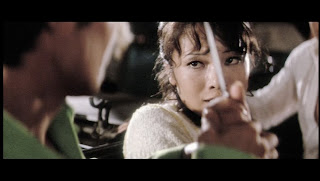
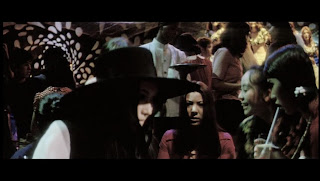
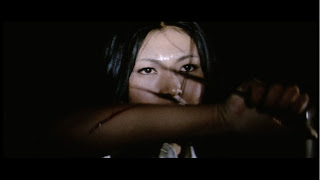
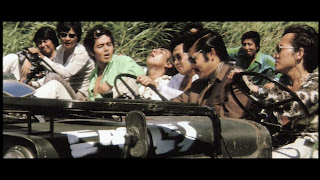
Apparently there’s no crossover of characters or plot-lines at all between these films, so starting on part # 3 is fine and dandy, although you could be forgiven for assuming otherwise as “Sex Hunter” opens midway through a mugging/beating being administered to a cringing salaryman by a gang of bad-ass teenage girls, then plunges us straight into the depths of an awesome psychedelic nightclub, where an altercation between gang leader Mako (Kaji) and her unctuous second in command Miki leads straight into a bloody nocturnal knife fight between the two girls (they fight in darkness, with a dagger in one hand and a torch in the other), as members of thuggish boy gang The Eagles circle the scene, tearing up the turf in their US Army jeeps. Kicking straight into gear with little in the way of preliminaries or explanations, it’s an exhilarating start to a movie, and the pace scarcely lets up until the closing credits, eighty something minutes later.
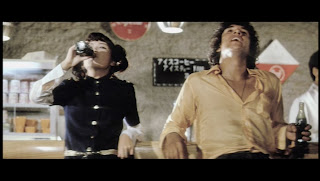

In brief, “Sex Hunter” tells the story of the increasing tensions and eventual bloody conflict between Mako’s girls and the yakuza-styled Eagles, as led by impotent, racist overlord The Baron (Fuji). At the film’s outset, the activities of the two gangs seem closely connected, as they hang out together exchanging tough-talk over whisky-cokes at the club and collectively terrorise the streets of their conveniently police-free neighbourhood.

(As with many Japanese exploitation films, “Sex Hunter” eschews the bright lights of Tokyo, instead restricting the action to a bleak, geographically-vague suburb, looking under-populated and economically bereft, characterised by the wasteland left behind by a disused USAF base – the perfect setting for the film’s overall themes of cultural desolation and adolescent abandonment, and, I’d wager, a more realistic backdrop for a Japanese crime story than the glass-fronted penthouses and skyscrapers that predominate in later films.)

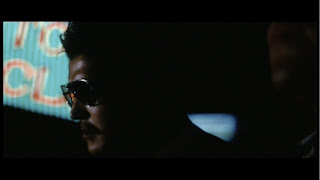
Cracks in the uneasy relationship between the two gangs are exposed when the Eagles beat up the mixed race boyfriend of Mari, one of Mako’s girls, and when The Baron – portrayed by Fuji as a classic tragic villain, seething and sweating behind mirror shades – subsequently flips out and declares a war on ‘half breeds’, sending his men to trash ‘Mama Blues’, a bar/social club frequented by the children of African-American servicemen and their ‘disgraced’ Japanese mothers.

As it happens though, the girls quite liked the folks ever at Mama Blues, and take a dim view of The Eagles’ increasingly fascistic behaviour. Furthermore, Mako has developed a pretty special friendship with Kazuma (Rikiya Yasuoka), a handsome, upstanding half-American guy who’s in town looking for his long lost sister, and is not inclined to take any shit from The Baron’s thugs.* Inevitably, the battlelines are drawn, and all manner of blood-curdling mayhem awaits.

As a director, Yasuhara Hasebe has what more faint-hearted (read: sane) film fans might consider a ‘mixed’ CV, beginning his career with the highly entertaining pop art action flick “Black Tight Killers” in ’66 before helming several “Stray Cat Rock” movies, a handful of early Sonny Chiba flicks, and the rarely seen fourth entry in the phenomenal “Female Prisoner Scorpion” series. Whilst many of Nikkatsu’s best known ‘creatives’ understandably jumped ship as the studio turned it’s resources over to the productions of violent sex flicks in the ‘70s however, Hasebe by all accounts embraced this new era with gusto, turning anyone who’d care to look up his resume on IMDB weak at the knees with a series of absolutely crazed-sounding efforts, ranging from the notoriously disturbing “Assault! Jack The Ripper” to something called “Honeymoon Surprise: Rape Train”, whose title alone makes me feel like I need therapy to recover from it.

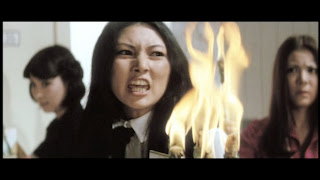
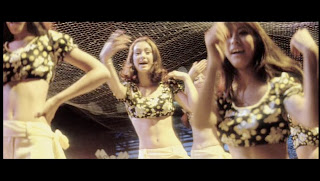
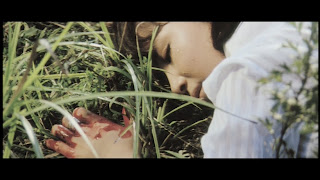
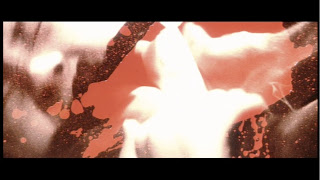
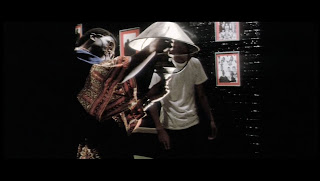
Thankfully for our purposes here though (and let’s face it, if there’s one thing to be learned from watching flicks like “Sex Hunter” and the “Scorpion” series, it’s that the artistic worth of Japanese movies should not be judged by their titles and plot synopses), Hasebe is also a flat-out killer director, with both a great feel for violent, fast-moving action and a keen eye for composition (perhaps inherited from his mentor Seijun Suzuki) that rarely lets him down, as he and cinematographer Muneo Ueda succeed in transforming practically every moment of “Sex Hunter” into a snapshot of transcendent pulp artistry that you could (and should) hang in a motherfucking gallery. All of the screengrabs I’ve included in this review have been taken at roughly desktop size, so click to enlarge some of ‘em, and hopefully my point should be self-evident. I could look at this film all day.

And if looking at stills is one thing, imagine them moving! Imagine this world of brooding, technicolour cool propelling itself through a constant turnover of knife fights, fist fights, gun fights, fire fights, chases, showdowns, pot parties, obscene trash-talk, dance sequences and bits where tough chicks just strut about the streets looking invincible, all accompanied by distorted psychedelic funk and post-Ye Ye Nippon girl-pop… godDAMN. Put simply, the entire film is a work of beautiful, pop art brutality.

On one level, the lessons that “Stray Cat Rock: Sex Hunter” seeks to teach us are basic ones: racism is stupid, violence is self-defeating, and if you go around trying to force yourself upon unwilling young women then you’ve only got yourself to blame when they return to fuck you up with a box of molotov cocktails. But beneath the film’s surface lie darker, more confused issues that imbue proceedings with a vicious counter-cultural kick reminiscent of the work of Koji Wakamatsu or Shunya Ito – “Sex Hunter” may be a great action/exploitation flick, but it’s also a brave and thought-provoking piece of Japanese cinema, exploring thorny questions of race and cultural identity with a scattershot, expressionistic approach that demands the attention of cineastes (and our aforementioned critics & experts) just as much as those of us here purely for the psychedelic nightclub scenes and cool girls having knife fights.

Whilst it is made abundantly clear to us that the racist violence of The Eagles is ugly and misguided, it’s also easy to see that the director wanted his audience, through the grotesque character of The Baron, to think about the wider circumstances which have driven these young men to act the way they do.

The Baron’s hate-filled worldview originates not so much from unthinking, inherited prejudice, but from an obsessive hatred of Americans and their post-war presence in Japan, arising from the trauma of seeing his sister raped by American GIs as a child – the same event which the film implies has also led to his sexual dysfunction and effectively ruined his life, turning him into a violent, neurotic freak. One only has to look at what American intervention in Japan has turned this guy and his criminal/sadist buddies into, and the physical desolation of the abandoned airforce base town in which they live, so see that the film’s sympathies are less clear cut than a reductive ‘racists vs. cool guys’ reading may suggest.
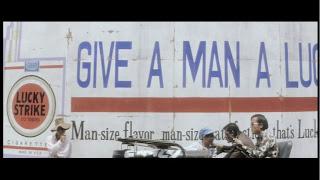

Melodramatic plot revelations aside, the real tragedy here is of course that The Baron’s quest for a native Japanese culture he can proudly defend against the foreign invaders is inherently doomed – a fact that’s almost comically underlined by the way he and his gang zoom around in repainted US Army jeeps, and spend the whole movie mimicking the mannerisms of Hollywood gangsters. The obvious parallel to guys like Hasebe (who was presumably old enough to remember the war and may even have fought in it), trying their damnedest to make distinctively Japanese films whilst shackled to the seductive allure of Anglo-American b-movies and pop culture, is inescapable, and “Sex Hunter”s bold mise en scene won’t let us forget these cruel ironies for a second.

External shots in the (sub)urban sections of the movie are dominated by oppressive billboards and neon signs advertising Coca-Cola, Pepsi or Lucky Strikes, and coke in particular is used as an ever-present reminder of American economic dominance. Both gangs habitually rattle off orders for “whisky-coke” at their club hang-out, and Mari’s status-quo threatening Jimi Hendrix-lookalike boyfriend is a coca-cola delivery guy - when The Baron’s thugs arrive to menace him, we see him pushed and beaten against crates of coke, and attacked with a broken bottle.

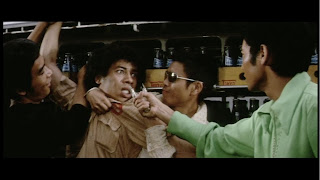

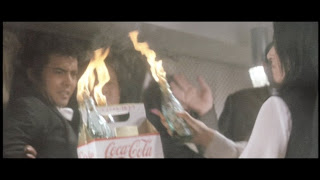
Even the girl group who sing in the club scenes are “The Golden Half”, a super-group of sorts put together to cash in on a brief trend for half-Caucasian / half-Japanese pop stars, and this mixed up exploration of cultural imperialism reaches it’s natural conclusion (and whatever else it may be, this film sure ain’t subtle) when The Eagles lure members of Mako’s gang to a spurious party and turn them over to a cabal of Caucasian ‘businessmen’ intent on holding their own ‘rape party’.** When Mako realises what’s going on and escapes from The Baron’s ham-fisted parallel attempt to seduce her, it goes without saying that her vehicle of choice as she rushes to help out her friends is a stolen Harley Davidson, and the film reaches a frenzied crescendo of symbolic, destructive chaos as the girls return to firebomb their white aggressors with – of course – flaming coke bottles!
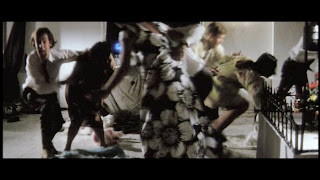
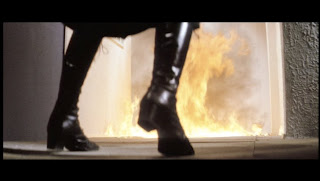

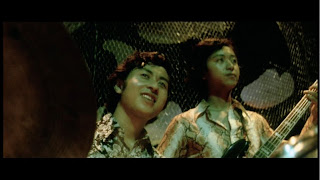
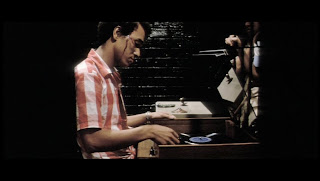
Any suggestion that Hasebe might be making a straight anti-American statement though is further muddied by the presence of ‘Mama Blues’ and its patrons – a fascinating inclusion that highlights a corner of post-war Japan rarely referenced in popular culture. Interestingly, the Mama Blues scenes seem to be filmed in a different aspect ratio from the rest of the film, leaving thick, black bars on either side of the screen. For all I know this might be because the American Cinemateque DVD*** is sourced from different prints of the movie or something, but whether intentional or otherwise, the effect is excellent, working alongside the actual prison bars that seem to form part of club’s décor to highlight the confined, closely-guarded world of these half-black, half-Asian outcasts.

With a relaxed, languid atmosphere and deep, high contrast photography, the Mama Blues scenes have a totally different feeling from the violent hyperactivity of the rest of the movie. Decorated with sombre portraits of jazz greats rather than garish corporate logos, the bar seems to be an island of calm, where an older, more refined culture holds sway. And when The Baron’s thugs intrude, they are a parody of the worst kind of Japanese machismo - screaming and bullying and revelling in their own cruelty. After they depart, we see a mixed race teenager who has been beaten by the gang get back on his feet. Slowly walking over to the turntable, he lifts the needle from the Nina Simone record that’s soundtracked the whole scene, and carefully puts it back in it’s cradle, as his friends wordlessly go about tidying the wreckage left by the intruders.

Corny stuff by the standards of a modern American movie maybe, but here the scene stands as an expression of a powerful dignity, speaking of a deep respect on Hasebe’s part for the implacable cool of black American culture, maybe even a plea for his more obnoxious fellow countrymen to try to understand and learn from it.

With such weighty themes being thrown around in such a bracingly violent and irreverent manner, it’s something of a tragedy that “Sex Hunter” takes a serious stumble in it’s final quarter, as the drawbacks of a sappy and undercooked script (and no doubt of the super-tight shooting schedules of Japanese genre films) make themselves felt, scuppering the film’s potential masterpiece status with some odd and disappointing decisions.

For one thing, the climatic girl gang vs. boy gang showdown that the film seems to have been building up to never quite materialises, as Hasebe instead plumps for a more conventional, if pleasingly nihilistic, Spaghetti Western style climax between Kazuma and The Baron’s gang, with the girls kept largely in the background.

Similarly, the characterisation of Mako herself is frustratingly uneven, with a definite tension developing between the weaker character suggested by the script, and the bad-ass gang leader demanded by Meiko Kaji’s iconic presence. Kaji herself seems to have wanted to play the character as bad-ass as possible, swaggering through scenes with an ornate sword-cane, wielding her blade like an avatar of cold, calculating vengeance, and even bringing back her floppy-hat-of-death from “Female Prisoner Scorpion: Jailhouse 41”. This is the kind of character we want from Meiko Kaji, and, for some of the movie at least, it’s the character we get.
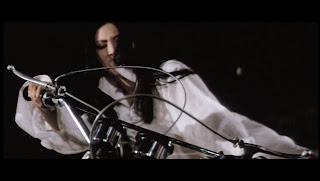
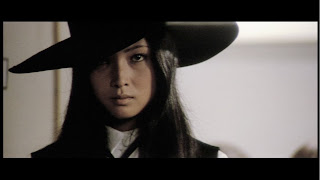

Early in the film, Mako visits The Eagles, who have captured Mari after she tried to ambush them with a knife, vis a vis the whole boyfriend-beating thing. “You’re screwed, Mari”, says Mako, after The Baron threatens his prisoner with a particularly unpleasant demise, “but if you guys do that, you’re screwed too”. The guys have a brief manly chuckle about being ordered around by a woman… but then they immediately back off, let Mari go unharmed and do exactly as the lady says. You don’t argue with THE STARE.

Later though, things are different: her role seems to become more passive when Kazuma is on hand to fill the male hero role, especially at the film’s conclusion, which finds the two lovers armed and under siege in a rickety guard-tower as The Eagles approach for a bloody showdown. Not only does Mako refuse to hold a gun here, but when the fighting begins she’s suddenly reduced to the level of the hopeless-female, familiar from any Western – hanging back, weeping and shouting “no” and “please, don’t”, as the guys duke it out. Useless. Is this the Meiko Kaji we know from the “Scorpion” and “Lady Snowblood” movies? I mean, there’s what, about eight or nine guys here, approaching on foot over open ground? Our Meiko would have grabbed the rifle and had half of them howling in pain clutching their bloody groins before we’d had time to blink. What a cop-out.
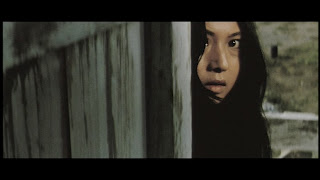
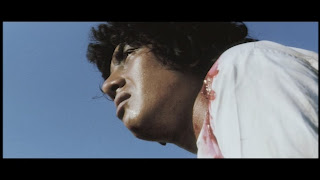

Such deficiencies are probably inevitable to some degree in a film like this – I doubt anyone had time to think too hard about characterisation and rewrites when many of the cast and crew were filming the next “Stray Cat Rock” movie literally *at the same time* as this one, hustling between two studios on different sides of town. But it’s a shame nonetheless that they sap the overall quality level of what could, under better circumstances, have been one of the all-time, unfuckable-with classics of Japanese popular cinema.

Ah well, who cares. Flaws noted and dealt with - I still thought “Sex Hunter” was a knockout. I’ve gotta say, I’m not usually the biggest fan of consciously ‘political’ cinema, but I love that unique, desperate way Japanese directors so often have of incorporating politics into their films, eschewing the drab dialectics, easy answers and – ugh - logic of lesser Euro/American filmmakers in favour of simply throwing everything into a howling mad contradictory vortex and screaming WHAT THE HEY, bringing us far closer to an understanding of the actual messed up contradictions of human interaction in the process… y’know what I mean?

I really dig those mad, screaming vortexes. It’s an approach that works well for me, and “Sex Hunter” is a fine example. Our critics and experts would lead me to believe that none of the other “Stray Cat Rock” movies are quite as remarkable as this one, presumably lacking in the kind of vision and provocative intent that set “Sex Hunter” apart. But y’know what? If there’s nothing more at the centre of the vortex than psychedelic rock, motorbikes and violent girl gangs, then WHAT THE HEY, that sounds like a pretty good vortex to me. The potent, not-on-DVD thrills of “Stray Cat Rock: Delinquent Girl Boss”, “Stray Cat Rock: Wild Jimbo”, “Stray Cat Rock: Machine Animal” and “Stray Cat Rock: Wild Measures ‘71” await, and anyone out there who can point me in their direction will be lavishly rewarded.


*Yasuoka’s character also sings the movie’s obligatory haunting, tragic love song, and it’s a pretty fine example of the form.

**By this point, you might be getting the idea this Hasebe character is pretty fixated on rape, but in his defence “Sex Hunter” is actually notable for featuring NONE of the kind of semi-nudity or leery, male-gazin’ footage you might reasonably expect to find in a film like this.

*** It’s a REALLY great DVD presentation by the way – the film looks absolutely beautiful and the sub-titling is perfect – a real treat to see a film this old and marginal treated so well. I think it’s now OOP sadly, so grab a copy while you can.