Honorable Mentions: Charles Laughton, Alec Guinness, Alastair Sim, Vincent Price, and Gene Tierney.
Showing posts with label toto2 (author). Show all posts
Showing posts with label toto2 (author). Show all posts
Monday, May 15, 2017
Five Stars Blogathon: Cary Grant Tops My List of Favorite Stars
This is my contribution to the Five Stars Blogathon in support of National Classic Movie Day. I encourage you to check out all the posts to this wonderful blogathon. When my fellow contributor Rick asked me to write about my five favorite film stars, I came up with four of them quickly. It was a challenge, though, to determine who to place in that last slot!
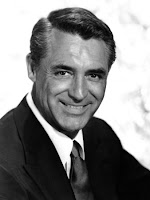 1. Cary Grant - Debonair and dashingly handsome, I most admire Cary Grant for his versatility. He can play zany roles in comedies like Holiday, charming heroes in escapist fare such as To Catch a Thief, or serious roles like the bitter government agent in Notorious. My favorite Cary Grant movies: Bringing Up Baby, North By Northwest, and The Bishop's Wife.
 2. Deborah Kerr - This gracious, understated actress lights up the silver screen with her compelling presence. She can play a lonely woman whose passion erupts on a sandy beach (From Here to Eternity) or an elegant governess in which a dance is the only way to convey her feelings (The King and I). She can even convincingly play three women in the same film (the under-appreciated Life and Times of Colonel Blimp). My favorite Deborah Kerr films must include Black Narcissus and The Chalk Garden.
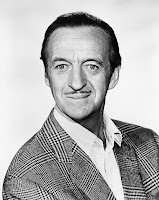 3. David Niven - This classy performer has a unique gift: He makes any movie better when he's in it. Although he became a Hollywood star, it's surprising how many supporting roles he had throughout his career. He flew alongside Errol Flynn in The Dawn Patrol, eluded Inspector Clouseau in The Pink Panther, and was one of the hotel residents in Separate Tables. He was also an entertaining writer, as evidenced by his delightful books Bring On the Empty Horses and The Moon's a Balloon. Some of my favorite films with this multifaceted actor: A Matter of Life and Death (aka Stairway to Heaven), The Birds and the Bees, and The Guns of Navarone.
 4. Danny Kaye - I always thought this gifted actor/dancer/singer should have been a bigger star. He was an absolute master of comic timing, as evidenced by the hilarious "Chalice in the Palace" and "Get it? Got it. Good!" routines in The Court Jester. He was also incredibly graceful on the dance floor, as he wonderfully displayed with Vera-Ellen in the lovely White Christmas number "The Best Things Happen While You're Dancing." These two also happen to be my favorite Danny Kaye movies.
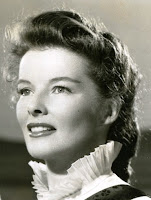 5. Katharine Hepburn - I am sure this strong-willed, intelligent actress will show up on many lists in this blogathon--and rightfully so. Like Cary Grant, she was equally at home in comedy and drama. She also managed to remain a star for an incredible five decades (six if you count a trio of made-for-TV movies and a small role in Love Affair). My favorite Katharine Hepburn films include Holiday, Desk Set, and Guess Who's Coming to Dinner.
Thursday, September 13, 2012
Alastair Sims Hosts an Evening of Revelations in "An Inspector Calls"
We receive some hints about their personalities from small comments made casually. Sheila sometimes has a bad temper. Eric drinks to excess. Gerald’s mother thinks he can better himself socially. Mrs. Birling is extremely concerned about maintaining correctness in everything. And Mr. Birling is pleased about the prosperity and progress of the times, but naïve about the potential for war. He announces to Gerald that there is a good chance for him (Mr. Birling) to receive a knighthood “so long as we all behave ourselves and don’t get into the police courts.” Gerald responds, “You seem a nice, well behaved family to me.”
Right on cue, into their midst, appears Inspector Poole, who is about to change their lives forever. He brings the news that a young woman, Eva Smith, has just died from ingesting disinfectant. The inspector wants to speak with all five people and, one by one, a complex story emerges.
After a few months, Eva found another position but had an encounter with a customer who had a hissy fit when she tried on a hat that didn’t suit her. The rude patron also happened to be a Birling, which resulted in Eva’s second firing. The story continues with each member at the table’s history with this woman.
Inspector Poole is expertly portrayed by Alastair Sim. He is an unusual detective who seems to know everything before it is revealed. As the story unfolds in flashbacks, we see that some members of the family truly are concerned for the part they may have played in Eva Smith’s predicament.
The mystery conveys a strong message: sometimes we can impact another person’s life much more profoundly than we may realize.
All of the cast members had busy careers on film but the one I have seen most often, besides Alastair Sim, was Brian Worth (Gerald Croft). Worth appeared in a host of popular British television shows including the Quatermass and the Pit serial, Danger Man, The Saint, The Prisoner, The Champions, and The Protectors. The other five actors include Jane Wenham as Eva, Eileen Moore as Sheila, Olga Lindo as Mrs. Birling, Arthur Young as Mr. Birling, and Bryan Forbes as Eric.
Thursday, April 19, 2012
Buff Guys, Bikini Babes, and Rockin' Surf Music Abound in "Muscle Beach Party"
| Julie, the Contessa, watches as Flex flexes his muscles. |
Flex: I’m the handsomest.
Contessa: And so big.
Flex: Yes, ma’m.
Contessa: I want to be alone with you.
Flex: Did you see this tricep?
Contessa: I want to take you away with me.
Flex: The way I can make it ripple?
Contessa: Right now.
Flex: I haven’t had my lunch.| Jack Fanny (Don Rickles) motivates his bodybuilders, led by Peter Lupus on the far right. |
I have something in common with a Contessa. No, it’s not the wealth, nor the beauty. But we both think Peter Lupus, billed under the stage name Rock Stevens, is cute and fun. Muscle Beach Party gives Lupus’s character Flex Martian, also known as Mr. Galaxy, a chance to really show off his award-winning physique. Lupus became regular Willie Armitage on Mission: Impossible two years after this classic entry in the Beach Party series. Flex proudly wears a shiny purple bathing suit with a gold cape and is surrounded by seven shorter muscular men in shiny pink bathing trunks and pink capes (named Biff, Rock, Tug, Riff, Hulk, Sulk, and Clod) and their manager Jack Fanny, perfectly portrayed by Don Rickles.
| Frankie explains to Dee Dee, a bit condescendingly, that "girls don't fly." |
| Luciana Paluzzi before Thunderball. |
| Annette surfing in her cute suit... in front of a rear screen wave. |
| Morey Amsterdam mugging as Cappy. |
The ending is not a surprise but viewers watch Beach Party films for the fun in the sun and the singing and dancing. There are lots of shots of surfing and even a “walls of Jericho” to separate the young women from the young men in their cramped lodging. It's a perfect movie for light summer viewing, with or without a beach.
Monday, February 20, 2012
Classic Movie Dogathon: Courage of Lassie
This dog's life is not an easy one and he undergoes many harrowing moments including making rescues in a blizzard and on a battlefield (he has been renamed Duke at this point). Courage of Lassie is a movie that draws the viewer in and keeps him firmly planted in his seat. It is frightening to see the Collie's actions on trial when he cannot speak for himself. Frank Morgan tries to speak for him but doesn't know or understand many of the circumstances that have brought Bill to this point.
Pal is the wonderfully talented male Collie who played Bill/Duke. He starred in all seven Lassie films and played Lassie in four of them. In The Painted Hills he was named Shep. Pal actually played Laddie in The Son of Lassie.
Be sure to check out the rest of the films in the Classic Movie Dogathon. Click here for the full schedule.
Friday, October 21, 2011
Ode to the Movie Mutant Monsters
So very many mutants,
oh how is one to choose?
Tarantula or Swamp Thing
or even Killer Shrews?
It's Alive's scary baby
really knew how to creep.
If the sea is your thing,
try Humanoids from the Deep.
Gamma People on the earth,
Mole People down below.
And in the air Ghidrah flew
despite Godzilla's blow.
So how to choose a mutant?
Remember to use care.
Don't feed the plant in Little Shop,
Don't feed the plant in Little Shop,
Shoo The Fly off your chair!
Wednesday, October 20, 2010
A Scent of Mimosa Signals Ghostly Doings in "The Uninvited"
1. A great setting.
2. An interesting back story.
3. Unusual happenstances.
4. An intriguing score.
5. Effective use of light and shadow.6. A possible ethereal presence.
All of these criteria are on display in the 1944 ghost tale The Uninvited.
While vacationing along the coast of England, a composer (Ray Milland) and his sister (Ruth Hussey) discover a beautiful house located next to the sea, appropriately named Windward. They decide impulsively to purchase it, even though their terrier Bobby refuses to climb the stairs. (People would be so much wiser if they would take cues from their pets.) Bobby soon leaves, realizing that their presence in the house is “uninvited.”
Windward's previous owner (Donald Crisp) is cold and curious His granddaughter, Stella Meredith (Gail Russell), lives with him because her mother is dead. Stella is horribly upset to learn that the house has been sold. Her grandfather had forbidden her to go to the house, but the new owners welcome her warmly.
The house contains an artist’s studio which is decidedly colder than any of its other rooms. There is an occasional sudden smell of mimosa, and it is sometimes very strong. But it is the sound of a woman sobbing uncontrollably in the wee hours of the night that truly lets us know there is a mystery afoot. But is there really a ghost? And if so, who is she and what does she want?
The Uninvited relies heavily on music and visuals to create its haunting atmosphere. Victor Young composed the score, which features the lovely “Stella by Starlight” theme. His 220 film credits include Scaramouche, The Quiet Man, and The Blue Dahlia.
The cast features Alan Napier as a doctor. Napier had a long, successful film career, but is best remembered for playing the very reliable butler Alfred to Batman in the 1960s TV series.
One of the scariest characters of the movie is Miss Holloway (Cornelia Otis Skinner), who is unfortunately in charge of a sanitorium named for Stella’s mother, Mary, for whom she has an unnatural affection reminiscent of Mrs. Danvers to Rebecca.
Most of the performers are solid except for Gail Russell. The Uninvited is not a masterpiece, but it has all of the elements needed to make it a recommended viewing for those who enjoy a good ghost story.
Wednesday, July 14, 2010
Champagne for Caesar: Bubbling Over With Fun!
Champagne for Caesar is a fun, lesser-known film, in which neither champagne nor Caesar plays a critical role in the story. The latter is actually a parrot with some bad habits taught to him by college students. The former is one of the preferred habits of said bird.
The movie focuses on Beauregard Bottomley, a genius who has trouble finding work and shares a small bungalow with his sister Gwenn and the parrot. Beauregard is delightfully played by the versatile, silver-tongued Ronald Colman. The siblings observe a TV show aired on a small television in a store window around which a number of other people have gathered. The program is called “Masquerade for Money” where contestants dress up as a character about whom the host, Happy Hogan, then asks questions.
The story line is often predictable, but it is quite fun to see everything play out because of the talented, eclectic, and capable cast.
Flame O’Neill is expertly performed by Celeste Holm, who offers a wicked little giggle when her ill charge is trying to sleep. She is the perfect temptation for Beauregard, but he does eventually cause her to have “Bottomley” trouble.
Art Linkletter, who died this May at the age of 97, was quite good as the host of “Masquerade for Money” Happy Hogan.
The role of Frosty, the shapely neighbor who is ogled by all the men except Beauregard, was convincingly acted by Ellye Marshall, whose resume only includes five films.
Mel Blanc lent his remarkable voice to Caesar, the parrot.
Director Richard Whorf had a very successful career directing on TV including several episodes of Have Gun - Will Travel, Gunsmoke, My Three Sons, and The Beverly Hillbillies.
Champage for Caesar is available on DVD. Let the bubbles begin!
Sunday, July 4, 2010
Ruggles of Red Gap: What Price Freedom?
An excellent example of this is on display in this lesser-seen gem starring the phenomenally talented Charles Laughton as Ruggles of Red Gap. Ruggles is a very proper manservant to Lord Burnstead in England. His employer, however, offers him as chattel as part of a bet that he loses in a poker game to some unusual Americans, Egbert and Effie Floud (Charles Ruggles and Mary Boland). Effie is thrilled beyond belief that this valet will be able to influence her wealthy, but decidedly uncultured, husband. But Egbert has other ideas. He is glad to have a new buddy and introduces Ruggles as “the Colonel” to the townsfolk back home in the U.S.
Ruggles is like a fish out of water. He doesn’t quite know what to make of this situation. He is an excellent servant but confused as to what his responsibilities are supposed to be in this household that is so decidedly different from the one he has known in England. Still, he is impressed with something he never quite grasped before. There are opportunities in this new country for everyone who is willing to work hard.
Ruggles befriends Mrs. Judson (ZaSu Pitts) and demonstrates his remarkable cooking abilities. Soon, the man who was displaced from his comfortable employment into a brand new environment is learning what it means to be a free man.
In the most touching scene of a movie that is mostly filled with humor, Egbert attempts to quote Lincoln’s Gettysburg address in the Silver Dollar Saloon when the quiet and gentle voice of Ruggles eloquently recites it in full. It is a remarkable moment and one that always makes me thankful for the many blessings afforded to us in our beloved country.
The supporting cast sparkles in Ruggles of Red Gap, especially Charles Ruggles who plays the endearing Egbert. It’s the “nouveau riche” Egbert who personifies the American spirit in the film. He accepts every person as his equal, never forgets a friend, and ignores any distinction between classes.
It’s interesting that the film’s most powerful scene—Ruggles’s reciting of the Gettysburg address—wasn’t in the original 1914 novel. But that scene and the strong performances give Ruggles a depth that’s totally missing in the 1950 Bob Hope remake Fancy Pants.
If you’ve never seen Ruggles of Red Gap, it makes for excellent viewing on this patriotic holiday. I truly hope that each and every American celebrates today with thanks given to our Lord and to those who made our freedom possible. Happy Fourth of July!
Wednesday, March 24, 2010
Into the West: The Hanging Tree--A Harbinger of Hope
The same could be said for having a real physician in this make-shift town (in lieu of a self-proclaimed healer named Grubb). On the surface, Doc Frail fits the bill. When a young girl’s illness turns out to be nothing but malnutrition, Frail loans the poor family his cow to provide milk. His only payment: a kiss on the check from his young patient.
But there’s a dark side to this quiet physician that wears his holster like a gunfighter. There are rumors about his past involving a man and a woman killed when a house burned to the ground. There’s also his treatment of Rune (Ben Piazza), a young man shot while trying to rob a sluice. Frail saves the embittered young man’s life, only to make him work as his bond-servant for payment—threatening to turn over the bullet he removed as evidence.
When a stagecoach is robbed, the townspeople divide into groups to look for its crew and passengers. They agree to fire two shots if someone has been found dead and three shots if alive. Karl Malden plays the sleazy prospector Frenchy, who finds the only survivor: an attractive young woman named Elizabeth (Maria Schell), who has been badly sunburned and temporarily blinded. Frenchy fires twice, waits for dramatic effect, and then fires a third shot in the air with a sly smirk on his face. This sets the tone for Frenchy’s questionable character, which comes into play again.
As Elizabeth recovers under the care of Doc Frail, she, Rune, and Frail form something of a modern family—complete with the usual frictions. The “father” has trouble expressing his emotions. The “son” thinks he hates his strict father. The “mother” tries to make peace between the two of them. Still, it’s a functional unit until Frail’s stubbornness—and perhaps guilt from the past—breaks up the family.
The Hanging Tree shares many similarities with the great Anthony Mann-James Stewart Westerns like Winchester ’73, The Far Country, and Bend of the River. The hero is a man with a questionable past who is given another chance at life. In the Mann-Stewart films, the heroes are often redeemed by communities (as in Far Country and Bend of the River). In The Hanging Tree, redemption comes in the form of a woman’s love and, to an extent, a boy’s respect for his father figure.
The Hanging Tree is also a well-developed portrait of a community that exists solely because of the gold mines. There are no elaborate saloons with musical performers as in many Westerns. The “town” is littered with make-shift buildings and tents filled with prostitutes and self-serving men like Grubb. As in Mann’s Westerns, the townspeople are an important part of the overall fabric of the film. They are sketched in carefully crafted vignettes where we get to know the kindly storekeeper, his suspicious wife, the vengeful gambler, etc.
Yet, while it plays like an Anthony Mann picture, The Hanging Tree is a testament to its underappreciated director, Delmer Daves. A graduate of Stanford University’s law school, Daves broke into the movie business as a highly-successful screenwriter, working on the scripts of The Petrified Forest, An Affair to Remember, and many others. As a writer and later director, he proved capable of making great films in almost any genre. Who else could take credit for making a war film with Cary Grant and John Garfield, a film noir with Edward G. Robinson, and a big screen soap with Troy Donahue? What Daves brought to all those films—and The Hanging Tree—was strong story-telling and an eye for great visuals. (He also seemed to have a knack for working with great composers like Max Steiner.)
The cast of The Hanging Tree is impeccable, led by Cooper’s simmering restraint and Maria Schell’s understated charm. George C. Scott, in his first film role, makes a strong impression in his brief scenes as Grubb. Karl Malden shows his versatility once again, revealing Frenchy’s sliminess in subtle layers.
There are plenty of Westerns with great title songs, such as Gunfight at the O.K. Corral and 3:10 to Yuma. My favorite, though, is the Oscar-nominated The Hanging Tree, which was written by Jerry Livingston and Mack David. It nicely summarizes the moral of this Western tale: that “to really live, you must almost die” and “when a man is gone, he needs no gold.”
The Hanging Tree is a Western without shootouts at the bar, although guns point the way to life and death. It is a story of survival in challenging times, where sometimes you have to lend a hand, regardless of the cost. And where, in the end, family and love are more important than a lifetime of riches.
Tuesday, February 23, 2010
Name the Movie Game (23 February Edition)
Hi, everyone! As always, here's a quick recap of the rules:
1. You may ask up to five yes or no questions a day. Each guess does count as one question.
2. Please number each question or each guess to make it easier to respond to them.
3. The player who is the first to guess the movie correctly will be the one to make the selection for the following week’s Name the Movie Game.
4. The game will end on Saturday night if the movie is not guessed.
I will answer questions until 11 p.m. EST tonight.
I'm thinking of a movie made in the 1950s.
1. You may ask up to five yes or no questions a day. Each guess does count as one question.
2. Please number each question or each guess to make it easier to respond to them.
3. The player who is the first to guess the movie correctly will be the one to make the selection for the following week’s Name the Movie Game.
4. The game will end on Saturday night if the movie is not guessed.
I will answer questions until 11 p.m. EST tonight.
I'm thinking of a movie made in the 1950s.
Thursday, February 18, 2010
Love Stories: A Matter of Life and Death
British Squadron Leader Peter D. Carter (David Niven) finds himself on the 2nd of May 1945 in a situation without a good resolution. The bombed and tattered airplane he is flying is on fire, without working instruments or landing gear, and is going to crash. There are no parachutes left because he has sent all of the other men out with them, except for Bob who has already died. Peter is a poet and quotes from Sir Walter Raleigh’s The Passionate Man’s Pilgrimage, whose verses chronicle a believer’s soul being taken to heaven, where it is forgiven, and awaiting its immortal body. Peter also quotes from Andrew Marvell’s To His Coy Mistress, the passage with “But at my back I always hear Time’s winged chariot hurrying near” because he knows his minutes are numbered and passing quickly.
The person with whom Peter is speaking is an American stationed in England named June (Kim Hunter), who is attempting to maintain radio communication with him to help if at all possible. Peter provides June with the critical facts of what has happened to Station Warrenden bomber group AG. He asks June to send a telegram to his mother and two sisters about his love for them. Peter explains he is going to bail out, without a chute, because he would rather jump than fry.
Peter becomes concerned he is frightening June and he doesn’t want to do that. He asks if she is pretty and tells her she has a good voice and guts and, if she is around when they find his body, she should look away. Peter presses and tells June he wants to be alone with her. He learns she was born in Boston, Mass., and asks the big question.
Peter: Are you in love with anybody? No, no, don’t answer that.
June: I could love a man like you, Peter.
Peter: I love you, June. You’re Life, and I’m leaving you.
The error of not collecting Peter at his appointed time was made by Conductor 71, charmingly portrayed by Marius Goring (who starred with Moira Shearer in The Red Shoes, beautifully written about at the Café by ClassicBecky). He is sent to bring Peter in now but Peter refuses to go with him. June takes Peter to meet Dr. Frank Reeves (Roger Livesey), who sincerely wants to help Peter and encourages him to fight. And that is what the movie becomes, as this matter of Peter’s life and death is argued before a celestial court.
This film was lovingly made by the Archers, Sir Michael Powell and Emeric Pressburger, just after the end of WWII. Jack Cardiff provided the spectacular cinematography. David Niven and Kim Hunter have remarkable chemistry and are provided excellent support by Roger Livesey, who had appeared in two other Archers’ films The Life and Death of Colonel Blimp and I Know Where I’m Going. Another of my favorite films is their atmospheric Black Narcissus, which features cinematography, courtesy of Jack Cardiff again, that is arguably among the most brilliant lensing ever done. That film's unforgettable performance is provided by Kathleen Byron, who has a small role in A Matter of Life and Death.
In rewatching this film with my husband, it was pleasant to recall my first viewing. Though three decades have moved along, we are still very much in love.
Tuesday, February 9, 2010
Name the Movie Game (9 February Edition)
Hi, everyone! As always, here's a quick recap of the rules:
1. You may ask up to five yes or no questions a day. Each guess does count as one question.
2. Please number each question or each guess to make it easier to respond to them.
3. The player who is the first to guess the movie correctly will be the one to make the selection for the following week’s Name the Movie Game.
4. The game will end on Saturday night if the movie is not guessed.
I will answer questions until 11 p.m. tonight (and starting again tomorrow if we're still playing). I'm thinking of a classic movie made in the 1930s. Let the game begin!
1. You may ask up to five yes or no questions a day. Each guess does count as one question.
2. Please number each question or each guess to make it easier to respond to them.
3. The player who is the first to guess the movie correctly will be the one to make the selection for the following week’s Name the Movie Game.
4. The game will end on Saturday night if the movie is not guessed.
I will answer questions until 11 p.m. tonight (and starting again tomorrow if we're still playing). I'm thinking of a classic movie made in the 1930s. Let the game begin!
Monday, January 4, 2010
A Month of Mysteries: The Falcon and the Co-Eds
At the little town just outside where Bluecliff is located, the Falcon meets three fun young girls, who are the daughters of the caretaker at the school, and rides in with them in the school car. They provide information and legwork for the Falcon and some comic relief for movie watchers. The credits refer to them as the first, second, and third Ughs but these talented young ladies sing as well as act.
Technically, Tom Conway took over the reel part of the Falcon’s brother from his real-life brother George Sanders, who is reported to have fatigued with the B-movie role. Conway first appeared in The Falcon’s Brother (1942) and then in nine additional offerings where he was referred to as simply the Falcon.
Jean Brooks appeared as different characters in six Falcon offerings. She and Isabel Jewell appeared together again in The Leopard Man, written by Ardel Wray, who also did the story and screenplay for The Falcon and the Co-Eds. Two of the Ughs were sisters and also appeared in The Falcon in Mexico.
Sunday, December 20, 2009
12 Days of Christmas: The Bishop's Wife
Snow fights and skating and shopping with Dudley
Lunch at Michel’s and a choir quite Godly
Divinely decorated Christmas tree
Done in one minute with angelic glee!
When the harp sounds
When the chair sticks
Think you’re feeling sad?
Then just think of Cary Grant smiling at thee
And then you will feel real glad!
(sung to the music of “My Favorite Things”)
I love this film! It is an endearing reminder to live giving thanks for the many blessings we have been given and a perfect movie to visit and revisit during the Christmas season.
(If you're a Loretta Young fan, click on her name in the Labels to read Toto2's review of Come to the Stable and Sazball's tribute to The Loretta Young Show.)
Tuesday, December 15, 2009
Name the Movie Game (15 December Edition)
As a reminder, here are the rules:
1. You may ask up to five yes or no questions a day. Each guess does count as one question.
2. Please number each question or each guess to make it easier for me to respond to them.
3. The player who is the first to guess the movie correctly will be the one to make the selection for the following week’s Name the Movie Game.
4. The game will end on Saturday night if the movie is not guessed before then.
I will be able to answer questions until about 11:00 p.m. daily Eastern time.
I am thinking of a movie that was made in the 1940s. Good luck!
1. You may ask up to five yes or no questions a day. Each guess does count as one question.
2. Please number each question or each guess to make it easier for me to respond to them.
3. The player who is the first to guess the movie correctly will be the one to make the selection for the following week’s Name the Movie Game.
4. The game will end on Saturday night if the movie is not guessed before then.
I will be able to answer questions until about 11:00 p.m. daily Eastern time.
I am thinking of a movie that was made in the 1940s. Good luck!
12 Days of Christmas: Barbara Stanwyck Hosts a Christmas in Connecticut
Happily married housewife,
Mother of one precious baby,
Loves to cook with a passion
In a beautiful Connecticut farmhouse
Author of Smart Housekeeping column
The above profile of Elizabeth Lane, smartly played by Barbara Stanwyck, sounds pretty awesome. Yet the only elements of truth are contained in the last line and even this is fraught with lies because every recipe published in Lane’s column is taken from her friend, professional chef Felix Bassenak, delightfully portrayed by S. Z. “Cuddles” Sakall.
The comedy of errors begins with a frenzy here! The hero, Jefferson Jones, played by Dennis Morgan, turns out to be a handsome and caring young man who finds himself attracted to what he thinks is a married woman with a young baby while Lane is equally smitten with Jones.
Some humorous scenes include when different babies are dropped off at the farmhouse to pass for Lane’s made-up child, one a blonde boy and the other a brunette girl. There are a number of attempts at a marriage between Lane and John Sloane (Reginald Gardiner)--a fellow who does care for her, is hosting the farce at his Connecticut farm, and is acting as the husband/father--but something always interrupts the effort.
Again, this movie was disastrously remade in 1992 and is reported to being remade even as I write, this time with Jennifer Garner.
Thursday, December 10, 2009
12 Days of Christmas: Come to the Stable
Loretta Young and Celeste Holm are radiant as sisters of the Order of Holy Endeavor. They have to work with three men who each provide obstacles to their purpose: a composer and neighbor, Robert Mason (Hugh Marlowe), a Bishop (Basil Ruysdael) with no money to assist them and the power to stop their effort, and a wealthy “bookie” in New York named Luigi Rossi (Thomas Gomez) who owns the land on which they want to build.
The screenplay was written in 1949 by Clare Boothe Luce and was quite different from her previous works, including The Women. In 1944, Luce’s only child, Ann, died at the age of 19 in an automobile accident. Part of Luce’s healing from this tragedy included her conversion to Roman Catholicism. Come to the Stable was her first written work after these events.
There is a charming quality to this film that is reflected in unlikely happenstances and the luminescent countenances of Loretta Young and Celeste Holm. Dooley Wilson is delightful as Anthony James, an employee of Mason who, along with Miss Potts, provides consistent support for the sisters, despite the challenges they encounter.
Interesting note: The four areas named on the sign post exist in Israel. Pennsylvania appears to have all four areas although Jordan is a township. The box containing my videotape copy of the movie identifies the location as Bethlehem, Connecticut. There are, however, several dozen cities by that name in the U.S. The location would seem to need to be in close proximity to New York because the nuns travel there in a jeep that is open at the top.
Sunday, November 29, 2009
A Holiday Shopping Poll
1. The Shop Around the Corner bookstore in You’ve Got Mail, where proprietress Kathleen Kelly (Meg Ryan) offers up some especially excellent children’s books in a family owned bookstore. The credits list Books of Wonder Bookstore and I recognized (and drooled over) their Oz book section in the film. Tom Hanks plays the owner of Fox Books, a successful chain of discount stores, with whom Kelly is communicating via e-mail. You’ve Got Mail is a remake of The Shop Around the Corner as is In the Good Old Summertime. The latter is a musical and the store featured there is Oberkugen’s Music Shop, run by S. Z. “Cuddles” Sakall.
2. The FAO Schwarz toy store in Big, where the owner of the Macmillan Toy Company (Robert Loggia) plays a couple of duets with the child-adult Tom Hanks on a Walking Piano. That truly looked like fun to me!
3. Neeley’s Department Store, owned by wealthy John P. Merrick (Charles Coburn), in The Devil and Miss Jones. Neeley’s is undergoing labor union discussion, much to the dissatisfaction of the very private Merrick, who chooses to work there and learn what is taking place. The store is well staffed by Mary Jones (Jean Arthur), Hooper (Edmund Gwenn), and Elizabeth Ellis (Spring Byington).
4. Macy’s Department Store, in 1947’s heartwarming Miracle on 34th Street. Kris Kringle (Edmund Gwenn) actually works there as does the lovely, but skeptical, Doris Walker (Maureen O’Hara). You may run into Doris’s young daughter, Susan, (Natalie Wood) while shopping.
5. Mr. Magorium’s Wonder Emporium, a toy store with a supernatural bent. Mr. Edward Magorium (Dustin Hoffman), at 243 years, is seeking to leave and chooses to bequeath his extraordinary shop to Molly Mahoney (Natalie Portman). You would want to have a strong belief in magic for this store and its merchandise to truly benefit from your shopping experience there.
Cast your vote in the poll in the sidebar...and happy shopping!
Tuesday, November 17, 2009
"Name the Movie" Game (17 November 2009 Edition)
Put on your game face, Café patrons, because I am thinking of a movie.
Rick’s Rules Reminders:
1. You may ask up to five yes or no questions a day. Each guess does count as one question.
2. Please number each question or each guess to make it easier for me to respond to them.
3. The player who is the first to guess the movie correctly will be the one to make the selection for the following week’s Name the Movie Game.
4. The game will end on Saturday night if the movie is not guessed before then.
I will be able to answer questions tonight until 11 p.m. Eastern.
Here we go! I am thinking of a movie that was made in the 1950s. This movie was adapted from a play. Good luck!
Rick’s Rules Reminders:
1. You may ask up to five yes or no questions a day. Each guess does count as one question.
2. Please number each question or each guess to make it easier for me to respond to them.
3. The player who is the first to guess the movie correctly will be the one to make the selection for the following week’s Name the Movie Game.
4. The game will end on Saturday night if the movie is not guessed before then.
I will be able to answer questions tonight until 11 p.m. Eastern.
Here we go! I am thinking of a movie that was made in the 1950s. This movie was adapted from a play. Good luck!
Wednesday, November 11, 2009
Feel Good Movies: A Life-Affirming Month is Shared in "Enchanted April"
TO THOSE WHO APPRECIATE
WISTERIA AND SUNSHINE
SMALL MEDIEVAL ITALIAN CASTLE
on the shores of the Mediterranean to
be Let furnished for the month of April.
WISTERIA AND SUNSHINE
SMALL MEDIEVAL ITALIAN CASTLE
on the shores of the Mediterranean to
be Let furnished for the month of April.
When she spots an acquaintance, Rose Arbuthnot (Miranda Richardson), reading the same ad at the Nightingale Women’s Club, Lotty decides it must be providence. She sees in Rose a soulmate who also needs a break from her monotonous everyday existence. Lotty proposes that they rent the castle and take a vacation just for themselves. As she explains to Rose: “I’ve been doing things for other people since I was eleven and I don’t feel any better for it.”
To defray the costs, they advertise for two other roommates. Only two women respond: Mrs. Fisher (Joan Plowright), a lonely, elderly woman who wants to “sit in the shade and remember better times” and Caroline Dester (Polly Walker), an attractive socialite tired of being relentlessly pursued by men.
During the month they share together in their lovely chateau surrounded by verdant splendor, these four women learn about each other, gain insight into themselves and their loved ones, and emerge with a new outlook on life. Perhaps everything works out too neatly in the end, but Enchanted April is a joyous, life-affirming film and there’s nothing wrong with that.
The cast is impeccable, with the four leading ladies receiving excellent support from Alfred Molina as Josie’s business-minded husband and Jim Broadbent as Rose’s feckless, but redeemable, husband. Michael Kitchen charmingly plays the owner of the castle, the visually-impaired George Briggs.
Equally impressive is Mike Newell’s subtle direction. The London scenes are photographed in drab, brownish tones, while the color seems to explode with brilliance when the action shifts to Italy. Newell also makes effective, constrained use of voiceovers that let us eavesdrop into each character’s thoughts.
Enchanted April was made for BBC television, but released theatrically in the U.S. Its source novel was first adapted for the screen in 1935, but I’ve never seen that version. This one is a film to be cherished.
Subscribe to:
Posts (Atom)