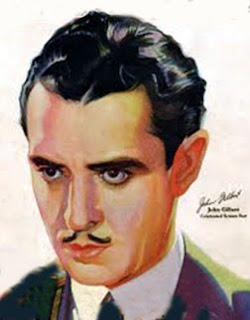
Showing posts with label greta garbo. Show all posts

Wednesday, February 14, 2018

The Five Biggest Stars of the 1930s

In earlier posts, we listed our picks for the five biggest stars of the 1940s, 1950s, and 1960s. The stars of the 1930s faced a decade of transition as the movie industry moved from silent films to almost exclusively talkies. The big change didn't matter for a handful of stars (e.g., Greta Garbo), but for others it may have contributed to their decline. As always, new stars emerged and they dominate our list below. As with our other Biggest Stars posts, our criteria focused on boxoffice power, critical acclaim, and enduring popularity.

1. Greta Garbo - In 1930, at the age of 25, Garbo was already a huge boxoffice attraction. Her first talking film Anna Christie was the highest grossing film of 1930. Her popular and critical successes continued throughout the decade with Mata Hari (1931), Grand Hotel (1932), Anna Karenina (1935), Camille (1936), and Ninotchka (1939). She earned four Oscar nominations during the decade, but never won. At the height of her popularity, she was earning $300,000 per film.

2. Clark Gable - Starting in 1932, the International Motion Picture Almanac ranked the top ten stars at the boxoffice annually. Clark Gable made the Top 10 every year of the 1930s and was the runner-up to Shirley Temple for the top spot three times. He also received his only Oscar nominations for It Happened One Night (which he won as Best Actor), Mutiny on the Bounty, and Gone With the Wind. Yes, Mr. Gable had a very good decade.

3. Bette Davis - She arrived in Hollywood in 1930 and had appeared in over 20 films before garnering critical acclaim for Of Human Bondage (1934). Who forget how she spewed out her classic line to Leslie Howard: "And after you kissed me, I always used to wipe my mouth! Wipe my mouth!"  Her performance earned Bette Davis her first Academy Award nomination. By the time the decade ended, she has won Oscars for Dangerous (1935) and Jezebel (1938). She also appeared in popular films such as The Petrified Forest (1936), Dark Victory (1939), and The Private Lives of Elizabeth and Essex (1939).

4. Fred Astaire & Ginger Rogers - They made their debut as a team in supporting roles in 1932's Flying Down to Rio. By the end of the decade, Fred Astaire and Ginger Rogers were the most famous dancing duo in the history of film. Nine of their ten collaborations were made in the 1930s, including Top HatSwing Time, and Shall We Dance. Their popularity was so great that Astaire earned a percentage of the profits on some of their movies--a rare practice in Hollywood at the time. Alas, Rogers made considerably less than her co-star, but she also branched out to serious roles and earned an Oscar in 1940 for Kitty Foyle.

5. Shirley Temple - In retrospect, it's hard to appreciate Shirley Temple's immense popularity in the 1930s. But she was the biggest draw in the U.S. for four years in a row (1935-38) and ranked in the Top 10 for another two years (1934 and 1939). But the movie-going public can be fickle and, following the commercial failure of The Blue Bird in 1940, Shirley Temple's career was never the same. She had peaked at age 12!

Honorable Mentions: Katharine Hepburn, Luise Rainer, Paul Muni, Myrna Loy, and Errol Flynn.

Monday, June 10, 2013

Classic Movies About Amnesia

Garbo ponders her identity.
A plot device staple, despite its unlikely real-life occurrence, amnesia has shown no favoritism toward any particular genre nor sex. Screen legend Greta Garbo made it fashionable for women to forget their identities in 1932's As You Desire Me, thus inspiring other actresses to ponder “Who am I?”  A sample roster spans five decades and includes Jennifer Jones (Love Letters), Ava Gardner (Singapore), Karen Valentine (Jane Doe), and Lindsay Wagner (Stranger in My Bed).  

Peck and Ingrid Bergman in Spellbound.
Males have proven to be equally forgetful, especially William Powell and Gregory Peck, both of whom suffered two bouts of amnesia (Powell in I Love You Again and Crossroads, Peck in Spellbound and Mirage). Greer Garson, who dealt with Ronald Colman's loss of memory in Random Harvest (1942), experienced it herself earlier in Remember? (1939). In an unusual plot twist, she and Robert Taylor played a bickering couple who take a potion that causes amnesia and then wind up falling in love again. Amnesia has also separated lovers in high-class soap operas like Random Harvest, Love Letters, and Singapore.

A confused Garner in Mister Buddwing.
It's hard to remember many amnesiac comedies, although Desperately Seeking Susan and The Road to Hong Kong spring to mind with little difficulty. The most interesting amnesiac plots have appeared in mysteries and espionage thrillers. Gregory Peck played the new head of an asylum who turns out to be an impostor with amnesia in Hitchcock's Spellbound (1945). Warner Baxter's The Crime Doctor was a sleuthing psychologist, who had been a master criminal before being reformed by amnesia. Unethical psychiatrist Tony Perkins tried to manipulate amnesiac killer Charles Bronson into murdering his wife's lover in the 1971 thriller Someone Behind the Door. James Garner, unable to remember his name, saw a Budweiser truck and an airplane and decided to call himself Mister Buddwing (1966). It was certainly one of the more commercial films of its time.

The article was reprinted with the authors' permission from the Encyclopedia of Films Themes, Settings and Series.

Saturday, January 8, 2011

The Greatest Dramatic Female Role: Camille

camille
In 1852 Alexandre Dumas, fils., published his dramatic novel La Dame aux Camelias. After becoming an overwhelming success in France, the novel was adapted into what is considered the most popular stage play ever produced: “Camille”. Based on Dumas’ own relationship with the tuberculosis-ridden courtesan Marie du Plessis, the story has seen countless retellings on both the stage and screen.  The most recent film adaptation is Baz Luhrmann’s outstanding musical, Moulin Rouge (2001), starring Nicole Kidman as Satine. And, if you happened to be at the Met on New Year’s Eve you saw the newest (and most energetic) version of Verdi’s “La Traviata”—the operatic retelling of “Camille” (but with a name change to Violetta). Whatever name the female lead is given, the story of “Camille” is one every actress worth her salt wants to play.  The New York Times said it best in 1904: “What the North Pole is to the intrepid explorer seeking for fame Camille is to the actress. It is the undiscovered country, always alluring, always fascinating. No other role—unless it be possibly that of Juliet—holds such potent attractiveness for the ambitious woman player.”

Greta Garbo was an ambitious woman player, and in 1936 she gave her greatest dramatic performance in the film Camille. Aided by the steady hand of director George Cukor, Annex%20-%20Garbo,%20Greta%20(Camille)_03Garbo delivered the definitive portrayal of the doomed Parisian courtesan. Although she was nominated for a Best Actress Academy Award, Garbo lost to Luise Rainer in The Good Earth. (I have a big issue with this not only because I believe Garbo was more deserving, but because Barbara Stanwyck’s nominated performance in Stella Dallas was better as well.)  Sadly, legendary MGM producer Irving Thalberg didn’t live to see this film to its end, but if he had to die and leave one film behind, this was the one.

camille3In the film, Garbo plays Marguerite “Camille” Gautier, a beautiful Parisian courtesan plagued with tuberculosis in mid-19th century Paris. Tuberculosis isn’t the only thing Marguerite is plagued with, though—she has a “heart bigger than her purse” and this leads her into a fateful love triangle with the rich Baron de Varville (Henry Daniell) and the handsome, but not rich, Armand Duval (Robert Taylor).

While Marguerite obviously loves Arnaud, she constantly pushes him away due to her financial needs, as well as her fear of being in love—she doesn’t believe it lasts. One of the more telling lines about her financial needs comes when Arnaud offers to take her to the country on his seven thousand francs a year and she says she spends more than that in a month.  Yet, somehow he convinces her to ditch the Baron and retreat to the country with him.

Once Marguerite makes the difficult decision to leave the Baron, she has to deal with the act of telling him and procuring from him 40,000 francs to cover her debts.  Henry Daniell is really good in this scene (actually, he’s good in the entire film, but this is his best scene). He plays it with just the right amount of wounded pride and anger. I especially enjoy watching him tell Marguerite that he’s glad to get rid of such a fool and then slaps her across the face after he gives her the money.

And so for a time, Marguerite and Arnaud live blissfully in the French countryside. Yet, money and Marguerite’s past are still an issue. Their happiness comes to an end 2521755486_2aebbd8811when Arnaud’s father (Lionel Barrymore) pays Marguerite a surprise visit and asks her to give Arnaud up to save his diplomatic career. In every film they appeared in together Barrymore and Garbo always played well off one another, and this scene is probably one of their more memorable. At first, it is a feisty confrontation between the two, but once Monsieur Duval realizes Marguerite loves his son his tone becomes more sympathetic. Still, in the end, he convinces her to give his son up. And this brings us to the three most unforgettable scenes in the film.

Knowing that she can’t convince Arnaud that she doesn’t love him, she does the only thing she knows will sever their relationship forever: she chooses money and the Baron over him. The look on Robert Taylor’s face when Marguerite walks out the door is priceless. Garbo is more than believably callous in this confrontation.

garboHardened by his dismissal from Marguerite, Arnaud seems like a totally different man when he meets Marguerite and the Baron at a casino.  Quoting the quintessential line of the play (and a play that they’ve just come from), Arnaud says it is “The story of a man who loved a woman more than his honor and a woman who wanted luxury more than his love.” This leads to a strange face-off between Arnaud and the Baron at the baccarat table, where Arnaud wins a fortune. Still, after all that she’s done to him, Arnaud begs Marguerite to run away with him. When he says that she will be free of him forever if she can say that she loves the Baron, Garbo’s Marguerite makes her final sacrifice and says yes.  This is painful to watch, it is so emotionally raw. You compound this with Arnaud’s throwing his winnings at her feet and declaring he owes her nothing now that he has paid his debt, and you have one helluva confrontation. Of course, this leads to a duel in which the Baron is wounded and from which Arnaud must leave the country. 

But what happens in the end, you ask? camille2It’s a tragic love story, so have some tissues close at hand when you watch to find out that answer. Needless to say, it is a classic ending…one you will never forget.

This was Garbo’s favorite role. In it she showed just how talented she was.  There are few actresses who truly make you believe they are the character they are portraying, but Garbo embodies this role completely.  It is truly one of the greatest female screen performances ever.

There are very few films that I rate as excellent, but this is one that I thinks deserves that ranking.  The story is a timeless tale of sacrificial love—a favorite theme of mine.  The acting is of superior caliber, especially Garbo and Daniell. For those who are enraptured by elegant, luxurious costumes, this film delivers. Garbo looks stunning in all of her gowns (lots of flounces and ruffles) and the men appear dashing and debonair in their 19th century long coats and top hats. Overall, it is a spectacular production that all classic cinema fans should encounter at least once…if not several times.

Monday, August 23, 2010

About John Gilbert...an interview with Leatrice Gilbert Fountain

Today Turner Classic Movies will showcase the films of silent screen star John Gilbert as part of its "Summer Under the Stars" line up. Viewers will have a chance to see eight silents, a mix of Gilbert's most celebrated films and lesser-known gems, as well as six sound pictures, most rarely seen.

If this daylong tribute marks a high point in the resurgence of John Gilbert, it is also a triumph for his daughter, Leatrice Gilbert Fountain, who has worked tirelessly for nearly 40 years to restore her father's reputation.

I spoke with Leatrice after the "Summer Under the Stars" schedule was announced.

"Speechless and surprised," was Leatrice's reaction to the all-day honor, "and it's so satisfying."
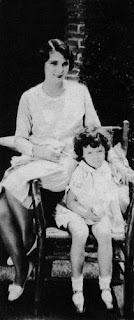
Leatrice was born just as her parents, John Gilbert and silent film star Leatrice Joy, were divorcing in the mid-1920s. Raised by her mother (the two are pictured at right), she yearned to know her father. She recalls, "My nurse told my mother that I kept asking when my daddy was coming home." But the marriage was finished and Leatrice had little contact with her illustrious dad.

Time passed, and then came a summer Leatrice and her mother spent in Malibu - where, it turned out, her father was also staying. She had been trying but hadn't managed to run into him yet when one day, as she was rolling in the surf, the victim of a rogue wave, strong hands snatched her from the sea. Leatrice looked up to see that her rescuer was her handsome father.

A while later Leatrice sent him a letter; she asked for his picture and enclosed one of herself. This ignited what Leatrice calls "a brief, intense relationship" that spanned the last year of John Gilbert's life.

"He appeared, we clicked and the future looked bright," she remembers. He was the only adult in her life that didn't talk down to her, he spoke to her as an adult and asked her grown-up questions. "I was a news junkie even then," she says, and her father talked with her about various topics of the day, from President Roosevelt to the repeal of prohibition. In that short period, Leatrice achieved a bond with her father that she didn't have with her mother ("a sweet fluff-head") or stepfather.

"My father lived on a Hollywood hillside in a Spanish-style home near a water tower. In my mind he lived in the tower of a castle at the top of a hill." Gilbert had the aura of a storybook prince for his daughter and when he died suddenly of a heart attack in January 1936 at age 38, Leatrice was devastated. Her longed-for connection with him had completely engaged her and then he was gone - "I felt a great emptiness...I don't think I ever got over the loss."

As years passed, John Gilbert, a top MGM star at the height of the silent era, was reduced to a Hollywood footnote. What most people knew about him, if they knew anything, were oft-repeated (and reprinted) tales of an inadequate voice that didn't translate to sound, a broken romance with Greta Garbo, questionable acting ability and a drinking problem that killed him.

At the time of his death Gilbert's great silent pictures were no longer shown and his career was in flux, so Leatrice grew up not knowing enough about her father's life or career to actively dispute the mythology that had become accepted as truth.

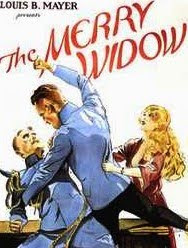
By the early 1970s, Leatrice was a married woman with five children living on the East Coast. Though she didn't know it at the time, she was about to embark on one of her life's missions, the restoration of her father's name. New York's Museum of Modern Art invited her to a screening of one of John Gilbert's signature silent films, Erich von Stroheim's The Merry Widow (1925). Watching the film for the first time, Leatrice experienced a jolt; she realized her father was not simply a handsome face, but a gifted actor. She recalls, "A young fan came up to me and commented on the "wonderful film" and said he wanted to write a book about John Gilbert. It then became my cause...I knew I wanted to be the one to write the book."
Once committed, Leatrice began to seek out her father's other films. She traveled to Eastman House in Rochester, NY, where she told fabled film curator James Card, "I don't know anything about my father's work," and Mr. Card eagerly replied, "Come with me and I'll show you..." Between Eastman House, MOMA and the Library of Congress, she saw all of John Gilbert's available films.

Leatrice was a busy wife and mother when she began her research and so she worked "in bursts" over several years. In the course of her work she met with many people who knew or worked with her father. Today Leatrice looks back and realizes she began her undertaking in the nick of time; most of the people she interviewed were soon gone. She met with cameramen and other technicians, she met with directors like Clarence Brown, John Ford, Howard Hawks and King Vidor, and she met with stars like Joan Crawford, Marlene Dietrich, Lillian Gish and Norma Shearer.

According to Leatrice, some remembered John Gilbert from before he was a star, when he was affectionately looked upon as "an adopted kid on the MGM lot." All responded warmly to her and Leatrice discovered that they all had liked her father and respected his work. She stayed with King Vidor's daughter and was able to spend days talking with the man who had directed her father in two of his best silent films, The Big Parade (1925) and Bardelys the Magnificent (1926). Clarence Brown, who directed Gilbert and Garbo in Flesh and the Devil (1926), generously spent an entire afternoon with Leatrice sharing his memories.

Norma Shearer, whom Leatrice believes may have once had a fling with Gilbert, told her of his passing, "Some of the tears I shed while making Romeo and Juliet were for your father."

The transformation in industry and public perception of John Gilbert came slowly, but Leatrice recalls a moment when she knew attitudes were shifting. In the early '80s she was invited by esteemed silent film historian/author/documentary filmmaker Kevin Brownlow (co-producer of the distinguished Hollywood series for Thames Television) to introduce a screening of Flesh and the Devil in London. She remembers enthusiastic crowds of young and old lined up to see the film and that, "New writers and reviewers watched without bias and wrote about what they saw on the screen."

In 1985 St. Martin's Press published Dark Star: The Untold Story of the Meteoric Rise and Fall of the Legendary John Gilbert, Leatrice's biography of her father, written with John Maxim. Filled with Leatrice's detailed research, the book not only recounted the story of John Gilbert's life but also went a long way to set the record straight on the rumors about him.

Perhaps the most virulent myth debunked is the story that John Gilbert's "high voice" had caused the collapse of his career. Gilbert's first talking feature, a film Leatrice describes as "a romantic comedy that was mistaken by audiences and critics for a straight romance," was a resounding flop. The dialogue was laughable and laughed at. But some said it was Gilbert's voice that caused the tittering. The voice theory was not the consensus at the time but it was the story that stuck over time. Leatrice calls her father's voice "a light baritone similar to Douglas Fairbanks, Jr.'s." Ultimately, a combination of factors plagued Gilbert's transition to sound: his disastrous relationship with MGM kingpin Louis B. Mayer, the quality of the early talkies to which he was assigned and, perhaps, a change in audience tastes from Victorian-era morality to pre-Code realism.

In her book Leatrice pointed out that John Gilbert continued to receive film offers till the end of his life. Marlene Dietrich, his final love, had persuaded him to co-star with her in Desire (1936), but he was forced to drop out after he suffered one in a series of three heart attacks, the last of which killed him. Leatrice is firm that, though her father did drink to excess, "he did not drink himself to death."

Regarding Gilbert's storied romance and rumored near-wedding with Greta Garbo, Leatrice comments,"I don't think she ever had any intention of marrying him."

Dark Star was a great success and Leatrice traveled the talk show circuit, spoke to college audiences, appeared at silent film events and gave countless interviews. She still gives an occasional interview and has continued to frequent silent film festivals and screenings around the world, introducing her father's pictures and taking part in panel discussions. Her "swan song" on the road, she told me, might have been last year's annual Pordenone Silent Film Festival in Italy, the largest silent film festival in the world. At this writing, though, Leatrice is beginning to change her mind...she just might go to Pordenone again this year...I hope so.

She muses, "In his lifetime, my father did not believe his film work would last or be remembered and he said as much to his close friends."

Leatrice Gilbert Fountain's passionate campaign to restore her father's reputation has succeeded beyond anything she might once have imagined. Today she is happy to report that her children are able to "bask in the reflected glory of their grandfather." Like their mother, they attend screenings and introduce his films to new generations of appreciative fans.


John Gilbert on TCM, Aug. 24
(Times shown = Eastern/Pacific)
The Busher (1919) - silent with Colleen Moore - 6am/3am
He Who Gets Slapped (1924) - silent with Lon Chaney and Norma Shearer - 7am/4am
The Merry Widow (1925) - the silent film that made Gilbert a star - 8:30am/5:30am
The Show (1927) - silent directed by Tod Browning - 11am/8am
Desert Nights (1929) - Gilbert's last silent - 12:30pm/9:30am
Way for a Sailor (1930) - with Wallace Beery - 1:45pm/10:45am
Gentleman's Fate (1931) - directed by Mervyn LeRoy - 3:15pm/12:15pm
The Phantom of Paris (1931) - Gilbert took the title role followng Lon Chaney's death - 5pm/2pm
Downstairs (1932) - "a dark little masterpiece" - 6:30pm/3:30pm
The Big Parade (1925) - silent classic, perhaps Gilbert's best film - 8pm/5pm
Bardeleys the Magnificent (1926) - swashbuckling silent classic - 10:15pm/7:15pm
Flesh and the Devil (1926) - silent classic with Garbo - 12am/9pm
Queen Christina (1933) - Garbo and Gilbert's classic sound film - 2am/11pm
The Captain Hates the Sea (1934) - Gilbert's last film, with Victor McLaglen - 4am/1am