Showing posts with label to sir with love. Show all posts

Wednesday, January 21, 2015

To Sir, With Love: The Feel-Good Side of the Sixties

During my formative teenage years, I developed a fondness for the British cinema of the mid-to-late 1960s. These films spanned several genres: the serious spy film (The Deadly Affair); social satire (Nothing But the Best); quirky thriller (Bunny Lake Is Missing); and pop culture comedy (Georgy Girl). The only thing they shared was a healthy dose of cynicism and impeccable British casts. So, it seems ironic that one of my favorite films of this period is an upbeat, almost sentimental, tale starring a mainstream American actor: To Sir, With Love.
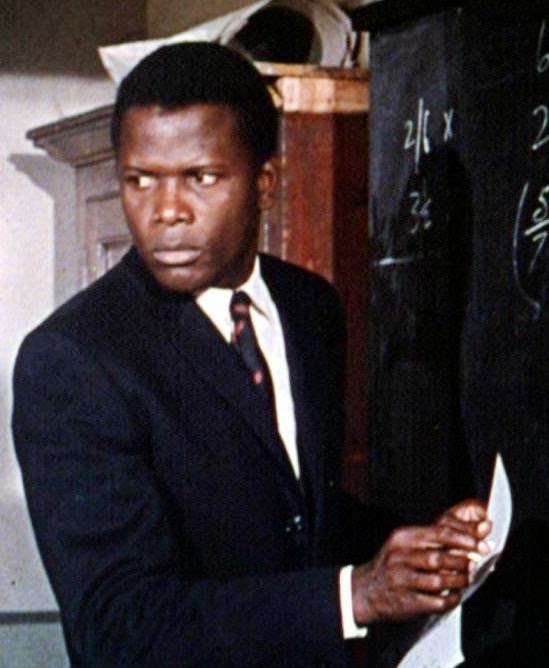
Sidney Poitier as Mr. Thackeray.
In a role seemingly tailored for him, Sidney Poitier plays Mark Thackeray, a young engineer looking for a job. Unable to find one in his chosen profession, he accepts temporary employment as a teacher in an inner-city London school. It’s a bleak situation—the students are out of control, most of the teachers are burned out, and the school reflects the poverty of the surrounding neighborhood. Thackeray’s initial attempts to reach his students fail miserably. He finally concludes that the teens act childish because they’re treated as children. He starts showing them respect and demands the same of them. He tosses out the curriculum and teaches his students about life. In the end, Thackeray becomes a teacher and his students become adults.
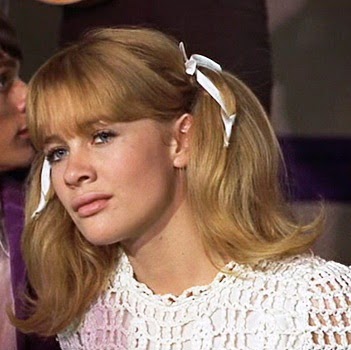
Judy Geeson as Pamela Dare.
Cynics will no doubt criticize To Sir, With Love as simple-minded and obvious. Perhaps, it is, but the story is put across with such conviction and professionalism that it’s impossible to ignore its many charms. In particular, a subplot involving an attractive student (Judy Geeson) who develops a crush on Thackeray is handled impeccably. Its only flaw is that Poitier and Geeson have such a natural chemistry that one almost wishes a romance could work out between them (but then, To Sir, With Love would have been a very different film).
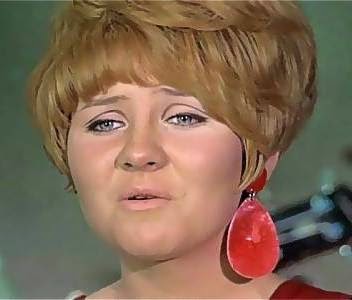
Lulu--she was once married to Bee Gee
Maurice Gibb.
The film’s theme, sung by Lulu (who plays one of the students), became a huge hit. Director James Clavell must have recognized the song’s potential—it’s heard multiple times throughout the picture. In one scene, it’s played over a montage of Thackeray taking his students to a museum. The scene looks very much like one of the world’s first music videos.

Sidney Poitier stands out as one of my favorite actors of the 1960s, with memorable performances in A Patch of Blue, Lilies of the Field, and In the Heat of the Night. Judy Geeson went on to play a major role in the vastly entertaining British miniseries Poldark and Poldark II. When my wife and I were in London in 1987, we saw Lulu in a production of the stage musical Peter Pan. She played Peter and still sounded great.


Sidney Poitier reprised his role as Mark Thackeray in the 1996 made-for-TV movie To Sir With Love II, directed by Peter Bogdanovich. The plot has Mr. Thackeray retiring from teaching in England, only to start anew at a Chicago inner-city school. It's pleasant enough, thanks to Poitier, but my recommendation is to stick with the original.

Monday, July 29, 2013

The Five Best Sidney Poitier Performances

One of the most biggest stars of the 1960s--and a personal fave at the Café--gets our "Five Best" treatment. It wasn't easy culling through Sidney Poitier's impressive array of performances and it was harder still to relegate the immensely likable Guess Who's Coming to Dinner to honorable mention status. However, the task here was to pick out his best performances, not to list our favorite Sidney Poitier movies. (Of course, to be honest, we love all five of the films below!)

1. Lilies of the Field.  Sidney Poitier won a Best Actor Oscar for playing Homer Smith, a drifter who stops to get water for his car at a southwestern farm run by German nuns. What Homer doesn't know is that the nuns believe he is the answer to their prayers--that he will build a chapel for them even though they have no money nor materials for the building. Often described as a feel-good movie, Lilies of the Field far exceeds that simple label with its inspirational message about faith and finding meaning in one's life. Poitier is at his most charming as Homer, a stubborn man who resists building the chapel initially. When he finally relents, he doesn't want anyone to help him. His scenes with the equally firm Mother Maria (beautifully played by Lilia Skala) are not to be missed.

2. The Defiant Ones. This 1958 classic helped define the term "high concept film" with a terrific premise about two escaped convicts--still shackled together--trying to escape a posse in the South. Not only do these men hate each other, but one is white (Tony Curtis), the other is black (Poitier), and racism is rampant around them. Poitier gives a dynamic performance as the persevering Noah Cullen and his hard work seems to inspire Curtis, who turns in one of the finest acting jobs of his career, too.

3. In the Heat of the NightThis racially-charged mystery, 1968’s Oscar winner for Best Picture, has aged gracefully over the years. The secret to its success can be attributed to its many layers. Peel back the mystery plot and you have a potent examination of racial tension in the South in the 1960s. Peel that back and you have a rich character study of two lonely police detectives, from completely different backgrounds, who gradually earn each other’s respect. Sidney Poitier has his most famous best role as the intelligent, proud, (and perhaps somewhat prejudiced) police detective Virgil Tibbs. He skillfully underplays the part, so that when Tibbs strikes a rich white man (a controversial scene at the time) or flashes his anger toward Rod Steiger's redneck sheriff, those scenes catch fire. Amazingly, Poitier was not Oscar nominated, perhaps because his votes were split among three memorable 1967 performances: In the Heat of the Night, Guess Who’s Coming to Dinner, and To Sir, With Love. He reprised the Tibbs role twice in the lesser efforts They Call Me MISTER Tibbs and The Organization.

4. To Sir, With LoveIn a role seemingly tailored for him, Sidney Poitier plays Mark Thackeray, a young engineer looking for a job. Unable to find one in his chosen profession, he accepts temporary employment as a teacher in an inner-city London school. It’s a bleak situation—the students are out of control, most of the teachers are burned out, and the school reflects the poverty of the surrounding neighborhood. Cynics criticize To Sir, With Love as simple-minded and obvious. Perhaps it is, but Poitier helps put the story across with such conviction and professionalism that it’s impossible to ignore its many charms. In particular, a subplot involving an attractive student (Judy Geeson) who develops a crush on Thackeray is handled impeccably.

5. A Patch of Blue. A constant thread throughout these five films is that a focal point of each is the relationship between two characters of starkly different backgrounds. In A Patch of Blue, Poitier plays an educated working man who befriends a blind young woman (Elizabeth Hartman) who lives with her abusive prostitute mother (Shelley Winters). A Patch of Blue could have easily veered into a "message picture" showing that love is literally blind. However, Poitier and Hartman bring a genuine quality to their performances, making their growing friendship believable and pulling us into their world. Just watch Poitier's face when Hartman's character confesses her love for him. That is the kind of scene that made Sidney Poitier a star.

Honorable Mention:  Edge of the City; A Raisin in the SunBlackboard Jungle; Guess Who's Coming to Dinner; and Brother John.