Showing posts with label film review. Show all posts

Wednesday, May 20, 2026

Richard Greene Rides Again as Robin Hood

Richard Greene as Robin Hood.
Sandwiched between The Men of Sherwood Forest (1954) and A Challenge for Robin Hood (1967), Hammer Films produced Sword of Sherwood Forest (1960). This action opus about the legendary English outlaw stands out for one big reason: It stars Richard Greene, famous for playing the title role in The Adventures of Robin Hood TV series. As all Robin Hood fans know, that's the one where he's "riding through glen with his band of men."

One might think that Sword of Sherwood Forest is a big screen continuation of the TV series that ran from 1955-59. However, that's not the case in terms of the storyline and the cast (with the exception of Greene and some minor players). The film features veteran actors in most of the major roles: Nigel Green (Hercules in Jason and the Argonauts) as Little John, Niall MacGinnis (Night of the Demon) as Friar Tuck, and Hammer regular Peter Cushing as the Sheriff of Nottingham. 

Peter Cushing as the Sheriff.
Screenwriter Alan Hackney wisely dispenses with the typical Robin Hood origin story. His tale has the Sheriff of Nottingham collaborating with the greedy Earl of Newark (Richard Pasco) to steal land by manipulating the court system. Maid Marian, who is the Sheriff's niece in this version, gets wind of their scheme. When her uncle won't change his evil ways, she seeks help from the Chancellor of England, who is visiting the area in his other capacity as Archbishop of Canterbury. 

Meanwhile, Robin is trying to figure out why the Sheriff killed an unknown traveler. Along the way, he happens on Marian, who has just bathed in a lake (it's a Hammer film, after all). Despite her feeble protests, there is an instant attraction between the two (although Robin is almost twice her age). But before they can get together, the Earl of Newark must be stopped before he can assassinate the Chancellor.

Hammer's most renowned director, Terrence Fisher, keeps Sword of Sherwood Forest moving briskly through its 80-minute running time. There are a plethora of outdoor scenes, perhaps in an attempt to keep production costs down. Contemporary reviews call it colorful, but, unfortunately, the print used for Mill Creek's Blu-ray disc (part of the Hammer Ultimate Collection) is a muted one. 

Sarah Branch as Marian.
Greene still has the required panache to play Robin, but, at age 41, he lacks the physicality required for the role (it's easy to spot his stunt double). Chemistry is definitely lacking between his Robin and Sarah Branch's Marian. The former model had little prior acing experience at the time and, though she tries, she seems miscast as a spunky heroine.

Peter Cushing and Richard Pasco excel as the villains. The problem is that, in a movie this short, there's only room for one villain. As a result, Cushing's Sheriff of Nottingham gets nudged into the background all too often. It's a shame to waste an actor of Cushing's caliber.

Finally, it's always fun to see who pops in British films of the 1960s. In uncredited roles, look for the following:  Desmond Llewelyn (Q in many Bond films) as the "wounded fugitive" at the beginning; Derren Nesbitt (Von Hapen in Where Eagles Dare) as Martin, one of the merry men; and Oliver Reed as Newark's henchman. I am convinced that Oliver Reed was dubbed, even though some sources contradict that claim.

Monday, April 20, 2026

Pat Boone and Shirley Jones Find April Love

Pat Boone.
Pat Boone as a bad boy? Well, he doesn't really play a bad boy in April Love (1957), but his character Nick is sentenced to probation after being arrested for joyriding in Chicago. To keep him out of trouble, his mother sends Nick to his uncle's rural Kentucky farm. Aunt Henrietta welcomes him, but Uncle Jed (Arthur O'Connell) isn't so sure about the big city troublemaker. Nick feels like a fish out of water until he meets a pretty neighbor named Liz (Shirley Jones) and gets involved with harness racing.

This remake of Home in Indiana (1944) was clearly designed to showcase Pat Boone, who was already a popular singer. His recording of "April Love" would turn out to be one of his biggest hits. The song also earned its writers, Sammy Fain and Paul Francis Webster, an Oscar nomination for Best Song (it lost to "All the Way" from The Joker Is Wild). Boone's co-star Shirley Jones, despite starring in the earlier Oklahoma! (1955) and Carousel (1956), doesn't even get a solo number (though she does sing a reprise of "Give Me a Gentle Girl"). 

Shirley Jones.
As light musicals go, April Love is pleasant, but never compelling. I was hoping that Liz's sister (played by Dolores Michaels) might take a serious interest in Nick, setting up a juicy triangle. But, after some innocent flirting, she makes it clear she's not interested in the boy from Chicago. After that, the viewer just has to wait for Nick to realize that Liz is played by the awesome Shirley Jones and he'd better make a commitment before some other guy comes along.

Incidentally, you may wonder if--after watching April Love--you somehow missed Nick kissing Liz at least once. No, you did not miss it! It never happens--though Nick almost kisses her before the couple is interrupted. You can read why that kiss never took place in this article from TCM.

Pat Boone experienced greater success on the silver screen than many of his singing peers (e.g., Connie Francis). He followed up April Love with a supporting role in the enjoyable Journey to the Center of the Earth (1959), a starring role opposite Ann-Margret in State Fair (1962), the Debbie Reynolds comedy Goodbye Charlie (1964), and the fact-based drama The Cross and the Switchblade (1970). By the early 1970s, Boone's acting career consisted almost entirely of TV appearances.

Monday, April 6, 2026

Devotion: A Biographical Misfire

Ida Lupino as Emily Bronte.
With a top-flight cast, rich source material, and high production values, Devotion (1946) has all the makings of a classic film biography of the Bronte sisters. And yet, when "The End" finally flashed on the screen, all I could do was ponder how things went so terribly wrong. It's not a dreadful movie, mind you--but it's inaccurate, inconsiderate, and empty.

The inaccuracy is nothing new when it comes to film biographies. There are plenty of biographies that take dramatic license with real events. Devotion imagines that Charlotte Bronte (Olivia de Havilland) and her sister Emily (Ida Lupino) fell in love with the same man, a curate (Paul Henreid) who worked for their father. Each sibling pours their passion into their novels and the results are Charlotte's Jane Eyre and Emily's Wuthering Heights

According to most accounts, real life featured less emotional turmoil and more interesting people. There was no love triangle. Emily never married; in fact, there is no indication of any romantic relationship in her life. Wuthering Heights was the product of her literary imagination. She and Charlotte were not close (the latter was eight years older); Emily felt a more kindred connection with her younger sister Anne. Keith Winter's screenplay does get some things right: brother Bramwell was an alcoholic; the sisters attended a school in Belgium; and Jane Eyre was a contemporary popular success while Wuthering Heights was not.

Olivia de Havilland as Charlotte.
The inaccuracies in Devotion, though, are less offensive than the film's inconsiderate treatment of its audience. The filmmakers seem to assume that the audience can't handle a serious portrait of the Bronte sisters' lives. The first half of Devotion unfolds like an adaptation of Little Women with the sisters and their brother frolicking on the moors and Charlotte developing a schoolgirl crush on her headmaster. Just as Ida Lupino, who provides some much-needed gravitas, finally steers the film in the right direction, Emily is relegated to the background as Charlotte becomes a London celebrity. From there, Devotion limps to its conclusion.

There are small pleasures to enjoy along the way, in particular Erich Wolfgang Korngold's rich music score and Ernest Haller's atmospheric cinematography. There is almost a quaint charm about the stagey "B" movie sets that are supposed to be the moors. Yet, nothing can save Devotion from its fate as a subpar biography dressed up like a Warner Bros. "A" production.

Although completed in 1944, Devotion was not released until two years later--a rare practice in the 1940s. Some historians believe that the delay was related to Olivia de Havilland's landmark lawsuit against Warner Bros. that resulted in the creation of the De Havilland Law.

Monday, March 23, 2026

Westworld: When Androids Run Amok

Yul Brynner as an android.
Delos is a luxury resort made up of three immersive, android‑populated theme parks: Westworld, Romanworld, and Medievalworld. Guests are greeted with a polished, almost too-perfect welcome that promises “the vacation of your dreams” in a place where nothing can go wrong. The staff present the resort as a flawless, high‑end escape where every desire can be indulged safely, thanks to the supposedly infallible android hosts. It’s a sales pitch wrapped in luxury and reassurance.

Richard Benjamin plays Peter Martin, a first-time visitor, who is still coping with the breakdown of his marriage. His friend John (James Brolin) has brought him to Westworld to forget about his troubles and indulge in his fantasy of living in the Old West. Initially, Peter is skeptical. But after defeating a gunslinger (Yul Brynner) in a saloon shootout and spending the night in a rowdy brothel, he begins to enjoy his vacation.

However, unknown to Peter and John, the scientists that operate the park have noticed some inconsistencies in the behavior of the androids. When a cascading system failure transforms some of the androids into killers, the two men must fight for their survival.

Bestselling author Michael Critchton wrote and directed Westworld (1973). It marked his theatrical film directing debut (he helmed the made-for-TV movie Pursuit one year earlier). The film's theme is one that would become prevalent in many Critchton books and films: When humans build powerful systems they don’t fully understand, the systems eventually stop behaving the way we expect. The most obvious extension of Westworld is Jurassic Park, in which there is a park (again) populated by man-made creatures (again) that react in an unexpected and violent way (again).

Richmond Benjamin.
Westworld is built on a fascinating premise, but its emotional core is thin: the film never invests enough in its characters for us to truly care when their lives are threatened. James Brolin’s John is so smug and self‑assured that he barely registers the danger around him, while Richard Benjamin’s Peter mostly frets about his failed marriage. Other guests—such as Dick Van Patten’s eager Medievalworld visitor—appear briefly and vanish before we can form any attachment. The result is a film rich in ideas but emotionally cold, a clinical exploration of technological hubris that keeps viewers intellectually engaged yet distant from the human stakes.

The supporting cast includes Yul Brynner as an android gunslinger--his all‑black outfit intentionally styled to evoke his iconic role as Chris Adams in The Magnificent Seven. Brynner also appears briefly as the Gunslinger in the best-forgotten Westworld sequel Futureworld (1976), which did not involve Critchon. Star Trek fans may recognize Majel Barrett, Nurse Chapel on the original Star Trek, as the brothel madam.

The Westworld TV series (2016-2022) is not a continuation of Crichton's film. Rather, it is a rethinking that reflects on and expands the original's themes.

Sunday, March 8, 2026

Hollywood Goes Welsh: How Green Was My Valley and The Corn Is Green

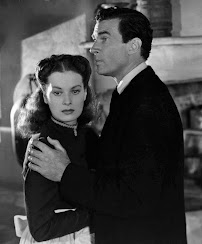
Maureen O'Hara and Walter Pidgeon.
How Green Was My Valley (1941). One of John Ford's most beloved movies, How Green Was My Valley won five Academy Awards including Best Picture. It ranks #75 in the 2007 edition of the American Film Institute's 100 Years…100 Movies. In 1990, the Library of Congress added it to the National Film Registry, recognizing it as a "culturally, historically, and aesthetically significant work."

The film follows Huw Morgan (Roddy McDowall) as he nostalgically recalls his childhood in a Welsh mining village, where his close‑knit family endures the hardships of dangerous coal‑pit labor, economic decline, and social upheaval. Through Huw’s eyes, the story traces the Morgans’ struggles with a miners’ strike, the fracturing of family unity, and the bittersweet passage from an idyllic green valley to an industrially scarred landscape.
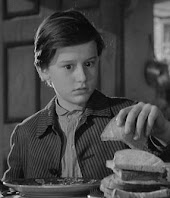
Roddy McDowall.
His sister Angharad (Maureen O'Hara) falls in love with the village preacher, Mr. Gruffydd (Walter Pidgeon), but social pressure pushes her into an unhappy marriage. Huw witnesses his brothers leave the valley in search of better opportunities as wages fall and the mines grow more perilous. He endures his own hardships at school, where he faces bullying before proving his resilience. The central figures in the story, though, are his hard-working father (Donald Crisp) and his steadfast mother (Sara Allgood).

There is much to admire in Ford's family saga, from its outstanding sets and cinematography to the performances of Crisp, Allgood, McDowall, and O'Hara. However, Philip Dunne's adaptation of Richard Llewellyn's 1939 bestseller tries to cram too much plot into the two-hour running time. Characters, such as Huw's charming sister-in-law Bron, are introduced and then ignored for long stretches. A subplot about a local choir performing for Queen Victoria is left hanging. After a long opening narration by the adult Huw, the closing narration feels rushed and incomplete. According to some sources, producer Daryl F. Zanuck originally intended to make a three-hour epic. I think that would have worked better in this case.

How Green Was My Valley is a very good John Ford picture, but I wouldn't rank it with his best. Ford’s most enduring achievements—The Quiet Man and The Man Who Shot Liberty Valance among them—derive their strength from a concentrated attention to a handful of characters. These films reveal how much more incisive Ford becomes when he works on a smaller emotional canvas, rather than the sweeping, ensemble-driven mode of How Green Was My Valley.
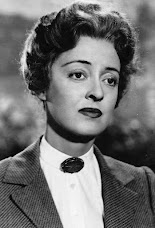
Bette Davis as Miss Moffat.
The Corn Is Green
 
(1945). Set in the late 19th century, The Corn Is Green stars Bette Davis as L.C. Moffat, a determined English schoolteacher who moves to a struggling Welsh mining village and opens a school. The story centers on her discovery of a young miner, Morgan Evans, whose academic potential is waiting to be unlocked. As Morgan transforms from an unrefined laborer into a promising scholar, the film highlights themes of social mobility, the power of education, and the personal sacrifices required to change a life.

Adapted from Emlyn Williams' 1938 stage play, which starred Ethel Barrymore on Broadway, The Corn Is Green is a Bette Davis vehicle in every sense of the term. She dominates her scenes with the same conviction that Miss Moffat brings to her role as local educator. It may not be Ms. Davis's most subtle performance, but it's a passionate one that propels the plot and themes effectively. It helps that she is surrounded by polished supporting players, three of whom reprise their roles from the Broadway production: Rhys Williams and Mildred Dunnock whose characters are recruited as teachers, and Rosalind Ivan, who plays Miss Moffat's housekeeper.
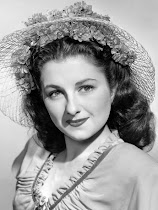
Joan Lorring.
However, the only members of the cast nominated for Oscars were John Dall (Supporting Actor) and Joan Lorring (Supporting Actress). The latter has the film's showiest role as the housekeeper's dissatisfied daughter whose selfish desires alter the lives of Miss Moffat and her protege. Lorring pulls off the part with conviction, reminding me a little of Bette Davis's similar performance in Of Human Bondage (1934). Sadly, it was her most notable role in an abbreviated screen movie career.

John Dall provides the necessary earnestness and conflict as Morgan. He shines in a scene in which he recounts to his teacher the simple joy of having an intelligent conversation with a fellow scholar. Still, Dall seems miscast at times. He was a last minute replacement for Richard Waring, who originated the part on Broadway, but entered the Army during World War II. At age 25, Dall looks too old to pass for a teenager (Waring was even older!). The stage-trained actor also sounds too articulate despite his attempts to sound blue-collar. 

Director Irving Rapper directs efficiently, making no attempt to "open up" the stage play adaptation. He worked frequently with friend Bette Davis. Their other collaborations include Shining Victory (1941), Now, Voyager (1942), Deception (1946), and Another Man's Poison (1952).

George Cukor directed Katharine Hepburn in a 1979 made-for-TV adaptation of The Corn Is Green. Five years earlier, Bette Davis starred in a 1974 pre-Broadway musical adaptation called Miss Moffat. It was set in the Southern U.S. with Moffat teaching a young Black man. It closed out of town, never reaching Broadway.

Monday, February 23, 2026

Everybody Was Kung Fu Fighting...Vampires!

John Forbes-Robertson as Dracula.
I first saw The Legend of the 7 Golden Vampires in a re-edited U.S. print called The Seven Brothers Meet Dracula. Let me start this review by encouraging you to never see that movie! It eliminates 14 minutes of plot and, if memory serves, still repeats a couple of scenes. Even the title change makes no sense as one of the "brothers" is a sister.

So, it was with trepidation that I watched The Legend of the 7 Golden Vampires (1974) several years later. My concerns were quickly put to rest as I viewed this wacky, wildly entertaining blend of vampires and kung fu. Over the years, it has become an annual Halloween tradition for this reviewer.

The film begins in Transylvania in 1804 with a Chinese monk named Kah journeying to Castle Dracula. Kah, an evil high priest, used to rule the village of Ping Kuei with his seven Golden Vampires. However, their power is fading and Kah wants Dracula to return them to full strength. Initially, Dracula shrugs off the idea because, obviously, he gains nothing from it. However, realizing that Transylvania has been sucked dry of blood, Dracula kills Kah, assumes his form, and heads to Asia to build a new empire with the Golden Vampires.

Cushing as Van Helsing.
A century later, Hsi Ching, a young man from Ping Kuei, seeks out Professor Van Helsing (Peter Cushing). Hsi Ching wants the famous vampire hunter, who has been lecturing at a Chungking University, to help his fellow villagers destroy the Golden Vampires and their leader. Van Helsing agrees and sets off on a trek to Ping Kuei accompanied by his son Leyland, Hsi Ching and his siblings, and a wealthy, beautiful widow (Julie Ege) who has financed the mission. Along the way, the group is confronted by bandits, staves off a vampire attack in a cave (the film's highlight), and eventually battles the Golden Vampires and Count Dracula.

Although kung fu and vampires might seem like unlikely bedfellows, The Legend of the 7 Golden Vampires merges the two genres seamlessly. The film was a co-production between Hammer Films and Shaw Bros. However, it's definitely a "Hammer film" and boasts the studio's usual polish (e.g., good-looking costumes, James Bernard's music). Peter Cushing, playing Van Helsing (or a descendant) for the fifth and final time, also provides some much-needed of gravitas. 

Most of the film was directed by Hammer veteran Roy Ward Baker. However, according to Geoff Mayer's book Roy Ward Baker, Shaw Bros. executive Run Run Shaw insisted that the fight scenes be overseen by his in-house director Chang Cheh. 

David Chiang as Hsi Ching.
David Chiang, who plays Hsi Ching, was already a popular Asian star and punches and kicks with authority when it's time to pummel vampires. On the other hand, his character's romance with Julie Ege's overdressed widow never quite gels. The same can be said for Leyland Van Helsing's attraction to Hsi Ching's sister. Neither relationship has time to develop given the film's pace and 89-minute running time.

Additionally, The Legend of the 7 Golden Vampires requires a little suspension of belief. It's never clear why Dracula (not played by Christopher Lee) needs to assume the guise of Kah. The timeline is also out of whack with the rest of the Hammer Dracula series. If Dracula started posing as Kah in 1804 and was still doing so a century later, how could he have encountered Van Helsing in Dracula in 1885?

I suppose one needs to cast those quibbles aside and enjoy The Legend of the 7 Golden Vampires for what it is: a unique, quirky mash-up of vampires and kung fu with a dash of plotting borrowed from The Seven Samurai. Now, who can refuse that?

Monday, February 9, 2026

Raquel Welch Races Around the Rink in Kansas City Bomber

Raquel Welch was at or near the peak of her career when she starred as a roller derby queen in Kansas City Bomber (1972). It's not the kind of role one would typically associate with the 1970s biggest sex symbol--but that's probably why she took it. Throughout her career, Welch sought out unexpected roles in films like Hannie Caulder (1971), The Wild Party (1975), and The Legend of Walks Far Woman (1982). Sometimes, her choices panned out (her delightful turn in The Three Musketeers) and sometimes they did not (the ill-fated Myra Breckenridge). Kansas City Bomber falls into the former category.

Welch stars as K.C. Carr, a promising roller derby player who is surprised to learn that she has been traded to the Portland Loggers. Most of her new teammates are unenthused about her arrival--especially Jackie Burdette who fears she is being replaced as the team's star. Actually, Burdette has little cause for concern, as the Loggers' owner (Kevin McCarthy) plans to sell the team and make K.C. a superstar for his new Chicago team. 

So, is Kansas City Bomber a character study? A chronicle of life on the road, in the vein of the later Slap Shot (1977)? Or a a portrait of hardcore fans obsessed with a scripted "sport"? The problem is that Kansas City Bomber is all of those things...and it's too much to pack into a 99-minute movie overstuffed with roller derby footage. 

Welch makes K.C. an fairly interesting, albeit confused, protagonist. The roller derby star wants to be a good single mother, but chooses a job that keeps her away from her family for weeks at a time. Her daughter (a young Jodie Foster) copes well enough, but her son rejects her (a subplot cast by the wayside). K.C. wants to fit in with her teammates, but starts an awkward romantic relationship with the team's owner (talk about accusations of favoritism!). She befriends a socially-challenged male player, totally misreading that he believes it's more than friendship.

K.C.'s exploits are framed against blue collar northwestern locations (much of it was filmed in Portland). Director Jerrold Freedman--who later helmed the excellent made-for-TV thriller A Cold Night's Death--captures the dingy locker rooms, the long bus rides, and the neon bars. He also paints an effective portrait of the manic fans, who spend their money to taunt the players and throw trash on the track. Though George Roy Hill covers the same ground more effectively in Slap Shot, it's worth noting that Freedman did it earlier. Indeed, Freedman's only misstep is the inclusion of too many extraneous roller derby scenes. (Ten minutes could have been easily trimmed from the 99-minute running time.)

Kansas City Bomber is not a hidden gem waiting to be discovered. It's a solid, unexceptional film that proves that Raquel Welch became a better actress as her career progressed. It's a must for Welch fans and for those who appreciate early 1970s cinema (as I do). For other viewers, there are worse ways to spend a lazy afternoon or late night.

Monday, January 12, 2026

A Double Bout of Amnesia: Love Letters and The Groundstar Conspiracy

Jennifer Jones and Joseph Cotten.
Love Letters (1945). During World War II, soldier Allen Quinton (Joseph Cotten) writes eloquent love letters on behalf of his less‑articulate comrade Roger. The woman receiving them, Victoria (Jennifer Jones), falls in love with the writer--whom she believes is Roger. She and Roger later wed, but the marriage ends in tragedy. The trauma results in amnesia, with Victoria forgetting everything about her past except the name Singleton. After the war, Allen struggles with PTSD. At a low point in his life, he meets a beautiful, strange woman with whom he connects instantly. She goes by a one-word name: Singleton.

Ayn Rand (The Fountainhead) penned the screenplay Love Letters from the novel Pity the Simplicity by Christopher Massie. It's a canny mixture of Cyrano de Bergerac and Random Harvest, though it never reaches those heights in terms of drama. The film's first half works best, with its emphasis on Allen and Singleton and their evolving relationship. Eventually, though, it turns into a somewhat conventional mystery with Allen trying to figure out what happened on the tragic night that caused the amnesia.

Jennifer Jones gives one of her most restrained performances. However, Cotten anchors the film with his quiet compassion. Surprisingly, he was the second choice for the role of Allen, with Gregory Peck turning down the part. The strong supporting cast includes a very likable Ann Richards, Cecil Kellaway in a role that should have been larger, and Glady Cooper in a brief, compelling appearance.

Love Letters earned four Academy Award nominations: Best Actress for Jennifer Jones; Best Score and Best Song for Victor Young; and Best Art Direction (black & white). 

I always find a certain charm about Hollywood's recreation of England in the 1930s and 1940s (see The Ghost and Mrs. Muir, The Uninvited). Love Letters is another fine example, aided by Lee Garmes' evocative cinematography. The acclaimed Garmes worked with Jennifer Jones on three films, the other two being Since You Went Away (1944) and Duel in the Sun (1946). 

George Peppard as Tuxan.
The Groundstar Conspiracy (1972). A sabotage attempt at a top‑secret research facility leaves a single survivor: a badly injured man who insists he has no memory of who he is or why he was there. Government investigator Tuxan (George Peppard) becomes convinced the man—now calling himself Welles—is a spy, and he pressures him for answers. As Welles (Michael Sarrazin) struggles to piece together fragments of his identity, a larger web of deception emerges, revealing that the truth behind the break‑in is far stranger and more unsettling than anyone expected.

The Groundstar Conspiracy was one of several amnesia films made in the 1960s and early 1970s (others include Mirage, Mister Buddwing, and Jigsaw). It's an efficiently made movie that holds interest without delivering the thrill its teases. The big twist at the climax, while lacking originally, works surprisingly well. And that's important in a film like this, because if the "big reveal" is a letdown, then the audience may feel ripped off for investing its time in a shoddy product.

George Peppard's "hero," Tuxan, is an unlikable, relentless security expert. To potentially gain information, he has no qualms about using a hidden camera to film an innocent woman--even when she is making love. Thematically, Tuxan's belief that potential intelligence outweighs an individual's privacy is the most provocative part of The Groundstar Conspiracy and an issue that remains relevant today. However, even of exploring this theme in depth (as The Conversation would do later), The Groundstar Conspiracy is content to function as disposable thriller.

Peppard is well cast, having long ago jettisoned the romantic, nice guy roles that stifled his early career (e.g., Home from the Hill, Breakfast at Tiffany's). He brings a hard edge and a rebellious attitude toward authority to his role. Michael Sarrazin does what he can as the amnesiac, but it's a thankless part to some extent because he essentially functions as what Hitchcock would call the MacGuffin.

I first saw The Groundstar Conspiracy on NBC's Monday Night at the Movies in the 1970s. While I forgot the plot over the years, the opening always stuck with me because of a very long pre-title sequence (an oddity at the time).

Monday, November 17, 2025

Edward G. Robinson Movie Reviews: Good Dad, Bad Dad

Edward G. Robinson & Margaret O'Brien.
Our Vines Have Tender Grapes (1945).  A year after receiving a special "outstanding child actress" Oscar for Meet Me in St. Louis, Margaret O'Brien teamed up with Edward G. Robinson in this earnest family film. They portray father and daughter (along with Agnes Moorehead as the mother) who live in a rural Wisconsin town settled by Norwegian immigrants. Like To Kill a Mockingbird, the narrative is a collection of childhood memories: the new progressive teacher who takes over the school, a circus that passes through the town, a youthful lark that turns dangerous, and one family's tragedy that impacts the entire town. The effects of World War II also loom quietly in the background, affecting the farmers' livelihoods and causing one resident to make a life-changing decision. The primary focus is on the close relationship between young Selma (O'Brien), an only child, and her father (Robinson). When the latter is forced to discipline his daughter, you can see the anguish on his face. To make amends, he gets up in the dead of night and takes Selma to see a traveling circus making a rest stop as it passes through the the town. When Selma gets excited at the prospect of seeing a "real, live" elephant, her father pays the animal's trainer to let her pet the majestic creature. It's a lovely scene that's certain to hit home with anyone who has shared a special childhood experience with a parent. A climatic scene, in which Selma makes a personal sacrifice to help a neighbor, is equally potent. The rest of Our Vines Have Tender Grapes cannot replicate the power of those scenes (and Butch Jenkins is mighty annoying as Selma's friend). Still, it's a poignant reflection on another time and place. By the way, the film's title--which is never spoken--is from the same Bible verse that provided the title for Lillian Hellman's The Little Foxes.

Allene Roberts & Edward G. Robinson.
The Red House (1947). When teenager Meg (Allene Roberts) convinces her father to hire a young man to assist with the farm chores, it appears to be a blessing. Her father (Edward G, Robinson), who adopted Meg with his sister, struggles with his wooden leg now and needs the help. Meg also has a crush on the young man, Nath, though he is dating someone else. It looks like a promising situation--until Nath decides to take a shortcut home through the nearby woods. Meg's father tries to stop the lad and warns him of dire consequences. But the more he discourages Nath, the more the young man becomes obsessed with the forest and the old red house that lies within it. One of my favorite filmmakers, Delmer Daves, directed and wrote the screenplay for The Red House. It was his fourth directorial effort and it's clear that Daves was still learning his craft. Running 100 minutes, The Red House feels like a much longer movie and could use some serious editing. That said, there are several brilliant sequences, most notably Nath's initial trek through the woods which foreshadows a later scene in the horror classic Night of the Demon. The cast is solid and features rising stars such as Julie London (as Nath's shallow girlfriend) and Rory Calhoun (a bad boy interested in Julie). It also affords Judith Anderson an opportunity to play the antithesis of Mrs. Danvers. Edward G. Robinson overplays his performance as Meg's father, who becomes gradually unhinged as he tries to hide a dark secret from his beloved daughter. It's not his best acting job, but it doesn't damage the film either. It's interesting to note that The Red House as been described as a horror film, a film noir, and a Gothic drama. I'd call it a psychological thriller--a flawed one that is nevertheless worth a look.

Monday, September 22, 2025

Michael Crichton's "Coma" Thrills

Geneviève Bujold as Dr. Wheeler.
Bestselling author Michael Crichton (Jurassic Park, The Andromeda Strain) directed seven films during his career. They ranged from very good (Westworld, The Great Train Robbery) to very lame (Looker, Physical Evidence). From a directorial perspective, his best work may be Coma (1978), a smart medical thriller which Crichton also adapted from the popular novel by his friend Robin Cook.

Geneviève Bujold stars as Dr. Susan Wheeler, an accomplished surgeon at a progressive Boston Hospital. After her best friend becomes brain dead following a routine abortion, Susan makes a startling discovery. She learns that a statistically high number of hospital patients have fallen into comas and then transferred to a mysterious facility called The Jefferson Institute. She shares her findings with her boyfriend (Michael Douglas), an ambitious fellow surgeon, and her department head (Richard Widmark). Both men dismiss Susan's concerns and imply, in a condescending manner, that Susan is being too emotional because of her friend's death. 

Michael Douglas as Mark.
Crichton's screenplay works well as both social commentary and paranoid mystery. As one of the few female doctors in the hospital, Susan has to work harder than her male counterparts. She is hampered by her unwillingness to play the "politics game"--unlike her boyfriend Mark, who lobbies blatantly for a promotion. 

Bujold comes across as cold at times, which makes her character both interesting and distant. It's an effective contrast to Michael Douglas, who makes Mark likable and supportive (well, up to a degree...his main focus is always on himself). In fact, Douglas is so good that one can't be sure whether Mark is a good guy or a bad guy heading into the climax.

Crichton can't cover all the film's weaknesses, of course. Any mystery movie buff will recognize that a key part of Cook's plot was lifted from the 1946 classic Green for Danger. As with many movies with hospital settings, there is an abundance of empty, darkly-lit hallways and rooms (apparently, there is no night staff). And, worst of all, the family of Susan's friend is never shown--apparently, her husband doesn't care that his wife is brain dead and has been shuffled off to another facility.

However, those are minor complaints about a satisfying thriller. Crichton flashes his writing talent with a delightful scene in which a pair of pathologists argue about the best way to murder someone without evidence appearing during the autopsy. It infuses some much needed dark humor at the perfect time. Later, Crichton shows his visual flair with a scene inside the Jefferson Institute that shows dozens of comatose bodies hanging helplessly from the ceiling on wires.

It's also worth noting that Michael Crichton packs the hospital scenes with overlapping "medical speak." It's a sound technique that gives those scene a realistic, vibrant feel. It reminded me of the highly-regarded pilot of the 1994-2009 TV series ER. That should come as no surprise, as the show's creator and pilot screenwriter was...Michael Crichton. 

Monday, August 25, 2025

Marlon Brando Directs!

Brando: Director and star.
Movie buffs and Western fans should to check out One-Eyed Jacks (1961), Marlon Brando’s flawed, overlong—but always interesting—sole directorial effort. Brando allegedly took over the reins after getting Stanley Kubrick fired as director. It was a rocky production, according to most sources, with an ever-changing screenplay (Rod Serling and Sam Peckinpah worked on early drafts). There’s an even a story that Brando had the cast and crew vote on how to end it. When Brando completed the film, Paramount was dissatisfied with the result and recut it.  Brando never directed again.

The plot is a familiar one. After robbing a bank in Mexico, outlaw partners Rio (Brando) and Dad (Karl Malden) are surrounded by a posse. Dad goes for help, but decides along the way that his best chance for survival is to abandon his friend. Rio gets captured and spends five years in a Mexican prison. When he escapes, he heads to Monterey to rob a bank and kill Dad—who has reformed, become the town sheriff, and settled down with a wife and stepdaughter.

To compensate for the familiar revenge plot, Brando focuses on the unique setting and the characters’ relationships. I can’t think of another “conventional” Western with a coastal setting. Charles Lang, Jr.’s exquisite photography (he earned an Oscar nomination) captures the beauty of the surrounding (even Dad’s house is located on the beach). 

The waves crashing on the shore also serve as a metaphor for the inner turmoil of the characters. Rio plays a cruel deception on Dad’s stepdaughter Louisa, but feels remorse immediately afterwards. Dad’s fear of Rio is mixed with guilt over double-crossing his friend. Louisa’s mother lies to Dad to protect her daughter, even at the expense of losing her husband’s trust.

The ending plays like a hastily-constructed one (which it probably was). But the poetic beauty of the closing scene on the beach reminds one that even when it’s being conventional, One-Eyed Jacks is different. That’s why it’s a movie worth seeing.


Monday, June 30, 2025

Frank Sinatra as Tony Rome Times Two!

One wonders if Frank Sinatra regretted turning down the lead role in Harper (1966), one of the '60s best detective films. That might explain his decision to star in Tony Rome, another private eye picture, the following year. Although based on a novel by Marvin Albert, Tony Rome comes across as a Harper rip-off with the locale shifted from the West Coast to Miami.

Tony Rome is a former cop who likes gambling, women, and living on a boat. In need of cash, Tony accepts a job from his former partner to return an heiress, who has passed out in a cheap hotel, to her father. The young woman (Sue Lyon) and her wealthy patriarch (Simon Oakland) each hire Tony for different reasons: She wants Rome to recover a missing diamond pin that she was wearing; her father wants the private eye to find out why his daughter has been acting strangely. 

By the time Tony figures what's going on, he's been beaten up multiple times, accused of murder, and nearly killed himself. On the plus side, he has also met a beautiful, very rich divorcee (Jill St. John)!

Gena Rowlands.
Tony Rome is a lightweight mystery with a convoluted plot that doesn't bear close scrutiny. What the screenplay lacks in depth, it makes up for in snappy dialogue ("Miami Beach--twenty miles of sand looking for a city"). An added bonus is the on-location shooting which gives Tony Rome a different look and feel from the multitude of private eye pictures set in and around L.A. 

On the negative side, Tony Rome is sexist and includes at least one racist remark. It's one thing to have a male character leer at a scantily-dressed lady; it's another thing when the camera lingers--close up--on a woman's derriere. Then, there is the 52-year-old Sinatra who has to fight off beautiful women half his age. (Of course, Frank did date the much younger Jill St. John in real life....).

Jill St. John.
Sinatra brings an affable weariness to his performance as the titular detective. The role certainly doesn't require him to bring his "A" game (as he did on other 1960s films like The Manchurian Candidate and Von Ryan's Express). He and leading lady Jill St. John have a nice chemistry (no surprise there...see above); it's too bad that her character has little to do with the plot. 

Gena Rowlands stands out among the supporting cast, but she's barely in the movie. In fact, none of the female characters get much screen time and that includes Sue Lyon and an unbilled Deanna Lund  (according to Tom Lisanti's Fantasy Femmes of Sixties Cinema, the future Land of the Giants TV star was embarrassed with her performance and asked to have her name removed from the credits.)

Despite just middling box office success, Frank Sinatra returned as Tony Rome in the following year's Lady in Cement. The only other holdover from the first film was Richard Conte as Tony's police detective chum and sometime nemesis. 

The story gets underway quickly when Tony discovers the title corpse while scuba diving for sunken treasure. While the police try to identify the victim, an imposing thug named Gronsky (Dan Blocker) hires Tony to search for a missing go-go dancer named Sandra Lomax. Could she be the lady wearing cement shoes?

Dan Blocker.
While Tony Rome rates a notch about average, Lady in Cement is a perfunctory private eye picture. In the 1940s, it would have been considered a "B" film. Dan Blocker rises above his material, turning Gronsky into a likable--but still threatening--criminal. Along with Jill St. John, he appeared with Sinatra earlier in Come Blow Your Horn. It's a shame that Blocker, who found television fame on Bonanza, didn't have a a bigger movie career. He died in 1972 at age 43 due to complications following gall bladder surgery.

Raquel Welch and her tall hair.
Raquel Welch doesn't fare as well as Sinatra's leading lady. She plays a character very similar to the one portrayed by Jill St. John in Tony Rome. However, whereas St. John excelled at playing sexy, flirty socialites, Welch struggles to find a groove. Some of her scenes are downright awkward. She was much more effective in later films such as Hannie Caulder (1971) and Kansas City Bomber (1972).

Lady in Cement flopped at the box office and plans for a third Tony Rome film--to be titled My Kind of Love--were scuttled. If you plan to watch either film,  I do need to warn you about the music scores: Tony Rome kicks off with an atrocious theme song suny by Nancy Sinatra whereas Lady in Cement boasts one of the 1960s worst soundtracks courtesy of Hugo Montenegro.

Monday, December 30, 2024

The Eiger Sanction Is a Tough Climb

The Eiger Sanction (1975). This action thriller, directed by and starring Clint Eastwood, follows a former assassin who is coerced into one last mission. There is some talk about recovering a germ warfare formula, but the mission is really about revenge. Two bad agents kill one of ours, so a shadowy U.S. agency wants them sanctioned--which is apparently code for eliminated. Eastwood's ex-killer now teaches art at a college (!) and wants nothing to do with this tit-for-tat until he's told the identity of the deceased agent.

Jack Cassidy as a villain.
Based on a novel by Rodney William Whitaker, The Eiger Sanction can't overcome a poorly-written screenplay and an opening half-hour of mostly filler material. The plot finally perks up when Eastwood's out-of-shape assassin starts training to climb the Eiger mountain in Switzerland in preparation for his mission. These scenes benefit from the casting of George Kennedy and Jack Cassidy in familiar roles (Kennedy as Eastwood's old pal and Cassidy as a slimy villain). Both actors were frequently stuck in these kinds of roles, but still--somehow--managed to deliver entertaining performances.

Vonetta McGee--wasted as Clint's gf.
Clint plays a softer variation of Dirty Harry, though he's more interested in the opposite sex. Indeed, the film's portrayal of women and the sexist attitudes toward them may be a little jarring for modern audiences. Part of that can be attributed to the decade when The Eiger Sanction was made--though there were strong female characters in Black action films like Cleopatra Jones and Coffy. To his credit, Eastwood starred in The Enforcer the following year with Tyne Daly as Dirty Harry's gritty partner.

There are thrilling scenes in the final third of The Eiger Sanction, as Eastwood's assassin scales the title peak while trying to figure out who to kill. However, the climax is such a letdown that I didn't realize it was the climax until John William's closing music started to play. (Incidentally, the dreadful score proves that the great John Williams was only human after all.)

Overall, The Eiger Sanction ranks as one of Eastwood's least interesting 1970s films. It's recommended for Clint completists only.

Monday, December 2, 2024

The Conversation and Repeat Performance

Gene Hackman.
The Conversation (1974). Francis Ford Coppola directed this overlong, but engrossing look into the life of an intensely private surveillance expert (Gene Hackman) whose recording of a seemingly innocent conversation has tragic results. Hackman’s character strives to distance himself from his subjects (“I don’t care what they’re talking about.—all I want is a nice fat recording.”). But his latest assignment conjures up painful memories of a previous job where one of his recordings led to murder. Hackman perfectly captures the loneliness and paranoia of a man who intrudes on others’ privacy, while zealously guarding his own. The best scene: Hackman and surveillance rival Allen Garfield try to one up each other during a party with other experts in their field. A young Harrison Ford plays a menacing business executive and Cindy Williams (Shirley in in the 1970s hit sitcom “Laverne and Shirley”) plays one of the subjects in the title conversation. Hackman, Coppola, and the film all earned Oscar nominations; Coppola lost to himself (he won for The Godfather Part II). Hackman played a similar surveillance expert in 1998’s Will Smith thriller Enemy of the State.

Joan Leslie.
Repeat Performance (1948). I first saw Repeat Performance over the Christmas holidays when I was in high school. The timing was impeccable since the film’s opening takes place on New Year’s Eve. I suspect I watched it because the supporting cast included Richard Basehart (star of my first favorite TV series “Voyage to the Bottom of the Sea”) and Tom Conway (from The Falcon detective films). In any event, I found myself watching what amounted to an extended episode of “The Twilight Zone”—and, this case, that's a high compliment. Joan Leslie plays Sheila Page, a popular stage actress who kills her playwright husband at December 31st. Distraught over what she has done, Sheila goes to see her emotionally fragile friend, poet William Williams (Basehart). Sheila tells William that she wishes for a second chance—if she could live the year again, she would do things differently. When the clock strikes midnight, the year begins over again. Yet, no matter what Sheila does, fate intervenes and she seems powerless to alter the ultimate course of destiny. Released by budget-minded Eagle Lion, Repeat Performance was regarded as a minor “B” film when first released. It has gained a little fame over the years, having been remade as the 1989 made-for-TV movie Turn Back the Clock with Connie Selleca (and featuring Joan Leslie in a cameo). In the late 1990s, it began to pop up at film noir conventions, sometimes with Leslie in attendance. Incidentally, the supporting also features a young Natalie Schafer—Mrs. Howell from “Gilligan’s Island.”

Monday, October 7, 2024

Roadgames: A Little Bit of Rear Window, a Dash of Duel

Quid (Stacy Keach) with his harmonica.
Directed by Hitchcock admirer Richard Franklin, Roadgames (1981) follows truck driver Patrick Quid (Stacy Keach) as he traverses the desolate highways of rural Australia after witnessing what may have been the aftermath of a murder. You see, there's a serial killer on the loose and Quid suspects it's the mysterious man driving a green van.

Released when slasher films like Halloween (1978) and Friday the 13th (1980) were in vogue, Roadgames is an oddity. It sounds like a slasher film, but--as its PG rating suggests--it's more of a throwback to suspense films like The Hitch-Hiker (1953). 

Thematically, Roadgames mirrors Hitchcock's Rear Window with its exploration of voyeurism and the paranoia that comes with it. Just as James Stewart’s character in Rear Window is confined to his apartment, Keach’s Quid is largely confined to his truck, observing the world through his windshield. The film also echoes Steven Spielberg's Duel (1971) with its intense, road-bound cat-and-mouse game, where the vast, empty landscapes heighten the sense of isolation and danger.

Stacy Keach delivers a standout performance as Quid, a trucker with a penchant for poetry and a sharp wit. His character’s quirky charm and intelligence add depth to the film, making him a compelling protagonist. On the other hand, Jamie Lee Curtis has limited screen time and is mired in an underwritten role as a hitch-hiker (again...she also played one in The Fog).* Aussie actress Marion Edward fares better as a stranded wife picked by Quid--and who fears that he may be the killer.

Shades of Hitchock's Rear Window.
Director Franklin makes exceptional use of the rural Australian settings, capturing the stark beauty and eerie emptiness of the outback. This backdrop heightens the film’s tension and sense of isolation, making one wonder why Franklin chose to stage the climax in an urban setting. It's a clunky ending altogether that negates some of the goodwill that Roadgames has established along the way.

Thus, if you watch Roadgames, watch it for the ride. In that context, it delivers modest thrills and a likable quirkiness. The best example of both is a scene in which Quid believes he has the killer trapped in a bathroom stall--and isn't quite sure what to do.

Though it was not a box office success in the U.S., Roadgames attracted enough attention to get Richard Franklin a plum directing assignment. His next movie, Psycho II (1983), was a belated sequel to one of his idol's most famous films.


* Richard Franklin has stated that Actors Equity of Sydney was displeased that an American actress was cast in the role, instead of an Australian performer. Avco Embassy, who provided some of the film's financing, insisted on a "name star" that American audiences would recognize. That led to the casting of Jamie Lee Curtis, who had previously starred in Halloween and The Fog.

Monday, September 9, 2024

Dick Powell Transforms His Career with Murder, My Sweet

Dick Powell as Marlowe.
My favorite fictional detectives are the erudite, snobbish Philo Vance and the sarcastic, sly Philip Marlowe. Both have been the subject of numerous films, but with middling results. Marlowe has been played by an unusual assortment of actors that includes Humphrey Bogart, Robert Montgomery, George Montgomery, James Garner, Elliott Gould, Robert Mitchum, and Liam Neeson. Bogart captured Marlowe’s toughness. Garner projected the right amount of sarcasm. Mitchum exhibited the requisite amount of world-weariness. But none of them could compare to the cinema’s first Philip Marlowe, as portrayed by Dick Powell in Edward Dmytryk’s smashing film noir Murder, My Sweet.

Powell's performance is all the more impressive when one considers his previous films were lighthearted musicals. Indeed, Powell’s early success as a crooner stifled his acting career. (By the way, he had a pleasant voice; my Mom had several of his records.)  But Powell’s career star status was dimming when RKO signed him to a contract. He still had enough clout to pick his own films and his first RKO effort was Murder,  My Sweet. It was based on the second Marlowe novel Farewell, My Lovely—which was my father's favorite book in the series (my second fave to The Lady in Lake).

Like all of Raymond Chandler’s novels, the colorful characters and seedy, neon-lit atmosphere of 1940s Los Angeles overpower the complex plotting which intertwines two mysteries. In the first, a big homicidal lug named Moose Malloy hires Marlowe to find Velma, his former girlfriend. He hasn’t seen her for eight years and it’s been six since she wrote. Of course, Moose spent most of that time in prison--but he still pines for his sweet, little Velma and desperately wants to be with her.

Marlowe’s second case seems even more straightforward. A well-dressed ne’er-do-well named Lindsay Marriott wants Marlowe to accompany him on a midnight rendezvous to buy back a lady friend’s stolen jade necklace. Unfortunately, the plan goes awry when Marlowe is knocked unconscious and awakes to find a pummeled dead body.

Dick Powell and Claire Trevor.
Powell’s dynamic performance anchors the film, but he also benefits from some classic Chandler dialogue (often spoken in voiceover as Marlowe recounts his story to the police). When Marlowe finds a dead body, he quips: “He was just snapped—the way a pretty girl would snap a stalk of celery.” Velma’s sleazy former employer is described as “a charming, middle-aged lady with a face like a bucket of mud.”

Edward Dmytryk was a promising director with a thin resume when he made Murder, My Sweet and he put his all into the film. The pacing is swift, the atmosphere is appropriately sordid, and the visuals are stylish (e.g., when Marlowe is knocked unconscious, a black pool swallows up the frame). I met Dmytryk when he gave a guest lecture at Indiana University in the late 1970s. He wouldn’t have mentioned Murder, My Sweet if I hadn’t asked a question about it. Most of his lecture centered on the years he was blacklisted  during the McCarthy era.

Murder, My Sweet holds up remarkably well as a classic film noir. It also marked a turning point in Powell’s career. He followed it with the compelling, brutal Cornered and established himself as a dramatic actor. He went on to be become a successful film director and a television pioneer when he co-founded Four Star Studios in the 1950s.

For the record, while Murder, My Sweet was the first Marlowe movie, the novel Farewell, My Lovely was adapted earlier as the "B" picture The Falcon Takes Over (1942). Philip Marlowe was nowhere in sight in this version. Instead, George Sanders starred as the debonair Gay Lawrence, who takes on Moose Malloy's case.

Monday, August 26, 2024

Mandy and A Boy Ten Feet Tall

Mandy Miller as Mandy.
Mandy (aka Crash of Silence) (1952). The lives of Christine and Harry Garland are thrown into turmoil when they discover that their young daughter, Mandy, is congenitally deaf. The parents grapple with their own misconceptions and differing views on how to best support Mandy. Should she be kept at home for private tutoring, as her grandparents suggest, or placed in a school with other deaf children? The tension between the parents, fueled by suspicions of an affair, add emotional weight to the narrative. The first-rate British cast shines all around. Phyllis Calvert and Terence Morgan capture the parents’ emotional struggles as they try to determine if their actions reflect what they want or what their daughter Mandy needs. Jack Hawkins shines as an instructor at the deaf school, whose intense focus on his students puts him at odds with an influential member of the school's board. Finally, there is the young actress Mandy Miller (who was not deaf in real life), who plays Mandy. With very limited dialogue, she expresses the young girl's loneliness, confusion, and frustration, especially when placed in the boarding school and separated from her family. (Incidentally, that's Jane Asher--Paul McCartney's one-time girlfriend--as Mandy's eventual friend at school.) Director Alexander Mackendrick, best known for his Ealing comedies and the noirish Sweet Smell of Success (1957), deserves praise for sensitively portraying Mandy’s world. Through her eyes, we witness the challenges of communication, isolation, and the desire to connect with others. (You can stream Mandy for free on the Million Dollar Movie Classics channel.)

Fergus McClelland and Edward G. Robinson.
A Boy Ten Feet Tall
(aka Sammy Going South) (1963). 
Another Alexander Mackendrick film with a young protagonist, A Boy Ten Feet Tall focuses on ten-year-old Sammy Hartland. After his parents are killed during the Suez Crisis in 1956, Sammy embarks on an epic journey from Egypt to South Africa. Armed with only a toy compass and the knowledge that his goal to is to travel south, Sammy sets out to find his aunt in Durban. He encounters a variety of characters along the way, including: a Syrian nomad who hopes to profit off Sammy; a well-meaning American tourist; and a kind-hearted diamond smuggler. Despite the immense challenges he faces, including the loss of his parents and the daunting task of traveling across a continent, Sammy remains determined and resourceful. His character evolves from a vulnerable child into a strong and independent young boy, showcasing his inner strength and adaptability. Newcomer Fergus McClelland makes a likable lead, but Edward G. Robinson delivers the film's standout performance as Cocky Wainwright, the diamond smuggler who temporarily becomes Sammy’s surrogate father. Robinson brings warmth and subtle compassion to the role, creating a character that is both gruff and endearing.  Director Mackendrick masterfully allows the audience to see the events through Sammy’s eyes, much as he did with the young protagonist in Mandy. This perspective ensures that the film remains focused on Sammy’s emotional journey, making it a poignant and engaging--if episodic--adventure. The mostly on-location shooting brings a raw, realistic quality to the film, highlighting the vastness and beauty of the African continent. This review is based on the 118-minute cut of A Boy Ten Feet Tall, which you can view stream for free on the Million Dollar Movie Classics channel. The original 129-minute version is believed to be lost. An 88-minute version was released to theaters in the U.S. in the 1960s.