Featured Post

SIX KEYS TO A LITERARY GENETIC CODE

In essays on the subject of centricity, I've most often used the image of a geometrical circle, which, as I explained here,  owes someth...

Showing posts with label jonny quest. Show all posts

Tuesday, October 8, 2019

HOW WEAK IS TOO WEAK? PT. 3

At the end of the second part of HOW WEAK IS TOO WEAK, I said:

In a future essay I'll develop further the notion that leadership sometimes engenders the privilege of combative status-- but also, sometimes not.

Given that I started this series talking in part about the sixties animated series JONNY QUEST, it's natural that one of my examples of a leader who does have combative status-- despite not being all that dynamic-- is Benton Quest of the same series. (I'll pass on making any judgments of later iterations of the franchise.)

First, like Benton's son Jonny, the scientist takes a back seat to the hyper-dynamicity of bodyguard Race Bannon. The good doctor is never seen fighting hand-to-hand, and is only occasionally seen using a pistol or rifle.


Clearly he can use a more exotic form of weaponry when pressed--


And he even creates weapons that can take out giant eye-robots.


So, even though Benton's not seen kicking a lot of ass, he contributes considerable dynamicity to the ensemble.

In contrast, there's the portentously named Commander Adama of BATTLESTAR GALACTICA.


Despite his being theoretically in command of the "battlestar" and of the entire stellar wagon train it escorted, Adama always seems generally removed from the action whenever the Cylons attack. I'm not going to say that he never gives a crucial command in a given narrative. However, the entire attitude of the GALACTICA production frames Adama as a figurehead-- which is perfectly true, in terms of actor Lorne Greene's star-power compared to the appeal of his less-known co-stars. Further, Greene had become internationally famous for playing Ben Cartwright for fourteen years. and though Daddy Ben did his share of fighting and shooting alongside his sons, the Ben Cartwright character became invested with a paternal gravitas-- which is almost certainly what the GALACTICA producers wanted from Greene. In contrast, all the action is given to Adama's "sons"-- the real one, Apollo, and the figurative one, Starbuck-- who are the ones who get out there and battle Cylons.


Indeed, even though Adama and a handful of other non-combative characters are indubitably *centric" with respect to the characters important to the serial narrative, none of them are important with respect to the combative scenes. Thus, from the combative standpoint, Adama does not share the combative status of the younger space-soldiers, who in general tend to go out and fight the enemy without any input from their "old man."

Friday, June 14, 2019

HOW WEAK IS TOO WEAK?

Back in 2013's essay TO THE POWER OF XYZ PT. 2, I wrote:

The purpose of extending this concept to types of narrative dynamicity is to account for the way in which many stories find ways for characters of lesser dynamicity-- and thus lesser stature-- to conquer entities with greater dynamicity/stature.  Whenever this formula is employed-- that of *megadynamicty* being overthrown by *mesodynamicity* (as with the film THE DEADLY MANTIS) or by *microdynamicity* (as with MIGHTY MAX), one is generally dealing with a refutation of-- or at least a temporary avoidance of-- the logic of the combative mode, which generally declares that exceptional force can only be overcome by exceptional force, or at least by exemplary force gifted with some measure of strategic ability, as we see at the conclusion of the film BIG TROUBLE IN LITTLE CHINA, cited here.

In the case of fictive situations wherein *megadynamicity* is overthrown by *mesodynamicity,* the exception I've provided is one where mesodynamicity is given a "boost" of some strategic sort, as when Jack Burton, whose personal power in no way equals that of his nemesis Lo Pan, pulls one specific trick out of his bag that defeats the villain.

Over the years I've cited a number of narratives wherein one member of an ensemble group is "lifted up," so to speak, by sheer association with other members who are more powerful. Here too "strategic ability" often ennobles the merely mesodynamic member. Jonny Quest, the ten-year-old boy from the eponymous cartoon, knows a little judo but is more likely to run from villains than fight them, or to strike from hiding to overcome a foe. But if he were the only star of his show, he wouldn't make the cut, any more than another cartoon-boy mentioned above, 1993'S MIGHTY MAX.

In contrast to Max, Jonny is elevated by his constant association with the "heavy lifter" of his ensemble, Race Bannon. In large part this elevation takes place because there is much more of an overt connection between Jonny and Race, in that Race is Jonny's masculine model for behavior, far more than Jonny's actual father, who shows courage in various situations but is far more invested in the life of the intellect than his offspring.


Mighty Max has a "heavy lifter" in his entourage, too: a big Viking with the supposedly humorous name "Norman." But there's no necessary connection between Max and Norman, so that Norman's toughness does not uplift or ennoble Max. Norman's just there to haul Max's ashes out of the fire when needed, and so Norman only rates as an "subordinate" ally, not a "coordinated" co-starring member of an ensemble.


Now, in the case of my most recent film-review, the 1998 QUEST FOR CAMELOT, I find its heroine Kayley to be a difficult nut to crack. In the review I mentioned briefly that despite her desire to be a heroic female knight, she does nearly nothing that smacks of heroic action.


 She does partner up with the character of Garrett, who, as I mention in the review, is a blind man who can fight well a la Marvel's Daredevil. But Kayley only has three scenes in the whole film where she personally fights back against much more powerful enemies:

(1) In the forest, she lassos, and somehow pulls down, a big tree (possibly a dead growth, though the film doesn't explain things very well), so that the tree falls atop her pursuing antagonists and delays them for a time.

(2) In the big climactic scene, when the main villain menaces King Arthur, Kaylie gets atop a roof-beam suspended on a rope, sets the beam free and pilots it so that it clobbers the villain, at least temporarily.

(3) At the very end she and Garrett together manage to fool the villain into striking the magical Stone with Excalibur, so that the sword gets stuck again and the bad guy can't use it any more.

So does she pass the "Jonny Quest test," or not?

My conclusion is that Kayley just barely crosses over into the world of combative heroes, and for the same reason that Jonny Quest does. Garrett is the only one who can really fight, and he's tied to her metaphorically in that (a) Garrett like Kayley nurtured the ambition of becoming a knight, though he obviously trained himself a lot better than she did, and (b) Garrett had a limited contact with Kayley's father, in that during his blindness Kayley's father succored Garrett to some small extent, though apparently not enough to keep Garrett from retreating into hermit-dom.

Another contrast, perhaps more instructive than that of MIGHTY MAX, is 2012's SNOW WHITE AND THE HUNTSMAN.  This film reworks the venerable fairy tale more skillfully than QUEST FOR CAMELOT reworks Arthurian motifs. However, SNOW WHITE is content to invest all of its combative energies in Eric the Huntsman, while Snow White's role is to reflect the myth of the "innocent maiden:"

Snow White's character has more flexibility.  As noted she incarnates the virtue of "innocence" as against the sordid "experience" of Ravenna, though it might be asserted that only the good luck of the script keeps Snow from undergoing a fate much like Ravenna's.  In contrast to many modern versions of the character, Kristen Stewart's Snow is not innocent in the sense of being vacuous, lacking any energy to fight for her own life.  She's never an exceptional fighter, despite getting tricked out in armor and trying to kill Ravenna at the climax, but she does try. The thing that allows her to triumph over the sorceress is the power of innocence, which the script compares the power of life itself. Only this can defeat the death-force represented by the Queen.  Such "life-force" gives Snow the ability to discourage at least one forest-denizen, a giant troll, from attacking her and her retainer, and this trope might be regarded as a loose rewriting of the Disney Snow White's ability to charm wildlife.  One can't precisely call Snow's "purity" to be a power as such: she never charms hordes of animals like the Snow White-manqué of 2007's ENCHANTED.  The script, though it never directly references specific religious icons or concepts, seems to be invoking something comparable to the Christian rewrites of pagan myths that we moderns know best from Arthurian stories. 

 Kayley may not be a very impressive knight, but at least her ambition to become one informs her dramatic arc, while Snow's dramatic arc is far more focused upon her overthrowing her older competitor as the realm's queen. And of course, there's no necessary connection between Snow and Eric, not even the rather simple one I demonstrated between Kayley and Garrett.

Monday, December 20, 2010

DEDUCE I SAY

Back in this essay I wrote:

"the good critic needs both inductive and deductive skills to do his job"

Further, I specified that the inductive method best described those analytical skills with which a critic analyzed particular examples of a phenomenon and then strove to generalize based on the data garnered from said examples, while the deductive method best described the notion of putting forth a theoretical schema and analyzing phenomena in line with that schema.

Of the two, the utility of "categories," which I addressed at the end of this previous essay, seems far more greater for the purpose of deductive, highly theoretical analysis as opposed to inductive, quasi-empirical analysis.

As example, Aristotle's POETICS uses both. Inductive logic is employed when the philosopher discusses the effects that a "medium" has on the production of art (particularly music). However, when Aristotle formulates his generalization about the "power of action" concept-- in which it's generalized that the power of narrative protagonists has to be either average, greater than average or less than average-- that's deductive logic.

That's not to say every use of categories is insightful. Tzvetan Todorov's schema regarding his concept of the uncanny, fantastic, and marvelous follows the same logical process as does Aristotle's argument: what one might even call "the Goldilocks paradigm." However, as I noted earlier Todorov's schema has too little wide applicability because it is too focused upon the concept in the "middle" position, so that his analyses of the other two axes of his schema suffer as a result.

Nevertheless, where matters of fictional narrative are concerned, it's generally better (diverging from Goldilocks here) to have too many choices than too few. Arguably even in inductive logic the logician chooses, consciously or otherwise, certain common factors from which he seeks to generalize from his particular examples. If some factors are excluded in favor of others, this may be less a valid analysis and more a validation of one's own personal tastes, or the tastes of a culture which one has come to internalize.

In JONNYQUESTING PART 2 I alluded to a naive form of this subconscious exclusion. I gave examples of comments by JONNY QUEST's creators Doug Wildey and Joe Barbera to the effect that they might have wished to have modeled their cartoon-creation more after the realistic vein of Milton Caniff's TERRY AND THE PIRATES than of, say, the TOM SWIFT books. This would not be a surprising preference for either man to champion, since both men grew up in a culture that almost always valorized "realism" over "fantasy."

Inductive procedures are largely useless for correcting cultural prejudices, for they cannot construct a schema capable of taking in the divergent narrative strategies of "literary realism" and "literary fantasy." In contrast, a deductive study of an "all-ages" cartoon like JONNY QUEST can show how those strategies are realized in different but equally-appealing types of stories-- but those strategies can only be seen with the aid of careful categorization.

Admittedly this process would be anathema to the creators who created such wild-and-woolly pulp-stories, but as Northrop Frye said:

"A snowflake is probably quite unconscious of forming a crystal, but what it does may be worth study even if we are willing to leave its inner mental processes alone."

Thursday, December 16, 2010

JONNYQUESTING: THE AUM THEORY IN PRACTICE, PART 3

A quick review of the three categories before going on:

The category of the ATYPICAL describes the phenomenality of those works that take place entirely within a sphere of mundane causality, where no marvels are possible.

The category of the MARVELOUS is precisely the opposite. Of course it's a given that there must always be some resemblance to the reader's phenomenal reality of cause-and-effect: as Brian Attebury points out in his FANTASY TRADITION IN AMERICAN LITERATURE, "We cannot picture the unknown unless we hear it described in terms of the known." But the emphasis in a marvelous story is clearly upon the break with the commonplace natural law.

The UNCANNY is midway between the two. In cognitive terms it is *isophenomenal,* in that the rules of accepted reality are validated in the narrative, but in affective terms it is *metaphenomenal.* In Todorov's THE FANTASTIC he views the uncanny as being a category of "the real," as with his most prevalent example, the Radcliffean Gothic-tale, in which spooks and spectres are proven to be false or delusory. As I've noted earlier I don't agree with this categorization. On top of that, whereas Todorov only considers his "uncanny" within the sphere of horror-fiction, focusing on "the fake supernatural," i have in addition to "fake supernatural" nine other categories of "affectively metaphenomenal" story-elements. I won't detail all nine here, though in earlier essays I've mentioned that certain stories about psychotic madmen (though not all) fall within the sphere of the uncanny, a la PSYCHO.

Some of the other nine categories *might* be applied to this essay's subject, JONNY QUEST. However, though I lost any bid for "simplicity" on this blog long ago, I will invoke it here. Thus in surveying the phenomenality of JONNY QUEST episodes I'll only label an episode "uncanny" if it contains an element of "the fake supernatural," as per Todorov's reading.

The Mystery of the Lizard Men (18 September 1964)-- This episode begins with a sort of "sea-Gothic" conceit, in which enemy agents masquerade as "lizard men." However, the villains' attempt to use a laser-gun to shoot down an American capsule propels the episode into the MARVELOUS category, as such laser-weapons are an extrapolation from then-current laser technology.


Arctic Splashdown (25 September 1964)-- This episode, involving spies in the Arctic and polar bears, falls under the ATYPICAL

The Curse of Anubis (2 October 1964)-- story begins with a plot to fake an Egyptian curse, but ends with the MARVELOUS introduction of an invulnerable mummy

Pursuit of the Po-Ho (9 October 1964)-- an ATYPICAL adventure against savage jungle natives

The Riddle of the Gold (16 October 1964)-- another ATYPICAL adventure involving counterfeit gold and a mundane impersonator

Treasure of the Temple (23 October 1964)-- ATYPICAL lost-treasure search

Calcutta Adventure (30 October 1964)-- MARVELOUS in that it includes the heroes invading not only a hidden sci-fi installation that makes poison gas, but the villains are defeated by Dr. Quest's use of a "sonic gun"

The Robot Spy (6 November 1964)-- one of the most MARVELOUS episodes, in which an entire army fails to stop the invulnerable "robot spy," and again Quest's super-technology comes to the rescue


Double Danger (13 November 1964)-- another ATYPICAL impersonation-plot

Shadow of the Condor (20 November 1964)-- ATYPICAL thrills when Race Bannon is forced to engage in a biplane duel with a mad World War I aerial ace

Skull and Double Crossbones (27 November 1964)-- modern-day pirates; ATYPICAL

The Dreadful Doll (4 December 1964)-- UNCANNY, in that the villains use drugs to fake voodoo curses

Dragons of Ashida (11 December 1964)-- a mad scientist gives rise to MARVELOUS flesh-and-blood dragons

A Small Matter of Pygmies (11 December 1964)-- ATYPICAL jungle-adventure

Turu the Terrible (24 December 1964)-- MARVELOUSly, a giant pterodactyl survives into modern times
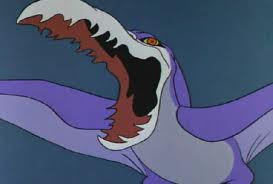


The Fraudulent Volcano (31 December 1964)-- Doctor Zin using MARVELOUS technology to make a dormant volcano blow its stack

Werewolf of the Timberland (7 January 1965)-- fake werewolf, so UNCANNY

Pirates from Below (14 January 1965)-- more modern pirates; ATYPICAL

Attack of the Tree People (21 January 1965)-- apes and blackmailers; ATYPICAL

The Invisible Monster (29 January 1965)-- a MARVELOUS (and scary!) invisible critter

The Devil's Tower (4 February 1965)-- madman forces natives to dig for diamonds; ATYPICAL

The Quetong Missile Mystery (11 February 1965)-- another MARVELOUS sci-fi installation with a missile buried beneath a swamp (!)

The House of Seven Gargoyles (18 February 1965)-- phony gargoyle; UNCANNY
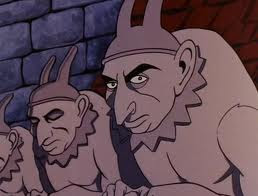


Terror Island (24 February 1965)-- MARVELOUS giant monsters

Monster in the Monastery (4 March 1965)-- fake Yetis give way to a real one; ergo MARVELOUS

The Sea Haunt (11 March 1965)-- and topping it all off, a MARVELOUS marine monster

(And would you believe I just now got the joke of "Sea Haunt," a pun on that old 1950s deep-sea diving teleseries!)

So this analysis comes down to:

TWELVE episodes of JQ are in the "marvelous" category: Lizard,Anubis, Calcutta, Robot, Ashida, Turu, Volcano, Invisible, Quetong,Terror, Monastery, Sea H.

ELEVEN episodes of JQ are in the "atypical" category: Arctic, Pohos, Gold, Temple, Double, Condor, Skull, Pygmies, Pirates, Tree People, Devil's Tower

Using Todorov's schema only three fall into the "uncanny" category: Doll, Werewolf, and Gargoyles.

A straight comparison of "atypical" and "marvelous" gives the latter category a dominant position in terms of narrative phenomenality: sort of the narratological version of a "51% controlling interest."

However, the category of the "uncanny" functions as something like a "swing vote."

If one considers that the exposure of the supernatural element as false puts the episode's phenomenality into the domain of "the real," as Todorov does, then those three episodes join with those of the "atypical" and give reality the "controlling interest."

If one considers (as I do) that the simple evocation of the supernatural orients the episode's phenomenality toward that of "the unreal," and considers "the uncanny" as being no less an expression of the metaphenomenal than is "the marvelous," then "fantasy" retains the upper hand.

And this is without even taking into account a lot of the little fantasy-touches that are tossed into the series as diversions: minor inventions of Doctor Quest, or Hadji's famed "sim sim sallah bim" levitation gag.

So my verdict is that though Joe Barbera and Doug Wildey probably would *rather* have crafted a hard-hitting adult-pulp adventure series after the exampe of TERRY AND THE PIRATES, what they gave fans was a work that better fits into the idiom of the superhero.

Not all serial works are so affected by their use of fantasy-tropes. Marvel's long-running RAWHIDE KID was a serial that flirted off and on with various superhero conceits, particularly costumed villains. Yet a full-fledged analysis of the original series in terms of Rawhide's opponents would certainly put that character in the "atypical" mode, since Rawhide faced far more injuns and gunslingers than he ever did costumed cavaliers.

Next up: some justification as to why this kind of categorization is important.

Tuesday, December 14, 2010

JONNYQUESTING: THE AUM THEORY IN PRACTICE PART II

Often, after I've attended a convention-panel and heard a professional make an interesting statement, I've wished myself trained in shorthand, to write the statement down quickly before the memory fades. Not having so trained myself, I'm relying only on memory when I recall the following--

At a convention in the 1990s, JONNY QUEST creator Doug Wildey was on a panel, and I remember him saying that he wasn't crazy about having to introduce sci-fi/fantasy monsters into the JQ mix, and that he did so as a means of appealing to kids. He gave me the impression that he much preferred the JQ episodes that focused on realistic adventure, such as "Shadow of the Condor." He also had choice things about what he and his fellow animators would've liked to have done to the cartoon-dog Bandit, but that's grist for some other mill.

Now, when JONNY QUEST debuted in 1964, it did so as a evening show for ABC-TV. So, unlike the Saturday morning cartoons directed wholly at juveniles, JONNY QUEST was trying, like Hanna-Barbera's earlier nighttime success THE FLINTSTONES, to appeal to both kids and adults with "all-ages" material. Unlike FLINTSTONES, JQ did not last more than a year and so ended up being recycled to Saturday mornings during those pre-cable days, where most juvenile watchers may have noticed in the show a harder edge than one usually found in the Hanna-Barbera superhero shows around the same time.

That harder edge, that element of rigor is important to the subcategory of popular fiction I've termed "adult pulp" in other essays. This hardboiled take on the adventure genre shows up in many fictional works of the early 20th century, such as those of Jack London and Dashiell Hammett. In GUNFIGHTER NATION literary critic Richard Slotkin refers to this form as the "blood-and-thunder" genre, and though American comic strips didn't seriously embrace this approach until the late 1920s, they had a pertinent effect on popular culture as a whole and on specific pop-cultural works, including, as a quote from this site makes clear, JONNY QUEST:

Although at first Jonny Quest seems most closely related to the Tom Swift, Jr. juvenile science fiction novels of the 50's and 60's penned under the name Victor Appleton, Hanna-Barbera co-founder Joseph Barbera in his autobiography My Life in 'toons cites the comic strip Terry and the Pirates as being the primary inspiration for Jonny Quest.

"It was a major departure for us, but both Bill and I had been hooked on adventure stories and superheroes since we were kids. As I've said, Bill and I really don't have much in common, but we both spent our nickels and dimes on movie serials and had read Frank Merriwell and Tom Swift novels as kids. I particularly admired Milt Caniff's long-running newspaper comic strip Terry and the Pirates, and that was the main inspiration for Jonny Quest - not only for some of the characters...but also in the sharp, angular look of the artwork, the emphasis on scientific gadgets and high-tech hardware, and the far-flung, exotic locales for the action."


Now, what's interesting about this reminiscence is that it shows JONNY QUEST as having a foot in two worlds: that of Tom Swift, which was directed wholly at juveniles, and of Caniff's TERRY AND THE PIRATES, which was technically "all-ages" but written in a melodramatic vein meant to appeal a little more to adults than to children. Unlike Tom Swift, TERRY, as any comics-maven should know, did not actually have much in the way of "scientific gadgets and high-tech hardware," and it certainly did not have such kid-appeasing figures as Egyptian mummies and Tibetan yetis.

Indeed, I would say that Caniff, comic strips' foremost (albeit not first) proponent of realistic "blood-and-thunder" adventures, is also a Great Ancestor to many comic-book artists-- Severin, Kubert, and Toth as well as Doug Wildey-- who preferred to work in a more realistic vein of adventure. At least one could call it more realistic in comparison to the major superhero artists of the period: Kirby, Simon, Schuster, Kane, Peter et al. Kirby and the rest of these worked in an idiom where the marvelous, the uncanny and the atypical could merge at any given time, and none of the characters involved would give a second thought to clashing phenomenologies. The Caniff tradition, however, strove for realistic depiction, and so generally speaking the pulpish peregrinations of works in this tradition concerned *atypical* occurences within an *isophenomenal* setting.

JONNY QUEST may have the isophenomenal TERRY AND THE PIRATES as a major model, but in terms of phenomality the program bears more resemblance to the classic superhero model, in which stories may center about any combination of atypical, uncanny or marvelous elements. And because the original run of the teleseries was only 26 episodes, it will be easy to break down on this blog just how often the serial fell into each of the three AUM modes. By doing so I can then determine whether or not the series-concept qualifies to be placed within the category of the superhero idiom, much as I considered Zorro's fitness in this essay.

The breakdown will begin in Part 3 of "Theory in Practice."