Showing posts with label Dead Can Dance. Show all posts

Thursday, 9 April 2026

Dead Can Dance - Aion

Released in 1990, Aion is widely regarded as a pivotal 5th album by Dead Can Dance, marking a deeper shift into medieval, Renaissance, and neoclassical influences compared to their earlier works. The 36-minute album is praised for its ethereal, dark atmospheres and the interplay between Brendan Perry's baritone and Lisa Gerrard's iconic vocal style. The album features acoustic instrumentation including hurdy-gurdy, bagpipes, and strings, with significant inspiration from 14th-century Italian dance music and troubadour songs. The album, featuring art from Hieronymus Bosch, focuses on themes of existence and destiny. Some critics noted it as a more coherent, albeit shorter, experience than their previous work, though it is occasionally described as a collection of moody pieces.  While sometimes seen as less "groundbreaking" than The Serpent's Egg, Aion is appreciated for its refined focus on early European music blended with modern, ethereal sounds. Aion is a must-hear for fans of neoclassical, darkwave, and early music, often seen as a perfect synthesis of, as DeBaser puts it, "a timeless medieval journey".

Released in 1990, Aion marks the moment Dead Can Dance fully committed to the sounds of the distant past. Recorded in a converted 18th-century church in Ireland, the album serves as a bridge between the band’s post-punk roots and a newfound obsession with the Renaissance and Medieval eras. It is a brief but potent collection that remains one of the most transportive entries in the 4AD catalogue, trading modern synthesizers for the wooden textures of the hurdy-gurdy, vielle, and bagpipes.
The album’s strength lies in its dual vocal identities, which feel more distinct here than on previous records. Brendan Perry provides the grounded, scholarly heart of the album, particularly on "Fortune Presents Gifts Not According to the Book," where his resonant baritone gives 16th-century Spanish poetry a gothic, psychedelic weight. Meanwhile, Lisa Gerrard acts as the ethereal counterpart; her performance on "The Song of the Sybil" is a masterclass in vocal control, turning a traditional Catalan chant into a haunting, otherworldly invocation that feels divorced from any specific point in time.
Instrumentally, Aion is a celebration of Early Music rhythms and textures. The standout track "Saltarello," an arrangement of a 14th-century Italian dance, showcases the band’s ability to find "the groove" in antiquity. The propulsive percussion and frantic woodwinds create a kinetic energy that balances the more somber, liturgical moments of the album. This dedication to authentic period instrumentation ensures the record avoids the "new age" trappings of the era, opting instead for a grit and resonance that feels earthy and lived-in.
However, the album is not without its flaws, the most notable being its brevity. Clocking in at just under 36 minutes, several tracks feel like sketches or atmospheric transitions rather than fully realized songs. Some critics argue that the record lacks the grand, cohesive architecture found in its predecessor, Within the Realm of a Dying Sun. While the individual vignettes are stunning, the flow can feel slightly fragmented, leaving the listener wishing for a deeper exploration of the themes introduced in the shorter instrumental passages.
Ultimately, Aion is a definitive work of neoclassical darkwave that remains a benchmark for the genre. By looking backward to the 14th and 16th centuries, Dead Can Dance created something that felt entirely new for the early 90s alternative scene. It is a beautifully curated gallery of sound that rewards focused listening, perfectly captured by the Hieronymus Bosch detail on its cover: strange, archaic, and deeply spiritual.

Dead Can Dance - The Serpent's Egg

Released in 1988, Dead Can Dance's The Serpent's Egg is widely considered a masterwork of neoclassical darkwave, blending gothic atmosphere with medieval, baroque, and world music influences. It marks a pivotal, more organic, and melodic transition in their career, featuring standout tracks like "The Host of Seraphim" and "Ullyses". The album is noted for a "thin," yet warm and hypnotic sound, characterized by Lisa Gerrard's ethereal vocals and Brendan Perry's deep, baritone vocals, mixed with sampling and classical instrumentation. It merges diverse musical traditions without relying on complex, over-produced arrangements, creating a soundtrack-like experience. The tracks often highlight the distinct styles of its two members, with Gerrard providing emotional, often glossolalia-driven pieces, and Perry providing more direct, rhythmic songs. The Serpent's Egg is seen as a key transition point, bridging their earlier, more directly Gothic sound with the more diverse, ethnocentric explorations that followed in the 1990s. 
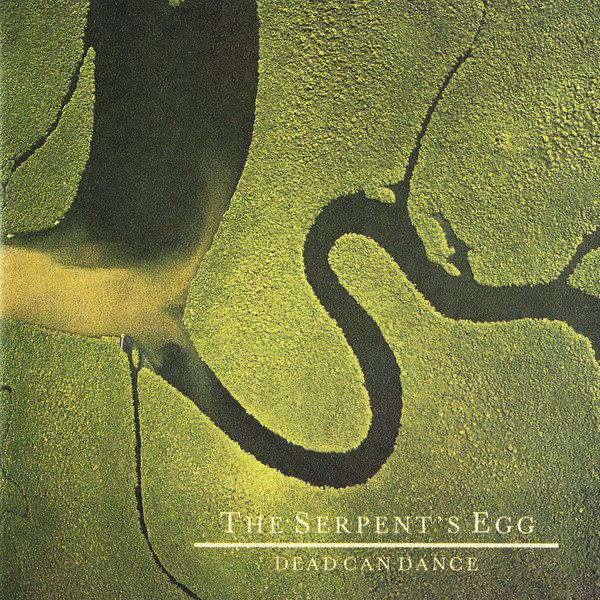
As much declined in prominence and in memory as the long-forgotten ruins and the fantastical civilizations they sing about, the work of the Australian, ethereally gothic band Dead Can Dance still leaves a pure, deep desire, a true yearning within the listener to experience life as a Romantic[1] would, approaching existence filled with sincerity and guided by strong emotions. None do instill that desire more than their magnum opus, the 1988 album The Serpent's Egg, ever after listening to it a hundred times over. The Serpent's Egg is unusual among Dead Can Dance's work in that it — unlike how its predecessor Within the Realm of a Dying Sun did in reference to Medieval Europe and its musical traditions – channels no specific culture or heritage within its sound. Rather, it somehow manages to incorporate a whole range of them into itself, and does so wonderfully. Some of that success is achieved by limiting its ambitions, such as by not blending African tribal drumming with European choral counterpoint[2] singing on the same song. However, this creative choice is not something that harms The Serpent's Egg as a whole but is something that enhances it, by allowing each cultural element its own chance to shine. Furthermore, the fact that each cultural element is allowed to have its own unique song adds an air of timeless mystery, like that of a pre-Raphaelite painting, to the album as a whole, and brings the heavenly voices of Brendan Perry and Lisa Gerrard – the closest things that The Serpent's Egg has to constants in its sound – to the forefront.
The Serpent's Egg is unusual among Dead Can Dance's work in that it — unlike how its predecessor Within the Realm of a Dying Sun did in reference to Medieval Europe and its musical traditions – channels no specific culture or heritage within its sound. Rather, it somehow manages to incorporate a whole range of them into itself, and does so wonderfully. Some of that success is achieved by limiting its ambitions, such as by not blending African tribal drumming with European choral counterpoint[2] singing on the same song. However, this creative choice is not something that harms The Serpent's Egg as a whole but is something that enhances it, by allowing each cultural element its own chance to shine. Furthermore, the fact that each cultural element is allowed to have its own unique song adds an air of timeless mystery, like that of a pre-Raphaelite painting, to the album as a whole, and brings the heavenly voices of Brendan Perry and Lisa Gerrard – the closest things that The Serpent's Egg has to constants in its sound – to the forefront.
With the fourth track, “The Writing on My Father's Hand”, instrumentation now returns. This track is perhaps the best of them all on the album, in the author's personal opinion, due to the vivid imagery that it conjures despite the simplicity of its sound and inspiration. Aurally, the song consists of two repeating, minor-keyed hurdy-gurdy drones backing the wordless hum-like vocals of Gerrand, topped off by a small crescendo of blurred synths and European counterpoint. The first three instruments repeat the same twenty-second melody until the last minute or so, when the song slowly transitions into the ending crescendo. Despite this instrumental poverty, however, one feels as if they have somehow stumbled upon a key scene in some tragedy where a once-great ruler dies full of regret for his deeds in life, his last moments either spent reconciling with some long-mistreated relative or in a hallucinatory delirium filled with the ghosts of his past.
Following up to “The Writing on My Father's Hand” is the fifth track, “In the Kingdom of the Blind the One-Eyed are Kings”, which can be simply summed as the clear opposite of its antecedent in almost all respcts. Barring its unusually long name, it is one of the most – if not the most – conventional, radio-friendly songs on the album, given that its lyrical content is a love song and its sound is primarily piano-based, ultimately building to a string-laced symphonic wall of sound. The sixth song is “The Chant of the Paladin”, a track that is very much like the fourth, in terms of structure, atmosphere, and vividity of imagery. However, it differs from “The Writing on My Father's Hand” in that its finale is little different from its beginning, in addition to using a repeated loop of what can only be described as the sound of a blacksmith's hammer thundering against an anvil as an instrument. This addition changes completely the mood of “The Chant of the Paladin” from anything that could resemble the atmosphere of its ante-predecessor, replacing the melancholy of a dying old man with the omniousness and tension of a knight putting on his armor and heading for grim war. The latter image is in fact very apt for one's overall positive opinion for The Serpent's Egg as a whole, for the last third is grim for the album's quality.
Unfortunately, after “The Chant of the Paladin”, the overall quality of The Serpent's Egg declines, with the four remaining tracks suffering from a combination of either being too short, too minimalisitic, or too long. The seventh track, “The Song of Sophia”, has the flaw of being too minimalistic, as it consists of merely just an extended, meandering wail of Gerrand's. The eighth track, “Echolalia”, is much better, consisting an a-capella tribal chant, albeit that one that is merely seventy-seven seconds longs. The next one, “Mother Tongue” is perhaps the worst one of this lot of the last four tracks, given that it is the same loop of tribal African drumming repeated over and over again with minor variations for five minutes; something that can be slightly torturous at times.
Concluding, finally, is “Ullysses”; an attempt to recapture the grandeur of the previous two-thirds. In that regard, it is only half-successful, for while it does have the theatricality of “The Writing on My Father's Hand” and “Orb de Ignis” that is required for such majesty, it lacks the true depth of feeling that is further needed to achieve greatness. This lack comes not from Perry's vocal performance – of which he gives his all here – but rather from the choice of using a glockenspiel as the main backing instrument. The tinny sound of the glockenspiel ruins the great pathos brought by Perry, leaving an otherwise great song something that is only above average.

To sum then: the 1988 gothic album, The Serpent's Egg by the Australian band Dead Can Dance is a masterwork, if one with a weak ending compared to its glorious beginning and middle. With supreme skill, it interweaves the traditions of many different cultural traditions together to create songs that bring the imagination to roaring life, and does so without relying upon any complex instrumental arrangements or whacky, out-there synths; it merely uses the powers of the human voice and a few well-placed crescendos and instrumentation loops to accomplish that. For the most part, all the songs of the work do not overstay their welcome, making them endlessly re-listenable and a great soundtrack for daydreaming. Of course, the last four songs or so do not hold up to the high standard set by the first six tracks here on in terms of quality, but that is an acceptable price to pay for an album that is near-flawless otherwise.

1. In the sense of the European cultural movement that immediately succeeded the Enlightenment.

2. Counterpoint means that two or more musicians take turns performing a single note; choral means that the counterpoint is sung rather than performed via an instrument.

Dead Can Dance - Spleen And Ideal

With this amazing album, Dead Can Dance fully took the plunge into the heady mix of musical traditions that would come to define its sound and style for the remainder of its career. The straightforward goth affectations are exchanged for a sonic palette and range of imagination. Calling it "haunting" and "atmospheric" barely scratches even the initial surface of the album's power. The common identification of the duo with a consciously medieval European sound starts here -- quite understandable, when one considers the mystic titles of songs, references to Latin, choirs, and other touches that make the album sound like it was recorded in an immense cathedral. Opening number "De Profundis" sets this mood so thoroughly, with bells and drones and more supporting another bravura performance from Gerrard, while the immediately following "Ascension" builds on this initial effort with further style and grace. It's limiting to think of either album or band strictly in terms of simple revivalism of old music. While the elements being drawn on are certainly of an older range, the results owe as much to the technologies of arrangement and production and a consciously cinematic feeling as much as they do antique pasts. Similarly, the feeling is not simply European but worldwide, with Gerrard's glossolalia intentionally reaching beyond easy understanding. Perry's vocal efforts are no less compelling, his own high point occurring with the vast-sounding "Enigma of the Absolute," as a steady, massive drum pound echoes behind a similarly treated guitar/harpsichord combination, tinged with a striking string arrangement. The overall feeling is of an ancient religious service suddenly brought to life in a truly modern way, with stunning results.

Dead Can Dance - Within The Realm Of A Dying Sun

With its two sides split between Perry and Gerrard's vocal efforts, Within the Realm of a Dying Sun serves as both a display for the ever more ambitious band and a chance for the two to individually demonstrate their awesome talents. Beginning with the portentous "Anywhere Out of the World," a piece that takes the deep atmospherics of "Enigma of the Absolute" to a higher level with mysterious, chiming bells, simple but effective keyboard bass and a sense of vast space, the album finds Dead Can Dance on a steady roll. Once again a range of assistant musicians provide even more elegance and power to the band's work, with a chamber string quartet plus various performers on horns, woodwind, and percussion. Impressive though the remainder of the first side is, Gerrard's showcase on the second half is even more enveloping and arguably more successful. The martial combination of drums and horns that start "Dawn of the Iconoclast" call to mind everything from Wagner to Laibach, but Gerrard's unearthly alto, at its most compelling here, elevates it even higher. "Cantara" is no less impressive, a swirling, drum-heavy song that sounds equally inspired by gypsy dancing, classical orchestras and any number of Arab musical traditions. "Summoning of the Muse" is perhaps too formal in comparison, though still quite impressive, but "Persephone" is the finer effort and a good way to close.

Wednesday, 7 January 2026

Dead Can Dance - Dead Can Dance

Putting early punk backgrounds and the like behind them, Brendan Perry and Lisa Gerrard created a striking landmark in early '80s atmospherics on their first, self-titled creation. Bearing much more resemblance to the similarly gripping, dark early work of bands like Joy Division, The Cocteau Twins and The Cure than to the later fusions of music that would come to characterize the duo's sound, Dead Can Dance is as Goth as it ever gets in many places. Perry and Gerrard's wonderful vocal work, Brendan’s rich, warm tones and Lisa’s unearthly, multi-octave exaltations, are already fairly well established, but serve different purposes here. Thick, shimmering guitar and rumbling bass/drum/drum machine patterns practically scream their sonic connections to the likes of Robin Guthrie and Robert Smith, but they still sound pretty darn good for all that.
When they stretch that sound to try for a more distinct, unique result, the results are astonishing. Gerrard is the major beneficiary here. "Frontier" explicitly experiments with tribal percussion, resulting in an excellent combination of her singing and the rushed music. Then there's the astonishing "Ocean," where guitar and chiming bells and other rhythmic sounds provide the bed for one of her trademark, and quite, quite lovely, vocal excursions into the realm of glossolalia. Perry in contrast tends to be matched with the more straightforward numbers of digital processing and thick, moody guitar surge. The album ends on a fantastic high note, "Musica Eternal," featuring a slowly increasing-in-volume combination of hammered dulcimer, low bass tones, and Gerrard's soaring vocals. As an indicator of where the band was going, it's perfect.
Then continuing in the vein of the self-titled debut but more clearly plunging into a wider range of music and style, Garden Of The Arcane Delight is the clear transition between the group's competent but derivative Goth start and something much, much more special. Opening track "Carnival of Light" captures the band at play, with rolling drums, dulcimer, processed guitar and more creating a swirling, evocative mix of sound at once new and old. Gerrard's simply lovely vocals are further icing on the cake. "Flowers of the Sea" is another similarly entrancing effort, simpler in arrangement but no less hypnotic. The remaining numbers, "The Arcane" and the wordily-entitled "In Power We Entrust the Love Advocated," follow the first album's general pattern -- Perry is again a fantastic singer, but the songs themselves aren't as memorable, embracing doomy goth sonics without adding much to the overall sonic canon.


Lisa Gerrard – Duality

Having already worked with Pieter Bourke on The Mirror Pool, Lisa Gerrard created her second album, Duality, with him as a full partner. It's literally just the two of them, recorded at a home studio in Australia. Bourke's work in Eden -- which had often been tagged with a Dead Can Dance wannabe brush -- actually meant that he knew more than most where Gerrard was coming from with her all-encompassing vision of music from different locales and times. Compared to the often overwhelming feeling of The Mirror Pool, Duality is no less mysterious and captivating, but still maintains a more intimate, close atmosphere. The echoing depths that characterize Gerrard's work again appear, as much a tribute to excellent production as it is an artistic choice, and there are wondrous parts with haunting string arrangements, but there are no huge, heavenly orchestras or the like dominating this time out. Meanwhile, the mysterious folk/dance side of Gerrard's work remains intact, percussive instruments of all sorts to the fore, blending Arabic, Mediterranean, South Asian, and other styles into a mystic whole, as on tracks like "Shadow Magnet" and "Nadir (Synchronicity)." Where there are rhythm less tracks, such as "The Unfolding" and the minimal beauty of "The Circulation of Shadows," the scale is less dominating, more directly connecting. As always, Gerrard's voice is simply breath taking, the vaunted and well-earned reputation for her singing ranges completely intact. Perhaps most surprising is when she sings in clear, straightforward English on "The Human Game," compared to her usual glossolalia when singing her own lyrics; in context, it's a fascinating switch. Bourke's own contributions -- it's not immediately clear if those include vocals, given Gerrard's own abilities in both high and low registers -- mesh excellently with her instrumental work and, since no specific credit appears instrument for instrument, everything works as a true partnership.

Brendan Perry - Eye Of The Hunter

‘Eye Of The Hunter’ is Brendan Perry's first solo album, and it builds on his reputation as Dead Can Dance's meditative, baritone singer/songwriter, in that it follows conventional song structures and it’s the most coherent thing he has produced. Perry's rich vocals and the songs' orchestral-folk arrangements and sombre titles give the album an intriguing Gothic/easy listening feel, similar to Scott Walker's darkest Baroque pop. However, in its attempts to pitch Perry‘s music into the same strata of operatic melancholy as his heroes Tim Buckley and Scott Walker, it may also mark the defining moment of insanity of his previously austere career.

Along with seven original tracks like "Medusa," "Saturday's Child," and "Archangel," Eye Of The Hunter also includes a thoughtful cover of Tim Buckley's "I Must Have Been Blind." We are floating away into the mountains of madness, then, and while Perry‘s aspirations are too huge to exist in the realms of the possible, ‘Eye Of The Hunter’ is blessed with snatches of delusional brilliance nonetheless. As Perry sings on ‘The Captive Heart’, “I’ve seen too many men driven insane by their distractions”. Here, for posterity, is concrete proof of that epithet. Though the stately pace of the songs becomes monotonous at times, Perry's first solo effort is a mature work worthy of his reputation.