Showing posts with label 4AD. Show all posts

Wednesday, 15 April 2026

This Mortal Coil - Box Set

The 2011 This Mortal Coil Deluxe Box Set is a high-end, definitive retrospective of the 4AD collective, limited to just 1,500 copies worldwide and celebrated for its exquisite Japanese craftsmanship. It compiles the group’s three core albums—It’ll End in Tears, Filigree & Shadow, and Blood—alongside a fourth disc, Dust & Guitars, which collects rare singles and previously unreleased tracks. Featuring remastered HDCD audio and "mini-LP" paper sleeve packaging designed by Vaughan Oliver and Ivo Watts-Russell, the set is considered the "holy grail" for collectors. It perfectly encapsulates the ethereal, dream-pop aesthetic of the label through its meticulous attention to both sonic clarity and tactile visual art.


The 2011 This Mortal Coil deluxe box set is more than just a retrospective; it is a definitive monument to the 4AD label’s "golden era." Limited to a global run of 1,500 copies, this collection gathers the three studio albums—It’ll End in Tears, Filigree & Shadow, and Blood—alongside a rarities disc. It serves as a masterclass in how to curate a legacy, transforming Ivo Watts-Russell’s experimental collective from a historical footnote into a tangible piece of art that feels as ethereal and haunting today as it did in the eighties.
Visually, the set is a triumph of tactile design, marking one of the final collaborations between Watts-Russell and the late graphic legend Vaughan Oliver. The packaging employs Japanese "mini-LP" paper gatefold sleeves, manufactured by the renowned Ichikudo company. The attention to detail is staggering, from the precision-printed OBI strips to the high-gloss finishes and reworked photography. Holding these discs feels like handling a gallery catalogue, perfectly mirroring the atmospheric, "dream-pop" aesthetic that the music pioneered.
Sonically, the jump in quality is immediately apparent thanks to the HDCD (High Definition Compatible Digital) mastering. While the original recordings were already celebrated for their cavernous reverb and lush layering, these remasters breathe new life into the arrangements. The acoustic guitars on the Tim Buckley covers sound more intimate, while the synth-heavy soundscapes of the middle period possess a newfound clarity. It is an immersive listening experience that rewards those with high-end audio setups, capturing every breathy vocal and delicate string swell.
The fourth disc, Dust & Guitars, is the crown jewel for long-time devotees. It finally rounds up the project’s elusive singles and includes previously unreleased treasures, most notably a heartbreaking cover of Neil Young’s "We Never Danced." By including these rarities, the box set provides a complete narrative arc of the project, showing how a one-off cover of "Song to the Siren" evolved into a sprawling, multi-instrumental entity that defined an entire subgenre of alternative music.
Ultimately, the 2011 box set remains the "holy grail" for 4AD collectors. It successfully balances the melancholic nostalgia of the past with a level of production quality that meets modern standards. While subsequent reissues in 2018 offered individual high-quality versions, they lack the cohesive, monolithic feel of this specific 2011 treasury. It is a hauntingly beautiful tribute to a project that was never meant to be a traditional band, but rather a fleeting, gorgeous moment in time.

This Mortal Coil - Dust And Guitars

Originally released as the bonus disc for the 2011 self-titled box set, Dust & Guitars serves as a hauntingly beautiful epilogue to the This Mortal Coil legacy, compiling stray singles, rarities, and previously unreleased gems. While it lacks the seamless, atmospheric narrative of the project’s official trilogy, it succeeds as a curated scrapbook of 4AD’s "golden age," featuring standout moments like the jangly 1983 "Sixteen Days / Gathering Dust" medley and a soulful, long-lost cover of Neil Young’s "We Never Danced." Critics generally view the collection as an essential "completist’s convenience" that captures the evolution of Ivo Watts-Russell’s ethereal wave aesthetic, from its post-punk roots to its signature orchestral gloom. Ultimately, it is a fragmented but vital artifact that provides a final, intimate look at the experimental spirit of one of alternative music's most influential collectives.

Dust & Guitars functions less like a traditional studio album and more like a curated scrapbook of the 4AD label’s most haunting experiments. Originally tucked away as the bonus disc in the 2011 box set, it gathers the stray threads of Ivo Watts-Russell’s "dream team" collective—Elizabeth Fraser, Robin Guthrie, and Howard Devoto, among others. While it lacks the deliberate, atmospheric flow of the project's official trilogy, it succeeds in documenting the evolution of a sound that defined an entire era of independent music.
The collection’s greatest strength lies in its ability to rescue lost moments from the 4AD vaults. The inclusion of the "Sixteen Days / Gathering Dust" medley from 1983 provides a fascinating look at the project’s post-punk roots, showcasing a jagged energy that would later be smoothed over by the group’s signature ethereal wash. However, the true heart of the disc is the previously unreleased cover of Neil Young’s "We Never Danced," featuring Alison Limerick’s soulful, melancholic delivery. It is a track so polished and poignant that its prior absence from their discography felt like a genuine oversight.
Critically, the album is a bit of a double-edged sword. For the casual listener, the repetition of certain motifs and the inclusion of "single versions" that differ only slightly from their album counterparts might feel redundant. To the "4AD completist," however, these variations are essential artifacts. Critics often point out that while the main albums were grand architectural statements, Dust & Guitars feels more like an intimate look at the blueprints—revealing the trial, error, and raw inspiration that fueled the project's ghostly aesthetic.
Ultimately, Dust & Guitars serves as a fitting, if somewhat fragmented, epilogue to the This Mortal Coil legacy. It doesn't attempt to rewrite the band's history but rather rounds it out with grace. It captures that specific, mid-80s "4AD magic"—where dark folk, ambient textures, and soaring vocals met to create something entirely timeless. It is an essential listen for anyone who wants to hear the final echoes of one of the most influential collectives in alternative music history.

This Mortal Coil - Blood

Released in 1991, Blood serves as the sprawling, 75-minute grand finale to the This Mortal Coil trilogy, trading the jagged post-punk edges of its predecessors for a lush, "chamber pop" aesthetic. Meticulously directed by 4AD founder Ivo Watts-Russell, the album is a masterclass in atmosphere, seamlessly weaving together haunting instrumentals and ethereal covers of artists like Chris Bell and Syd Barrett. While some critics find its double-album length "taxing" or "bloated," others praise the sophisticated production and standout vocal performances—most notably the folk-inflected harmonies of Kim Deal and Tanya Donelly. Ultimately, it remains a definitive document of the "4AD sound," capturing a transition from darkwave into a polished, cinematic abstraction that feels both timeless and deeply melancholic.

Released in 1991, Blood serves as the sprawling, 75-minute grand finale to Ivo Watts-Russell’s This Mortal Coil project. While its predecessors focused on the skeletal beauty of post-punk and darkwave, Blood leans heavily into a lush, "chamber pop" aesthetic. It is an album of immense patience, trading the occasional jagged edges of the 80s for a seamless, oceanic flow of sound that feels both expensive and hauntingly intimate.
The album is perhaps best known for its incredible vocal performances, particularly the chemistry between Kim Deal and Tanya Donelly on their cover of Chris Bell’s "You and Your Sister." Their harmonies provide a rare moment of grounded, folk-inflected warmth amidst the record's more ghostly, synthesized landscapes. Other standouts, like Caroline Crawley’s take on Syd Barrett’s "Late Night," reinforce the project's knack for uncovering the hidden, melancholic soul within psychedelic and rock classics.
Structurally, Blood is a double-album that demands total immersion. Critics often point out that its length can be "taxing," as it moves through long stretches of instrumental textures and drumless ballads that blur together. However, for those who appreciate the 4AD "ethereal" sound, this lack of friction is the point. It’s an exercise in mood-setting, where the transitions between tracks are as vital as the songs themselves, creating a singular, twilight-lit world that never breaks character.
Ultimately, Blood is a meticulously crafted farewell that successfully unified diverse genres—from country-rock to avant-garde minimalism—under a gothic umbrella. It lacks the shock of the new that made It’ll End in Tears a classic, but it compensates with a sophisticated production polish that has aged remarkably well. It remains a definitive document of the "4AD Sound," capturing a specific moment where indie rock surrendered entirely to beautiful, dark abstraction.

This Mortal Coil - Filigree & Shadow

Released two years after their debut album, This Mortal Coil’s Filigree & Shadow was no less ornate than its predecessor; a double album with each of its four sides a self-contained unit. New faces joined the cast for this record, including a variety of singers Ivo handpicked like Alison Limerick, Jeanette, Dominic Appleton (Breathless), sisters Deirdre and Louise Rutkowski (Sunset Gun), and Richenel. This Mortal Coil's second album is arguably their best, a sprawling double-LP expanding on the gothic intrigue of It'll End In Tears with even more widescreen production and symphonic grandeur; vocals are handled largely by Breathe's Dominic Appleton and the wonderful Rutkowski Sisters. This is tender, emotional music - sometimes cloyingly so - but by god, is it good, and unlike pretty much anything else out there these days. As before, and after, 4AD and TMC mastermind Ivo Watts-Russell delves into the songbook of West Cost American folk-rock - which, lest we forget, wasn't as well-documented and canonised in '86 as it is now - and comes up with gold. A sepulchral version of Tom Rapp's 'The Jeweller' opens the album, Appleton turns Gene Clark's cocaine-strained love song 'Strength Of Strings' into a fire and brimstone epic, and Deirdre Rutkowski gives one of the finest vocal performances of the 1980s or any other decade for a soaring dub-pop take on Gary Ogan's 'I Want To Live'. Tim Buckley ('Morning Glory'), Judy Collins, Colin Newman, Talking Heads ('Drugs') and Van Morrison ('Come Here My Love') are also covered, but remarkably one of the album's most classic-sounding and resonant songs, 'Tarantula', was originally by 4AD's own Colour Box, whose own Martyn Young fronts a transformative, celestial chamber-pop arrangement by Watts-Russell. And of course there's no shortage incredible instrumentals like 'Ivy and Neet', featuring the unmistakably laconic saxophone of Dif Juz's Richard Thomas, the title track, and the incredibly grave 'The Horizon Bleeds & Sucks It Thumb'. The influence of this album, at once mournful and ecstatic, can be heard in everything from Massive Attack through to The xx and even the likes of The Haxan Cloak and Raime - and though not without its cloying moments, it remains an out and out classic, bound together by John Fryar's engineering and Watts-Russell's visionary gusto.

This Mortal Coil - It'll End In Tears

The first of 4AD owner Ivo Watts-Russell's multi-artist studio sessions under the This Mortal Coil name, 1984's It'll End in Tears was a surprisingly influential album in many circles, key in the reawakening of interest in artists like Alex Chilton and the late Tim Buckley by a younger generation of listeners. (Two songs from Big Star's Third are included, a version of "Kangaroo" featuring Cindytalk vocalist Gordon Sharp that sounds even druggier and more disorienting than the original, and a chilling piano and strings version of "Holocaust" with haunted vocals by Howard Devoto; the simple but ravishing version of Buckley's "Song to the Siren" by Cocteau Twins Liz Fraser and Robin Guthrie was cited by David Lynch as the direct inspiration for Julee Cruise's first two albums and has since been used several times in commercials and films.) The covers are the most memorable part of the album; a Robbie Grey-sung version of Colin Newman's "Not Me," cleverly incorporating a hypnotic riff from another Newman song, "B," is the most conventionally hooky song on the album, to the point that folks who haven't listened to the album for a while tend to forget that half of the songs are "band" originals. These six songs mark 4AD's definitive break from its origins as an artsy post-punk imprint (Bauhaus, Modern English's first few records, etc.) to the development of "the 4AD sound," a heavily reverbed wash of treated guitars and atmospheric keyboards with vocals treated as another instrument in an amorphous wash of sound. The problem is that these largely instrumental tracks sound more like half-baked studio doodles than fully formed songs; a three-song stretch on side two featuring Dead Can Dance's Lisa Gerrard is particularly tiresome. As a whole, It'll End in Tears is a lovely, often exquisite record; taken individually, the power of some of the songs is lost.

This Mortal Coil - Sixteen Days Gathering Dust 12''

Sixteen Days / Gathering Dust is a bouncy ethereal Goth pop track that fully displays Ivo’s love of the Goth rock scene with comparisons to Bauhaus, The Cure and early Siouxie & The Banshees apparent. The length of the track at over 9 minutes was quite rare for a pop oriented style of music but somehow keeps the groove generating with the jangle guitars, new wave drum machine and silky Gothic female vocals. The second track “Song To The Siren” a cover of singer Tim Buckley’s 1970 folk song is beautifully performed by Elizabeth Fraser of the Cocteau Twins. The closer “Sixteen Days Reprise” is exactly as you’d expect it only more in The Cure sort of Goth pop delivery. In fact I’d say it sounds more like late 80s Cure than the Cure sounded themselves at the time. It has more changes and sound effects.
While only a three song 12” EP, this debut is quite the fun listen. Each track is quite distinct, well-crafted and stands apart from the more commercial sounding bands of the era. While not quite as raw as Bauhaus and not as ethereal and dream poppy as the Cocteau Twins, it manages to find that middle ground with just enough rock gusto mixed and mingled with the suave Gothic rock approach. Personally I find this to be a great starting point to explore one of the coolest Goth spinoffs in This Mortal Coil that have since been pegged as ethereal wave(?)


Monday, 13 April 2026

Kendra Smith - Five Ways Of Disappearing

The little known yet 100% accurate rule of Kendra says that every record in which she's participated has been in the very least good. Five Ways of Disappearing is her oddest release yet, still, it upholds the rule of Kendra. It checks out, The Days of Wine and Roses where she played bass and sung a little number was phenomenal, Rainy Day, the covers album she appeared in alongside pals like Susanna Hoffs or Michael Quercio became quite a charming tribute. Everything Opal recorded is essential dream pop stuff (even the two volumes of Early Recordings). The Guild of Temporal Adventurers saw her go it alone with decent results, which brings us full circle to Five Ways of Disappearing. As said before, this is quite strange and bizarre, even for 4AD and Kendra's standards. Very diverse too, we've got interstellar alien progressions sprinkled with a drop of cabaret (the wonderfully titled "Bohemian Zebulon"), concise and surprisingly sprightly pop songs ("In Your Head"), seasickness inviting maritime ramblings ("Drunken Boat"), harmonium playing the likes of which hadn't been around since Nico's heyday, eastern touches, foggy psychedelia, mentions of maggots and violent marauders or gorgeous compositions brimming with unusual clarity ("The Valley of the Morning Sun"). 
Scattershot perhaps, yet I found myself glued to the bag of tricks that Five Ways of Disappearing turned out to be, showing sides and colours of the always alluring Kendra I never knew even existed. She remains elusive as can get, singing imbued with a distant eerie mystery only she can marshal, and that is obviously a good thing. Here's hoping she ditches the hermit ways she's been pursuing and goes back to chasing her song writing muse instead.

Friday, 10 April 2026

Pale Saints - The Comforts of Madness (30th Anniversary Reissue)

The 30th Anniversary Reissue of Pale Saints' The Comforts of Madness (2020) is widely praised as a definitive, high-quality remaster of a shoegaze/dream-pop classic. It highlights the album’s mix of Ian Masters’ ethereal vocals and aggressive instrumentation, with a bonus disc of raw demos and Peel Sessions that showcase the band's early confidence. The remastered audio is lauded for its clarity, high-end separation, and low noise, bringing out the "4AD sheen" given by producers Gil Norton and John Fryer. The second disc includes crucial demos from Woodhouse Studio and their John Peel Session (July 1989), offering a rawer glimpse into the songwriting process. Frequently cited as a top-five album of the shoegaze era, often bridged between the noise of My Bloody Valentine and the jangle of early indie-pop. The demos highlight how the final album was shaped by studio production, with "Insubstantial" and "Sight of You" noted for having more direct, less-polished alternative versions. The reissue is considered "essential" for fans of 4AD-era dream-pop, successfully resurrecting a "lost classic" with improved sonic depth. 

Released in 2020, the 30th Anniversary Reissue of The Comforts of Madness serves as a powerful reminder of why Pale Saints were more than just a footnote in the 4AD catalogue. While often overshadowed by the sheer volume of My Bloody Valentine or the ethereal wash of Slowdive, this remaster highlights the band's unique "manic-depressive" energy. The new master breathes fresh life into the 1990 original, sharpening the contrast between Ian Masters’ choir-boy vocals and the jagged, propulsive drumming that sets this record apart from its sleepier shoegaze peers.
The sonic restoration is the real star here, particularly on the vinyl pressing. Tracks like "Sight of You" and "Language of Flowers" benefit from a significantly wider soundstage; the guitars feel less like a muddy wall of noise and more like a carefully layered crystalline structure. The low end is tighter, allowing the rhythmic complexity of the basslines to drive the songs forward, while the high-end frequencies have been polished to remove the brittle "thinness" often associated with early digital CD transfers.
For the dedicated fan, the bonus material is a goldmine rather than mere filler. The inclusion of the 1989 John Peel Session captures the band in a raw, hungry state, offering a more aggressive counterpoint to the studio versions. Even more revelatory are the Woodhouse Studio demos; these tracks strip away the studio sheen to reveal the melodic skeletal structures of the songs, proving that the band’s strength lay in solid songwriting rather than just pedal-board experimentation.
Ultimately, this reissue cements the album’s legacy as a bridge between late-80s indie-pop and the wall-of-sound era that followed. It’s a definitive package that honors the band’s brief but brilliant peak. Whether you are a crate-digger looking for the missing link in your 4AD collection or a long-time fan wanting to hear these tracks with modern clarity, this 30th-anniversary edition is an essential, high-fidelity trip through one of the most restless albums of its decade.

Pale Saints - Slow Buildings

Slow Buildings (1994) marks a stylistic shift for Pale Saints, moving from dreamy shoegaze toward guitar-driven pop and indie rock following the departure of vocalist/bassist Ian Masters. Featuring new vocalist Meriel Barham, the album is noted for its "fast and furious" pop (e.g., "Angel"), long drone pieces (e.g., "Henry"), and hazy melodies. Some critics and fans now view the album as a hidden gem, highlighting it as a strong, experimental shift with "heartbreaking melodies". Others feel the album suffers from the loss of Ian Masters' songwriting and voice, citing a lack of hooks and a "weaker second half," particularly when compared to earlier work. The album is noted for its "loud and hazy" guitars, with some reviewers finding it less "murky" than earlier albums and praising the "ringing bass" and "introspective vocals". The album was produced by Hugh Jones. 

Released in 1994, Slow Buildings caught Pale Saints at a precarious crossroads. Following the departure of founding frontman Ian Masters, the band shifted Meriel Barham from backing to lead vocals, a move that fundamentally altered their DNA. While their earlier work defined the delicate, "recursive" 4AD sound, this album saw the band stepping out of the shadows. The result is a record that feels more grounded and muscular than its predecessors, trading the jittery, fragile energy of In Ribbons for a lush, expansive confidence.
Musically, the album is a masterclass in mid-90s atmospheric rock, moving far beyond the "shoegaze" tag that had previously pinned them down. With producer Hugh Jones at the helm, the band embraced a more "crystalline" and polished sonic palette. Tracks like "Angel (Will You Be My)" showcase a driving, almost aggressive power-pop sensibility, while the sprawling, eleven-minute centerpiece "Henry" proves they hadn't lost their knack for hypnotic, slow-burn melancholia. The interplay between Graeme Naysmith’s textured guitar work and Barham’s soaring, ethereal delivery creates a sound that is both "narcotic" and remarkably sturdy.
However, the album is not without its challenges, primarily its ambitious runtime. Spanning nearly an hour, some critics at the time felt the record suffered from a "mid-album drift," particularly during the more experimental, instrumental-heavy passages like "Gesture of a Fear." Without Masters’ idiosyncratic songwriting to provide a counter-tension, the record occasionally leans into a "dreamy malaise" that can feel self-indulgent to those seeking the punchy hooks of their earlier EPs. It is a record that demands patience, rewarding the listener only after the atmosphere has fully settled in.
Decades later, Slow Buildings stands as a remarkably sophisticated finale for a band that refused to repeat themselves. It may lack the "cult of personality" surrounding their debut, but it offers a more "mature and cohesive" vision of what British alternative rock could be when it looked past the noise. By trading chaos for clarity, Pale Saints created a "hidden masterpiece" that serves as a bridge between the wall-of-sound 80s and the more textured, post-rock leaning landscapes of the late 90s.

Pale Saints - Half-Life EP

Released in 1990, Pale Saints' Half-Life EP is a revered early shoegaze EP bridging the chaotic debut The Comforts of Madness and the polished In Ribbons. Produced by Chris Allison, the 4-track release features ethereal vocals, "Baby Maker" psychedelic guitars, and atmospheric, rhythmic tension often considered a masterpiece of the genre. The EP displays a mix of noisy, chaotic textures with pop sensibility. It features dreamy, Angelic vocals alongside heavy, melodic guitar work. Produced by Chris Allison (rather than 4AD stalwarts), it features a slightly less abrasive sound than their debut. It marks the introduction of guitarist/vocalist Meriel Barham (ex-Lush) into their sonic universe, bridging towards a more structured sound.  Highly regarded by fans of 90s alternative and shoegaze, with some listeners rating it as a "shoegaze classic" and essential. 

The Half-Life EP (1990) serves as the definitive bridge between the Pale Saints’ jagged, post-punk beginnings and the shimmering dream-pop that would define their peak. Released during a prolific era for the 4AD label, the record introduced Meriel Barham (formerly of Lush) to the lineup. This addition shifted the band’s chemistry, tempering Ian Masters’ eccentric, choir-boy vocals with Barham’s ethereal harmonies, creating a dual-vocal dynamic that added significant depth to their wall of sound.
The opening track, "Half-Life Remembered," is the EP’s centerpiece and a masterclass in shoegaze dynamics. It moves with a restless, "tastefully progressive" energy, eschewing standard verse-chorus structures for a fluid arrangement that feels both urgent and ghostly. Critics often point to this song as evidence of the band’s maturing songwriting, where the chaotic distortion of their debut album, The Comforts of Madness, began to give way to more deliberate, atmospheric textures.
The B-sides further showcase the band's versatility, ranging from the crushing to the surreal. "Baby Maker" is a fan favorite for its sheer sonic weight, featuring oscillating guitar riffs that define the "heavy" side of shoegaze. In contrast, "Two Sick Sisters" leans into the band’s weirder instincts, offering an eerie, slow-burning soundscape that feels like a transmission from another dimension. While the final track, "A Revelation," is lighter and more melodic, it serves as a gentle comedown from the EP's more intense moments.
Ultimately, Half-Life remains one of the most respected EPs of the original shoegaze movement. It captured a band in a state of perfect evolution—retaining their initial grit while embracing the lush, polished production that would eventually characterize their 1992 masterpiece, In Ribbons. For many listeners, it isn't just a transitional piece, but the moment the Pale Saints truly found their unique, haunting identity in the crowded UK indie scene.

Pale Saints - Flesh Balloon EP

The Pale Saints' 1991 Flesh Balloon was the first single the band released after its excellent and experimental debut album. The band scaled back its ambition and noise levels for the EP but dialled up the emotion. "Hunted" appeared on the fine In Ribbons album in 1992 and it is an epically melancholic track that is lush and lovely, depending more on shadings and feeling rather than sonic assault. "Porpoise" is a charming bit of filler that utilizes a skittering drum machine rhythm and spacy guitars to create a weird hybrid of shoegaze and lounge music. The bubbly sweet "Kinky Love" is a dreamy cover of a 1976 Nancy Sinatra tune featuring new band member Meriel Barham on vocals. The demo of "Hair Shoes" (the rerecorded version appears on In Ribbons) is similar to the finished version but is still interesting. Fans of the band, and anyone who is even slightly a fan of the shoegaze sound should be, ought to look high and low for this great EP. "Kinky Love" alone is worth whatever you end up paying.

Released in 1991, the Flesh Balloon EP captures Pale Saints at a fascinating crossroads. It marks the moment the 4AD stalwarts began to shed the jagged, manic energy of their debut, The Comforts of Madness, in favour of something more expansive and velvet-toned. The introduction of Meriel Barham (formerly of Lush) is the catalyst here, providing a vocal counterpoint that pulled the band away from the feedback-laden "noise-pop" camp and firmly into the realm of ethereal dream-pop.
The EP’s centerpiece is undoubtedly their cover of Nancy Sinatra’s "Kinky Love." It is a masterclass in atmosphere, replacing the original’s 1970s kitsch with a shimmering, slow-motion haze. Barham’s vocal delivery is breathy and detached, floating over a production that feels both intimate and cavernous. For many fans, this track remains the definitive version of the song, serving as a blueprint for the "sophisti-pop" leanings that would later define their second album, In Ribbons.
While "Kinky Love" grabs the headlines, the supporting tracks offer a glimpse into the band's experimental range. "Hunted" is a standout of melancholic beauty, driven by Ian Masters’ fragile vocals and a bassline that anchors the swirling guitars. "Porpoise," meanwhile, leans into a peculiar, rhythmic lounge vibe, showing that the band wasn't afraid to step outside the standard shoegaze template. Even the demo version of "Hair Shoes" included here feels essential, offering a rawer, more skeletal look at their songwriting process.
Ultimately, Flesh Balloon is more than just a stop-gap release; it is a cohesive atmospheric statement. It successfully bridged the gap between the band's chaotic beginnings and their more polished future, proving they could be just as impactful with a whisper as they were with a wall of sound. Though brief, it remains a high-water mark for the 4AD label and a mandatory listen for anyone exploring the foundations of 90s alternative dream-pop.

Thursday, 9 April 2026

Dead Can Dance - Aion

Released in 1990, Aion is widely regarded as a pivotal 5th album by Dead Can Dance, marking a deeper shift into medieval, Renaissance, and neoclassical influences compared to their earlier works. The 36-minute album is praised for its ethereal, dark atmospheres and the interplay between Brendan Perry's baritone and Lisa Gerrard's iconic vocal style. The album features acoustic instrumentation including hurdy-gurdy, bagpipes, and strings, with significant inspiration from 14th-century Italian dance music and troubadour songs. The album, featuring art from Hieronymus Bosch, focuses on themes of existence and destiny. Some critics noted it as a more coherent, albeit shorter, experience than their previous work, though it is occasionally described as a collection of moody pieces.  While sometimes seen as less "groundbreaking" than The Serpent's Egg, Aion is appreciated for its refined focus on early European music blended with modern, ethereal sounds. Aion is a must-hear for fans of neoclassical, darkwave, and early music, often seen as a perfect synthesis of, as DeBaser puts it, "a timeless medieval journey".

Released in 1990, Aion marks the moment Dead Can Dance fully committed to the sounds of the distant past. Recorded in a converted 18th-century church in Ireland, the album serves as a bridge between the band’s post-punk roots and a newfound obsession with the Renaissance and Medieval eras. It is a brief but potent collection that remains one of the most transportive entries in the 4AD catalogue, trading modern synthesizers for the wooden textures of the hurdy-gurdy, vielle, and bagpipes.
The album’s strength lies in its dual vocal identities, which feel more distinct here than on previous records. Brendan Perry provides the grounded, scholarly heart of the album, particularly on "Fortune Presents Gifts Not According to the Book," where his resonant baritone gives 16th-century Spanish poetry a gothic, psychedelic weight. Meanwhile, Lisa Gerrard acts as the ethereal counterpart; her performance on "The Song of the Sybil" is a masterclass in vocal control, turning a traditional Catalan chant into a haunting, otherworldly invocation that feels divorced from any specific point in time.
Instrumentally, Aion is a celebration of Early Music rhythms and textures. The standout track "Saltarello," an arrangement of a 14th-century Italian dance, showcases the band’s ability to find "the groove" in antiquity. The propulsive percussion and frantic woodwinds create a kinetic energy that balances the more somber, liturgical moments of the album. This dedication to authentic period instrumentation ensures the record avoids the "new age" trappings of the era, opting instead for a grit and resonance that feels earthy and lived-in.
However, the album is not without its flaws, the most notable being its brevity. Clocking in at just under 36 minutes, several tracks feel like sketches or atmospheric transitions rather than fully realized songs. Some critics argue that the record lacks the grand, cohesive architecture found in its predecessor, Within the Realm of a Dying Sun. While the individual vignettes are stunning, the flow can feel slightly fragmented, leaving the listener wishing for a deeper exploration of the themes introduced in the shorter instrumental passages.
Ultimately, Aion is a definitive work of neoclassical darkwave that remains a benchmark for the genre. By looking backward to the 14th and 16th centuries, Dead Can Dance created something that felt entirely new for the early 90s alternative scene. It is a beautifully curated gallery of sound that rewards focused listening, perfectly captured by the Hieronymus Bosch detail on its cover: strange, archaic, and deeply spiritual.

Dead Can Dance - The Serpent's Egg

Released in 1988, Dead Can Dance's The Serpent's Egg is widely considered a masterwork of neoclassical darkwave, blending gothic atmosphere with medieval, baroque, and world music influences. It marks a pivotal, more organic, and melodic transition in their career, featuring standout tracks like "The Host of Seraphim" and "Ullyses". The album is noted for a "thin," yet warm and hypnotic sound, characterized by Lisa Gerrard's ethereal vocals and Brendan Perry's deep, baritone vocals, mixed with sampling and classical instrumentation. It merges diverse musical traditions without relying on complex, over-produced arrangements, creating a soundtrack-like experience. The tracks often highlight the distinct styles of its two members, with Gerrard providing emotional, often glossolalia-driven pieces, and Perry providing more direct, rhythmic songs. The Serpent's Egg is seen as a key transition point, bridging their earlier, more directly Gothic sound with the more diverse, ethnocentric explorations that followed in the 1990s. 
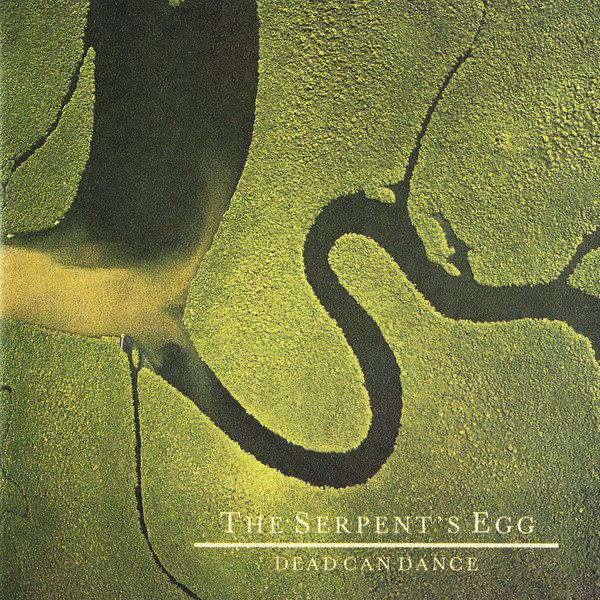
As much declined in prominence and in memory as the long-forgotten ruins and the fantastical civilizations they sing about, the work of the Australian, ethereally gothic band Dead Can Dance still leaves a pure, deep desire, a true yearning within the listener to experience life as a Romantic[1] would, approaching existence filled with sincerity and guided by strong emotions. None do instill that desire more than their magnum opus, the 1988 album The Serpent's Egg, ever after listening to it a hundred times over. The Serpent's Egg is unusual among Dead Can Dance's work in that it — unlike how its predecessor Within the Realm of a Dying Sun did in reference to Medieval Europe and its musical traditions – channels no specific culture or heritage within its sound. Rather, it somehow manages to incorporate a whole range of them into itself, and does so wonderfully. Some of that success is achieved by limiting its ambitions, such as by not blending African tribal drumming with European choral counterpoint[2] singing on the same song. However, this creative choice is not something that harms The Serpent's Egg as a whole but is something that enhances it, by allowing each cultural element its own chance to shine. Furthermore, the fact that each cultural element is allowed to have its own unique song adds an air of timeless mystery, like that of a pre-Raphaelite painting, to the album as a whole, and brings the heavenly voices of Brendan Perry and Lisa Gerrard – the closest things that The Serpent's Egg has to constants in its sound – to the forefront.
The Serpent's Egg is unusual among Dead Can Dance's work in that it — unlike how its predecessor Within the Realm of a Dying Sun did in reference to Medieval Europe and its musical traditions – channels no specific culture or heritage within its sound. Rather, it somehow manages to incorporate a whole range of them into itself, and does so wonderfully. Some of that success is achieved by limiting its ambitions, such as by not blending African tribal drumming with European choral counterpoint[2] singing on the same song. However, this creative choice is not something that harms The Serpent's Egg as a whole but is something that enhances it, by allowing each cultural element its own chance to shine. Furthermore, the fact that each cultural element is allowed to have its own unique song adds an air of timeless mystery, like that of a pre-Raphaelite painting, to the album as a whole, and brings the heavenly voices of Brendan Perry and Lisa Gerrard – the closest things that The Serpent's Egg has to constants in its sound – to the forefront.
With the fourth track, “The Writing on My Father's Hand”, instrumentation now returns. This track is perhaps the best of them all on the album, in the author's personal opinion, due to the vivid imagery that it conjures despite the simplicity of its sound and inspiration. Aurally, the song consists of two repeating, minor-keyed hurdy-gurdy drones backing the wordless hum-like vocals of Gerrand, topped off by a small crescendo of blurred synths and European counterpoint. The first three instruments repeat the same twenty-second melody until the last minute or so, when the song slowly transitions into the ending crescendo. Despite this instrumental poverty, however, one feels as if they have somehow stumbled upon a key scene in some tragedy where a once-great ruler dies full of regret for his deeds in life, his last moments either spent reconciling with some long-mistreated relative or in a hallucinatory delirium filled with the ghosts of his past.
Following up to “The Writing on My Father's Hand” is the fifth track, “In the Kingdom of the Blind the One-Eyed are Kings”, which can be simply summed as the clear opposite of its antecedent in almost all respcts. Barring its unusually long name, it is one of the most – if not the most – conventional, radio-friendly songs on the album, given that its lyrical content is a love song and its sound is primarily piano-based, ultimately building to a string-laced symphonic wall of sound. The sixth song is “The Chant of the Paladin”, a track that is very much like the fourth, in terms of structure, atmosphere, and vividity of imagery. However, it differs from “The Writing on My Father's Hand” in that its finale is little different from its beginning, in addition to using a repeated loop of what can only be described as the sound of a blacksmith's hammer thundering against an anvil as an instrument. This addition changes completely the mood of “The Chant of the Paladin” from anything that could resemble the atmosphere of its ante-predecessor, replacing the melancholy of a dying old man with the omniousness and tension of a knight putting on his armor and heading for grim war. The latter image is in fact very apt for one's overall positive opinion for The Serpent's Egg as a whole, for the last third is grim for the album's quality.
Unfortunately, after “The Chant of the Paladin”, the overall quality of The Serpent's Egg declines, with the four remaining tracks suffering from a combination of either being too short, too minimalisitic, or too long. The seventh track, “The Song of Sophia”, has the flaw of being too minimalistic, as it consists of merely just an extended, meandering wail of Gerrand's. The eighth track, “Echolalia”, is much better, consisting an a-capella tribal chant, albeit that one that is merely seventy-seven seconds longs. The next one, “Mother Tongue” is perhaps the worst one of this lot of the last four tracks, given that it is the same loop of tribal African drumming repeated over and over again with minor variations for five minutes; something that can be slightly torturous at times.
Concluding, finally, is “Ullysses”; an attempt to recapture the grandeur of the previous two-thirds. In that regard, it is only half-successful, for while it does have the theatricality of “The Writing on My Father's Hand” and “Orb de Ignis” that is required for such majesty, it lacks the true depth of feeling that is further needed to achieve greatness. This lack comes not from Perry's vocal performance – of which he gives his all here – but rather from the choice of using a glockenspiel as the main backing instrument. The tinny sound of the glockenspiel ruins the great pathos brought by Perry, leaving an otherwise great song something that is only above average.

To sum then: the 1988 gothic album, The Serpent's Egg by the Australian band Dead Can Dance is a masterwork, if one with a weak ending compared to its glorious beginning and middle. With supreme skill, it interweaves the traditions of many different cultural traditions together to create songs that bring the imagination to roaring life, and does so without relying upon any complex instrumental arrangements or whacky, out-there synths; it merely uses the powers of the human voice and a few well-placed crescendos and instrumentation loops to accomplish that. For the most part, all the songs of the work do not overstay their welcome, making them endlessly re-listenable and a great soundtrack for daydreaming. Of course, the last four songs or so do not hold up to the high standard set by the first six tracks here on in terms of quality, but that is an acceptable price to pay for an album that is near-flawless otherwise.

1. In the sense of the European cultural movement that immediately succeeded the Enlightenment.

2. Counterpoint means that two or more musicians take turns performing a single note; choral means that the counterpoint is sung rather than performed via an instrument.

Dead Can Dance - Spleen And Ideal

With this amazing album, Dead Can Dance fully took the plunge into the heady mix of musical traditions that would come to define its sound and style for the remainder of its career. The straightforward goth affectations are exchanged for a sonic palette and range of imagination. Calling it "haunting" and "atmospheric" barely scratches even the initial surface of the album's power. The common identification of the duo with a consciously medieval European sound starts here -- quite understandable, when one considers the mystic titles of songs, references to Latin, choirs, and other touches that make the album sound like it was recorded in an immense cathedral. Opening number "De Profundis" sets this mood so thoroughly, with bells and drones and more supporting another bravura performance from Gerrard, while the immediately following "Ascension" builds on this initial effort with further style and grace. It's limiting to think of either album or band strictly in terms of simple revivalism of old music. While the elements being drawn on are certainly of an older range, the results owe as much to the technologies of arrangement and production and a consciously cinematic feeling as much as they do antique pasts. Similarly, the feeling is not simply European but worldwide, with Gerrard's glossolalia intentionally reaching beyond easy understanding. Perry's vocal efforts are no less compelling, his own high point occurring with the vast-sounding "Enigma of the Absolute," as a steady, massive drum pound echoes behind a similarly treated guitar/harpsichord combination, tinged with a striking string arrangement. The overall feeling is of an ancient religious service suddenly brought to life in a truly modern way, with stunning results.

Dead Can Dance - Within The Realm Of A Dying Sun

With its two sides split between Perry and Gerrard's vocal efforts, Within the Realm of a Dying Sun serves as both a display for the ever more ambitious band and a chance for the two to individually demonstrate their awesome talents. Beginning with the portentous "Anywhere Out of the World," a piece that takes the deep atmospherics of "Enigma of the Absolute" to a higher level with mysterious, chiming bells, simple but effective keyboard bass and a sense of vast space, the album finds Dead Can Dance on a steady roll. Once again a range of assistant musicians provide even more elegance and power to the band's work, with a chamber string quartet plus various performers on horns, woodwind, and percussion. Impressive though the remainder of the first side is, Gerrard's showcase on the second half is even more enveloping and arguably more successful. The martial combination of drums and horns that start "Dawn of the Iconoclast" call to mind everything from Wagner to Laibach, but Gerrard's unearthly alto, at its most compelling here, elevates it even higher. "Cantara" is no less impressive, a swirling, drum-heavy song that sounds equally inspired by gypsy dancing, classical orchestras and any number of Arab musical traditions. "Summoning of the Muse" is perhaps too formal in comparison, though still quite impressive, but "Persephone" is the finer effort and a good way to close.

Friday, 3 April 2026

Pixies - Alec Eiffel 2xEP

We can thank the Pixies for a lot of things. They influenced bands such as Nirvana and Radiohead, as well as being one of the first Alt rock bands in America. After releasing three fairly successful studio albums, the Pixies released their final studio album, “Trompe Le Monde”, in 1991. While certainly not one of the defining albums of the early 90s American guitar indie scene Trompe le Monde remains a thoroughly enjoyable slice of guitar-pop, if not as catchy as their second album Doolittle. Alexandre Gustave Eiffel is the architect of the Eiffel tower after which the track "Alec Eiffel" is named. He was thought to have been crazy for wanting to build a phallic-shaped tower. This song is about how people are always trying to bring down others and their ideas. Alec Eiffel, probably the best song on the album, if not by the Pixies, remains a marvel of pop simplicity, musically and lyrically. It’s a perfect example of guitar and drums blending together evenly, as Joey lies down a nice little guitar part while the drums follow at the same pace. Adding to the mix, for some strange reason there is an odd sounding keyboard part in the middle of the song. Go figure.

Pixies - Trompe le Monde

Trompe le Monde (1991) is often viewed as the Pixies' most consistent, albeit abrasive, "final" album, blending punk-metal intensity with sci-fi themes and razor-sharp riffs. Often characterized as a Black Francis solo project due to Kim Deal's minimal involvement, the album delivers fifteen fast-paced, high-energy tracks. Critics note a shift toward a harder-edged, less "quiet/loud" sound, featuring more "loud/loud" guitar-driven, "post-surf" rock. Key tracks include "Planet of Sound," "Alec Eiffel," "U-Mass," and a popular cover of The Jesus and Mary Chain's "Head On". Initially underrated compared to Doolittle and Surfer Rosa, it is now frequently reappraised as a "bittersweet masterpiece" or, by some, their best work. It is often considered a "dark horse" in their discography, representing both a peak of their creative powers and the tension that led to their initial breakup. 


Let the record show that Pixies went out in an explosion of sound, an apocalyptic sunset. Trompe Le Monde (“fool the world”) is a bittersweet masterpiece, a portrait of a band both at the height of their creative powers and one fraught with incredible tensions. The members don’t complement each other so much as compete to see who can make the most noise, yet it all comes together like choreographed chaos. It also didn’t hurt that the band hurled fifteen brilliant songs out the window before heading off the cliff.
The band’s lyrics have always had a surreal, dreamlike quality to them, and listening to Trompe Le Monde is like being in the middle of a waking dream. The ideas seem purposefully disconnected, as though Black Francis cut out rather than cut up lyrics. In some cases (“Bird Dream of the Olympus Mons,” “The Navajo Know”), the songs are little more than haikus set to music. Black and the band rev up their engines, race through two or three minutes of hellfire fury and aching beauty, crash and start over again. The first time I listened to Trompe Le Monde, it felt like fifteen botched surgeries. Pixies records always feel that way; it takes a few listens before the beauty underneath it all bubbles up.
Some have pointed out, to their dismay, that Kim Deal sings less this time. The good news is that she plays more. I don’t recall ever feeling compelled to point out what a great bass guitarist she is because, honestly, I never felt that way before. But she is freaking awesome on Trompe Le Monde, and so is David Lovering. Pixies’ rhythm section totally represents on this record. Another musical note worth making is the appearance of different instruments: a tabla (I presume) on “Space,” an organ on “Bird Dream of the Olympus Mons,” bits of piano on “Motorway To Roswell.” It’s not a string section, but for an unpretentious band like Pixies it’s an interesting creative development. Otherwise, this is an audible retreat from the expansive sound of Bossanova, a return to the self-amused punk music of Doolittle.
In their too-short lifetime, Pixies never released a merely good album. You could say the same for Velvet Underground. Each record was an important statement that made everything around it seem banal. Songs like “Trompe Le Monde,” “Planet of Sound, “Alex Eiffel,” “Space,” U-Mass” and “Subbacultcha” never changed the world. Instead, they invited you into Pixies’ world, a reflection of reality sculpted in brutal chunks of sound and mysticism mixed with the mundane, all of it rendered with a pervading sense of dislocation driven by a yearning for connection. From “Caribou” to “Debaser” to “Motorway To Roswell,” it was an amazing ride. They might have gone on for a few more albums, run out of gas like most bands, bickering in the backseat until the bitter end. But Black and the band never take their foot off the pedal, not even for a moment, on Trompe Le Monde. Swan song, my ass; this was self-immolation.

Pixies - Death To The Pixies

Death to the Pixies (1997) is a comprehensive, widely praised 2-CD retrospective (1987–1991) featuring a "best of" studio disc and a high-energy 1990 live concert. It is considered an excellent introduction to their influential indie rock sound, though some critics felt the studio track selection was random and the live disc was better suited for hardcore fans. Combines studio hits like "Debaser" and "Where Is My Mind?" with a 21-song live set from the Netherlands. Highly regarded as a definitive, if not perfectly curated, collection. The live disc is often cited as a standout, capturing the band's raw, chaotic energy. Ideal for new listeners, while the live album appeals to long-time fans. Overall, Death to the Pixies is a highly recommended, essential compilation for understanding the band's impact on alternative rock. 


Death to the Pixies probably doesn’t do adequate justice to the band that, in a mere four-year existence, lit the fuse which led to the alterna-explosion of the present decade and inspired dozens, nay hundreds, of like-minded bands (and those are just the ones the bass player formed). The first disc covers all the “hits,” including songs (like “Here Comes Your Man”) that really aren’t representative of the far-reaching mixture of mythopoesy, hi-fi-sci-fi, and screwball pop-punkisms that provided the template for the irony-enriched shambleaya that followed (mix “Gouge Away” with “Bone Machine,” add a pinch of “More Than a Feeling,” and you’ve got “Smells Like Teen Spirit”), and the second is a 1990 live recording from a band not known for its on-stage charisma and spontaneity (the one time I saw them, they played their set list in alphabetical order, which should tell you something).
It gives short shrift to their legendary first full-length, Surfer Rosa (the album that gave “recorder” Steve Albini a career between dissing former friends and taking forever to record his own damn records) and all but ignores their underappreciated kiss-off, Trompe Le Monde. There are no rarities or real surprises to speak of (though 4AD is said to be at work on an odds ‘n’ sods set – if they skip “Theme From the Nintendo Video Game ‘Narc’,” I’m suing Ivo) – the dedicated Black Francophile could probably cobble together a more penetrating collection by putting their five CDs in and hitting shuffle. This compilation’s saving grace: It’s the Pixies, dammit. Hearing their wall-eyed melangé of surf riffs, pop sniffles, end-of-the-world shrieks, and the cracked harmonies of Black Francis and Kim Deal (fave example: “Nimrod’s Son”) is always a treat no matter how unimaginatively arranged, every single song has at least one Bartlett’s-worthy sound byte (“You’re so pretty when you’re unfaithful to me!”), and if, for some idiotically occult reason, you’ve not supped at the Pixies’ slanted table, this is as good a place to tuck in as any.

Pixies - Debaser (Live) EP

The Debaser (Live) EP, released by 4AD in September 1997, serves as a 4-track, CD-single taster for the compilation album Death to the Pixies. It highlights the band's signature "loud/quiet/loud" dynamic, featuring a remastered studio version of "Debaser" alongside live recordings that showcase their potent, high-energy stage presence. Reviews highlight the live tracks as energetic, with Black Francis’s vocals described as "demented," Kim Deal's basslines driving the pace alongside Dave Lovering’s "insane" drums, and Joey Santiago's guitar delivering a "sonic plow". The release came during a period of renewed interest in the band,, coinciding with the 1997 Death to the Pixies compilation, which aimed to re-introduce the band's influence to a new audience. While sometimes considered a "cash-grab" by collectors, the live performances themselves are often praised, sometimes described as superior or more raw than the studio originals. The EP is generally recognized as a solid, high-energy live snapshot of the band's peak era. 


When I first sat down with the Pixies discography, everything was hunky dory. I finally sat down with all they had, everything was in its right place. The music, so utterly simple, was enthralling. The lyrics, so nonchalant, were thought-provoking. And the vocals, so silly, were captivating. Yet no one song had stuck out to me. There were a trove I adored, but nothing itching to stand above the rest. This was in stark contrast to an album's width, where Doolittle struck a chord and never let go, easily taking a hold of my number one spot. Then I started to contemplate 'Debaser.' I always returned to 'Debaser.' By theory, by the Pixies' whole motto, there was nothing inherently special about it. But that's exactly what made 'Debaser' so memorable. It took that mission statement and boldly defined it. That first guitar riff is ringing in my ear as we speak, and at the drop of a dime, Frank Black's "ahhhh ho ho ho!" could replace it, soon before Kim Deal's enigmatic coos of "debaserrrrrrrrr" takes over. All without even listening to the song. Point being, it's unforgettably catchy.

Pixies - Bossanova

Released in 1990, Pixies' Bossanova is a critically regarded, melodic pivot toward sci-fi surf rock and space-age pop, moving away from the raw intensity of Doolittle. Featuring standouts like "Velouria" and "Dig for Fire," it showcases smoother production, stronger, more accessible melodies, and less of the band’s earlier punk-driven, "quiet-loud" dynamics. The album is noted for its slicker, reverb-drenched, "widescreen" sound compared to its predecessors. Some critics found the production polished and, in some cases, less raw, while others appreciated the refined, modern sound. Heavily influenced by space, aliens, and, according to some interpretations, a "looser" structure. Bossanova is often viewed as a slight step down from the band’s peak of Doolittle and Surfer Rosa by some, yet it is still regarded as a "classic" and a solid, enjoyable record by many others.


By Mark Beaumont ( Classic Rock ) published 7 August 2020
Having cast himself as the unhinged oracle of grisly mythical proto-grunge on Surfer Rosa (’88) and Doolittle (’89), Pixies’ Black Francis rematerialised in 1990 as noir rock’s Man From Planet X, his slasher-flick aesthetic given a sci-fi B-movie twist. 
For third album Bossanova Joey Santiago’s guitars took on a rocket- ship gleam, Dave Lovering’s drums a propulsive blast, and Francis’s breathless alt.pop a gruesome fascination with loving the alien. Key to Bossanova’s science-fiction tone is The Happening, a tribute to Vegas DJ Billy Goodman’s very own War Of The Worlds prank in the 1950s. Goodman recorded a novelty single called Flying Saucer, purporting to be an on-the-spot news report from the first meeting of man and extraterrestrial, and Francis’s song follows a UFO nut (like Francis at the time) hearing the track on his car radio and racing off to Vegas to welcome his new alien overlords. 
Elsewhere, the theremin wails of Velouria suggest intergalactic communication, but the album’s gnarled pop centrepiece actually concerns Francis falling in love with a furry/smooth woman from Lemuria, an ancient land sunk beneath the Pacific. Pixies weren’t yet as away with the spacemen as they’d get on 1991’s Trompe Le Monde, where they’d visit Martian volcanos and recreate Roswell, but Francis clearly saw their future in futurism. Bossanova seemed to time-warp Pixies far ahead of a slacker-rock pack still struggling to catch up with Doolittle. As US rock grew ever more bedraggled, Pixies and producer Gil Norton coated their Talking Heads homage Dig For Fire, Stormy Weather and Allison (dedicated to jazz pianist Mose Allison) in slick titanium shells, and softened the murky menace of The Happening, Hang Wire and Is She Weird? with moments of astral surf sweetness in Ana and Havalina. 
By encasing Pixies’ grime, melody and precision violence in a sleeker modernist production, tracks like All Over The World actually sketched out the blueprint for Nevermind sharper than Kurt favourite Surfer Rosa ever had, and also set them light years apart from their immediate grunge descendants. Having left behind their early albums as mysterious monoliths marking their presence here, Bossanova beamed Pixies to their very own planet of sound.