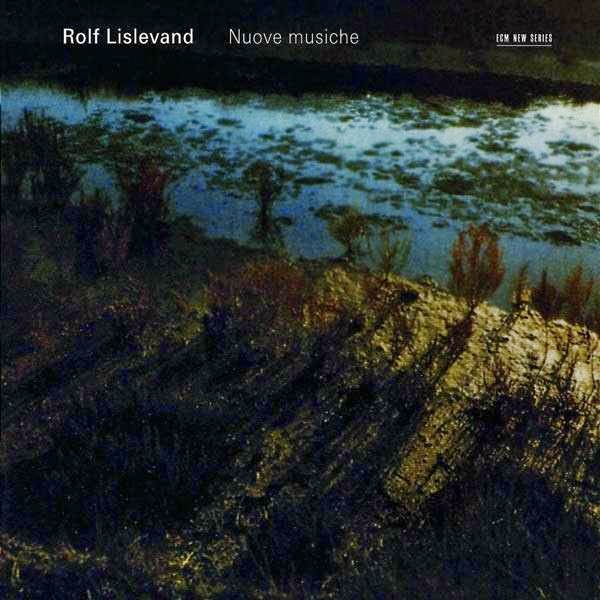
Is it fair for baroque to sound so sensual? An elegiac soprano
voice wafts above an instrumental piece by Giovanni Girolamo Kapsberger.
Flamenco rhythms underpin a passacaglia. Then suddenly we hear the
typical harmonies and ornaments of Celtic folk music. Is that how this
music really sounded in Italy in the early 1600s? Of course not. But
what the Norwegian lutenist and guitarist Rolf Lislevand and his six
colleagues bring off on
Nuove musiche, their début album for ECM,
has all the earmarks of a manifesto. Their vibrant and literally
unheard-of readings of early baroque music from Italy are meant to grab
the listener directly, as if it really were 'new music'.
'For years people tried to play early music as closely as possible to
the way it was played at its time of origin', Lislevand explains 'But
that's a philosophical self-contradiction. The first question is whether
it's possible at all to replicate the performance of a musician who
lived centuries ago. As far as I'm concerned, reconstruction is not
really interesting at all. Do we really want to act as if we hadn't
heard any music between 1600 and the present day? I think that would be
dishonest. With this recording we say goodbye once and for all to early
music's authenticity creed.'
This doesn't mean that anything goes - on the contrary. Lislevand, who
learned his craft at the famous Schola Cantorum in Basle, has been
professor of lute and historical performance practice at Trossingen
Musikhochschule since 1993. He has turned out many prize-winning
recordings, some of them with his Kapsberger Ensemble, which forms the
core of the musicians on Nuove Musiche. He avidly scrutinises every
available scrap of information on what he plays and how to play it
properly. But those are only the preconditions for a convincing
performance. After all, one vital element in baroque music was
improvisation: 'Pieces were played to meet the needs of the moment',
Professor Lislevand points out. 'To play strictly according to the notes
on the page would be tantamount to lying, for the scores were written
in a sort of shorthand. They presuppose a good deal of knowledge and
self-assurance from the player.'
Take the percussion instruments, for instance. We know they were used,
but nobody around 1600 bothered to write down the parts. So we have no
way of knowing for sure how they were used. Did they only serve as
timekeepers, or was their timbre exploited as well? Lislevand has very
strong views on the subject: 'The idea that it wasn't until today that
we could freely express our feelings is not only naive but arrogant.
Personally I believe that the people of the 17th century were much
richer and more self-aware than we assume today.' It is only natural,
then, that the percussionist Pedro Estevan offers a huge range of
expressive sounds and rhythms on
Nuove musiche.
Lislevand searches for points of contact between the 400-year-old pieces
on this recording (by Kapsberger, Pellegrini, Piccinini and others) and
the musical horizons of today's performers. Usually the starting point
is the passacaglia, a set of increasingly dramatic variations on an
unchanging bass pattern. Passacaglias formed the core repertoire of the
lute and guitar books of the 17th century. 'They thrive on chromaticism,
harsh dissonances and offbeat rhythms. If the composers tried to get
these effects, then we have every right to go even further. My idea is
simply to develop and elaborate things already there in the material.
Arianna Savall's melody really does come from the Kapsberger toccata
itself. Everything there that smacks of echoes from current popular
music is already contained in the pieces. I just coax it out.'
(ECM Records)