
I was first introduced to Claudine when I saw her in the movie “The Party” singing Mancini’s "Nothing To Lose" (one of the most funniest scenes I ever saw on the screen, courtesy of Peter Sellers). Ever since then I have loved her music. She has one of the most sweet sounding, soothing and sexy voices around. No, she wasn't highly successful with her albums, her singles never peaked high on the charts, but Claudine Longet was a class act nevertheless, oozing French luxuriance but never decadence, she was the All-American French-girl-next-door. Her singing, highly imbued with her accent, is lilting, purring, often coy. Pop culture may remember Claudine Longet for just two achievements: her co-starring role in the 1968 Peter Sellers vehicle "The Party," and her starring role in the 1976 shooting of skier Spider Sabich. Although Claudine recorded a series of bewitchingly ethereal albums which are much revered by today's aficionados of smooth, sophisticated Sixties pop. Those seven original albums have always been very difficult to find in the stores or elsewhere. But Rato Records finally achieved to get them all and now they are shared here, once more, for your special delight.
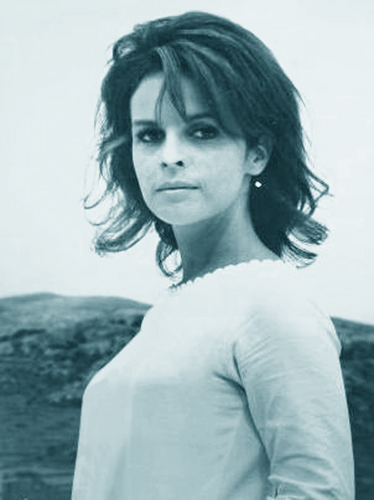
Claudine was born in Paris on January 29, 1942; according to an excellent article in the magazine Girlyhead, she relocated to the U.S. at age 19, settling in Las Vegas and becoming the lead dancer in the Folies Bergère show. There she met crooner Andy Williams, with whom she'd earlier crossed paths while still a child in Paris; they were married in 1961 Christmas day, although the 14-year difference in their ages was the source of much controversy among Williams' fans. During the early years of her marriage to Williams, Longet put her career on hold to start a family (the couple had three children, Noëlle, Christian and Robert); resurfacing in 1964, she appeared as a guest star on television series including Combat!, Hogan's Heroes, Run for Your Life and The Rat Patrol. Not surprisingly, she was also regularly featured on The Andy Williams Show.
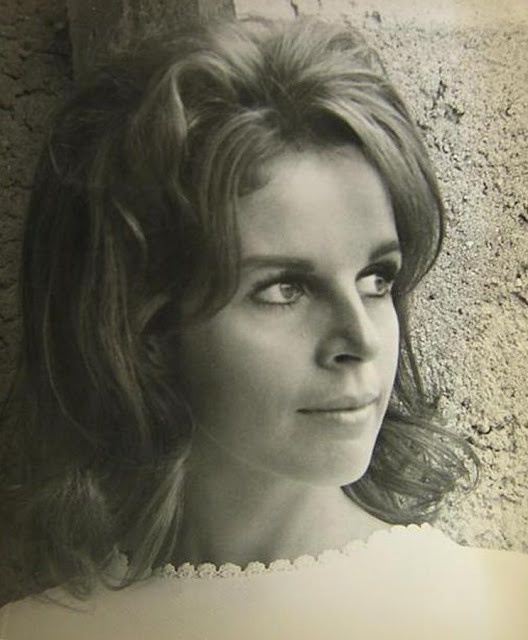
Claudine defined a style with her large brown childlike eyes, her long brown hair, and her beautiful, youthful face. It was a look perfect for the kind of light acting that she did, where she was usually a quiet contrast for the comedy or drama whirling around her. Actually, with those looks it's suprising she didn't become a model early in her career, but perhaps life as Mrs. Andy Williams prevented her from exploring that global arena. Long and lithe, Claudine was of the Twiggy / Mia Farrow school of physical beauty, compensating for her lack of a voluptuos figure with an attractive slender shape that was almost closer to childhood than womanhood and an appealing alternative to full-figured French actresses like Brigitte Bardot.
A&M SP4121 (April 1967)
 Longet signed to A&M Records in 1966, scoring a minor hit with her debut single "Meditation"; her first LP, "Claudine", appeared the next year, gaining moderate airplay for "Hello, Hello" and a cover of the Beatles' "Here, There and Everywhere". Longet's records were part of the effort of Herb Alpert's A&M Records to extend the label's (previously bigband) repertoire. This first serious attempt to start a music career reached #11 in the US charts. "Un Homme et une Femme (A Man and a Woman)" with its uncredited male vocalist, sounds like a Gainsbourg duet, but elsewhere Longet and her breathy, girlish voice take center stage. Three songs from the album charted, with "Hello, Hello" performing very well in adult contemporary circles.
 A&M SP4129 (October 1967)
 The second album, "The Look of Love" appeared later in that same year of 1967. It may not be that whispery vocal that is the most grating thing about this record. It will be the sugar. It’s sweeter than hard candy. But how does she do it? How does she manage to be so cloying? Maybe it’s the accent. «How een-seen-see-teeve» she coos to comic effect in “How Insensitive”, one of the most delicate and melancholy songs in pop music. Normally, I find a French accent charming, even sophisticated. But Claudine manages to subvert whatever worldliness is inherent in the inflection. Or maybe it’s the Elmer Fuddisms that occasionally creep into her voice. Her version of the Beatles’ “When I’m 64” is an absolute howl. «When I get oder, gway in my hair, meeny years fwom now, wee-oo you stee-oo be seending me a vow-en-tine…»

Or maybe it’s simply how absurdly far she carries the little-girlness of the style. On this record she actually covers that Paris Sisters hit, “I Love How You Love Me”, which provides a good comparison for how much higher she ratchets the saccharin in an already syrupy song. "The Look of Love" remains the creative zenith of Claudine Longet's A&M tenure - arranger Nick DeCaro and producer Tommy LiPuma weave together elements of soft pop, jazz and bossa nova to create a fairy-dust suite perfectly modulated to Longet's breathy allure, rendering moot her obvious vocal limitations via the perfect combination of singer, songs and sound. Material like Margo Guryan's "Think of Rain" and the Bacharach/David title cut envelops Guryan in a potently romantic atmosphere that underscores the innocence and intimacy so central to her identityn - rarely have albums forged from so little yielded so much. She couldn't do a bad record, such is her grasp of our culture and the notion of romance. Turn down the lights, light the candles and fire up Claudine!
 A&M SP 4142 (April 1968)
Claudine Longet's third album, "Love is Blue", released 1968 (the same year she co-starred opposite Peter Sellers in the hilarious movie “The Party”), continues the middle-of-the-road tendencies of her first two, leading off with an oddly jaunty reinterpretation of "Falling in Love Again", Marlene Dietrich's theme song, whose jaded world-weariness Longet replaces with her own pleasantly insubstantial persona. With its cinematic background noise staging and odd ragtime piano accents, it recalls Harpers Bizarre's playful deconstruction of pre-rock standards. More successful are the straightforward bilingual version of the title track, one of the evergreen tunes of '60s easy listening; the oft-recorded Alan Gordon and Gary Bonner sunshine pop tune "Small Talk"; and a mournful, skeletal version of Randy Newman's little-known early tune "Snow" that's among Longet's finest interpretations of her career. Even better is Longet's take on the Bee Gees standard "Holiday"; Longet's endearingly pitch-poor, lispy vocals are tailor-made for this spooky, unconventional song, which arranger Nick DeCaro gives a suitably off-kilter arrangement featuring a chorus of wordless Longets between the strings and the increasingly florid piano accompaniment.
 A&M SP 4163 (December 1968)
"Colours", the fourth album, released 1968, included two of Donovan's early folky tunes, "Catch the Wind" and the title track, a delicate acoustic reading of Gordon Lightfoot's "Pussywillows, Cat-Tails" that's really quite lovely, and perhaps most surprisingly, a tender recasting of the Everly Brothers' "Let It Be Me" with a coda featuring new French lyrics penned by Longet herself. Not everything works: the opening version of "Scarborough Fair / Canticle" doesn't hint at the complexity of the harmonies of the Simon & Garfunkel original, and Joni Mitchell's "Both Sides Now" skates so dangerously close to tweeness by itself that the addition of Longet's wispy little-girl vocals and prominent lisp sends it over the edge. She redeems herself at the album's end, however, with a delicately mournful take on Randy Newman's oft-recorded "I Think It's Going to Rain Today" that features only the composer's piano and Longet's uncharacteristically self-assured vocals. "Colours" is certainly enjoyable on the shallow, kitschy «ha ha, look at this» level that most modern-day hipsters condescend to, but for true connoisseurs of the style, it's probably Claudine Longet's best album.
A&M SP 4232 (January 1970)
 Without any doubt, this "Run Wild, Run Free" was Claudine’s hardest album to find. After many searches I finally got it as a japanese import. A little expensive but a rarity is usual priceless for us, music lovers and maniac collectors. It’s the last album for A&M, recorded in a time where Claudine was feeling that she was really “involved” for the first time in a true singing career. Claudine explains that this new feeling she has for music is «Like a tiny little door that opens up, and you wonder, my God, what's in there? Singing is not yet something vital for me, something that I have to protect. But it's getting to be fun all of a sudden. It's the first time that I've felt ready to do it on my own, and not because I have an accent or a little voice». Claudine cites the Beatles, the Stones, and all the new pop performers who have become what they are today by taking chances and being themselves. She wants to take chances now. «I'm ready for another dimension. I feel that I now want to sit down with my producer and try things, new chords, new phrasings.»
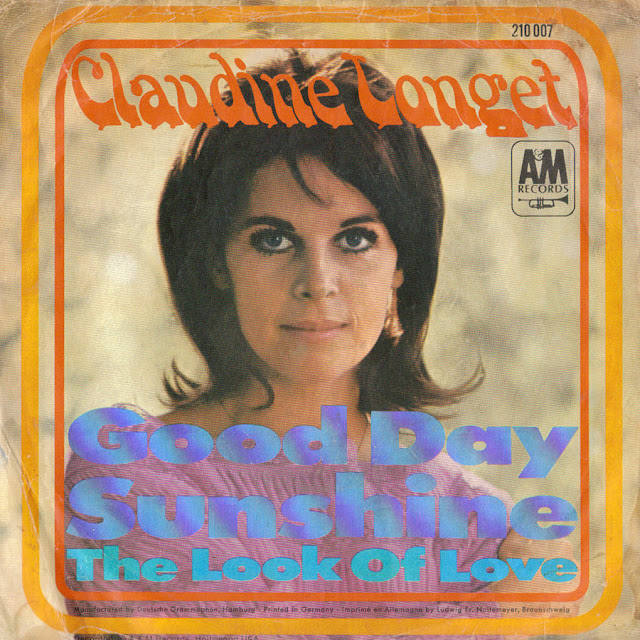
Because of the lightness of her previous albums, Claudine has always been thought of as a frothy, light, fluffy performer. Of this image she says, «I'm not bubbly. Songs like "Hello, Hello" are still there within me, but I feel much more comfortable with Randy's songs. You see, when I first started in the business of singing, I just sang. The musicians did something and I went along with it - sort of independently. The music was recorded first, then I came in and tried to fit in the vocal. And that was that.» Claudine labels her new album «a together creation. It was stimulating. I often feel that recording is like going through all the creating and then seeing this sign that says EXIT, and going through that door with no regrets, because there are other things in my life which are more important than my career - my home and my children.» Claudine asks the question, «Who knows who I am? I am always changing like life. I want to try new things, and I will»
Barnaby/CBS Z 30377 (1971)
"We've Only Just Begun" (an ironic title given that the couple's marriage had ended just the year before, although she and their three children continued appearing on his annual television Christmas specials for years to follow) is Longet's Barnaby debut, where her style truly makes the transition from the '60s to the '70s. This is obvious from the song choices alone, which draw from the new generation's hitmakers (Bread, the Carpenters, the Jackson 5) rather than the British Invasion or groovy, cocktail-lounge pop. Also, while Nick DeCaro (who arranged all her previous albums) still guides Longet's music, he steers the sound toward a noticeable '70s feel, as bubbly bass lines and an intrusive storm of choral vocals add a contemporary, soft-rock flavor. This isn't just another background record for mellow, make-out sessions, but a more brassy, extroverted bid for the top 40. Longet's whispery vocals are mostly unchanged, but she does seem overwhelmed by the arrangements at times.
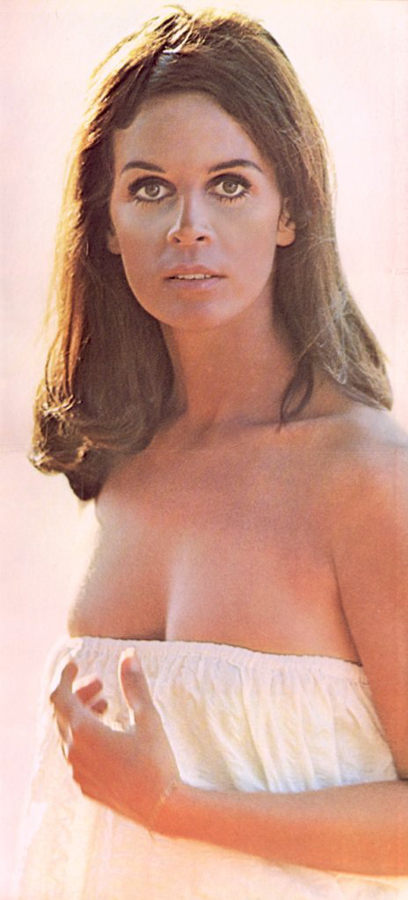
Of course, some fans hardly cared about the music - the come-hither shot of a tanned, bare-shouldered Longet on the cover was probably enough on its own to sell a few copies. Those who opened the album's gatefold received another jolt: an even more seductive photo of her, this time wearing a strapless top which her exposed bustline barely held in place. Typically, the record's main themes are love and romance, but a few quirkier tracks stretch Longet's range. The sharpest twists come with two Melanie Safka compositions, which insert flashes of protest. "Peace Will Come (According to Plan)" preaches about global unity, while making a gallant effort to prove bongos and gospel organ can fit into the same song. It almost succeeds, too! "What Have They Done to My Song, Ma" shows Safka's lighter side, but its sense of wry self-deprecation isn't quite captured by Longet's timid reading. Note how she carefully changes the hook's original syntax to the more grammatical «Look what they've done to my song, Ma.» It's also hard not to giggle when her twee accent yields «Look what they've done to my bwain!»
 Barnaby MGM BR-15001 (1972)
This was Longet's final official release, although she recorded an album's worth of tracks for a proposed follow-up (finally assembled in 1993 under the title "Sugar Me", which I've already presented here, separately). With "Let's Spend the Night Together", Claudine found herself in the hands of producer Ken Mansfield. Mansfield was best known as the former manager of Apple Records' stateside offices, but had become president of Barnaby Records in 1971. Later, he produced artists including Waylon Jennings, Jessi Colter, David Cassidy and even Don Ho. Mansfield aimed to cast Longet as a more contemporary artist, and thus chose material by acclaimed singer-songwriters rather than deskbound writers-for-hire. He also hired a slew of top-notch session men, including bass legend Joe Osborn, drummer John Guerin, woodwind ace Tom Scott and not-yet-famous guitarist Larry Carlton.

It's worth noting that "Colours" is the only other Longet album which has full musician credits - Mansfield obviously wanted to stress the players' expertise. "Let's Spend the Night Together" remains Longet's most poetic album. The airy instrumental which begins and ends the record acts as a conceptual frame, and several songs are further unified by a light "sleep" motif (which Mansfield admits was accidental).There's an earthy sense of band chemistry not found on her other albums, and the stereo effects allow individual parts to be easily heard. ARP synthesizers now jump into a pivotal role (usually substituting for a trumpet, trombone or flute) and, thankfully, the choral voices of her previous record have been dropped. The songwriters collected on "Let's Spend the Night Together" are impeccable, though they were probably less than thrilled with these innocuous treatments. The highlights come early, with dreamy versions of Brian Wilson's masterpiece "God Only Knows" (the overdubbed harmonies in the closing are particularly sweet) and Paul McCartney's underrated "Every Night"
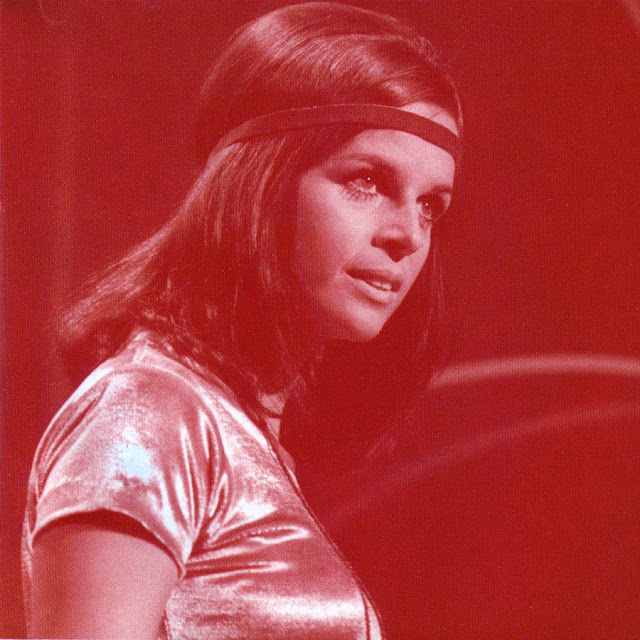
Another jewel is her cover of Graham Nash's "Sleep Song", a timeless melody with a graceful flow. The sparse arrangement of this waltz makes it one of her most affecting tunes ever. Other songs thoughtfully blend love and remorse, sometimes evoking images of her own failed marriage. "Remember the Good" (written by Mickey Newbury, whose "Sweet Memories" had been crooned by her husband) seems especially personal with its resigned lyric and half-whispered vocal. A haunting recorder part sets the mood, along with a sea of ARP strings. Kris Kristofferson's "When I Loved Him" is a similar dab of romantic nostalgia, though it's marred by its ending: an extra minute of unfocused, piano-and-congas jamming which could have been lifted from a nearby Traffic album. Oh well...at least, the session cats found a place to show off their licks. Elsewhere, the stoic elegance of Leonard Cohen's "Hey That's No Way to Say Goodbye" is way beyond Longet's emotional depth, but the arrangement has lots of fun with its goofy headphone bounces and twittering synthesizer fugue. Four lesser tracks fill out the record. “Birds”, a haunting ode taken from Neil Young’s "After the Gold Rush", gets a fairly straightforward rendition with some pleasing flute. “Wake Up to Me Gentle” is a mild little tune written by Mansfield himself, in which the metallic clamor of the Marxophone (an esoteric, autoharp-like instrument) simulates a ringing alarm. The title cut, easily the most radical reinterpretation, warps the Rolling Stones’ original melody and chords while slowing the tempo to a lazy, syncopated bounce.
The almighty conga drums pop up again, and the breaks have some cute interplay between flutey ARP runs and George Harrison – like slide guitar. Listen for the peculiar “oom” sound which is looped on the rhythm track, and Longet’s attempt to desexualize the lyric by switching the chorus to «Mama needs you more than ever». Finally, there’s the most idiosyncratic piece of all: a bizarre medley of John Lennon’s “Jealous Guy” and “Don’t Let Me Down”. This one blends Lennon’s then-current hit (here, changed to «I’m just a jealous kind» to fix the gender) with the «I’m in love for the first time...» bridge from the earlier Beatles song. The introduction’s stilted bass line and Longet’s blank «da da da dah» vamping (substituted for Lennon’s whistling) may cause a few chuckles, but this is part of the track’s naïve charm.
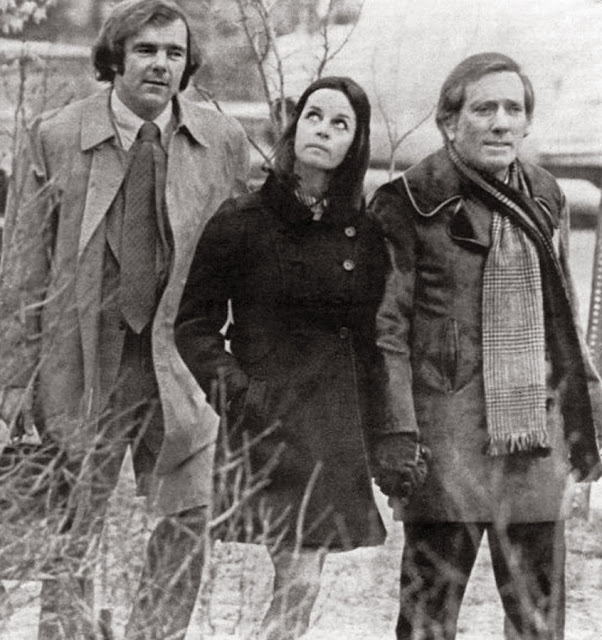
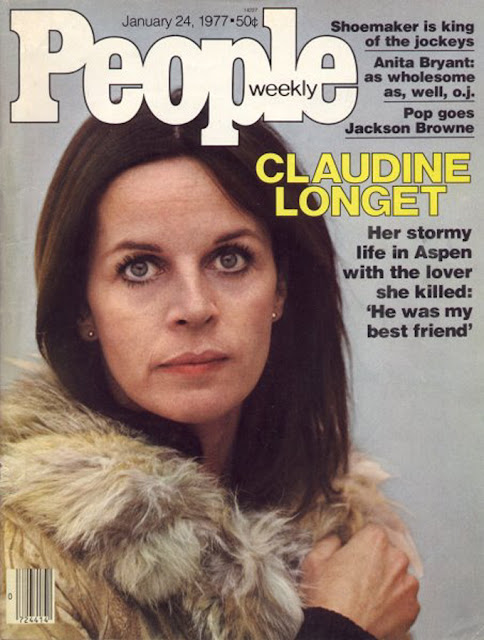
As Longet's music career faded, she became romantically involved with Olympic skiing champion Spider Sabich, in 1974, moving with him to Aspen, Colorado, a getaway for the rich and famous where their neighbors included the likes of Jack Nicholson and John Denver. On the morning of March 21, 1976, Sabich was shot and killed when his Lüger pistol went off in Longet's hand; around Aspen, many demonized the tragedy as a case of cold-blooded murder — rumors about the couple's souring romance swirled endlessly — although the resulting trial found Longet guilty only on charges of criminal negligence, for which she served 30 days in jail. Upon her release, she later married her defense attorney, Ron Austin, and remained in Aspen, although in the years to follow she appeared in public only rarely. After the criminal trial, the Sabich family iniciated civil proceedings to sue Longet. The case was eventually resolved out of court, with the provision that Longet never tell or write about her story.