Original released on LP ATCO
33-227 (mono) / SD 33-227 (stereo)
(US 1968, January 22)
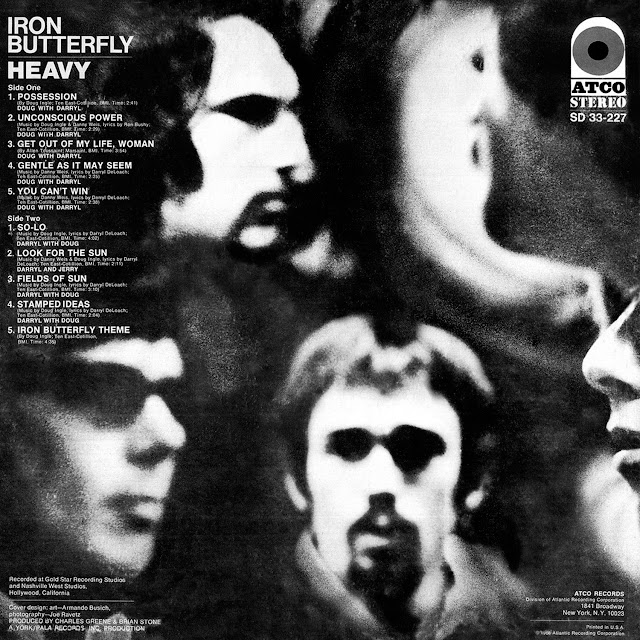
 Iron Butterfly’s debut is patchy..some winners, mostly losers. Certainly not that "heavy" either. The band already had their unique style down from the start, really no modifications for their next few albums. Their music's obvious draw is Doug Ingle’s organ playing and the guitarist's unique Mosrite tone. On a side note, Danny Weis got that tone first and later showed it to Eric Brann. Highlights here include the creepy, organ-driven “Possession” and “Unconscious Power”. “You Can’t Win” is a basic 4/4 rocker. You can’t really go wrong with that. “Fields of Sun” would actually fit better on their third album, "Ball". The bridge reminds me of something from that album. I like the weird falsetto singing along with it. 4 good songs so far. Now for the bad tracks. “Get Out My Life Woman” has an organ intro straight from the toyshop, and then the song takes a sudden turn into unexciting, slow blues rock. “Gentle as it May Seem” is as straightforward as you could ask for. Those "come here woman!" bits are cringeworthy. “So-Lo” is rather odd. The main organ riff is a melody that feels kind of kiddie/saccharine, even more so during the bridges. The backing vocals aren't appropriate for the song, and Doug should’ve sang lead. “Stamped Ideas” is a pure slice of filler, no substance. The lyrics are moronic and the tune is cloying. What a relief the next track will be... The album’s crowning glory is the instrumental “Iron Butterfly Theme”, which supposedly conveys the birth, life, and death of a butterfly. It's made up of reverberating Mosrite guitar sound that IB is noted for and Doug’s ghost-like chanting. It ends with a repeating organ note that would seem to indicate a dying heartbeat, and then it flatlines. It’s Iron Butterfly’s most psychedelic song outside of "IAGDV". (in AllMusic)