When we watch a movie, we are generally the most interested in being entertained. So, too, when we watch our favorite horror films, we typically watch them for their arresting visuals and special effects, as well as for their psychological shocks. We usually know who directed a certain film because directors are the ones who are the most promoted and well-known as those who “made the movie”. Often, though, only casual thought is given to the rest of the professional artists and craftspeople behind the scenes who are responsible in creating a finished product. Besides a script and the actors, the cameraman has a critical role in the “look” of a film. Cinematography, as it is formally called, has a long history of development, and we have a few early cameramen to thank for making classic horror films both visually striking and memorable.
One such individual was cinematographer Arthur Edeson. He was highly regarded by actor and producer Douglas Fairbanks and director Raoul Walsh, and was behind the camera for many landmark films including, THE THIEF OF BAGHDAD (1924), ALL QUIET ON THE WESTERN FRONT (1930), MUTINY ON THE BOUNTY (1935), THE MALTESE FALCON (1941) and CASABLANCA (1942). Of interest to horror fans, he was the cinematographer for three out of the four films that James Whale directed for Universal Pictures during the 1930’s, including the granddaddy monster movie of them all, FRANKENSTEIN (1931). James Whale was well aware of his expertise and Edeson was his first choice for the production.
Arthur Edeson was born October 24, 1891 in New York City. He attended the College of the City of New York and became a photographer, specializing in portraits, as well as negative retouching and platinum printing.
Looking for more steady-paying work, his interest turned to the burgeoning field of motion pictures and in 1911 he applied for a job at the newly-formed U.S. division of the French-owned Éclair Studio in Fort Lee, New Jersey. “While I was waiting in the outer office,” he recalled, “a man came in and stabbed his finger around the crowded room, saying: ‘I’ll take you — and you — and you. Come with me.’ I couldn’t tell whether I was one of those selected, but I joined the group anyway. Once inside the mysterious recesses of the studio, I found I’d been hired — as an actor.”
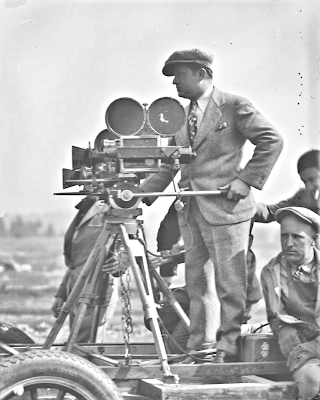 |
| The Patent Leather Kid - March 29, 1927. |
With no real interest in a career as a thespian, Edeson continued to concentrate on his photography and when time permitted, he would shoot portraits of various actors on the set. His work caught the attention of one of Éclair’s top cinematographers, John Van den Broeck, who told him: “You’re wasting your time as an actor, son. Why don’t you switch over to the other side of the camera, where your ability will mean more, and you can be sure of a longer and steadier career?”
Soon after, Van den Broeck brought an idea to the Éclair Studio executives, and Edeson suddenly found himself appointed the studio’s official portrait photographer. He cleared out a corner of the film lab and created a workshop and darkroom for himself.
Still, Edeson had dreams of becoming a cameraman, but at Éclair all the posts had been filled. There was little else he could do to get closer to a film camera because in those days the cameramen did all the work themselves, from loading and unloading the camera to editing. As a result, there was a great deal of secrecy surrounding movie cameras and their operation, with trade secrets not to be revealed for fear of a lawsuit. Nevertheless, he learned by observation, as well as valuable information shared by his friend, Van den Broeck. When the time came, he would be ready.
When a cameraman fell ill in the middle of a shoot, Edeson got his chance and was called to fill in for him. His work so impressed the studio owner, Charles Jourjon, that he was promoted to full-time cinematographer, the first and only American cameraman at Éclair. There was only one obstacle – he needed an interpreter to communicate with the rest of the French crew!
The job was not without its challenges. “In those times, flat lighting was the rule of the day,” Edeson wrote. “However, I began to introduce some of the lighting ideas I had learned in my portrait work — a suggestion of modeling here, an artistically placed shadow there — and soon my efforts tended to show a softer, portrait-like quality on the motion picture screen. This was so completely out of line with what was considered ‘good cinematography’ in those days that I had to use my best salesmanship to convince everyone it was good camerawork.”
While Edeson was working on the East Coast, he was a member of the Cinema Camera Club, the first organization of motion picture cameramen in the country. When he moved to Hollywood, he joined the West Coast affiliate called the Static Club, which was renamed to the Cinema Camera Club of Hollywood. Later, it was reorganized into the American Society of Cinematographers (ASC), as it is still known today. Edeson was a Charter Member and remained active for 40 years.
One of Edeson's specialties was filming large scale action scenes and one of his best examples was the battle scenes in ALL QUIET ON THE WESTERN FRONT. Filmed with multiple cameras and crane and tracking shots, they were of immense scope and breathtaking for the time. The film ended up winning the Academy Award for Best Picture and Edeson was nominated for Best Cinematographer (he lost to Joseph T. Rucker and Willard Van der Veer, cameramen for the documentary WITH BYRD AT THE SOUTH POLE.
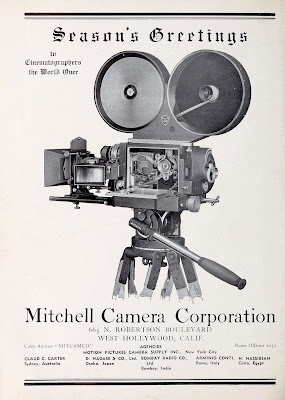 |
Edeson used the Mitchell camera to film Frankenstein.
|
Edeson went on to a very successful career. Out of all of his 135 films, Edeson would say that he liked THE THIEF OF BAGHDAD the best because all the special optical effects were done by him alone in camera (which is a skill in itself). Stylistically, he preferred some of his other films such as THE MALTESE FALCON.
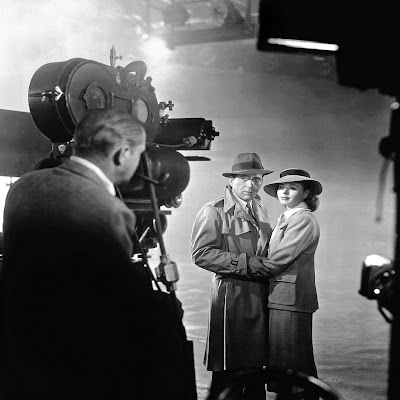 |
| Behind the camera in Casablanca. |
Looking back at his accomplishments, Edeson explained: “I think one of the most important parts of the cameraman’s job is determining when to let himself go in photographing a picture, and when to hold himself in. The best thing, I think, is to strive to keep things always as simple as possible, photographically speaking. The principal things are always your story and actors; if you keep your compositions and lighting simple, placing the accent rather on them than on the camera, or on mere decorativeness, you can’t go very far wrong”.
NOTE: A portion of this text was published in the article, "He Filmed Frankenstein: The Cinematography of Arthur Edeson", for CASTLE OF FRANKENSTEIN #39 (Spring 2024).
AMERICAN CINEMATOGRAPHER (November 1942):
AMERICAN CINEMATOGRAPHER (December 1935):
Review of FRANKENSTEIN in INTERNATIONAL PHOTOGRAPHER (August 1932):