Showing posts with label Frank Bolle. Show all posts

Saturday, April 18, 2026

Solar Reflections - Nuclear Nightmares!


In the third volume of Doctor Solar Man of the Atom from Dark Horse, we are treated to a fully-realized superhero. Gold Key had been reluctant to dive into the superhero pool, clearly showing a disdain for the underwear crowd which commanded so much attention in the field. But eventually they follow the patterns and give us a Doctor Solar who functions in many ways like a hero in the classic modes.

Paul S. Newman, the ubiquitous writer for Gold Key continued to handle the chores on that end and Frank Bolle had successfully taken over the art, if his style was somewhat less dynamic than what had come before. With this team we continue to get stories which are rock solid science fiction such as when Doctor Solar is forced to travel back in time to stop a deadly doomsday device by going to before it began, and later he confronts a sun spun out of control and threatening to destroy the Earth itself.

Then the stories begin to focus more on the machinations of Solar's arch enemy Nuro, an obscure behind-the-scenes villain akin to many masterminds from the Bond films and other such tales. Nuro employs a robot dubbed "Orun", one who'd battled Solar before and makes of him a steady henchman and persistent threat to Doctor Solar. We get a glimpse of Nuro's face after many years of shadows and see that he has a rather porcine countenance. Nothing much is made of this, but it suggests a slight change in the tone of the series.

Those changes continue when Dick Wood takes on the writing and veteran Al McWilliams steps into do some art on the series and we meet Hamilton Mansfield Lamont, who is Gale's nephew. This brilliant young man joins the cast which had long been comprised of love interest Gale and Dr. Solar's longtime boss and confidant Doctor Clarkson and soon becomes a nerdish Snapper Carr/Rick Jones like figure. You can for sure say that the Man of the Atom becomes a bona fide superhero when he gets a teen sidekick.

We also get a new villain, sort of when King Cybernoid is birthed as Nuro's intellect becomes entrapped in the robotic form of his henchman. This new more physical opponent again creates a more pure superhero dynamic for the book and draws it away from its sci-fi roots, though of course those notions still function to supply threats.

Here are the covers of the issues included in this volume.


Next time Doctor Solar really goes through some changes, and we chase the character through the decades of the 70's and the 80's.


Rip Off

Saturday, April 11, 2026

Solar Reflections - Doctor In Red!


With the second volume of Doctor Solar Man of the Atom we are getting a full-fledged superhero, a bright and shiny man in red who saves the day when it's needed. The adventures though in this volume also explore the unique nature of Doctor Solar, putting him through a wide range of transformations, not for Solar are the machinations of sundry super-villains but rather it is often Solar battling against the peculiar side effects of his own awesome power.

Frank Bolle

All the stories here were drawn by Frank Bolle, an artist with a flair for the real but lacking the oomph often associated with superheroes. The writing on this series transitioned in the tenth issue with the ubiquitous Paul S. Newman giving way to Dick Wood.

In these stories Doctor Solar is pitted against Nuro time and again who fights most often by proxy and very often using machines. The first of these is a device which challenges the reality people see, but Solar is able to fend off these threats and save Blue Valley. Then it's a computerized robot named Transvac which is able to absorb energy including the energy which comprises Solar himself, but that energy is possessed of a min which uses strategy to escape. Then for a couple of issues Solar has to contend with an overabundance of energy which swells him to gigantic proportions. It is through the steady and reliable help of his best girl Gail he often found his way to return to some semblance of humanity, whether in scale or temporally.

For Gold Key, a company that clearly didn't get the whole superhero zeitgeist, Doctor Solar Man of the Atom is an anomaly. Other superheroes from the company were either parodies of the form (Frankenstein, Dracula, The Owl) or firmly rooted in science fiction like Solar (Magnus, Robot Fighter). It's Solar's magnificently resplendent red costume which has made him an iconic hero worthy of revival over the decades. Sure the nature of the hero, a many torn asunder by the power of the atom and reshaped into something akin to a god is fascinating, but without that costume it's all for naught.

Here are the covers in this collection, all by the great George Wilson.


More Doctor Solar next week. 


Rip Off

Saturday, April 4, 2026

Solar Reflections - Man Of The Atom!


Dated October 1962 the debut issue of Doctor Solar hit the stands as the fledgling Gold Key brand was first trying to establish itself after the split from Dell. The talents at Western Publications were eager to try out their own stuff and adding a "superhero" seemed necessary for  a comics company. Under a lush and mysterious Richard Powers cover, this comic seemed to be what it was -- a strange blend of science fiction and superheroics, with less attention on the latter.


In the debut story "Doctor Solar's Secret", we meet Doctor Philip Solar, a nuclear physicist who works at Atomic Valley. There he is trapped inside a sabotaged nuclear pile and the radiation, which kills his colleague does not kill him, instead he finds himself changed and weirdly quickened by the radioactivity. His skin becomes a vivid green and he seems to be dead save that he isn't. The only person who knows his secret is Dr.Clarkson, his boss, who works with Solar to keep him alive by giving him access to radiation he needs. Ignorant of his true nature is Gail Sanders, a newly arrived and quite attractive scientist who is smitten with Solar. The man behind the sabotage is the mysterious Nuro, who will be the villain throughout the series.In the second story "An Atomic Inferno" the agent of Nuro runs afoul of Gail and stops her and destroy Atom Valley before she can reveal his secrets, but not before Solar can save the day. The agent pays for his failures.

Esteemed science fiction artist Richard Powers does the first two covers for the series run before George Wilson takes over. The artwork on the early issues is by Bob Fujitani and it is stellar, offering up the a nicely dramatic but still exceedingly real world for Solar to operate in. Frank Bolle became the regular artist with the sixth issue and his style is certainly in the spirit of Fujitani's but alas to my eye lacks some of the power. The ubiquitous Paul Newman writes the scripts for all the Solar comics, and Matt Murphy is given credit as co-writer.

In subsequent issues we get stories like "Remote-Controlled Traitor" which has Gail Sanders kidnapped by Nuro's agents and she becomes a saboteur before she is confronted and saved by Solar, and  "The Night of the Volcano" has Solar leaving the confines of his laboratory and rushing to save the region from a tremendous volcanic eruption which had been unwittingly triggered by experiments from Atom Valley itself. Eventually he visits undersea cities and confronts aliens other scientists with odd and sometimes villainous goals. Always the mysterious and malevolent Nuro is lurking behind the scenes,even sending a robot to infiltrate Blue Valley in one issue. 


These early stories have a specific science fiction feel to them, as the always staid and conservative Gold Key folks were really reluctant to tap the superhero vein, but rather wanted to market a character who was just a scientist with an unusual condition. They seemed to be designing for television shows rather than superhero comics. Of course they eventually relented and gave Doctor Solar a costume in the fourth issue, but the nature of the stories really didn't change all that much in these early issues. All the stories were written by the phenomenal Paul S. Newman save for the seventh which was written by Otto Binder.

Here are the covers for the first seven issues. 


More "Solar Reflections" to come next week.


Rip Off

Saturday, April 20, 2024

The Phantom - The Charlton Years Volume Five!


The Phantom - The Complete Series: The Charlton Years Volume Five brings the reprint series from Hermes to a close as it documents the end of the venerable Phantom comic many years ago. The character had begun his new comic adventures at Gold Key in 1962and continued them at King Comics in 1966 before being picked up by Charlton for a hefty run. In 1976 it ended, but not with a whimper by any means. 


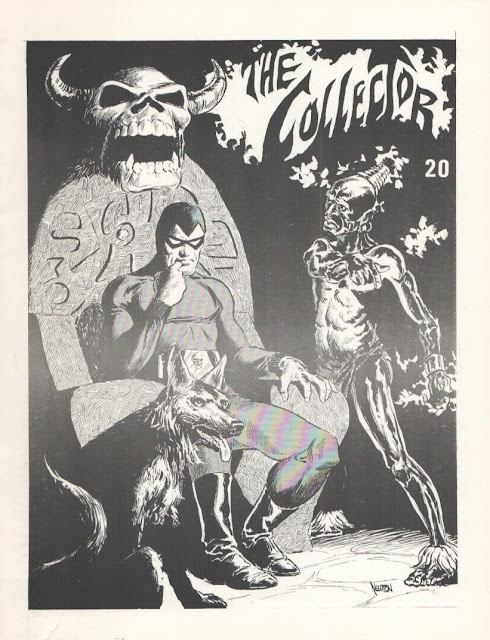
Don Newton was one of his generations finest comic artists, alongside others such as Joe Staton, John Byrne, Dave Cockrum, and Mike Vosburg. He lived in Arizona, far from the NYC-based comic book industry so he made his bones with outstanding fan artwork. On many occasions he drew the Phantom. Now he'd get his chance to draw him in a professional capacity. But first...


Charlton's conversion of their Phantom to something more akin to what classic fans of the character expect continues with issue sixty-three. "The Web of Fear" was written by Joe Gill and drawn by Frank Bolle. It has the Ghost Who Walks battling a villain dubbed "The Spider" who targets the Phantom and Diana Palmer as well as the treasure hidden in the Skull Cave. The Phantom invades the Spider's lair to rescue Diana and later lures the Spider and his thugs into his trap. 
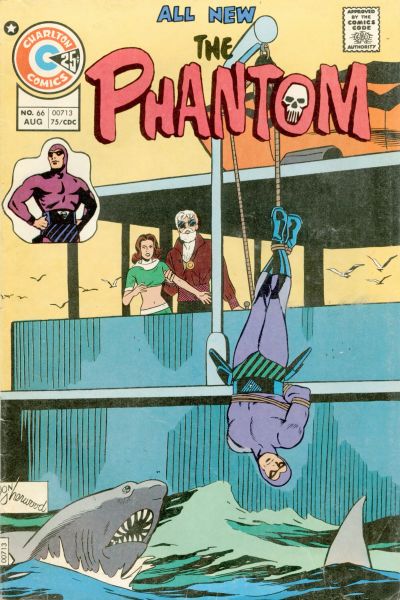

Joe Gill wrote "Goldbeard the Pirate", but Don Sherwood drew it. Sherwood has a peculiar spare style and one of the biggest signatures I've ever seen in comics. George Wildman is revamping the Phantom as part of a larger move to revive Charlton's languishing superhero genre. To that end the company has been created Yang and E-Man. Charlton's ghost-host line-up is getting a kick as well. Charlton is on the cusp of another of its periodic flowerings. Back to the Phantom, we find the pirate Goldbeard using Diana to attract the Phantom who he wants to fee to the fishes. That of course doesn't work, but it comes close, and the rest of the comic is a back and forth between these two foes. 


With the sixty-seventh issue of The Phantom the game changes entirely as the late great Don Newton takes on the title that will make his reputation. "Triumph of Evil" written by Joe Gill offers Newton a chance to revise the Phantom's famous origin. Nazis come to the Deep Woods and are confronted by the Phantom's father. It proves to be his final mission. The secret of the Phantom is almost exposed, but our Phantom arrives in the nick of time to assume the legendary role. We get this story in a flashback as the Phantom tells it to Diana Palmer, explaining I suppose the need for an heir. This comic marked a new path for the Phantom, beginning with the attractive painted cover. 
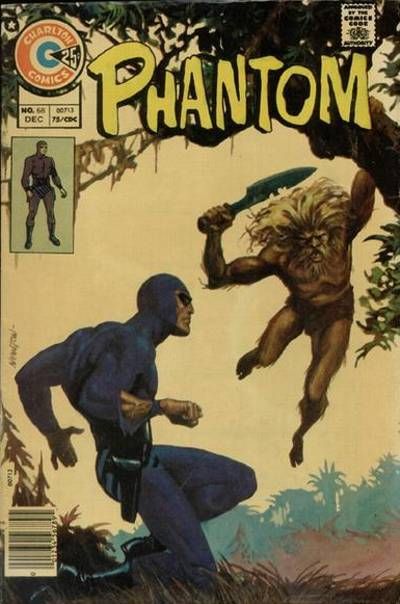

Nick Cuti steps in to write "The Beasts of Madame Khan". We meet Hera Kahn as she attempts to bring her animal act to a circus. She is rebuffed but when the owner is killed by a strange fox-faced woman his brother agrees. The circus supplies cover for Khan to enter the jungle and look for the Mask of  Dusambassi, a legendary item once venerated by a tribe which dressed in animal skins and practiced lycanthropy. Khan appears to be able to transform herself and she has in her thrall three beast-men (a lion-man, a leopard-man, and a panther-man). The Phantom has to battle all of these foes to recover the mask and return some measure of peace to the jungle. 


Underneath a typically handsome Don Newton cover we get the story "The Shining City" which pits the Phantom against the cruel Athena, a woman of accomplished martial arts skills and unlimited money. She wishes to cross Bengalla to reach an unknown destination which turns out to be a lost city known as "New Athens" and is filled with people who have lost contact with the outside world, until Athena found them and appears now as a prophesized ruler. She'd like the Phantom to rule by her side but he has other ideas.  The story was written by Joe Gill but drawn by Recreo Studio. "The Immortal Ghost of Bengali" is a one-page text item which has the Phantom confronting an old cult of Leopard Men. 
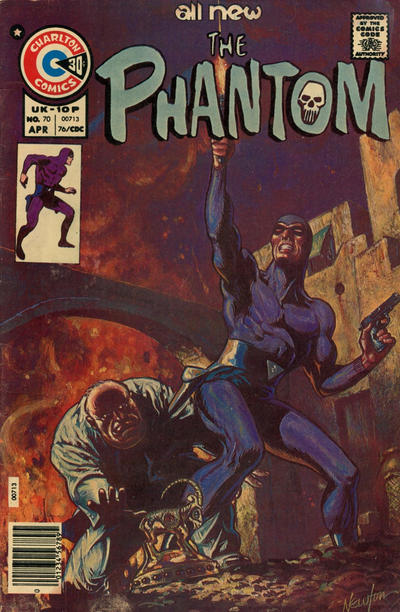

Bill Pearson joins Newton in a Phantom comic which pays homage to a duo of classic Humphrey Bogart movies. In "Mystery of the Mali Ibex", an ancient golden treasure is sought by a man named Rick who teams with a stunning blonde he calls Slim to travel up-river in a small boat with the one woman who might know its location. He is shot, the woman is killed and the blonde heads back to civilization, specifically Casablanca. There the man, named Rick confronts the blonde about the Ibex, but then a fat bar owner and his slinky henchman intervene. The Phantom, the father of our Phantom, gets involved. There are secrets and betrayals galore in this story which evokes both The African Queen and Casablanca. Newton's atmospheric artwork is ideal for this period tale. 


Issue seventy-one gives us "The Phantom Battles the Monster of Zanadar" written by a guy named John Clark. There are echoes of H. Ridger Haggard in this tale which has a cameo by a character named Quartermine. The Phantom undertakes a rescue mission up a remote mountain and finds a hidden tribe which worships a deadly giant spider. There are some great thrills in this one, and some nifty spins on the classic action. 


Don Newton's incredible run is interrupted by a story from Joe Gill and artist Don Sherwood. This one had been commissioned and was waiting for its opportunity by editor George Wildman. "Man in the Shadows" pits the Phantom against a wily foe named Dr. Nyte. Nyte kidnaps Diana in order to lure the Phantom into his trap where his henchmen all wear masks to make them look like their boss. The Phantom is forced to climb deadly cliffs to get to Nyte's remote lair which looks like a gothic mansion of sorts. Nyte has also trained a deadly wolf named "Satan" to imitate the loyal Devil. There is also a text story titled "The Witchman's Revenge" which has the Phantom battling a powerful slave in place of the titular Witchman. For some reason, or merely by accident, this story is presented out of order in the reprint collection, but it's all there. 
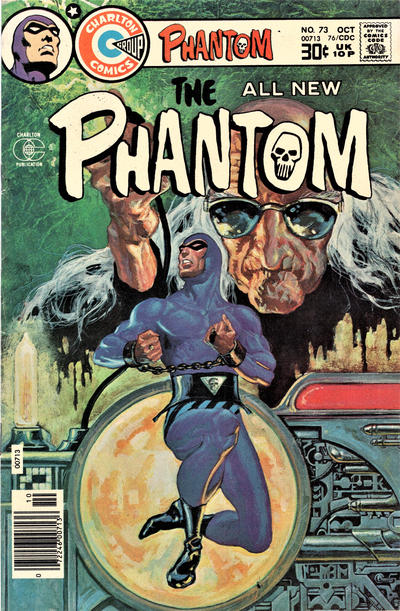

Don Newton returns in issue seventy-three on "The Torch" written by Bill Pearson (under a pseudonym). The creators are reaching into the Jame Bond universe for inspiration this time as the Phantom rises from the sea in that classic Sean Connery manner. (Minus the goofy bird thank goodness.) The Torch is an assassin and arsonist sent by Dr. Never (who we never see) to kill an old villainous chap named Raven who commands a gang of zombie-men controlled by headbands. We even get a little flavor of those classic Universal monster flicks as well. This one definitely was set up for a sequel but it was not to be. "The Invaders of Bengali!" is a one-page text yarn which has the Phantom do a crackerjack job of scaring away some poachers. 


Arguably the finest comic book run of Phantom stories comes to a conclusion with "The Phantom of 1776" which was both written and drawn by Don Newton. Dated January of 1977, this actually hit the racks in the fall of 1976 during the two-hundred-year anniversary of the signing of the Declaration of Independence. (The two-hundred-and-fiftieth anniversary is just around the corner if we can hold onto our democracy just a little bit longer.) When slavers enter the Deep Woods and steal away the chief's son and others, the Phantom takes on the mission to bring him back. That means sailing to America and battling pirates along the way. The Phantom is able to find the chief's son but none of the others who were taken. The Phantom has to take part in a battle between the British and the Colonialists before he can complete his mission. He uses his influence with Ben Franklin (who he saved in another adventure) to get back to Bengalla. But not before he witnesses the signing of the Declaration of Independence. As dandy as that is, the failure to rescue all the natives does leave a bad taste in the mouth after reading this classic adventure. 


And that's a wrap on Charlton's The Phantom. The little publisher produced some really outstanding issues in the run which began at Gold Key, continued briefly with King Comics and finally came to a finale with these issues by Don Newton. Newton's career was made by these comics, as he left Charlton a recognized pro and went over to DC to draw Aquaman, Batman and to my eye his other great mastepiece Shazam. If you just want the Newton adventures, Hermes has published them alone sporting that great cover image from the last issue. 

The Phantom would later show up in all sorts of places in comics. Reprints of the comic strips would show up now and again. DC took on the character and produced some handsome work by the likes of Joe Orlando and Luke McDonnell in the 80's. Marvel got their hands on the Ghost Who Walk for a few fantastic issues in the 90's. Moonstone revived the hero for the new century and was doing a bang-up job until Dynamite came along and lifted the license. Hermes itself has created some new material in recent years. I have more of the Hermes Avon novels to read and review and I might even get around to some of these other comics. The Phantom is well and truly immortal. 

Rip Off

Saturday, April 6, 2024

The Phantom - The Charlton Years Volume Four!


The fourth volume of The Phantom - The Complete Series: The Charlton Years from Hermes Press presents us with a transitory period for the character. We will encounter the final issues by longtime Phantom artist Pat Boyette, we will face a quartet of issues which reprint Phantom material from Italy, we will enjoy two new Jim Aparo covers, and we get to savor some Phantom work by Frank Bolle. The indefatigable Joe Gill will keep writing away as he as done for almost all of the Phantom's Charlton career. 


In the first story of issue fifty-seven we get the Phantom once again battling thieves who have come after the Bandar treasure. This time in a tw-parter titled "The Phantom Fails" and "Prisoner of Beauty", it's two thugs known as Snake and Gorilla who work for a woman called La Contessa. The Phantom pursues them to the estates of this woman and discovers it was a ruse to lure him to her so that she could marry him, thus neutralizing him as a threat to her criminal ambitions. In a third story titled "Taking His Medicine" we see the Phantom screw up as he is convinced a witch doctor named Yushari is a fraud. He learns better when he gets a snake bite. 


In issue fifty-eight's "The Swamp of Death" the Phantom pursues a villain named Varsarfski into a deadly miasma in a swamp and falls victim to its deadly fumes until he's saved by Rex and Tomm the young boys he looks after. In the second part titled "The Man Who Peddled Death" the Ghost Who Walks takes off after that same baddie and confronts him before he can use poison gas in the civilized world. "Diana's Ransom" has the Phantom use the Bandar treasure to try and save the woman he loves, with the help of Rex and Tomm. 


Issue fifty-nine is the last one by Pat Boyette and it kicks off with a story that seems all too familiar as once again the Phantom must use the Bandar treasure to rescue Diana from kidnappers. One nifty thing about "Prisoner on Shark Island" is that we see the Phantom using a distinctive biplane with his skull insignia on it. In "The Despoilers" the Ghost Who Walks is up against a slick customer who has come to get the mineral rights to the Bandar territory for his greedy bosses. "Caught in the Devil's Cauldron" is the last story and has the Phantom respond to a psychic message from Diana telling him she's in terrible trouble. He uses a distinctive jet this time to reach the site of a shipwreck and gets her and others out before their air pocket vanishes. The two spend some quality time together after this, if you know what I mean. And that's it for Boyette. The King Features People wanted a change, and they get it with the next issue. 


The Phantom series turns to reprinting Italian work by writer Giovanni Fiorentini and artist Mario Pedrazzi. Neither is credited, but the letterer Frank Bravo is. George Wildman also gets a mention.  Apparently, Jim Aparo left some work behind and that is used for a stellar cover which advertises itself as "The New Phantom", signaling a break from the long tenure of Pat Boyette. The story titled "Assault on the Phantom's Treasure" (Again!?!) concerns a villain named Stangol who has a grudge against the Phantom for foiling his granddad's attempt to steal the treasure. He gets men and a high-tech tank and rumbles into the Deep Woods raising havoc as he goes. 


Under another Jim Aparo cover, we get another story by Fiorentini but a new artist named Sante D'Amico draws it. "A Deadman's Promise" has the Phantom encounter an escaped prisoner who claims the Phantom (our Phantom's dad) promised him he'd clear his name of murder twenty years before. The Phantom takes on the case and heads to Europe where the real villain lives a life of luxury. There are more secrets still to be uncovered in this one. Again Frank Bravo and George Wildman gets credits. 


Frank Bolle takes on the cover chores for this revised Phantom. We get another story titled "The Trap" by the Fiorentini and Pedrazzi team and it concerns Strangol (the guy with eye patch) who escapes jail thanks to his girlfriend Linda and plots even more revenge on the Ghost Who Walks. The convoluted scheme involves Diana and the showdown gifts the reader with a car that turns into a helicopter. It all comes to naught as Strangol is captured again. Frank Bravo stays on the lettering. 


Frank Bolle gives us another decent cover for issue sixty-three.  Inexplicably Strangol and Linda are back for a third try at the Phantom. No mention is made of how they got out of jail this time. Titled "The River Pirates" this is the final offering from the Fiorentini and Pedrazzi team. (I should point out that my source for the credits in these last four issues came from the wonderful Grand Comics Database.) This time Strangol has a high-tech submarine to do his dirty work. A greedy Rajah is making his people suffer when the Phantom takes a hand to change things just as Strangol and his boys show up. Bravo and Wildman return. 


All four of the adventures presented in the previous four issues of The "New" Phantom are reprints from late 60's issues of the Italian Avventure Americane-LUomo Mascherato. 


The sixty-fourth issue of The Phantom (no longer "New" but "All New") features another Frank Bolle cover and this time Bolle also draws the interior story "The Duel of Death" written by Joe Gill as Charlton returns with domestic U.S. production of the world-famous hero. This one has a lot going for it as we get a jet dogfight, a plane hijacking, and a mano a mano showdown. The baddie is a skull-faced character dubbed Colonel Death and he's helped by the vivacious red-haired Desert Flame. I'm not huge fan of Bolle's especially back in the day, but he does a great job on this story. 


Under the leadership of George Wildman Charlton is getting itself together for a great push featuring some great young talent which will in some cases redefine the comic book reading experience. More on that next time as Don Newton gets his shot at the Ghost Who Walks in the fifth and final volume of Phantom stories from Charlton.  

Rip Off