Showing posts with label Lin Carter. Show all posts

Saturday, April 21, 2012

Weird Paperback Tales!


Weird Tales is a title which conjurs all manner of dark and bizarre images. It served exceedingly well for decades as the source for strange fiction which punctured the expectations of the general public and appealed to those of us with a hankering for peculiar and odd folk and their doings.

Lovecraft and Howard are the two giant names most associated with the title, but many are the writers and artists which have appeared in the pages. The title lasted in its original incarnation from 1923 to 1954, then later in the 70's another four issues appeared. The covers pictured here are from the first of two 1980's revivals, this one helmed by Lin Carter. The first three books appeared in 1981 and the final one in 1983.

With the magazine format finding trouble, marketing these types of paperbacks was an experiment tried a few times. Zebra was an imprint which offered up quite a bit of material which first appeared in the pages of Weird Tales so it makes sense they'd offer up this approach.

The first three covers are by Tom Barber. The fourth has been identified as by Doug Beekman. Girls and bulls seemed to be a favorite theme.


Weird Tales would return again later in the decade, this time under the editorial auspices of George Scithers. It would find some success and in fact continues to the present day. Here is a link.

Rip Off

Saturday, April 14, 2012

Forgotten Hero Of Lemuria!


Lin Carter is a name I first remember from the Conan paperbacks, then soon thereafter in the comic book adaptations of his own hero Thongor at Marvel Comics. I developed a great respect for Carter when he served as editor for Ballantine's Fantasy line, which really opened up not only the world of fantasy for me, but to the world of finer (if not necessarily better) literature as well.

But Carter's first hero, his first book in fact seems to have been 1965's Wizard of Lemuria which is agreed by all to be an imitation of Robert E. Howard's mighty Hyborian hero Conan.


He followed that up quickly with a sequel titled logically enough Thongor of Lemuria. Both of these ACE paperbacks are graced with outstanding Gray Morrow artwork, making them highly collectable for fans of many types.


With the third novel from 1967, Frank Frazetta is brought aboard for the covers and he gives us an image of Thongor which puts the character forward in a truly heroic pose, in what is surely the most famous of the Thongor covers.


Frazetta is back for the fourth installment from 1968, this time showing the Lemurian hero astride a flying dinosaur over a volcanic landscape. It's not a bad cover at all.


For the fifth book also from 1968, Jeff Jones is brought in and offers up a very nice heroic pose for Thongor.

The first two Thongor novels novels were re-titled and revised and reissued by Berkely paperbacks.


Wishing to give the series a set of titles which were immediately recognizable, Thongor's name was made part of each and so added to the first novel. The artwork by Jeff Jones is worthy, but not spectacular by any means. Thongor is seen only above the logo sneaking in through a window, an odd pose for the hero of such a series.


The second novel is given a rather new and ponderous title and a new cover, again by Jones, this time Thongor too is put in a queer pose, his back to the reader.


Again in 1970 the last of the Thongor books limps onto the stands with another Jones cover, this one interesting, but hardly iconic.

And then Thongor ended. Some say Carter's interest turned away when he began working directly with Conan and the other heroes he admired, so his own creations suffered for want of time. He sure seemed to keep pumping them out though, with different heroes in different variations on classic Howard and Burroughs settings.

I didn't find Thongor anywhere though in his original format until I located the three paperbacks below from 1976 sporting Vincent DiFate covers which work mightily to minimize if not utterly eliminate any sense that Thongor is a hero in the tradition of Conan.


I am not aware that Thongor has been reprinted any time recently. Thongor seems to have landed on the dust heap of heroes, forgotten as once upon a time his land of Lemuria was forgotten before Carter gave us a glimpse.

Rip Off

Wednesday, December 29, 2010

The Pre-Conan Barbarian!

Jim Steranko

John Romita

John Romita & Ernie Chan

Gil Kane & Frank Giacoia

John Romita & Tony Mortellaro

Vincente Alcazar

John Romita & Tony Mortellaro

Gil Kane & Ralph Reese

Above is a gallery of Marvel's Thongor series which ran in the former monster-reprint book Creatures on the Loose. Ironically this is a seminal series for fantasy fans because it also ran the first episodes of Gullivar of Mars and debuted King Kull in that great one-off story by Berni Wrightson.

Also heavy on the irony is that it was in fact Lin Carter's Thongor that started the whole barbarian-in-comics surge that in many ways defines the Bronze Age. Figuring there was no way Marvel could afford to license Robert E. Howard's Conan the Barbarian, Roy Thomas began his search looking for ways to get hold of the lesser known (and presumably cheaper) Thongor. When he found out Conan could be done, he dropped poor Thongor, but with this series at last got Lin Carter's homage to both REH and ERB onto the comics page.

As it turns out, Thongor is a pre-Conan hero in another way too, as in the vast scope of the Marvel Universe history as defined here, his adventures pre-date Conan's by some vast number of years, but are connected. Not bad for a largely forgotten knockoff from a then meager genre.

Rip Off

Tuesday, December 28, 2010

Jusko Against The Gods!


Frank Frazetta


Above is the masterful Frank Frazetta painting Thongor Against the Gods for the Lin Carter Novel of the same name.


Here is a cover for an issue of Marvel's The Savage Sword of Conan by Joe Jusko. Is there an inspiration from the iconic Frazetta image? I say yay. What say ye?

Rip Off

Monday, December 28, 2009

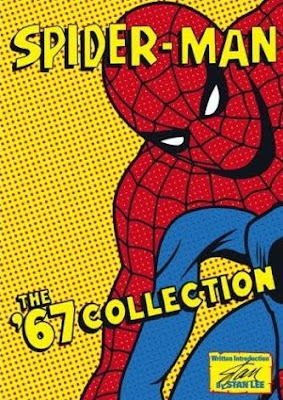
The Animated Spider-Man Season Two!


It's definitely a change, but I have to say I prefer this second season to the first. The stories were slightly more complex and had a vaguely more adult feel to them. This is especially so of the origin story in the first two episodes of season two. The art on those was pretty good and the story very much like a Spidey comic. I love the backgrounds in this series, the colors are vibrant and intoxicating often making up for admittedly lackluster animation.

Now after that beginning things get strange. But knowing that fantasy masters like Lin Carter on the writing and Gray Morrow on the art design are at the helm I can't be surprised all that much that Spidey spent most of the season out of the city and in some vague jungle/alien setting up to his webs in plants and weird bat-things. One thing I noticed was that many of the stories really threw curveballs, in that Spidey would begin his adventure normally enough with crime and thugs but then there would be a shift and he'd find himself in the future, underground, or on a bizarre island somewhere.

I consider these adventures to be similar to the kinds of adventures that Spidey would have in Marvel Team-Up in which he'd often venture into territories radically different from the classic big city crime story he's rooted in. The MTU Spidey would travel in time, go into space, venture into lost worlds and do all manner of things bizarre by his standards. This second season had that kind of feel to it.

Here a dozen things I learned watching this second season of Spider-Man:

1. The sky is often green and always always dramatic as if a storm is about to erupt.

2. Purple gorillas are seen by the criminal set as effective disguises for some reason. Maybe it's a DC thing.

3. Spidey can pilot experimental jetplanes and has ready access to them on a whim, and no one misses them when they fly away.

4. Mole Men are ridiculously stupid, getting duped by the same criminal in two episodes. And they like to gong a lot.

5. Giant doors are common in many alien landscapes, as if Kong himself were on the other side.

6. Spidey loves to swing and swing and swing and swing and swing though the city, often attaching his webline to no discernable object.

7. Villains are most often green, the sure sign of villainy in the Bakshiverse.

8. Peter Parker plays baseball.

9. Parker sure hangs out with a lot of different girls, but I'm guessing he's not a FWB (Friend with Benefits), accounting for that gloomy puss he wears most of the time.

10. Manhattan is a remarkably sturdy cityscape and can survive mutltiple sinkings of various buildings and even detaching from the earth and flying into the sky.

11. Martians look amazingly like ancient gods of Norse and Greco-Roman mythology.

12. The power of flight is achieved by putting a blender on your head.


Ralph Bakshi produced a wacky cartoon, that's so bizarre that I wouldn't mind watching it again in a few years. The stories are at once patterned and unpredicatable. Spidey seems mostly trusted by the police, even admired by them save for the last episode when inexplicably he's seen as a baddie and a threat. The villains are cackling madmen, but intreresting looking by and large.

Things happen in the Bakshiverse that require no explanation, they just are. And in the context of these stories, I can accept that. You might even dub this season of Spidey stories his "Weird Adventures" and be very close to capturing the feeling they have.

Rip Off