Showing posts with label Image Comics. Show all posts

Saturday, February 24, 2024

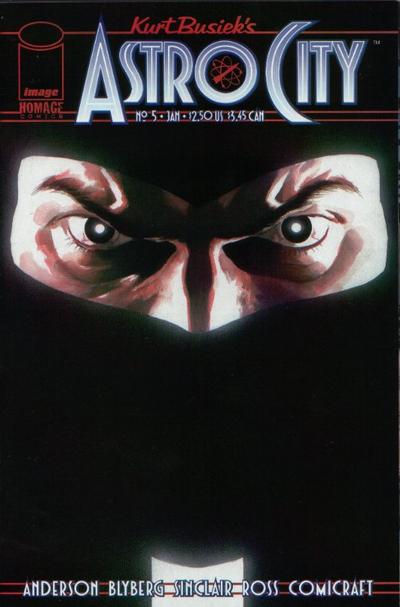
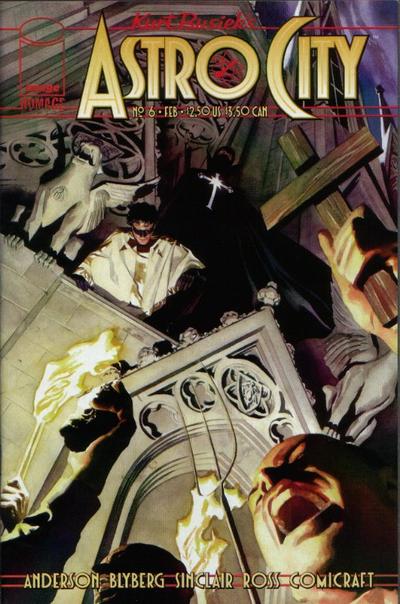
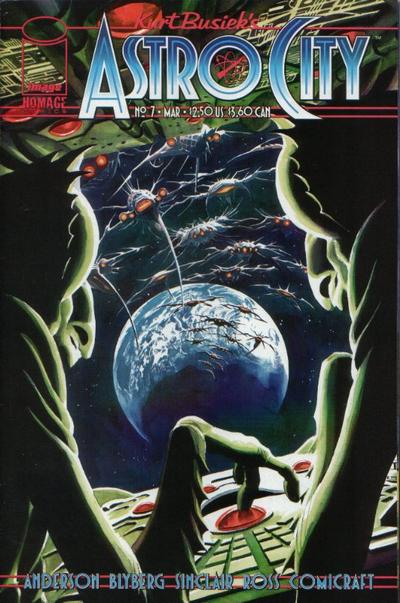
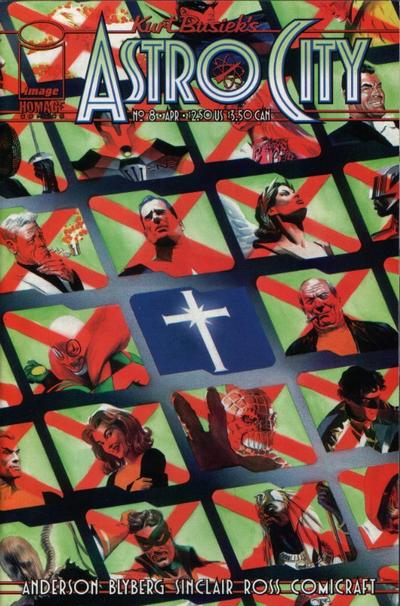
Astro City MetroBook Three!


Astro City MetroBook 3 has arguably the best epic of the entire run. Certainly, it's the longest and most elaborate. A mystery which is established almost from the beginning of the Astro City run is about what tragedy befell the Silver Agent. We know it was bad, we know people feel badly about it, but we don't know what it was. In this extended saga running through more than sixteen issues we finally find out, that a lot more as well. I caution you that this is a spoiler rich review. I tried not to reveal things, but the story is just so complex it's hard not to do so. Proceed with caution. 


The story begins in the Arrowsmith/Astro City Flip Book. We meet two young boys -- Charles and Royal Williams. The story begins in 1958 and these two are still kids, looking at the heroes around them and finding little to identify with. Still, it's impossible not to be impressed. But when they meet The Black Badge and he gives them his trust, they are proud beyond words. And so are their parents, but none of the family know just how close tragedy lurks. 


In the first four-part saga of Astro City: Dark Age we meet the brothers again in 1971 and it's a time of turmoil in the United States as the war rages in Vietnam and faith in heroes is lagging. That faith takes a fatal blow when all the world see the Silver Agent kill a super-villain on television. The Silver Agent's ultimate fate is decided, and he's slated for execution. Meanwhile the brothers have gone along different paths with Charles becoming a cop with a grudge against heroes and Royal becoming a small-time thief. Both seem unable to find anyone other than each other that they can trust. That trust is strained when Royal gets targeted by the Blue Knight, a superhero who kills hoods, even small-time ones. The mystery of the Silver Agent deepens as it becomes clear he has traveled through time. Other heroes show up such as Jack-in-the-Box, the Furst Family and members of the Honor Guard. 


In Astro City: Dark Age Book Two we shift the action to 1978 and we find the Williams brothers estranged. Charles is trying to make a career as a cop work despite money problems at home and pressure from his partner to go on the take and additional pressure from Internal Affairs to rat out his colleagues. He's in a pressure situation as is all of Astro City when a silent giant form called "The Incarnate" appears in the skies. Royal is still a hood and despite his best efforts to stay out of the limelight is nonetheless tagged for advancement in the gang. Superheroes have gotten grimmer and grittier in the late 70's with Hellhound, Street Angel and Black Velvet tearing up the gangs, sometimes with fatal results. A gang war erupts with help from the Pyramid cabal, the same outfit that killed the parents of the Williams brothers. They bring Jitterjack to town, a homicidal lunatic with vast strength and the stakes get more and more deadly. Also, Royal learns the identity of the man who killed his parents. It all comes to a head when Charles is wounded, and Royal has to make a supreme sacrifice to save his brother. There are lots of other heroes such as the Furst Family, Simon Magus, and even a startling appearance by the Silver Agent. 


Our story then skips ahead to 1982 in Astro City: Dark Age Book Three. The Williams brothers now work together albeit in different roles in different places. After doing a four-year stint in jail Royal is paroled by EAGLE for whom Charles now works to infiltrate Pyramid. (When you think of EAGLE thing SHIELD and when you think of Pyramid think of HYDRA.) As a soldier he is being trained in a remote camp and is subject to drugs which work the warriors into a frenzy. Royal is too clever to fall victim to these. The two are chasing the man who killed their parents, a man who ranks high in the Pyramid. There is a raid and as a result Royal goes to ground hiding from both EAGLE and Pyramid. In the broader world the Apollo Eleven it turns out are empowered by distant cosmic forces which are deciding the fate of the planet Earth. Superheroes are needed in force to fend off the cosmic threat when the powers of the Eleven are stolen by Pyramid and turned into a cosmic killer. But the superhero Point Man makes a grave error when he uses an ancient weapon against the threat and ends creating a tear in reality. In the craziness the Williams brothers reunite but again miss their chance at gaining a measure of revenge and nearly die themselves. 


Astro City: The Dark Age Book Four we jump ahead to 1984. The brothers have formed a team using technology from both EAGLE and Pyramid to make themselves powerful enough to hunt down and kill the man who murdered their parents. They are relentless in their quest to find vengeance. Royal has questions, but Charles is focuesed and together they work tirelessly to locate and attempt to kill the man, who knowing they are coming uses all the tech he can find to elude them and ultimately makes himself so powerful they cannot stop him. His threat is magnified by the deadly energy which has seeped into the universe through the tear and ultimately a deadly force for vengeance appears in the form of the Pale Rider, a creature who judges and executes criminals no matter how large or small their crimes. That desire for rough justice infects the larger society as well. Ultimately the battle comes to a head when the Silver Agent appears and works with the brothers to bring the saga to a conclusion. 


We are then treated to an epilogue which takes us to the present day, where we find that the story we'd been following in the preceding sixteen issues was related by the Williams brothers to a man wanting to write a history of the era. The brothers had found some comfort and anonymity running a fishing boat and we are treated to the debut of the Samaritan when he saves the Challenger shuttle in 1986. It marked the end of a darker era and the beginning of a brighter day. 


This wonderful volume then closes out with the two-issue Astro City Special starring the Silver  Agent. And finally after so many years we get the story behind his sacrifice. We see him as a young man suffering from Polio who wants more than anything to serve his fellow man and gets that chance when inside Mount Kirby he chances on a strange silver object which gives him power. He fights crime and then is whisked into the distant future to fight for the very safety the planet and more. Eventually we learn why he decides to travel back in time to meet the grim fate he knows awaits him. 


This has to be one of the finest comic sagas I've ever read. Having this expansive story under a single cover in a handy form is ideal. The secret sauce of Astro City is emotion and Busiek and Anderson are at the top of their game as they relate this tale of a darker days when it was perhaps just a wee bit harder to be a hero, but perhaps even more important. I cannot recommend this story enough. 

Rip Off

Saturday, January 27, 2024

Astro City MetroBook One!


Following the success of Marvels, the duo of Kurt Busiek and Alex Ross teamed up once again to bring the world a whole new superhero universe, a place filled with heroes, villains, and the assorted sidekicks, bystanders, witnesses, and others who live for the most part in a little burg dubbed "Astro City". It's a fantastic conceit, a city which no borders save those of the imaginations of the creators. Joining Busiek and Ross on this endeavor was Brent Anderson, a tremendous artist, previously best known for his work on Ka-Zar the Savage and Strikeforce: Moritauri. Busiek wrote them, Anderson drew them, and Ross wrapped these delicious packages in magnificent covers. The success of the boys at Image gave this concept a place to live for a time. 
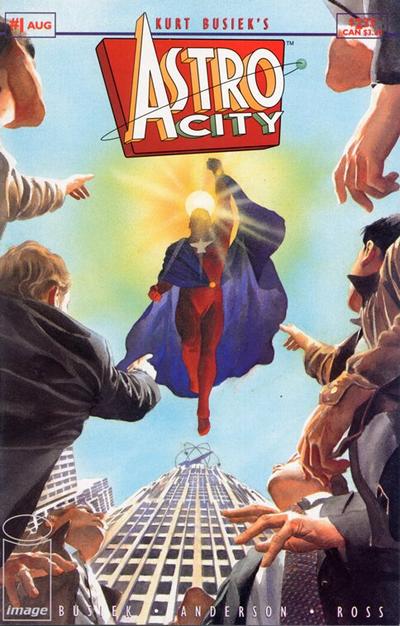

In the very first issue of Astro City we meet Samaritan, the "Superman" of this universe. But these are different kinds of superhero yarns, less interested in the hustle and bustle of defeating criminals in never ending battles and more interested in the thoughts and feelings of those who wage those battles and those who merely witness them. I this debut story we follow the hero in and out of his secret identity as a fact checker for a publishing house and as the supremely powerful and stunningly swift hero who responds to threats on schedule measured in seconds. His single joy doing the work is flying, which he does much less than he'd like. 
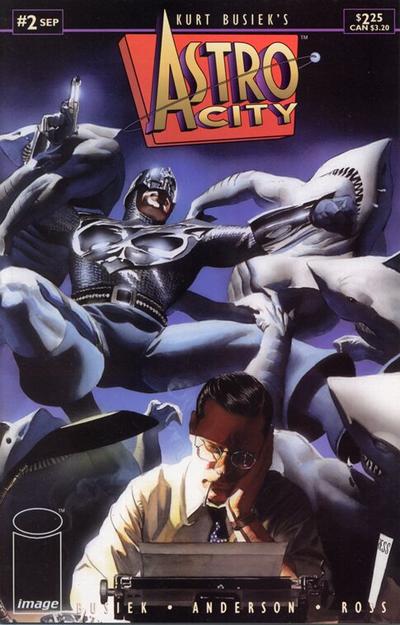

In the second issue we meet the Silver Agent and a reporter who as a rookie came across the biggest story of his career. We seem him now as an experienced editor teaching his reporters to stick to the facts. Print what you can prove. Sadly for him, or perhaps not, he could not prove much of the story which resulted in the saving of the world no less. 


The third issue gives us Jack-in-the-Box, or more accurately a smalltime hood's impressions of the hero. The crook stumbles across Jack's secret identity and then quakes in fear as he tries any number of schemes to attempt to profit from that ill-gotten information. This is an ideal Astro City story since we only really see the superhero from the outside, just as we might in our own world should such things exist. 


Different emotions come into play in the fourth issue which showcases a young woman who lives in Shadow Hill, a ghetto area of Astro City, cloistered and rife with Old World customs and actual magic. It is watched over by an enigmatic figure called The Hanged Man.  She leaves her superstition behind to head into the gleaming city, inspired by Winged Victory to make something of her life. Choices we make are often very tough and often surprising. 


We meet Crackerjack, a bombastic hero who is full of bluster and braggadocio. He is under surveillance by a mysterious old man who is watching all of mankind to make some kind of judgement. Due in part to Crackerjack's behavior he makes the call, and we will learn the consequences of that in later issues. 


The sixth and final issue of the original limited series returns us to the character Samaritan as we follow him and the heroine Winged Victory as they try have a simple date. Other heroes work overtime to give them leisure to spend a few moments together. It probably doesn't end as you thought it might. Busiek's ability to develop character is amazing to behold and folks in his stories have an uncanny reality. 


The series returns as an ongoing and follow a gaggle of heroes seen from afar by a man who has just moved to Astro City from Boston along with his two young daughters. His wife has left him for another man and he's trying to live his life with as little bitterness as he can muster for the sake of his girls. Watching the heroes of Astro City and the threats they battle gives him pause, but also inspiration. 


We get the first continued story in a two-parter which focuses on Astra of the Furst Family. It's always fun to follow the echoes of other heroes Busiek draws upon to create his super folks for Astro City and the does a great job with the Furst Family which reminds me of the Fantastic Four and the Doom Patrol as well. We get a look at some of weirder places in this world as the family searches for their little girl who has gone on an adventure to learn hopscotch. 
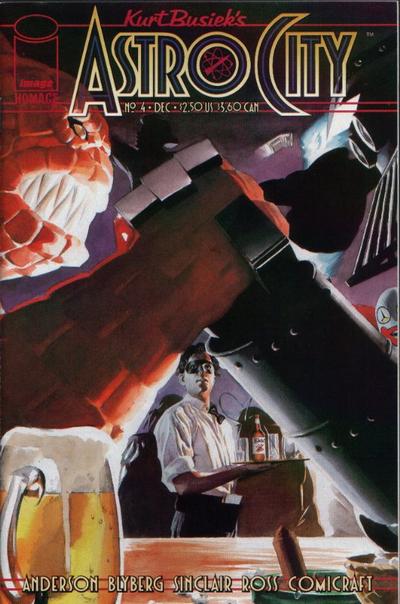


Given the luxury of the ongoing series, Busiek and Anderson gives us the first full-fledged six-part epic set in the town of heroes. There is a serial killer in Shadow Hill and the inability of the heroes to find the culprit begins to scratch away at the good will people felt for the heroes. Goaded on by a mayor with ulterior motives, the story documents the heroes as they fall from grace. We see this through the eyes of a young man who has come to Astro City to become a hero and who gets the chance when the Confessor becomes his mentor and fights crime as the Alter Boy. The Confessor has secrets of his own. By the end of this saga the Confessor has transformed. The story leads us back to that lone tale involving Crackerjack and the weird little man who watched him. The call he sent was for invasion. 
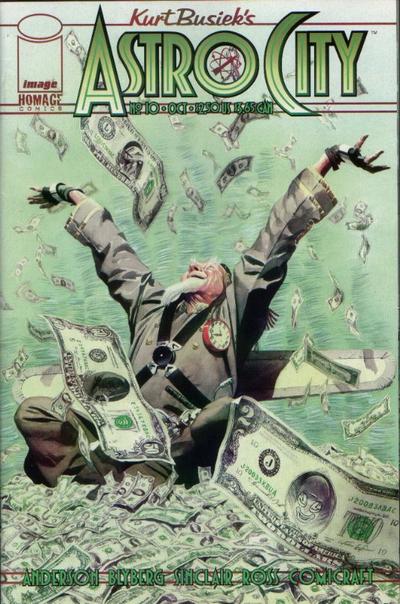

The tenth issue introduces us to the Garbage Man, an old man who rankled against forced retirement and used his technical wizardry and his new leisure time to commit crimes. When he commits the perfect crime, he finds that enjoying his spoils in remote sunny climes is not what makes him happiest. 


Jack-in-the-Box is the center of the next two-part story which introduces to him properly. He's a toy manufacturer who is a second-generation hero, following in the footsteps of his father who used his wits and inventions to stop the company he worked for from turning his creations into weapons. Jack is visited by two weird versions of himself who claim to be his son from different futures. Both seek revenge for something Jack did. He soon finds his wife is pregnant and now there's a dilemma of how to be a good father a good superhero at the same time. 


The collection closes out with a special issue numbered one-half which appeared as a promotional giveaway. The story revolves around a man who dreams of a lovely woman he's never met. This vision interferes with his work and his love life. When he finally learns the truth, he's given a difficult choice by the Hanged Man. It's a delightful tale, an ideal example of what Astro City is about. 


These stories are stunning, and it was so much fun to read them again after so many years. Here's something I wrote about the series years ago. I'll  let me then speak for me now. 

Kurt Busiek and Brent Anderson have told some utterly touching stories over the years about regular folks who just happen to have superpowers or who just happen to know someone who does. These are by and large gentle stories about all too mortal human beings trying to find a way forward in a world that doesn't always make the most sense. It's just like real life, but more colorful on occasion. That's the real secret of Astro City, that despite the likes of Samaritan, Silver Agent, The Confessor, and more, the world is very much like the one outside most of our windows. It's world of hard choices and difficult decisions made by regular folks with limited information and imperfect understanding. It's just like here and now.

 I'm already eager to dive into the second MetroBook. 

Rip Off

Saturday, April 24, 2021

The World According To Hembeck!


Fred Hembeck is an original. Hembeck has made no secret of his utter fanboy adoration of vintage comic books, in fact the absolute reverse is the case. Hembeck spreads his affection and his sometimes withering analysis widely for all to read and enjoy. He does it like no one else, from inside the medium as a comic book character himself. It's not a route he took directly as he describes in the mammoth The Nearly Complete Essential Hembeck Archives Omnibus, but rather a haphazard advance into the medium. It once upon a time felt like a Hollywood movie hadn't really impacted the culture until MAD Magazine put their distinctive satirical stamp on it, and later Saturday Night Live performed much the same function for a few blessed years. Hembeck is like that, in that until he sees fit to make a commentary in his own unique way upon a given comic book it really is just another pamphlet in the pile. His attention gives it cache, it rates a thumbs up or a thumbs down or most likely a thumbs sideways.  


Hembeck divides this mammoth nine hundred page tome into seven parts. Part One deals with his "Little Freddy" strips produced in 1999 and show Hembeck as a mature cartoonist in command of his material. These are charming little tales of the nostalgic time when comic books were just becoming part of Fred's life. 


The Second part of the book is the heart of the volume as far as I'm concerned. It contains black and white reprints of all seven of Hembeck's impressive collections for Fantaco (not Fantagraphics as he points out a few times), a small publisher who specialized in fan-friendly informative books. These are collections of Hembeck's "Dateline: @!?!#" pages from Alan Light's The Buyer's Guide. In addition there are new pieces included as well, though by this time all of it glows with a delightful glow of Bronze Age nostalgia. Truth told if you were not into comics in the late 70's and 80's not much of this is going to make much sense. But sense that was a heyday for yours truly, I lapped it up. At least all of it I could read. Hembeck's greatest failing is an inability to limit his verbage and while pages filled with fun images are a hoot often the words themselves are microscopic and well beyond my tired old eyes (even with assist) to make out. So some of it I jut wrote off and moved on. 


The Third section of the book contains 1980'd material that didn't make it into the collections and there's a definite randomness to it that makes reading and looking at it a real festival. 


The Fourth section of this massive book incorporates some really fascinating stuff from Hembeck's participation in CAPA-Alpha. This venerable association was a pre-computer version of the message board with some blog-like features save it was all on glorious paper, much of it mimeo. An "APA" was an "Amateur Press Alliance" and CAPA-Alpha was the grandad of all of them begun by Jerry Bails no less. Members produced material, sent it to a "Central Mailer" and that person assembled and printed the result to mail back to the members for the enjoyment of the greater whole. I was a member briefly of an APA in the late 70's and was even central mailer for a brief time and I can speak with authority that it's a massive undertaking and I respect anyone who every participated. 


Section Five gives us something different, some actual stories from Hembeck produced here and there over many years, some published before some not. We meet his superhero creations "The Dog" and "Mr. Mumbo-Jumbo" as well an intriguing interview with Batman about Frank Miller and a story about dating and time travel. One fun piece has Sgt. Fury taking on the "Hydra Ladies Auxillary" and this story was later redrawn by John Severin for inclusion in What Th?. 


The Sixth section gives us more Dateline pages, these from a much later time in the late 80's and right up to the 21st century no less. To be honest while these pages are crafted with some more skill overall, they have less fanboy appeal for me because of the subject matter which while it includes blasts from the Silver and Bronze Ages has a lot of stuff from the 90's for sure. 


The Seventh and final part of the book takes us into the 21st century and the shift to things produced for Hembeck.com and a comic strip called "Kidz". There are some of Hembeck's patented cover redos here too as there are throughout the book and if you know Hembeck you know those have a charm all their own. He has an uncanny knack for redrawing a cover in his own style and making that image fresh all over again. That's a gift indeed. 


This is a hefty mighty tome and it's not a book that will surrender its charms easily. But it's worth the work for fans of a certain vintage. 

Rip Of