Showing posts with label audible books. Show all posts

Tuesday, 5 May 2026

Audio Book: Prevail (The Inspiring Story of of Ethiopia's Victory Over Mussolini's Invasion 1935-1941)

As part of the monthly Audible subscription plan, you get access to a "free library" of titles. Skimming through these, one title in particular caught my eye, "Prevail: The Inspiring Story of Ethiopia's Victory Over Mussolini's Invasion 1935-1941". I vaguely knew of the Italy's Abyssinian Campaign from my O-Level (not GCSE, so that ages me) history lessons about the League of Nations failure to act effectively in the interwar years. I was intrigued and felt ashamed for not correctly thinking of it as the Ethiopian Campaign. In my early Western Desert reading there were always references made to the East African Campaign. The "one" Wavell "diverted" resources to (see below, not only does the book describe the war, but also the fascinating political world events and personalities that became involved from Evelyn Waugh, Bernard Shaw, Joe Lewis, Laval and Eden but to name but a few): 


Still a "work in progress" for me .. but the shooting is about to start. 

Note: Ethiopia was the only African country that was a member of the League of Nations, partly because Mussolini's Italy championed its cause, thinking that France or Britain would block its membership, but they didn't. The irony of that cannot be lost, and a great exercise of double-thinking yourself into an awkward political corner! 

Wednesday, 10 December 2025

Max Hastings: 1914 Catastrophe .. and a couple of other "Good Reads"

If I were going to recommend reading material for military officers currently serving in the Armed Forces of Great Britain, the United Kingdom or any of her Commonwealth and NATO partners, then it would have to be a collection like this (see below, Max Hastings - "Catastrophe Europe Goes to War 1914", just to remember how things can unexpectedly start!): 


Followed by a haunting tale of lost peace and complacency at all levels of government and the military (see below, Dan Dannatt's "Victory into Defeat"): 

Which turned an "Unhappy Ending" of one world war into a new nightmare of another, with opening rounds going to the vanquished. This is a "first love" book of mine (see below, Alistair Horne - "To Lose a Battle France 1940", I discovered it in teh early 1990's and it has been on my self ever since): 

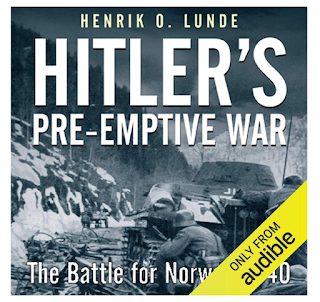
Finally, while wild emotions are running around their heads, let them stop and read about Norway (mostly ignored apart from the First and Second Naval Battles of Narvik) - but look at the other Narvik, and the strange possibilities of this forgotten success in an otherwise bleak campaign .. which hailed the first successful allied amphibious operation of the war in 1940 (see below, Henrik Lunde's Hitler's Pre-Emptive War"): 


Thought provoking and a tale of swinging fortunes. Best remember from history the lessons of "things lost and things gained," as the best made plans of mice and men play out upon the stage not under their control. 


Friday, 14 November 2025

Book: Victory to Defeat (Richard Dannatt and Robert Lyman)

We had won, with a magical formula of 1918 combined arms warfare, hard earned through bitter experience of four years of fighting and then we lost or rather forgot it! Such criminal complacency meant that another generation of youth experienced a second World War. The people who "had practical experience of fighting it" drifted away and did other things. The world wanted to be pacifist. The politicians became politicians again and took their eye off the ball, they took the easy option, cutting to the bone military spending. The "war to end all wars" was supposed to be exactly that, although there was a dissenting feeling in Germany that in 1918 they had not been defeated in the field (the very same myth used by National Socialism and the "stabbing in the back" from a caste of politicians). However, in 1918 the Allied armies pummelled the German Imperial Army to its knees in the 100 Day Offensive with "combined arms" and overwhelming industrial power (infused with the additional of the American Expeditionary Force (AEF) - which was not specifically called out in the book). The armistice came, it signalled the end of the war (11/11/1918), then came the Treaty of Versailles with its own cauldron of snakes that poisoned international politics for decades to come. The League of Nations was born and withered on the vine through application of realpolitik between the Great Powers. In Britain there was a spirit of the war is all over now, let's get back to normal (proper) peacetime soldering as we have an empire to run. Contemplation of another war of this magnitude was an anathea. Politicians who thought different were not elected .No peer war was expected within the next ten years, so colonial policing was the order of the day for the British Army. The British Army was shrunk to a rump (prioritising Empire over continental commitments) and certain important or maverick personalities played with their own hobby horses and pet projects within the confines of the Treasury's frugal remit. Britain literally became an island nation behind a sea and air barrier, the Royal Navy in her senior service role and the over promising of the RAF (capable of punishing enemies with the bomber and protecting the homeland with the fighter) gained favour. There was no appetite for a tangible army capacity capable of force projection on the continental mainland to deter the rising power of Nazi Germany. Without such an army, even if scaled back, there was no way of keeping the hard-earned organisational knowledge of "how to do things" at scale. Then the chickens come home to roost through a series of international crisis and the early war defeats of 1939-40 (see below, a tale of the once and future king - the practice of combined arms warfare, found - lost - then painfully recovered from 1942 onwards; although the British 1940 successes of The Western Desert Force against the Italians - Wavell's 10,000 (Beda Fomm), the East African Campaign and reconquest of Ethiopia and Somaliland, again against the Italians, was not called out):


The allegory or case study to modern times (2022+) is called out, how different is the current political situation with Russia and continental Europe? The message is clear. Let us not make the same mistake again. The world of 2025 seems horribly similar to the 1930's and the lead up to the Second World War. This time we also live in a nuclear age where the stakes could not be higher. The general (Dannatt) also seems to indirectly pushing the value of wargaming in military circle - when you do not have the physical items it does not stop you from imaginative thought experiments (with reference back to the Germans formulating the doctrine of mobile warfare in the 1930's without any tanks - they wargamed and conducted imaginative field exercises). If you want peace, then be sure you are prepared for war. A protagonist thinks twice before attacking a prepared potential victim - or rather the "victim" is not viewed as a victim but rather a "respected or feared foe". Deterrence has to be credibly backed up or the paper tiger will be called out.  Knowing what form of armed forces (Army, Navy, Air, Cyber, Space, Civil) you need is the key to knowing what capabilities you have to nurture or retain for future use (and their scalability for wartime needs). That comes from an unending intellectual engagement across the whole spectrum of government. I for one cannot fault the main theme of the message!

David Isby gave an informative and interesting review of the book too:     

https://www.strategypage.com/bookreviews/2537#gsc.tab=0

Friday, 3 October 2025

War through the Eyes of Children: Last Witnesses (by Svetlana Alexievich

This is a haunting book. One hundred and two post war interviews with survivors who had lived through WWII and the German invasion of Russia in WW2. They remembered events through the eyes of a child their experiences, so personal and centred on their mothers and fathers, mama and papa (see below, no to be rushed, the audible experience created greater immersion for me - I found it hard): 


A book I think both West and Eastern leaders and politicians should be made to read. 

Thursday, 18 September 2025

Revenge of the Tipping Point - Malcolm Gladwell

Twenty five years on after his seminal book The Tipping Point, post "Covid pandemic" and maybe just maybe looking for his next income stream Malcolm Gladwell returns with The Revenge of the Tipping Point. It is interesting in its own right, he is not reviewing his old material in a new light but rather bringing compelling insights focus. How much change is needed to change a system? The answer seems to be between a quarter and a third of a population (from opinion, voting patterns or contagion). Beware also the superspreaders that break mathematical models of the scientific experts as the under researched "superspreaders" exhibit transformational powers to the system. It is scary, spooly and seemingly uncontrollable [chaotic] stuff - which relegates everybody to "watchers" rather than "controllers" (see below, he will make you think about simple stuff in a deeper way):  


Malcolm Gladwell always gives you an interesting conceptual framework to rattle, he fills it with interesting nuggets (thought experiments and facts), not overpopulated and invites you to to give it a good shake. The noise is pleasing and generates new ways of seeing things. Outliers, Blink, Revenge of the Tipping Point read. "The Bomber Mafia" is on my wish list. Maybe then I will go back to the original Tipping Point or turn to "Talking to Strangers", "What the Dog Saw" or "David and Goliath". Nice to know there is plenty of reading out there still to be done. 

Note: I do hold small reservations over believing everything I read, as the famous Shackleton advert (but then he is no different to many others who have fallen into that same pothole of urban myth).
 
In December 1913, Shackleton published details of his new expedition, grandly titled the "Imperial Trans-Antarctic Expedition". There is a legend that Shackleton posted an advertisement emphasising the hardship and danger of the planned voyage, so that he could better narrow down the selection of candidates for his expedition, but no record of any such advertisement has survived and its existence is considered doubtful.
The jury seems to be out on this!

Wednesday, 17 September 2025

Book: Hitler's Soldiers

This is certainly not a triumpiantalist book, despite what you might think from a first glance at the title. It holds no bars in describing the dark psyche of a German Soldier (in all the various combination of the land soldier, from Landser to Panzer Commander and all shades in between). How they lived and died for the Third Reich, fighting on well past the point of hope. It dispels any illusion of nobility, any fictional occlusion of the truth of what is meant to fight for Germany in WWII, with the underlying guilt and stain of the regime. It describes the fighting, successes and failures but also the underlying "why" they fought. There are too many chilling home truths to attempt to list here, but the nature of the whole hearted commitment of the German Army to the Nazi State is plain to see. From 1934 the German Army incrementally sold its soul to the Nazi regime, to the point where the two in the end in 1945 the two were indistinguishable from each other. A fascinating and shocking read, along the lines of Ordinary Men (see below, the compunction to a "duty" made them fight - by oath to see the Fuhrer, as the embodiment of Germany):  


Chilling reading. 

Like many good books, once I have listened to them on Audible and cannot stop thinking about them. I inevitably buy a paper copy for reference. This book is both chilling for the haunting message it tells and very informational in the sense of detail and context it gives. Highly recommended!  

Saturday, 5 April 2025

A Book of its Time: Them: Adventures with Extremists

In retrospect the world of 2012 seems such a quainter quieter place, where when we worried it was about the possible "what ifs?", that we really did not think would come to pass, despite the history of 9/11 (2001) and "The War on Terror". The world still seemed "bounded and explainable" to all those fortunate not to be in a war zone. Afghanistan was heading down a road "we thought" we [The West] controlled and could and would be put to rights. Afterall there was only one global Superpower in town - the USA and its weight was unstoppable  (see below, Jon Ronson gives an off the wall, humourous assessment of idiosyncratic and peculiar dangers the world was facing. The danger was from within, it seemed adolescent and seemed to be small. You could make jokes about it. a bit like a BBC2 family sit-com):  


It seems that what you are not looking for, like another major war in Europe the like of which has not been seen since the Second World War, a Superpower Trade Wars and the complete failure of Western intervention in non-westernised cultures, these are the things we should have really been worried about!

Thursday, 27 March 2025

"On The Beach" (Nevil Shute)- One That Didn't Make The Shortlist To Jackanory!

I had heard about this one. It was talked about in hushed terms. An old book, published in 1957. A classic, also two films - old and new. So not wanting to be told off for getting "yet another book in the house" I used an Audible subscription token to listen to it, and if anything hearing it as the spoken word was much more traumatic than reading it. At times the dead pan delivery of "the way life went on" was truly chilling, a dystopian reflection of a normality that is not quite normal, against the nightmare world events and its approaching consequences (see below, Neil Shute, a fantastic read/listen. as relevant now as then):  


Bedtime reading for the young ones it is not and remember this was years before Carl Sagan's calculations of a "nuclear winter" hypothesis resulting from a strategic nuclear exchange.   

Wednesday, 12 March 2025

Audible Books: Miscellaneous

Reading, or rather listening. On the history front I decided to broach my general ignorance of the Middle East (unless the battles of Rommel and the 8th Army count) of which I know very little, just the complex and disturbing pictures I see on the TV news. So I took an Audible recommendation of "Arabs" by Tim Mackintosh-Smith (see below, it helped that it came free with my Audible subscription [win-win], and it was very comprehensive, or rather it was very, very long [going back to before the Arab date "dot"] so although I do not remember "everything" I got the satisfaction of a "general feeling" and understanding of the 'diaspora of meaning' that the word Arab evokes - simply put no one interpretation will ever suffice):  


Following on from this I chased up on another recommendation form a friend that takes a very close look at the troubled history of Palestine, Syria, Iraq and Lebanon courtesy of Britain and France's colonial history in teh region, after the fall of the Ottoman Empire. Aspects of "The Great Game", which really should be entitled, "Be Very Careful For What You Wish For!" It was both deeply informative and deeply troubling, to extent that it just left you shaking your head in disbelief (see below, "A Line in the Sand" is a terrible read because it lays bare the worst part of human nature and international politics - (one of) the moral of the story being don't leave a French and British career diplomat alone is a room of a map of a country that is not theirs and really know squat about to draw a line on a map, between alcoholic drinks, coffee and pastries):   


Needing some "light relief" from the blood letting and treachery from the folded, furrow of deep history and cynical realpolitik's, I called out to my friends for more lighter recommendations and got something I would never have chosen myself (see below, a fantasy detective story set in the modern day, to my escapist delight I really enjoyed it and can see myself slowly walking through the series): 


Refreshed from the non-hard historical journey (although with a deeper appreciation of how many rivers there are in the London whereabouts) I took up my final recommendation (I do have "free will" too, honest. This one was with a slight game inclination, aka Science Fiction, set in a universe that most people who have played or tinkered with Traveller would recognise. Think "Merchant Prince" but working your way up through from the bottom, after life has dealt you an unexpected "bad hand" (see below, "Quarter Share", another series I think I am now hooked into following):  


Given my liking of the book and genre, I have been collectively told it is high time I started watching "The Expanse" on Amazon Prime while I still have the chance.

Final Note: I would recommend all of the above, but for very different reasons!

Tuesday, 3 December 2024

Audible Book: Nuclear War A Scenario

Well the title grabs your attention for sure. The theme tune of "Protect and Survive" rings in my ears but this is an American slant, so the melting milk bottles of Sheffield are not mentioned (see Threads, "THE" Nuclear War film). Nevertheless the scientific effects of nuclear hydrogen (H) bombs are chillingly accurate, well researched and repeats successfully what others have already stated, nuclear war is an Armageddon that you don't want to experience  (see below, the mushroom cloud cover will sell the book for sure):


Despite the warnings from history we never seem to earn and we are only happy when we are playing with fire. Annie Jacobsen then spins a scenario to draw the reader into a plausible sequence of events, albeit "unlikely" whereby a nuclear armed minor state (spoiler alert - North Korea) launches an attack on the United States of America .. twice, an ICBM and a submarine launched one. The response (because there may well be a third) is to obliterate North Korea, but because of technology defects on the Russia monitoring satellites they believe (falsely?) that this is an attack on Mother Russia and immediately fall into the "dead-man's hand" counter-strike mentality because they cannot talk to the US President (because he is "unavailable"). The Kremlin-Washington hotline goes very cold. What China would do in response to it meanwhile soaking up radioactivity by the mega-Currie is not deliberated, or India or Pakistan. The decapitation effect of not getting the President of the United States out of Washington in time is though. This is a curious thought experiment of things not going to plan. 

I have friends who are sceptical as to the plausibility of the scenario, stating that sixties-to-nineties technologies have been modernised (despite what detractors say of all things Russian) and the kind of mistakes Annie says could happen just don't add up. I do hope so. There is much that does not add up in the real world, but that is my worry. I read it (or rather listened to it) and had that morbid fascination of 'good when finished'. It did feel that Dr Strangelove had undergone a year 2000+ makeover, but highlighted that command elements of the Superpowers are (or could be) stuck in the 1970s.  

Links: 


The more I look the more I wonder how thin is the knife edge we walk?

Nuclear Close Calls: 


Thursday, 28 November 2024

WW2 US Tank Destroyers Book: The Tank Killers

Now here's the thing, what is the difference between a US Tank Destroyer and a US Tank? Late war, seemingly not much on the surface, they are tracked AFVs but they are supposed to fight very different battles. A Tank Destroyer is a 'counterattack' weapon and the the Tank is an 'attack' weapon (according to the 1941 US Army Doctrine). Early war if you were a Tank Destroyer, you either towed an AT gun or mounted it in a light transport (37mm anti tank gun on a M6 Dodge or a 75mm anti-tank gun on a M3 Half-Track). Tunisia was an interesting time, for mobility that was not a good solution, The transition to a fully tracked model started and we got the M10 (Wolverine - 3" anti-tank gun), M18 (Hellcat - 76mm anti-tank gun) and M36 (Jackson). 

Patton hated the concept as he viewed the Tank Destroyer as another form of tank, but the M10 and M18 were not, they had thin armour and so were fast and carried a better weapon to that of the standard Sherman. Tank Destroyer crews were also supposed to be able to hunt enemy armour in closed terrain with bazookas and Tank Destroyer training including fighting dismounted with infantry. The Tank Destroyer (TD) battalions were initially kept separate from the Armoured Divisions but the infantry happily grabbed them. Later in the war US Armoured Divisions could find themselves with Tank Destroyer battalions attached, initially awkwardly but a useful combat synergy arose. 

The "theory" was that the TD Battalions were Divisional or Corp assets rushed to a threatened sector facing a German armoured attack. They could move fast, get into an ambush position or turn flanks and they were highly successful, despite the "battalion formation" seldom being used in battle (see below, this book opened my eyes to the US infantryman's friend for killing enemy armour):   


The battalions found themselves parcelled out in companies and platoons, attached to regiments and battalions of infantry. The higher ranking infantry officers had to be dissuaded from "seeing a tank", pointing to the open topped turret helped, which meant "clearing the path of enemy infantry in attack was essential"! Yes, as the Americans were advancing, the Tank Destroyers were attacking, by stalking and facing off the inevitable German counterattack, which was their forte. Tank destroyers always seemed to be in the right place, at the right time for the "wrong job" from what they were designed for, so they were used in many ad hoc situations, because the US Commanders had them to hand (and could not afford to wait until an armoured battalion showed up). Successful operations with reconnaissance and cavalry was notable, as unlike the tanks the tank destroyers could keep up with the recon troops. Their close training with infantry put them as ideal (far better than tanker training) to be direct fire weapons for infantry - and the infantry knew they had to clear the ground ahead for the Tank Destroyers. Tanks, being armoured, trundled ahead and got themselves into trouble.  M10 and M18 were exceptional in this, the M36 was blessed with an excellent 90mm anti-tank gun but had the armour of a converted Sherman chassis. Some units changed back to M10s because it hindered their operations. Tank Destroyer units suffered less than infantry and tanks, so probability wise it was a good posting, but it was going to be eventful, you would certainly "see the elephant". Their biggest enemy was internal to the US Army, Patton and other armoured Generals hated them and the force was quietly disbanded in peacetime during the late 1940's.

From a wargaming perspective the potential is great at the skirmish level (a supported platoon), especially when in late 1944 the US Armoured Division finally figured out how to use TDs in combination with tanks. TD/tank pairs with armoured infantry could bring all arms and manoeuvre to great effect.

I can recommend the book and was politely surprised that it was again a "Free" read choice for monthly subscribers to Amazon Audible.

Final Note: The late war 1945 Paderborn incident/battle reference in Tiger Battalion 507 was
also alluded to here, described as "a company roughly handled" as opposed to completely routed by two platoons of Royal Tigers. Interesting, it has got me looking at my 20mm US Tank Destroyer pairs (like the ark, I got them in twos) of M10s, M18s and M36s.

Tuesday, 1 October 2024

Watch out for those Accountability Sinks - The Unaccountability Machine

Ever thought that the world is just too complex and is just mad. You know you just could be right. The Unaccountability Machine might just be able to tell you why (see below, another interesting and insightful Audible read, this time about Economics): 


It introduces a interesting character called Stafford Beer and the Cybernetics Movement, co-starring Norbert Wiener, Gordon Pask and John von Neumann. What could go wrong if we follow the (wrong) economists?

Wikipedia: 

Not forgetting the terrible tale of the squirrels: 

Thursday, 25 July 2024

Spring and Summertime Audible Reading: WWII (Early War from 1939 to 1941)

Thanks to Audible (via listening in the car and while I am doing the washing up) I am able to keep up with my "electronic book time" (and in all honesty, I usually buy a paper copy of the books I like and have listened to too).  It is nourishing when you can mine a consistent meme or theme, even as a background task. I have recently gone back to one of my first loves of history, the early war period of WWII (clanky tanks, Stukas and all that stuff), with some nice new author "finds" and their revisionist reviews of oft forgotten episodes of the early war.

Reading List (Done):

Starting at the beginning - Case White: The Invasion of Poland 1939 (see below, Robert Forczyk is a great new author find for me and the Poland 1939 Campaign is covered in greater detail that I have managed to find before):


Of interest were the "learning mistakes" of the German Army, as not everything went right for them and how an alliance which looks good on paper is, when tested (France and Great Britain supporting the Poles - allegedly), falls apart through lack of any tangible help Britain and France could give Poland in 1939! The Allies in short wanted everything to go much slower, but were simply not given this luxury.  

The open fighting war in Poland now over, we move onto Narvik .. the campaign before the Low Countries started and the site of the Allies first "land" victory in WWII. This was after a bizarre naval start to to proceedings, where we almost saw an  "Allied invasion of Norway" first and arguably "an Allied act or war on Norway" (courtesy of the RN) ! A beguiling episode of unfathomable "what ifs" that could have spelled out a very different outcome. Overall an excellent book (see below, where bizarrely the displaced Polish troops helped the French and British inflict the first Blitzkrieg era defeat on Germany by the recapture of Narvik in what was the final moments of this ill-prepared campaign [on both sides]):

Then back to more familiar territory of France 1940 proper, but with a twist, not the familiar and beloved Alister Horne's recount, (France 1940: To Lose a battle) and looking predominately at Case Yellow, but instead just a review of that and then greater focus on Case Red. This is looking at the battle of France post Dunkirk, and what was termed the Second BEF's brief campaign. This includes the 2nd Armoured Divisions "trials and tribulations "in what was a travesty of combat, or "How not to attack with a British cruiser armed tank division in 1940, thinking it was the same as a French tank division and had supporting infantry". Fascinating early war "cringe" details, again a story of what could have been (see below, subtext - how allies can hurt each other as much as the enemy):


Then a real focus on Dunkirk from the German view, illuminating when considering the operation from a German perspective (see below, a huge take away was that the German effort to take Dunkirk was uncoordinated and from a C3 perspective was horrifically fragmented and certainly not combined arms, a fascinating read):


After the fall of France how long could Britain stand? Many thought, including Joseph Kennedy, JFK's father and American ambassador to Great Britain, thought not long. Britain was doomed as it could not stand alone. "We March Against England". This gives a peculiar twist to viewing and understanding  this period. Absolutely fascinating stuff (see below, again its from my latest author find, Mr Robert Forczyk):

This information was especially interesting when reviewing it against Paddy Griffith's epic1974 Operation Sea Lion game and the capabilities (see below, Paddy's book is full of of detailed notes and is available from the History of Wargaming Project):


Yet one more thing leading to another, the Western Desert comes into focus and another book from Robert Forczyk fills this gap nicely (see below, those early Italian and DAK battles covered in fascinating details [still as yet only available in hardback - so note to self, it is a book still for me to get]):  

Again a great book and brings a new perspective on the early war Western Desert campaign(s) and specifically Rommel's character and leadership in particular (a tank commander is being very hard on a felloe tan commander). Logistics, logistics and logistics! It is no good getting something after a hard fought battle if you cannot supply yourself sufficiently to keep it.

The above might explain my lack of posting over the last few months (first half of 2024), coupled with increased WhatsApp-Facebook-X  usage (a trio of digital distractions) and heck, a busy work-family life balance.

Reading List (To Do): 

Where next? Historically, all eyes turn East (as did Hitler) and the war swings in a very dramatic fashion as an 'irresistible force' hits an 'unmovable object' (Germany invades Russia) and believe it or not there is a book for that (see below, in truth there are many books, but this one concentrates on tanks which is a leading draw to me, thank you Mr Forczyk): 

Although I think, instead of a picture of a sexy Tiger Tank on the front cover (which is "just" in period, but will sell books for sure), I would have preferred a picture of a weather-worn, workhorse PzIII, which would have been much more appropriate IMHO. 

Note: Any more book recommendations appreciated and welcome, as I seem to have come to the bottom of my list (ready-use locker). 

Wednesday, 3 July 2024

Trevor Beevor - Russia: Revolution and Civil War 1917 - 1921

Again, an Audible listen, but on the follow up to get a paper copy too. So much in it just to be able to "remember" (see below, an appropriate picture as the cavalry [how can I not say Cossack (Red and White)] played such an important part): 


The book comes with a warning, it will change what you thought you knew about the RCW, well at least foe me ii did. A long listen (23 hours) - horrifically fascinating, absolutely cruel in detail and so pertinent for today’s understanding of where Russia came from .. as well as understanding the Allied politics of WW2 much better.

Highly recommended!

Monday, 29 January 2024

Audible Book: Victory at Sea - Paul Kennedy

A good general read of naval war in WWII, from the man who brought us Rise and Fall of the Great Powers. In fact how I came across this Audible version of this book (Victory at Sea), was because I was looking for an Audible version of "that" book (Rise and Fall). I was intrigued at his (Kennedy's) obvious obsession with WW2 naval power and the world wide implications of naval conflict. I listened to the sample and was hooked (see below, it gives a good all ocean coverage of WWII and I have to say "I learned a few new things" - although the editors should have picked up some silly errors [Hipper was not in the Channel Dash, but the Prince Eugen a Hipper class cruiser heavy, while accounting for RN CVs they had tallied the Furious sunk despite it surviving the war, getting confused with the loss of the Hermes I think], in the main it was wholesomely good and accurate [so I forgive the previous small errors], but I would double check specifics of ships to see if they are correct): 


As per what is now a recurring theme of my Audible purchases, if (as I usually do) I like the audio recording of the book I also end up getting a print copy too. It is a knowledge at your fingertips thing for me. Here, despite it being newly in print (so a relatively "expensive" treat) and despite it being in hardback, I really wanted it for the glorious watercolour artwork which beautifully accompanies it. If but only for that reason alone, the watercolour illustrations make it a beautiful book for the library shelf and thus I can whole heartedly recommend it. 

Friday, 29 December 2023

Attack Warning Red (Julie McDowell): Audible Book

Not a light Xmas read, but a very rewarding one as it gave a fascinating glimpse of the "What if" or "What could have been" with a chilling reveal of strategic war planning - or rather, the lack of the ability to effectively plan for the unthinkable which on reflection .. makes sense. The Government's natural desire or want to "protect national assets" (even in a selfish way) was simply defeated by the Physics of Oppenheimer's and Teller's Hydrogen Bomb, "game changer"  (see below, not quite the happy nuclear family I was thinking about, I am more of a "The Simpons" man myself): 


My verdict: So good that, after listening to the Audible version I bought the hardback copy (I could not wait for the April paperback edition to come out). It caused much stimulating conversation with the older members of the family who lived through the Cuban Missile Crisis and Cold War 1980's! I also need to watch Threads again as well as catch up on the latest Podcast of The Atomic Hobo.

Friday, 22 December 2023

Audible Book: Black Holes by Brian Cox and Jeff Foreshaw

Following my son's interest in Physics (I was pretty useless at hands on Science at school and ended up doing Computers instead) I thought I might try and "audible" my way into what makes him so excited about it. The latest book by Brian Cox and his compatriot Jeff Foreshaw seemed as good a place as any to start (see below, "to boldly go" or rather "sit back and listen") : 


Well there is an Elton John song that comes to mind, aka Rocket Man and the line "All the science I don't understand", but I enjoyed the ride and bought a physical copy of teh book to go back to! I may well have to listen again to this one. Thought provoking and often mind blowing!

Tuesday, 28 November 2023

The Man From The Future - John von Neumann (Audible Books)

I thought I knew something about John von Neumann, but this book amazed my by revealing how little I really knew about him at all. He was the definition of a Polymath .. and  a Nobel one at that, in many fields! So, hand on heart, I can thoroughly recommend this title (see below, I listened too it via Audible, but intend to buy the book too, so I can skim through the chapters again .. I cannot give a higher recommendation than that): 


A tantalising peek at its contents reveals: 

"The smartphones in our pockets and computers like brains. The vagaries of game theory and evolutionary biology. Self-replicating moon bases and nuclear weapons. All bear the fingerprints of one remarkable man: John von Neumann.

Born in Budapest at the turn of the century, von Neumann is one of the most influential scientists to have ever lived. His colleagues believed he had the fastest brain on the planet - bar none. He was instrumental in the Manhattan Project and helped formulate the bedrock of Cold War geopolitics and modern economic theory. He created the first ever programmable digital computer. He prophesied the potential of nanotechnology and, from his deathbed, expounded on the limits of brains and computers - and how they might be overcome."

It is also pitched at the general reader (so I didn't have that Stephen Hawkins Brief History of Time, "What does that mean?" - effect here on me).

Thursday, 9 November 2023

Audible - "A Savage War of Peace" Alistair Horne

Ever since reading, or should I say literally burned the print from the page with my mark one eyeball from Alistair Horne's "To lose a Battle: France 1940" - I knew I had to go on and complete his four part French Trilogy (akin to Douglas Adams five part Hitch-Hikers Guide to teh Trilogy). It was a bucket list "thing" for me to do. I devoured "The Price of Glory: Verdun 1916" but then came to an abrupt halt. Despite buying both the Franco Prussian prequel ("The Fall of Paris: The Siege and teh Commune 1870-71") and the de Gaulle sequel ("A Savage Wat of Peace: Algeria 1954 - 64"), the books never leapt into my hands. They have remained a "pile of pages" for decades, shameful look down. To jumpstart the much delayed process I saw Audible had "A Savage War of Peace" so downloaded it and jumped in feet first (see below, I had been warned from others that it was not a "happy book" and they were absolutely right, it made the Northern Ireland troubles look kindergarten by comparison):  


When I finally finished it, there was a sense of relief, "that's over". The only way I can try to describe it is as, "watching a good sports team play their professional game in a haphazard unprofessional amateur fashion. What they did well, was done in teh wrong places for the wrong reasons. The star goal scorer  (de Gaulle) was living off his past victories and prestige. I feel as if I now know how little I really know about France, having had but a small glimpse of their suffering and self inflicted post-Colonial malaise (of both indignation and sense of collective guilt). I now need a way to get into the Franco Prussian chapter - I seem to have read them all in the wrong sort of order.

Friday, 3 November 2023

Corruptible - Audible Audio Book

Never mind the Halloween Horrors [Freddie, The Exorcist, Poltergeist are wimps compared to the everyday human potential to do wrong], if you really want to scare yourself silly then read Corruptible by Brian Klaas. Does 'Power Corrupt'? Does 'Power Corrupt' or 'Do Corruptible and/or Corrupt people seek Power'? The answer seems to be a bit of both, well a lot of both - but there are examples of selfishness under duress that ease the soul (see below, a recommended listen/read to all - I was so fascinated I also got a physical copy too just to check up on a few references): 


Spoiler alert: It seems that even though the answer is yes to both of the above, there is still a hope for us. If you make 'systems of power' totally transparent [so it is hard and/or obvious that if people "cheat" they will be caught and subject to open punishment] and people powerful people are totally accountable and impacted for their actions .. yes, those right at the top, not 'creeping out' the lower minions by being Big Brother .. spend your time and energy checking  up on the people who can make really big scores out of bad behaviour .. then we may just have a chance, albeit a tiny one, to evolve past our worst selves!