Showing posts with label Writer. Show all posts
Showing posts with label Writer. Show all posts
Tuesday, February 25, 2025
Monday, March 04, 2019
Tabitha King Brilliantly Called Out The Sexist Media
If you’ve ever read a Stephen King book, any of them, you’ll know what a critical role his wife Tabitha played in helping to launch his writing career. And Tabitha is an accomplished author all on her own, with eight novels and two non-fiction books out there, so she is not simply “Stephen King’s wife.”
At least to most people; but, after Stephen and Tabitha King made a major charitable donation to the New England Historic Genealogical Society—oh, and the gift was Tabitha King’s idea—the couple was thanked with headlines and notifications like this:
“Stephen King and his wife donate $1.25M to New England Historic Genealogical Society.”
And so Stephen King took to Facebook to post a letter Tabitha had penned:
My wife is rightly pissed by headlines like this: “Stephen King and his wife donate $1.25M to New England Historic Genealogical Society.” The gift was her original idea, and she has a name: TABITHA KING. Her response follows. Wife is a relationship or status. It is not an identity. You could have made other choices. You could have referred to me as Of Stephen. Or His Old Lady. Or His-Ball-And-Chain. I have sons. You could have referred to me as Mother-of-Novelists. I have a daughter but wouldn’t it be just silly to refer to me as Mother-of-Clergy? I’m seventy. I thought I would give you permission, if “Of Tabitha” predeceases me, to title my obituary, Relick of Stephen King. In the meantime, you might consider the unconscious condescension in your style book, and give women their names.”
True, Stephen King does get most of the publicity, but should that mean Tabitha is just his wife, a nameless part of his life? Stephen and Tabitha King have been active in politics and supporting the arts for decades, and their contributions will live on long after they’re gone, but they are the contributions of Stephen and Tabitha King.
And this isn’t simply political correctness, this is about acknowledging a person for being more that “the spouse of”; she is half of the Kings and she deserves that recognition. As do all women; they aren’t appendages and afterthoughts and wives.
I was raised by a father and a mother and mu mother wasn’t just my father’s wife, nor he simply my mother’s husband. My mother was a nurse, a teacher, a cook, an artist, a source of love and compassion, an example of how to treat people, accept people, understand people. She wasn’t just the wife of my father, she was her own person, like Tabitha King.
We need to remember that because, if I have my way, and if my dream comes true, one day women will run the world.
PS This is Tabitha King, in her own right.
|
Thursday, October 29, 2009
LGBT History Month: Harvey Fierstein
Harvey Fierstein is a lot of things; he's been a drag performer, a stage actor, film actor, cartoon character, musical performer, gay rights activist, playwright. His life is as unconventional as any you might find, as is his success.
He's made a career of turning unconventional shows into Broadway sensations. In the 1980s, his play Torch Song Trilogy won him two Tony Awards, for Best Actor and for Best Play. In it, Harvey plays a drag queen--a breakthrough piece because it proved that a gay–themed show could turn a profit on Broadway--and in 2002 Harvey Fierstein won another
Harvey wanted to be a writer, even way back in high school, and he took every creative writing course he could find. Trouble was, he wasn't so good at it, so he switched to something he knew better: drag. As a 270–pound teenager, Fierstein specialized in impersonations of brassy–voiced Broadway star Ethel Merman, and became a hit in some of New York's lesser–known clubs. he also created his own characters, Virginia Hamm, Kitty Litter, and Bertha Venation, which he took to the clubs. he was doing all this while still in school.
Despite the demands of his busy life, Fierstein gained the attention of Andy Warhol, who cast him in Pork, one of Warhol's few theater productions. The play, in which Harvey played an asthmatic lesbian, had its debut at New York's La Mama Experimental Theater Club in 1971. Soon, Fierstein was writing his own plays, inspired by other La Mama actors who wrote plays for him to perform; Harvey returned the favor by writing his colleagues into his plays, the first of which, International Stud, debuted in 1972. The gay community loved it, but no one, least of all Harvey Fierstein, ever thought his brand of theater would ever make it to Broadway.
A critic dubbed Harvey "the devil come to earth for writing such a horrible thing," and, never one to be stifled by criticism, Harvey continued writing, though, to appease his parents who wished he would earn a steady income, he enrolled at the Pratt Institute in Brooklyn to study art education, earning a BFA in 1973. Fierstein taught briefly, but he couldn't stay out of the theater, and continued working on his plays, writing and staring in his one-act productions. Two of those plays, Fugue in a Nursery and Children First, would be combined with International Stud to form Torch Song Trilogy.
The main character in Torch Song Trilogy is Arnold Beckoff, a drag queen who yearns for an ordinary life, who wants nothing more than to settle down, adopt a child, and live happily ever after. Arnold sees no reason his sexual orientation should hinder that goal. Fierstein based the character on his own experiences as a gay man who wanted to marry his lover, who left him for a woman, who watched his friends be gay bashed, who longed to have a child. The play was hit because everyone, gay and straight, could identify with Arnold, who wanted out of life what most people want.
With his newfound success, Fierstein next took on a musical adaptation of La Cage Aux Folles, writing most of the book on the subway, to and from his appearances in Torch Song. La Cage Aux Folles opened at the Palace Theater in August of 1983 and ran for 1,761 performances. Other plays followed, Spookhouse, Forget Him, and Safe Sex; none as successful as his previous works.
Over the next several years, Fierstein appeared in more than 30 films; he even reprised the role of Arnold in the film version "Torch Song Trilogy." He appeared on television in everything from, yes, "Murder She Wrote" to "Cheers," and voiced the character of Homer Simpson's gay secretary in "The Simpsons." In 2002, he was back on Broadway as Edna Turnblad
But Harvey isn't all drag queen and playwright. he's also an outspoken advocate for the LGBT community. He purposely only takes roles that he believes will influence people's opinions about gay people. He said,
The march goes on, sometimes in stilettos and spandex.
On This Day In LGBT History
October 29, 1979 – Gay activists hold “mince-in” at Ontario legislature in Toronto to draw attention to inaction on human rights protections for gays and lesbians.
October 29, 1995 – In Iran, a 31 year old man was convicted of “ugly and improper conduct” and sentenced to twenty lashes for cross-dressing.
October 29, 1997 – Representatives from the National Black Lesbian and Gay Leadership Forum, the Human Rights Campaign, the National Latino/a Lesbian and Gay Organization, and the Gay Lesbian and Straight Educators Network met with House Democratic leader Richard Gephardt to discuss the Employment Non-Discrimination Act and funding for AIDS care and research.
October 29, 1997- US House Democratic Leader Dick Gephardt met with several leaders of national gay and lesbian organizations to discuss ways in which the party could assist gay and lesbian candidates through the coming election cycle.
October 29, 1997- Rep. Barney Frank (D-Mass.) introduced a bill calling for the extension of health insurance coverage to the domestic partners of US federal employees through the federal employee health program.
October 29, 1997- Maryland’s Court of Special Appeals unanimously overturned Circuit Court Judge Lawrence H. Rushworth’s decision prohibiting a divorced gay man from seeing his children in the presence of his partner.
October 29, 1995 – In Iran, a 31 year old man was convicted of “ugly and improper conduct” and sentenced to twenty lashes for cross-dressing.
October 29, 1997 – Representatives from the National Black Lesbian and Gay Leadership Forum, the Human Rights Campaign, the National Latino/a Lesbian and Gay Organization, and the Gay Lesbian and Straight Educators Network met with House Democratic leader Richard Gephardt to discuss the Employment Non-Discrimination Act and funding for AIDS care and research.
October 29, 1997- US House Democratic Leader Dick Gephardt met with several leaders of national gay and lesbian organizations to discuss ways in which the party could assist gay and lesbian candidates through the coming election cycle.
October 29, 1997- Rep. Barney Frank (D-Mass.) introduced a bill calling for the extension of health insurance coverage to the domestic partners of US federal employees through the federal employee health program.
October 29, 1997- Maryland’s Court of Special Appeals unanimously overturned Circuit Court Judge Lawrence H. Rushworth’s decision prohibiting a divorced gay man from seeing his children in the presence of his partner.
Sunday, October 25, 2009
LGBT History Month: Bob Smith
We're going to go light today, as we continue our trip through LGBT history, because it's a well-known fact that The Gays are a funny people. How else do we get through the Days Of Sally Kern and The Year Of Pat Robertson? How else can we abide Fred Phelps?
We kid, because we can.
So, in the spirit of good gay humor, today I'll feature one of my personal favorite comedians and authors, Bob Smith.
Quick notes: he's gay, go figure, and he has the distinction of being the first openly gay comedian to appear on The Tonight Show, which he did in 1994. Not that the 'mo's hadn't been on before him, but they hadn't been so open--and, yes, I'm including Rip Taylor in that group. Funny? Yes. Out? Not so much at the time. Ellen? Still keeping the secret.
But Smith is more that funny. He's also an accomplished author, first of Openly Bob, which I thought was about me because I have a big head and I roll like that, and Way To Go, Smith. Openly Bob received a Lambda Literary Award for humor.
His first novel, Selfish and Perverse, was published in 2007.
That's Bob Smith, and so is this:
…I’ve found that in the limbo dance of pettiness, I’m always able to go a little bit lower.
_________________________
Over the course of ten years we had made the natural transition that every couple makes from fucking like bunnies to fucking like Easter Bunnies. Every time we had sex, it felt like a holiday.
_________________________
Cosmopolitans: The bright red candy-colored martinis made with cranberry juice are the perfect drinks for adults unwilling to relinquish their youth. A Cosmopolitan looks like a kiddie drink all grown up—a Shirley Temple that has become Ambassador Shirley Temple-Black.
__________________________
What really seems to tick off Fundamentalist Christians is that gay people and Jews don’t seem to care that we might not get into their Heaven. As I get older I realize that having a halo isn’t all it’s cracked up to be. Direct overhead lighting is always unflattering and it would only accentuate the dark circles under my eyes.
__________________________
At night we no longer snuggled in bed like spoons—in our mutual hostility, we were two knives stuck in the headboard…. Our bed was a beautiful mahogany sleigh bed…possibly the noisiest piece of furniture ever built. The mattress and box spring are supported by large, thick, hand-hewn wooden slats, and every time one of us sat on the bed the protesting groans gave the impression that tonight, even if we were willing, the bed had a headache.
_____________________________
A former marine who served in Vietnam, Gordon was the most macho cater-waiter in New York. He was a catering commando in the social jungle of Manhattan. The major difference between ‘Nam and Gotham being that in the social jungle the most effective form of camouflage is a pair of oversized sunglasses and an Hermes scarf…. Gordon was the hardest working man in catering, but the gleam in his eye wasn’t from the Baccarat crystal. Sometimes I felt that the only thing holding him together was his cummerbund and bow tie. There were nights when I was afraid that the sound of champagne corks popping might trigger a flashback—causing him to smear his face with guacamole and try to fight his way out of the foyer with a fish knife.
_________________________
Over the course of ten years we had made the natural transition that every couple makes from fucking like bunnies to fucking like Easter Bunnies. Every time we had sex, it felt like a holiday.
_________________________
Cosmopolitans: The bright red candy-colored martinis made with cranberry juice are the perfect drinks for adults unwilling to relinquish their youth. A Cosmopolitan looks like a kiddie drink all grown up—a Shirley Temple that has become Ambassador Shirley Temple-Black.
__________________________
What really seems to tick off Fundamentalist Christians is that gay people and Jews don’t seem to care that we might not get into their Heaven. As I get older I realize that having a halo isn’t all it’s cracked up to be. Direct overhead lighting is always unflattering and it would only accentuate the dark circles under my eyes.
__________________________
At night we no longer snuggled in bed like spoons—in our mutual hostility, we were two knives stuck in the headboard…. Our bed was a beautiful mahogany sleigh bed…possibly the noisiest piece of furniture ever built. The mattress and box spring are supported by large, thick, hand-hewn wooden slats, and every time one of us sat on the bed the protesting groans gave the impression that tonight, even if we were willing, the bed had a headache.
_____________________________
A former marine who served in Vietnam, Gordon was the most macho cater-waiter in New York. He was a catering commando in the social jungle of Manhattan. The major difference between ‘Nam and Gotham being that in the social jungle the most effective form of camouflage is a pair of oversized sunglasses and an Hermes scarf…. Gordon was the hardest working man in catering, but the gleam in his eye wasn’t from the Baccarat crystal. Sometimes I felt that the only thing holding him together was his cummerbund and bow tie. There were nights when I was afraid that the sound of champagne corks popping might trigger a flashback—causing him to smear his face with guacamole and try to fight his way out of the foyer with a fish knife.
________________________________
We don't need to be in your face as we fight the struggle for equality. We can simply stand back and make you laugh, because laughter really is the great unifier. If you haven't heard of Bob Smith, or read his books, you're missing something....it's called laughter.
The march goes on....unless we slip on a banana peel.
On This Day In LGBT History
October 25, 51 AD – Titus Flavius Domitianus was born in Rome. The Emperor is the first recorded case of a married man ditching his wife for his boyfriend. The young man was the mime, Paris. After a public outcry he killed off Paris and went back to wife. It didn’t last long though. Domitian kept up his affairs with young men, and the wife had him assassinated.
Friday, October 23, 2009
LGBT History Month: Paul Monette
Anyone who writes, anything from notes to journals to blogs to books, understands that the best writing of all comes when the writer writes what they know. There is nothing that connects people more than shared experiences, shared emotions, shared lives.
Paul Monette knew this, and opened up every aspect of his life to tell stories, all of our stories. He was there to tell us how he struggled with being gay, how he found his identity, how he coped with a society that often views us as 'less than','how to deal with finding love, and losing love to AIDS.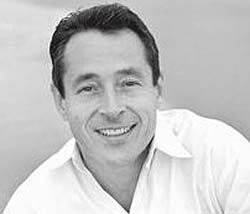
Paul Monette was always out, it seems. As a young man in his twenties he met Roger Horowitz, with who he would live, and love, for the next twenty years. He'd begun teaching poetry, but soon became disillusioned with that art form, and with Horowitz' encouragement, the couple moved to Los Angeles so Monette could pursue a career as a screenwriter.
He wrote many screenplays, none of which were ever produced, but just the act of writing them, convinced Monette that he should write novels, that he should tell his story and the stories of others.
Monette published four novels between 1978 and 1982, and all were enormously successful, establishing him as a writer of popular fiction. But his life began to change, and his work would change just as dramatically. In his fiction, Monette unabashedly depicts gay men who strive to fashion their own identities that lead them to love, friendship, and self-fulfillment. His early novels often begin where most coming-out novels end; his characters have already come to terms with their homosexuality and they battle family relations, societal expectations, and personal desires in a desire to live their lives as openly gay men.
In the earl 80s Roger Horowitz was diagnosed with AIDS, and he died in 1986. Monette began to write himself out of his pain, by telling of their battle with AIDS in Borrowed Time. Then he shared more of his pain, and his life, when he wrote Love Alone: 18 Elegies For Rog, a collection of poems about losing his lover to AIDS. These two books are oftentimes quoted as being the two most powerful works of fiction about living with,m and dying from, AIDS.
With the publication of these two works, Paul Monette found himself as somewhat of a national spokesman for AIDS. Along with Larry Kramer, he became one of the most familiar and outspoken activists of our time. With very few out gay men in the national spotlight, especially in the early years of the epidemic, Monette's openness and honesty, and simple visibility as a gay man, helped many through their own times of crises.
His own memoirs, Becoming A Man: Half A Life Story, was less the story of people with AIDS, but rather the story of Monette's own struggles with growing up gay. It's the story of a life in the closet and the struggles we all face knowing when to come out. Becoming a Man won the 1992 National Book Award for nonfiction, and Paul Monette went on to write two more novels about AIDS: Afterlife in 1990, and HalfwayHome in 1995.
Paul Monette, himself, died from complications of AIDS in 1995.
His is a story, in life and words, fiction and fact, of our struggles, with being gay, with finding acceptance not only from others but from ourselves, on recognizing that while we are different, we are all, straight and gay, black, white, male, female, all very much alike.
As I said, everyone who writes anything knows the best writing is what you know, and Paul Monette showed us that we can write what we know, live what we know, be what we know.
The march goes on.
On This Day In LGBT History
October 23, 1766 – Christoffel Bosch van Leeuwarden, a seventy year old porter in the Netherlands, was convicted of seduction to sodomy and sentenced to three years of prison labour.
October 23, 1907 – The Molte v. Harden trial began in Germany. Journalist Maximillian Harden accused General Kuno Count von Moltke of being in a homosexual relationship. Moltke filed a civil suit, and though Harden was acquitted the verdict was later overturned and he was found guilty.
October 23, 1937 – Mattachine Society founder Harry Hay’s former lover Stanley Haggart wrote to him after marrying a woman in an attempt to change his sexuality, “To think it had to take a marriage with its wedding night experiences to show me where my real affinity lies. Every cell in me screamed out in protest at my desecration of my body. At that time I knew that I belonged to you and you to me.”
October 23, 1977 – Two thousand people demonstrate in downtown Montreal to protest October 22 bar raids. Police attack the demonstrators with motorcycles and billy-clubs and made further arrests.
October 23, 1979 – Former Winnipeg Free Press publisher Richard Malone pleads guilty to charges of buggery and obstructing justice. He is given a one-year sentence, following “juvenile sex ring” investigation in February 1979.
October 23, 1993 – In Helena Montana the state supreme court ruled that transvestitism is not a sufficient reason to deny a father joint custody of his 3-year old child.
October 23, 1998 – The Los Angeles City council condemned the “Making Sense of Homosexuality” conference, organized by the National Association for Research and Therapy of Homosexuality, saying that claims of “curing” homosexuals create an atmosphere that can lead to anti-gay violence.
October 23, 1999 – Religious right leader Rev. Jerry Falwell and evangelical Christian supporters met with Rev. Mel White and gay Christians for an anti-violence forum.
October 23, 1907 – The Molte v. Harden trial began in Germany. Journalist Maximillian Harden accused General Kuno Count von Moltke of being in a homosexual relationship. Moltke filed a civil suit, and though Harden was acquitted the verdict was later overturned and he was found guilty.
October 23, 1937 – Mattachine Society founder Harry Hay’s former lover Stanley Haggart wrote to him after marrying a woman in an attempt to change his sexuality, “To think it had to take a marriage with its wedding night experiences to show me where my real affinity lies. Every cell in me screamed out in protest at my desecration of my body. At that time I knew that I belonged to you and you to me.”
October 23, 1977 – Two thousand people demonstrate in downtown Montreal to protest October 22 bar raids. Police attack the demonstrators with motorcycles and billy-clubs and made further arrests.
October 23, 1979 – Former Winnipeg Free Press publisher Richard Malone pleads guilty to charges of buggery and obstructing justice. He is given a one-year sentence, following “juvenile sex ring” investigation in February 1979.
October 23, 1993 – In Helena Montana the state supreme court ruled that transvestitism is not a sufficient reason to deny a father joint custody of his 3-year old child.
October 23, 1998 – The Los Angeles City council condemned the “Making Sense of Homosexuality” conference, organized by the National Association for Research and Therapy of Homosexuality, saying that claims of “curing” homosexuals create an atmosphere that can lead to anti-gay violence.
October 23, 1999 – Religious right leader Rev. Jerry Falwell and evangelical Christian supporters met with Rev. Mel White and gay Christians for an anti-violence forum.
Tuesday, October 20, 2009
LGBT History Month: Randy Shilts
Randy Shilts spent his life writing about us and for us, and to us. He chronicled who we were and how we came to be, where we come from and where we headed. He lived as openly as nearly anyone on the planet, creating a model many might follow.
It seemed as though he always wanted to write, that he always had something to say. He was the managing editor of the Oregon Daily Emerald, the student newspaper, at the University of Oregon. It was there, at the age of twenty, that Randy Shilts came out as a gay man, even running for student office under the slogan Come Out For Shilts.
And though he graduated near the top of his class, finding work as an openly gay man in 1975 was near impossible, especially in what he soon learned was the homophobic environment of newspapers and television stations. He began to work as a freelance journalist, and because of his talent, he was offered the position of national correspondent by the San Francisco Chronicle in 1981. This made Randy Shilts the "first openly gay reporter with a gay 'beat' in the American mainstream press." Ironically enough, just as he was getting started in his new post, came news of the Gay Plague; AIDS, which would later take his life, was becoming a national  news story.
But it wasn't the only story. Living and working in San Francisco he was fascinated by the life of openly gay politician Harvey Milk, and wrote his first best seller, The Mayor of Castro Street: The Life and Times of Harvey Milk. This was yet another first for Randy Shilts; his book became one of the first gay political biographies, an entirely new genre.
His writing style was admired for its powerful narrative drive, interweaving personal stories with political and social reporting, and Shilts described himself best by saying he was a literary journalist in the style of Capote and Mailer.
Randy Shilts final book, Conduct Unbecoming: Gays and Lesbians in the US Military: Vietnam to the Persian Gulf, shined a light on the discrimination faced on a daily basis by LGBT members of the American military. He and his assistants interviewed over a thousand people for the book, and Randy Shilts dictated the last chapter from a  hospital bed.
Still, it wasn't all glory for Randy Shilts. While many, gay and straight, praised his work, he was also criticized--to the point of being spat on on Castro Street--for calling for the closure of gay bathhouses in San Francisco to slow the spread of AIDS. And the gay community also berated Shilts for his opposition to the controversial practice of outing prominent but closeted lesbians and gay men. still, he maintained his integrity in spite of being called "a traitor to his own kind" by another Bay Area journalist. In a note included in The Life and Times of Harvey Milk, he told of what he saw as his duty to rise above the criticism:
I can only answer that I tried to tell the truth and, if not be objective, at least be fair; history is not served when reporters prize trepidation and propriety over the robust journalistic duty to tell the whole story.
Randy Shilts had been tested for HIV, but declined to hear the results until he finished writing And the Band Played On. He felt that the knowledge of his condition, be it positive or negative, might have an effect on the book, and for Randy Shilts, the book, the characters, their stories, and the cause, came first. It was in March of 1987 that Shilts learned he was HIV+, and though he began taking AZT, and continued on that regimen for many years, he did not disclose his status until shortly before he died.
In 1992, Shilts came down with pneumocystis carinii pneumonia and suffered a collapsed lung; the following year, it was Kaposi's sarcoma. In a New York Times interview in 1993, Randy Shilts said:
HIV is certainly character-building. It's made me see all of the shallow things we cling to, like ego and vanity. Of course, I'd rather have a few more T-cells and a little less character.
Despite his condition--he was essentially homebound and on oxygen--Randy Shilts went to Los Angeles in the late summer of 1993 for the premier of HBO's And The Band Played On.
Randy Shilts died in February of 1994, at his ranch in Guerneville, California. He was survived by his partner, Barry Barbieri, his mother, and his brothers, one of whom had conducted a commitment ceremony for Randy and Barry the year prior.
Randy Shilts died in February of 1994, at his ranch in Guerneville, California. He was survived by his partner, Barry Barbieri, his mother, and his brothers, one of whom had conducted a commitment ceremony for Randy and Barry the year prior.
He bequeathed 170 cartons of papers, notes, and research files to the local history section of the San Francisco Public Library, including research for what would have been his fourth book, an examination of homosexuality in the Roman Catholic Church.
A longtime friend said of Randy Shilts:
He chose to write about gay issues for the mainstream precisely because he wanted other people to know what it was like to be gay. If they didn't know, how were things going to change?
For Randy Shilts, the band plays on.
On This Day In LGBT History
October 20, 1969 – The National Institutes of Mental Health released a report based on a study led by psychologist Dr. Evelyn Hooker. The report urged states to repeal sodomy laws.
October 20, 1987 – Over fifty ACT-UP members were arrested during an act of civil disobedience protesting President Reagan’s lack of action in the AIDS epidemic. Another demonstration of about 150 people was held across the street from the United Nations building during the UN General Assembly’s first debate on AIDS.
October 20, 1987 – The US House of Representatives voted 368-47 to approve an amendment to withhold federal funding from any AIDS education organization which encourages homosexual activity. The senate approved a similar amendment the previous week by a vote of 94-2. It was introduced by Sen. Jesse Helms.
October 20, 1987 – The US House Judiciary Committee voted 21-13 to approve a bill requiring the justice department to collect statistics on hate crimes, including anti-gay violence.
October 20, 1992 – The San Diego Police Department announced that it was severing its ties with the Boy Scouts of America due to a local chapter’s dismissal of a gay police officer who was involved with the Explorer program.
October 20, 1993 – Roman Catholic priest Rev Andre Guindon died of a heart attack at age 60. In his book “The Sexual Creators” he wrote that heterosexuals should look to same-sex couples to learn about tenderness and sharing.
October 20, 1997 – Portugal’s first Gay and Lesbian Community Centre opened in Lisbon.
October 20, 1987 – Over fifty ACT-UP members were arrested during an act of civil disobedience protesting President Reagan’s lack of action in the AIDS epidemic. Another demonstration of about 150 people was held across the street from the United Nations building during the UN General Assembly’s first debate on AIDS.
October 20, 1987 – The US House of Representatives voted 368-47 to approve an amendment to withhold federal funding from any AIDS education organization which encourages homosexual activity. The senate approved a similar amendment the previous week by a vote of 94-2. It was introduced by Sen. Jesse Helms.
October 20, 1987 – The US House Judiciary Committee voted 21-13 to approve a bill requiring the justice department to collect statistics on hate crimes, including anti-gay violence.
October 20, 1992 – The San Diego Police Department announced that it was severing its ties with the Boy Scouts of America due to a local chapter’s dismissal of a gay police officer who was involved with the Explorer program.
October 20, 1993 – Roman Catholic priest Rev Andre Guindon died of a heart attack at age 60. In his book “The Sexual Creators” he wrote that heterosexuals should look to same-sex couples to learn about tenderness and sharing.
October 20, 1997 – Portugal’s first Gay and Lesbian Community Centre opened in Lisbon.
Monday, October 19, 2009
LGBT History Month: Larry Kramer
Larry Kramer is an everyman....an everyGAYman. Playwright, author, public health advocate, fighter, speaker and activist....hero to the LGBT community, whether you like him or not.
In 1953, Larry enrolled at Yale University, but didn't do well in that environment. He truly believed he was the only gay man at the school and, at one point, tried to commit suicide with an overdose of aspirin. That experience, of wanting to end his life because he was homosexual, left him desperate to explore sexuality and fight for gay people in any way possible.
After graduation, Larry worked as a teletype operator at Columbia Pictures in Hollywood. Eventually he moved to the story department to rework scripts; his first writing credit was for Here We Go Round the Mulberry Bush, a teen sex comedy. He followed that with an Oscar nomination for his screenplay of D.H.Lawrence's Women in Love in 1969. Then Larry erred, or he believes he erred. He wrote what he now calls "the only thing in my life I'm ashamed of;" the 1973 musical remake of Frank Capra's Lost Horizon.
Disappointed im himself, Larry left Hollywood for New York City to write for the stage. He began to integrate homosexual themes into his work, his first of which was Sissies' Scrapbook--later rewritten and retitled as Four Friends--a dramatic play about four dysfunctional friends, one of whom is gay. Calling it a play about "cowardice and the inability of some men to grow up," Larry loved the play, and loved it more when it was actually produced. However, mixed reviews and poor box office, closed the play quickly, and he vowed never to write for the stage again.
His first novel, Faggots, received all sorts of attention, though perhaps not the kind Larry Kramer craved. Faggots was about the fast lifestyle of gay men of Fire Island and Manhattan; it was the story a man who is unable to find love while encountering drugs and casual sex in bars and discos.
Faggots caused an uproar in the very community it portrayed; it was taken off the shelves of the Oscar Wilde Memorial Bookstore and Kramer was actually banned from the grocery store near his home. Both the gay and straight press panned the book and Larry remembers that time as one when the "straight world thought I was repulsive, and the gay world treated me like a traitor. People would literally turn their back when I walked by."
Still, Faggots is one of the best-selling gay novels of all time. The book has never been out of publication and is often taught in gay studies classes and Larry Kramer seemed on the cusp of becoming a successful, though controversial writer. He might have stayed there had it not been for that flu.
His friends began getting sick, and then dying, and Larry wanted to know why. In 1981, he invited a select group of New York's gay community to his apartment to listen to a doctor say their friends' illnesses were related, and research was needed. The Gay Men's Health Crisis [GMHC] was formed that night, becoming the primary organization to raise funds for, and provide services to, people stricken with AIDS.
Although Larry Kramer served on its first board of directors, his view of how it should be run sharply conflicted with other members. While GMHC concentrated on social services for AIDS patients, Kramer wanted to fight for funding from New York City. Mayor Koch was a particular target, as was the behavior of gay men before we really understood how HIV was transmitted. When doctors suggested men stop having sex, Kramer strongly encouraged GMHC to deliver the message to as many gay men as possible but they refused.
Larry then did what he does best: write. His essay "1,112 and Counting" discussed the spread of HIV/AIDS, the lack of government response, and apathy of the gay community. It was meant to frighten gay men, and anger them to respond to government indifference. It attacked everyone from the Centers for Disease Control [CDC], the National Institutes of Health [NIH] and Sloan-Kettering Cancer Center; Larry raged at politicians for refusing to acknowledge the implications of an AIDS epidemic. While many were still talking about this flu, or this gay disease, Larry Kramer realized it was much, much more, and his harshest condemnation was directed at gay men who thought that if they ignored HIV/AIDS it would simply go away.
But many in the gay community, remembering Larry Kramer as the writer of that awful Faggots, saw him as the Gay Chicken Little, shrieking about a falling sky. Calling him too militant, the GMHC ousted Larry Kramer from the organization in 1983.
Saddened by his removal from the GMHC, Kramer left for Europe, and while visiting Dachau, he learned that the concentration camp had opened in 1933--long before the war--and that neither Germany, nor other nations, did anything to stop it. He saw a direct correlation between Dachau and the AIDS epidemic, and was inspired to chronicle the same reaction from the American government and the gay community to the AIDS crisis.
Despite his vow never to write for the theater again, The Normal Heart is a play set between 1981 and 1984. In it, a writer named Ned Weeks nurses his lover who is dying of an unnamed disease--one which has his doctors puzzled--and is frustrated at being unable to research it. Weeks is also a member of an unnamed organization of which he is eventually thrown out.
The play is considered a literary landmark. It contended with the AIDS crisis when few would speak of it, including gay men themselves; it remains the longest-running play ever staged at the Public Theater--running for a year starting in 1985--and has been produced over 600 times in the U.S., Europe, Israel, and South Africa.
Finally finding a place where his voice might be heard, Larry Kramer next wrote Just Say No, A Play About A Farce, highlighting the hypocrisy of the Reagan and Koch administrations that Larry believes allowed AIDS to become an epidemic. It is the story of a First Lady, her gay son, and the closeted gay mayor of America’s “largest northeastern city.”
I wonder who he meant?
It was not a successful endeavor, however. The New York Times hated it, and few came to see it, although one person, Susan Sontag, said that Larry Kramer "is one of America's most valuable troublemakers. I hope he never lowers his voice."
Published in 1989, Reports from the Holocaust: The Story of an AIDS Activist is a selection of Larry Kramer's nonfiction writings focusing on AIDS activism and LGBT civil rights. His message, the same as always, is that gay men must accept responsibility for their lives, and that those who are still living give back to their community by fighting for People With AIDS, and for civil rights for the LGBT community.
Larry Kramer:
"I must put back something into this world for my own life, which is worth a tremendous amount. By not putting back, you are saying that your lives are worth shit, and that we deserve to die, and that the deaths of all our friends and lovers have amounted to nothing. I can't believe that in your heart of hearts you feel this way. I can't believe you want to die. Do you?"
Larry Kramer effectively, directly, and deliberately defines AIDS as a Holocaust to which the United States failed to respond quickly. He believes this is due to the fact that AIDS initially infected gay men, and then predominantly poor and politically powerless minorities. It was the people who didn't really matter that got sick, he feels, and so now he personally advocates for a more significant response to AIDS. He implores the government to conduct research based on commonly accepted scientific standards and to allocate funds and personnel to AIDS research. Kramer ultimately feels that the response to AIDS in the U.S. be defined as a Holocaust because of the large number deaths that resulted from the negligence and apathy in the Reagan, George H.W. Bush, and early Clinton Presidencies
Tragedy was first a speech and a call to arms that Kramer delivered five days after the 2004 re-election of George W. Bush; he then turned it into a book. Larry Kramer found it inconceivable that Bush was reelected on the backs of gay people when there were so many more pressing issues. There was war, a failing economy, pollution, but Bush made the campaign about gay marriage. Larry Kramer feels we, as a community, were trampled on by George W. Bush in his quest for power.
I think he had something there.
See, people don't seem to understand the one thing that Larry Kramer fully gets: you can be angry at those you love; you can even hate those you love. He loves the LGBT community, he simply wants us to get what we need for ourselves instead of waiting for someone, anyone, to give us our rights. They're our rights, we shouldn't be waiting for them to come to us, we should demand them.
Larry Kramer decided the time was ripe to act.
He confronted the director of an NIH agency about not devoting more time and effort toward researching AIDS because he was closeted; he threw a drink in Republican fundraiser Terry Dolan's face during a party and screamed at him for having affairs with men, then using homosexuality as a reason to raise money for conservative causes; he called Ed Koch and the media and government agencies in New York City "equal to murderers".
Larry would not be quiet.
In 1987, Larry Kramer founded AIDS Coalition to Unleash Power [ACT UP], a direct action protest organization targeting government agencies and corporations for their lack of treatment and funding for people with AIDS. Giving a speech at one of the first ACT UP gatherings, Kramer began by having two thirds of the room stand up, and told them they would be dead in five years: "If my speech tonight doesn't scare the shit out of you, we're in real trouble. If what you're hearing doesn't rouse you to anger, fury, rage, and action, gay men will have no future here on earth. How long does it take before you get angry and fight back?"
How long indeed.
ACT UP's first target was the Food and Drug Administration [FDA], who Larry Kramer accused of neglecting badly needed medication for HIV+ Americans. For Larry Kramer, a man of words, now it was time for action; his primary objective was to get as many people as possible arrested to focus attention on their target. On March 24, 1987, 17 people out of 250 participating were arrested for blocking rush hour traffic in front of the FDA's Wall Street offices and Larry Kramer himself was arrested countless numbers of times while working with ACT UP. The group disrupted evening newscasts, corporate board meetings and even the New York Stock Exchange. Soon there were hundreds of chapters in the US and Europe.
Today, Larry Kramer continues to advocate for social and legal equity for homosexuals. "Our own country's democratic process declares us to be unequal, which means, in a democracy, that our enemy is you. You treat us like crumbs. You hate us. And sadly, we let you."
In 1988, as Just Say No was closing, Larry Kramer entered the hospital with an aggravated congenital hernia. While in surgery, doctors discovered liver damage due to Hepatitis B, and informed Larry that he was also HIV+. In 2001, at age 66, Kramer was in dire need of a liver transplant, but he was turned down by Mount Sinai Hospital's organ transplant list because HIV+ patients were routinely considered inappropriate candidates for organ transplants due to complications from HIV and perceived short lifespans. Out of the 4,954 liver transplants performed in the United States, only 11 were for HIV-positive people.
In June 2001, Newsweek announced that Larry Kramer was dying; in December 2001, the Associated Press claimed Kramer had died. Instead, very much alive, Larry Kramer was at the Thomas E. Starzl Transplantation Institute at the University of Pittsburgh--which had done more HIV transplants (9) than any other facility in the world.
He received the new liver on December 21, 2001.
Say what you will about Larry Kramer. He's brash. He's arrogant. He's rude. He's a troublemaker. But he marches out in front of all of us, even those who choose not to march. He stands up for us, and in our faces, at the same time. If there ever was a hero to the gay community and for the gay community, then it's a list that should include the name of Larry Kramer.
The march goes on.
On This Day In LGBT History
October 19, 1946 – Harris Glenn Milstead, better known to the world as Divine, is born in Baltimore. The queen of shock starred in Pink Flamingos, Female Trouble and a raft of other films.
October 19, 1955 – Daughters of Bilitis, the first long-term American organization for lesbians, was founded in San Francisco by Del Martin and Phyllis Lyon.
October 19, 1981- Former Toronto mayor John Sewell wins junior aldermanic seat in Ward 6 byelection. It is the first time the gay issue has not played a role in an election in the mainly gay area.
October 19, 1993 – Massachusetts state education officials announced that they would use $450,000 in funds raised from a new state cigarette tax to fund programs to stop anti-gay harassment in public schools.
October 19, 1996 – Representatives of the American Psychiatric Association met with approximately fifty transgender activists who voiced their concerns about reforming the diagnosis of Gender Identity Disorder.
October 19, 1999 – A rape center in Vancouver organization was ordered to pay $2,030 in damages for banning a transgendered person from its drop-in center.
October 19, 1955 – Daughters of Bilitis, the first long-term American organization for lesbians, was founded in San Francisco by Del Martin and Phyllis Lyon.
October 19, 1981- Former Toronto mayor John Sewell wins junior aldermanic seat in Ward 6 byelection. It is the first time the gay issue has not played a role in an election in the mainly gay area.
October 19, 1993 – Massachusetts state education officials announced that they would use $450,000 in funds raised from a new state cigarette tax to fund programs to stop anti-gay harassment in public schools.
October 19, 1996 – Representatives of the American Psychiatric Association met with approximately fifty transgender activists who voiced their concerns about reforming the diagnosis of Gender Identity Disorder.
October 19, 1999 – A rape center in Vancouver organization was ordered to pay $2,030 in damages for banning a transgendered person from its drop-in center.
Subscribe to:
Posts (Atom)