egroj world: Charlie Rouse
Showing posts with label Charlie Rouse. Show all posts

Saturday, May 31, 2025

Charlie Rouse • Takin' Care Of Business


Biography
by Scott Yanow
Possessor of a distinctive tone and a fluid bop-oriented style, Charlie Rouse was in Thelonious Monk's Quartet for over a decade (1959-1970) and, although somewhat taken for granted, was an important ingredient in Monk's music. Rouse was always a modern player and he worked with Billy Eckstine's orchestra (1944) and the first Dizzy Gillespie big band (1945), making his recording debut with Tadd Dameron in 1947. Rouse popped up in a lot of important groups including Duke Ellington's Orchestra (1949-1950), Count Basie's octet (1950), on sessions with Clifford Brown in 1953, and with Oscar Pettiford's sextet (1955). He co-led the Jazz Modes with Julius Watkins (1956-1959), and then joined Monk for a decade of extensive touring and recordings. In the 1970s he recorded a few albums as a leader, and in 1979 he became a member of Sphere. Charlie Rouse's unique sound began to finally get some recognition during the 1980s. He participated on Carmen McRae's classic Carmen Sings Monk album and his last recording was at a Monk tribute concert.
https://www.allmusic.com/artist/charlie-rouse-mn0000176387/biography

///////


Biografía
por Scott Yanow
Poseedor de un tono inconfundible y un estilo fluido orientado al bop, Charlie Rouse formó parte del cuarteto de Thelonious Monk durante más de una década (1959-1970) y, aunque en cierto modo se da por sentado, fue un ingrediente importante en la música de Monk. Rouse siempre fue un intérprete moderno y trabajó con la orquesta de Billy Eckstine (1944) y con la primera big band de Dizzy Gillespie (1945), debutando en disco con Tadd Dameron en 1947. Rouse apareció en muchos grupos importantes, como la orquesta de Duke Ellington (1949-1950), el octeto de Count Basie (1950), en sesiones con Clifford Brown en 1953 y con el sexteto de Oscar Pettiford (1955). Codirigió los Jazz Modes con Julius Watkins (1956-1959), y después se unió a Monk para una década de extensas giras y grabaciones. En los años 70 grabó algunos álbumes como líder, y en 1979 se convirtió en miembro de Sphere. El sonido único de Charlie Rouse empezó a obtener por fin cierto reconocimiento durante la década de 1980. Participó en el clásico álbum de Carmen McRae Carmen Sings Monk y su última grabación fue en un concierto homenaje a Monk.
https://www.allmusic.com/artist/charlie-rouse-mn0000176387/biography


Wednesday, May 14, 2025

Charlie Rouse & Seldon Powell • We Paid Our Dues!


A really great little album -- featuring some of the best small combo work by tenorists Charlie Rouse and Seldon Powell! The album is split into two parts -- one part featuring work by Rouse with a trio that features Gildo Mahones on piano, Reggie Workman on bass, and Art Taylor on drums. With Mahones leading the rhythm, the session's a lot more soulful than some of Rouse's other work -- swinging with a lean mean sound that really returns his tenor style to some of its 50s power. The other group on the set features rare small combo work by Seldon Powell -- an excellent tenor player who almost never got to work in small group settings. The rest of Powell's group includes Peck Morrison on bass, Denzil Best on drums, and Lloyd Mayers on piano. Both players are well suited to appear on the same record, and the split in personnel from track to track is less bracing than you might think. Titles include "Two For One", "Quarter Moon", "I Should Care", "Bowl Of Soul", and "For Lester". Note also that the Rouse tracks do not appear on his other full album for Epic, Yeah.  
Dusty Groove, Inc.
https://www.dustygroove.com/item/980897/Charlie-Rouse-Seldon-Powell:We-Paid-Our-Dues

///////


Un pequeño gran álbum que presenta algunos de los mejores trabajos en pequeño combo de los tenoristas Charlie Rouse y Seldon Powell. El álbum está dividido en dos partes: una parte presenta el trabajo de Rouse con un trío que incluye a Gildo Mahones al piano, Reggie Workman al bajo y Art Taylor a la batería. Con Mahones al frente de la rítmica, la sesión es mucho más conmovedora que algunos de los otros trabajos de Rouse: un swing con un sonido esbelto que realmente devuelve a su estilo de tenor parte de su poder de los años 50. El otro grupo de la sesión es un pequeño combo de Seldon Powell, un excelente tenor que casi nunca trabajó en grupos pequeños. El resto del grupo de Powell incluye a Peck Morrison al bajo, Denzil Best a la batería y Lloyd Mayers al piano. Ambos músicos están bien preparados para aparecer en el mismo disco, y la división del personal de una pista a otra es menos molesta de lo que se podría pensar. Los títulos incluyen «Two For One», «Quarter Moon», «I Should Care», «Bowl Of Soul» y «For Lester». Nótese también que los temas de Rouse no aparecen en su otro álbum completo para Epic, Yeah.  
Dusty Groove, Inc.
https://www.dustygroove.com/item/980897/Charlie-Rouse-Seldon-Powell:We-Paid-Our-Dues


Tuesday, April 29, 2025

Les Modes • Mood In Scarlet


Les Jazz Modes Biography by David Szatmary
This underrated swinging bop group was earmarked by the distinctive sound of Julius Watkins on French horn. The band also included Monk sax player Charlie Rouse, pianist Gildo Mahones, bassist Ron Jefferson, and sometimes percussionist Chano Pozo. Five albums were recorded by Les Jazz Modes in the mid- to late '50s, and some of the group's music has subsequently been reissued/compiled by Koch and Collectables.

///////


Biografía de Les Jazz Modes por David Szatmary
Este infravalorado grupo de swinging bop se caracterizó por el distintivo sonido de Julius Watkins a la trompa. La banda también incluía al saxofonista de Monk Charlie Rouse, al pianista Gildo Mahones, al bajista Ron Jefferson y, en ocasiones, al percusionista Chano Pozo. Les Jazz Modes grabaron cinco álbumes entre mediados y finales de los años 50, y parte de la música del grupo ha sido reeditada y recopilada posteriormente por Koch and Collectables.


Friday, April 11, 2025

Charlie Rouse • Bossa Nova Bacchanal


Review by Thom Jurek
This 1962 date by tenor saxophonist Charlie Rouse celebrates a grander and funkier scale of what Stan Getz and Charlie Byrd did earlier in 1962 with the bossa nova. Unlike Getz, Rouse didn't feel he needed to be a purist about it, and welcomed all sorts of Afro-Caribbean variations into his music. His choice of bandmates reflects that: a three-piece percussion section with drummer Willie Bobo, conguero Carlos "Patato" Valdes, and Garvin Masseaux on chekere (a beaded percussion instrument that is played by being shaken). Add to this bassist Larry Gales, and a pair of guitarists, Kenny Burrell, and Chauncey Westbrook, along with Rouse, and it is an unusual and exotic sextet. Burrell and Masseaux were part of Ike Quebec's band on Soul Samba, but the two recordings couldn't be more different. For his part, Rouse's embrace of bossa nova, as well as other Latin and Caribbean music, is firmly rooted in jazz -- and not American jazz trying to be Brazilian. Rhythmically, Rouse, who is a hard bopper if there ever was one, takes the rhythmic and harmonic concepts of the samba, marries them to Afro-Caribbean folk styles, and burns it all through with the gloriously unapologetic swing of jazz. The standout selections here are a pair of Luiz Bonfá tunes, "Velhos Tempos," and his classic "Samba de Orfeu." On the former, both guitarists play unamplified guitars in rhythmic counterpoint as Rouse offers first the melody, and then an improvisation in the upper register of the horn, on the latter, nix the counterpoint and listen, as both guitarists shimmer through the changes, one playing just behind the beat for a reverb effect. The percussion interplay is startling in its complexity, but seamless and warm in its balance, resulting in a fine section solo in the middle of the cut that is infectious. Ultimately, this is one of Rouse's finest moments as a leader.

///////

Reeseña por Thom Jurek
Esta fecha de 1962 del tenor saxofonista Charlie Rouse celebra una escala más grandiosa y funkier de lo que Stan Getz y Charlie Byrd hicieron antes en 1962 con la bossa nova. A diferencia de Getz, Rouse no sentía que necesitara ser un purista al respecto, y dio la bienvenida a todo tipo de variaciones afrocaribeñas en su música. Su elección de compañeros de banda refleja eso: una sección de percusión de tres piezas con el baterista Willie Bobo, el conguero Carlos "Patato" Valdés, y Garvin Masseaux sobre chekere (un instrumento de percusión de cuentas que se toca sacudido). Agregue a este bajista Larry Gales, y un par de guitarristas, Kenny Burrell, y Chauncey Westbrook, junto con Rouse, y es un sexteto inusual y exótico. Burrell y Masseaux formaban parte de la banda de Ike Quebec en Soul Samba, pero las dos grabaciones no podían ser más diferentes. Por su parte, el abrazo de Rouse a la bossa nova, así como a otras músicas latinas y caribeñas, está firmemente arraigado en el jazz, y no en el jazz estadounidense que intenta ser brasileño. Rítmicamente, Rouse, que es un hard bopper si alguna vez hubo uno, toma los conceptos rítmicos y armónicos de la samba, los casa con los estilos populares afro-caribeños y lo quema todo con el swing gloriosamente libre de jazz. Las selecciones más destacadas son un par de canciones de Luiz Bonfá, "Velhos Tempos" y su clásico "Samba de Orfeu". En el primero, ambos guitarristas tocan guitarras sin amplificar en contrapunto rítmico cuando Rouse ofrece primero la melodía, y luego una improvisación en el registro superior del cuerno, en este último, nix el contrapunto y escucha, mientras ambos guitarristas titilan a través de los cambios, uno jugando justo detrás del ritmo para un efecto de reverberación. La interacción de percusión es sorprendente por su complejidad, pero perfecta y cálida en su equilibrio, lo que resulta en un solo de sección fina en el medio del corte que es infeccioso. En última instancia, este es uno de los mejores momentos de Rouse como líder.


Wednesday, February 19, 2025

Clifford Jordan • Drink Plenty Water


After 49 years on the shelf, Drink Plenty Water, a long lost jazz recording from the late tenor sax master Clifford Jordan has been issued. Originally recorded for the Strata-East label in 1974, it is the only release in the Chicago native’s catalog that is primarily a vocal recording, with inventive arrangements courtesy of bassist Bill Lee. Joining Jordan on tenor are Dick Griffin on trombone, Bill Hardman on trumpet, Charlie Rouse on bass clarinet, Strata East co-founder Stanley Cowell on piano, Billy Higgins on drums, Bernard Fennell on cello, and Lee and Sam Jones on bass.

Jordan’s widow, Sandra, brought Drink Plenty Water to the light of day, spearheading a two-year-long, pandem- ic-delayed effort to get these four-decades-old recordings mastered and prepared for this January 2023 release.

Jordan’s daughter, Donna Jordan Harris – all of 16 years of age at the time – sings lead vocals on several tracks, backed by remaining members of the ensemble. The vocal arrangements bring an unexpected new take to the compositions “Witch Doctor’s Chant (Ee-Bah-Lickey-Doo)” and “I’ve Got a Feeling for You” that first appeared on Clifford Jordan’s 1968 album Soul Fountain.

Jordan recorded Drink Plenty Water’s opening track, “The Highest Mountain,” more than any of his other com- positions during his recording career, which spanned from 1957 until his passing in 1993. And the song has lived on with recordings by T.S. Monk, Hugh Lawson, John Marshall and others. The vocal arrangement for “The Highest Mountain” on Drink Plenty Water makes it the most unique treatment of one of his finest compositions.

Additional tracks include “My Papa’s Coming Home,” a rhythm changes vamp with what trombonist Griffin describes as a “stunning” solo from the leader, and “Drink Plenty Water and Walk Slow,” a short track featuring Fennell and Jordan under a spoken word story from actor David Smyrl. Other highlights of the 35-minute-long recording are the two tracks titled “Talking Blues” – the first a spoken-word story from Smyrl about a hustler living the fast life, and the second an instrumental version with great interplay between Jordan, Hardman, Fen- nell and Griffin.

“Besides being one of the greatest saxophonists in our Artform, my friend and colleague Clifford Jordan was also, aside from Stanley Cowell, just about the single other most important artist-owned recording contributor to ‘Strata-East’ at the dawn of the label's inception,” writes veteran trumpeter and Strata-East co-founder Charles Tolliver in Drink Plenty Water’s CD booklet. “Although this recording did not make it to the catalogue during this period, kudos to Sandy Jordan for finally unearthing this gem from the archives so it can now be issued."
https://www.gratefulweb.com/articles/drink-plenty-water-long-lost-1974-clifford-jordan-vocal-jazz-album-released

///////

Después de 49 años en la estantería, se ha publicado Drink Plenty Water, una grabación de jazz perdida hace mucho tiempo del difunto maestro del saxo tenor Clifford Jordan. Grabada originalmente para el sello Strata-East en 1974, es la única grabación del catálogo del oriundo de Chicago que es principalmente una grabación vocal, con arreglos inventivos cortesía del bajista Bill Lee. Junto a Jordan en el tenor están Dick Griffin en el trombón, Bill Hardman en la trompeta, Charlie Rouse en el clarinete bajo, el cofundador de Strata East Stanley Cowell en el piano, Billy Higgins en la batería, Bernard Fennell en el violonchelo, y Lee y Sam Jones en el contrabajo.

La viuda de Jordan, Sandra, sacó a la luz Drink Plenty Water, encabezando un esfuerzo de dos años y un retraso pandémico para masterizar y preparar estas grabaciones de cuatro décadas de antigüedad para su publicación en enero de 2023.

La hija de Jordan, Donna Jordan Harris, que en aquel momento tenía 16 años, es la voz principal en varios temas, respaldada por los demás miembros del grupo. Los arreglos vocales aportan una nueva e inesperada perspectiva a las composiciones "Witch Doctor's Chant (Ee-Bah-Lickey-Doo)" y "I've Got a Feeling for You", que aparecieron por primera vez en el álbum de Clifford Jordan de 1968 Soul Fountain.

Jordan grabó la primera canción de Drink Plenty Water, "The Highest Mountain", más que ninguna otra durante su carrera discográfica, que se extendió desde 1957 hasta su fallecimiento en 1993. Y la canción ha perdurado en grabaciones de T.S. Monk, Hugh Lawson, John Marshall y otros. El arreglo vocal de "The Highest Mountain" en Drink Plenty Water lo convierte en el tratamiento más singular de una de sus mejores composiciones.

Otros temas incluyen "My Papa's Coming Home", un vampiro de cambios de ritmo con lo que el trombonista Griffin describe como un solo "impresionante" del líder, y "Drink Plenty Water and Walk Slow", un tema corto con Fennell y Jordan bajo una historia hablada del actor David Smyrl. Otros momentos estelares de la grabación de 35 minutos son los dos temas titulados "Talking Blues", el primero una historia hablada de Smyrl sobre un buscavidas que vive la vida rápida, y el segundo una versión instrumental con una gran interacción entre Jordan, Hardman, Fenell y Griffin.

"Además de ser uno de los mejores saxofonistas de nuestra forma de arte, mi amigo y colega Clifford Jordan fue también, aparte de Stanley Cowell, el otro artista más importante que contribuyó a la grabación de 'Strata-East' en los albores de la creación del sello", escribe el veterano trompetista y cofundador de Strata-East Charles Tolliver en el libreto del CD de Drink Plenty Water. "Aunque esta grabación no se incluyó en el catálogo durante este período, felicito a Sandy Jordan por haber desenterrado finalmente esta joya de los archivos para que ahora pueda publicarse".
https://www.gratefulweb.com/articles/drink-plenty-water-long-lost-1974-clifford-jordan-vocal-jazz-album-released


Saturday, February 15, 2025

Louis Smith • Smithville


Review
by Stephen Thomas Erlewine
Like his debut, Smithville is another set of thoroughly winning straight-ahead bop from the underappreciated trumpeter Louis Smith. Stylistically, there are no surprises here -- this is mainstream bop and hard bop, comprised of original and contemporary bop numbers, as well as standards ("There'll Never Be Another You," "Embraceable You") -- but since the music is performed so well, it doesn't matter. There is genuine passion to this music, not only from Smith, but also from pianist Sonny Clark, tenor saxophonist Charlie Rouse, bassist Paul Chambers and drummer Art Taylor. It's a first-rate hard bop set that deserves wider distribution than it has received.
https://www.allmusic.com/album/smithville-mw0000498692

///////


Reseña
por Stephen Thomas Erlewine
Al igual que su debut, Smithville es otro conjunto de bop straight-ahead completamente ganador del subestimado trompetista Louis Smith. Estilísticamente, no hay sorpresas aquí - se trata de bop mainstream y hard bop, compuesto de números bop originales y contemporáneos, así como estándares ("There'll Never Be Another You", "Embraceable You") - pero como la música se interpreta tan bien, no importa. Hay auténtica pasión en esta música, no sólo por parte de Smith, sino también del pianista Sonny Clark, el saxofonista tenor Charlie Rouse, el bajista Paul Chambers y el batería Art Taylor. Es un conjunto de hard bop de primera clase que merece una distribución más amplia de la que ha recibido.
https://www.allmusic.com/album/smithville-mw0000498692


Monday, January 27, 2025

Thursday, October 3, 2024

Arthur Taylor, Charlie Rouse, Frank Foster • Taylor's Tenors [link OK]


Review
by Al Campbell
Legendary drummer Art Taylor played on a multitude of classic jazz sessions, but only managed to release a few dates as a leader before he passed away in 1995. His second, Taylor's Tenors, from mid-1959, features two straight-ahead tenor saxophonists, Charlie Rouse and Frank Foster, engaging in an insightful yet swinging hard bop conversation. Rouse would shortly become Thelonious Monk's tenor of choice, while Foster continued his tenure with Count Basie's band for another five years. These six hard bop pieces include two by Monk, Jackie McLean's "Fidel," and originals each from Rouse, pianist Walter Davis, and Taylor.
https://www.allmusic.com/album/taylors-tenors-mw0000173743?1637958377813

///////


Revisión
por Al Campbell
El legendario baterista Art Taylor tocó en multitud de sesiones de jazz clásico, pero sólo consiguió publicar unas pocas fechas como líder antes de fallecer en 1995. Su segundo disco, Taylor's Tenors, de mediados de 1959, presenta a dos saxofonistas tenores directos, Charlie Rouse y Frank Foster, entablando una conversación de hard bop perspicaz pero con mucho swing. Rouse se convertiría poco después en el tenor preferido de Thelonious Monk, mientras que Foster continuó con la banda de Count Basie durante otros cinco años. Estas seis piezas de hard bop incluyen dos de Monk, "Fidel" de Jackie McLean, y originales de Rouse, el pianista Walter Davis y Taylor.
https://www.allmusic.com/album/taylors-tenors-mw0000173743?1637958377813


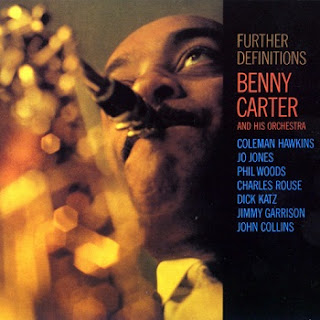
Benny Carter & His Orchestra • Further Definitions


Review by Scott Yanow
Altoist/arranger Benny Carter's classic Further Definitions is a revisiting, instrumentation-wise, to the famous 1937 session that Carter and tenor saxophonist Coleman Hawkins made in France with two top European saxophonists (Andre Ekyan and Alix Combelle) and guitarist Django Reinhardt. The all-star group (which also includes Hawkins, altoist Phil Woods, Charlie Rouse on second tenor, pianist Dick Katz, guitarist John Collins, bassist Jimmy Garrison, and drummer Jo Jones) performs a particularly inspired repertoire. Carter's charts, which allow Hawkins to stretch out on "Body and Soul," give everyone a chance to shine. "Honeysuckle Rose" and "Crazy Rhythm" hold their own with the 1937 versions, and "Blue Star" and "Doozy" prove to be two of Carter's finest originals. Although Benny Carter was not actively playing much at the time (this was his only small-group recording during 1963-1975), he is heard in typically prime form. Very highly recommended.
https://www.allmusic.com/album/further-definitions-mw0000335476?1631040234852


Biography
by Scott Yanow

To say that Benny Carter had a remarkable and productive career would be an extreme understatement. As an altoist, arranger, composer, bandleader, and occasional trumpeter, Carter was at the top of his field since at least 1928, and in the late '90s, Carter was as strong an altoist at the age of 90 as he was in 1936 (when he was merely 28). His gradually evolving style did not change much through the decades, but neither did it become at all stale or predictable except in its excellence. Benny Carter was a major figure in every decade of the 20th century since the 1920s, and his consistency and longevity were unprecedented.

Essentially self-taught, Benny Carter started on the trumpet and, after a period on C-melody sax, switched to alto. In 1927, he made his recording debut with Charlie Johnson's Paradise Ten. The following year, he had his first big band (working at New York's Arcadia Ballroom) and was contributing arrangements to Fletcher Henderson and even Duke Ellington. Carter was with Henderson during 1930-1931, briefly took over McKinney's Cotton Pickers, and then went back to leading his own big band (1932-1934). Already at this stage he was considered one of the two top altoists in jazz (along with Johnny Hodges), a skilled arranger and composer ("Blues in My Heart" was an early hit and would be followed by "When Lights Are Low"), and his trumpet playing was excellent; Carter would also record on tenor, clarinet (an instrument he should have played more), and piano, although his rare vocals show that even he was human.

In 1935, Benny Carter moved to Europe, where in London he was a staff arranger for the BBC dance orchestra (1936-1938); he also recorded in several European countries. Carter's "Waltzing the Blues" was one of the very first jazz waltzes. He returned to the U.S. in 1938, led a classy but commercially unsuccessful big band (1939-1941), and then headed a sextet. In 1943, he relocated permanently to Los Angeles, appearing in the film Stormy Weather (as a trumpeter with Fats Waller) and getting lucrative work writing for the movie studios. He would lead a big band off and on during the next three years (among his sidemen were J.J. Johnson, Miles Davis, and Max Roach) before giving up on that effort. Carter wrote for the studios for over 50 years, but he continued recording as an altoist (and all-too-rare trumpeter) during the 1940s and '50s, making a few tours with Jazz at the Philharmonic and participating on some of Norman Granz's jam-session albums. By the mid-'60s, his writing chores led him to hardly playing alto at all, but he made a full "comeback" by the mid-'70s, and maintained a very busy playing and writing schedule even at his advanced age. Even after the rise of such stylists as Charlie Parker, Cannonball Adderley, Eric Dolphy, Ornette Coleman, and David Sanborn (in addition to their many followers), Benny Carter still ranks near the top of alto players. His concert and recording schedule remained active through the '90s, slowing only at the end of the millenium. After eight amazing decades of writing and playing, Benny Carter passed away quietly on July 13, 2003 at a Los Angeles hospital. He was 95.
https://www.allmusic.com/artist/benny-carter-mn0000790083/biography

///////


Reseña de Scott Yanow
El clásico Further Definitions de Benny Carter es una revisión, en cuanto a la instrumentación, de la famosa sesión de 1937 que Carter y el saxofonista tenor Coleman Hawkins realizaron en Francia con dos saxofonistas europeos de primera fila (Andre Ekyan y Alix Combelle) y el guitarrista Django Reinhardt. El grupo de estrellas (que también incluye a Hawkins, el contralto Phil Woods, Charlie Rouse como segundo tenor, el pianista Dick Katz, el guitarrista John Collins, el bajista Jimmy Garrison y el baterista Jo Jones) interpreta un repertorio especialmente inspirado. Los gráficos de Carter, que permiten a Hawkins estirarse en "Body and Soul", dan a todos la oportunidad de brillar. "Honeysuckle Rose" y "Crazy Rhythm" están a la altura de las versiones de 1937, y "Blue Star" y "Doozy" resultan ser dos de los mejores originales de Carter. Aunque Benny Carter no estaba tocando mucho en ese momento (esta fue su única grabación en grupo pequeño durante 1963-1975), se le escucha en su forma típica. Muy recomendable.
https://www.allmusic.com/album/further-definitions-mw0000335476?1631040234852


Biografía
por Scott Yanow

Decir que Benny Carter tuvo una carrera notable y productiva sería quedarse muy corto. Como contralto, arreglista, compositor, director de banda y trompetista ocasional, Carter estuvo en la cima de su campo desde al menos 1928, y a finales de los 90, Carter era un contralto tan fuerte a la edad de 90 años como lo era en 1936 (cuando sólo tenía 28 años). Su estilo, que fue evolucionando gradualmente, no cambió mucho a lo largo de las décadas, pero tampoco se volvió en absoluto rancio o predecible, salvo en su excelencia. Benny Carter fue una figura importante en todas las décadas del siglo XX desde los años 20, y su consistencia y longevidad no tienen precedentes.

Esencialmente autodidacta, Benny Carter empezó con la trompeta y, tras un periodo con el saxo en do, se pasó al alto. En 1927, hizo su debut discográfico con el grupo Paradise Ten de Charlie Johnson. Al año siguiente, tuvo su primera big band (trabajando en el Arcadia Ballroom de Nueva York) y contribuyó con arreglos a Fletcher Henderson e incluso a Duke Ellington. Carter estuvo con Henderson durante 1930-1931, se hizo cargo brevemente de los Cotton Pickers de McKinney y luego volvió a dirigir su propia big band (1932-1934). Ya en esta etapa se le consideraba uno de los dos mejores contraltos del jazz (junto con Johnny Hodges), un hábil arreglista y compositor ("Blues in My Heart" fue un éxito temprano y le seguiría "When Lights Are Low"), y su forma de tocar la trompeta era excelente; Carter también grabaría con el tenor, el clarinete (un instrumento que debería haber tocado más) y el piano, aunque sus raras voces demuestran que incluso él era humano.

En 1935, Benny Carter se trasladó a Europa, donde en Londres fue arreglista de la orquesta de baile de la BBC (1936-1938); también grabó en varios países europeos. El "Waltzing the Blues" de Carter fue uno de los primeros valses de jazz. Regresó a Estados Unidos en 1938, dirigió una big band con clase pero sin éxito comercial (1939-1941), y luego encabezó un sexteto. En 1943, se trasladó permanentemente a Los Ángeles, apareciendo en la película Stormy Weather (como trompetista con Fats Waller) y consiguiendo un lucrativo trabajo escribiendo para los estudios cinematográficos. Durante los tres años siguientes dirigió una big band de forma intermitente (entre sus acompañantes se encontraban J.J. Johnson, Miles Davis y Max Roach) antes de renunciar a ella. Carter escribió para los estudios durante más de 50 años, pero continuó grabando como contralto (y como trompetista poco frecuente) durante los años 40 y 50, realizando algunas giras con Jazz at the Philharmonic y participando en algunos de los álbumes de jam-session de Norman Granz. A mediados de los años 60, sus tareas de compositor le llevaron a no tocar apenas el contralto, pero regresó por completo a mediados de los años 70, y mantuvo una agenda muy ocupada tocando y escribiendo incluso a su avanzada edad. Incluso después del auge de estilistas como Charlie Parker, Cannonball Adderley, Eric Dolphy, Ornette Coleman y David Sanborn (además de sus muchos seguidores), Benny Carter sigue estando entre los mejores intérpretes de alto. Su agenda de conciertos y grabaciones se mantuvo activa hasta los años 90, y sólo disminuyó al final del milenio. Tras ocho increíbles décadas escribiendo y tocando, Benny Carter falleció tranquilamente el 13 de julio de 2003 en un hospital de Los Ángeles. Tenía 95 años.
https://www.allmusic.com/artist/benny-carter-mn0000790083/biography


Wednesday, September 25, 2024

Charlie Rouse • The Upper Manhattean Jazz Society


Review by Scott Yanow
Veteran tenor saxophonist Charlie Rouse plays some high-quality post-bop on this quintet set with trumpeter Benny Bailey (in top form), pianist Albert Dailey, bassist Buster Williams and drummer Keith Copeland. The music is quite modern and none of the pieces (originals by Rouse, Dailey and Fritz Pauer, plus two ballads from pianist John Hicks) have exactly caught on. However, the blend and contrast between Rouse and Bailey, plus the strong rhythm section, makes this a set of interest to collectors of acoustic jazz.
https://www.allmusic.com/album/the-upper-manhattan-jazz-society-mw0000081015

///////


Reseña de Scott Yanow
El veterano saxofonista tenor Charlie Rouse toca algo de post-bop de alta calidad en este quinteto con el trompetista Benny Bailey (en plena forma), el pianista Albert Dailey, el bajista Buster Williams y el baterista Keith Copeland. La música es bastante moderna y ninguna de las piezas (originales de Rouse, Dailey y Fritz Pauer, además de dos baladas del pianista John Hicks) ha calado precisamente. Sin embargo, la mezcla y el contraste entre Rouse y Bailey, además de la potente sección rítmica, hacen que este conjunto sea interesante para los coleccionistas de jazz acústico.
https://www.allmusic.com/album/the-upper-manhattan-jazz-society-mw0000081015


Saturday, August 10, 2024

Herbie Mann • Just Wailin'


This recording emphasizes ( although does not stick exclusively to) the blues.  The sextet has impressive players (flutist Herbie Mann, Charlie Rouse on tenor, guitarist Kenny Burrell, pianist Mal Waldron, bassist George Joyner and drummer Art Taylor ) and the material ( originals by Waldron, Burrell and Calvin Massey in addition to a brief "Jumpin' With Symphony Sid" ) is reasonably challenging but the musicians never really come together as a group.  The straightahead jam session has its strong moments and, as long as one keeps their expectations low, the music will be enjoyable despite the lack of major sparks. ~ Allmusic.com
This is a great CD because the music is high quality and easily accessable.  Unlike bebop which is like jazz on steroids, you can listen to this CD at the end of a hard day at work, cleaning the house, driving, etc.  You can put it on at a party and set a nice, relaxed, hip mood. ~ Glenn R. Ellison 
 
///////
 
Esta grabación hace hincapié ( aunque no se ciñe exclusivamente) en el blues.  El sexteto cuenta con músicos impresionantes (el flautista Herbie Mann, Charlie Rouse en el tenor, el guitarrista Kenny Burrell, el pianista Mal Waldron, el bajista George Joyner y el baterista Art Taylor ) y el material ( originales de Waldron, Burrell y Calvin Massey además de un breve "Jumpin' With Symphony Sid" ) es razonablemente desafiante, pero los músicos nunca se unen realmente como grupo.  La jam session directa tiene sus momentos fuertes y, siempre que uno mantenga sus expectativas bajas, la música será agradable a pesar de la falta de chispas importantes. ~ Allmusic.com
Este es un gran CD porque la música es de alta calidad y fácilmente accesible.  A diferencia del bebop, que es como el jazz con esteroides, puedes escuchar este CD al final de un duro día de trabajo, limpiando la casa, conduciendo, etc.  Puedes ponerlo en una fiesta y crear un ambiente agradable, relajado y moderno. ~ Glenn R. Ellison


Tuesday, July 2, 2024

Clark Terry, Paul Gonsalves, Joe Gordon, Art Mardigan • The Jazz School


There are sixteen students in this class of the Jazz School ; sixteen young men whose grades are impeccable, whose studies have clearly qualified them for a successful and distinguished career. At the head of the class for the first four exercises is a member of the drums corps, a familiar figure by the name of Arthur Mardigan. Art is a native Detroiter, born in December, 1923 and a narre band musician since the age of nineteen, when he joined Tommy Reynolds. After Army service in 1943-44 he spent a year with Georgie Auld’s group, then went home to Detroit for a while be- fore entering the New York scene, where he was a part of many noteworthy 52nd Street combos under the leadership of Charlie Parker, Dexter Gordon, Allen Eager and Kai Winding. In addition, Art worked off and on with Woody Herman and Elliot Lawrence. In 1954, when Pete Rugolo came east to form a band for a tour, Art was a cornerstone of that all-star ensemble. Not long ago he was heard on an EmArcy LP disc with Bill de Arango. Featured with Art on his four performances here are Don Joseph, a cornetist who’s been a familiar figure around New York jazz circles for several years ; Milt Gold, a trombonist who has seen service with such name bands as Stan Kenton’s and Claude Thornhill’s ; and Al Cohn, the tenor saxophonist and arranger who has been rising rapidly to jazz eminence in the past year. (Al wrote "Moroccan Blues" for this session.) Heard with Mardigan in the rhythm section are John Williams, the 25-year-old pianist from Windsor, Vermont, best known for his work with Stan Getz ; and Teddy Kotick, a 27-year-old bass man who has been prominent on the New York scene with Charlie Parker, Buddy Rich, Buddy De Franco and a flock of other combos. These students guide their class through four exercises that required little or no homework ; the welcome strains of "I've Found A New Baby" (with Williams comping happily through Cohn's swinging solo chorus) ; the unusual Milt Gold trombone work and the unexpected combination of ancient and modern melodic ideas by Joseph on Moroccan Blues ; the pensive swing and easy-riding tenor work on Old Gold, and the happy, west-coast-style theme and solos on Golden Touch. Class dismissed. A new group moves in : at the head of this class is Paul Gonsalves, tenor saxophonist from Brockton, Massachusetts. Raised in Pawtucket, R.I., Paul started his musical life as a guitarist at the age of sixteen, in 1936 ; later, switching to tenor saxophone, he became popular as a featured member of the Sabby Lewis orchestra, a well known Boston group, with which he made his record debut...
(from the liner Notes)  

///////


Hay dieciséis estudiantes en esta clase de la Escuela de Jazz; dieciséis jóvenes cuyas notas son impecables, cuyos estudios los han calificado claramente para una carrera exitosa y distinguida. A la cabeza de la clase para los primeros cuatro ejercicios está un miembro del cuerpo de tambores, una figura conocida con el nombre de Arthur Mardigan. Art es un nativo de Detroit, nacido en diciembre de 1923 y músico de bandas de música desde los diecinueve años, cuando se unió a Tommy Reynolds. Tras el servicio militar en 1943-44, pasó un año con el grupo de Georgie Auld, y luego regresó a su casa en Detroit durante un tiempo antes de entrar en la escena neoyorquina, donde formó parte de muchos combos notables de la calle 52 bajo la dirección de Charlie Parker, Dexter Gordon, Allen Eager y Kai Winding. Además, Art trabajó ocasionalmente con Woody Herman y Elliot Lawrence. En 1954, cuando Pete Rugolo llegó al este para formar una banda para una gira, Art fue una piedra angular de ese conjunto de estrellas. No hace mucho se le escuchó en un disco LP de EmArcy con Bill de Arango. Junto a Art, en sus cuatro actuaciones, están Don Joseph, un cornetista que ha sido una figura familiar en los círculos de jazz de Nueva York durante varios años; Milt Gold, un trombonista que ha trabajado con bandas de renombre como las de Stan Kenton y Claude Thornhill; y Al Cohn, el saxofonista tenor y arreglista que ha ascendido rápidamente a la eminencia del jazz en el último año. (Al escribió "Moroccan Blues" para esta sesión.) Junto a Mardigan en la sección rítmica están John Williams, el pianista de 25 años de Windsor, Vermont, más conocido por su trabajo con Stan Getz ; y Teddy Kotick, un bajista de 27 años que ha destacado en la escena neoyorquina con Charlie Parker, Buddy Rich, Buddy De Franco y un flock de otros combos. Estos estudiantes guían a su clase a través de cuatro ejercicios que requieren poca o ninguna tarea; los acordes de bienvenida de "I've Found A New Baby" (con Williams componiendo alegremente a través del coro solista de Cohn); el inusual trabajo de trombón de Milt Gold y la inesperada combinación de ideas melódicas antiguas y modernas de Joseph en Moroccan Blues; el swing pensativo y el trabajo de tenor de fácil conducción en Old Gold, y el tema y los solos alegres de estilo de la costa oeste en Golden Touch. Se acabó la clase. Entra un nuevo grupo: a la cabeza de esta clase está Paul Gonsalves, saxofonista tenor de Brockton, Massachusetts. Criado en Pawtucket, R.I., Paul comenzó su vida musical como guitarrista a la edad de dieciséis años, en 1936; más tarde, cambiando al saxofón tenor, se hizo popular como miembro destacado de la orquesta de Sabby Lewis, un conocido grupo de Boston, con el que debutó en un disco...
(de las notas de presentación)  


Friday, June 28, 2024

Thelonious Monk • Live at the Newport Jazz Festival


Liner Notes

Thelonious Monk - piano; Charlie Rouse - tenor sax; Sam Jones - bass; Arthur Taylor - drums

One of the most original voices and idiosyncratic piano stylists in all of jazz, Thelonious Monk was also one of the genre's most prolific composers. His staggering output includes tunes that have become classics - "'Round Midnight," "Blue Monk," "Straight No Chaser," "Epistrophy," "Pannonica" and "Bemsha Swing," to name just a few - and have been covered by innumerable artists over the past 50 years.

For Monk's July 3rd set at the 1959 Newport Jazz Festival, the enigmatic pianist-composer was accompanied by his longtime tenor saxophonist Charlie Rouse and the rarely recorded rhythm tandem of bassist Sam Jones and drummer Art Taylor. Together they swung sympathetically and brilliantly on Monk staples like "In Walked Bud" and "Well You Needn't" along with a rousing "Rhythm-a-ning," while also displaying uncommon sensitivity on the evocative ballad "Crepuscule with Nellie." This stellar performance came just four months after Monk's celebrated Town Hall concert in New York, which featured ambitious tentet renditions of his music arranged by Hall Overton.

Monk opens his July 3rd set with a swinging rendition of "In Walked Bud," a piece based on the chord progression of Irving Berlin's "Blue Skies" and which Monk dedicated to his friend and fellow jazz pianist Bud Powell. Rouse stretches out heroically on his tenor solo here, blowing soulfully phrased, robust tones with unbridled conviction for several choruses while drummer Taylor spurs him on with his slickly interactive, boppish swing factor. Next up is the jaunty "Blue Monk," one of Monk's most frequently covered compositions in his expansive repertoire. Monk and Rouse play as one through the quirky-playful head before the tenor player launches into his relaxed solo, which he delivers with rare eloquence on top of Monk's spiky comping. Taylor's capacity for cutting up the beat in slick, inventive ways while maintaining a swinging pulse enlivens the track. Monk's solo here is a prime case of "less is more."

"Crepuscule with Nellie," a gorgeous melody Monk wrote for his wife in 1957, opens with some stirring unaccompanied piano before the full band enters for a patient, expressive treatment of this brief but beautiful number. "Well You Needn't," an off-kilter piece that marries dissonance and swing, is given a hip new treatment, courtesy of Taylor's inimitable syncopation on the kit. Monk's piano solo here is particularly unpredictable and arresting. The set closes on an energetic note with another of Monk's signature pieces, "Rhythm-a-ning," a typically quirky number based on the chord changes to George Gershwin's 1930 composition "I Got Rhythm." Monk's demonstrative comping here adds an edge to the proceedings while his solo is strictly subversive. Rouse takes his time and blows effortlessly over the changes on his graceful solo and Taylor imbues the track with a supreme sense of swing on the kit, culminating a most exhilarating set by a true jazz legend. A familiar face at Newport over the years, Monk appeared at George Wein's festival a dozen times over the years before dropping off the jazz scene in the mid 1970s and entering into seclusion.

In his autobiography, "Myself Among Others," George Wein wrote about first encountering Monk in New York in the late 1940s: "I had no inkling of his genius and not the faintest idea of how close we would later become." Wein was one of the speakers at Monk's funeral service held at St. Peter's Church in New York on February 17, 1982.

Born on October 10, 1917 in Rocky Mount, North Carolina, Monk grew up in New York in the section of Manhattan (West 63rd Street) that is now the location of Lincoln Center for the Performing Arts. He started playing piano when he was around five and later became inspired by the Harlem stride pianists James P. Johnson, Willie "The Lion" Smith and Lucky Roberts as well as by more harmonically advanced pianists Duke Ellington and Teddy Wilson. During the early '40s, he played in the house band of Minton's Playhouse in Harlem and in 1942 worked with Lucky Millinder's band. In 1944, he played briefly with the Cootie Williams Orchestra (during this period, Williams was the first to record Monk's timeless composition,"'Round Midnight"). He recorded his first session with Coleman Hawkins in 1946. The following year, Monk was signed to a recording contract by Blue Note founder Alfred Lion, making his recording debut as a leader later that year. He was under contract to Prestige from 1952 to 1954, then in 1955 signed with Riverside, where producer Orrin Keepnews presided over a string of stellar Monk recordings, including 1956's Brilliant Corners featuring tenor saxophonist Sonny Rollins. In 1957, Monk had a longstanding engagement at the Five Spot nightclub in New York with a quartet that featured tenor saxophonist John Coltrane along with Wilbur Ware on bass and Shadow Wilson on drums. A year later, he took up another extended residency at the Five Spot, this time with Johnny Griffin on tenor, Ahmed Abdul-Malik on bass and Roy Haynes on drums. And in 1959 came his gala concert at Town Hall in New York (a tentet performance under the direction of arranger Hall Overton and documented on a live Riverside release).

A fruitful relationship with Columbia Records, which began in 1962, was a period of higher visibility for Monk. His recorded triumphs during this time included 1963's Monk's Dream and Criss Cross. Both best-sellers prompted a 1964 Time magazine cover story on the enigmatic artist entitled "The Lonliest Monk." He toured constantly throughout the 1960s with his quartet, which featured the ever-reliable tenor saxophonist Charlie Rouse along with various combinations of rhythm tandems (including bassist Larry Gales and drummer Ben Riley, bassist John Ore and drummer Frankie Dunlop, and near the end of his active career bassist Larry Ridley and drummer Thelonious Monk, Jr.). Then in 1973 he suddenly dropped off the scene entirely. Other than a few rare appearances during the mid-'70s, Monk lived the rest of his life in seclusion and died on February 17, 1982 in the Weehawken, New Jersey home of his friend and benefactor Baroness Pannonica "Nica" de Koenigswarter, a wealthy patron of several New York City jazz musicians. Monk's music - full of dissonant harmonies, idiosyncratic hesitations, angular melodies, dramatic use of silence and abrupt motific twists - continues to be played frequently on bandstands and on recordings by jazz musicians today, both young and old alike.

A 1988 documentary film on his complicated life and beautiful music, Thelonious Monk: Straight, No Chaser ( executive produced by Clint Eastwood and co-produced by Charlotte Zwerin and Bruce Ricker) contributed mightily toward keeping the legacy of Thelonious Monk alive. (Milkowski)

///////


Notas de Editorial

Thelonious Monk-piano; Charlie Rouse-saxo tenor; Sam Jones-bajo; Arthur Taylor-batería

Thelonious Monk, una de las voces más originales y estilistas de piano idiosincrásicos de todo el jazz, también fue uno de los compositores más prolíficos del género. Su asombrosa producción incluye melodías que se han convertido en clásicos: "'Round Midnight", "Blue Monk", "Straight No Chaser", "Epistrophy", "Pannonica" y "Bemsha Swing", por nombrar solo algunas , y han sido cubiertas por innumerables artistas en los últimos 50 años.

Para el set del 3 de julio de Monk en el Festival de Jazz de Newport de 1959, el enigmático pianista y compositor estuvo acompañado por su saxofonista tenor Charlie Rouse y el tándem rítmico raramente grabado del bajista Sam Jones y el baterista Art Taylor. Juntos tocaron con simpatía y brillantez temas básicos de Monk como "In Walked Bud" y "Well You Needn't" junto con un entusiasta "Rhythm-a-ning", al tiempo que mostraban una sensibilidad poco común en la evocadora balada " Crepuscule with Nellie."Esta actuación estelar se produjo solo cuatro meses después del celebrado concierto de Monk en el Ayuntamiento de Nueva York, que contó con ambiciosas interpretaciones tentet de su música arregladas por Hall Overton.

Monk abre su set del 3 de julio con una interpretación oscilante de" In Walked Bud", una pieza basada en la progresión de acordes de" Blue Skies " de Irving Berlin y que Monk dedicó a su amigo y colega pianista de jazz Bud Powell. Rouse se extiende heroicamente en su solo de tenor aquí, soplando tonos robustos y conmovedoramente fraseados con una convicción desenfrenada durante varios coros, mientras que el baterista Taylor lo estimula con su ingenioso factor de swing interactivo y boppish. El siguiente es el alegre "Blue Monk", una de las composiciones versionadas con más frecuencia de Monk en su amplio repertorio. Monk y Rouse tocan como uno solo a través de la peculiar cabeza juguetona antes de que el tenor se lance a su relajado solo, que entrega con rara elocuencia además de la composición puntiaguda de Monk. La capacidad de Taylor para cortar el ritmo de manera ingeniosa e ingeniosa mientras mantiene un pulso oscilante anima la pista. El solo de Monk aquí es un excelente caso de " menos es más."

"Crepuscule with Nellie", una hermosa melodía que Monk escribió para su esposa en 1957, comienza con un conmovedor piano solo antes de que la banda completa ingrese para un tratamiento paciente y expresivo de este breve pero hermoso número. "Well You Needn't", una pieza extravagante que combina disonancia y swing, recibe un nuevo tratamiento moderno, cortesía de la inimitable síncopa de Taylor en el kit. El solo de piano de Monk aquí es particularmente impredecible y llamativo. El conjunto se cierra con una nota enérgica con otra de las piezas emblemáticas de Monk, "Rhythm-a-ning", un número típicamente peculiar basado en los cambios de acordes de la composición de George Gershwin de 1930 "I Got Rhythm."La composición demostrativa de Monk aquí agrega una ventaja a los procedimientos, mientras que su solo es estrictamente subversivo. Rouse se toma su tiempo y explota sin esfuerzo los cambios en su elegante solo y Taylor imbuye la pista con una suprema sensación de swing en el kit, culminando un set de lo más emocionante de una verdadera leyenda del jazz. Una cara familiar en Newport a lo largo de los años, Monk apareció en el festival de George Wein una docena de veces a lo largo de los años antes de abandonar la escena del jazz a mediados de la década de 1970 y entrar en reclusión.

En su autobiografía, "Yo mismo entre otros", George Wein escribió sobre su primer encuentro con Monk en Nueva York a fines de la década de 1940: "No tenía ni idea de su genio ni de lo unidos que nos volveríamos más tarde."Wein fue uno de los oradores en el funeral de Monk celebrado en la Iglesia de San Pedro en Nueva York el 17 de febrero de 1982.

Nacido el 10 de octubre de 1917 en Rocky Mount, Carolina del Norte, Monk creció en Nueva York en la sección de Manhattan (West 63rd Street) que ahora es la ubicación del Lincoln Center for the Performing Arts. Comenzó a tocar el piano cuando tenía alrededor de cinco años y más tarde se inspiró en los pianistas de Harlem stride James P. Johnson, Willie" The Lion " Smith y Lucky Roberts, así como en los pianistas más avanzados armónicamente Duke Ellington y Teddy Wilson. A principios de los años 40, tocó en la banda de Minton's Playhouse en Harlem y en 1942 trabajó con la banda de Lucky Millinder. En 1944, tocó brevemente con la Orquesta Cootie Williams (durante este período, Williams fue el primero en grabar la composición atemporal de Monk,"'Round Midnight"). Grabó su primera sesión con Coleman Hawkins en 1946. Al año siguiente, Monk firmó un contrato de grabación con el fundador de Blue Note, Alfred Lion, haciendo su debut discográfico como líder más tarde ese año. Estuvo bajo contrato con Prestige de 1952 a 1954, luego en 1955 firmó con Riverside, donde el productor Orrin Keepnews presidió una serie de grabaciones estelares de Monk, incluida Brilliant Corners de 1956 con el saxofonista tenor Sonny Rollins. En 1957, Monk tuvo un compromiso de larga data en el club nocturno Five Spot en Nueva York con un cuarteto que incluía al saxofonista tenor John Coltrane junto con Wilbur Ware al bajo y Shadow Wilson a la batería. Un año después, asumió otra residencia extendida en The Five Spot, esta vez con Johnny Griffin al tenor, Ahmed Abdul-Malik al bajo y Roy Haynes a la batería. Y en 1959 llegó su concierto de gala en Town Hall de Nueva York(una actuación de tentet bajo la dirección del arreglista Hall Overton y documentada en un lanzamiento en vivo de Riverside).

Una fructífera relación con Columbia Records, que comenzó en 1962, fue un período de mayor visibilidad para Monk. Sus triunfos grabados durante este tiempo incluyeron Monk's Dream y Criss Cross de 1963. Ambos bestsellers provocaron una portada de la revista Time de 1964 sobre el enigmático artista titulada " El monje más solitario."Realizó giras constantemente durante la década de 1960 con su cuarteto, que contó con el siempre confiable saxofonista tenor Charlie Rouse junto con varias combinaciones de tándems rítmicos (incluido el bajista Larry Gales y el baterista Ben Riley, el bajista John Ore y el baterista Frankie Dunlop, y cerca del final de su carrera activa el bajista Larry Ridley y el baterista Thelonious Monk, Jr.). Luego, en 1973, de repente abandonó la escena por completo. Aparte de algunas raras apariciones a mediados de los 70, Monk vivió el resto de su vida en reclusión y murió el 17 de febrero de 1982 en la casa de Weehawken, Nueva Jersey, de su amiga y benefactora la baronesa Pannonica "Nica" de Koenigswarter, una rica mecenas de varios músicos de jazz de la ciudad de Nueva York. La música de Monk, llena de armonías disonantes, vacilaciones idiosincrásicas, melodías angulosas, uso dramático del silencio y giros motivacionales abruptos, continúa sonando con frecuencia en los quioscos y en las grabaciones de músicos de jazz de hoy en día, tanto jóvenes como mayores.

Un documental de 1988 sobre su complicada vida y su hermosa música, Thelonious Monk: Straight, No Chaser (producido por Clint Eastwood y coproducido por Charlotte Zwerin y Bruce Ricker) contribuyó poderosamente a mantener vivo el legado de Thelonious Monk. (Milkowski)


www.theloniousmonkmusic.com ...