egroj world: Lewis Nash
Showing posts with label Lewis Nash. Show all posts

Saturday, November 15, 2025

Jordan VanHemert • Deep in the Soil


Energy and enthusiasm fairly leap from the speakers—or headphones—on Sharel Cassity's daring "Call to Order," the opening number on Korean-born saxophonist Jordan VanHemert's fifth album as leader, Deep in the Soil. Alas, that same ardor doesn't reappear until track seven (of eight), trombonist Michael Dease's boppish "ST in the House." In between, VanHemert and his companions (group sizes vary from sextet to duo) offer some agreeable music but nothing that approaches the ebullience or cogency of the themes already named.

It may (or may not) be coincidental that trumpeter Terell Stafford is present and solos impressively on "Call" and "ST," as he does on the charming finale, his own "Blues for JT." Whatever the reason, everything seems a tad more engaging when he is on the scene. That is not to say that VanHemert and the others are less than proficient; far from it. VanHemert is a splendid soloist, as are Dease (who solos only once) and pianist Helen Sung, while bassist Rodney Whitaker and drummer Lewis Nash keep the rhythm flowing as smoothly as any duo you would care to name.

VanHemert, who usually plays tenor saxophone, sets it aside here in favor of the alto, a tribute, he says, to his earliest jazz influence, the legendary Charlie Parker—although there is more Cannonball Adderley, Lou Donaldson or Jackie McLean in his post-bop style than there is Bird. Stafford and Dease are in or out on various tracks, while Sung is ever-present—including a duo with VanHemert on his graceful "Autumn Song," the only number on which Whitaker and Lewis are not on board. The Adderley connection is most apparent on PAUL MITCHELL's gritty "Hard Times," the best-known version of which was rendered by another renowned alto master, David "Fathead" Newman.

Jimmy Heath wrote the congenial "Sound for Sore Ears," Stevie Wonder the easygoing "Superwoman," while VanHemert contributed the cordial ballad "Everything Changes, Everything Stays the Same." Although every theme is respectable, "Call to Order" sets the bar quite high, devaluing everything that follows. Unfair, perhaps, but no less true. Even so, a well-played and well-above average session with much to admire. 
By Jack Bowers
September 1, 2024 
https://www.allaboutjazz.com/deep-in-the-soil-jordan-vanhemert-origin-records

///////


La energía y el entusiasmo se desbordan de los altavoces —o auriculares— en la audaz "Call to Order" de Sharel Cassity, el tema que abre el quinto álbum del saxofonista coreano Jordan VanHemert como líder, Deep in the Soil. Lamentablemente, ese mismo ímpetu no reaparece hasta la séptima pista (de ocho), la bop-pop "ST in the House" del trombonista Michael Dease. Entre medias, VanHemert y sus compañeros (la formación varía entre sexteto y dúo) ofrecen música agradable, pero nada que se acerque a la efervescencia o la fuerza de los temas ya mencionados.

Puede que sea (o no) coincidencia que el trompetista Terell Stafford esté presente y ofrezca solos impresionantes en "Call" y "ST", así como en el encantador final, su propia composición "Blues for JT". Sea cual sea la razón, todo parece un poco más cautivador cuando él está en escena. Esto no quiere decir que VanHemert y los demás sean menos competentes; ni mucho menos. VanHemert es un solista espléndido, al igual que Dease (quien solo toca un solo) y la pianista Helen Sung, mientras que el bajista Rodney Whitaker y el baterista Lewis Nash mantienen el ritmo con una fluidez comparable a la de cualquier dúo de renombre.

VanHemert, quien habitualmente toca el saxofón tenor, lo deja de lado en favor del alto, un homenaje, según él, a su primera influencia en el jazz, el legendario Charlie Parker; si bien en su estilo post-bop se percibe más la influencia de Cannonball Adderley, Lou Donaldson o Jackie McLean que la de Bird. Stafford y Dease participan de forma intermitente en varios temas, mientras que Sung está siempre presente, incluyendo un dúo con VanHemert en su elegante "Autumn Song", el único tema en el que Whitaker y Lewis no están presentes. La conexión con Adderley se hace más evidente en la cruda "Hard Times" de PAUL MITCHELL, cuya versión más conocida fue interpretada por otro renombrado maestro del saxo alto, David "Fathead" Newman.

Jimmy Heath compuso la agradable "Sound for Sore Ears", Stevie Wonder la relajada "Superwoman", mientras que VanHemert contribuyó con la cordial balada "Everything Changes, Everything Stays the Same". Si bien todos los temas son respetables, "Call to Order" deja el listón muy alto, restándole valor a todo lo demás. Quizás sea injusto, pero no por ello menos cierto. Aun así, se trata de una sesión bien interpretada y muy superior a la media, con mucho que admirar.
Por Jack Bowers
1 de septiembre de 2024
https://www.allaboutjazz.com/deep-in-the-soil-jordan-vanhemert-origin-records


Tuesday, September 2, 2025

Lewis Nash • Stompin At The Savoy


Biography
by Rose of Sharon Witmer
Although Lewis Nash has played the drums on more than 200 recordings, he has only one CD, recorded in 1989, under his own name. The title says it all: Rhythm Is My Business. Born in 1958 in Phoenix, AZ, Nash was destined to leave his hometown for New York to play with some of the greatest stars of the history of modern jazz.
The talented young drummer played the drums in Phoenix, before moving to New York in 1981. In this jazz mecca, Nash had the incredibly good fortune to join Betty Carter's band when he was just 23 years old, giving him the opportunity to hone his chops with world-class musicians like Benny Green, Stephen Scott, and Don Braden. Carter was known for her insistence on the absolute best from her musicians, and Nash grew as a musician and as a performer under her tutelage. He appears on many of her recordings, including the Grammy Award-winning 1988 CD, Look What I Got.
It was his decade with the Tommy Flanagan Trio for which Nash may be best known. The legendary Flanagan is on record as having preferred to work with the intuitive, always-ready Nash more than any other drummer. Along with Flanagan on piano, and Peter Washington on bass, the trio created some of the most memorable jazz recordings of the 1990s. Sea Changes (1996), Lady Be Good...For Ella 1994, and Live At the Village Vanguard (1998) are just three of the trio's outstanding albums.
Throughout that decade, Nash also performed with a veritable who's who of jazz luminaries, including Sonny Rollins, Clark Terry, Wynton Marsalis, Oscar Peterson, McCoy Tyner, Branford Marsalis, Bud Shank, Scott Hamilton, Jackie McLean, Cyrus Chestnut, and Horace Silver, to name only a few.
In the late '90s, Nash started branching out. He formed his own group, the Lewis Nash Ensemble, comprised of Nash, along with Jimmy Green on saxophone; David Finck on bass; Steve Nelson on vibraphone; and Steve Kroon on percussion. Among the group's many accomplishments is their two year stint with the Jazz at Lincoln Center Program, performing in the New York public school system. Providing inspiration and expertise to students is an important part of Nash's career. In 2001, he became a member of the faculty at the prestigious Juilliard School of Music.


As with any good teacher, Nash continues to learn as well. One such growth experience is his collaboration with David O'Rourke on a project to take traditional Irish music and address it in the jazz idiom. Their Celtic Jazz Collective released a CD in 2001: Celtic Jazz Collective: IsLinn (A Vision). In addition to Nash and O'Rourke, the recording features uilleann pipe master, Paddy Keenan; Regina Carter on violin; Martin Reilly on accordion; Marie Reilly and Fiona Doherty on fiddles; pianist, Fintan O'Neill; Niall Vallely on concertina; along with Peter Washington and Ronan Guilfoyle, both on bass; and Steve Kroon on percussion. The group has taken two diverse musical traditions, and synergized them into something new and exciting. That is just the way things seem to go in the life of Lewis Nash, whose business is rhythm.
https://www.allmusic.com/artist/lewis-nash-mn0000264126/biography

///////


Biografía
por Rosa de Sharon Witmer
Aunque Lewis Nash ha tocado la batería en más de 200 grabaciones, sólo tiene un CD, grabado en 1989, con su propio nombre. El título lo dice todo: Rhythm Is My Business. Nacido en 1958 en Phoenix, AZ, Nash estaba destinado a dejar su ciudad natal para ir a Nueva York a tocar con algunas de las mayores estrellas de la historia del jazz moderno.
El joven y talentoso baterista tocaba la batería en Phoenix, antes de trasladarse a Nueva York en 1981. En esta meca del jazz, Nash tuvo la increíble suerte de unirse a la banda de Betty Carter cuando sólo tenía 23 años, lo que le dio la oportunidad de perfeccionar sus habilidades con músicos de talla mundial como Benny Green, Stephen Scott y Don Braden. Carter era conocida por su insistencia en que sus músicos dieran lo mejor de sí mismos, y Nash creció como músico e intérprete bajo su tutela. Aparece en muchas de sus grabaciones, incluido el CD Look What I Got, ganador de un premio Grammy en 1988.
Fue su década con el Tommy Flanagan Trio por la que Nash puede ser más conocido. El legendario Flanagan ha dejado constancia de que prefería trabajar con el intuitivo y siempre dispuesto Nash más que con cualquier otro batería. Junto con Flanagan al piano y Peter Washington al bajo, el trío creó algunas de las grabaciones de jazz más memorables de la década de 1990. Sea Changes (1996), Lady Be Good...For Ella 1994, y Live At the Village Vanguard (1998) son sólo tres de los destacados álbumes del trío.
A lo largo de esa década, Nash también actuó con un verdadero "quién es quién" de las luminarias del jazz, como Sonny Rollins, Clark Terry, Wynton Marsalis, Oscar Peterson, McCoy Tyner, Branford Marsalis, Bud Shank, Scott Hamilton, Jackie McLean, Cyrus Chestnut y Horace Silver, por nombrar sólo algunos.
A finales de los 90, Nash empezó a diversificarse. Formó su propio grupo, el Lewis Nash Ensemble, compuesto por Nash, junto con Jimmy Green al saxofón, David Finck al bajo, Steve Nelson al vibráfono y Steve Kroon a la percusión. Entre los muchos logros del grupo se encuentra su participación durante dos años en el programa Jazz at Lincoln Center, actuando en el sistema escolar público de Nueva York. Ofrecer inspiración y experiencia a los estudiantes es una parte importante de la carrera de Nash. En 2001, pasó a formar parte del profesorado de la prestigiosa Juilliard School of Music.
Como todo buen profesor, Nash también sigue aprendiendo. Una de esas experiencias de crecimiento es su colaboración con David O'Rourke en un proyecto para tomar la música tradicional irlandesa y abordarla en el lenguaje del jazz. Su Celtic Jazz Collective publicó un CD en 2001: Celtic Jazz Collective: IsLinn (A Vision). Además de Nash y O'Rourke, la grabación cuenta con el maestro de la gaita uilleann, Paddy Keenan; Regina Carter al violín; Martin Reilly al acordeón; Marie Reilly y Fiona Doherty a los violines; el pianista Fintan O'Neill; Niall Vallely a la concertina; junto con Peter Washington y Ronan Guilfoyle, ambos al bajo; y Steve Kroon a la percusión. El grupo ha tomado dos tradiciones musicales diversas y las ha sinergizado en algo nuevo y emocionante. Así es como parecen ir las cosas en la vida de Lewis Nash, cuyo negocio es el ritmo.
https://www.allmusic.com/artist/lewis-nash-mn0000264126/biography


lewisnashmusic.com...


Saturday, June 28, 2025

Houston Person • Mellow


Review by Michael G. Nastos
Not all mellow, Houston Person's tribute to the softer side of jazz has its moments based on the laid-back timbre of his soul rather than a program consisting of only ballads. The tenor sax he wields certainly reflects the tradition established by Ben Webster in its soul-drenched tone, but is not as vocally pronounced or vibrato-driven. The quite capable pianist John Di Martino is the one whose more enunciated notions are harnessed, while tasteful guitar by the underrated James Chirillo rings out in acceptance of Person's embraceable hues. In a program of standards and two blues jams, Person rounds into shape this quintet of true professionals to render themes that are harder to play slow than fast. The slower material includes the regretful, throaty ballad "Too Late Now," the totally restrained "To Each His Own," a poignant "Two Different Worlds," and the deep, mature take of "God Bless the Child." Ever cognizant of blue moods, Person is masterful in expressing his innermost heartfelt feelings, as on the easy swinger and obvious choice for this date, Duke Ellington's "In a Mellow Tone." Then there's "Blues in the A.M.," a basic jam with Ray Drummond's bass leading out with drummer Lewis Nash in an uptown style as Chirillo's guitar states its wise, sophisticated case. The most upbeat number is the closer, the fast hard bop three-minute quickie "Lester Leaps In," while in midtempo form, the opener, Bobby Hebb's "Sunny," is a typical choice. Conversely, the usual ballad "Who Can I Turn To?" is a bit amped up. Di Martino and Chirillo are known to kick things up several notches, but here are great tastemakers who fully understand Person's persona and growing importance as one who prefers an understated approach. That's not to say this marvelous tenor saxophonist has depreciated his talent as an adept technician, but at this point in his career he prefers this music on the mellow side, and has no problem staying interested in that mood, no matter the tempo.

///////

Review by Michael G. Nastos
No todo el mellow, Houston Person's tribute to the softer side of jazz tiene sus tiempos basados ​​en el timbre de su alma en lugar de un programa de escucha de sólo bolas. El tenor sax he wields significa que la tradición establecida por Ben Webster en su soul-drenched tone, but is not a vocally pronounced or vibrato-driven. El pianista muy capaz John Di Martino es el que tiene nociones más enunciados se potencian, mientras que la guitarra buen gusto por el subestimado James Chirillo resuena en la aceptación de matices abarcables de la persona. En un programa de estándares y dos blues jams, Person ronda en forma de este quintet de true profesionales para rendir los temas que son difíciles de reproducir en un tiempo lento. En el caso de que se trate de una película de ficción o de ficción, el personaje de la saga de la saga de la saga Crepúsculo. "En el Mellow Tone", en el Mellow Tone. "En el Mellow Tone, Duke Ellington", en el Mellow Tone. En el caso de que se trate de "Blues in the A.M.," a basic jam con Ray Drummond's bass a cabo con el rebrote de Lewis Nash en un ascenso de estilo a las Chirillo's de los Estados Unidos. "El número más alto es el rápido, el rápido rápido bop de tres minutos quickie" Lester Leaps In, "mientras que en el midtempo form, el opener, Bobby Hebb's" Sunny, "es una típica opción. La canción de la canción "Who Can I Turn To?" es a bit amped up. Di Martino y Chirillo se conocen como las cosas más altas, pero aquí son grandes tastemakers que cumplen el personaje de la persona y el crecimiento de sus creadores. En el caso de que se trate de una persona que no sea de su agrado, no se deje engañar a los demás.


Wednesday, May 7, 2025

Tommy Flanagan • Sea Changes


Review by Ken Dryden
It's easy to understand why Tommy Flanagan has been one of the most praised pianists over the '80s and '90s while listening to an excellent trio date such as this CD. With bassist Peter Washington and drummer Lewis Nash, he features a number of songs with oceanic themes, including a tantalizing "How Deep Is the Ocean?," "I Cover the Waterfront," and his own snappy title track. Flanagan also delivers a thunderous take of "Relaxin' at Camarillo" and the smoldering, savory blues "C.C. Rider."
https://www.allmusic.com/album/sea-changes-mw0000595119

///////


Reseña de Ken Dryden
Es fácil entender por qué Tommy Flanagan ha sido uno de los pianistas más elogiados durante los años 80 y 90 mientras se escucha una excelente cita a trío como este CD. Con el bajista Peter Washington y el batería Lewis Nash, presenta una serie de canciones de temática oceánica, entre ellas una tentadora "How Deep Is the Ocean?", "I Cover the Waterfront" y su propio y ágil tema titular. Flanagan también ofrece una atronadora versión de "Relaxin' at Camarillo" y el ardiente y sabroso blues "C.C. Rider".
https://www.allmusic.com/album/sea-changes-mw0000595119


Saturday, March 15, 2025

Ron Carter • So What


Review by Michael G. Nastos
Ron Carter's recordings as a leader have varied in shape and style, from his contemporary commercial CTI recordings, his Milestone LP's emphasizing the piccolo bass, more symphonic efforts, and straight-ahead efforts such as this one. With the extraordinary Kenny Barron at the piano and drummer Lewis Nash, Carter plays standards and four of his originals that all fall snugly into the modern mainstream of jazz. It's a relatively laid-back affair, as Barron's potential energy is for the most part subdued, while Nash and Carter lock in on a cooperative mindset. In lieu of balance, the pianist tenderly wafts through a ballad version of "My Foolish Heart," leads out quaintly on "You'd Be So Nice to Come Home To," and springs along happily during the Randy Weston evergreen "Hi-Fly." There's more of a challenge to Carter's original material, as the cute tune "It's About Time" offers up tricky tandem playing from the bassist and Barron, "The Third Plane" is polite bop as the pianist slightly extrapolates, surrounding Carter's talk-back type melodic inserts, and while the emotional content of the trio darkens on the pensive, anticipatory "Three More Days." There's a thin veil of swing and blues similar to the standard "Too Close for Comfort" on "Eddie's Theme," while the opener "So What," a song Carter played with Miles Davis and on his own a thousand times, sports his lead bass melody line with a freshness that is reinvented. Truly a team effort, this consistently well-played set should remind us all how brilliant these players are, especially with the cool Count Basie concept of "less is more" in mind.

///////

Traducción Automática:
Revisión por Michael G. Nastos
Las grabaciones de Ron Carter como líder han variado en forma y estilo, desde sus grabaciones comerciales contemporáneas de CTI, sus LP de Milestone que enfatizan el bajo piccolo, los esfuerzos más sinfónicos y los esfuerzos directos como este. Con el extraordinario Kenny Barron en el piano y el baterista Lewis Nash, Carter toca los estándares y cuatro de sus originales que encajan perfectamente en la corriente principal moderna del jazz. Es un asunto relativamente relajado, ya que la energía potencial de Barron es en su mayor parte moderada, mientras que Nash y Carter se enfocan en una mentalidad cooperativa. En lugar de mantener el equilibrio, el pianista sopla con ternura una versión balada de "My Foolish Heart", comenta de manera extraña en "You Be So Nice To Come To To To To To You", y brota alegremente durante el Evergreen de Randy Weston "Hi-Fly . " El material original de Carter presenta un desafío mayor, ya que la linda melodía "It's About Time" ofrece una complicada interpretación en tándem por parte del bajista y Barron, "The Third Plane" es cortés, ya que el pianista extrapola un poco, rodeando el tipo de comentarios de Carter. inserciones melódicas, y mientras el contenido emocional del trío se oscurece en el pensativo, anticipativo "Tres días más". Hay un delgado velo de swing y blues similar al estándar "Too Close for Comfort" en "Eddie's Theme", mientras que el abridor "So What", una canción que Carter tocó con Miles Davis y él solo mil veces, mantiene su ventaja. Línea de bajo melodía con una frescura que se reinventa. Verdaderamente un esfuerzo de equipo, este conjunto bien jugado debería recordarnos a todos lo brillantes que son estos jugadores, especialmente con el genial concepto Count Basie de "menos es más" en mente.


www.roncarterbass.com ...


Tuesday, February 11, 2025

The Ron Carter Nonet • Eight Plus


Review by Rick Anderson  
"Playing jazz is about taking risks," says bassist, cellist, composer, and jazz elder statesman Ron Carter, and you have to give him credit for never settling into a rut over the course of his long and checkered musical career. On this album he heads a fairly standard quintet that features two significant innovations: Carter himself plays a half-size piccolo bass (which he uses mostly as a melody instrument, leaving the actual bass parts to the impressive Leon Maleson) and the quintet is further augmented by three cellists. Is the experiment a success? For the most part, yes. The intonation problems that marred Carter's cello playing in the early '60s with pianist Mal Waldron have followed him onto the piccolo bass, but his humor, energy, and inventiveness are enough to put the music across despite the occasional tuning problems. The cellos are a nice touch, and their chordal accompaniments give Carter's compositions an unusual and pleasing texture. Highlights on the program include a nicely constructed blues entitled "Blues for Bradley," a sprightly arrangement of the gospel standard "Just a Closer Walk With Thee" that comes off sounding like a cross between funk and second-line New Orleans jazz, and the lovely "Little Waltz," which is a bit slow for dancing but which beautifully showcases the cellos. On the downside, Carter's Freddie Green-style chord vamping on Leon Russell's "Song for You" is cute, but ultimately ineffective.
https://www.allmusic.com/album/eight-plus-mw0000019872

///////


Reseña de Rick Anderson
"Tocar jazz se trata de tomar riesgos", dice el bajista, violonchelista, compositor y veterano del jazz Ron Carter, y hay que darle crédito por nunca caer en la rutina en el transcurso de su larga y azarosa carrera musical. En este álbum, encabeza un quinteto bastante estándar que presenta dos innovaciones significativas: el propio Carter toca un bajo flautín de tamaño medio (que usa principalmente como instrumento melódico, dejando las partes de bajo reales al impresionante Leon Maleson) y el quinteto es más aumentada por tres violonchelistas. ¿Es el experimento un éxito? En su mayoría, sí. Los problemas de entonación que estropearon el violonchelo de Carter a principios de los años 60 con el pianista Mal Waldron lo han seguido hasta el bajo flautín, pero su humor, energía e inventiva son suficientes para transmitir la música a pesar de los problemas de afinación ocasionales. Los violonchelos son un buen toque, y sus acompañamientos de cuerdas le dan a las composiciones de Carter una textura inusual y agradable. Los aspectos más destacados del programa incluyen un blues muy bien construido titulado "Blues for Bradley", un arreglo alegre del estándar gospel "Just a Closer Walk With Thee" que suena como un cruce entre el funk y el jazz de Nueva Orleans de segunda línea, y el encantador "Little Waltz", que es un poco lento para bailar pero que exhibe maravillosamente los violonchelos. En el lado negativo, el vampirismo de acordes al estilo de Freddie Green de Carter en "Song for You" de Leon Russell es lindo, pero en última instancia ineficaz.
https://www.allmusic.com/album/eight-plus-mw0000019872


www.roncarterbass.com ...


Saturday, February 8, 2025

George Freeman • The Good Life


Editorial Review
George Freeman has been part of jazz for nearly a century. Brother of Von and uncle of Chico Freeman, he's worked with the greats, such as Charlie Parker and Ben Webster. Appearing on the recording is legendary organist Joey DeFrancesco, going into the studio just a couple of months before his untimely death. DeFrancesco admired Freeman's work on a Jimmy McGriff LP so it is quite touching that the two were able to collaborate here. Also featured on 4 tracks is bass phenom Christian McBride stoking up some swinging performances with Freeman. Drummers Lewis Nash and Carl Allen provide propulsive rhythms throughout. It must be said, however, that the pulsing heart of the band is Freeman himself, who plays with integrity and enthusiasm and who continues to bring an impressive lifetime of experience to his work.
https://www.amazon.com/George-Freeman/dp/B0C3RY6RT3

///////


Reseña editorial
George Freeman forma parte del jazz desde hace casi un siglo. Hermano de Von y tío de Chico Freeman, ha trabajado con los grandes, como Charlie Parker y Ben Webster. En la grabación aparece el legendario organista Joey DeFrancesco, que entró en el estudio sólo un par de meses antes de su prematura muerte. DeFrancesco admiraba el trabajo de Freeman en un LP de Jimmy McGriff, por lo que es muy conmovedor que ambos pudieran colaborar aquí. También aparece en 4 temas el fenómeno del bajo Christian McBride, que hace algunas interpretaciones con Freeman. Los baterías Lewis Nash y Carl Allen aportan ritmos propulsivos. Hay que decir, sin embargo, que el corazón palpitante de la banda es el propio Freeman, que toca con integridad y entusiasmo y que sigue aportando a su trabajo una impresionante experiencia de toda una vida.
https://www.amazon.com/George-Freeman/dp/B0C3RY6RT3


www.jazzdepot.com ...


Thursday, February 6, 2025

Joe Lovano Quartets • Live At The Village Vanguard


Biography:
Grammy-winning saxophonist, composer and producer Joe Lovano is fearless in finding new modes of artistic expression. With a Grammy Win for his 52nd Street Themes and 14 other nominations, he has won Down Beat Magazine’s Critics and Readers Polls countless times as Tenor Saxophonist, Musician of the Year, Jazz Album of the Year and Triple Crowns from Downbeat. He has also gotten numerous awards from Jazz Times and the Jazz Journalists Association for Tenor Saxophone, Album of the Year and Musician of the Year.

Born in Cleveland, Ohio on December 29, 1952 he attended the famed Berklee College of Music in Boston where years later he was awarded an Honorary Doctorate. Since 2001 he has held the Gary Burton Chair in Jazz Performance and is a founding faculty member since 2009 of the Global Jazz Institute at Berklee directed by Danilo Perez. He is a guest lecturer at New York University’s Jazz Program, Juilliard and Manhattan School of Music as well as Clinician at Universities around the globe.

He has toured with jazz greats such as Woody Herman Thundering Herd, Dr. Lonnie Smith, Jack McDuff, Mel Lewis Jazz Orchestra, Paul Motian Trio, Charlie Haden Liberation Music Orchestra, Carla Bley Band, Elvin Jones Jazz Machine, Saxophone Summit and has created a body of work for his own large ensembles including strings, woodwinds, voice as well as his Horn-rich Nonet and more recently his UsFive group with double drummers which has been gathering kudos world-wide!

Since 1991 Lovano has been recording as a leader for Blue Note Records. “Joe Lovano Quartet: Classic! Live at Newport” featuring Hank Jones was recorded in 2005 and released in 2016 marking his 25th recording for the label.

Joe has also performed and recorded with a long list of jazz greats including Woody Herman, Mel Lewis, Bob Brookmeyer, Paul Motian, Bill Frisell, Tony Bennett, Abbey Lincoln, Charlie Haden, John Scofield, Gunther Schuller, Elvin Jones, McCoy Tyner, Ed Blackwell, Herbie Hancock, Dave Holland, Hank Jones, Dave Liebman, Michael Brecker, Dave Douglas, Judi Silvano, Ravi Coltrane, Chucho Valdez, Ornette Coleman and many others.

In addition, composer Mark Anthony Turnage wrote a Concerto for Saxophone and Chamber Orchestra for Joe called “A Man Descending” which has been performed globally and Maestro Michael Abene orchestrated an album of all-Lovano originals called “Symphonica” for the WDR Symphonic Orchestra and Big Band, which was released on Blue Note and received a Grammy nomination.

Joe Lovano continues to explore new horizons within the world of music as a soloist, band leader and composer.
https://www.allaboutjazz.com/musicians/joe-lovano

///////

Biografía:
El saxofonista, compositor y productor Joe Lovano, ganador de un Grammy, no tiene miedo a la hora de encontrar nuevos modos de expresión artística. Ganador de un Grammy por sus 52nd Street Themes y otras 14 nominaciones, ha ganado innumerables veces las encuestas de críticos y lectores de la revista Down Beat como saxofonista tenor, músico del año, álbum de jazz del año y triple corona de Downbeat. También ha obtenido numerosos premios del Jazz Times y de la Jazz Journalists Association como Saxofón Tenor, Álbum del Año y Músico del Año.

Nacido en Cleveland, Ohio, el 29 de diciembre de 1952, estudió en el famoso Berklee College of Music de Boston, donde años más tarde se le concedió el Doctorado Honoris Causa. Desde 2001 ocupa la cátedra Gary Burton de Interpretación de Jazz y es miembro fundador desde 2009 del Global Jazz Institute de Berklee dirigido por Danilo Pérez. Es profesor invitado en el Programa de Jazz de la Universidad de Nueva York, en Juilliard y en la Manhattan School of Music, así como clínico en universidades de todo el mundo.

Ha realizado giras con grandes del jazz como Woody Herman Thundering Herd, Dr. Lonnie Smith, Jack McDuff, Mel Lewis Jazz Orchestra, Paul Motian Trio, Charlie Haden Liberation Music Orchestra, Carla Bley Band, Elvin Jones Jazz Machine, Saxophone Summit y ha creado un corpus de obras para sus propios grandes conjuntos, que incluyen cuerdas, maderas y voz, así como su Horn-rich Nonet y, más recientemente, su grupo UsFive con doble batería, que ha cosechado elogios en todo el mundo.

Desde 1991, Lovano graba como líder para Blue Note Records. "Joe Lovano Quartet: ¡Classic! Live at Newport" con Hank Jones fue grabado en 2005 y lanzado en 2016 marcando su 25ª grabación para el sello.

Joe también ha tocado y grabado con una larga lista de grandes del jazz como Woody Herman, Mel Lewis, Bob Brookmeyer, Paul Motian, Bill Frisell, Tony Bennett, Abbey Lincoln, Charlie Haden, John Scofield, Gunther Schuller, Elvin Jones, McCoy Tyner, Ed Blackwell, Herbie Hancock, Dave Holland, Hank Jones, Dave Liebman, Michael Brecker, Dave Douglas, Judi Silvano, Ravi Coltrane, Chucho Valdez, Ornette Coleman y muchos otros.

Además, el compositor Mark Anthony Turnage escribió para Joe un concierto para saxofón y orquesta de cámara titulado "A Man Descending", que se ha interpretado en todo el mundo, y el maestro Michael Abene orquestó un álbum de originales de Lovano titulado "Symphonica" para la WDR Symphonic Orchestra and Big Band, que se publicó en Blue Note y recibió una nominación a los Grammy.

Joe Lovano sigue explorando nuevos horizontes en el mundo de la música como solista, líder de banda y compositor.
https://www.allaboutjazz.com/musicians/joe-lovano

Monday, February 3, 2025

Lewis Nash • It Dont Mean A Thing


Biography
by Rose of Sharon Witmer
Although Lewis Nash has played the drums on more than 200 recordings, he has only one CD, recorded in 1989, under his own name. The title says it all: Rhythm Is My Business. Born in 1958 in Phoenix, AZ, Nash was destined to leave his hometown for New York to play with some of the greatest stars of the history of modern jazz.
The talented young drummer played the drums in Phoenix, before moving to New York in 1981. In this jazz mecca, Nash had the incredibly good fortune to join Betty Carter's band when he was just 23 years old, giving him the opportunity to hone his chops with world-class musicians like Benny Green, Stephen Scott, and Don Braden. Carter was known for her insistence on the absolute best from her musicians, and Nash grew as a musician and as a performer under her tutelage. He appears on many of her recordings, including the Grammy Award-winning 1988 CD, Look What I Got.
It was his decade with the Tommy Flanagan Trio for which Nash may be best known. The legendary Flanagan is on record as having preferred to work with the intuitive, always-ready Nash more than any other drummer. Along with Flanagan on piano, and Peter Washington on bass, the trio created some of the most memorable jazz recordings of the 1990s. Sea Changes (1996), Lady Be Good...For Ella 1994, and Live At the Village Vanguard (1998) are just three of the trio's outstanding albums.
Throughout that decade, Nash also performed with a veritable who's who of jazz luminaries, including Sonny Rollins, Clark Terry, Wynton Marsalis, Oscar Peterson, McCoy Tyner, Branford Marsalis, Bud Shank, Scott Hamilton, Jackie McLean, Cyrus Chestnut, and Horace Silver, to name only a few.
In the late '90s, Nash started branching out. He formed his own group, the Lewis Nash Ensemble, comprised of Nash, along with Jimmy Green on saxophone; David Finck on bass; Steve Nelson on vibraphone; and Steve Kroon on percussion. Among the group's many accomplishments is their two year stint with the Jazz at Lincoln Center Program, performing in the New York public school system. Providing inspiration and expertise to students is an important part of Nash's career. In 2001, he became a member of the faculty at the prestigious Juilliard School of Music.


As with any good teacher, Nash continues to learn as well. One such growth experience is his collaboration with David O'Rourke on a project to take traditional Irish music and address it in the jazz idiom. Their Celtic Jazz Collective released a CD in 2001: Celtic Jazz Collective: IsLinn (A Vision). In addition to Nash and O'Rourke, the recording features uilleann pipe master, Paddy Keenan; Regina Carter on violin; Martin Reilly on accordion; Marie Reilly and Fiona Doherty on fiddles; pianist, Fintan O'Neill; Niall Vallely on concertina; along with Peter Washington and Ronan Guilfoyle, both on bass; and Steve Kroon on percussion. The group has taken two diverse musical traditions, and synergized them into something new and exciting. That is just the way things seem to go in the life of Lewis Nash, whose business is rhythm.
https://www.allmusic.com/artist/lewis-nash-mn0000264126/biography

///////


Biografía
por Rosa de Sharon Witmer
Aunque Lewis Nash ha tocado la batería en más de 200 grabaciones, sólo tiene un CD, grabado en 1989, con su propio nombre. El título lo dice todo: Rhythm Is My Business. Nacido en 1958 en Phoenix, AZ, Nash estaba destinado a dejar su ciudad natal para ir a Nueva York a tocar con algunas de las mayores estrellas de la historia del jazz moderno.
El joven y talentoso baterista tocaba la batería en Phoenix, antes de trasladarse a Nueva York en 1981. En esta meca del jazz, Nash tuvo la increíble suerte de unirse a la banda de Betty Carter cuando sólo tenía 23 años, lo que le dio la oportunidad de perfeccionar sus habilidades con músicos de talla mundial como Benny Green, Stephen Scott y Don Braden. Carter era conocida por su insistencia en que sus músicos dieran lo mejor de sí mismos, y Nash creció como músico e intérprete bajo su tutela. Aparece en muchas de sus grabaciones, incluido el CD Look What I Got, ganador de un premio Grammy en 1988.
Fue su década con el Tommy Flanagan Trio por la que Nash puede ser más conocido. El legendario Flanagan ha dejado constancia de que prefería trabajar con el intuitivo y siempre dispuesto Nash más que con cualquier otro batería. Junto con Flanagan al piano y Peter Washington al bajo, el trío creó algunas de las grabaciones de jazz más memorables de la década de 1990. Sea Changes (1996), Lady Be Good...For Ella 1994, y Live At the Village Vanguard (1998) son sólo tres de los destacados álbumes del trío.
A lo largo de esa década, Nash también actuó con un verdadero "quién es quién" de las luminarias del jazz, como Sonny Rollins, Clark Terry, Wynton Marsalis, Oscar Peterson, McCoy Tyner, Branford Marsalis, Bud Shank, Scott Hamilton, Jackie McLean, Cyrus Chestnut y Horace Silver, por nombrar sólo algunos.
A finales de los 90, Nash empezó a diversificarse. Formó su propio grupo, el Lewis Nash Ensemble, compuesto por Nash, junto con Jimmy Green al saxofón, David Finck al bajo, Steve Nelson al vibráfono y Steve Kroon a la percusión. Entre los muchos logros del grupo se encuentra su participación durante dos años en el programa Jazz at Lincoln Center, actuando en el sistema escolar público de Nueva York. Ofrecer inspiración y experiencia a los estudiantes es una parte importante de la carrera de Nash. En 2001, pasó a formar parte del profesorado de la prestigiosa Juilliard School of Music.
Como todo buen profesor, Nash también sigue aprendiendo. Una de esas experiencias de crecimiento es su colaboración con David O'Rourke en un proyecto para tomar la música tradicional irlandesa y abordarla en el lenguaje del jazz. Su Celtic Jazz Collective publicó un CD en 2001: Celtic Jazz Collective: IsLinn (A Vision). Además de Nash y O'Rourke, la grabación cuenta con el maestro de la gaita uilleann, Paddy Keenan; Regina Carter al violín; Martin Reilly al acordeón; Marie Reilly y Fiona Doherty a los violines; el pianista Fintan O'Neill; Niall Vallely a la concertina; junto con Peter Washington y Ronan Guilfoyle, ambos al bajo; y Steve Kroon a la percusión. El grupo ha tomado dos tradiciones musicales diversas y las ha sinergizado en algo nuevo y emocionante. Así es como parecen ir las cosas en la vida de Lewis Nash, cuyo negocio es el ritmo.
https://www.allmusic.com/artist/lewis-nash-mn0000264126/biography


lewisnashmusic.com...


Saturday, January 25, 2025

Joe Lovano • 52-Th Street Themes


2001 Grammy Award Winner for Best Large Jazz Ensemble Album, Jazz Journalists Awards Album of the Year

The music on 52nd Street Themes holds a deep, personal meaning for saxophonist Joe Lovano. It’s as though Lovano had worked his entire life to prepare for the work he did in 2000’“culminating in the rich, expansive Nonet charts of 52nd Street Themes, written by long-time Cleveland veteran Willie Smith.

Fronting a four-man sax section, Joe blasts through such strong Dameronia as The Scene Is Clean and Tadd’s Delight, refreshes the indelible lyricism of Dameron’s lovely If You Could See Me Now, and, in an intimate duet with pianist John Hicks, one of Joe’s favorite pianists, velvetizes Billy Strayhorn’s lush Passion Flower.

It also features Miles Davis’ early “Sippin’ at Bells”; Lovano’s homage to Charlie Parker, the complex “Charlie Chan,” a three-way saxophone conversation between Lovano and fellow tenormen George Garzone and Ralph Lalama that’s punctuated by Lewis Nash’s pinpoint drums; “Abstractions on 52nd Street,” Lovano’s extrapolation and embellishment of a Thelonious Monk line; and George Gershwin’s “Embraceable You,” plushly orchestrated by Willie “Face” Smith and lovingly performed by Lovano.
Others contributing sax are Gary Smulyan (baritone) and Steve Slagle (alto); Tim Hagans and Conrad Herwig play trumpet and trombone, respectively, while Dennis Irwin handles bass. Like many other Lovano records, this hews close to tradition but updates it effectively. Besides the fervor of the playing ‘” Smith says he would’ve played saxophone, but these New York players were much better prepared ‘” the song selection is astute, Lovano’s originals are solid, and Smith’s sole compositional contribution, “Deal,” is tasty indeed.

Evoking the spirits of Tadd Dameron, Thelonious Monk, Billy Strayhorn, Miles Davis, Charlie Parker, Ernie Henry and George Gershwin, this album conveys the spirit of bebop as a living tradition, reveling in the collective camaraderie of a smallish ensemble that projects all the harmonic opulence of a big band.
http://www.joelovano.com/albums/detail/19/52nd-Street-Themes

///////

Ganador del Premio Grammy 2001 al Mejor Álbum de Conjunto de Jazz, Álbum del Año de los Premios de los Periodistas de Jazz

La música de 52nd Street Themes tiene un significado profundo y personal para el saxofonista Joe Lovano. Es como si Lovano hubiera trabajado toda su vida para preparar el trabajo que hizo en el año 2000''culminando en los ricos y expansivos gráficos Nonet de 52nd Street Themes, escritos por el veterano de Cleveland Willie Smith.

Al frente de una sección de saxos compuesta por cuatro hombres, Joe hace estallar Dameronia como The Scene Is Clean y Tadd's Delight, refresca el lirismo indeleble de la encantadora If You Could See Me Now de Dameron y, en un dúo íntimo con el pianista John Hicks, uno de los pianistas favoritos de Joe, aterciopela la exuberante Passion Flower de Billy Strayhorn.

También incluye el primer "Sippin' at Bells" de Miles Davis; el homenaje de Lovano a Charlie Parker, el complejo "Charlie Chan", una conversación a tres bandas de saxofón entre Lovano y sus compañeros George Garzone y Ralph Lalama, puntuada por la precisa batería de Lewis Nash; "Abstractions on 52nd Street", extrapolación y embellecimiento de Lovano de una línea de Thelonious Monk; y "Embraceable You" de George Gershwin, orquestada por Willie "Face" Smith e interpretada con cariño por Lovano.
Otros saxos que contribuyen son Gary Smulyan (barítono) y Steve Slagle (alto); Tim Hagans y Conrad Herwig tocan la trompeta y el trombón, respectivamente, mientras que Dennis Irwin se encarga del bajo. Como muchos otros discos de Lovano, éste se ciñe a la tradición, pero la actualiza con eficacia. Además del fervor de la interpretación '" Smith dice que habría tocado el saxofón, pero estos músicos neoyorquinos estaban mucho mejor preparados'", la selección de canciones es astuta, los originales de Lovano son sólidos, y la única contribución compositiva de Smith, "Deal", es realmente sabrosa.

Evocando los espíritus de Tadd Dameron, Thelonious Monk, Billy Strayhorn, Miles Davis, Charlie Parker, Ernie Henry y George Gershwin, este álbum transmite el espíritu del bebop como una tradición viva, deleitándose con la camaradería colectiva de un conjunto pequeño que proyecta toda la opulencia armónica de una gran banda.
http://www.joelovano.com/albums/detail/19/52nd-Street-Themes


www.joelovano.com ...


Sunday, November 24, 2024

Frank Morgan • Jazz 'Round Midnight


AllMusic Review by Scott Yanow: "This sampler CD from Verve has ten ballad-oriented performances featuring altoist Frank Morgan that are taken from his four Antilles albums (A Lovesome Thing, Listen to the Dawn, You Must Believe In Spring and Mood Indigo). Serious collectors will want to pick up his complete sets, but those listeners who enjoy hearing Morgan's Charlie Parker-influenced alto at slower tempos may enjoy this overview. There are duets with guitarist Kenny Burrell and pianists Kenny Barron and Barry Harris, a vocal by Abbey Lincoln (on the passionate but somewhat unsuitable "Ten Cents A Dance") and cameos by trumpeter Roy Hargrove and Wynton Marsalis." source: https://www.allmusic.com/album/jazz-round-midnight-mw0000615470

///////


Reseña de AllMusic por Scott Yanow: "Este CD recopilatorio de Verve tiene diez interpretaciones orientadas a baladas que presentan al saxofonista alto Frank Morgan y que se toman de sus cuatro álbumes de Antilles (A Lovesome Thing, Listen to the Dawn, You Must Believe In Spring y Mood Indigo). Los coleccionistas serios querrán obtener sus conjuntos completos, pero aquellos oyentes que disfruten de escuchar el alto de Morgan, influenciado por Charlie Parker, a tempos más lentos pueden disfrutar de esta visión general. Hay dúos con el guitarrista Kenny Burrell y los pianistas Kenny Barron y Barry Harris, una voz de Abbey Lincoln (en el apasionado pero algo inapropiado "Ten Cents A Dance") y cameos del trompetista Roy Hargrove y Wynton Marsalis." fuente: https://www.allmusic.com/album/jazz-round-midnight-mw0000615470


Monday, October 28, 2024

Cory Weeds • With Benefits


Friday, September 20, 2024

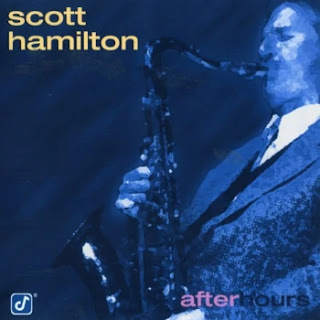
Scott Hamilton • After Hours


Biography:
Scott Hamilton was born in 1954, in Providence, Rhode Island. During his early childhood he heard a lot of jazz through his father’s extensive record collection, and became acquainted with the jazz greats. He tried out several instruments, including drums at about the age of five, piano at six and mouth-organ. He had some clarinet lessons when he was about eight years of age, but that was the only formal music tuition he has ever had. Even at that age he was attracted to the sound of Johnny Hodges, but it was not until he was about sixteen that he started playing the saxophone seriously. From his playing mainly blues on mouth organ, his little band gradually became more of a jazz band.
He moved to New York in 1976 at the age of twenty-two, and through Roy Eldridge, with whom he had played a year previously in Boston, got a six-week gig at Michael’s Pub. Roy also paved the way for him to work with Anita O’Day and Hank Jones. Although it was the tail-end of the of old New York scene, a lot of the greats were still playing and he got to work and learn from people like Eldridge, Illinois Jacquet, Vic Dickenson and Jo Jones. Eldridge was Scott’s champion, but pulled no punches, and could be extremely critical, something for which Scott has always been grateful. In December of the same year John Bunch got Scott his first recording date, for Famous Door, and was also responsible for him joining Benny Goodman. He continued to work with Goodman at different times until the early 1980s.
In 1977 he formed his own quartet, which later became a quintet, with Bunch added to the group. The same year Carl Jefferson heard him, and began recording him for his Concord record label. More than forty albums later he is still recording for them, having made many under his own leadership, several with his regular British quartet of John Pearce, Dave Green and Steve Brown, including his latest, Nocturnes & Serenades. The Quartet plus two guests, Dave Cliff and Mark Nightingale recorded Our Delight! for Alan Barnes’ Woodville label. A new release, Across the Tracks on Concorde is due this May. Along the way he has made albums with Dave McKenna, Jake Hanna, Woody Herman, Tony Bennett, Gerry Mulligan, Flip Phillips, Maxine Sullivan, Buddy Tate, Warren Vache, many with Rosemary Clooney and a number with another of his mentors, Ruby Braff, with whom he played residencies at the Pizza Express Jazz Club, London in the mid-1980s. Over the years Scott has also performed and recorded with such touring bands as the Concord Jazz All Stars, the Concord Super Band and George Wein’s Newport Jazz Festival All Stars.
For some years he was based in London, where he first played in 1978, but now travels the world from Italy. Each year, in addition to two or three residencies with the quartet at the Pizza Express Jazz Club, British jazz club dates and festival work including Brecon, where he is one of the patrons, he regularly tours Germany, the Netherlands, Scandinavia, Japan, Spain and Italy. He returns to America three or four times a year to play at festivals, including in 2007, the New York JVC festival in June and Irvine, California in September, and in February 2008 for three nights at the Lincoln Centre New York.
His playing has best been described by fellow tenor saxophonist and writer, Dave Gelly: “Following a Scott Hamilton solo is like listening to a great conversationalist in full flow. First comes the voice, the inimitable, assured sound of his tenor saxophone, then the informal style and finally the amazing fluency and eloquent command of the jazz language.” Scott was awarded the ‘Ronnie’ for International Jazz Saxophonist of the Year in the 2007 inaugural Ronnie Scott’s Jazz Awards.  It is no wonder that Scott Hamilton is in demand the world over.
(Brian Peerless)
http://www.scotthamiltonsax.com/

///////


Biografía:
Scott Hamilton nació en 1954, en Providence, Rhode Island. Durante su infancia escuchó mucho jazz a través de la extensa colección de discos de su padre, y se familiarizó con los grandes del jazz. Probó varios instrumentos, incluyendo la batería a la edad de cinco años, el piano a los seis años y la armónica. Tomó algunas clases de clarinete cuando tenía unos ocho años, pero fue la única clase de música formal que tuvo. Incluso a esa edad se sintió atraído por el sonido de Johnny Hodges, pero no fue hasta los dieciséis años cuando empezó a tocar el saxofón en serio. De tocar principalmente blues con armónica, su pequeña banda se convirtió gradualmente en una banda de jazz.
Se mudó a Nueva York en 1976 a la edad de veintidós años, y a través de Roy Eldridge, con quien había tocado un año antes en Boston, consiguió un concierto de seis semanas en el Michael's Pub. Roy también le allanó el camino para trabajar con Anita O'Day y Hank Jones. Aunque era el final de la vieja escena neoyorquina, muchos de los grandes seguían tocando y él se puso a trabajar y a aprender de gente como Eldridge, Illinois Jacquet, Vic Dickenson y Jo Jones. Eldridge era el campeón de Scott, pero no se andaba con rodeos y podía ser extremadamente crítico, algo por lo que Scott siempre ha estado agradecido. En diciembre del mismo año John Bunch le consiguió a Scott su primera fecha de grabación, para Famous Door, y también fue responsable de que se uniera a Benny Goodman. Continuó trabajando con Goodman en diferentes momentos hasta principios de los 80.
En 1977 formó su propio cuarteto, que más tarde se convirtió en quinteto, con Bunch añadido al grupo. Ese mismo año Carl Jefferson lo escuchó y comenzó a grabarlo para su sello discográfico Concord. Más de cuarenta álbumes después sigue grabando para ellos, habiendo hecho muchos bajo su propia dirección, varios con su cuarteto británico habitual de John Pearce, Dave Green y Steve Brown, incluyendo su último, Nocturnos y Serenatas. El cuarteto más dos invitados, Dave Cliff y Mark Nightingale grabaron Our Delight! para el sello Woodville de Alan Barnes. Un nuevo lanzamiento, Across the Tracks en el Concorde, está previsto para este mayo. Por el camino ha hecho álbumes con Dave McKenna, Jake Hanna, Woody Herman, Tony Bennett, Gerry Mulligan, Flip Phillips, Maxine Sullivan, Buddy Tate, Warren Vache, muchos con Rosemary Clooney y un número con otra de sus mentoras, Ruby Braff, con quien hizo residencias en el Pizza Express Jazz Club de Londres a mediados de los 80. A lo largo de los años, Scott también ha tocado y grabado con bandas de gira como la Concord Jazz All Stars, la Concord Super Band y la Newport Jazz Festival All Stars de George Wein.
Durante algunos años estuvo basado en Londres, donde tocó por primera vez en 1978, pero ahora viaja por el mundo desde Italia. Cada año, además de dos o tres residencias con el cuarteto en el Pizza Express Jazz Club, fechas de clubes de jazz británicos y trabajos en festivales como el de Brecon, donde es uno de los patrocinadores, realiza giras regulares por Alemania, los Países Bajos, Escandinavia, Japón, España e Italia. Regresa a América tres o cuatro veces al año para tocar en festivales, entre ellos, en 2007, el festival JVC de Nueva York en junio e Irvine, California, en septiembre, y en febrero de 2008 durante tres noches en el Lincoln Centre de Nueva York.
Su forma de tocar ha sido mejor descrita por su compañero saxofonista tenor y escritor, Dave Gelly: "Seguir un solo de Scott Hamilton es como escuchar a un gran conversador a todo volumen. Primero viene la voz, el inimitable y seguro sonido de su saxo tenor, luego el estilo informal y finalmente la asombrosa fluidez y el dominio elocuente del lenguaje del jazz". Scott fue galardonado con el premio 'Ronnie' al Saxofonista Internacional de Jazz del Año en la edición inaugural de los Premios de Jazz Ronnie Scott de 2007.  No es de extrañar que Scott Hamilton sea solicitado en todo el mundo.
(Brian Peerless)
http://www.scotthamiltonsax.com/


www.scotthamiltonsax.com ...


Thursday, August 15, 2024

Lewis Nash Quintet • The Highest Mountain


Biography
by Rose of Sharon Witmer
Although Lewis Nash has played the drums on more than 200 recordings, he has only one CD, recorded in 1989, under his own name. The title says it all: Rhythm Is My Business. Born in 1958 in Phoenix, AZ, Nash was destined to leave his hometown for New York to play with some of the greatest stars of the history of modern jazz.
The talented young drummer played the drums in Phoenix, before moving to New York in 1981. In this jazz mecca, Nash had the incredibly good fortune to join Betty Carter's band when he was just 23 years old, giving him the opportunity to hone his chops with world-class musicians like Benny Green, Stephen Scott, and Don Braden. Carter was known for her insistence on the absolute best from her musicians, and Nash grew as a musician and as a performer under her tutelage. He appears on many of her recordings, including the Grammy Award-winning 1988 CD, Look What I Got.
It was his decade with the Tommy Flanagan Trio for which Nash may be best known. The legendary Flanagan is on record as having preferred to work with the intuitive, always-ready Nash more than any other drummer. Along with Flanagan on piano, and Peter Washington on bass, the trio created some of the most memorable jazz recordings of the 1990s. Sea Changes (1996), Lady Be Good...For Ella 1994, and Live At the Village Vanguard (1998) are just three of the trio's outstanding albums.
Throughout that decade, Nash also performed with a veritable who's who of jazz luminaries, including Sonny Rollins, Clark Terry, Wynton Marsalis, Oscar Peterson, McCoy Tyner, Branford Marsalis, Bud Shank, Scott Hamilton, Jackie McLean, Cyrus Chestnut, and Horace Silver, to name only a few.
In the late '90s, Nash started branching out. He formed his own group, the Lewis Nash Ensemble, comprised of Nash, along with Jimmy Green on saxophone; David Finck on bass; Steve Nelson on vibraphone; and Steve Kroon on percussion. Among the group's many accomplishments is their two year stint with the Jazz at Lincoln Center Program, performing in the New York public school system. Providing inspiration and expertise to students is an important part of Nash's career. In 2001, he became a member of the faculty at the prestigious Juilliard School of Music.


As with any good teacher, Nash continues to learn as well. One such growth experience is his collaboration with David O'Rourke on a project to take traditional Irish music and address it in the jazz idiom. Their Celtic Jazz Collective released a CD in 2001: Celtic Jazz Collective: IsLinn (A Vision). In addition to Nash and O'Rourke, the recording features uilleann pipe master, Paddy Keenan; Regina Carter on violin; Martin Reilly on accordion; Marie Reilly and Fiona Doherty on fiddles; pianist, Fintan O'Neill; Niall Vallely on concertina; along with Peter Washington and Ronan Guilfoyle, both on bass; and Steve Kroon on percussion. The group has taken two diverse musical traditions, and synergized them into something new and exciting. That is just the way things seem to go in the life of Lewis Nash, whose business is rhythm.
https://www.allmusic.com/artist/lewis-nash-mn0000264126/biography

///////

Biografía
por Rosa de Sharon Witmer
Aunque Lewis Nash ha tocado la batería en más de 200 grabaciones, sólo tiene un CD, grabado en 1989, con su propio nombre. El título lo dice todo: Rhythm Is My Business. Nacido en 1958 en Phoenix, AZ, Nash estaba destinado a dejar su ciudad natal para ir a Nueva York a tocar con algunas de las mayores estrellas de la historia del jazz moderno.
El joven y talentoso baterista tocaba la batería en Phoenix, antes de trasladarse a Nueva York en 1981. En esta meca del jazz, Nash tuvo la increíble suerte de unirse a la banda de Betty Carter cuando sólo tenía 23 años, lo que le dio la oportunidad de perfeccionar sus habilidades con músicos de talla mundial como Benny Green, Stephen Scott y Don Braden. Carter era conocida por su insistencia en que sus músicos dieran lo mejor de sí mismos, y Nash creció como músico e intérprete bajo su tutela. Aparece en muchas de sus grabaciones, incluido el CD Look What I Got, ganador de un premio Grammy en 1988.
Fue su década con el Tommy Flanagan Trio por la que Nash puede ser más conocido. El legendario Flanagan ha dejado constancia de que prefería trabajar con el intuitivo y siempre dispuesto Nash más que con cualquier otro batería. Junto con Flanagan al piano y Peter Washington al bajo, el trío creó algunas de las grabaciones de jazz más memorables de la década de 1990. Sea Changes (1996), Lady Be Good...For Ella 1994, y Live At the Village Vanguard (1998) son sólo tres de los destacados álbumes del trío.
A lo largo de esa década, Nash también actuó con un verdadero "quién es quién" de las luminarias del jazz, como Sonny Rollins, Clark Terry, Wynton Marsalis, Oscar Peterson, McCoy Tyner, Branford Marsalis, Bud Shank, Scott Hamilton, Jackie McLean, Cyrus Chestnut y Horace Silver, por nombrar sólo algunos.
A finales de los 90, Nash empezó a diversificarse. Formó su propio grupo, el Lewis Nash Ensemble, compuesto por Nash, junto con Jimmy Green al saxofón, David Finck al bajo, Steve Nelson al vibráfono y Steve Kroon a la percusión. Entre los muchos logros del grupo se encuentra su participación durante dos años en el programa Jazz at Lincoln Center, actuando en el sistema escolar público de Nueva York. Ofrecer inspiración y experiencia a los estudiantes es una parte importante de la carrera de Nash. En 2001, pasó a formar parte del profesorado de la prestigiosa Juilliard School of Music.
Como todo buen profesor, Nash también sigue aprendiendo. Una de esas experiencias de crecimiento es su colaboración con David O'Rourke en un proyecto para tomar la música tradicional irlandesa y abordarla en el lenguaje del jazz. Su Celtic Jazz Collective publicó un CD en 2001: Celtic Jazz Collective: IsLinn (A Vision). Además de Nash y O'Rourke, la grabación cuenta con el maestro de la gaita uilleann, Paddy Keenan; Regina Carter al violín; Martin Reilly al acordeón; Marie Reilly y Fiona Doherty a los violines; el pianista Fintan O'Neill; Niall Vallely a la concertina; junto con Peter Washington y Ronan Guilfoyle, ambos al bajo; y Steve Kroon a la percusión. El grupo ha tomado dos tradiciones musicales diversas y las ha sinergizado en algo nuevo y emocionante. Así es como parecen ir las cosas en la vida de Lewis Nash, cuyo negocio es el ritmo.
https://www.allmusic.com/artist/lewis-nash-mn0000264126/biography

Thursday, August 1, 2024

Cyrus Chestnut • My Father's Hands


The Baltimore-born Cyrus Chestnut is a wonderful pianist, rather like Oscar Peterson in his heyday: one of the rare kind who isn’t forever trying to impress you. He doesn’t need to try. Now in his late 50s, he has been playing since, as a small child, he watched his father’s hands “in a passionate relationship with the piano”. His father, McDonald, who played in Baptist churches and was his first teacher, died last year. This album is dedicated to his memory.

Among Chestnut’s many attractive points is his leaning towards melody. These 10 tracks are full of tunes, some composed by him, some already well known, and some that just turn up in the course of playing. His own pieces, especially Thinking About You and Working Out Just Fine, are really attractive, catchy numbers. Of the standards here, But Beautiful, although short, is exactly what its title suggests. Yesterday, very slow with lots of space, some gentle harmonic changes and a few tinkly phrases suggesting birdsong, is quite magical. This is the pianist’s show, of course, but in Peter Washington and Lewis Nash it has one of the best bass and drums teams anywhere.
https://www.theguardian.com/music/2022/aug/13/cyrus-chestnut-my-fathers-hands-review-like-oscar-peterson-in-his-heyday


Review
by Matt Collar  
With the death of Cyrus Chestnut's 85-year-old father, McDonald Chestnut, in 2021, the pianist lost not only his most passionate supporter but the man who first taught him to play. A self-taught pianist and organist, the elder Chestnut played in church (along with his wife, a choir director). He introduced the younger Chestnut to classical piano, gospel, and traditional spirituals, setting Cyrus on the path to eventually become one of the most accomplished jazz musicians of his generation. With 2022's My Father's Hands, Chestnut pays tribute to his dad, crafting a heartfelt album that touches upon jazz and pop standards, Latin rhythms, and originals. Joining him are two of his longtime associates and esteemed contemporaries, bassist Peter Washington and drummer Lewis Nash. Together, they play with an intuitive warmth and camaraderie. As the album is an homage to his father's memory, one might expect it to be melancholy or sad. However, while there are certainly moments of tearful beauty, as on Chestnut's lyrical rendition of the ballad "But Beautiful," the record is never maudlin and finds him in a lively mood. This is especially true on the opening original "Nippon Soul Connection," a blues swinger in the '60s hard bop tradition. He also dives into Ray Bryant's Latin number "Cubano Chant" and subtly subverts expectations with his bossa nova take on the classic "There Will Never Be Another You." We also get a dusky and introspective reading of the Beatles' "Yesterday." His father's essence is perhaps best captured on "I Must Tell Jesus," a soulful hymn that Chestnut plays solo, infusing the measured gospel melody with warm chordal harmonies that shimmer with joy.
https://www.allmusic.com/album/my-fathers-hands-mw0003734248

///////


Cyrus Chestnut, nacido en Baltimore, es un pianista maravilloso, más bien como Oscar Peterson en su época de esplendor: uno de los pocos que no se esfuerza por impresionar. No necesita intentarlo. A sus 50 años, lleva tocando desde que, de pequeño, observaba las manos de su padre "en una relación apasionada con el piano". Su padre, McDonald, que tocaba en las iglesias baptistas y fue su primer maestro, murió el año pasado. Este álbum está dedicado a su memoria.

Entre los muchos atractivos de Chestnut está su inclinación por la melodía. Estos 10 temas están llenos de melodías, algunas compuestas por él, otras ya conocidas y otras que simplemente aparecen en el transcurso de la interpretación. Sus propias piezas, especialmente Thinking About You y Working Out Just Fine, son números realmente atractivos y pegadizos. De los estándares aquí presentes, But Beautiful, aunque corto, es exactamente lo que sugiere su título. Yesterday, muy lenta, con mucho espacio, algunos cambios armónicos suaves y algunas frases tintineantes que sugieren el canto de los pájaros, es bastante mágica. Este es el espectáculo del pianista, por supuesto, pero en Peter Washington y Lewis Nash tiene uno de los mejores equipos de bajo y batería de cualquier lugar.
https://www.theguardian.com/music/2022/aug/13/cyrus-chestnut-my-fathers-hands-review-like-oscar-peterson-in-his-heyday


Reseña
por Matt Collar  
Con la muerte del padre de Cyrus Chestnut, McDonald Chestnut, de 85 años, en 2021, el pianista perdió no sólo a su más apasionado defensor sino al hombre que le enseñó a tocar por primera vez. Pianista y organista autodidacta, el mayor de los Chestnut tocaba en la iglesia (junto con su mujer, directora del coro). Introdujo al joven Chestnut en el piano clásico, el gospel y los espirituales tradicionales, y puso a Cyrus en el camino para convertirse en uno de los músicos de jazz más consumados de su generación. Con 2022's My Father's Hands, Chestnut rinde homenaje a su padre, elaborando un álbum muy sincero que toca estándares de jazz y pop, ritmos latinos y originales. Se unen a él dos de sus asociados de siempre y estimados contemporáneos, el bajista Peter Washington y el baterista Lewis Nash. Juntos, tocan con una calidez y camaradería intuitivas. Como el álbum es un homenaje a la memoria de su padre, uno podría esperar que fuera melancólico o triste. Sin embargo, aunque hay momentos de belleza lacrimógena, como en la interpretación lírica de Chestnut de la balada "But Beautiful", el disco nunca es sensiblero y se encuentra en un estado de ánimo animado. Esto es especialmente cierto en el original de apertura "Nippon Soul Connection", un blues swinger en la tradición del hard bop de los 60. También se sumerge en el número latino de Ray Bryant "Cubano Chant" y subvierte sutilmente las expectativas con su versión bossa nova del clásico "There Will Never Be Another You". También tenemos una lectura oscura e introspectiva de "Yesterday" de los Beatles. La esencia de su padre es quizás la mejor capturada en "I Must Tell Jesus", un himno conmovedor que Chestnut interpreta en solitario, infundiendo la mesurada melodía gospel con cálidas armonías de acordes que brillan de alegría.
https://www.allmusic.com/album/my-fathers-hands-mw0003734248


www.cyruschestnut.net ...


Monday, July 29, 2024

Kenny Barron • A Table for Two


Biography:
Kenny Barron's unmatched ability to mesmerize audiences with his elegant playing, sensitive melodies and infectious rhythms is what inspired “The Los Angeles Times” to name him “one of the top jazz pianists in the world” and “Jazz Weekly” to call him “The most lyrical piano player of our time.”

Philadelphia is the birthplace of many great musicians, including one of the undisputed masters of the jazz piano: Kenny Barron. Kenny was born in 1943 and while a teenager, started playing professionally with Mel Melvin's orchestra. This local band also featured Barron's brother Bill, the late tenor saxophonist. At age 19, Kenny moved to New York City and was hired by James Moody after the tenor saxophonist heard him play at the Five Spot.

He joined Dizzy Gillespie's band in 1962, where he developed an appreciation for Latin and Caribbean rhythms. After five years with Dizzy, Barron played with Freddie Hubbard, Stanley Turrentine, Milt Jackson, and Buddy Rich. In 1971 he joined Yusef Lateef's band. It is Lateef who Kenny credits as a key influence in his art for improvisation. In 1973 Kenny joined the faculty at Rutgers University as professor of music. He held this tenure until 2000, mentoring many of today's young talents including David Sanchez, Terence Blanchard, and Regina Bell. In 1974 he recorded his first album as a leader for the Muse label, entitled “Sunset To Dawn.” This was to be the first of over 40 recordings (and still counting!) as a leader.

Throughout the 1980's, Kenny collaborated with the great tenor saxophonist Stan Getz, touring with his quartet and recording several albums, one of which was nominated for a Grammy (”People Time”) Also during the 80's, he co-founded the quartet “Sphere,” along with Buster Williams, Ben Riley and Charlie Rouse. This band focused on the music of Thelonious Monk and original compositions inspired by him. Sphere recorded several outstanding projects for the Polygram label, among them “Four For All” and “Bird Songs.” After the death of Charlie Rouse, the band took a 15-year hiatus and reunited, replacing Rouse with alto saxophonist Gary Bartz. This reformation made its debut recording for Verve Records in 1998.

Kenny Barron's own recordings for Verve have earned him five Grammy nominations, most recently for “Spirit Song” in 2000. Prior Grammy nominations went to “Sambao,” “Night and the City” (a duet recording with Charlie Haden) and “Wanton Spirit” (a trio recording with Roy Haynes and Haden.) It is important to note that these three recordings each received double-Grammy nominations (for album AND solo performance.) Barron consistently wins the jazz critics and readers polls, including Downbeat, JazzTimes and Jazziz magazines. He has been named Best Pianist by the Jazz Journalists Association every year since 1997 and was as a finalist in the prestigious 2001 Jazz Par International Jazz Award.

Throughout his career, Kenny Barron has been the pianist of choice for some of jazz's greatest musicians. Now at age 58, whether he is playing solo, with his Trio or his newest ensemble, “Brazilia” (a quintet featuring some of Brazil's greatest musicians), Kenny Barron is now recognized the world over as a master of performance and composition.
https://musicians.allaboutjazz.com/kennybarron

///////


Biografía:
La inigualable habilidad de Kenny Barron para cautivar al público con su elegante forma de tocar, sus sensibles melodías y sus contagiosos ritmos es lo que inspiró al "Los Angeles Times" a nombrarlo "uno de los mejores pianistas de jazz del mundo" y al "Jazz Weekly" a llamarlo "El pianista más lírico de nuestro tiempo".

Filadelfia es la cuna de muchos grandes músicos, incluyendo uno de los maestros indiscutibles del piano de jazz: Kenny Barron. Kenny nació en 1943 y durante su adolescencia comenzó a tocar profesionalmente con la orquesta de Mel Melvin. Esta banda local también contaba con la participación del hermano de Barron, Bill, el fallecido saxofonista tenor. A la edad de 19 años, Kenny se mudó a la ciudad de Nueva York y fue contratado por James Moody después de que el saxofonista tenor lo escuchó tocar en el Five Spot.

Se unió a la banda de Dizzy Gillespie en 1962, donde desarrolló una apreciación por los ritmos latinos y caribeños. Después de cinco años con Dizzy, Barron tocó con Freddie Hubbard, Stanley Turrentine, Milt Jackson y Buddy Rich. En 1971 se unió a la banda de Yusef Lateef. Es a Lateef a quien Kenny atribuye una influencia clave en su arte para la improvisación. En 1973 Kenny se unió a la facultad de la Universidad de Rutgers como profesor de música. Ocupó este puesto hasta el año 2000, siendo mentor de muchos de los jóvenes talentos de hoy en día, incluyendo a David Sánchez, Terence Blanchard y Regina Bell. En 1974 grabó su primer álbum como líder para el sello Muse, titulado "Sunset To Dawn". Esta iba a ser la primera de más de 40 grabaciones (¡y todavía siguen contando!) como líder.

A lo largo de los años 80, Kenny colaboró con el gran saxofonista tenor Stan Getz, haciendo giras con su cuarteto y grabando varios discos, uno de los cuales fue nominado a un Grammy ("People Time") También durante los años 80, co-fundó el cuarteto "Sphere", junto con Buster Williams, Ben Riley y Charlie Rouse. Esta banda se centró en la música de Thelonious Monk y en composiciones originales inspiradas en él. Sphere grabó varios proyectos destacados para el sello Polygram, entre ellos "Four For All" y "Bird Songs". Después de la muerte de Charlie Rouse, la banda se tomó un paréntesis de 15 años y se reunió, reemplazando a Rouse con el saxofonista alto Gary Bartz. Esta reforma hizo su debut grabando para Verve Records en 1998.

Las propias grabaciones de Kenny Barron para Verve le han valido cinco nominaciones al Grammy, la más reciente por "Spirit Song" en el año 2000. Las nominaciones previas al Grammy fueron para "Sambao", "Night and the City" (una grabación a dúo con Charlie Haden) y "Wanton Spirit" (una grabación a trío con Roy Haynes y Haden.) Es importante notar que estas tres grabaciones recibieron cada una nominaciones a los Grammy dobles (para el álbum Y la actuación en solitario.) Barron gana consistentemente las encuestas de los críticos y lectores de jazz, incluyendo las revistas Downbeat, JazzTimes y Jazziz. Ha sido nombrado Mejor Pianista por la Asociación de Periodistas de Jazz cada año desde 1997 y fue finalista del prestigioso premio Jazz Par International Jazz Award 2001.

A lo largo de su carrera, Kenny Barron ha sido el pianista elegido por algunos de los más grandes músicos del jazz. Ahora a la edad de 58 años, ya sea que toque solo, con su Trío o con su más reciente conjunto, "Brazilia" (un quinteto con algunos de los más grandes músicos de Brasil), Kenny Barron es ahora reconocido en todo el mundo como un maestro de la interpretación y la composición.
https://musicians.allaboutjazz.com/kennybarron


kennybarron.com ...


Wednesday, June 5, 2024

Pat Martino • Think Tank


It's been nearly twenty years since Pat Martino's comeback from a near-fatal brain aneurysm. In that time he's re-established himself as one of the jazz world's premier guitarists, a technically advanced post bop player who combines forward-thinking musical ideas with native Philly grit; think Pat Metheny with more soul.

Think Tank , as the name suggests, finds Martino at his most cerebral, which has its pros and cons. The title track, for example, is a blues of sorts built on an equation based on the letters of John Coltrane's name, which may sound like an exercise for a composition class, but manages to hold together pretty well organically. Coltrane, a Philadelphia mentor of Martino's, is a recurring reference on the album, both indirectly in Martino's intensely spiritual and intellectual approach to the music, and directly on the funk-based original "Phineas Trane as well as on an extended romp through Coltrane's "Africa.

Martino is backed by a lineup that includes heavyweights on every instrument: Joe Lovano on tenor sax, Gonzalo Rubalcaba on piano, Christian McBride on bass and Lewis Nash on drums. And while many all star lineups fail to live up to their promise, this one mostly comes through. All the musicians have moments of magic, especially Rubalcaba, the Cuban-born virtuoso who seems to have outgrown his youthful habit of simply playing as many notes as he can as quickly as he can. He shows welcome restraint here, especially on the ballad "Sun on My Hands, where he and Martino play off each other with beauty and subtlety. Martino himself is much more subdued than in the past, offering harmonically complex solos that challenge listeners but retain enough recognizable blues and bop roots to be accessible.
BY JOEL ROBERTS
January 21, 2004
https://www.allaboutjazz.com/think-tank-pat-martino-blue-note-records-review-by-joel-roberts

///////


Han pasado casi veinte años desde que Pat Martino se recuperó de un aneurisma cerebral casi mortal. En ese tiempo se ha restablecido como uno de los principales guitarristas del mundo del jazz, un intérprete de post bop técnicamente avanzado que combina ideas musicales de vanguardia con la garra nativa de Filadelfia; piensa en Pat Metheny con más alma.

Think Tank , como su nombre indica, encuentra a Martino en su versión más cerebral, lo que tiene sus pros y sus contras. El tema que da título al disco, por ejemplo, es una especie de blues construido a partir de una ecuación basada en las letras del nombre de John Coltrane, que puede sonar como un ejercicio para una clase de composición, pero que consigue mantenerse bastante bien de forma orgánica. Coltrane, mentor de Martino en Filadelfia, es una referencia recurrente en el álbum, tanto de forma indirecta en el enfoque intensamente espiritual e intelectual de Martino hacia la música, como directamente en el original basado en el funk "Phineas Trane", así como en un extenso paseo por "África" de Coltrane.

Martino está respaldado por una formación que incluye pesos pesados en todos los instrumentos: Joe Lovano al saxo tenor, Gonzalo Rubalcaba al piano, Christian McBride al bajo y Lewis Nash a la batería. Y mientras que muchas alineaciones de estrellas no logran estar a la altura de lo que prometen, ésta lo consigue en su mayor parte. Todos los músicos tienen momentos de magia, especialmente Rubalcaba, el virtuoso de origen cubano que parece haber superado su hábito juvenil de tocar simplemente todas las notas que puede tan rápido como puede. Aquí muestra una grata moderación, especialmente en la balada "Sun on My Hands", donde él y Martino juegan el uno con el otro con belleza y sutileza. El propio Martino es mucho más moderado que en el pasado, ofreciendo solos armónicamente complejos que desafían a los oyentes, pero conservan suficientes raíces de blues y bop reconocibles para ser accesibles.
POR JOEL ROBERTS
21 de enero de 2004
https://www.allaboutjazz.com/think-tank-pat-martino-blue-note-records-review-by-joel-roberts


http://www.patmartino.com/