Showing posts with label Tony Williams. Show all posts

Friday, March 27, 2026

Miles Davis • Sorcerer


Review from AllMusic (by Stephen Thomas Erlewine):
Sorcerer, the third album by the second Miles Davis Quintet, is in a sense a transitional album, a quiet, subdued affair that rarely blows hot, choosing to explore cerebral tonal colorings. Even when the tempo picks up, as it does on the title track, there's little of the dense, manic energy on Miles Smiles -- this is about subtle shadings, even when the compositions are as memorable as Tony Williams' "Pee Wee" or Herbie Hancock's "Sorcerer." As such, it's a little elusive, since it represents the deepening of the band's music as they choose to explore different territory. It's such a layered, intriguing work.
https://www.allmusic.com/album/sorcerer-mw0000197402

///////

Reseña de AllMusic (por Stephen Thomas Erlewine):
Sorcerer, el tercer álbum del segundo Quinteto de Miles Davis, es en cierto sentido un álbum de transición, un asunto tranquilo y moderado que rara vez se calienta, optando por explorar coloridos tonales cerebrales. Incluso cuando el tempo se acelera, como en la pista del título, hay poca de la energía densa y maníaca de Miles Smiles -- esto se trata de matices sutiles, incluso cuando las composiciones son tan memorables como "Pee Wee" de Tony Williams o "Sorcerer" de Herbie Hancock. Como tal, es un poco elusivo, ya que representa la profundización de la música de la banda mientras eligen explorar territorio diferente. Es un trabajo en capas e intrigante.
https://www.allmusic.com/album/sorcerer-mw0000197402


Friday, February 20, 2026

The Tony Williams Lifetime • Ego


Review
by Stewart Mason  
Easily the weirdest record the Tony Williams Lifetime ever released, 1971's Ego is an experimental blend of post-hard bop jazz and the spacier end of psychedelic rock. Larry Young's wafting organ parts and Ted Dunbar's rockist guitar (as opposed to the more traditional jazz bent of the guy he replaced, John McLaughin) combine to make parts of the album sound like Atom Heart Mother-era Pink Floyd, particularly on "There Comes a Time" and "Lonesome Wells (Gwendy Trio)." Unfortunately, both of those tracks are bogged down by Williams' own earnest and not terribly inspired verses. The best tracks are those that dispense with the lyrical claptrap -- the liner notes are also a terribly dated hoot -- and get down to the creation of some roiling atmospheres and powerful group improvisation. In that regard, things really pick up at the end, with the ghostly "Mom and Dad" and the cacophonous closer "Urchins of Shermese," on which Williams splits the narcoleptic mood of the introduction with some of his most fractured and arrhythmic fills ever, while simultaneously maintaining a groove that's typically snaky and propulsive. Drum geeks will particularly adore the two brief solo pieces, "Clap City" and "Some Hip Drum Shit," which are both technically impressive and short enough not to get dull. Solid jazz-rock, from the days before fusion got painfully dull.
https://www.allmusic.com/album/ego-mw0000048154

///////


Revisión
por Stewart Mason  
Fácilmente el disco más extraño que Tony Williams Lifetime haya lanzado, Ego de 1971 es una mezcla experimental de jazz bop post-duro y el extremo más espacial del rock psicodélico. Las partes de órgano flotantes de Larry Young y la guitarra rockera de Ted Dunbar (a diferencia de la inclinación jazzística más tradicional del tipo al que reemplazó, John McLaughin) se combinan para hacer que partes del álbum suenen como Pink Floyd de la era Atom Heart Mother, particularmente en "There Comes a Time" y " Lonesome Wells (Gwendy Trio)."Desafortunadamente, ambas pistas están empantanadas por los versos serios y no terriblemente inspirados de Williams. Las mejores pistas son aquellas que prescinden de la trampa lírica (las notas del trazador de líneas también son un grito terriblemente anticuado ) y se reducen a la creación de algunas atmósferas turbulentas y una poderosa improvisación grupal. En ese sentido, las cosas realmente mejoran al final, con el fantasmal "Mamá y papá" y el cacofónico cierre "Erizos de Shermese", en el que Williams divide el estado de ánimo narcoléptico de la introducción con algunos de sus rellenos más fracturados y arrítmicos de la historia, al tiempo que mantiene un ritmo que es típicamente serpenteante y propulsivo. Los geeks de la batería adorarán especialmente las dos breves piezas en solitario, "Clap City" y "Some Hip Drum Shit", que son técnicamente impresionantes y lo suficientemente cortas como para no aburrirse. Sólido jazz-rock, de los días previos a que la fusión se volviera dolorosamente aburrida.
https://www.allmusic.com/album/ego-mw0000048154


Monday, November 3, 2025

VA • Blue Note Meets UNIQLO


Horace Parlan, Joe Henderson, Dexter Gordon, Jackie McLean, Sonny Clark, Lou Donaldson, Tony Williams, Lee Morgan, Art Blakey.


www.bluenote.com ...


Wednesday, February 19, 2025

Miles Davis • My Funny Valentine


Review
by Scott Yanow
Miles Davis' concert of February 12, 1964, was divided into two LPs, with all of the ballads put on My Funny Valentine. These five lengthy tracks (specifically, "All of You," "Stella by Starlight," "All Blues," "I Thought About You," and the title cut) put the emphasis on the lyricism of Davis, along with some strong statements from tenor saxophonist George Coleman and freer moments from the young rhythm section of pianist Herbie Hancock, bassist Ron Carter, and drummer Tony Williams. This hour-long LP complements the up-tempo romps of Four & More.
https://www.allmusic.com/album/my-funny-valentine-mw0000023241/user-reviews

///////


Reseña
por Scott Yanow
El concierto de Miles Davis del 12 de febrero de 1964 se dividió en dos LPs, y todas las baladas se incluyeron en My Funny Valentine. Estos cinco largos temas (en concreto, "All of You", "Stella by Starlight", "All Blues", "I Thought About You" y el corte que da título al disco) ponen el énfasis en el lirismo de Davis, junto con algunas declaraciones contundentes del saxofonista tenor George Coleman y momentos más libres de la joven sección rítmica formada por el pianista Herbie Hancock, el bajista Ron Carter y el batería Tony Williams. Este LP, de una hora de duración, complementa el ritmo acelerado de Four & More.
https://www.allmusic.com/album/my-funny-valentine-mw0000023241/user-reviews


www.milesdavis.com ...


Saturday, February 15, 2025

Herbie Hancock • My Point Of View


Review
by Stephen Thomas Erlewine  
Takin' Off was an impressive debut effort from Herbie Hancock, and his second record, My Point of View, proved that it was no fluke. Hancock took two risks with the album -- his five original compositions covered more diverse stylistic ground than his debut, and he assembled a large septet for the sessions; the band features such stellar musicians as trumpeter Donald Byrd, tenor saxophonist Hank Mobley, drummer Tony Williams, guitarist Grant Green, bassist Chuck Israels, and trombonist Grachan Moncur III. It's a rare occasion that all seven musicians appear on the same track, which speaks well for the pianist's arranging capabilities. Hancock knows how to get the best out of his songs and musicians, which is one of the reasons why My Point of View is a captivating listen. The other is the sheer musicality of the record. Hard bop remains the foundation for Hancock's music, but he explores its limitations, finding its soulful side (the successful "Watermelon Man" rewrite "Blind Man, Blind Man"), its probing, adventurous leanings (the edgy "King Cobra"), and its ballad side. "The Pleasure Is Mine" is a lovely, simple ballad, while "A Tribute to Someone" takes the form to more challenging territory -- it's lyrical, but it takes chances. The closer "And What if I Don't" finds the band working a relaxed, bluesy groove that gives them opportunities to spin out rich, tasteful solos. It's a little more relaxed than Takin' Off, but in its own way My Point of View is nearly as stunning.
https://www.allmusic.com/album/my-point-of-view-mw0000247492

///////

Reseña
por Stephen Thomas Erlewine  
Takin' Off fue un impresionante debut de Herbie Hancock, y su segundo disco, My Point of View, demostró que no fue casualidad. Hancock asumió dos riesgos con el álbum: sus cinco composiciones originales cubrían un terreno estilístico más diverso que en su debut, y reunió un gran septeto para las sesiones; la banda cuenta con músicos estelares como el trompetista Donald Byrd, el saxofonista tenor Hank Mobley, el batería Tony Williams, el guitarrista Grant Green, el bajista Chuck Israels y el trombonista Grachan Moncur III. Es raro que los siete músicos aparezcan en el mismo tema, lo que habla bien a las claras de la capacidad de arreglo del pianista. Hancock sabe cómo sacar lo mejor de sus canciones y músicos, lo cual es una de las razones por las que My Point of View es una escucha cautivadora. La otra es la pura musicalidad del disco. El hard bop sigue siendo la base de la música de Hancock, pero éste explora sus limitaciones, encontrando su lado más conmovedor (la exitosa reescritura de "Watermelon Man", "Blind Man, Blind Man"), sus inclinaciones indagadoras y aventureras (la atrevida "King Cobra") y su lado de balada. "The Pleasure Is Mine" es una balada encantadora y sencilla, mientras que "A Tribute to Someone" lleva la forma a un territorio más desafiante: es lírica, pero se arriesga. El final, "And What if I Don't", encuentra a la banda trabajando en un ritmo relajado y bluesero que les da la oportunidad de hacer solos ricos y de buen gusto. Es un poco más relajado que Takin' Off, pero a su manera My Point of View es casi igual de asombroso.
https://www.allmusic.com/album/my-point-of-view-mw0000247492


www.herbiehancock.com ...


Tuesday, February 11, 2025

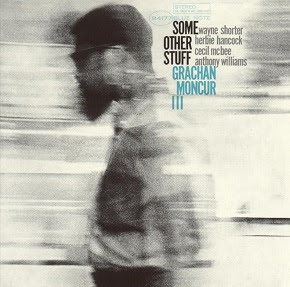
Grachan Moncur III • Some Other Stuff


Review
by Scott Yanow
Grachan Moncur III was one of the top trombonists of the jazz avant-garde in the 1960s although he had only a few chances to lead his own record sessions. This 1964 set (which has been reissued on CD) was one of his finest, a quintet outing with bassist Cecil McBee, two of the members of the Miles Davis Quintet (pianist Herbie Hancock and drummer Tony Williams), and tenor saxophonist Wayne Shorter just a brief time before he joined Miles. The group performs four of Moncur's challenging originals, including "Nomadic" (which is largely a drum solo) and "The Twins," which is built off of one chord. None of the compositions caught on but the strong and very individual improvising of the young musicians is enough of a reason to acquire the advanced music.
https://www.allmusic.com/album/some-other-stuff-mw0000628322


Biography
by Matt Collar
A trailblazing trombonist and composer, Grachan Moncur III was a bold improviser whose searing, harmonically explosive style (rooted in blues and bebop but reaching far beyond those traditions) helped to define the sound of edgy free jazz and post-bop. Moncur rose to prominence in the 1960s with his two landmark Blue Note sessions, 1963's Evolution and 1964's Some Other Stuff. The trombonist had already garnered attention playing on saxophonist Jackie McLean's classic Destination Out! and would go on to record with adventurous avant-garde improvisors like Archie Shepp, Sunny Murray, Beaver Harris, and others. While he only released a handful of his own albums through the '70s and 80s, he remained a vital presence, teaching and working with luminaries like Frank Lowe and Big John Patton. He re-emerged with 2004's Exploration, a collaboration with arranger Mark Masters, featuring stars like Tim Hagans and Billy Harper. His final album, 2007's Inner Cry Blues, also found him just as inspired and boundary-pushing as ever.

Born June 3, 1937 in New York City, Moncur grew up in Newark, New Jersey the son of bassist Grachan Moncur II. The young Moncur initially started out on the cello at age nine before switching to trombone at age 11. As a teenager, he attended the private Laurinburg Institute in North Carolina, where trumpeter Dizzy Gillespie had studied. It was during this period that he started sitting in at local clubs and made lasting connections with players like Art Blakey and Jackie McLean. After high school, he toured with Ray Charles and Sonny Rollins and was a member of Art Farmer and Benny Golson's Jazztet. It was with the Jazztet that he made his recorded debut, appearing on 1962's Another Git Together.

In 1963, he entered the studio with Jackie McLean, appearing on two of the saxophonist's landmark Blue Note sessions, Destination Out! and One Step Beyond, both also featuring vibraphonist Bobby Hutcherson. As a leader, Moncur made his solo debut for Blue Note with 1963's Evolution, itself a landmark of the burgeoning post-bop avant-garde movement. It again found him working with McLean, as well as trumpeter Lee Morgan. He returned the following year with another vibrantly exploratory album, Some Other Stuff, this time featuring Herbie Hancock and Wayne Shorter. These albums captured the sociopolitical Zeitgeist of the era, earning Moncur a spot on poet and activist Amiri Baraka's 1965 concert New Black Music, later released as The New Wave in Jazz and also featuring artists like Albert Ayler, Archie Shepp, and John Coltrane.

Moncur soon joined Shepp's ensemble and recorded on albums by avant-garde artists like Roswell Rudd and Beaver Harris, the latter of whom he joined in the cooperative group 360 Degree Music Experience. He spent extended periods in Paris in the late '60s, where he recorded two albums for the BYG Actuel label, New Africa and Aco dei de Madrugada (One Morning I Waked Up Very Early). In 1974, he was commissioned by the Jazz Composer's Orchestra to write a jazz symphony for full orchestra and soloists that he released that same year as Echoes of Prayer. A sixth album, Shadows, arrived in 1977 (as a Japan-only release) and found Moncur leading a group with Marion Brown, Reggie Workman, Joe Chambers, Dave Burrell, Roland Prince, and Andy Bey.

He remained active into the '80s, playing on Big John Patton's 1983 album Soul Connection, and appeared on Frank Lowe's 1984 album Decision In Paradise with trumpeter Don Cherry, pianist Geri Allen, bassist Charnett Moffett, and drummer Charles Moffett. There were also recordings with vocalist Cassandra Wilson, the Paris Reunion Band, and William Parker. However, increasing health problems and copyright disputes limited his own output, and he concentrated more on teaching.

In 2004, he re-emerged with Exploration on Capri Records, featuring his compositions arranged by Mark Masters for an octet that included Tim Hagans, Billy Harper, Gary Bartz, Andrew Cyrille, and others. Two years later, he delivered Inner Cry Blues, featuring a Bay Area-based group with trumpeter Erik Jekabson, tenor saxophonist Mitch Marcus, bassist Lukas Vesely, and drummer Sameer Gupta. Following a lengthy illness, Moncur died on June 3, 2022 at his home in Newark, New Jersey from cardiac arrest. It was his 85th birthday.
https://www.allmusic.com/artist/grachan-moncur-iii-mn0000803589/biography

///////


Reseña
por Scott Yanow
Grachan Moncur III fue uno de los mejores trombonistas de la vanguardia jazzística de los años sesenta, aunque sólo tuvo unas pocas oportunidades de dirigir sus propias sesiones discográficas. Esta grabación de 1964 (que se ha reeditado en CD) fue una de sus mejores, un quinteto con el bajista Cecil McBee, dos de los miembros del Miles Davis Quintet (el pianista Herbie Hancock y el batería Tony Williams), y el saxofonista tenor Wayne Shorter poco antes de unirse a Miles. El grupo interpreta cuatro de los desafiantes originales de Moncur, entre ellos "Nomadic" (que es en gran parte un solo de batería) y "The Twins", que se construye a partir de un acorde. Ninguna de las composiciones tuvo éxito, pero la fuerte e individual improvisación de los jóvenes músicos es razón suficiente para adquirir la música avanzada.
https://www.allmusic.com/album/some-other-stuff-mw0000628322


Biografía
por Matt Collar
Grachan Moncur III, trombonista y compositor pionero, fue un audaz improvisador cuyo estilo abrasador y armónicamente explosivo (enraizado en el blues y el bebop, pero que iba mucho más allá de esas tradiciones) ayudó a definir el sonido del free jazz y el post-bop. Moncur saltó a la fama en la década de 1960 con sus dos sesiones emblemáticas para Blue Note, Evolution (1963) y Some Other Stuff (1964). El trombonista ya había llamado la atención tocando en el clásico Destination Out! del saxofonista Jackie McLean y grabaría con aventureros improvisadores de vanguardia como Archie Shepp, Sunny Murray, Beaver Harris y otros. Aunque sólo publicó un puñado de sus propios álbumes en los años 70 y 80, siguió siendo una presencia vital, enseñando y trabajando con luminarias como Frank Lowe y Big John Patton. Reapareció con Exploration, de 2004, una colaboración con el arreglista Mark Masters en la que participaron estrellas como Tim Hagans y Billy Harper. Su último álbum, Inner Cry Blues, de 2007, también lo encontró tan inspirado y transgresor como siempre.

Nacido el 3 de junio de 1937 en Nueva York, Moncur creció en Newark, Nueva Jersey, hijo del bajista Grachan Moncur II. El joven Moncur empezó a tocar el violonchelo a los nueve años, antes de pasarse al trombón a los once. De adolescente, asistió al instituto privado Laurinburg de Carolina del Norte, donde había estudiado el trompetista Dizzy Gillespie. Fue durante este periodo cuando empezó a tocar en clubes locales y estableció contactos duraderos con músicos como Art Blakey y Jackie McLean. Después del instituto, hizo giras con Ray Charles y Sonny Rollins y formó parte del Jazztet de Art Farmer y Benny Golson. Fue con el Jazztet con el que hizo su debut discográfico, apareciendo en 1962 en Another Git Together.

En 1963, entró en el estudio con Jackie McLean, apareciendo en dos de las sesiones emblemáticas del saxofonista para Blue Note, Destination Out! y One Step Beyond, ambas también con el vibrafonista Bobby Hutcherson. Como líder, Moncur debutó en solitario para Blue Note con Evolution, de 1963, un hito del floreciente movimiento vanguardista post-bop. Volvió a trabajar con McLean y con el trompetista Lee Morgan. Volvió al año siguiente con otro álbum vibrantemente exploratorio, Some Other Stuff, esta vez con Herbie Hancock y Wayne Shorter. Estos álbumes captaban el Zeitgeist sociopolítico de la época, lo que le valió a Moncur un puesto en el concierto New Black Music de 1965 del poeta y activista Amiri Baraka, publicado posteriormente como The New Wave in Jazz y en el que también participaron artistas como Albert Ayler, Archie Shepp y John Coltrane.

Moncur pronto se unió al conjunto de Shepp y grabó en álbumes de artistas vanguardistas como Roswell Rudd y Beaver Harris, a este último se unió en el grupo cooperativo 360 Degree Music Experience. Pasó largas temporadas en París a finales de los 60, donde grabó dos álbumes para el sello BYG Actuel, New Africa y Aco dei de Madrugada (Una mañana me desperté muy temprano). En 1974, recibió el encargo de la Jazz Composer's Orchestra de escribir una sinfonía de jazz para orquesta completa y solistas que publicó ese mismo año con el título Echoes of Prayer. Un sexto álbum, Shadows, llegó en 1977 (sólo en Japón) y en él Moncur lideraba un grupo con Marion Brown, Reggie Workman, Joe Chambers, Dave Burrell, Roland Prince y Andy Bey.

Permaneció activo hasta los años 80, tocando en el álbum Soul Connection de Big John Patton de 1983, y apareció en el álbum Decision In Paradise de Frank Lowe de 1984 con el trompetista Don Cherry, la pianista Geri Allen, el bajista Charnett Moffett y el batería Charles Moffett. También realizó grabaciones con la vocalista Cassandra Wilson, la Paris Reunion Band y William Parker. Sin embargo, los crecientes problemas de salud y las disputas por los derechos de autor limitaron su propia producción, y se concentró más en la enseñanza.

En 2004, reapareció con Exploration en Capri Records, con composiciones suyas arregladas por Mark Masters para un octeto que incluía a Tim Hagans, Billy Harper, Gary Bartz, Andrew Cyrille y otros. Dos años más tarde, publicó Inner Cry Blues, con un grupo de la Bay Area formado por el trompetista Erik Jekabson, el saxofonista tenor Mitch Marcus, el bajista Lukas Vesely y el batería Sameer Gupta. Tras una larga enfermedad, Moncur falleció el 3 de junio de 2022 en su casa de Newark, Nueva Jersey, de un paro cardíaco. Cumplía 85 años.
https://www.allmusic.com/artist/grachan-moncur-iii-mn0000803589/biography


Friday, February 7, 2025

Chet Baker-Wolfgang Lackerschmid • Artists Favor


www.chetbaker.net ...
www.lackerschmid.de ...


Tony Williams • Life Time


Review
by Scott Yanow
Drummer Tony Williams' first recording as a leader (made when he was 18 and still billed as Anthony Williams) gave him an opportunity to utilize an advanced group of musicians: tenor saxophonist Sam Rivers, vibraphonist Bobby Hutcherson, pianist Herbie Hancock, and both Richard Davis and Gary Peacock on bass. Williams wrote all four of the pieces and has a different combination of players on each song. The freely improvised "Memory" features Hutcherson, Hancock, and Williams in some colorful and at times spacy interplay; "Barb's Song to the Wizard" is a Hancock-Ron Carter duet; "Tomorrow Afternoon" has Rivers, Peacock and Williams in a trio; and all of the musicians (except Hutcherson) are on the sidelong "2 Pieces of One." The unpredictable music holds one's interest; a very strong debut for the masterful drummer.
https://www.allmusic.com/album/life-time-mw0000655098

///////


Reseña
por Scott Yanow
La primera grabación como líder del baterista Tony Williams (realizada cuando tenía 18 años y aún figuraba como Anthony Williams) le dio la oportunidad de utilizar un avanzado grupo de músicos: el saxofonista tenor Sam Rivers, el vibrafonista Bobby Hutcherson, el pianista Herbie Hancock, y tanto Richard Davis como Gary Peacock al bajo. Williams escribió las cuatro piezas y cuenta con una combinación diferente de intérpretes en cada canción. La improvisada "Memory" presenta a Hutcherson, Hancock y Williams en una colorida y a veces picante interacción; "Barb's Song to the Wizard" es un dúo Hancock-Ron Carter; "Tomorrow Afternoon" tiene a Rivers, Peacock y Williams en un trío; y todos los músicos (excepto Hutcherson) están en la lateral "2 Pieces of One". La imprevisible música mantiene el interés; un debut muy sólido para el magistral batería.
https://www.allmusic.com/album/life-time-mw0000655098


Thursday, February 6, 2025

Miles Davis • Seven Steps To Heaven


Review
by Rovi Staff  
Seven Steps to Heaven finds Miles Davis standing yet again on the fault line between stylistic epochs. In early 1963, pianist Wynton Kelly, bassist Paul Chambers, and drummer Jimmy Cobb left to form their own trio, and Davis was forced to form a new band, which included Memphis tenor player George Coleman and bassist Ron Carter. When Davis next entered the studio in Hollywood, he added local drummer Frank Butler and British studio ace Victor Feldman, who ultimately decided not to go on the road with Davis. It's easy to see why Davis liked Feldman, who contributed the dancing title tune and "Joshua" to the session. On three mellifluous standards -- particularly a cerebral "Basin Street Blues" and a broken-hearted "I Fall in Love Too Easily" -- the pianist plays with an elegant, refined touch, and the kind of rarefied voicings that suggest Ahmad Jamal. Davis responds with some of his most introspective, romantic ballad playing. When Davis returned to New York he finally succeeded in spiriting away a brilliantly gifted 17-year-old drummer from Jackie McLean: Tony Williams. On the title tune you can already hear the difference, as his crisp, driving cymbal beat and jittery, aggressive syncopations propel Davis into the upper reaches of his horn. On "So Near, So Far" the drummer combines with Carter and new pianist Herbie Hancock to expand on a light Afro-Cuban beat with a series of telepathic changes in tempo, texture, and dynamics. Meanwhile, Feldman's "Joshua" (with its overtones of "So What" and "All Blues") portends the kind of expressive variations on the basic 4/4 pulse that would become the band's trademark, as Davis and Coleman ascend into bebop heaven.
https://www.allmusic.com/album/seven-steps-to-heaven-mw0000188023

///////


Reseña
por Rovi Staff  
Seven Steps to Heaven encuentra a Miles Davis de nuevo en la línea divisoria entre épocas estilísticas. A principios de 1963, el pianista Wynton Kelly, el bajista Paul Chambers y el batería Jimmy Cobb se marcharon para formar su propio trío, y Davis se vio obligado a formar una nueva banda, que incluía al tenor de Memphis George Coleman y al bajista Ron Carter. Cuando Davis volvió a entrar en el estudio de Hollywood, añadió al batería local Frank Butler y al as de los estudios británico Victor Feldman, que finalmente decidió no salir de gira con Davis. Es fácil ver por qué a Davis le gustaba Feldman, que contribuyó a la sesión con la bailable melodía del título y con "Joshua". En tres estándares melifluos, en particular un cerebral "Basin Street Blues" y un desgarrado "I Fall in Love Too Easily", el pianista toca con un toque elegante y refinado, y el tipo de voicings enrarecidos que sugieren a Ahmad Jamal. Davis responde con algunas de sus baladas más introspectivas y románticas. Cuando Davis regresó a Nueva York, consiguió finalmente arrebatarle a Jackie McLean un batería de 17 años brillantemente dotado: Tony Williams. En el tema que da título al disco ya se nota la diferencia, ya que su nítido y enérgico ritmo de platillos y sus nerviosas y agresivas síncopas impulsan a Davis hacia lo más alto de su trompa. En "So Near, So Far", el batería se combina con Carter y el nuevo pianista Herbie Hancock para ampliar un ligero ritmo afrocubano con una serie de cambios telepáticos de tempo, textura y dinámica. Mientras tanto, "Joshua" de Feldman (con sus matices de "So What" y "All Blues") presagia el tipo de variaciones expresivas en el pulso básico de 4/4 que se convertiría en la marca registrada de la banda, mientras Davis y Coleman ascienden al cielo del bebop.
https://www.allmusic.com/album/seven-steps-to-heaven-mw0000188023


Tuesday, February 4, 2025

Grachan Moncur III • Evolution


Review
by Steve Huey  
One of the New Thing's extremely few trombonists and a greatly underappreciated composer of tremendous evocative power, Grachan Moncur III got his first major exposure on Jackie McLean's groundbreaking 1963 masterpiece, One Step Beyond. Toward the end of the year, most of the same musicians reconvened for Moncur's debut as a leader, Evolution; McLean, vibist Bobby Hutcherson, and drummer Tony Williams are all back, with Bob Cranshaw on bass and an extra voice in trumpeter Lee Morgan, moonlighting from his usual groovy hard bop style. While Moncur takes a little more solo space here, the main emphasis is on his talent as a composer. The four originals are all extended, multi-sectioned works (the shortest is around eight minutes), all quite ambitious, and all terrifically moody; much of the album sounds sinister and foreboding, and even the brighter material has a twisted, surreal fun-house undercurrent. Part of that is due to the accuracy with which the musicians interpret Moncur's vision. Hutcherson provides his trademark floating chordal accompaniment, which is crucial to the overall texture; what's more, the album features some of McLean's weirdest playing ever, and some of Morgan's most impressively advanced, as he makes the most of a situation he longed to be in more often. Of the pieces, "Monk in Wonderland" is the most memorable; its whimsical, angular theme is offset by Hutcherson's mysterious vibes, which create a trippy effect in keeping with the title. "Air Raid" is alternately ominous and terrifyingly frantic, and the funereal title track keeps time only in the pulse of the horns and the backing, which is based entirely on whole notes. With such an inventive debut, it's a shame Moncur didn't record more as a leader, which makes Evolution an even more important item for fans of Blue Note's avant-garde to track down.
https://www.allmusic.com/album/evolution-mw0000197035

///////


Reseña
por Steve Huey  
Grachan Moncur III, uno de los poquísimos trombonistas de la New Thing y un compositor muy infravalorado con un tremendo poder de evocación, se dio a conocer por primera vez en la innovadora obra maestra de Jackie McLean de 1963, One Step Beyond. Hacia finales de año, la mayoría de los mismos músicos volvieron a reunirse para el debut de Moncur como líder, Evolution; McLean, el vibrista Bobby Hutcherson y el batería Tony Williams están de vuelta, con Bob Cranshaw al bajo y una voz extra en el trompetista Lee Morgan, pluriempleado de su habitual estilo groovy hard bop. Aunque Moncur se toma aquí un poco más de espacio como solista, el énfasis principal recae en su talento como compositor. Los cuatro originales son obras extensas y multi-seccionales (la más corta dura unos ocho minutos), todas bastante ambiciosas, y todas terriblemente malhumoradas; gran parte del álbum suena siniestro y premonitorio, e incluso el material más brillante tiene un trasfondo retorcido y surrealista. En parte se debe a la precisión con la que los músicos interpretan la visión de Moncur. Hutcherson aporta su característico acompañamiento de acordes flotantes, que es crucial para la textura general; es más, el álbum presenta algunas de las interpretaciones más extrañas de McLean, y algunas de las más impresionantemente avanzadas de Morgan, que saca el máximo partido de una situación en la que anhelaba estar más a menudo. De las piezas, "Monk in Wonderland" es la más memorable; su tema caprichoso y anguloso se ve compensado por las misteriosas vibraciones de Hutcherson, que crean un efecto triposo acorde con el título. "Air Raid" es alternativamente ominoso y aterradoramente frenético, y el fúnebre tema que da título al disco mantiene el compás sólo en el pulso de las trompas y el acompañamiento, que se basa enteramente en notas enteras. Con un debut tan inventivo, es una pena que Moncur no grabara más como líder, lo que hace de Evolution un disco aún más importante para los fans de la vanguardia de Blue Note.
https://www.allmusic.com/album/evolution-mw0000197035


Sunday, February 2, 2025

Tony Williams Lifetime • Emergency


Review
by Leo Stanley
Tony Williams' Emergency was one of the first and most influential albums in late-'60s fusion, a double-LP set that shattered the boundaries between jazz and rock. Working with guitarist John McLaughlin and organist Larry Young, Williams pushed into new territory, creating dense, adventurous, unpredictable soundscapes. With Emergency, Tony Williams helped create the foundation of the style and sound of fusion. It's a seminal release.
https://www.allmusic.com/album/emergency%21-mw0000473149

///////

Reseña
por Leo Stanley
Emergency de Tony Williams fue uno de los primeros y más influyentes álbumes de fusión de finales de los 60, un doble LP que rompió las fronteras entre el jazz y el rock. Trabajando con el guitarrista John McLaughlin y el organista Larry Young, Williams se adentró en nuevos territorios, creando paisajes sonoros densos, aventureros e impredecibles. Con Emergency, Tony Williams ayudó a crear los cimientos del estilo y el sonido de la fusión. Es un lanzamiento seminal.
https://www.allmusic.com/album/emergency%21-mw0000473149